
Naʻenaʻe (Dubautia scabra)
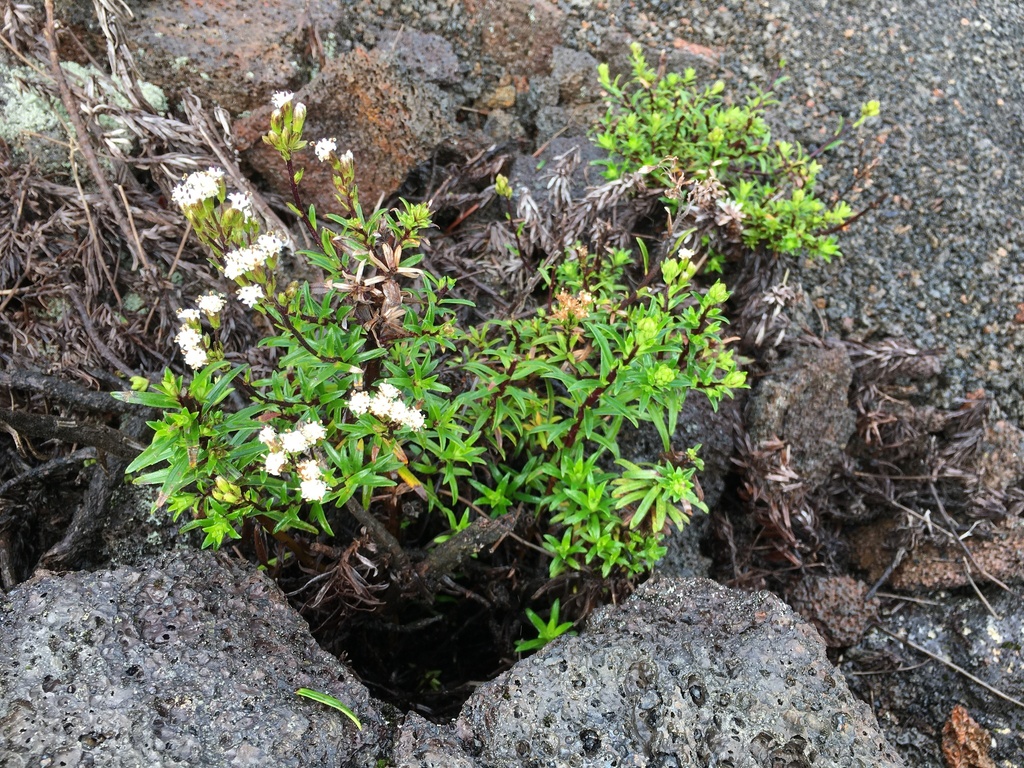
Dubautia scabra, known in Hawaiian as Naʻenaʻe or kūpaoa and in English as rough dubautia, is a low, spreading native shrub found only in the Hawaiian Islands. It forms mats and mounds of bright green leaf rosettes and carries branched clusters of small white to pinkish flower heads, mostly in summer.
Naʻenaʻe belongs to the famous Hawaiian silversword alliance, the group of about 30 closely related plants that also includes the ʻĀhinahina (Haleakalā Silversword). All of them descend from a single tarweed-like ancestor from western North America, and they have evolved into rosette plants, shrubs, trees and vines. Dubautia scabra is the toughest of pioneers: on Hawaiʻi Island it is one of the first native shrubs to take root on new lava flows.
It grows on Hawaiʻi Island, Maui, Molokaʻi and Lānaʻi, from barren lava fields to wet forest. Visitors to Hawaiʻi Volcanoes National Park see it often along trails across young lava. This guide covers how to recognize naʻenaʻe, where it grows, how to grow it, and its place in one of the most celebrated examples of evolution on islands.
Identification
There are about two dozen species of Dubautia, all endemic to Hawaiʻi, and several of them hybridize. Naʻenaʻe is best recognized by its low, spreading habit, its crowded narrow leaves with rough edges, and its clusters of small whitish flower heads.
Growth Habit
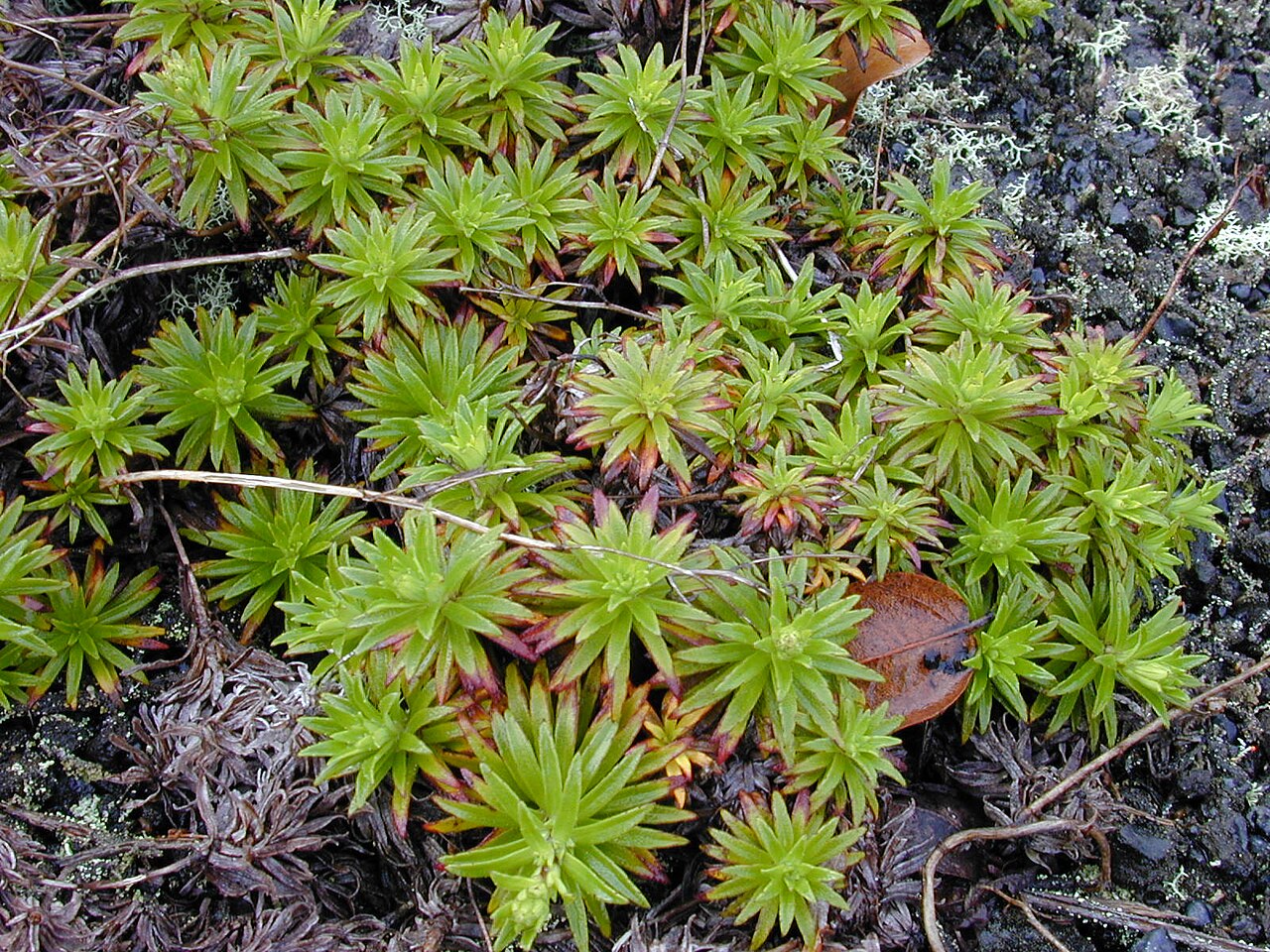
Naʻenaʻe is a low shrub, usually under 2 feet tall, with branches that sprawl or root along the ground and form mats. The leaves are crowded toward the branch tips, so each shoot looks like a small green rosette or starburst. On older lava flows plants can mound up into dense patches several feet across.
Leaves
The leaves are narrow and lance-shaped, up to about 2 inches long, and arranged in whorls or opposite pairs crowded along the stems. They are bright green, and the margins and surfaces are rough to the touch with tiny stiff hairs, which gives the species its name: scabra means rough. One subspecies, subsp. leiophylla, has smoother leaves.
Flowers
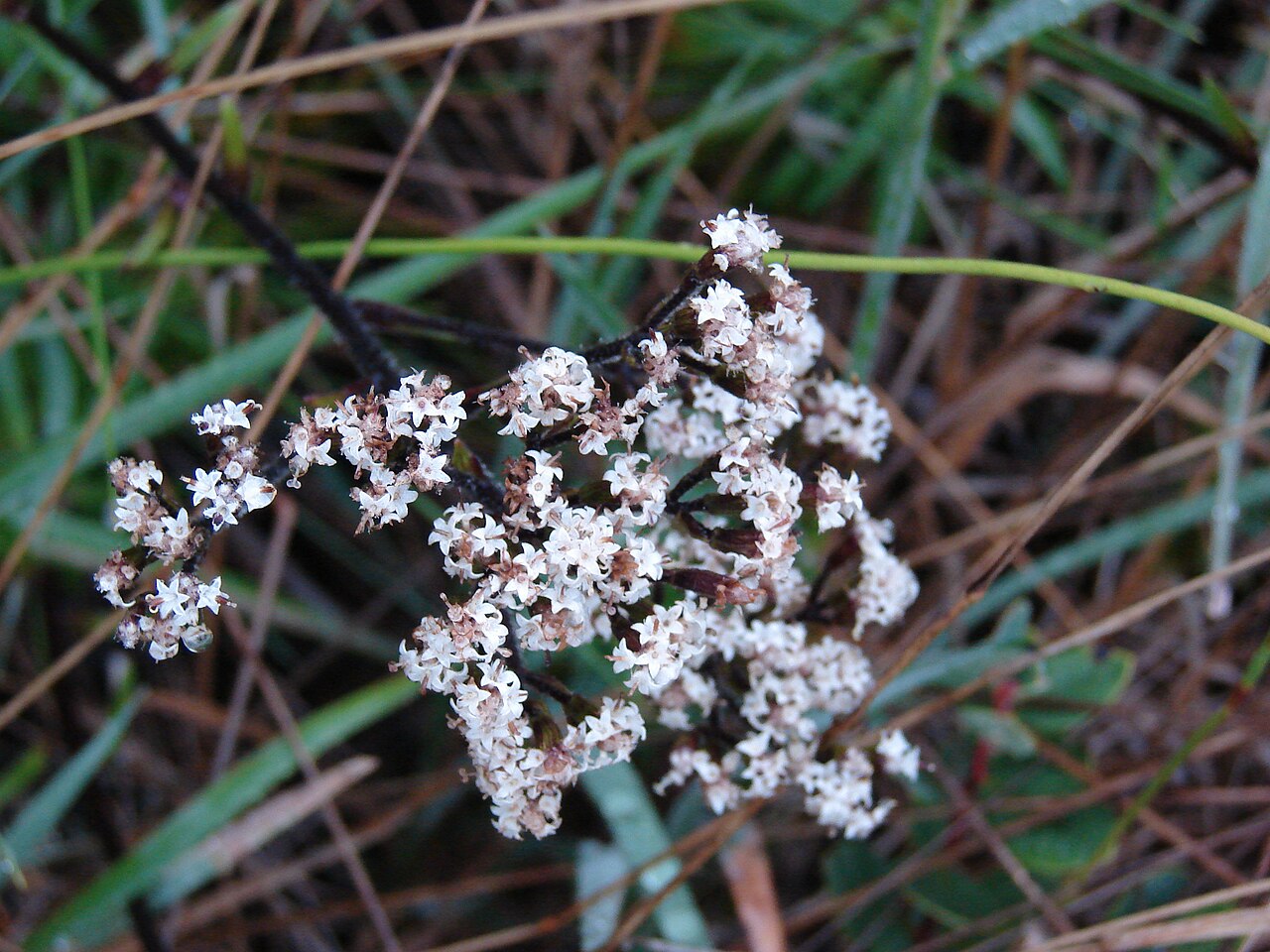
The flower heads are small and rayless, each made up of a few tiny tubular florets. They are white to pale pink or lavender and are carried in loose, branched clusters on slender stalks above the leaves. Plants can bloom at almost any time of year but flower most in summer.
Fruit
Each floret produces a small, narrow achene topped with a short crown of bristles (pappus). The seeds are dispersed by wind and gravity across lava fields and openings.
Similar Species
On Hawaiʻi Island, Dubautia ciliolata also grows on lava and cinder, but it has narrower, often grayish leaves with fringed margins and yellow flower heads; the two species hybridize where they meet. Other Dubautia species are mostly taller shrubs or trees with larger leaves.
Quick Facts
| Scientific Name | Dubautia scabra (DC.) D.D. Keck |
| Family | Asteraceae (aster family) |
| Plant Type | Low spreading shrub; endemic to Hawaiʻi |
| Mature Height | 6 in–2 ft |
| Mature Spread | 1–4 ft; can form mats |
| Growth Rate | Moderate |
| Sun Exposure | Full sun to light shade |
| Water Needs | Low to moderate; needs sharp drainage |
| Soil Type | Lava, cinder or rocky, very well-drained soils |
| Soil pH | About 5.0–7.0 |
| Bloom Time | Year-round, peaking in summer |
| Flower Color | White to pale pink or lavender |
| Fall Color | None; evergreen |
| Fruit | Small achenes with a short bristly pappus |
| Deer Resistant | No; browsed by goats and deer where present |
| USDA Hardiness Zones | 10–12 (best at middle elevations) |
Native Range
Naʻenaʻe is endemic to the Hawaiian Islands, where it grows on Hawaiʻi Island, Maui, Molokaʻi and Lānaʻi. The typical subspecies, subsp. scabra, grows on Maui and Hawaiʻi Island. It occurs over a wide elevation range, from about 250 feet to about 8,200 feet (75 to 2,500 meters).
It is best known as a colonizer of barren lava flows and cinder fields, especially on the slopes of Kīlauea and Mauna Loa, where it grows in cracks in pāhoehoe and ʻaʻā with ʻŌhiʻa Lehua, Pūkiawe and ʻōhelo. It also grows in open shrubland, subalpine areas and openings in wet and mesic forest; subsp. leiophylla is found mostly in wetter forest.
The species is not federally listed and is common in places such as Hawaiʻi Volcanoes and Haleakalā national parks. Like other Hawaiian plants, it is affected by feral goats, invasive grasses, which carry fire across lava fields, and development on the lower slopes.
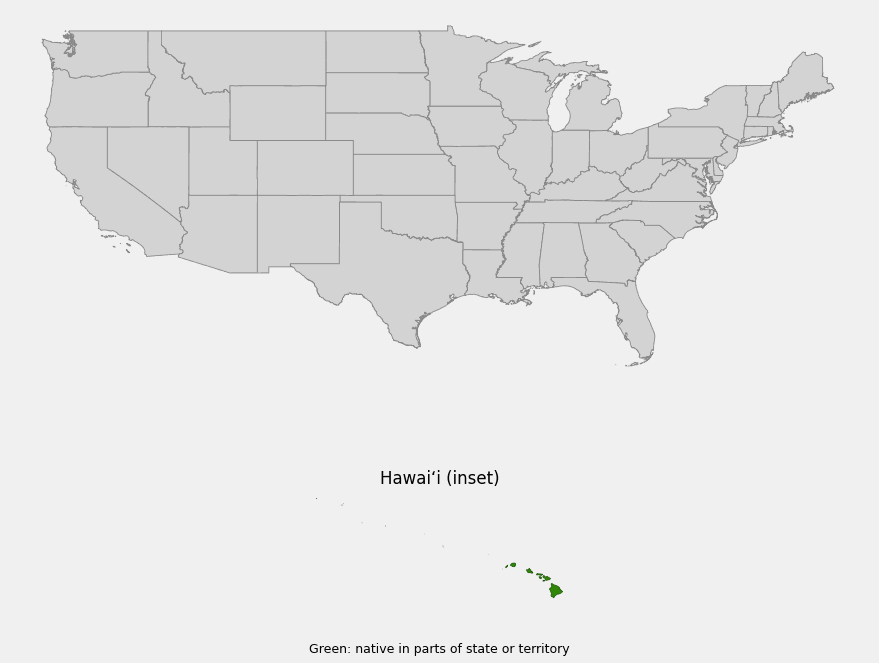
📋 Regional plant lists featuring Naʻenaʻe: Hawaii
Growing & Care Guide
Naʻenaʻe is not a common nursery plant, but it can be grown in Hawaiʻi by gardeners who can give it full sun, sharp drainage and cooler, middle-elevation conditions. It is happiest in lava rock gardens and cinder beds, and it tends to rot in heavy, wet soil or struggle in hot, humid lowland gardens. Buy plants from Hawaiʻi native plant nurseries, and never collect from national parks or other protected areas. Hawaiʻi also restricts bringing plants in from other states.
Light
Give it full sun. It tolerates light shade, but in shade it becomes leggy and flowers less. Its natural home is open lava with little or no canopy.
Soil & Water
Plant in cinder, crushed lava or a very gritty, well-drained mix; good drainage matters more than fertility. Water regularly while the plant establishes, then water deeply but infrequently. In wetter areas, raise the planting on a mound of cinder so water drains away from the stems.
Planting Tips
Naʻenaʻe looks natural planted among lava rocks, where its rosettes can spread over stone. Combine it with ʻōhelo, pūkiawe, ʻāheahea and native sedges in a lava-field garden. Space plants about 2 to 3 feet apart for a ground cover.
Pruning & Maintenance
Little pruning is needed. Trim spent flower clusters and any dead stems to keep it tidy. Keep invasive grasses away; they crowd out low natives and create fire risk.
Propagation
Grow it from fresh seed sown on the surface of a gritty mix, or from stem cuttings taken from healthy, non-flowering shoots. Branches that root where they touch the ground can be separated and potted. Because Dubautia species hybridize freely, collect seed from plants growing away from other species if you want true naʻenaʻe.
Landscape Uses
- Lava rock gardens: a low, spreading native for cinder and lava plantings
- Ground cover: forms mats of green rosettes on poor, rocky ground
- Upland native gardens: suits sunny, well-drained gardens at middle elevations
- Habitat restoration: a native pioneer for revegetating lava and cinder
- Education: a living example of the Hawaiian silversword alliance
Wildlife & Ecological Value
On young lava, naʻenaʻe is one of the plants that turns bare rock into a living community.
For Pollinators
The small flower heads attract native bees, flies, moths and other insects. Like many Hawaiian composites, it supports native insects that feed on its flowers and seeds.
For Birds
Native birds such as the ʻapapane and ʻamakihi forage among lava-field shrubs for insects, and seed-eating birds take the achenes.
For Mammals
Hawaiʻi’s only native land mammal is the Hawaiian hoary bat, which hunts insects over open lava and shrubland. Feral goats and other introduced browsers eat naʻenaʻe where they can reach it.
Ecosystem Role
As an early colonizer, naʻenaʻe traps windblown dust, leaf litter and moisture in lava cracks, building the first pockets of soil. Its mats shelter insects and seedlings of other native plants, helping new lava develop into shrubland and forest.
Cultural & Historical Uses
The genus Dubautia is named for Joseph Eugène DuBaut, a French naval officer on the Freycinet expedition that visited Hawaiʻi in 1819. Hawaiians call several Dubautia species naʻenaʻe, and some are also known as kūpaoa.
The silversword alliance, made up of Dubautia, Argyroxiphium and Wilkesia, is one of the best-known examples of adaptive radiation in the world. DNA studies show that all its members descend from a single ancestor related to the tarweeds of California, which reached Hawaiʻi millions of years ago. Naʻenaʻe and its relatives have since evolved into rosette plants, mat-forming shrubs, trees and vines adapted to every habitat from lava to bog.
Because species in the alliance hybridize readily, Dubautia scabra and its relatives have been studied closely by evolutionary biologists. On Hawaiʻi Island, hybrids between D. scabra and D. ciliolata on lava flows have helped show how new forms can arise as plants colonize new land.
Frequently Asked Questions
Is naʻenaʻe native to Hawaiʻi?
Yes. Naʻenaʻe (Dubautia scabra) is endemic to the Hawaiian Islands. It grows on Hawaiʻi Island, Maui, Molokaʻi and Lānaʻi.
Is naʻenaʻe related to the silversword?
Yes. It belongs to the Hawaiian silversword alliance, along with the silverswords and greenswords (Argyroxiphium) and the iliau (Wilkesia). They all descend from one North American tarweed ancestor.
Where can I see naʻenaʻe?
It is common along trails across young lava in Hawaiʻi Volcanoes National Park, such as around Kīlauea Iki, and in Haleakalā National Park on Maui.
Can I grow naʻenaʻe in my garden?
Yes, in Hawaiʻi, if you give it full sun and very well-drained cinder or lava soil, ideally at middle elevations. It often struggles in hot, humid lowland gardens or heavy, wet soil.
What does “scabra” mean?
Scabra is Latin for rough. The leaves are rough to the touch because of tiny stiff hairs on their edges and surfaces.

Looking for a nursery that carries Naʻenaʻe?
Browse our native plant nursery directory: Hawaii

