
Hawaiʻi Sedge (Carex alligata)
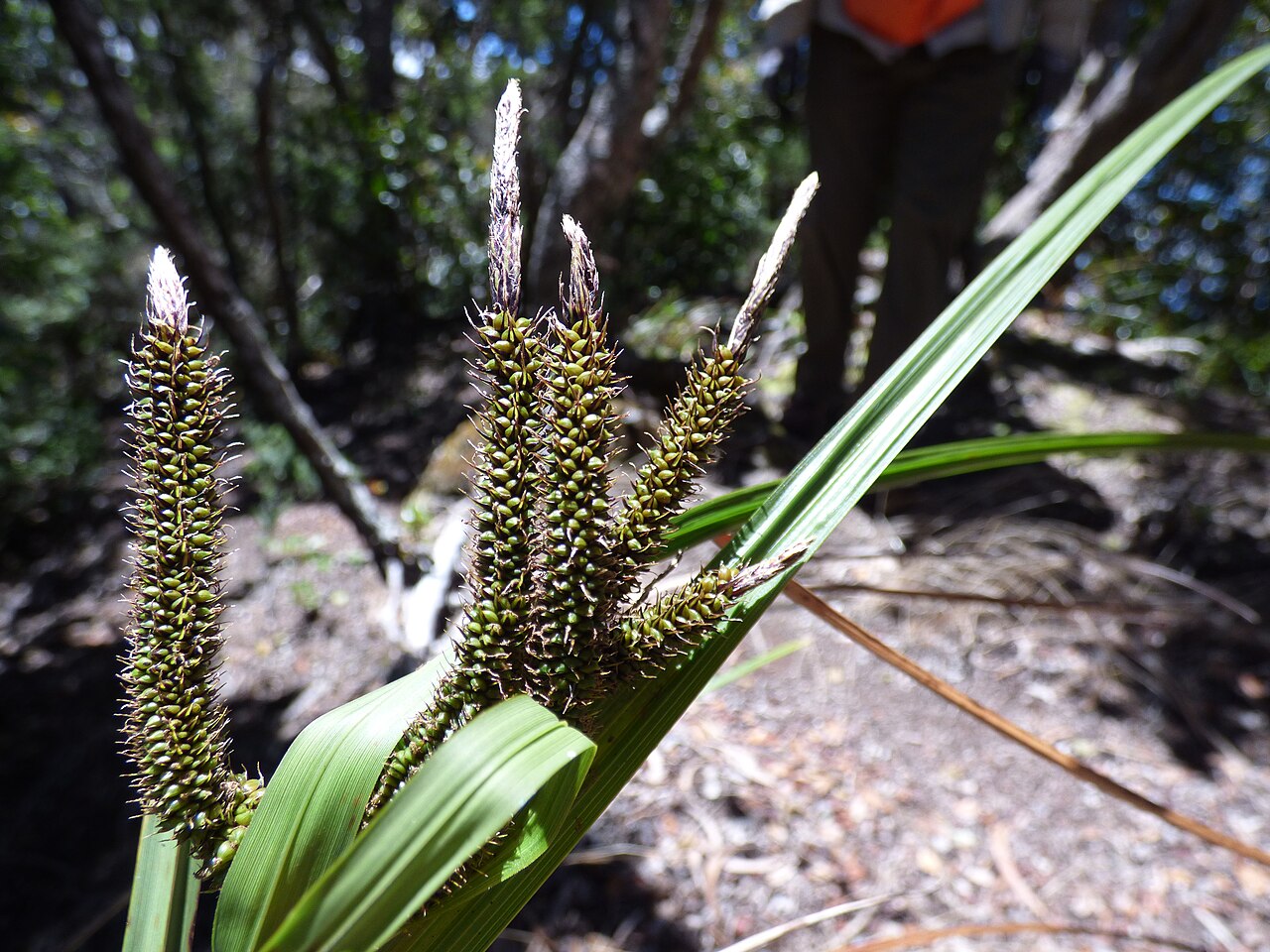
Carex alligata, the Hawaiʻi sedge, is a large, clump-forming sedge (family Cyperaceae) found only in the Hawaiian Islands. It grows in wet forests, along streams and in other wet places on Kauaʻi, Oʻahu, Molokaʻi, Maui and Hawaiʻi Island, forming fountain-like clumps of long, glossy leaves topped in season by dense, dark, cylindrical seed spikes.
Hawaiʻi has eight native Carex species, and half of them, including this one, are endemic. None of the native sedges in this genus has a known Hawaiian name, although Hawaiians surely knew these plants. Hawaiʻi sedge was first described in 1867 by the American botanist Francis Boott, a specialist in the genus.
Hawaiʻi sedge is not federally listed under the Endangered Species Act and is fairly common in wet forest. It is now grown by some Hawaiʻi native plant nurseries as a bold, grass-like accent, groundcover and erosion-control plant for wet spots. Buy only nursery-propagated plants, and never dig plants from the wild. This guide covers how to identify it, where it grows and how to use it in gardens.
Identification
Hawaiʻi sedge is a tall, coarse, grass-like plant. Like other sedges, its flowering stems are usually triangular in cross-section, and its leaves are arranged in three ranks around the base, unlike the two-ranked leaves of grasses.
Growth Habit
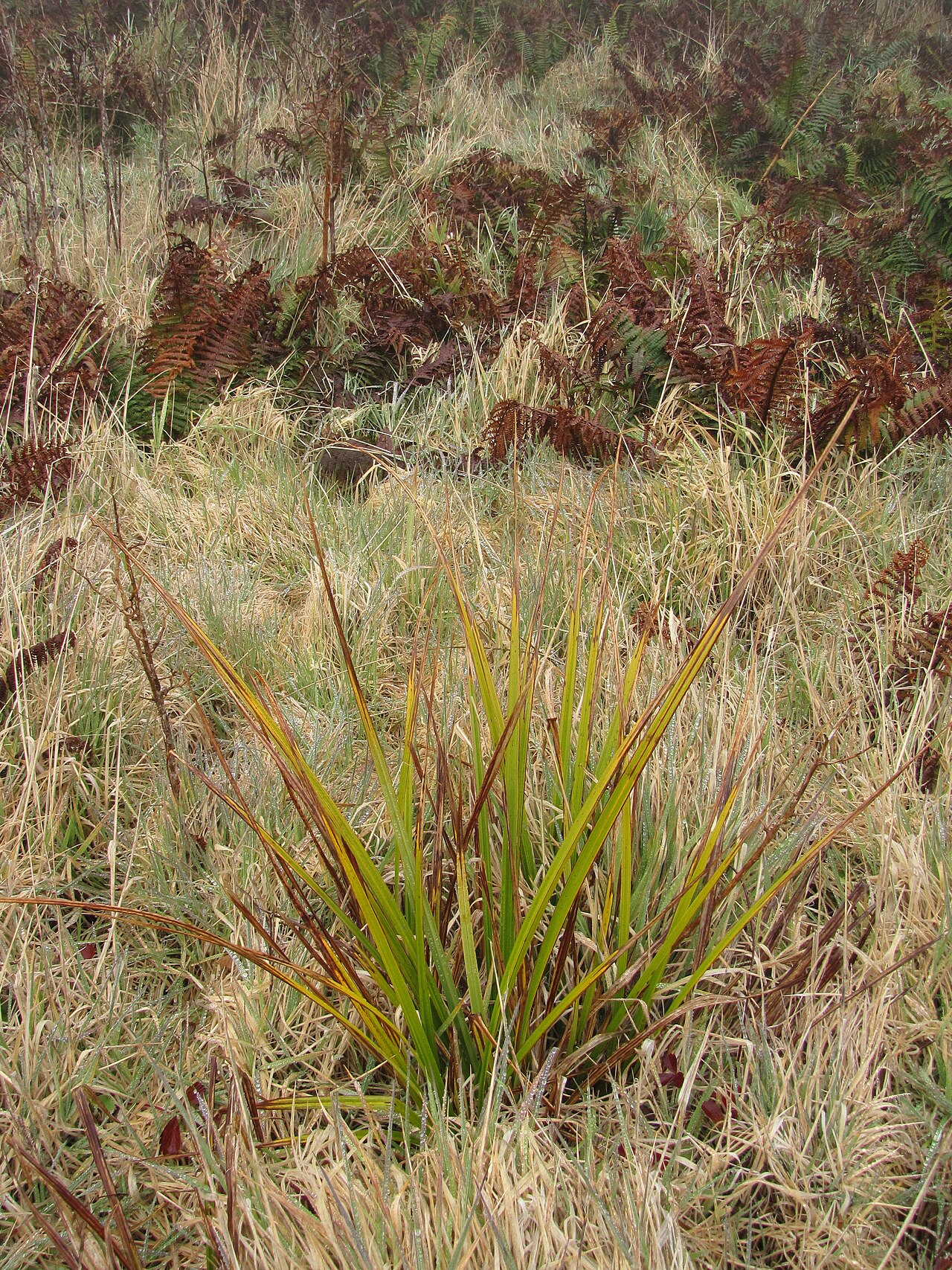
A perennial, clump-forming sedge, typically 2½ to 3 feet tall and 1 to 3 feet wide, with long leaves arching outward from a dense base. Flowering stems rise among the leaves and often arch over under the weight of the seed spikes.
Leaves
Leaves are long and strap-like, about 2 to 3 feet long and roughly ¼ to ½ inch wide, light to dark green and somewhat glossy, with a keeled midrib and rough edges. Older leaves turn tan or reddish-brown and persist at the base of the clump.
Flowers
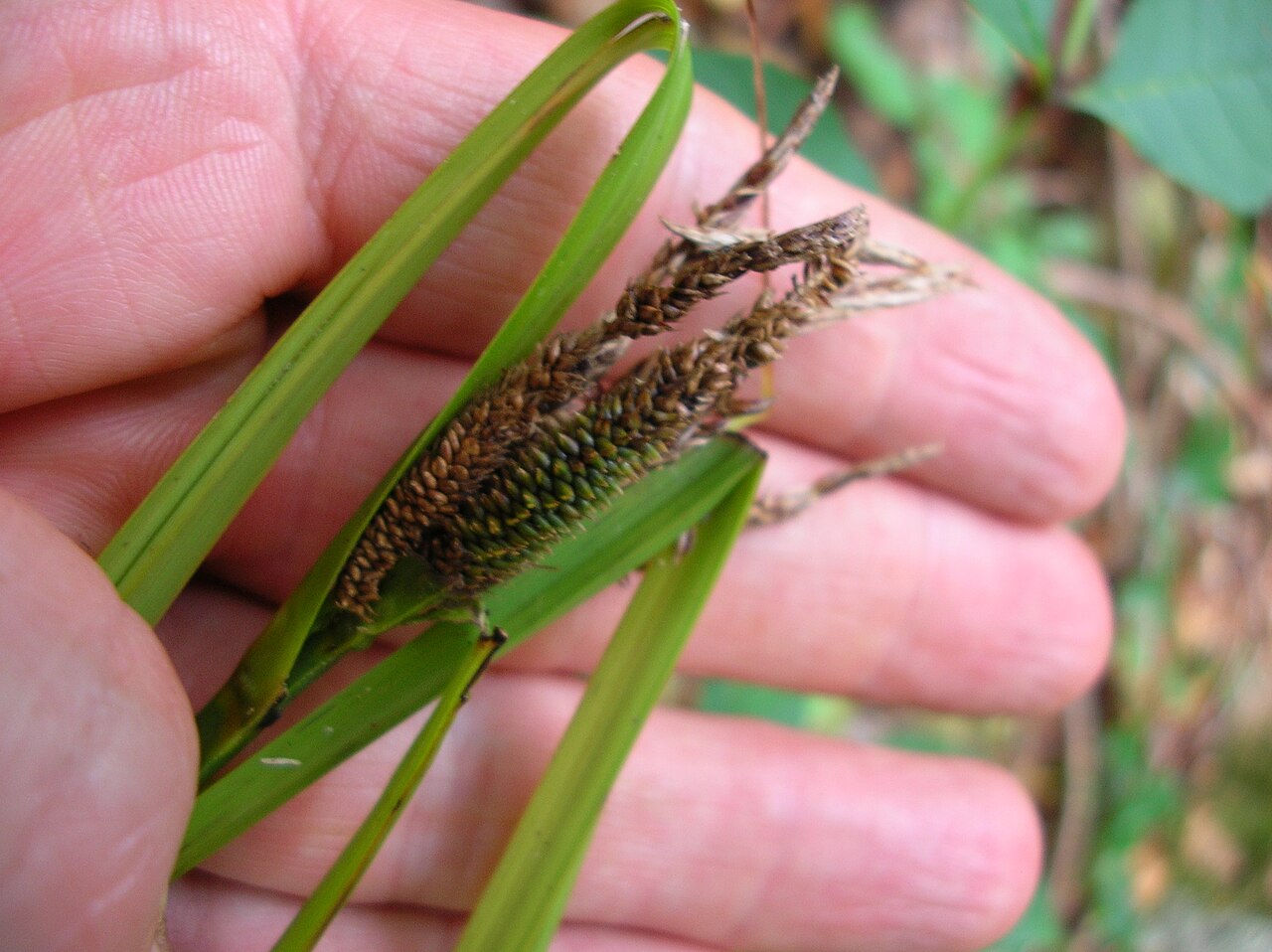
The tiny flowers are wind-pollinated and grouped in spikes near the top of the flowering stems. Male (pollen-bearing) flowers form pale spikes or sit at the tips of the spikes, and female flowers form dense, cylindrical spikes about 1 to 3 inches long, with long, leaf-like bracts beneath them.
Fruit & Look-alikes
As the seeds ripen, the female spikes turn dark brown to blackish and bristly, each seed (an achene) enclosed in a small sac called a perigynium. Oʻahu sedge (Carex wahuensis), another native, is smaller and tolerates drier, sunnier sites. Native rushes and other sedges such as Machaerina have flatter, iris-like leaves or round stems, and grasses such as Kāwelu have hollow, round stems and leaves in two ranks.
Quick Facts
| Scientific Name | Carex alligata Boott |
| Family | Cyperaceae (sedge family) |
| Plant Type | Clump-forming perennial sedge; Hawaiian endemic |
| Mature Height | 2½–3 ft |
| Mature Spread | 1–3 ft |
| Growth Rate | Moderate to fast |
| Sun Exposure | Full sun to partial sun |
| Water Needs | High; moist to wet soil |
| Soil Type | Moist, organic soils; tolerates wet ground |
| Soil pH | Acidic to slightly acidic |
| Bloom Time | Flowers and seed spikes at various times of year |
| Flower Color | Pale tan (male) and green to dark brown (female) |
| Fall Color | None; old leaves turn tan to reddish-brown |
| Fruit | Small achenes in sacs on dark, bristly spikes |
| Deer Resistant | Not well documented; grazed and uprooted by feral animals |
| USDA Hardiness Zones | 10–12 (outdoors in Hawaiʻi) |
Native Range
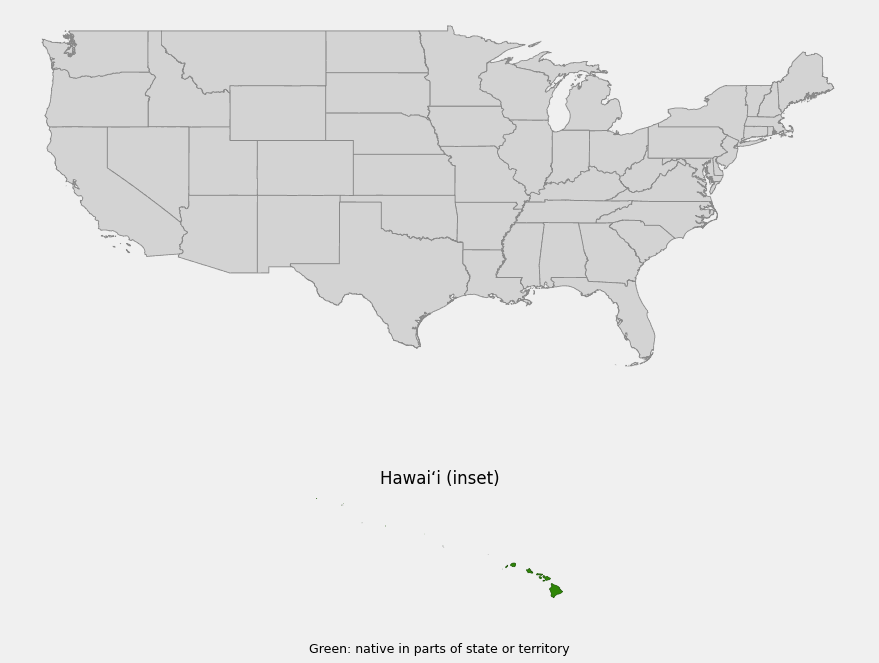
Hawaiʻi sedge is endemic to the Hawaiian Islands and grows nowhere else in the wild. USDA PLANTS lists it as native only in Hawaiʻi. It occurs on Kauaʻi, Oʻahu, Molokaʻi, Maui and Hawaiʻi Island.
It grows in wet forests, along stream banks, in forest openings and in other wet sites, mainly at about 2,000 to 5,000 feet where rainfall exceeds 100 inches a year. On Maui it has been photographed at Waikamoi, Makawao and Kīpahulu forest reserves, and at Polipoli. On Kauaʻi and Hawaiʻi Island it is common in the wet uplands.
Because it tolerates disturbance and sun, it often grows along trails, ditches and the edges of openings, and it is one of the native plants that recolonize disturbed wet ground. It is still threatened locally by feral pigs and by invasive grasses and shrubs that crowd out native ground cover.
📋 Regional plant lists featuring Hawaiʻi Sedge: Hawaii
Growing & Care Guide
Hawaiʻi sedge is one of the native sedges now in cultivation in Hawaiʻi. It is used much like Oʻahu sedge (Carex wahuensis), but it needs more water and grows taller, to about 3 feet. Buy only nursery-propagated plants from Hawaiʻi native plant growers, and never dig plants from the wild. Hawaiʻi restricts bringing plants in from other states, so gardeners in Hawaiʻi should buy it from local native plant nurseries. It grows outdoors only in frost-free climates (about USDA zones 10–12) and does best in cooler, wetter gardens.
Light
Full sun to partial sun. In hot, dry lowland gardens it does better with some afternoon shade and regular water.
Soil & Water
Give it moist to wet, organic soil and regular water; it tolerates soggy ground and is well suited to rain gardens, swales, stream banks and the edges of ponds. Do not let it dry out for long.
Planting Tips
Use it as a bold accent, in groups as a groundcover, along drainage swales and stream banks for erosion control, or in large containers. Space plants 1½ to 3 feet apart. It combines well with native ferns and shrubs in wet, windward gardens.
Pruning & Maintenance
Comb or cut out old, brown leaves and spent flower stems to tidy the clump. Clumps tend to be short-lived and decline after a few years, so divide and replant them every 2 to 3 years to keep them vigorous.
Propagation
Nurseries propagate it by dividing clumps and from seed collected from cultivated plants. Sow fresh seed on moist mix and keep it constantly moist. Home gardeners should divide only their own nursery-bought plants.
Landscape Uses
- Rain gardens and swales: thrives in moist to wet soil
- Erosion control: dense clumps hold stream banks and slopes
- Accent and groundcover: fountain-like clumps of glossy leaves
- Wet forest restoration: a native ground-layer plant that recolonizes disturbed wet sites
Wildlife & Ecological Value
Hawaiʻi sedge is a common part of the ground layer in Hawaiian wet forests.
For Pollinators
Its flowers are wind-pollinated and offer little to pollinators.
For Birds
The seeds may be eaten by birds, and the dense clumps provide cover for ground-foraging birds and insects.
For Mammals
The Hawaiian hoary bat, Hawaiʻi’s only native land mammal, hunts insects over the forest. Introduced feral pigs and other animals graze and uproot sedges and disturb the forest floor.
Ecosystem Role
Its dense root system binds soil on stream banks, trails and slopes, and it is one of the native plants that recolonize disturbed wet ground, helping to resist invasion by weeds.
Cultural & Historical Uses
None of Hawaiʻi’s native Carex species is known to have a Hawaiian name, although Hawaiians certainly knew these sedges and may have used them. The genus name Carex is the classical Latin name for sedge. The meaning of the species name alligata is unclear; in Latin, alligatus means “bound” or “tied to.”
Francis Boott, who described the species in 1867, was a Boston-born physician and botanist who spent much of his career in London and devoted himself to the study of Carex. Several other names, such as Carex sandwicensis, have been applied to Hawaiian plants now included in C. alligata.
Carex is one of the largest genera of flowering plants, with about 2,000 species worldwide. Sedges are popular ornamental grasses on the U.S. mainland, and native Hawaiian sedges such as this one and Oʻahu sedge are increasingly used in Hawaiʻi landscapes as low-maintenance alternatives to non-native ornamental grasses.
Frequently Asked Questions
Does Hawaiʻi sedge have a Hawaiian name?
No Hawaiian name is known for it or for any of Hawaiʻi’s other native Carex species.
Is it a grass?
No. It is a sedge, in the family Cyperaceae. Sedges look like grasses but usually have triangular stems and leaves in three ranks.
Can I grow it in my garden?
Yes, in Hawaiʻi or other frost-free areas, in sun to partial sun with moist to wet soil. Divide clumps every 2 to 3 years. Buy only nursery-propagated plants from Hawaiʻi native plant nurseries.
How is it different from Oʻahu sedge?
Hawaiʻi sedge is taller (to about 3 feet) and needs more water. Oʻahu sedge (Carex wahuensis) is smaller and tolerates drier, sunnier sites.
Is it endangered?
No. It is not federally listed and is fairly common in wet forests on five of the main islands.

Looking for a nursery that carries Hawaiʻi Sedge?
Browse our native plant nursery directory: Hawaii

