Chokecherry in a Wildlife Border: Planning for Suckers and Fruit Drop
Last updated: November 6, 2026
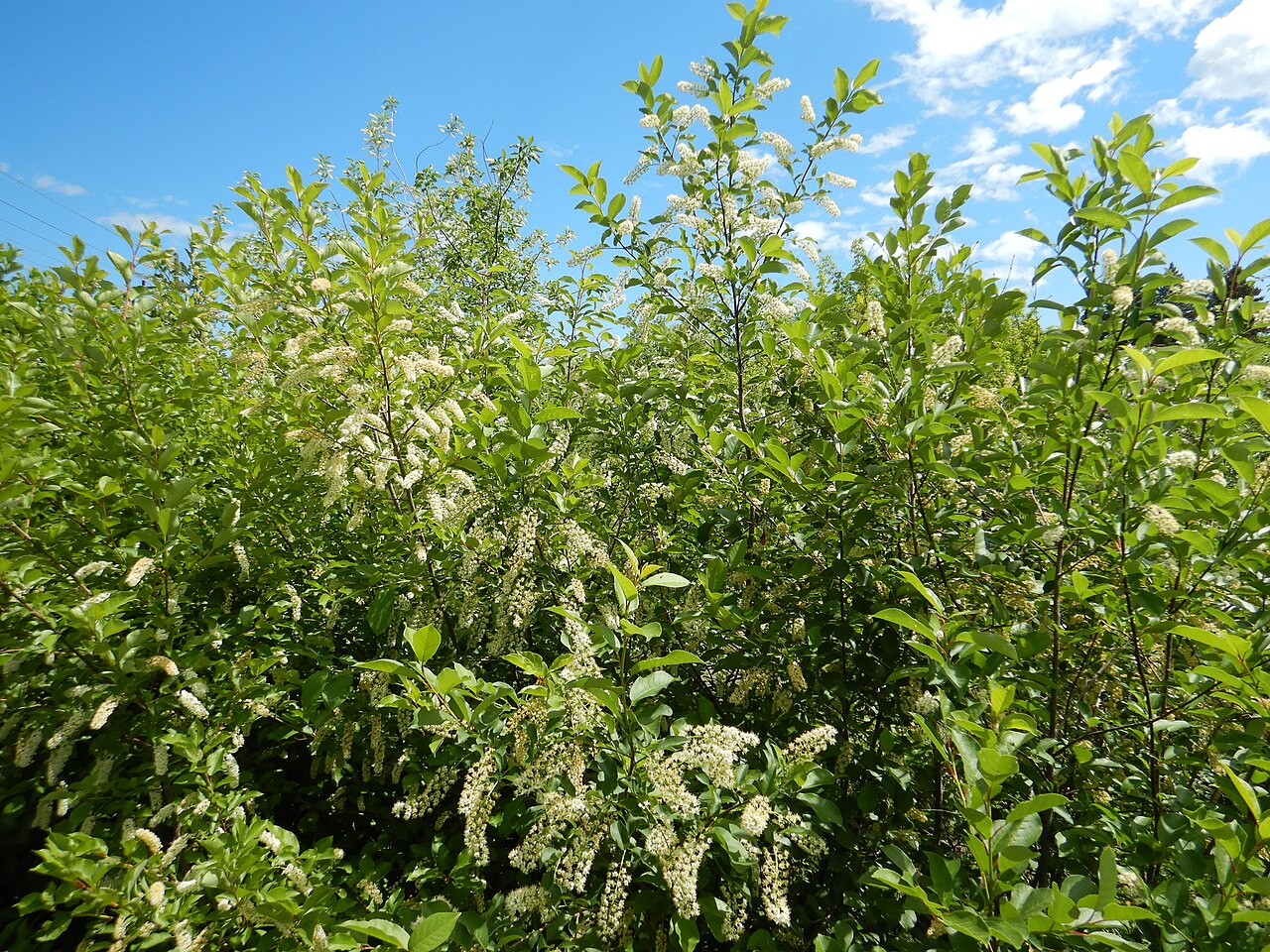
Chokecherry is one of the most useful native plants for a wildlife border. It flowers heavily in spring, feeds birds and mammals in summer, and grows across a huge part of North America.
It also comes with two habits you need to plan for. It spreads by root suckers into thickets, and it drops a large crop of small fruit with poisonous pits.
This plan shows how to place chokecherry in a border so the thicket works for you, how to handle fruit drop and safety concerns, what to plant with it, and how to manage it through the first three years.
Plan at a Glance
| Site | Back of a deep border, property-line hedgerow, or field edge with room to spread |
| Size | 20 to 30 feet tall and 18 to 25 feet wide as a tree (NC State Extension); often kept shrubby; colonies spread wider |
| Sun | Full sun for best flowering and fruit; tolerates considerable shade |
| Soil | Adaptable: dry to moist, tolerates limestone soils and drought |
| Maintenance | Moderate: yearly sucker control at the edges, winter checks for black knot |
| Best regions | Northern and western U.S. and Canada; in the East, south mainly in the mountains to North Carolina and Tennessee |
Assess the Site Before You Commit
Chokecherry is a cold-climate plant. The Lady Bird Johnson Wildflower Center lists its range from Newfoundland to British Columbia, south to North Carolina, Tennessee, northern Arkansas, Texas and southern California. NC State Extension, which lists it as a mountain plant in that state, gives hardiness zones 2a to 6b.
It is tough about soil. The Wildflower Center rates it highly tolerant of drought and of limestone-based soils, and lists dry to moist conditions. It calls the plant remarkably shade tolerant, though NC State lists full sun for garden use, and flowering and fruiting are generally best in sun.
The bigger questions are about what is next to the border. Ask three things before planting:
- Is there lawn, a path or a neighbor’s yard on the other side? Suckers will try to move into it.
- Do livestock, horses or pets use the area? The plant is toxic to them, as covered below.
- Is there a patio, walk or play area under where the canopy will be? Fruit and pits will fall there.
Plan for Suckers
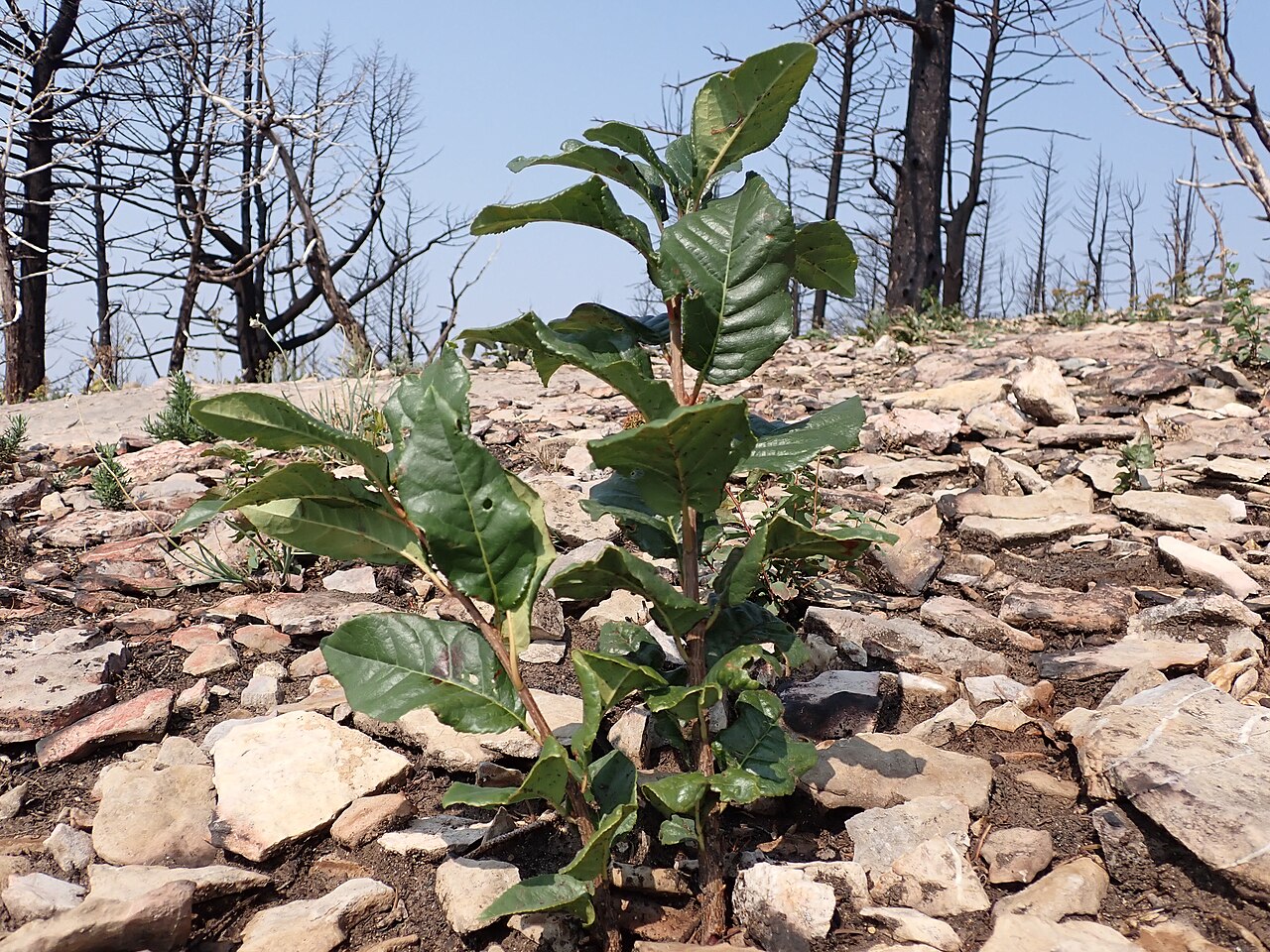
NC State says chokecherry spreads from a shallow, spreading root system that can form new plants from long underground runners, and that wild plants can form very dense thickets. The Wildflower Center also notes it often forms thickets.
In a wildlife border, a thicket is useful cover for birds. The goal is to decide where the thicket is allowed to go and where it is not.
Layout tactics that contain the spread
- Put it at the back. Place chokecherry in the deepest part of the border, with other shrubs and a mown or mulched strip in front.
- Use a mowing edge. A strip of regularly mown lawn along the front of the border removes most suckers that reach it without extra work.
- Leave a buffer at property lines. Keep the planting far enough inside the line that you can reach and remove suckers on your side.
- Keep it away from paving and foundations. Shoots that come up through cracks or against a wall are hard to remove.
- Treat the colony as the unit. Plan the border space for a spreading group, not a single plant. Wikipedia’s summary notes that a colony can reach a width of about 60 feet.
Plan for Fruit Drop and Safety
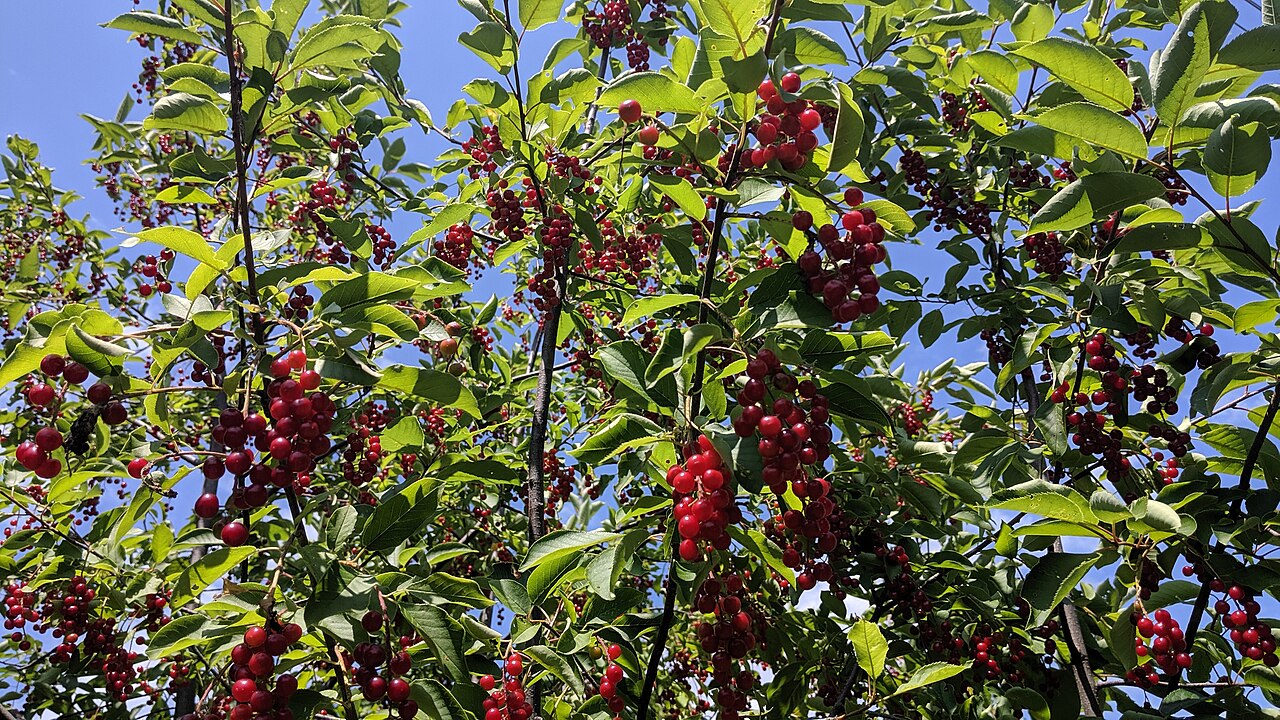
The Wildflower Center describes dense clusters of red fruit that ripen to dark purple from August to September in the North, or June to August farther south. Birds eat much of the crop, but some will fall beneath the plant.
Toxicity: the part not to skip
Chokecherry contains compounds that can release cyanide. NC State lists the stems, leaves and seeds as containing cyanide, particularly toxic while wilting, and flags the plant as a problem for cats, dogs and horses.
The Wildflower Center warns that new growth, wilted leaves, and parts injured by frost or drought are poisonous to cattle and humans, and that children have been poisoned after eating large quantities of the fruit with its seeds. Wikipedia’s summary adds that wilting after frost or broken branches makes the foliage especially dangerous to cattle, goats and other ruminants.
For a home border, that means:
- Do not plant chokecherry along pasture fences or where horses or livestock can reach it.
- After storms, promptly clear broken branches where animals could eat wilted leaves.
- Keep it away from play areas, and teach children not to eat the fruit or chew the pits.
- If you plan to harvest fruit for jelly, follow a reliable extension preserving guide; the pits are poisonous.
Design the Wildlife Border
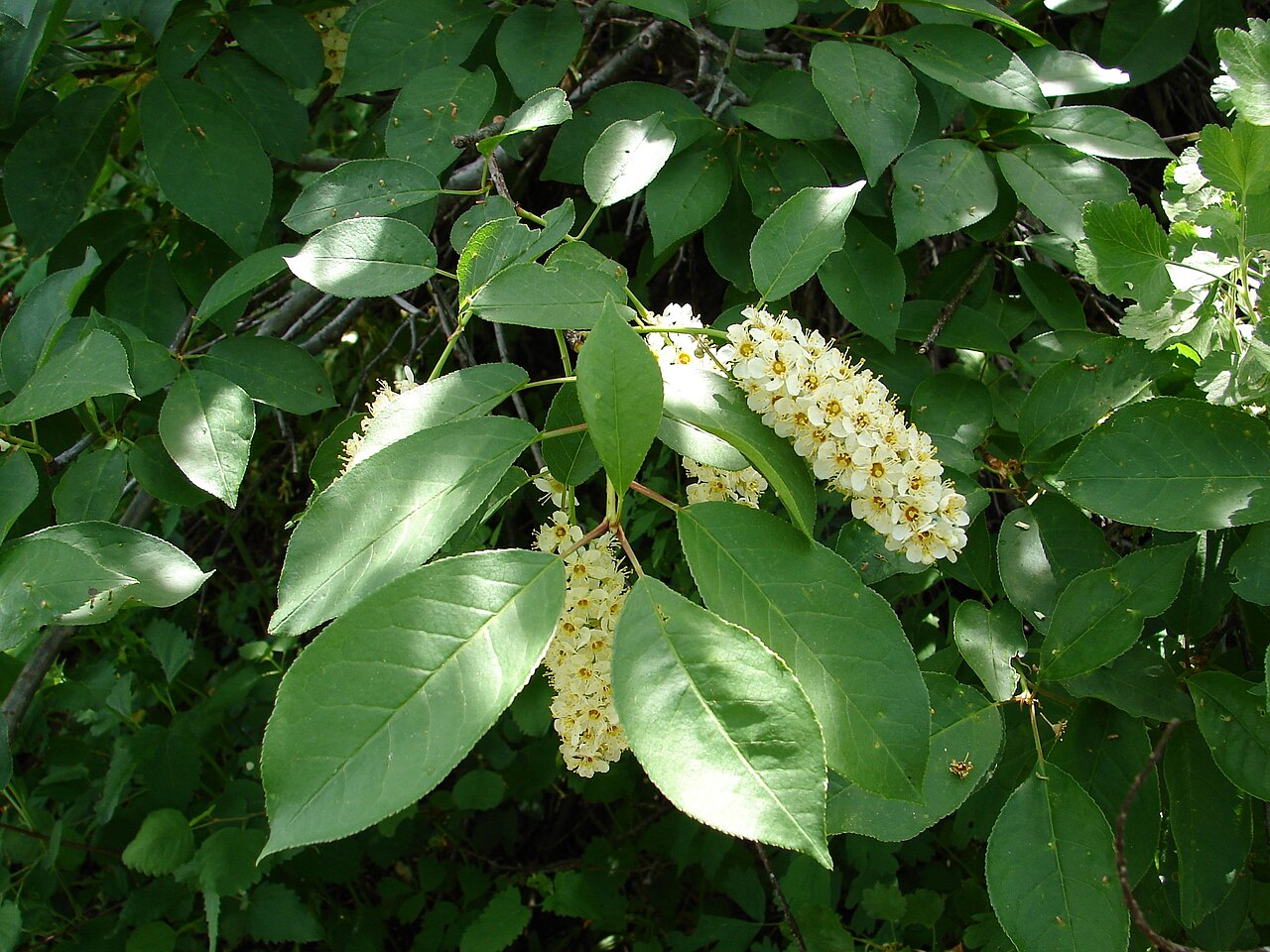
A good wildlife border has layers, flowering and fruiting at different times, and some dense cover. Chokecherry provides early flowers and summer fruit; the companions extend the season.
Arrange the border in three bands. At the back, chokecherry and other tall shrubs or small trees. In the middle, medium shrubs. At the front, a low band of grasses or perennials and a mown edge.
Repeat chokecherry in groups along a long border rather than as one plant at each end. That gives birds continuous cover and makes the planting look intentional.
Plant Palette
Heights and ranges are from the Lady Bird Johnson Wildflower Center unless noted. Confirm each plant is native to your county before buying.
| Plant | Role | Height | Sun / moisture | Native range |
|---|---|---|---|---|
| Chokecherry (Prunus virginiana) | Back-of-border thicket, spring flowers, summer fruit | Up to about 30 ft | Sun to shade / dry to moist | Newfoundland to BC, south to NC, TN, N. AR, TX and S. CA |
| Nannyberry (Viburnum lentago) | Tall shrub, fall fruit | Up to about 30 ft | Sun to shade / moist | Quebec to Manitoba and MT, south to VA, N.E. MO, E. NE and WY |
| Redosier dogwood (Cornus sericea) | Middle band, red winter stems, white fruit | Up to about 12 ft | Part shade / moist | Newfoundland to AK, south to VA, NE, NM mountains and N. CA |
| Saskatoon serviceberry (Amelanchier alnifolia) | Early-summer fruit, western border | 4–15 ft | Sun to shade / dry to moist | S. Manitoba to AK, south to N.W. IA, NM, AZ and CA |
Regional alternates
Plant choices must match your region. Nannyberry and redosier dogwood suit the Northeast and Upper Midwest. In the Plains and Mountain West, Saskatoon serviceberry replaces nannyberry as the fruiting companion.
Chokecherry itself is poorly suited to the hot Southeast outside the mountains. Gardeners there should choose a locally native fruiting shrub from their state list instead.
For more boundary-planting ideas, see our plans for American hazelnut in a boundary planting and a mixed shrub border built around nannyberry.
Installation Steps
- Inspect nursery plants. University of Minnesota Extension lists chokecherry among the trees most susceptible to black knot and advises not buying plants with galls. Look for hard, black swellings on stems.
- Check the neighborhood. UMN also advises avoiding new plantings where many wild cherries and plums are infected, or removing galls nearby first.
- Call 811 before digging, and wait for utility marks. Keep the spreading root zone clear of buried lines.
- Plant at the back of the border, spacing groups by the mature widths you expect, and set each plant no deeper than it grew in the pot.
- Water and mulch. Water deeply, then mulch 2 to 3 inches deep, keeping mulch off the stems.
- Cut the mowing edge. Establish the mown or mulched strip in front at planting time, so the boundary exists before suckers do.
First-Three-Years Maintenance Calendar
- Year 1, spring to fall: water during dry spells until the plants are established. Keep weeds down so the young shrubs are not shaded out.
- Year 1, late winter: check stems for black knot galls. UMN recommends pruning them out in late winter at least 4 inches below the gall and removing the cut branches from the site.
- Year 2, spring: watch for tent caterpillar webs, which the Wildflower Center says are often built on this species. Remove small webs by hand if they bother you.
- Year 2, summer: pull or cut suckers that appear outside the planned thicket. Mow the front edge regularly.
- Year 3: decide on form. Thin to a few main stems for a tree-like look, or let the back of the border thicken into cover. Continue edge control every year.
- After every ice or wind storm: the Wildflower Center notes branches break easily in ice storms. Remove broken branches promptly, especially where animals could eat the wilting leaves.
Mistakes to Avoid
- Planting it as a lawn specimen. Suckers will appear in the turf around it.
- Planting near pastures or horse paddocks. Wilted leaves are dangerous to livestock.
- Putting it over a patio or play area. Fallen fruit and pits collect underneath.
- Ignoring black knot. Galls are easiest to manage when caught early.
- Planting too close to a property line. Leave room to manage suckers from your side.
📋 Find plants for your region: see the full Chokecherry (Prunus virginiana) profile or our native plant lists for New Hampshire, Maine & Vermont, Michigan, Wisconsin & Eastern Minnesota, the Dakotas & Western Minnesota, Nebraska, Kansas & Eastern Colorado, Montana & Wyoming, Utah & Western Colorado, Idaho, Eastern Oregon & Eastern Washington, and California & Nevada.
Frequently Asked Questions
How do I stop chokecherry from spreading?
You manage it rather than stop it. Plant it at the back of a deep border, keep a mown edge in front, and cut or pull suckers outside the planned area each year.
Is chokecherry fruit poisonous?
The pits are poisonous, and the Wildflower Center notes children have been poisoned after eating large quantities of fruit with seeds. Leaves and stems are also toxic, especially when wilted. Keep it away from play areas and livestock.
How big does chokecherry get?
NC State lists 20 to 30 feet tall and 18 to 25 feet wide, while many plants stay shrubby. Colonies can spread much wider than a single plant.
What are the black lumps on my chokecherry branches?
They are likely black knot, a fungal disease. University of Minnesota Extension recommends pruning galls out in late winter at least 4 inches below the gall and removing the prunings.
Which wildlife uses chokecherry?
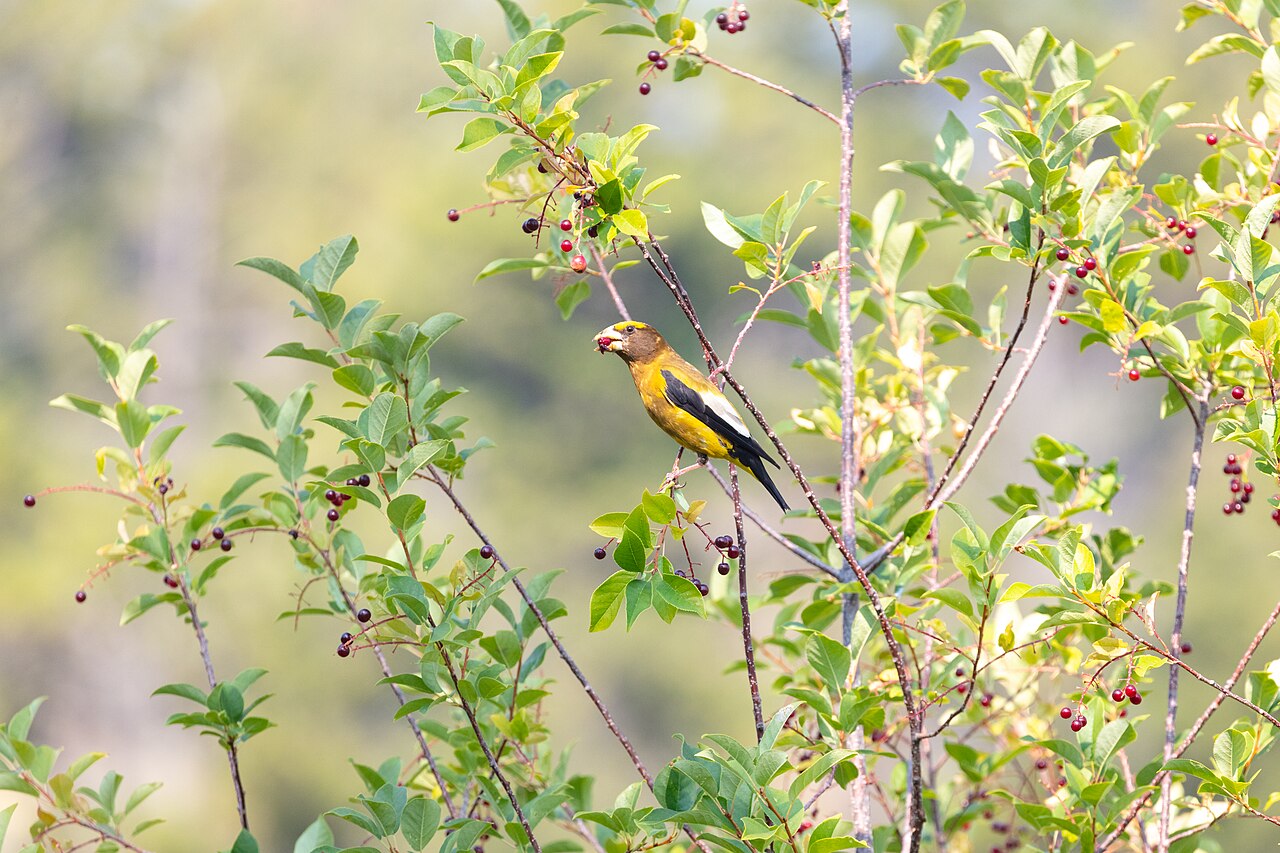
The Wildflower Center lists its fruit as important food for many birds and mammals in July and August, and its flowers as of special value to native bees. NC State lists it as a larval host for the eastern tiger swallowtail.
Sources
- NC State Extension Gardener Plant Toolbox, Prunus virginiana: size, suckering root system, sun, hardiness zones, toxicity, wildlife value.
- Lady Bird Johnson Wildflower Center, Prunus virginiana: range, thickets, fruit timing, drought and limestone tolerance, ice-storm breakage, tent caterpillars, toxicity warning, wildlife. Companion data from Wildflower Center pages for nannyberry, redosier dogwood and Saskatoon serviceberry.
- University of Minnesota Extension, Black knot: chokecherry susceptibility, buying clean stock, late-winter pruning of galls.
- Wikipedia, Prunus virginiana: colony width, toxicity to ruminants after wilting.
- 811 Before You Dig, Contact 811 before every dig.