
Sweetgum in a Residential Yard: Shade Benefits and Seedball Trade-Offs
Last updated: November 6, 2026
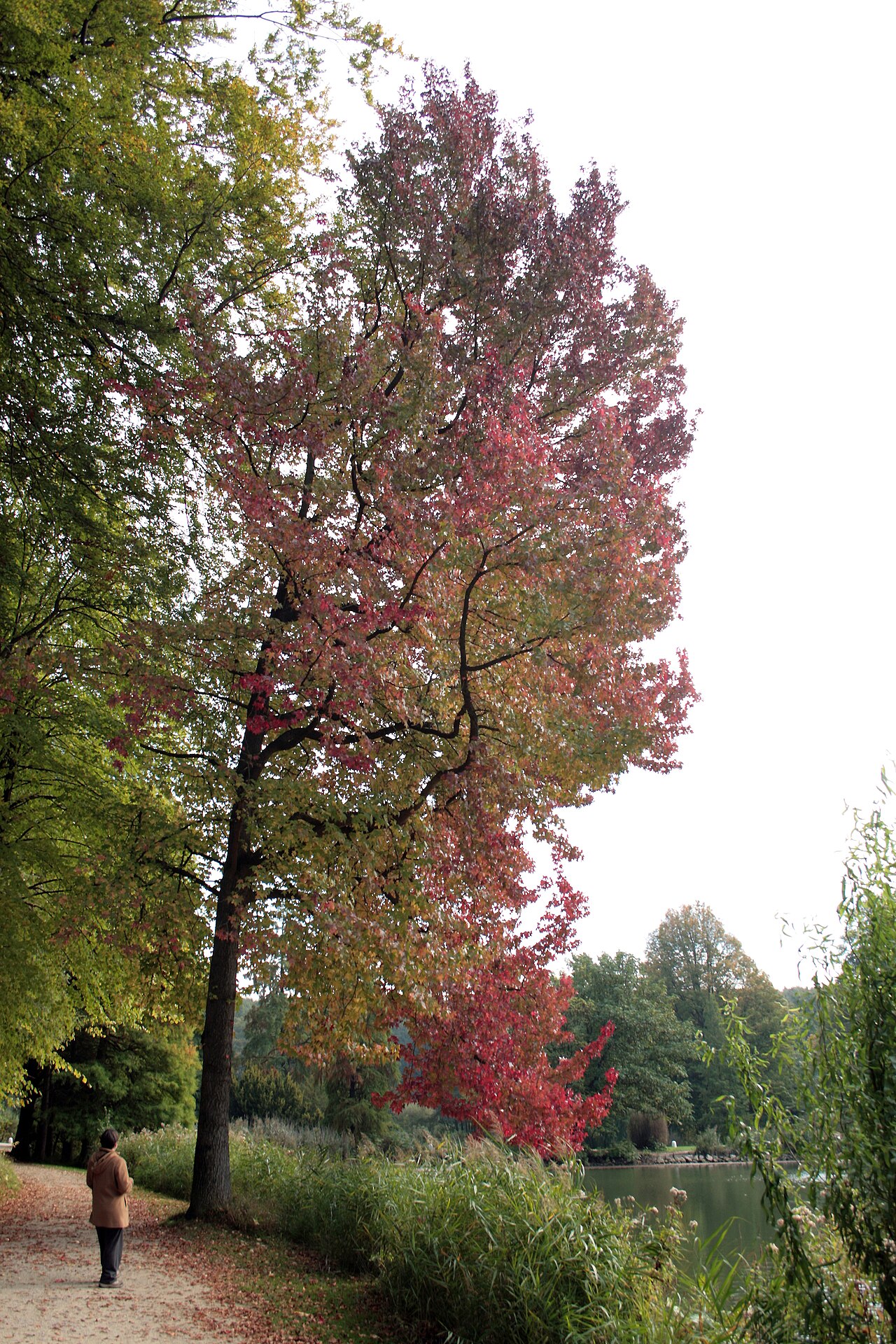
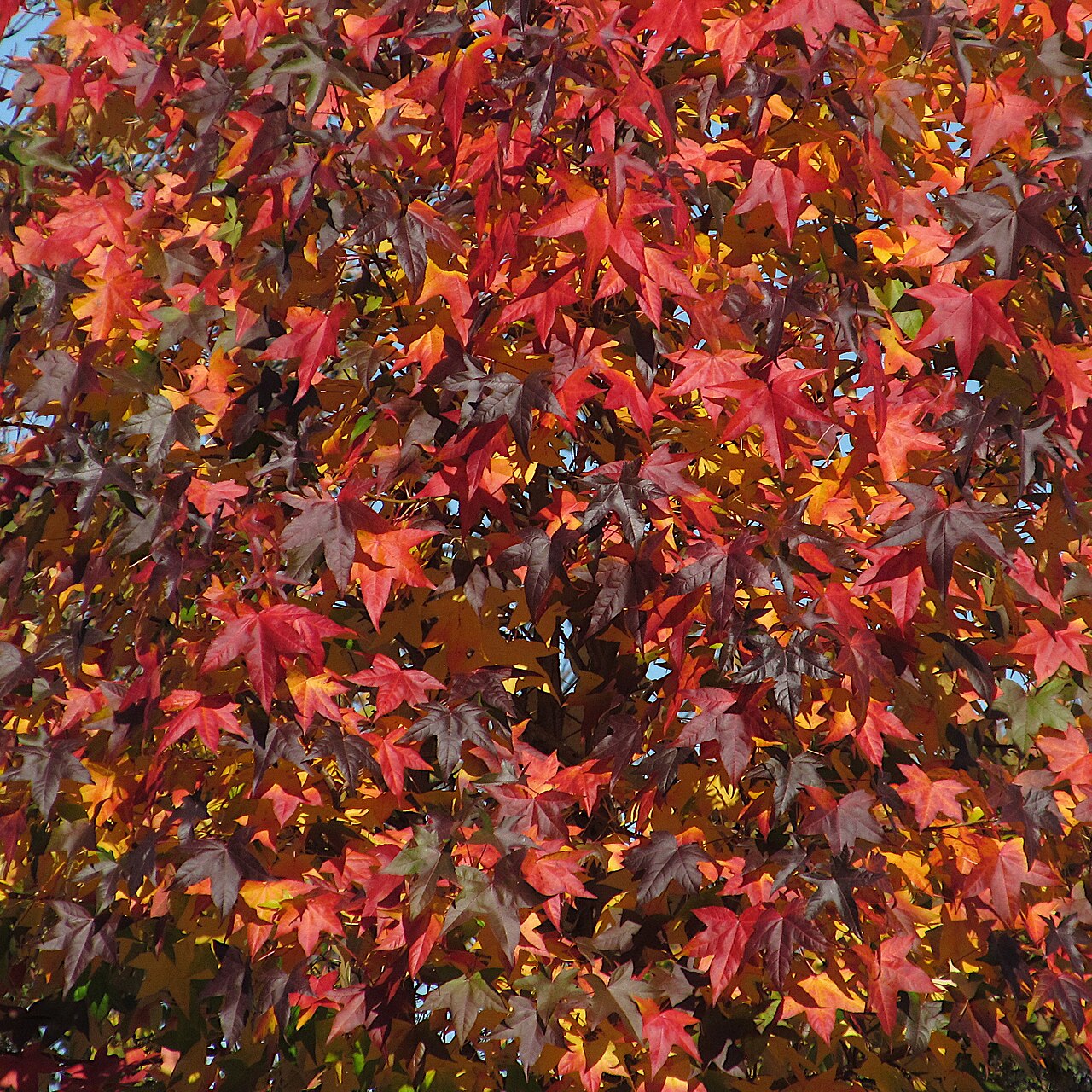
Sweetgum is one of the most beautiful native shade trees in the eastern United States. Its star-shaped leaves turn red, purple, orange and yellow in fall, and it grows fast into a tall, well-shaped tree.
It also drops thousands of spiky seedballs, often called gumballs, and its roots can lift paving. NC State Extension puts it bluntly: the fruit makes sweetgum the bane of some homeowners’ existence.
Whether sweetgum belongs in your yard comes down to space and placement. This guide weighs the shade benefits against the trade-offs, then shows where to put the tree, what to plant under it, and when a fruitless cultivar or a different tree makes more sense.
Plan at a Glance
| Site | Open lawn or the back of a large lot, well away from the house, paving, pools and overhead lines |
| Size | 60 to 100 feet tall and 40 to 50 feet wide (NC State) |
| Sun | Full sun to part shade (NC State) |
| Soil | Moist, slightly acid soil is best (Oregon State); avoid alkaline soil, where iron chlorosis can occur (NC State) |
| Maintenance | Low for the tree itself; moderate for fruit cleanup from December to April |
| Best regions | Southern Connecticut to southern Indiana, southern Illinois and southeast Missouri, south to Florida and east Texas |
The Shade Benefits
NC State calls American sweetgum an excellent shade tree. It grows rapidly, which means useful shade sooner than with slow-growing trees.
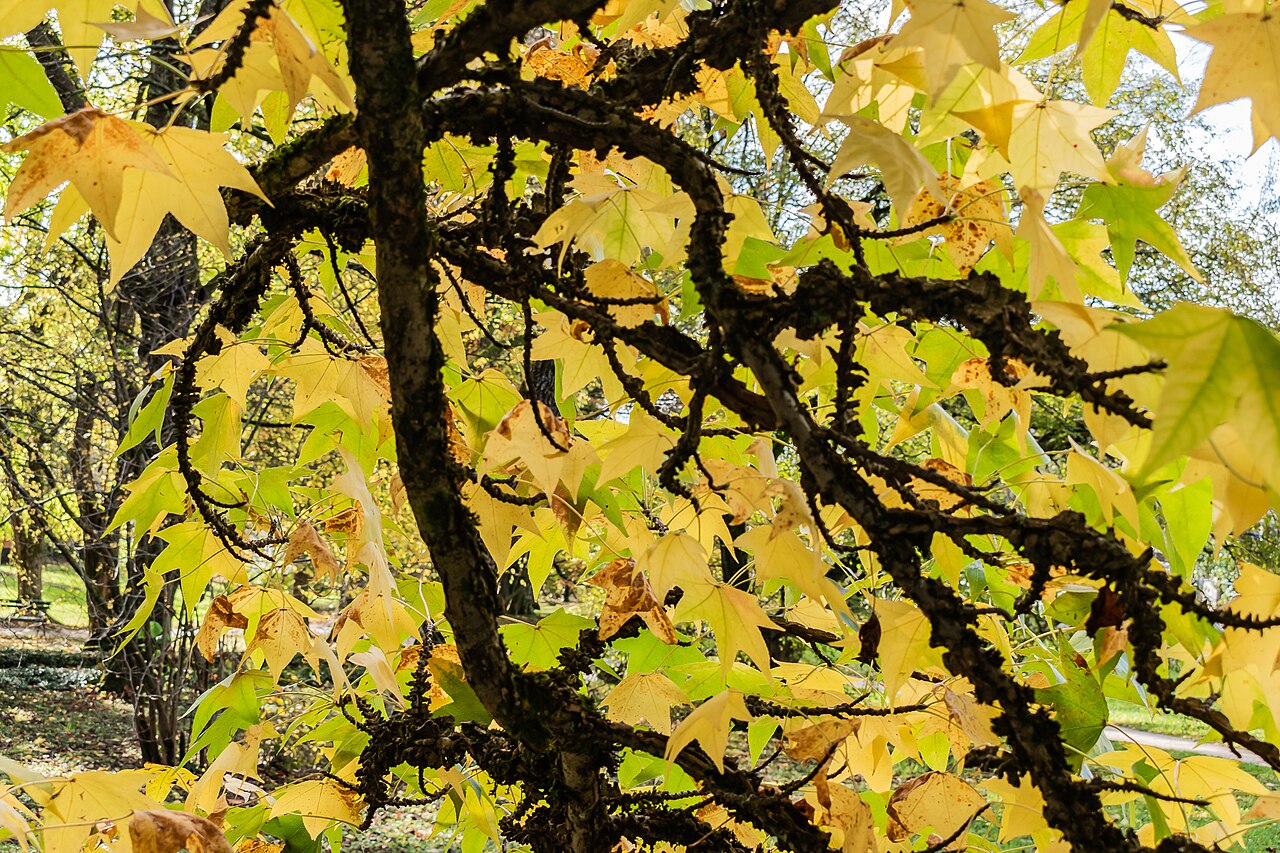
Fall color is the other big draw. NC State notes that the glossy leaves turn bright red, purple, yellow or orange and stay on the tree a long time.
Sweetgum also supports wildlife. NC State lists it as a host for imperial moth and hickory horned devil caterpillars. Wikipedia notes that goldfinches, purple finches, squirrels and chipmunks eat the seeds.
It is tough, too. NC State says it resists heat, drought, soil compaction, deer and rabbits. Wikipedia notes that trees may live up to 400 years, so placement is a very long-term decision.
The Trade-Offs
Gumballs
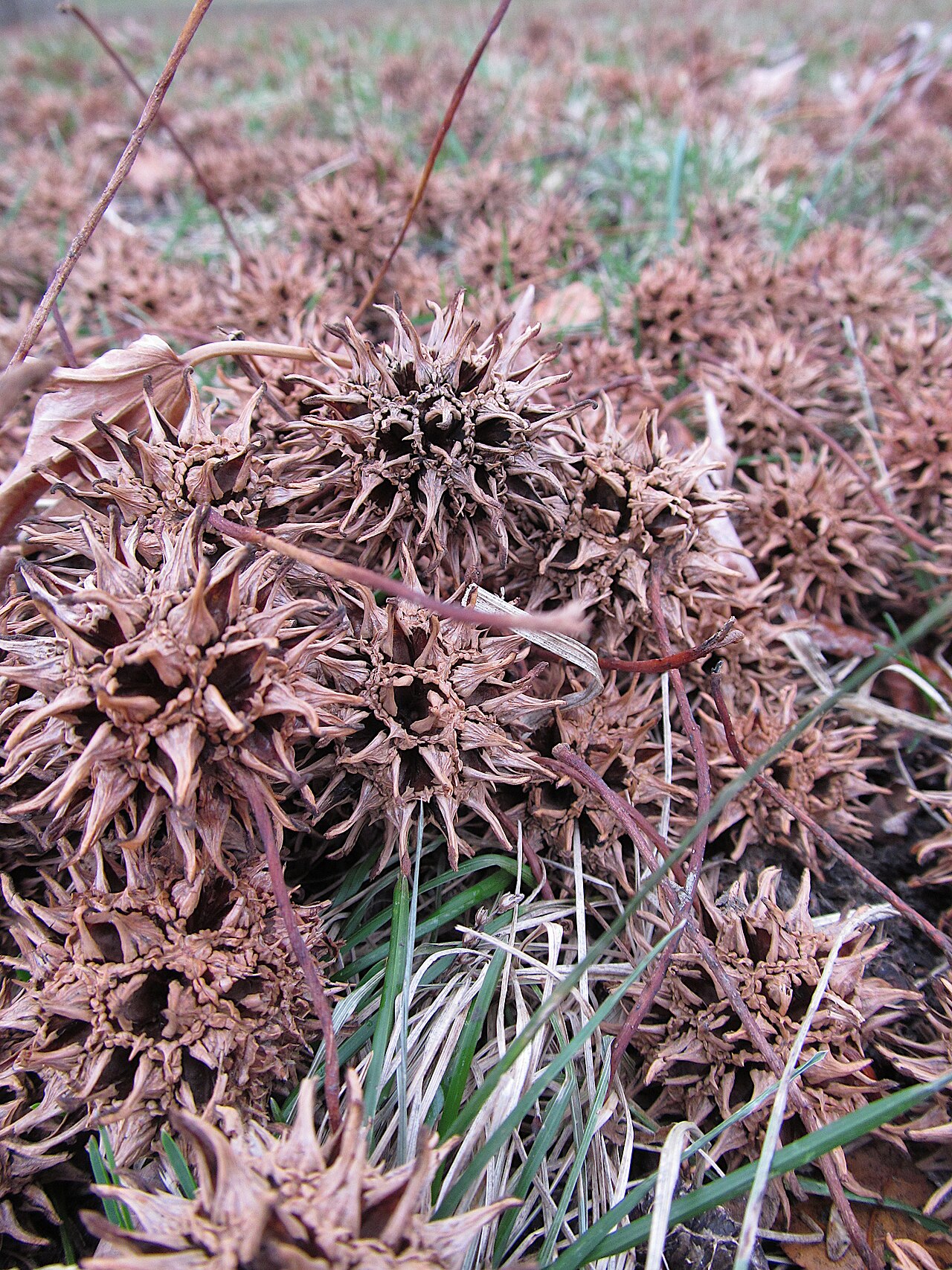
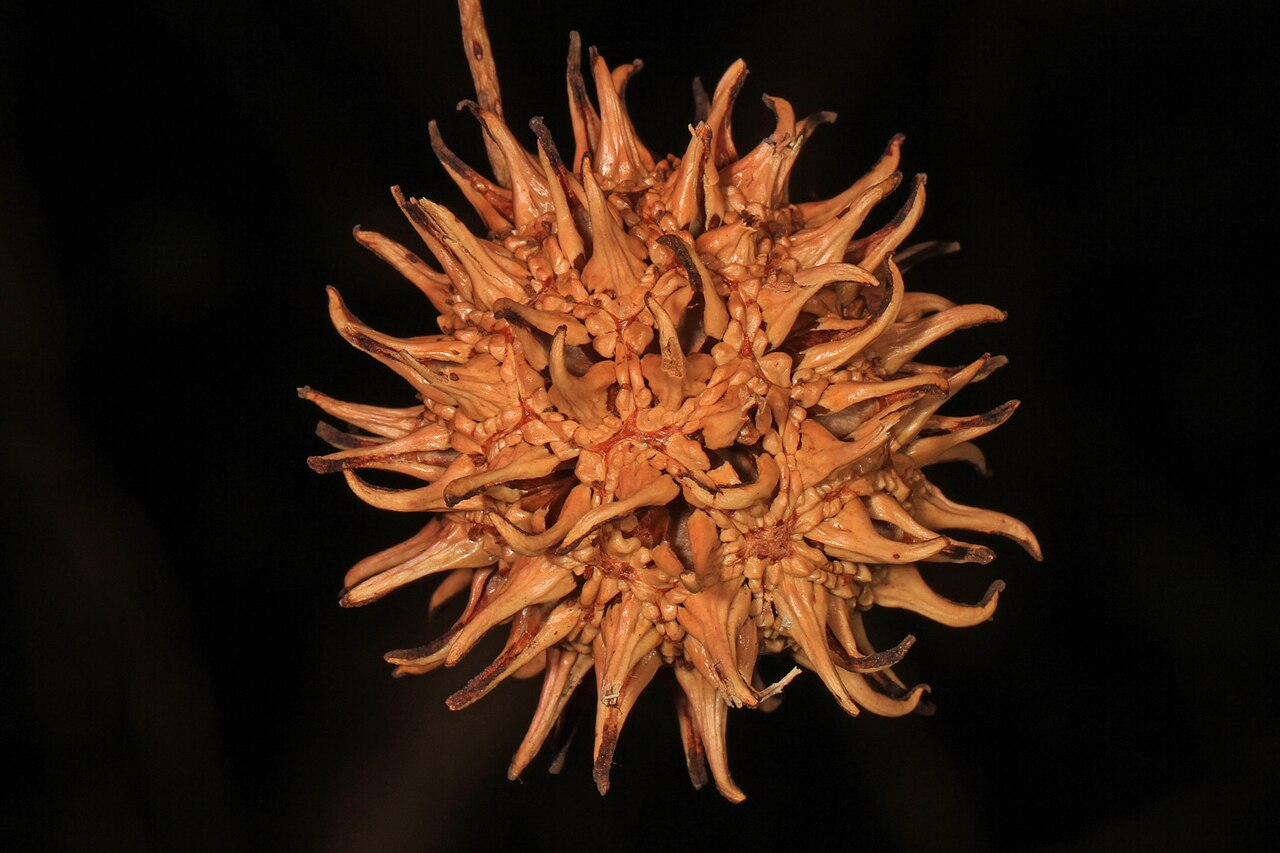
The female flowers become spherical, spiny fruiting heads. NC State says the fruit litters the ground from December to April and is a litter problem in lawn and patio areas.
Oregon State University’s landscape plant guide warns that the fruit may be messy and advises against walking barefoot under the tree. Gumballs on a patio, deck, path or play area are uncomfortable underfoot and need regular sweeping.
Roots
NC State describes a shallow root system. Oregon State says surface roots lift sidewalks, and NC State’s page for the ‘Rotundiloba’ cultivar advises against placing sweetgum near driveways or sidewalks because of its aggressive roots.
Surface roots also make mowing harder over time. That is one more reason to put a mulched bed, not lawn, under the canopy.
Size
With a mature spread of 40 to 50 feet, per NC State, the canopy reaches 20 to 25 feet from the trunk in every direction. Many suburban lots simply do not have that room away from the house and paving.
Assess Your Yard
Measure the open space before you fall for the fall color. You need a spot where a circle about 50 feet across, the mature canopy, can sit without covering the house, driveway, patio, pool or septic field.
Look up for overhead lines. A tree that can reach 60 to 100 feet tall should never be planted under or near them.
Have underground utilities marked before digging; in the United States, call 811. Roots that NC State and Oregon State describe as shallow and capable of lifting paving should be kept away from buried lines and foundations.
Check soil pH if you are unsure. NC State notes that iron chlorosis can occur in alkaline soils, and Oregon State says sweetgum grows best in deep, moist, slightly acid soil.
Where to Put a Sweetgum
Back of a large lot. The best place is at the far side of an open lawn, where gumballs fall into a mulched bed or naturalized area rather than onto paving.
Along a property edge. A sweetgum on the boundary with woods or a meadow lets fruit drop into an area you never walk barefoot or mow.
As part of a grove. On acreage, sweetgum works with other large natives. NC State lists red maple, white oak and water oak as trees that fill a similar niche.
Not here: next to the house, beside the driveway or a sidewalk, over a patio or pool, or in a small front yard.
Setback Quick Reference
| Mature spread | 40–50 ft (NC State): canopy edge about 20–25 ft from the trunk |
| House and roof | Keep the mature canopy clear of the house; plan at least 25 ft from the trunk |
| Driveways, sidewalks, patios | Avoid nearby planting; roots lift paving (Oregon State, NC State) |
| Overhead lines | Never under or near them; trees reach 60–100 ft (NC State) |
| Lawn under the canopy | Replace with a mulched bed so gumballs and surface roots stay out of the mowing zone |
Distances are our arithmetic from published mature sizes, not engineering standards. For a large tree near structures, consult a certified arborist.
Managing Gumballs
Plan the ground under the canopy so the fruit lands somewhere harmless. A wide bed of mulch and shade-tolerant groundcovers hides gumballs and needs no mowing.
Where gumballs do land on lawn or paving, rake or sweep through winter and early spring. Clear them before you mow.
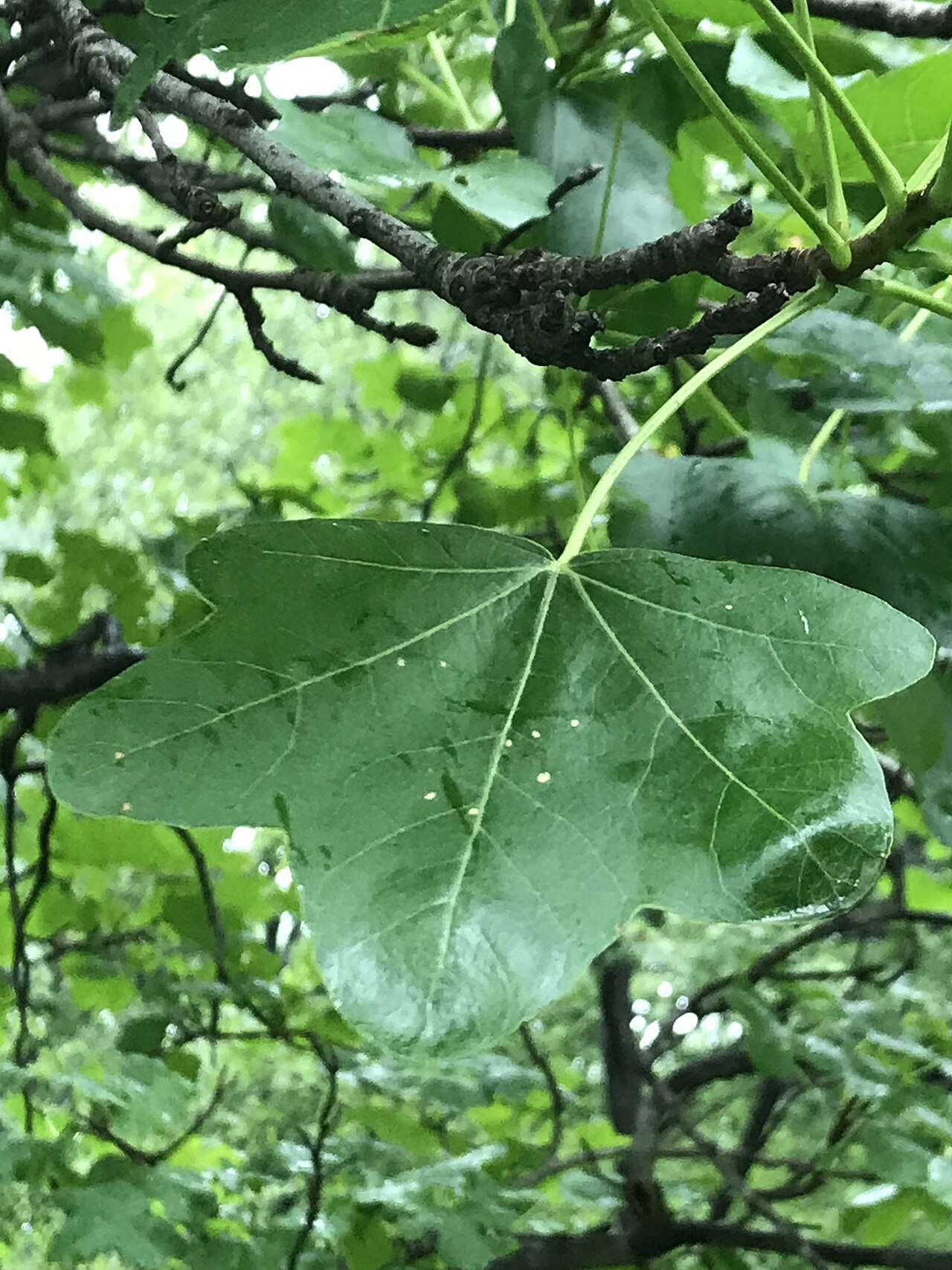
If no-fruit is the priority, choose a fruitless cultivar instead of fighting the species. NC State describes ‘Rotundiloba’ as lacking the spiny gumballs, with rounded leaf lobes and good fall color. NC State still lists it at 60 to 75 feet tall and warns about its roots, so placement rules still apply.
Planting Under and Around Sweetgum
The Lady Bird Johnson Wildflower Center lists sweetgum’s habitat as low, rich, moist woods and coastal plains. Shade-tolerant natives from similar habitats suit the bed under its canopy.
Plant companions as small plants so you dig only small holes among the shallow roots, and keep them toward the outer canopy rather than against the trunk.
Plant Palette
| Plant | Role | Height | Sun / moisture | Native range |
|---|---|---|---|---|
| Sweetgum (Liquidambar styraciflua) | Large shade tree | 60–100 ft | Full sun to part shade; moist, slightly acid | S. CT to s. IN, s. IL and se. MO, south to s. FL, se. TX and se. OK |
| Virginia sweetspire (Itea virginica) | Shrub layer at the bed edge | Usually 3–6 ft | Part shade; moist | S. NJ to KY, s. IL, MO and OK, south to FL and TX |
| Christmas fern (Polystichum acrostichoides) | Evergreen cover that hides gumballs | 1.5–2 ft | Part shade to shade; moist | N.S. to se. MN, south to c. FL and e. TX |
| Wild geranium (Geranium maculatum) | Spring flowers under the canopy | Up to about 3 ft | Part shade to shade; moist | ME to GA, west to Man., se. SD, e. KS and AR |
| Black gum (Nyssa sylvatica) | Alternative tree with fall color and no gumballs | 40–70 ft | Sun to shade; moist | S. ME to MI, IL and se. MO, south to FL Panhandle and e. TX |
Heights for sweetgum and black gum from NC State; others and all ranges from the Lady Bird Johnson Wildflower Center.
Installation Steps
Step 1: Confirm space and utilities. Stake the trunk location and measure 25 feet out in all directions. Call 811 before digging.
Step 2: Choose the tree. Decide between the species and a fruitless cultivar such as ‘Rotundiloba’. NC State lists dwarf selections such as ‘Gumball’ and ‘Oconee’ at about 15 feet for smaller spaces.
Step 3: Plant in spring. NC State recommends spring planting because roots take three to four months to recover from transplanting.
Step 4: Mulch the future canopy zone. Start with a mulch ring a few feet wide and widen it as the tree grows.
Step 5: Water through establishment. Oregon State notes that the root system may take several years to establish, with limited shoot growth in that time. Water during dry spells for the first few years.
The First Three Years
- Year 1: water deeply in dry weather. Expect little top growth while roots establish.
- Year 2: widen the mulch bed and add the fern, geranium and sweetspire at its outer edge.
- Year 3: keep watering in drought. If leaves look pale or yellow, test soil pH; NC State notes iron chlorosis in alkaline soils.
- Every winter once fruiting starts: sweep gumballs off paths and lawn before mowing.
Mistakes to Avoid
Planting near paving. NC State and Oregon State both warn about roots and sidewalks.
Planting where fruit lands on patios or play areas. NC State calls the fruit a litter problem in lawns and patios.
Underestimating size. A 60- to 100-foot tree does not belong under wires or near a roof.
Planting in alkaline soil. Iron chlorosis can follow, per NC State.
Cutting roots to repair paving without advice. If a mature sweetgum is already lifting paving, talk to a certified arborist before cutting roots.
Regional Fit and Alternatives
The Lady Bird Johnson Wildflower Center gives the native range as southern Connecticut to southern Indiana, southern Illinois and southeast Missouri, south to Florida, southeast Texas and southeast Oklahoma, plus Mexico and Central America. North and west of that, choose a locally native shade tree.
If you love sweetgum’s fall color but lack the space, black gum is narrower at 20 to 35 feet wide, per NC State. For a small tree near a seating area, see our plan for a fringetree near a patio.
📋 Sweetgum appears on our regional native plant lists for New York, Pennsylvania and northern New Jersey, Delaware, southern New Jersey and Long Island, Maryland, Virginia and West Virginia, Georgia, Alabama and Mississippi, Arkansas, Louisiana, eastern Oklahoma and eastern Texas and Ohio and Indiana.
Frequently Asked Questions
How far from a house should I plant a sweetgum?
Far enough that the 40- to 50-foot mature canopy stays clear of the house. That means at least 25 feet from the trunk. More is better.
When do sweetgum balls fall?
NC State says the fruit litters the ground from December to April.
Is there a sweetgum without gumballs?
Yes. NC State describes ‘Rotundiloba’ as lacking gumballs. It still grows 60 to 75 feet tall and has aggressive roots.
Do sweetgum roots damage sidewalks?
They can. Oregon State says surface roots lift sidewalks, and NC State advises against planting near driveways or sidewalks.
Do birds eat sweetgum seeds?
Yes. Wikipedia lists goldfinches, purple finches, squirrels and chipmunks among seed eaters.
Sources
- NC State Extension Gardener Plant Toolbox, Liquidambar styraciflua: size, shallow roots, spring planting, fruit litter, fall color, wildlife, chlorosis, cultivars; ‘Rotundiloba’: fruitless habit, size, roots; and Nyssa sylvatica: size.
- Oregon State University Landscape Plants, Liquidambar styraciflua: soil, root establishment, surface roots, fruit.
- Lady Bird Johnson Wildflower Center plant pages for sweetgum, Virginia sweetspire, Christmas fern, wild geranium and black gum.
- Wikipedia, Liquidambar styraciflua: lifespan and seed-eating wildlife.

