A Native Planting on a Gentle Slope: Coverage, Access, and Erosion Limits
Last updated: November 6, 2026
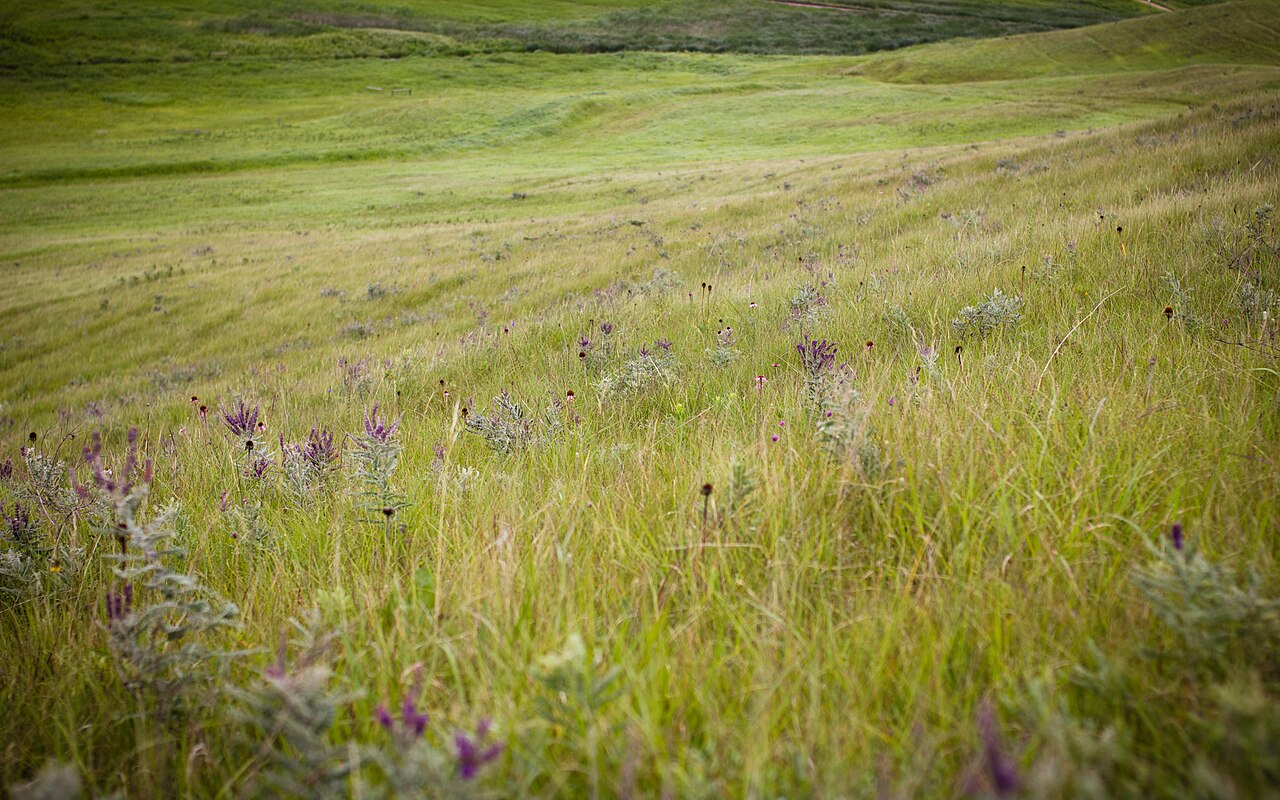
A gentle slope is one of the best places in a yard for a native planting. It is awkward to mow, it drains quickly, and a deep-rooted mix of grasses, wildflowers and low shrubs can hold it better than thin turf.
It is also a place where a garden can quietly fail. Water runs off before it soaks in, mulch slides downhill, and a bed you cannot walk into without slipping turns into a weedy bank by the second summer.
This plan covers the three things that decide whether a slope planting works: how fast you get the soil covered, how you will reach every part of it for upkeep, and where plants stop being enough and the slope needs grading, a wall or professional help.
Plan at a Glance
| Site | A sunny or partly sunny bank or hillside with a gentle to moderate grade |
| Size | Any; the sample plan is a 10 × 20-foot bank |
| Sun | Full sun to part sun; a shady variant is included |
| Soil | Usually well drained and drier at the top, moister at the base |
| Maintenance | Low once covered; regular weeding and checks for gullies in the first two years |
| Best regions | Midwest, Great Plains edge and much of the East for the plants named here; check every plant against your regional list |
Start by Measuring the Slope
Iowa State University Extension measures slope as rise over run: how many feet the ground climbs over a set horizontal distance. A rise of 1 foot over 12 feet is a 1:12 slope, or about 8 percent.
Slopes under about 5 percent (1:20) generally need no special planting approach. From roughly 8 to 16 percent, they become hard to walk, garden and water on.
At 20 percent (1:5) or more, Iowa State calls them steep.
Around 30 percent (1:3), slopes are too steep to mow, so turf is a poor fit. Iowa State notes that 50 percent (1:2) is often considered the steepest slope that can support plant growth.
To measure your own, run a string from a stake at the top of the slope to a stake further down, level it with a line level, then measure the drop at the lower stake. Divide the drop by the string length and multiply by 100.
Know the Erosion Limits Before You Plant
Plants cover and bind soil, but they do not fix every slope problem. Henderson County Extension in North Carolina advises that a slope should not exceed 45 degrees. Steeper banks may need regrading or a retaining wall.
Treat these as signs that you need more than a planting plan:
- Active slumping, cracks or bulges in the soil surface, which can signal movement below the root zone.
- Deep gullies that reappear after every heavy rain.
- A slope that drops toward a foundation, driveway or wall, where failure would damage a structure.
- Large volumes of water arriving from a roof, road or neighbor’s yard.
For any of these, talk to your local extension office, a landscape professional or a civil engineer before planting. Retaining walls and grading can require permits, and a failed wall is far worse than a bare bank.
For a broader overview of how roots and ground covers stabilize banks, see our guide to slope erosion control with natives.
Site Assessment
Read the moisture gradient
Iowa State points out that slopes are usually drier, because water runs downhill before it can soak in, and that the base is often wetter than the top. Walk the slope after a rain and note where water collects or flows.
Find where the water comes from
Look uphill. Driveways, downspouts and paved areas above a slope push extra water down it. Iowa State recommends redirecting that water with small trenches, drain tile or surface drains at the top so less of it runs across the planting.
If a downspout empties onto the bank, our plan for native plants at a downspout shows how to slow and spread that water.
Note sun, wind and existing plants
Record hours of sun and wind exposure, and what already grows there. Iowa State notes that annual plants do little to reduce erosion in winter and early spring.
Design for Coverage
The fastest way to protect a slope is to cover the soil from more than one height. Iowa State notes that foliage at different heights scatters heavy raindrops, and that layers of shrubs with perennials and ground covers beneath them work better than ground cover alone.
Mix root types
Iowa State also recommends a diverse mix, because varied root systems, from fibrous to deep, hold soil more effectively. Combine bunchgrasses, spreading ground covers and a few low shrubs.
Stagger, don’t row
Plants set in straight rows running downhill create channels for water. Iowa State recommends staggering plants and, if rows are unavoidable, running them across the slope along the contour.
Plant closer than on flat ground
Gaps between plants are where soil washes. A common approach is to set plugs closer than you would in a level bed so foliage closes over sooner. The quantity box below shows how spacing changes the plant count.
Plan Access From Day One
Iowa State is blunt about upkeep on slopes: navigating them is difficult, so plant only low-maintenance species and avoid anything that needs frequent deadheading, dividing or pruning.
You will still weed, water and check for gullies for at least two seasons, so build access into the layout:
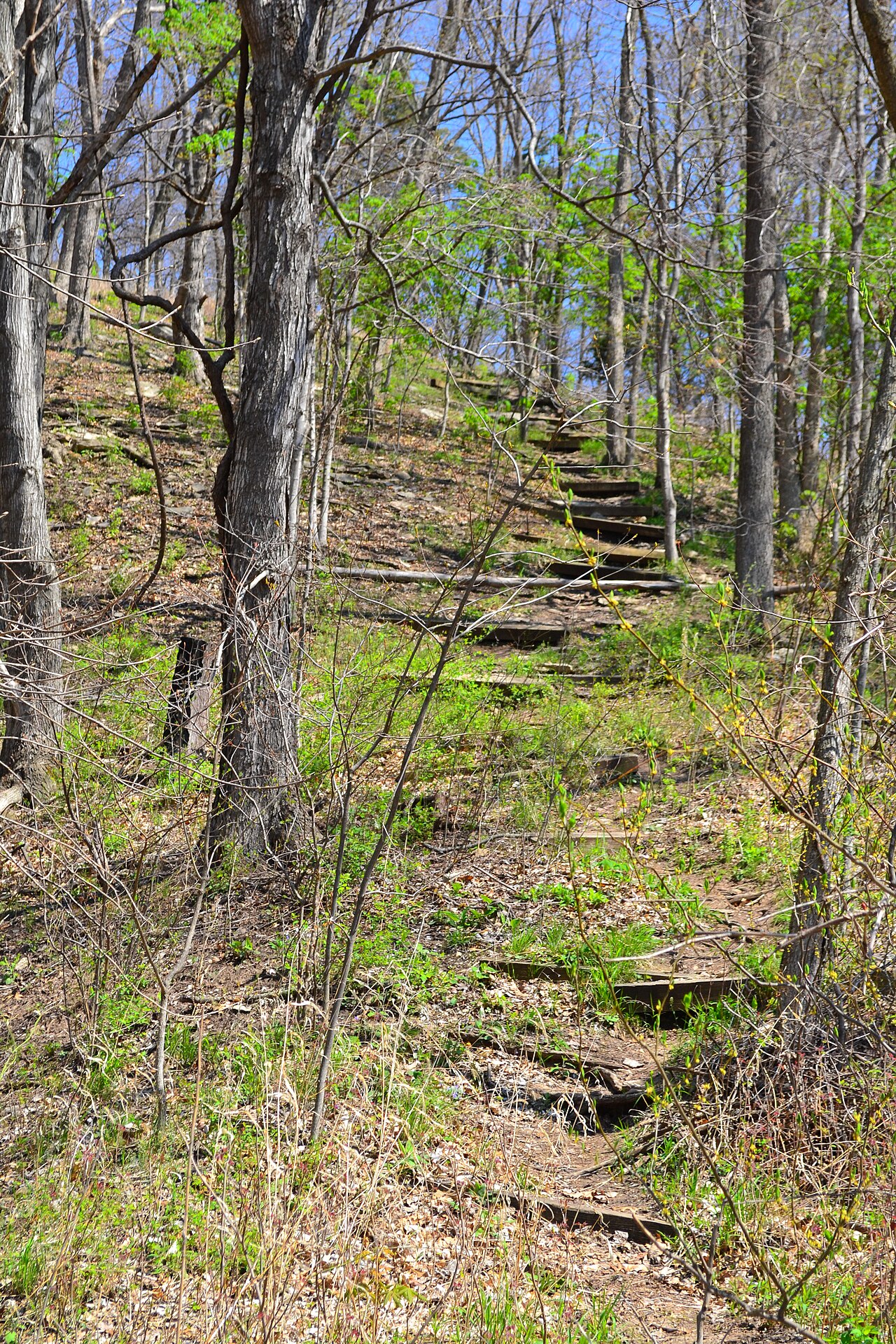
- A contour path. Iowa State notes that terracing can be as simple as a path carved into the slope to slow water. A narrow path across the bank doubles as a work route.
- Stepping stones or timber risers on the steeper sections, set firmly into the soil.
- Reach zones. Keep any planting strip narrow enough to reach into from a path or the lawn edge without stepping on wet soil.
- A clear top and bottom edge, so you can mow or trim a strip along the bed without walking into it.
Plant Palette
Several of these plants also appear on Iowa State’s hillside list. Ranges are broad but not universal, so check each against your state.
Sample Plant Palette for a Sunny Slope
Heights and conditions are from the Lady Bird Johnson Wildflower Center plant database.
| Plant | Role | Height | Sun / moisture | Native range (LBJ) |
|---|---|---|---|---|
| Little bluestem | Matrix bunchgrass, upper and mid slope | Mounds 18–24 in | Sun–part shade / dry, well drained | Quebec to Alberta, south through much of the U.S. east of the Rockies |
| Sideoats grama | Clumping grass, dry upper slope | 2–3 ft | Sun–part shade / dry–moist | South-central Canada and much of the U.S. |
| Prairie dropseed | Fine-textured edging grass | Seedheads to 3 ft | Sun / dry | Quebec to Saskatchewan, locally south to NC, KY, east TX and CO |
| Aromatic aster | Spreading fall bloomer, front edge | Usually under 20 in | Sun–part shade / dry–moist | PA to NC, west to northeast WY and TX |
| Butterfly weed | Summer color, dry pockets | 1.5–2 ft | Sun / dry–moist, well drained | New England to FL, west to TX, north to MN |
| New Jersey tea | Low shrub with deep roots | Often about 3 ft | Sun–part shade / dry–moist | Quebec to FL, west to MN, eastern NE, eastern KS and TX |
| Fragrant sumac | Colonizing shrub for large banks | 6–12 ft, spreading | Sun–shade / dry–moist | Western Quebec to GA and KS, west to CA |
| Switchgrass | Tall grass for the moister base | 3–10 ft | Sun–part shade / dry–moist | Quebec to Saskatchewan and MT, south to FL and most of the U.S. |
| Pennsylvania sedge | Ground cover for a shaded section | 6–12 in | Sun–shade / dry | Southern Quebec to ND and MT, south to GA and AR |
How each plant earns its place
Little bluestem is the backbone. The Wildflower Center lists it for well-drained soils from sand to clay and says it is wonderful planted en masse.
Sideoats grama often grows with little bluestem but does not compete well with very tall grasses, the Wildflower Center notes. Keep it on the upper slope, away from switchgrass.
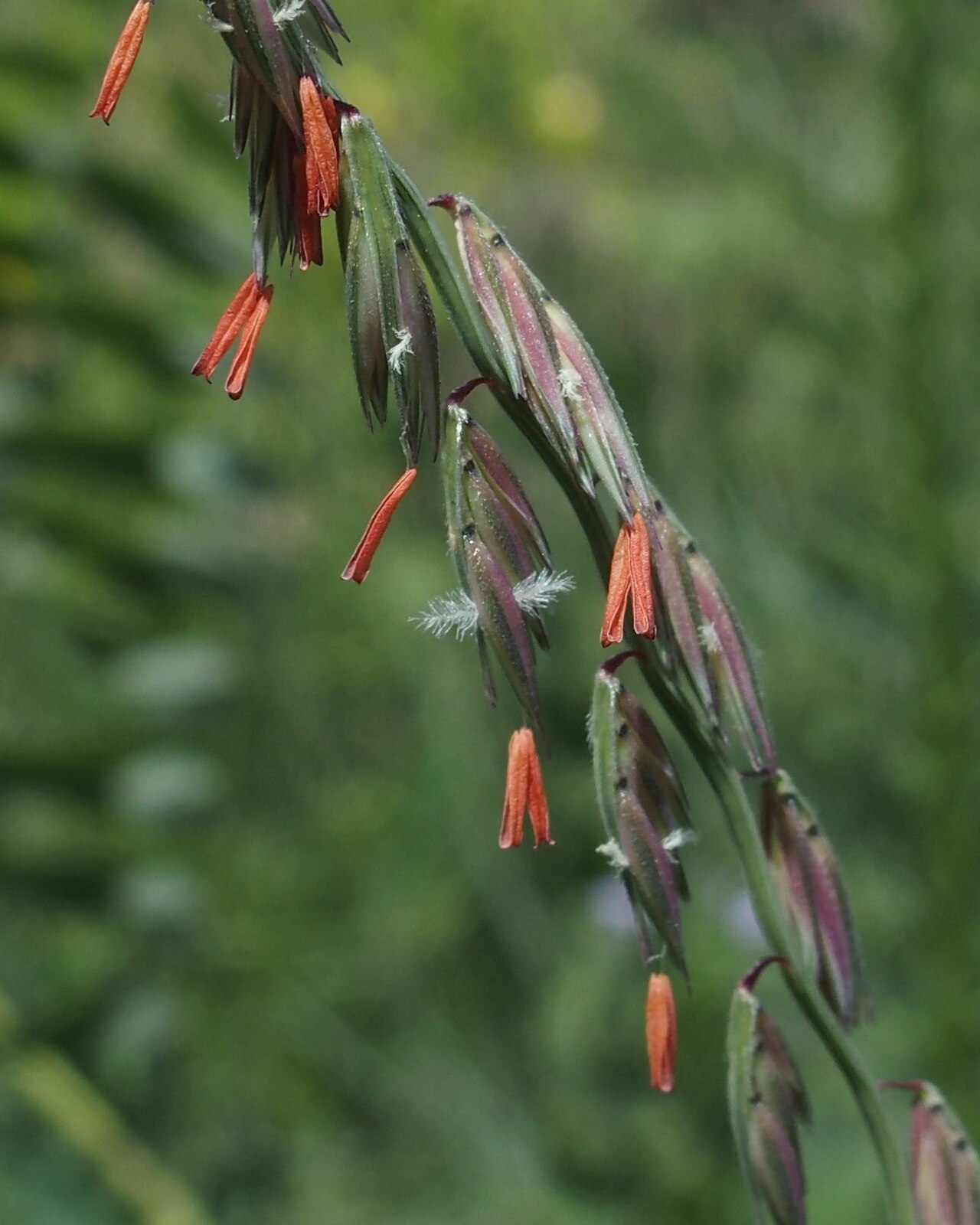
Prairie dropseed is slow to establish, according to the Wildflower Center, so do not count on it for first-year cover.
Aromatic aster slowly colonizes by stolons, which helps it knit the front edge, though the Wildflower Center advises thinning it regularly.
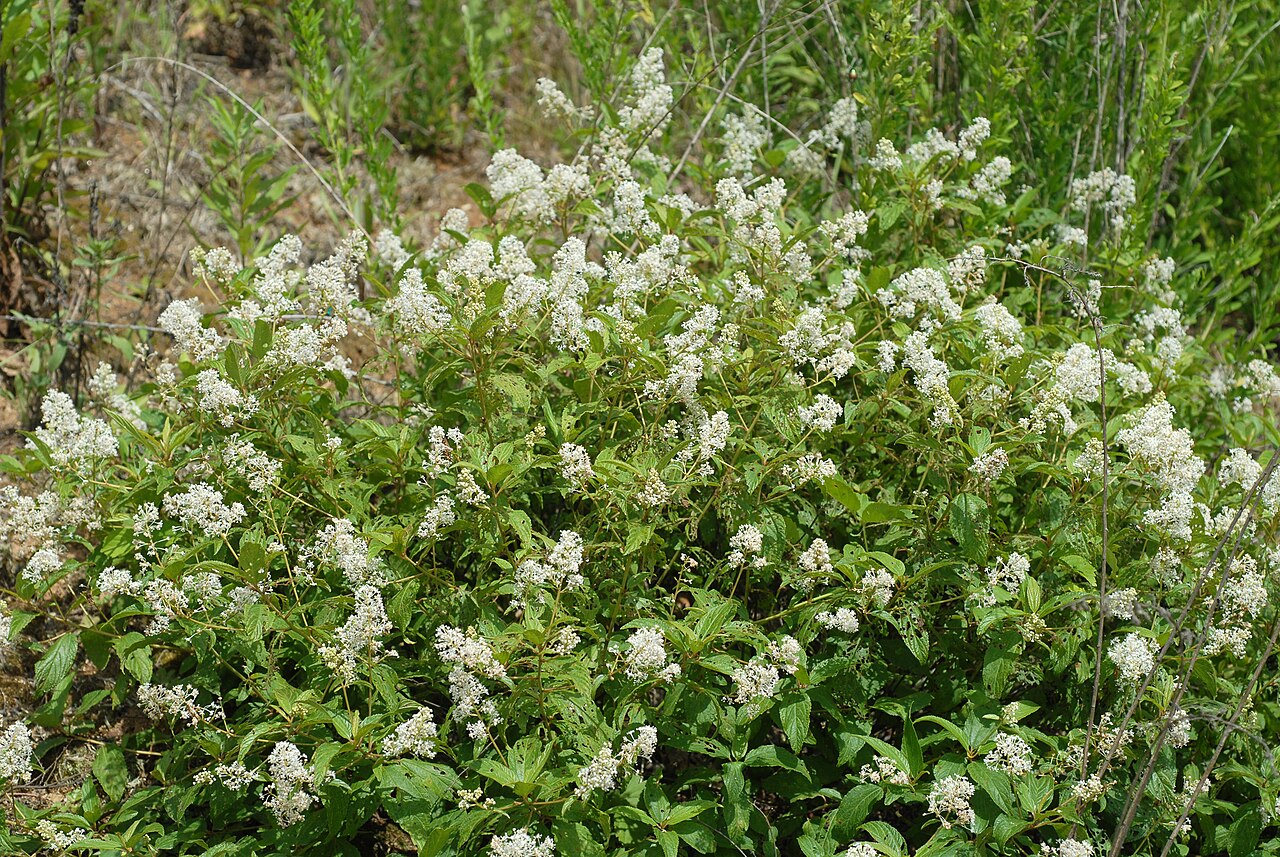
New Jersey tea is the standout shrub for a sunny bank. The Wildflower Center calls it extremely adaptable, able to withstand inhospitable conditions because of its massive, deep roots, and lists rocky hillsides among its uses.
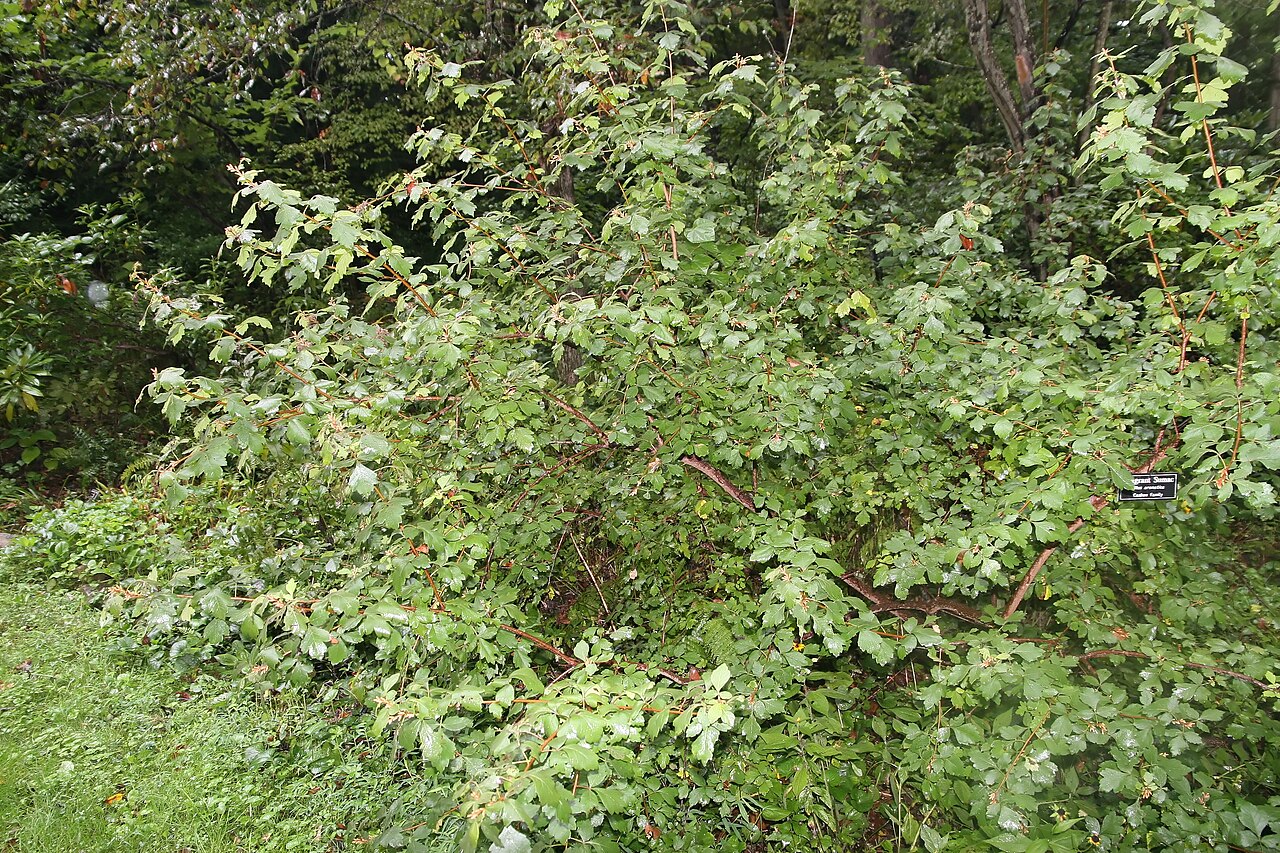
Fragrant sumac colonizes to form thickets and is drought tolerant, according to the Wildflower Center. Use it on larger banks, not small beds beside a lawn.
Switchgrass belongs at the moister base. The Wildflower Center describes it as a rhizomatous, loose sod former up to 10 feet tall, so give it room.
A shady slope variant
If part of the slope sits under trees, switch to shade-tolerant plants. The Wildflower Center describes Pennsylvania sedge as a fine ground cover that spreads by rhizomes in dry woods, and Iowa State lists it among sedges for hillsides. For more shade options, see our guide to a dry-shade native border under trees.
Quantity Check for a 10 × 20-Foot Bank
The bank is 200 square feet. Plant counts depend on the spacing you choose:
- At 12 inches apart: about 200 plants
- At 18 inches apart: about 90 plants
- At 24 inches apart: about 50 plants
Mix spacings within the bed. Use wider spacing for New Jersey tea and other shrubs, and tighter spacing for plugs of grasses, sedges and ground covers.
Installation Steps
Step 1: Redirect water at the top
Fix the water source before you plant. Iowa State recommends trenches, tile or surface drains along the top of the slope to keep extra water off the hillside.
Step 2: Leave existing roots in place
Iowa State recommends killing turf in place rather than stripping it, using a non-selective herbicide with a short residual, so the dead roots keep holding soil and the plants go in through the dead layer. If you use an herbicide, follow its label exactly. If you would rather not, ask your local extension office about other ways to remove turf without baring the soil.
Step 3: Plant on small level pockets
Iowa State advises setting each root ball level with the uphill side of the slope and mounding soil on the downhill side. A stone, brick, strip of cardboard or half a pot on the lower side holds that soil in place.
For larger plants, carve a small planting terrace two to three times wider than the root ball. Never bury the crown of a perennial or the base of a shrub.
Step 4: Protect the soil while roots grow
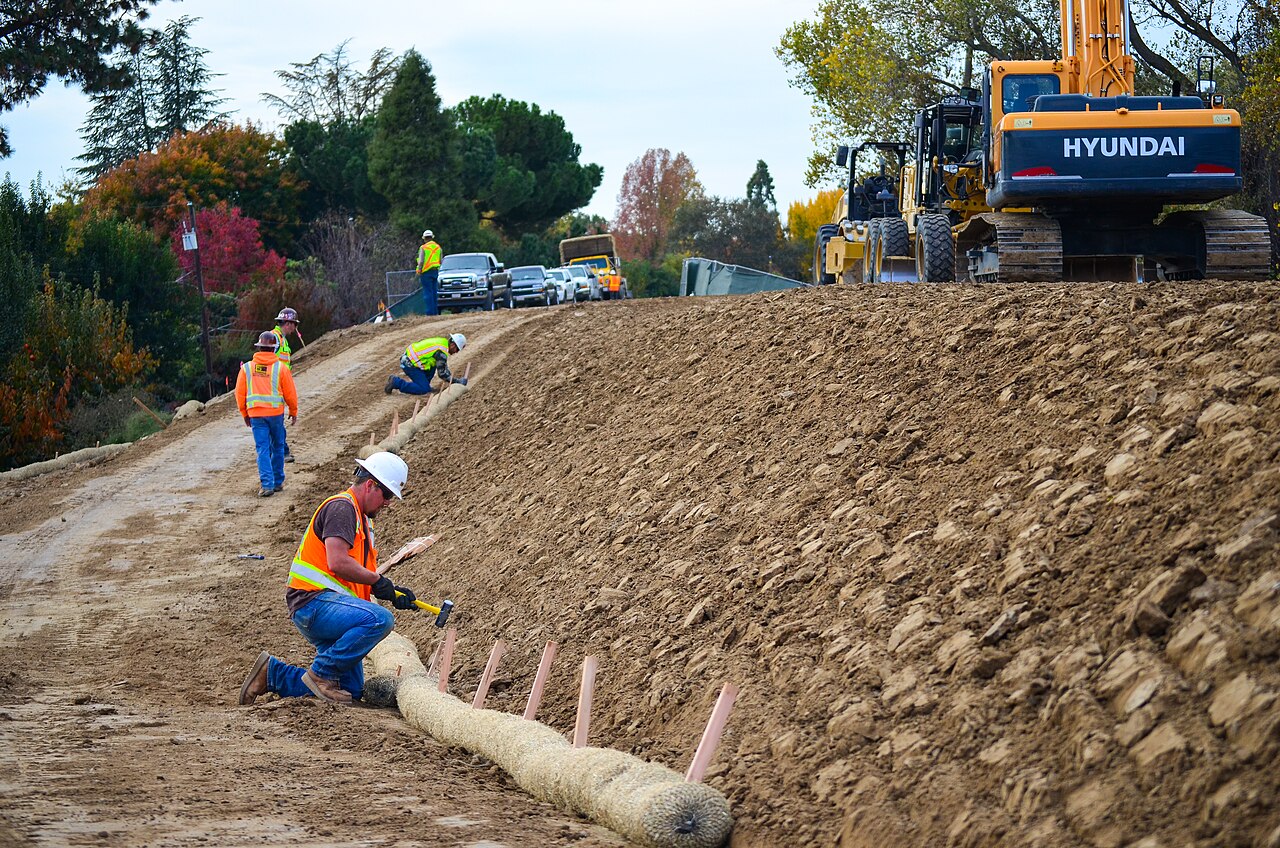
Iowa State notes that the establishment period is when erosion risk is highest. Options include:
- Mulch that stays put. Coarse, angular mulches such as shredded bark or leaf mold are less likely to wash downhill than bark chips or river rock.
- Wattles. Straw tubes laid across the slope slow and redirect water, especially at any change in grade.
- Erosion blankets. Jute, burlap or coir blankets pinned tightly to the soil hold seed and soil in place. Henderson County Extension recommends natural jute fabric staked down, with shredded mulch over it.
- A temporary cover crop. Iowa State suggests a fast-germinating annual such as annual ryegrass sown at planting time to hold soil while perennials establish.
Step 5: Water in cycles
Water runs off a slope before it soaks in. Iowa State recommends drip lines or soaker hoses. Without them, water each plant until runoff starts, move on, then return and repeat until the root zone is wet.
First-Three-Years Maintenance Calendar
Year 1
- Spring and summer: water in cycles whenever the top few inches dry out, and pull weeds every two to three weeks while they are small.
- After heavy storms: look for runnels or exposed roots, and add mulch or a stone check where water starts to cut a channel.
- Fall: leave stems and grasses standing so the soil stays covered through winter.
Year 2
- Late winter: cut back last year’s growth, leaving cuttings as mulch where they stay put.
- Summer: water only in long dry spells, and plug any bare gaps.
Year 3
- Spring: thin aromatic aster or fragrant sumac where they crowd paths.
- Summer and fall: the planting should manage on normal rainfall. Rethink drainage on any section still eroding.
Mistakes to Avoid
- Planting before fixing the water. If water still pours over the top, it will cut through a new planting.
- Straight rows down the hill. Stagger plants or run rows across the slope.
- No way in. Without a path you will skip weeding, and weeds will take over.
- Invasive ground covers. Henderson County Extension warns against English ivy, vinca and Asiatic jasmine. Most people who plant them regret it.
- Expecting plants to hold a failing bank. Slumping soil, deep gullies or a slope above a structure need professional assessment.
📋 Find plants for your region: the plants above suit much of the Midwest and East. Compare them with our native plant lists for Illinois, Iowa & Missouri and Michigan, Wisconsin & Eastern Minnesota, or your own state’s list. In the Southeast and West, swap in species from your regional list that match the same roles.
Frequently Asked Questions
How steep is too steep for a native planting?
Iowa State Extension calls 20 percent (1:5) or more steep and notes 50 percent (1:2) is often the steepest slope that supports plants. Steeper banks may need regrading or a wall.
Should I seed or plant plugs on a slope?
Iowa State notes that seed is cheaper for large areas but needs a prepared seedbed and erosion protection. Transplants cost more but establish faster, cover ground sooner and disturb less soil.
What mulch works best on a slope?
Iowa State recommends coarse, angular mulches such as shredded bark, leaf mold or grass clippings, which are less likely to wash downhill than bark chips or river rock.
Can I just let the grass grow tall on the slope?
Henderson County Extension mentions no-mow grass as one option. A mix of native grasses, wildflowers and shrubs adds more layers of cover and more varied roots.
How do I water new plants on a slope without washing soil away?
Use drip lines or soaker hoses. Otherwise water until runoff begins, move on, then come back and repeat, as Iowa State recommends.
Sources
- Iowa State University Extension and Outreach, Gardening on Slopes and Hillsides: slope measurement and thresholds, drainage, erosion control, plant selection, planting technique, watering, maintenance, recommended species.
- N.C. Cooperative Extension, Henderson County Center, Stabilizing Slopes: maximum slope, invasive ground covers to avoid, jute fabric and mulch, native grass options.
- Lady Bird Johnson Wildflower Center plant database: little bluestem, sideoats grama, prairie dropseed, aromatic aster, butterfly weed, New Jersey tea, fragrant sumac, switchgrass, Pennsylvania sedge: height, light, soil, habit and native range.