
Beaked Cornsalad (Valerianella radiata)

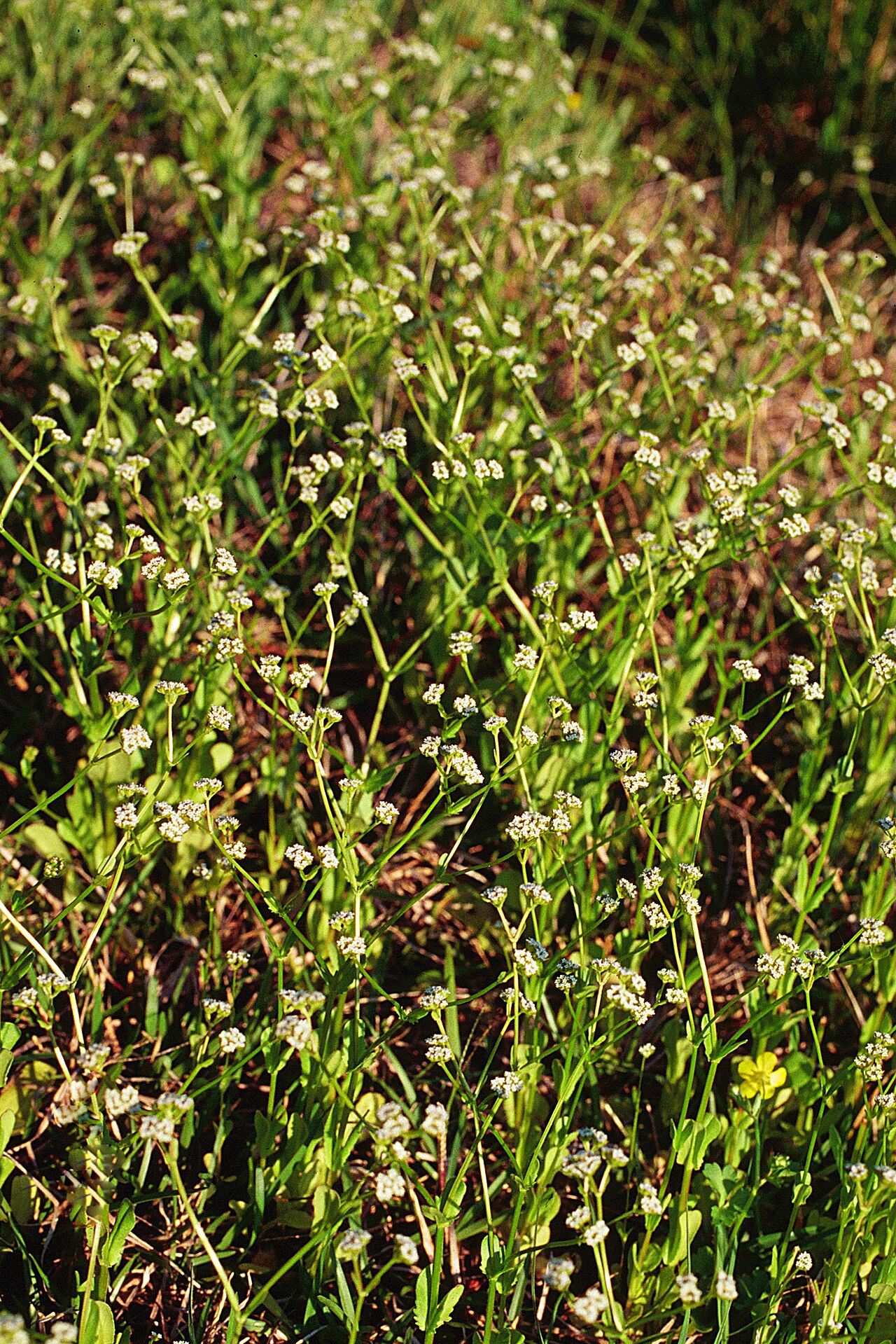
Valerianella radiata, known as Beaked Cornsalad, is a small native winter annual of fields, floodplains, glades and open woods across the eastern and south-central United States. Its seeds sprout in fall, it overwinters as a small rosette of spoon-shaped leaves, and in early to mid spring it sends up repeatedly forked stems 6 to 24 inches tall, each branch ending in a flat cluster of tiny white flowers.
It belongs to the valerian family (now usually included in the honeysuckle family, Caprifoliaceae), and its closest well-known relative is European corn salad (Valerianella locusta), the cultivated salad green sold as mâche or lamb’s lettuce. Beaked cornsalad itself is a wildflower rather than a garden vegetable, but it is a common and attractive part of the spring flora in much of the Southeast.
Because it is an annual that completes its life cycle by early summer, it is easiest to enjoy in meadows, lawns managed for wildflowers and other open spaces where it can reseed. This guide covers identification, range, how to encourage it and its value to early-season insects.
Identification
Beaked cornsalad is recognized by its regularly forked (dichotomous) stems, opposite leaves and small, flat-topped clusters of tiny white flowers in spring. Telling the native cornsalads apart requires a look at the mature fruit.
Leaves & Stems
The overwintering rosette leaves are spoon-shaped, smooth and slightly succulent. Stem leaves are opposite, oblong, stalkless, 1 to 3 inches long and often have a few teeth near the base. The stems are smooth, angled and branch repeatedly in pairs, giving the plant a neat, forking shape.
Flowers
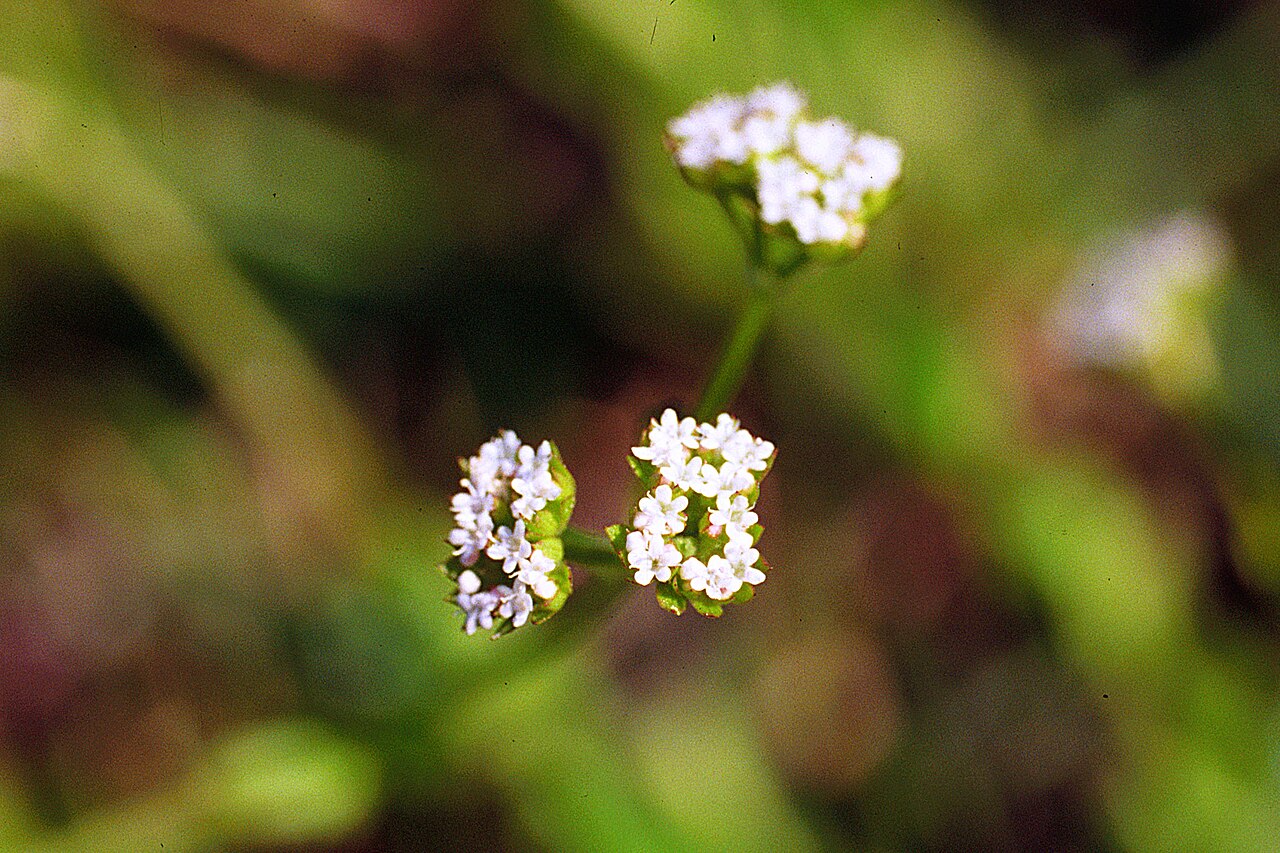
From about March to May each branch ends in a dense, rounded or flat-topped cluster of tiny white flowers, each about ⅛ inch across with a short tube and five spreading lobes. Small leafy bracts sit beneath the clusters.
Fruit & Seeds
The fruits are tiny, dry and three-chambered; only one chamber holds a seed. They are finely hairy or smooth and ripen in late spring, after which the plant withers and dies.
Similar Species
Several native cornsalads occur in the same region, such as Valerianella umbilicata and V. woodsiana, and they are separated mainly by fruit shape and the relative size of the fruit chambers. European corn salad (V. locusta), escaped from gardens in places, has pale bluish flowers. Small white mustards such as bittercress have four-petaled flowers and alternate leaves.
Quick Facts
| Scientific Name | Valerianella radiata |
| Family | Caprifoliaceae (honeysuckle family; formerly Valerianaceae) |
| Plant Type | Winter annual herb |
| Mature Height | 6–24 in |
| Mature Spread | 4–12 in |
| Growth Rate | Fast |
| Sun Exposure | Full sun to part shade |
| Water Needs | Moderate; moist soil in winter and spring |
| Soil Type | Loam, clay or alluvial soils; also thin soils over limestone |
| Soil pH | About 5.5–7.5 |
| Bloom Time | March–May |
| Flower Color | White |
| Fall Color | None; overwinters as a green rosette |
| Fruit | Tiny dry three-chambered fruits |
| Deer Resistant | Unknown; seldom noted as browsed |
| USDA Hardiness Zones | Annual; grows in roughly zones 5–9 |
Native Range
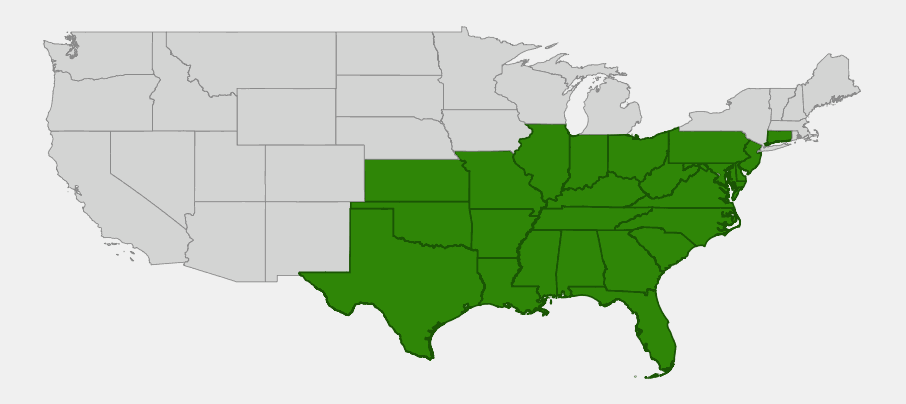
Beaked cornsalad is native to the eastern and south-central United States. USDA PLANTS records it from Connecticut, New Jersey and Pennsylvania south to Florida, and west through the Ohio Valley and the Gulf states to Illinois, Missouri, Kansas, Oklahoma and Texas.
It is most common in the Southeast and the lower Midwest, especially on the coastal plain, the Piedmont and the limestone regions of Kentucky, Tennessee and the Ozarks. In Texas it occurs mainly in the eastern and central part of the state, and in Kansas it is limited to the southeast. Connecticut is near its northeastern limit.
It grows in moist fields and pastures, floodplain meadows and woods, stream terraces, roadsides, lawns and old fields, and on rocky glades and open woods, often where the soil is wet in winter and spring. The National Wetland Plant List rates it facultative to facultative-wetland depending on region, meaning it grows in both wetlands and uplands.
📋 Regional plant lists featuring Beaked Cornsalad: New York, Pennsylvania & Northern New Jersey · Ohio & Indiana · Kentucky & Tennessee · Nebraska, Kansas & Eastern Colorado · Connecticut, Massachusetts & Rhode Island · New Hampshire, Maine & Vermont · Maryland, Virginia & West Virginia · Delaware, Southern New Jersey & Long Island · Illinois, Iowa & Missouri · Alabama, Georgia & Mississippi · North & South Florida · North & South Carolina · Arkansas, Louisiana, Eastern Oklahoma & Eastern Texas
Growing & Care Guide
Beaked cornsalad is not a typical garden perennial, but it is easy to encourage in meadows, wildflower lawns and open, moist spots. As a winter annual it needs bare soil in fall to sprout and must be allowed to set seed each spring.
Light
Full sun to part shade. It grows in open fields and also under deciduous trees that are leafless during its winter and spring growing season.
Soil & Water
It prefers moist loam or clay that stays damp through winter and spring, and it tolerates brief flooding. Summer drought does not matter, because the plant has already died back and survives as seed.
Planting Tips
Scatter seed in late summer or early fall on bare or lightly disturbed soil, and lightly rake it in. Combine it with other spring natives such as spring beauty, bluets and butterweed in a wildflower lawn or meadow.
Pruning & Maintenance
Delay mowing until the seeds have ripened in late spring, usually by late May or June. After that the plants wither on their own. Avoid fall pre-emergent herbicides, which prevent the seed from sprouting.
Propagation
Propagate it only by seed. Collect the small fruits when they turn tan in late spring, store them dry over summer, and sow them in fall. Established patches reseed themselves if left unmowed until seed is set.
Landscape Uses
- Wildflower lawns: a low, early-spring bloomer that tolerates late mowing
- Meadows and pastures: adds a lacy white haze to moist spring meadows
- Pollinator plantings: very early flowers for small bees and flies
- Floodplain restoration: a native annual for moist, open ground
- Nature study: a common native wildflower in its range
Wildlife & Ecological Value
Beaked cornsalad blooms early, when few other flowers are open, and it is part of the first wave of food for spring insects.
For Pollinators
The tiny flowers offer nectar and pollen to small bees, including sweat bees and mining bees, and to flies and other small insects active in early spring.
For Birds
Its small seeds may be eaten by ground-feeding songbirds, and the insects it attracts are food for early-arriving birds.
For Mammals
Rabbits and other small grazers may nibble the tender spring growth.
Ecosystem Role
As a winter annual it uses the cool season when perennial vegetation is dormant, adding cover to bare soil in winter and early food for insects in spring, then dying back before summer competition peaks.
Cultural & Historical Uses
The genus name Valerianella means “little valerian,” for its resemblance to the true valerians. The species name radiata means “radiating” or “rayed.” The common name “cornsalad” was originally given to the European species, which grew as a weed in grain (“corn”) fields and was eaten as a salad.
European corn salad (Valerianella locusta) has been grown as a winter salad green for centuries and is sold today as mâche or lamb’s lettuce. Beaked cornsalad is its native North American cousin. Do not gather or eat wild plants unless you are certain of their identification and know the site has not been sprayed.
Although it is easy to overlook, beaked cornsalad is a reminder that many native wildflowers are winter annuals, timing their lives to the cool, moist part of the year.
Frequently Asked Questions
Is beaked cornsalad native?
Yes. It is native to the eastern and south-central United States. Its relative European corn salad (mâche) is the species grown as a salad green.
When does beaked cornsalad bloom?
In early to mid spring, roughly March to May depending on latitude.
Is beaked cornsalad a weed?
It often appears in lawns, pastures and fields, but it is a native annual that does not persist past late spring and causes little harm. Many people welcome it in wildflower lawns.
How do I grow beaked cornsalad?
Sow seed in late summer or fall on bare, moist soil in sun or part shade, and let the plants set seed in spring before mowing.
How is it different from European corn salad?
European corn salad (Valerianella locusta) has pale bluish flowers and differently shaped fruits, and it is grown as a vegetable. Beaked cornsalad has white flowers and is a native wildflower.

Looking for a nursery that carries Beaked Cornsalad?
Browse our native plant nursery directory: Alabama & Arkansas · Connecticut, Delaware, Florida & Georgia · Illinois, Indiana & Kansas · Kentucky, Louisiana, Maryland, Mississippi & Missouri · New Jersey, North Carolina, Ohio & Oklahoma · Pennsylvania, South Carolina, Tennessee, Texas & Virginia · West Virginia