
Bill Williams Mountain Giant Hyssop (Agastache pallidiflora)
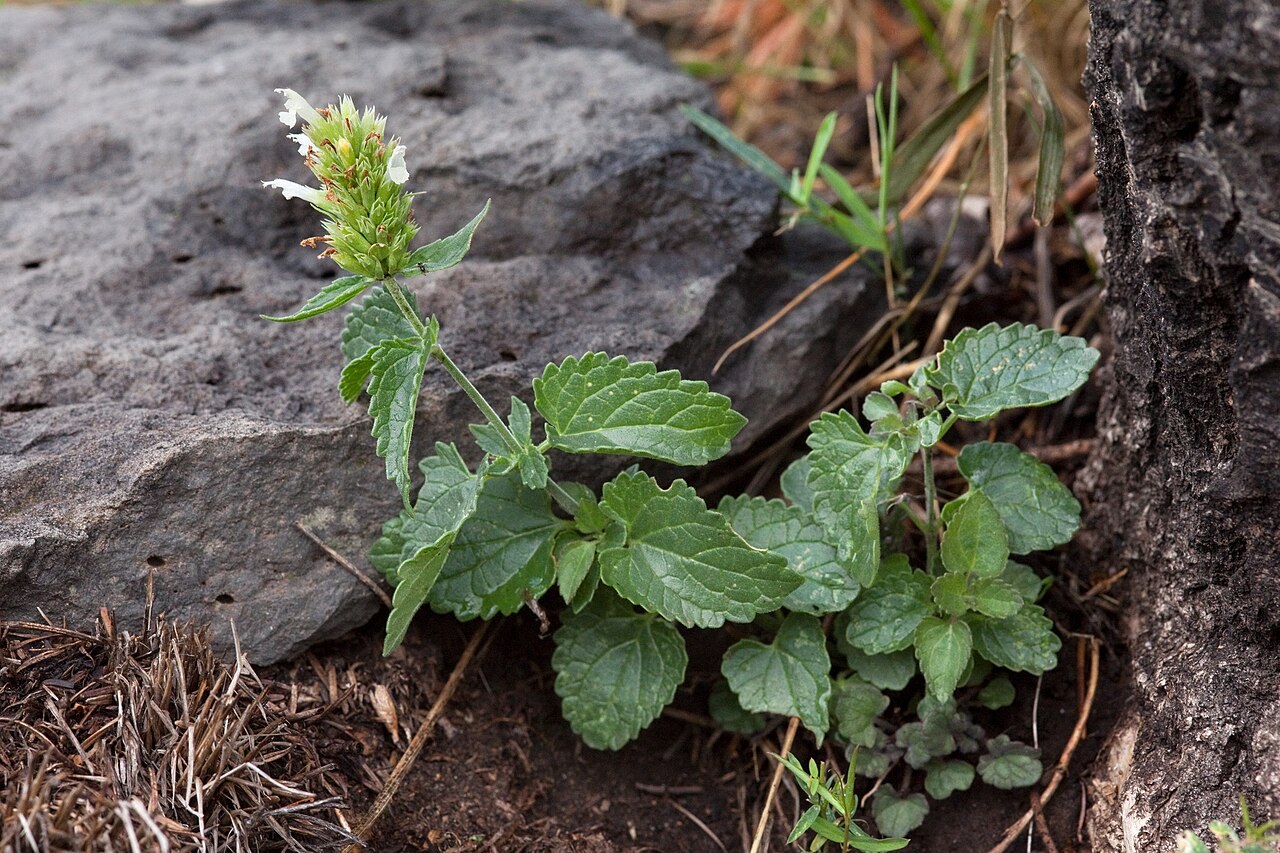
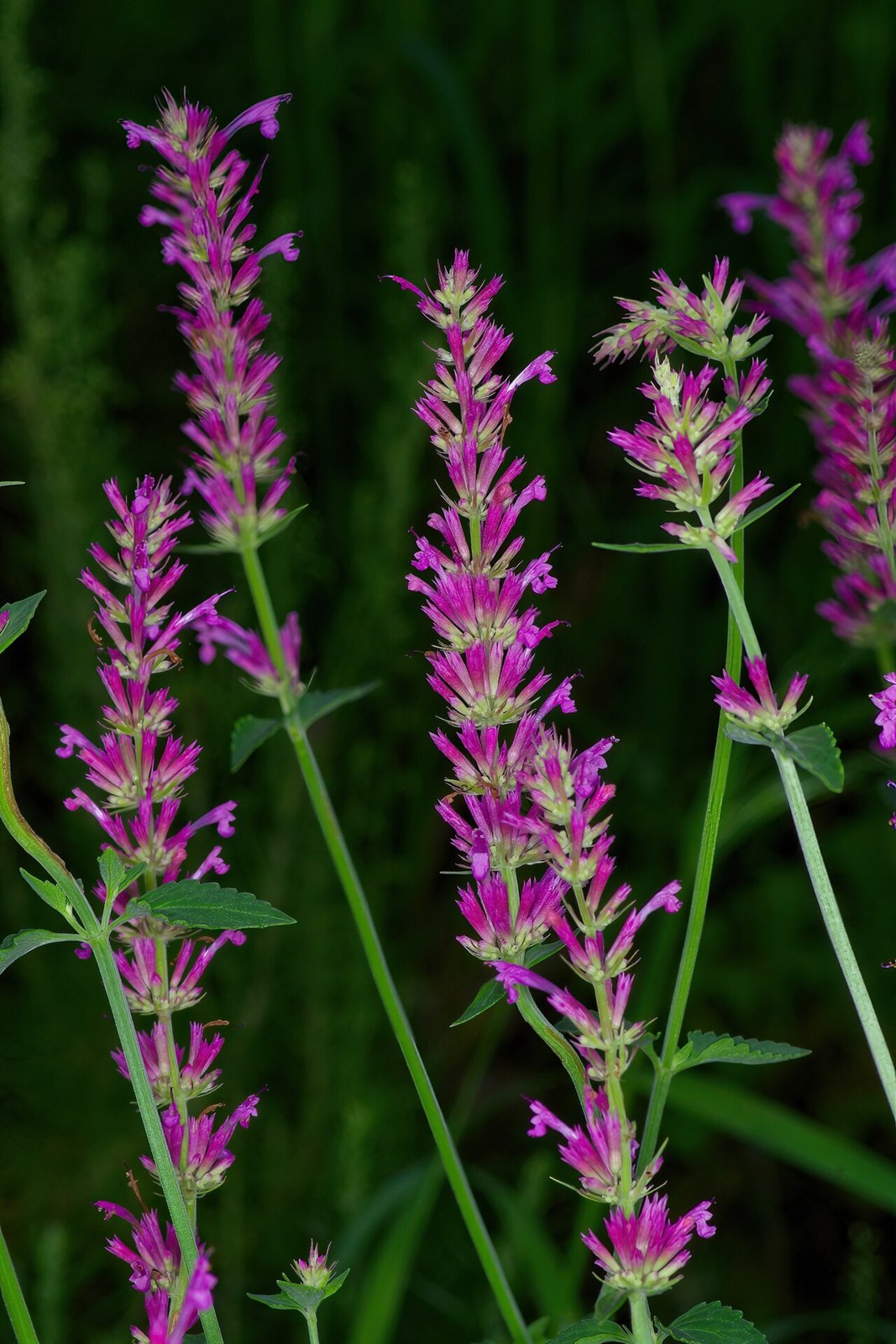
Agastache pallidiflora, the Bill Williams Mountain Giant Hyssop, is an aromatic perennial in the mint family that grows in the mountains of Arizona, New Mexico and far west Texas. It is also called New Mexico giant hyssop. The plant forms a loose clump of square stems, usually 1 to 3 feet tall, topped from midsummer into fall by dense spikes of small tubular flowers. In most of its range the flowers are pale, from creamy white to soft lavender, which is what pallidiflora (“pale-flowered”) means, but some populations carry rose-pink to purple blooms.
The common name points to Bill Williams Mountain near Williams, Arizona, one of the forested peaks where this hyssop grows. Its natural home is not the hot desert but the cooler “sky islands” and high plateaus of the Southwest, mostly between about 7,000 and 10,000 feet, where it grows in moist, rich soil in canyons, along streams, in openings of ponderosa pine and mixed-conifer forest and among rocks on shaded slopes. In the Black Range and Pinos Altos Range of southwestern New Mexico and on peaks such as Escudilla Mountain in eastern Arizona, it is one of the characteristic late-summer wildflowers.
For gardeners, this is a native giant hyssop with real regional roots. Its leaves smell of mint and licorice when brushed, its flower spikes feed bumblebees, other native bees, butterflies and sometimes hummingbirds through the late season, and it is easy to grow from seed. It is a better fit for higher-elevation and cooler gardens in the Southwest than for the low desert, where it needs afternoon shade and regular water to look its best. If you came here from our New Mexico drought-tolerant wildflowers guide, the honest summary is: it handles heat, poor soil and dry spells once established, but it is a plant of mountain canyons and does best with somewhat more moisture than true desert wildflowers.
Identification
Bill Williams Mountain giant hyssop is a clump-forming perennial herb that is often woody at the base, spreading slowly from a short, branched rootstock (caudex) or rhizomes. Like all mints it has square stems and opposite leaves, and the whole plant is fragrant. It is easy to confuse with its close relatives, so check the flower color, the size of the flowers and how far the stamens stick out.
Stems & Habit
The stems are erect or ascending, slender (only a few millimeters thick) and square in cross-section, usually 1 to 3 feet tall (about 30 to 100 cm). They branch above the base and can make a bushy clump in good conditions. A single plant usually sends up several flowering stems from the woody base each year.
Leaves
The leaves are triangular to ovate, about 0.5 to 2.75 inches long (1 to 7 cm), with a blunt, squared-off or slightly heart-shaped base and rounded teeth along the edge. They are a dull, dusty green on both surfaces, with veins that stand out on the underside, and they are held in opposite pairs that are not crowded on the stem. Crushed leaves release the minty, anise-like scent typical of the genus.
Flowers
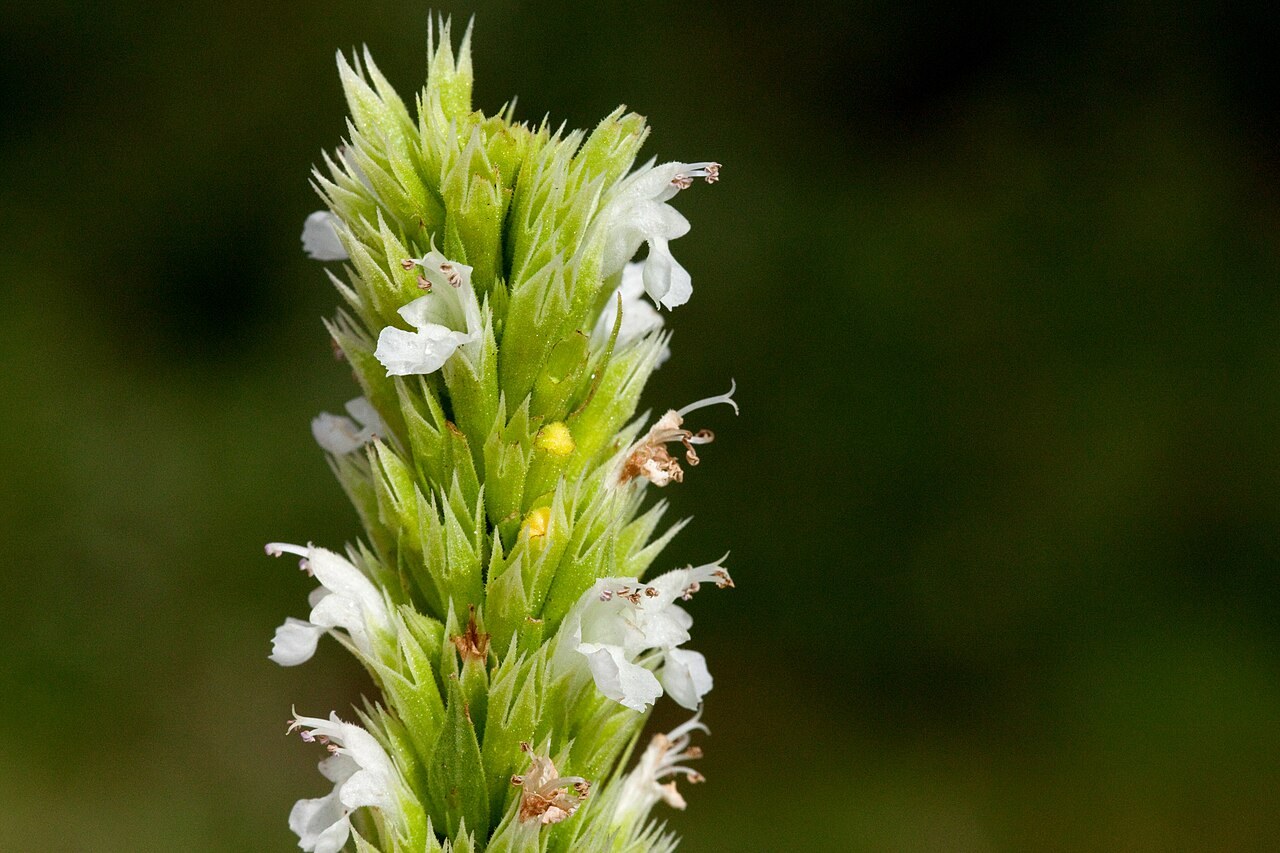
Flowers appear from about July into October in dense spikes at the tops of the stems. Each spike is made of 4 to 15 stacked whorls (verticils) of flowers, usually packed so tightly that the spike looks continuous. The individual flowers are small, tubular and two-lipped, roughly 3/8 to 3/4 inch long (9 to 18 mm), and range from white and creamy green through pale blue-lavender to pinkish purple. The calyx (the cup around the flower) is green to pink or rosy lavender. The upper stamens and the style usually stick out past the corolla, which gives the spike a slightly bristly look.
Fruit & Seeds
Each flower produces up to four tiny nutlets, about 1/16 inch long (1.5 to 2 mm), ovoid, with a few hairs at the tip. They ripen inside the persistent calyces in fall, and the dry spikes stand through early winter.
Similar Species
Short-flowered giant hyssop (Agastache breviflora) grows in the same mountains and looks similar, but its flowers are smaller and its stamens do not stick out; Bill Williams Mountain giant hyssop is the showier of the two. Nettle-leaf giant hyssop (A. urticifolia) is a larger plant, often 3 to 5 feet, with bigger leaves and a more northern and western range. The hummingbird mints sold for desert gardens, such as Texas hummingbird mint (A. cana), have longer, bright pink to red-orange tubular flowers.
Quick Facts
| Scientific Name | Agastache pallidiflora |
| Family | Lamiaceae (Mint) |
| Plant Type | Herbaceous perennial, woody at the base |
| Mature Height | 1–3 ft |
| Mature Spread | 1–2 ft |
| Growth Rate | Moderate |
| Sun Exposure | Full Sun to Part Shade (afternoon shade at low elevations) |
| Water Needs | Average; moderate drought tolerance once established |
| Soil Type | Rich to rocky, well-drained loam or gravelly soil |
| Soil pH | Slightly acidic to slightly alkaline |
| Bloom Time | July – October |
| Flower Color | White, cream, pale lavender, blue-lavender or pink-purple |
| Fall Color | None notable |
| Fruit | Tiny nutlets in persistent calyces, fall |
| Deer Resistant | Usually; the aromatic foliage is seldom heavily browsed |
| USDA Hardiness Zones | About 5–8 (estimate based on its mountain range) |
Native Range
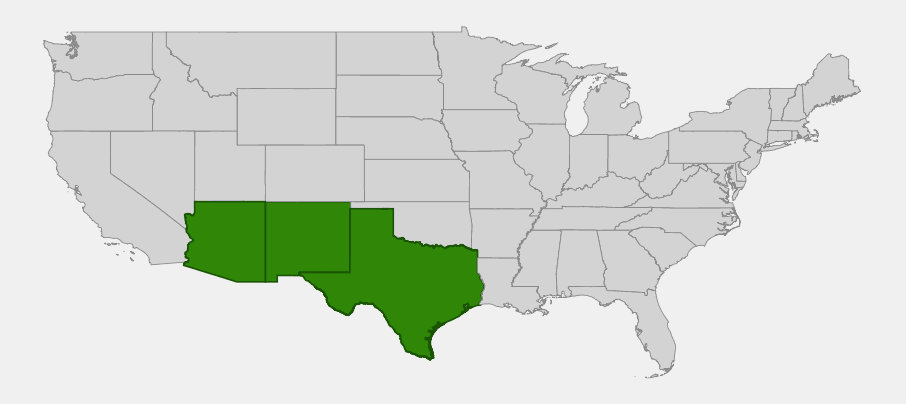
Bill Williams Mountain giant hyssop is a plant of the southwestern mountains. County records place it across much of central and northern Arizona and western and central New Mexico, from the Mogollon Rim, the White Mountains and the San Francisco Peaks area through the Gila country, Black Range and Pinos Altos Range, east to the mountains of central New Mexico. In Texas it is limited to the Trans-Pecos, where it grows in the higher mountains of the far west of the state. It has not been documented in the rest of Texas, and Colorado and Utah records were not confirmed for this guide.
Throughout this range it grows at middle and high elevations, mostly from about 7,000 to 10,000 feet in Arizona and New Mexico and somewhat lower in the Texas mountains. Typical sites are moist, rich soils in canyon bottoms and along streams, rocky slopes in ponderosa pine, Douglas-fir and aspen forest, and small openings and meadow edges where it gets sun for part of the day. It often grows near springs or on the shaded, north-facing side of a canyon, which tells you a lot about how to place it in a garden.
Botanists divide the species into several varieties that differ mainly in flower color, hairiness and leaf shape, and they do not all agree on how to treat them. Commonly recognized names include var. pallidiflora (pale flowers, the most widespread form), var. neomexicana (often with rose to purple flowers, sometimes treated as its own species, Agastache neomexicana), var. greenei, var. gilensis from the Gila region, and var. havardii of the Texas mountains. For gardeners the practical point is that seed from different sources can give quite different flower colors, so buy from a supplier that grows plants from local southwestern seed when you can.
📋 Regional plant lists featuring Bill Williams Mountain Giant Hyssop: Arizona & New Mexico · South & West Texas
Growing & Care Guide
Like most giant hyssops, this species is easy to grow if you match its natural conditions: good drainage, some moisture during the growing season and sun for at least part of the day. It is short-lived compared with some perennials, often lasting three to five years, but it reseeds gently in open, gravelly soil, so a planting tends to persist.
Light
Give it full sun at higher elevations and in cooler gardens, such as Flagstaff, Santa Fe, Los Alamos or Silver City. In hot, low-elevation gardens like Phoenix, Tucson, Las Cruces or El Paso, plant it where it gets morning sun and afternoon shade, for example on the east side of a wall or under the light shade of a desert tree. Too much shade makes the stems lean and reduces flowering.
Soil & Water
Plant in well-drained soil. Native soils in its habitat range from rich canyon loam to gravelly, rocky ground, and it does well in ordinary garden soil that does not stay soggy. Heavy clay that holds water in winter is the most common cause of loss. Water regularly through the first summer. After that, plants in mountain and high-plateau gardens get by on summer monsoon rains plus an occasional deep soak in dry spells. In the low desert, expect to water every week or two in summer. It is more drought tolerant than a typical garden perennial, but less so than true desert natives such as desert marigold or blackfoot daisy.
Planting Tips
Plant nursery-grown plants in spring after the last frost, or in early fall in warmer areas, spacing them 18 to 24 inches apart. Set the crown at soil level and use a gravel or thin bark mulch rather than a thick layer of wet mulch against the stems. Group three or more plants together; the spikes are fairly slender and look best in drifts.
Pruning & Maintenance
Little care is needed. Leave the seed heads standing over winter for birds and for self-sowing, then cut the old stems to a few inches above the ground in early spring before new growth starts. Avoid fertilizer; rich feeding makes the stems floppy and shortens the plant’s life. Root rot in wet soil is the main problem; powdery mildew can appear late in the season in crowded, humid spots.
Propagation
Grow it from seed. Sow on the surface or barely cover the small seeds, since light helps germination. Seed from high-elevation populations often germinates better after a few weeks of cold, moist stratification in the refrigerator or after fall sowing outdoors. Seedlings often bloom in their first or second summer. Softwood cuttings taken in late spring or early summer root readily, and older clumps can be carefully divided in early spring.
Landscape Uses
- Mountain and high-desert perennial borders with scarlet bugler, skyrocket gilia and wild bergamot
- Shady canyon or woodland-edge gardens with golden columbine under Gambel oak or pines
- Pollinator gardens, where it adds late-summer bloom after many spring wildflowers are done
- Herb and fragrance gardens, placed near paths so the leaves get brushed
- Rain-garden edges and swales that collect monsoon runoff but drain quickly
- Naturalistic meadows at higher elevations, where it can self-sow
Wildlife & Ecological Value
In the mountain forests of the Southwest, late summer is when the monsoon rains bring a second flush of flowers, and giant hyssops are a big part of that show.
For Pollinators
The dense spikes produce nectar over a long season and are worked by bumblebees, many smaller native bees, honey bees, butterflies and day-flying moths. The pale-flowered forms are mainly bee flowers. Pinker forms are also visited by hummingbirds, which pass through these mountains in large numbers on their late-summer migration. Because it blooms from July into October, it helps fill the late-season gap when pollinators are building fat reserves or provisioning nests.
For Birds
Seed-eating birds such as finches may pick at the dry seed heads in fall and winter, and the clumps give low cover for ground-foraging birds. Hummingbirds feed at the flowers as noted above.
For Mammals
The strongly scented foliage is not a favorite browse for deer or elk, and rabbits usually leave established plants alone, though young seedlings can be nibbled. No plant is fully deer-proof, especially in dry years.
Ecosystem Role
Bill Williams Mountain giant hyssop is one of many native mints that make up the wildflower layer of southwestern pine and mixed-conifer forests. Its rhizomes and woody base help hold soil on rocky slopes and stream banks, and it often recolonizes openings after disturbance. Planting it in gardens near forest edges helps connect pollinator habitat between wild areas.
Cultural & Historical Uses
Ethnobotanical records from the Ramah Navajo of western New Mexico describe several traditional uses of this plant. It was used as a lotion in ceremonial chants, the dried, powdered root was applied to sores, and the plant was burned as a fumigant for a condition described as “deer infection.” It was also used in protective practices. These records describe historical cultural practices and are not advice for home use.
Like other giant hyssops, the plant has a strong minty, anise-like scent, and Southwestern field guides note that its leaves were also used as a seasoning. Its fragrance is one reason the genus is popular in herb gardens today.
In modern gardening, most Agastache sold in nurseries are hybrids or selections of other species, including the Mexican and desert hummingbird mints. Bill Williams Mountain giant hyssop and its pink-flowered relative are mostly available from native seed companies and specialty southwestern nurseries, which makes them good choices for gardeners who want a true regional native rather than a hybrid. Other native giant hyssops covered on Plant Native include anise hyssop (A. foeniculum) of the northern plains and yellow giant hyssop (A. nepetoides) of the eastern woodlands.
Frequently Asked Questions
Is Bill Williams Mountain giant hyssop drought tolerant?
Moderately. Established plants handle dry spells, heat and poor soil, but in the wild it grows in moist mountain canyons and forest openings. In high-elevation gardens it usually gets by on rainfall plus occasional deep watering; in low-desert gardens give it afternoon shade and water every week or two in summer.
What color are the flowers?
Usually white, cream or pale lavender, as the name pallidiflora (“pale-flowered”) suggests. Some populations, often called var. neomexicana or New Mexico giant hyssop, have rose-pink to purple flowers.
Do hummingbirds visit it?
Sometimes, especially the pinker forms. The main visitors are bumblebees and other native bees, with butterflies and moths as well. For a hummingbird-focused planting, pair it with red tubular flowers such as scarlet bugler or skyrocket gilia.
How is it different from anise hyssop?
Anise hyssop (Agastache foeniculum) is a plant of the northern prairies and plains with blue-violet spikes and leaves that are whitish underneath. Bill Williams Mountain giant hyssop is a southwestern mountain species with dull green leaves on both sides and paler flowers in most populations.
When does it bloom?
From about July into October, peaking during and after the summer monsoon rains. Cutting off faded spikes can extend flowering, but leaving some to set seed lets the planting renew itself.

Looking for a nursery that carries Bill Williams Mountain Giant Hyssop?
Browse our native plant nursery directory: Arizona · New Mexico · Texas

