
Browne’s Savory (Clinopodium brownei)
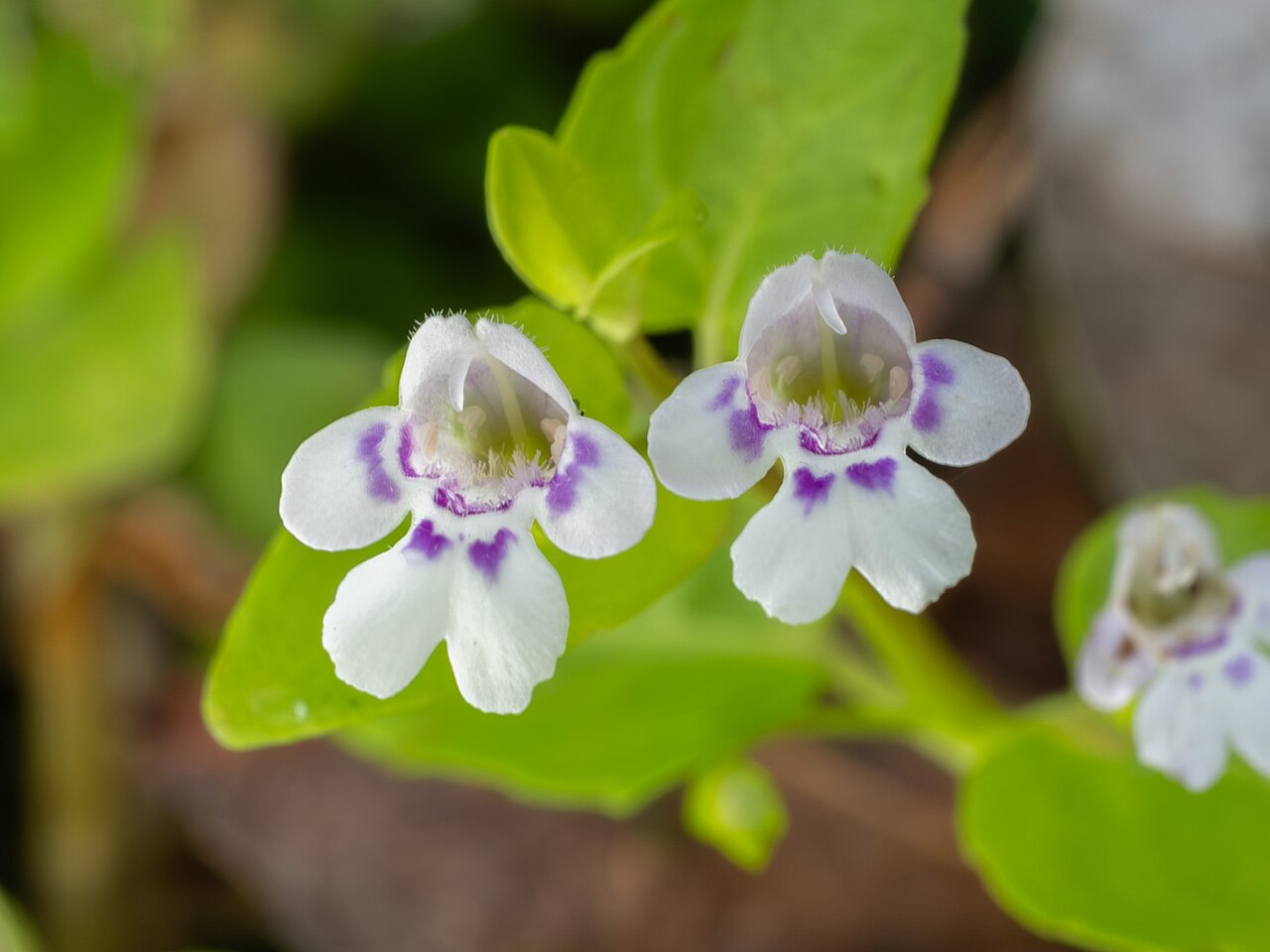
Clinopodium brownei, known as Browne’s Savory or Browne’s mint, is a low, creeping member of the mint family that grows on wet ground along the Gulf and southern Atlantic coastal plains. Its sprawling, square stems root as they spread, forming bright green mats of small, rounded, slightly fleshy leaves that smell pleasantly minty when crushed. Small, two-lipped flowers, white to pale lavender with purple spots, appear in the leaf axils for much of the year.
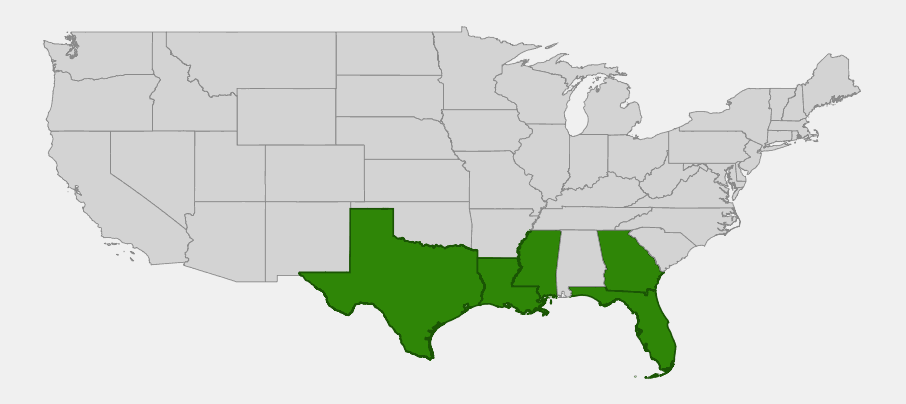
In the United States it is native to Florida, Georgia, Mississippi, Louisiana and Texas, growing in spring runs, stream banks, cypress swamps, marshes, wet ditches and lake shores. Beyond the U.S. it ranges through Mexico, Central America, the West Indies and South America. It is also known under the older names Micromeria brownei and Satureja brownei.
Browne’s savory is an easy, attractive native groundcover for wet soils, rain gardens and pond edges, and it can even grow partly submerged. This guide covers how to identify it, where it grows, how to grow it and its value to pollinators.
Identification
Browne’s savory is a small plant that is easy to overlook until it blooms. Its creeping habit, rounded aromatic leaves and white-and-purple flowers set it apart from other low plants of wet ground.
Leaves & Growth Habit
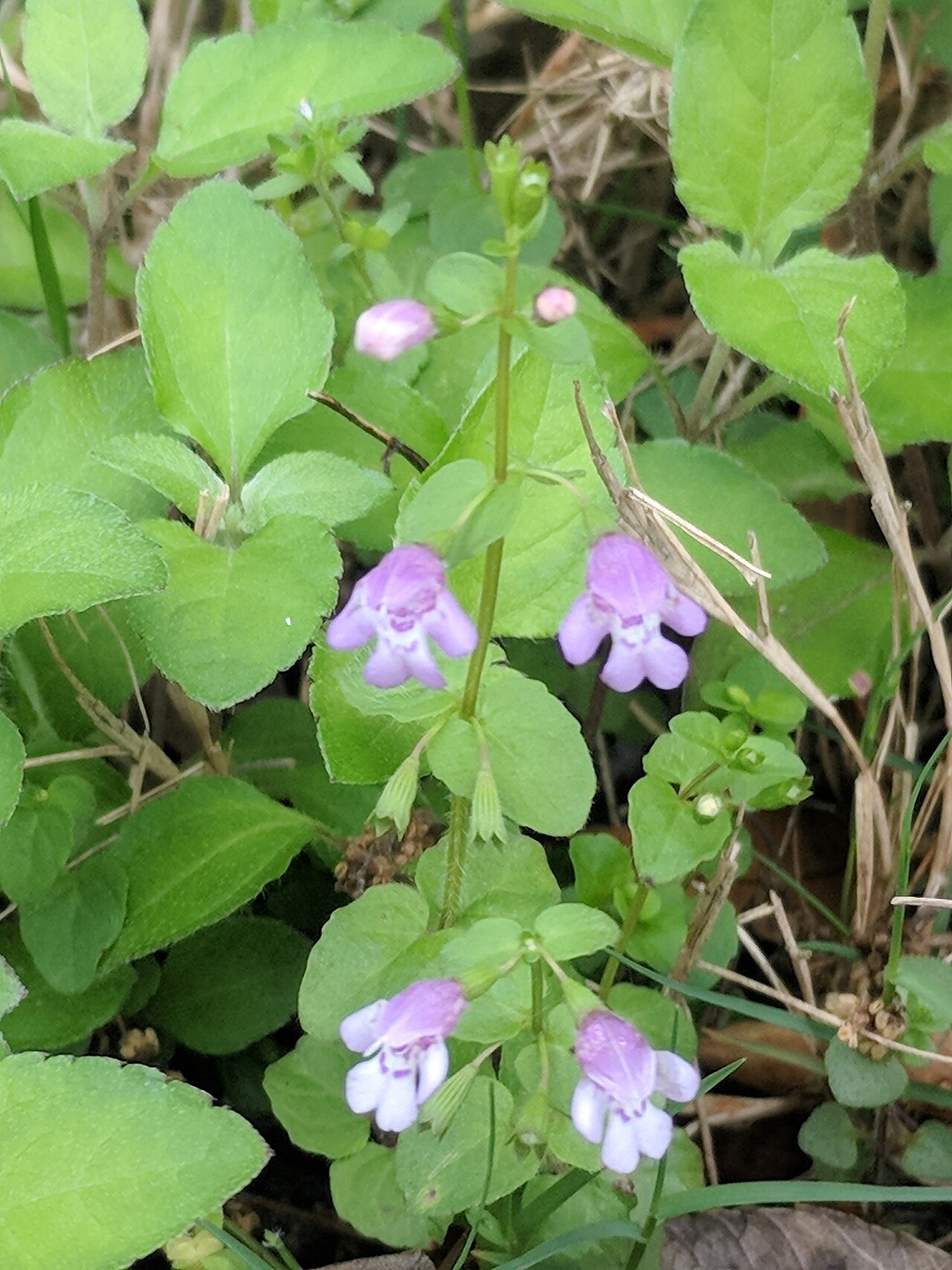
A perennial with slender, sprawling to creeping, four-angled stems that root at the nodes, forming loose mats 4 to 16 inches tall where stems turn upward. The leaves are opposite, broadly oval to nearly round, about ¼ to 1 inch long, with a few shallow, rounded teeth, short stalks and a slightly fleshy texture. Crushed leaves have a minty, savory scent. Stems and calyces are often hairy.
Flowers
The flowers grow singly or in pairs from the leaf axils on slender stalks. Each is about ⅓ to ½ inch long, tubular and two-lipped, white, pinkish-white or pale lavender, with purple spots or lines on the three-lobed lower lip. In Florida and South Texas it can flower in almost any month, with a peak from late winter into summer.
Fruit
Each flower produces four tiny, smooth nutlets inside the persistent, hairy, ribbed calyx.
Look-alikes
Lemon Bacopa also forms creeping mats in wet places and smells of lemon, but it has untoothed leaves and blue, nearly symmetrical flowers. Herb-of-grace has narrow, fleshy, unscented leaves and white flowers. Florida and other calamints (Calamintha) are upright shrubby plants of dry, sandy ground.
Quick Facts
| Scientific Name | Clinopodium brownei (syn. Micromeria brownei, Satureja brownei) |
| Family | Lamiaceae (mint family) |
| Plant Type | Creeping, mat-forming herbaceous perennial |
| Mature Height | 4–16 in |
| Mature Spread | Spreads by rooting stems into mats several feet across |
| Growth Rate | Fast |
| Sun Exposure | Full sun to part shade |
| Water Needs | High; moist to wet soil or shallow water |
| Soil Type | Wet sand, muck, loam or limestone-based soils |
| Soil pH | Slightly acidic to alkaline |
| Bloom Time | Year-round in warm areas; mainly spring to summer |
| Flower Color | White to pale lavender with purple spots |
| Fall Color | None; evergreen in mild winters |
| Fruit | Four tiny nutlets |
| Deer Resistant | Moderately; aromatic foliage |
| USDA Hardiness Zones | About 8–11 |
Native Range
Browne’s savory is native to the coastal plain of the southeastern and south-central United States. USDA PLANTS lists it in Florida, Georgia, Mississippi, Louisiana and Texas. It is most common in peninsular Florida, where the Atlas of Florida Plants records it in many counties, and it reaches southern Georgia, the Gulf coastal plain of Mississippi and Louisiana, and Texas.
In Texas it grows on the upper Gulf Coast around Houston and Brazoria County and inland along spring-fed streams of the Balcones region, such as around Austin and San Antonio. It also occurs widely through Mexico, Central America, the West Indies and northern South America, reflecting its preference for warm, wet places.
Its habitats are wet and often shaded: spring runs and seepage areas, stream and river banks, cypress and hardwood swamps, marshes, wet meadows, lake shores, ditches and wet lawns. It is rated an obligate wetland plant and often grows at the water’s edge or in shallow, slowly moving water.
📋 Regional plant lists featuring Browne’s Savory: North & South Florida · Alabama, Georgia & Mississippi · Arkansas, Louisiana, Eastern Oklahoma & Eastern Texas · South & West Texas
Growing & Care Guide
Browne’s savory is sold by some native nurseries in Florida and the Gulf states, and by aquatic and water-garden suppliers. It establishes quickly from small plants or cuttings and is one of the few native groundcovers that thrives in permanently wet soil.
Light
Full sun to part shade. It grows well in the dappled shade of swamp edges and spring runs, and in full sun if the soil stays wet. In dry or deeply shaded spots it thins out.
Soil & Water
Keep the soil constantly moist to wet. It grows in wet sand, muck or loam and can be planted in shallow water a few inches deep at a pond edge. It will not survive in dry soil, so it is best in rain gardens, bog gardens, pond margins, low spots and along streams.
Planting Tips
Plant small plants or rooted cuttings 12 to 18 inches apart in spring; they knit together into a mat within a season. Use it as a groundcover under taller wetland plants such as cardinal flower, pickerelweed and lizard’s tail, or let it spill over the edge of a pond or container water garden.
Pruning & Maintenance
It needs little care. Trim back stems that spread where they are not wanted, and pull out any that creep into paths or lawns. A hard freeze can kill back the top growth in the northern part of its range, but plants usually regrow from protected stems and roots.
Propagation
It is easy to propagate from stem cuttings, which often already have roots at the nodes; simply pin a stem section onto wet soil. Clumps can also be divided at any time during the growing season. It can be grown from seed sown on the surface of wet soil.
Landscape Uses
- Wet groundcover: evergreen mats for rain gardens, low spots and stream banks
- Pond and water gardens: spills over edges and tolerates shallow water
- Pollinator gardens: long-blooming flowers for small bees and butterflies
- Aromatic and herb gardens: fragrant, minty leaves
Wildlife & Ecological Value
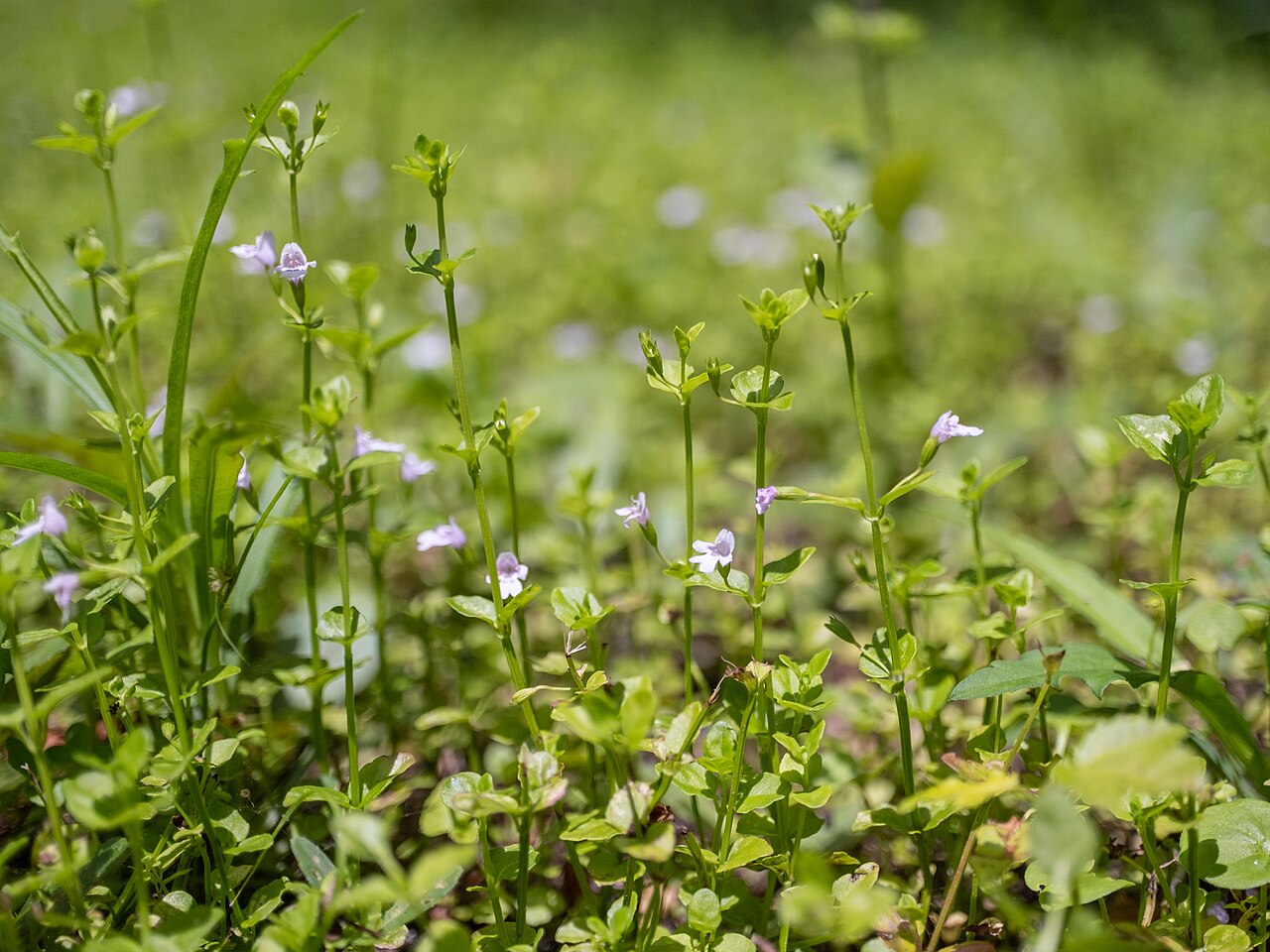
Browne’s savory flowers through much of the year in warm climates, providing a steady, if modest, nectar source on wet ground.
For Pollinators
Its small flowers are visited by small native bees, including sweat bees, and by butterflies, flies and other insects. The Lady Bird Johnson Wildflower Center notes that it attracts butterflies and is a nectar source.
For Birds
It is of little direct food value to birds, but its mats shelter the small insects and other invertebrates eaten by wetland birds.
For Mammals
Its aromatic foliage is not a preferred food for deer or rabbits.
Ecosystem Role
Its creeping, rooting stems help hold soil on stream banks and around springs, and its dense mats provide cover for amphibians and aquatic invertebrates at the water’s edge. It is an indicator of saturated, spring-fed or seasonally flooded soils.
Cultural & Historical Uses
The species honors Patrick Browne, an 18th-century Irish physician and naturalist who lived in Jamaica and wrote The Civil and Natural History of Jamaica (1756), one of the first detailed accounts of Caribbean plants. It was formally named by the Swedish botanist Olof Swartz, who studied West Indian plants.
The plant has moved through several genera, including Thymus, Micromeria, Satureja and Clinopodium, which is why it appears under different names in older books and the aquarium trade. Clinopodium also includes wild basil and several other native savories.
Like other savories, Browne’s savory has fragrant, minty leaves, and in parts of its range they have been steeped for tea. If you try it, be certain of identification, harvest only from clean water and soil, and use small amounts.
Frequently Asked Questions
Is Browne’s savory a mint?
Yes. It belongs to the mint family (Lamiaceae), and its crushed leaves have a pleasant minty, savory scent.
Can Browne’s savory grow in water?
Yes. It grows in wet soil and in shallow water at the edges of ponds, springs and streams, and it is sometimes grown as an aquarium or water-garden plant.
Is Browne’s savory a good groundcover?
Yes, for wet places. It forms low, evergreen mats in moist to wet soil in sun or part shade, but it will not survive in dry soil.
What are its other names?
It is also called Browne’s mint and has been listed as Micromeria brownei and Satureja brownei. USDA PLANTS uses Clinopodium brownei.
Where is Browne’s savory native?
In the United States it is native to Florida, Georgia, Mississippi, Louisiana and Texas. It also grows in Mexico, Central America, the West Indies and South America.

Looking for a nursery that carries Browne’s Savory?
Browse our native plant nursery directory: Florida & Georgia · Louisiana & Mississippi · Texas

