
Coastal Jointweed (Polygonella articulata)
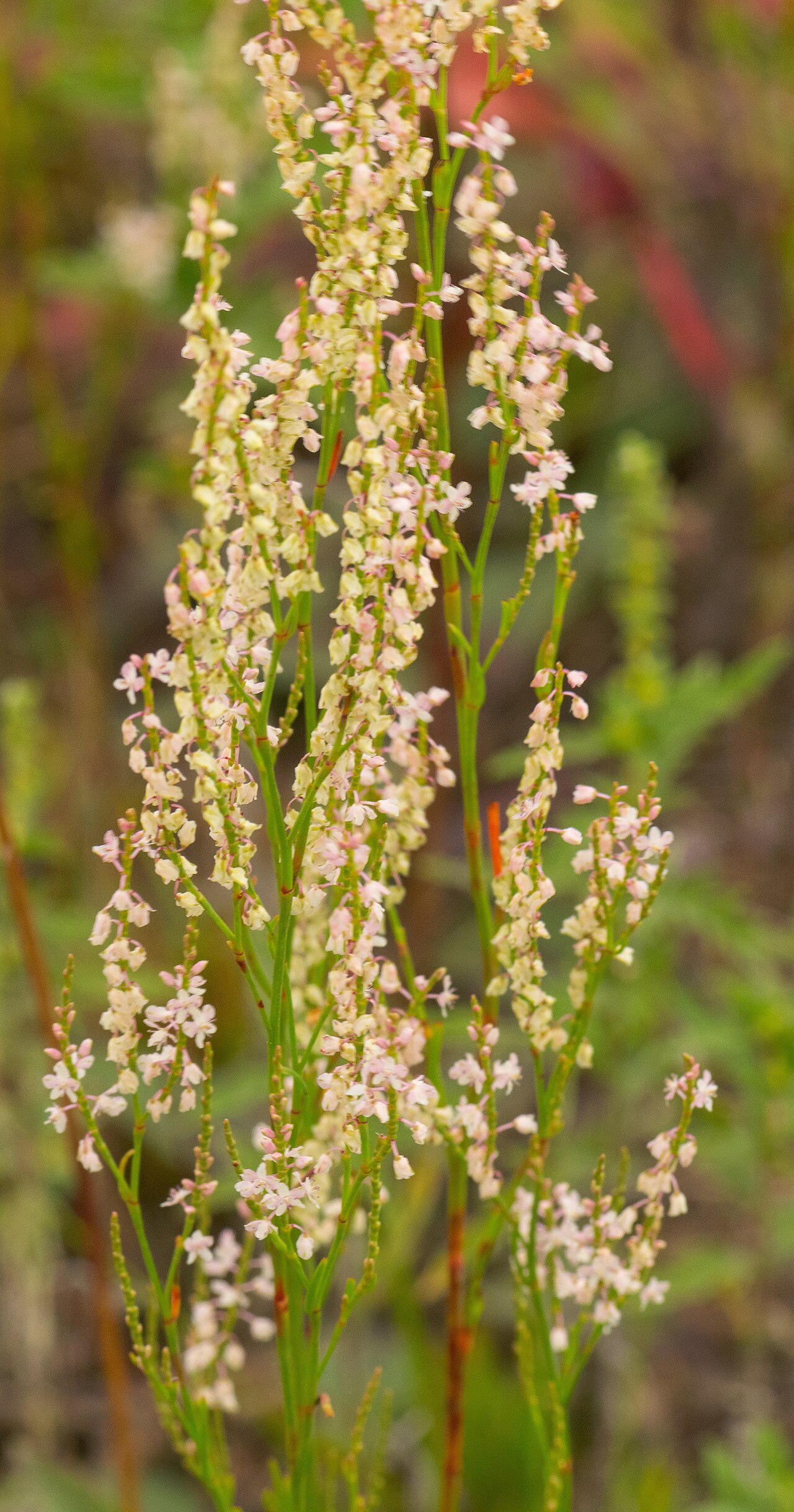
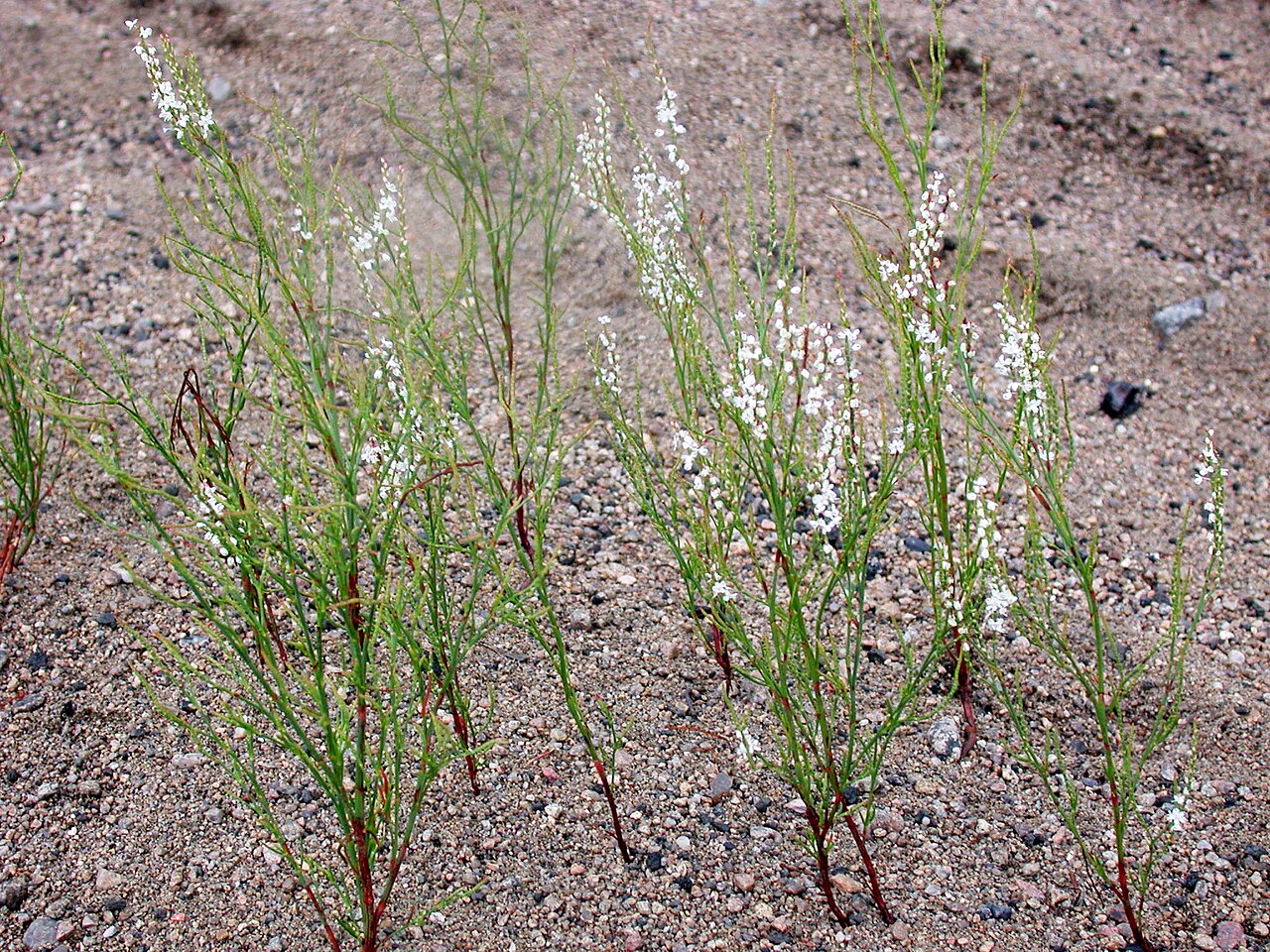
Polygonella articulata, known as Coastal Jointweed, northern jointweed or sand jointweed, is a small, wiry annual of the buckwheat or knotweed family (Polygonaceae) native to the sandy places of eastern and north-central North America. It grows 4 to 20 inches tall, with thin, branching, jointed stems and tiny, needle-like leaves that often drop early, so the plant can look almost leafless.
For most of the summer it is easy to overlook, but from August into October it is covered with slender spikes of tiny white, pink or rose-red flowers that make patches of it glow on bare sand. The stems turn reddish in fall, adding to the effect. The name “jointweed” refers to the stems, which are divided into short segments by papery sheaths (ocreae) at each node, as in other members of the knotweed family.
Coastal jointweed grows on dunes and sandy coastal plain from Maine to North Carolina and on inland sand plains and barrens around the Great Lakes and the upper Mississippi Valley. It is common in some places, such as the New Jersey Pine Barrens and Cape Cod, and rare in others. This guide covers how to identify it, where it grows, how to grow it in a sandy native garden, and its value to wildlife.
Identification
Coastal jointweed has few look-alikes in northern sand habitats. In late summer, look for a bushy little annual with jointed, wiry stems, almost no leaves, and many slender spikes of tiny white to pink flowers.
Growth Habit & Stems
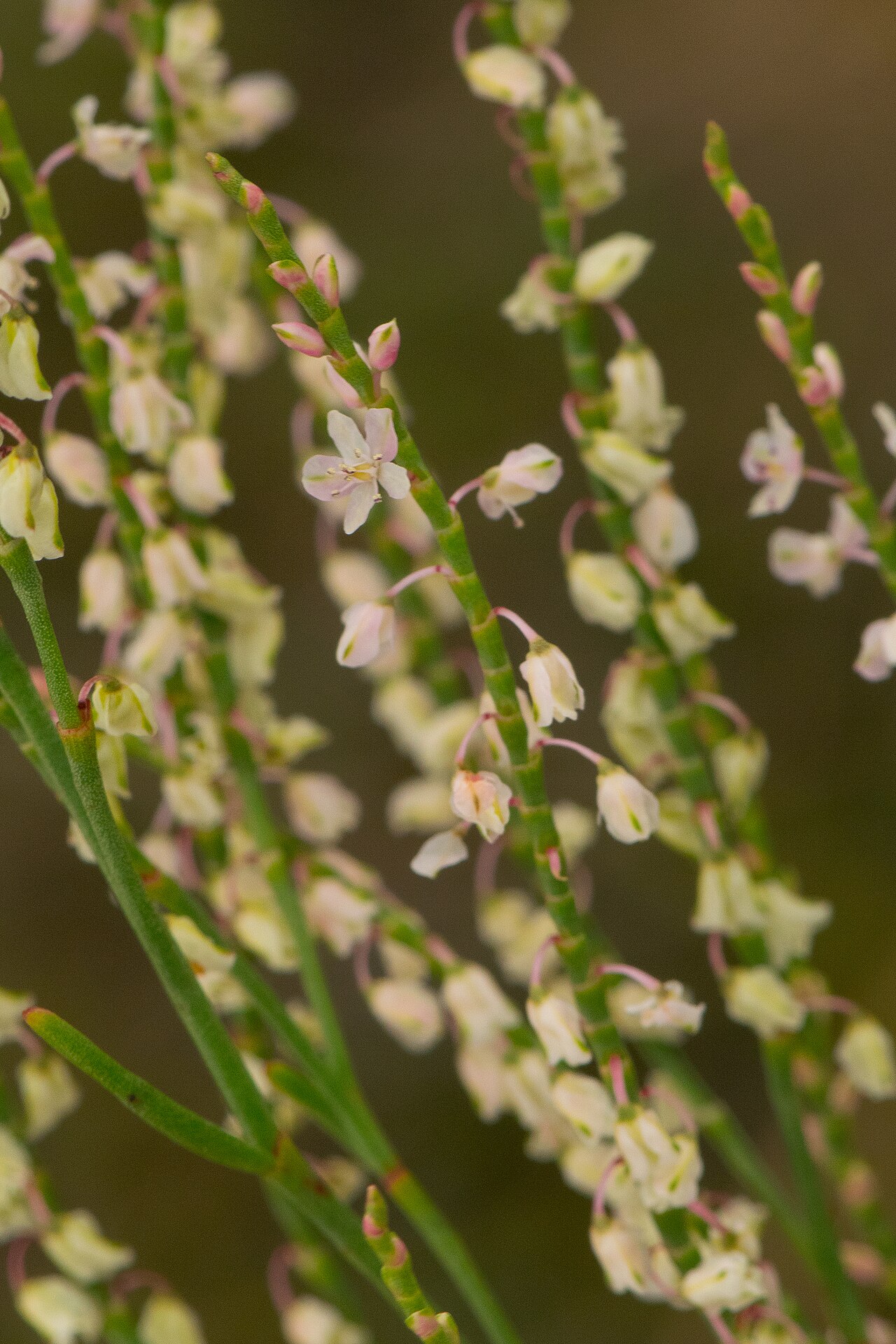
It is an annual that germinates in spring and dies after setting seed in fall. Plants are usually 4 to 20 inches tall, with one or several erect stems that branch repeatedly into a broom-like form. The stems are thin, smooth and divided into short joints by small, papery, tubular sheaths at each node, and they often turn red or purplish as the season progresses.
Leaves
The leaves are alternate, very narrow and needle-like, usually less than an inch long, and jointed at the base. Many of them fall off by flowering time, leaving the plant looking like a cluster of bare, jointed wires.
Flowers
From August to October, the branch tips carry slender spike-like racemes of tiny flowers, each about 1/8 inch across, hanging on short, slender stalks that bend downward. Each flower has five white to pink or rose petal-like tepals and eight stamens. Plants vary in color, from nearly white to deep pink; the flowers fade to rosy tones as they age.
Fruit & Seeds
Each flower produces a single small, shiny, dark brown, three-angled achene, enclosed by the persistent tepals. The seeds fall close to the parent plant, and the species often reappears in the same sandy patches year after year.
Look-alikes
Other jointweeds (Polygonella) are mostly southern plants of the Atlantic and Gulf coastal plains, especially Florida. Knotweeds (Polygonum) have similar sheathing nodes but broader leaves and flowers in the leaf axils rather than in slender terminal spikes. Beach heather (Hudsonia tomentosa), which shares its dunes, is a low shrub with scale-like leaves and yellow flowers in early summer.
Quick Facts
| Scientific Name | Polygonella articulata (L.) Meisn. |
| Family | Polygonaceae (buckwheat family) |
| Plant Type | Annual herb |
| Mature Height | 4–20 in |
| Mature Spread | 4–10 in |
| Growth Rate | Fast (completes its life cycle in one season) |
| Sun Exposure | Full sun |
| Water Needs | Very low; dry sand |
| Soil Type | Loose, dry, nutrient-poor sand and sandy gravel |
| Soil pH | About 4.5–7.0 |
| Bloom Time | August–October |
| Flower Color | White to pink or rose |
| Fall Color | Stems turn red to purplish |
| Fruit | Small, shiny, three-angled brown achene |
| Deer Resistant | Seldom browsed |
| USDA Hardiness Zones | 3–8 (annual) |
Native Range
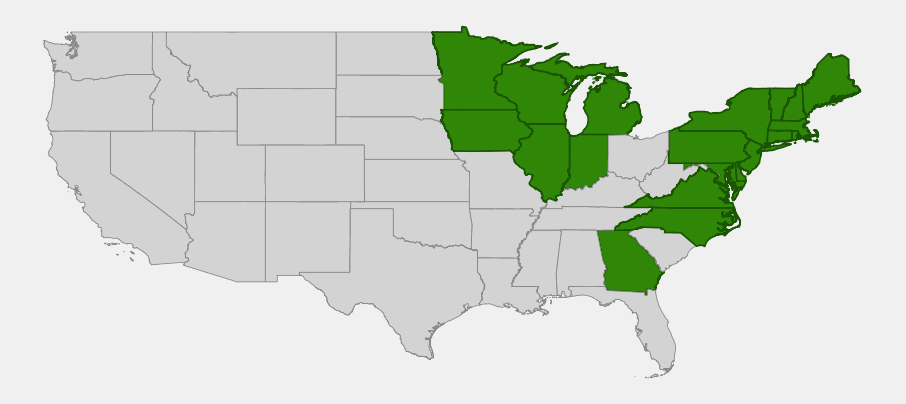
Coastal jointweed has a two-part range. Along the Atlantic coast it grows on dunes, sandy flats and pine barrens from Maine and New Brunswick south through Massachusetts (including Cape Cod and the islands), Long Island, New Jersey, Delaware and Maryland to Virginia and North Carolina. USDA PLANTS lists it as native to 20 states, and it also grows in New Brunswick, Quebec and Ontario.
Inland, it occurs on sand plains, glacial outwash and old lake-shore sands around the Great Lakes and in the upper Midwest, including Michigan, Wisconsin, Minnesota, northern Indiana and Illinois, eastern Iowa and the sand barrens of Pennsylvania, New York, Vermont and New Hampshire. A single collection from the sandhills of Georgia is an outlying record far south of the main range.
It is plentiful in some sandy regions, such as the New Jersey Pine Barrens and the sand plains of central Wisconsin, but scarce or local toward the edges of its range, and it is tracked as rare in several states. Its habitat, open sand that is kept bare by wind, fire or disturbance, has declined as dunes and barrens have been developed or have grown up into forest.
📋 Regional plant lists featuring Coastal Jointweed: New York, Pennsylvania & Northern New Jersey · Ohio & Indiana · Michigan, Wisconsin & Eastern Minnesota · Connecticut, Massachusetts & Rhode Island · New Hampshire, Maine & Vermont · Maryland, Virginia & West Virginia · Delaware, Southern New Jersey & Long Island · Illinois, Iowa & Missouri · Alabama, Georgia & Mississippi · North & South Carolina
Growing & Care Guide
Coastal jointweed is rarely sold, but it is easy to grow from seed in the right conditions: full sun and dry, open sand. It is best used in sand gardens, dune and barrens restorations, and gravel gardens, where it can reseed itself among other sand-loving plants. Collect seed only where it is plentiful and with permission, never from rare populations.
Light
Give it full sun. It grows on open, bare sand and does not tolerate shade or crowding by taller plants.
Soil & Water
It needs loose, dry, infertile sand or sandy gravel with low competition. Rich garden soil, mulch and irrigation encourage other plants that crowd it out. No watering is needed once seedlings are up, except during a severe drought in early summer.
Planting Tips
Scatter seed on bare sand in fall so it can experience winter cold before germinating in spring. Leave some open, unmulched sand between other plants, such as little bluestem, wild lupine and native grasses, so it has space to reseed each year.
Pruning & Maintenance
No pruning is needed. Leave the plants standing in fall until the seeds have dropped. Occasional light raking or disturbance that keeps patches of sand bare helps it persist.
Propagation
It is grown only from seed. Collect the small brown achenes in October when the flower spikes have dried, store them cool and dry, and sow them on the soil surface in late fall or give them a few weeks of cold, moist stratification before a spring sowing.
Landscape Uses
- Sand and gravel gardens: late-season pink and white flowers on dry, bare sand
- Dune and barrens restoration: a characteristic annual of open coastal and inland sands
- Pollinator plantings: late-summer nectar for small bees, wasps and flies
- Rock gardens: delicate, airy texture among low, sand-loving plants
- Fall interest: stems turning red as the flowers fade
Wildlife & Ecological Value
Coastal jointweed blooms late, when few other plants in its sandy habitat are flowering, so it is an important late-season food source for small insects.
For Pollinators
The tiny flowers attract small native bees, wasps, flies and other small insects in late summer and fall. On sand barrens and dunes, where flowers are scarce at that season, a patch of jointweed can be busy with insects.
For Birds
Sparrows, juncos and other small seed-eating birds forage for seeds on open sand, and dune and barrens birds benefit from the insects that visit the flowers.
For Mammals
It provides little food for larger mammals, but small rodents eat the seeds.
Ecosystem Role
As an annual of bare sand, coastal jointweed is one of the plants that colonize open dunes, blowouts and disturbed sand, helping to stabilize the surface. It is part of the specialized plant community of pine barrens and sand prairies, habitats that depend on fire, wind and other disturbance to stay open.
Cultural & Historical Uses
The genus name Polygonella means “little Polygonum“, from the Greek polys, many, and gonu, knee or joint, referring to the swollen, jointed stems of the knotweed family. The species name articulata means jointed. Linnaeus first described the plant as Polygonum articulatum, and it was later moved to Polygonella by the Swiss botanist Carl Meisner.
Jointweed is one of the signature late-summer wildflowers of the New Jersey Pine Barrens and the sandy outer coast of New England, where its pink and white sprays decorate roadsides and fire breaks in September.
Because it depends on open sand, coastal jointweed is a useful indicator of healthy, fire- and wind-maintained barrens and dune habitats. Where it is rare, protecting and managing those habitats is the best way to keep it.
Frequently Asked Questions
Why is it called jointweed?
Its thin stems are divided into short segments by papery sheaths at each node, giving them a jointed look. The species name articulata also means jointed.
Is coastal jointweed an annual?
Yes. It sprouts from seed each spring, flowers in late summer and fall, and dies after setting seed, but it reseeds itself in suitable sandy habitat.
Where does coastal jointweed grow?
On dunes, sandy coastal plain and pine barrens from Maine to North Carolina, and on inland sand plains and barrens around the Great Lakes and the upper Midwest, as well as in southeastern Canada.
When does it bloom?
From about August to October, later than most plants in its sandy habitats.
Can I grow it in my garden?
Yes, if you have full sun and loose, dry, infertile sand. Sow seed in fall and leave patches of bare sand so it can reseed.

Looking for a nursery that carries Coastal Jointweed?
Browse our native plant nursery directory: Connecticut, Delaware & Georgia · Illinois, Indiana & Iowa · Maine, Maryland, Massachusetts, Michigan & Minnesota · New Hampshire, New Jersey, New York & North Carolina · Pennsylvania, Rhode Island, Vermont & Virginia · Wisconsin

