
Gander’s Cholla (Cylindropuntia ganderi)
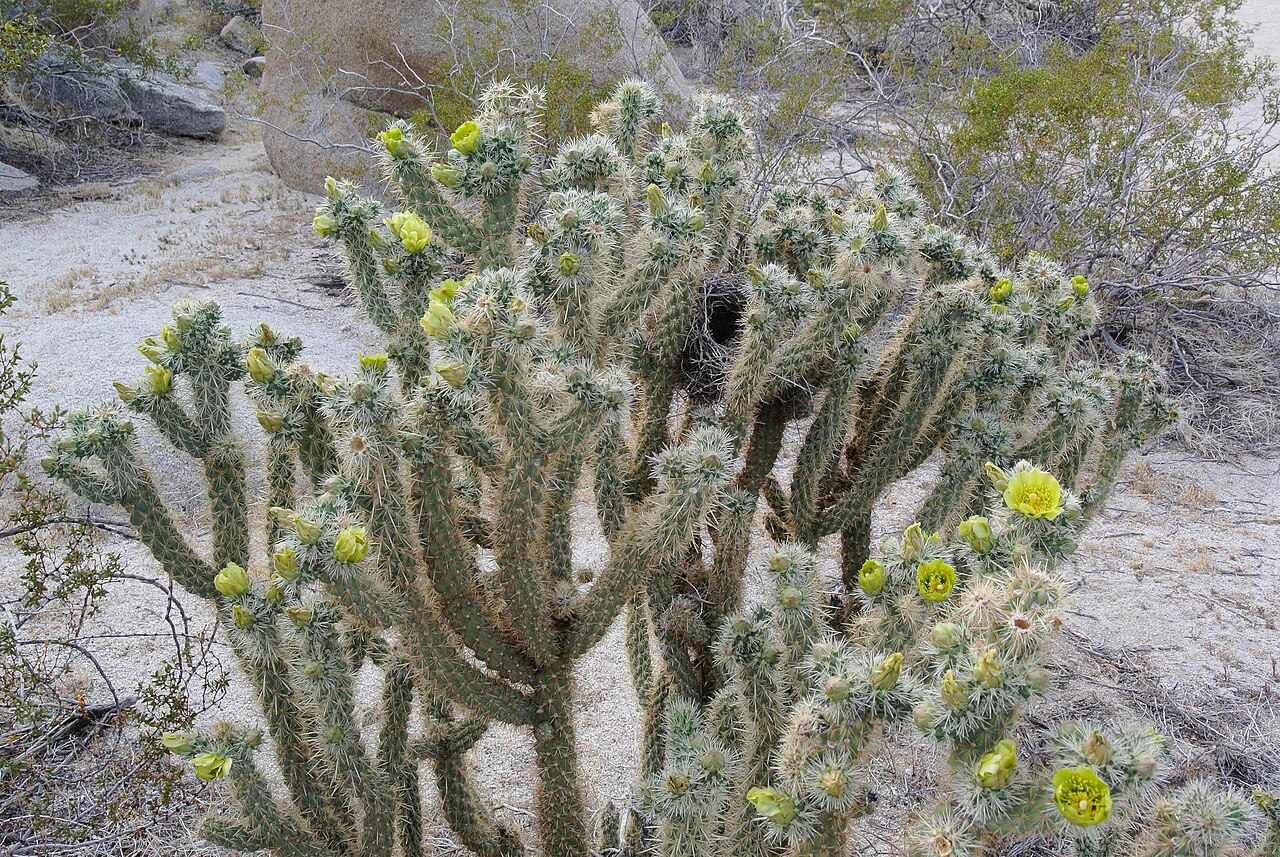
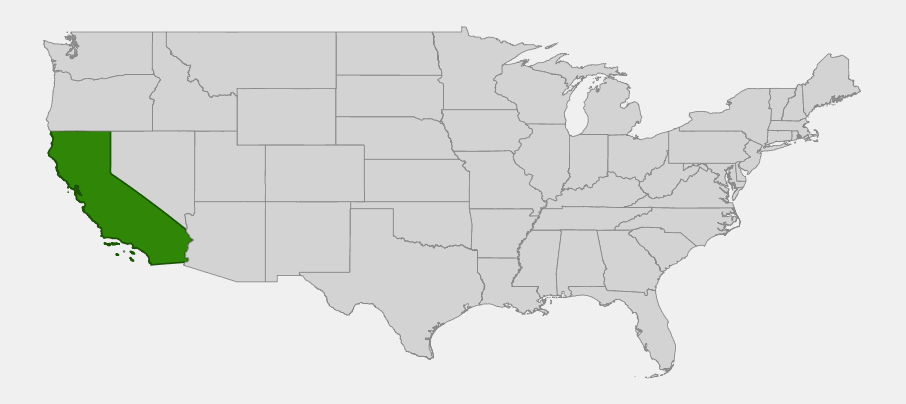
Cylindropuntia ganderi, known as Gander’s Cholla, Gander cholla or Gander’s buckhorn cholla, is a shrubby cholla cactus of the western Sonoran Desert. In the United States it grows only in southern California, on the desert slopes and canyons of San Diego, Riverside and Imperial counties, and it continues south into Baja California, Mexico.
It is a low to medium-sized, densely branched cactus, usually 1 to 4 feet tall, built of short, cylindrical, knobby stem joints covered with straw-colored to tan spines. In spring it opens pale yellow to greenish-yellow flowers, often tinged bronze or reddish, at the tips of the branches. Anza-Borrego Desert State Park is one of the best places to see it.
Gander’s cholla was long treated as a variety of buckhorn cholla, and it still looks similar. It is a handsome plant for desert gardens in its region, but, like all chollas, it is very spiny. This guide covers how to identify it, where it grows, how to grow it safely, and its value for wildlife.
Identification
Look for a compact, many-branched cholla with short, bumpy joints and dense straw-colored spines, growing on rocky slopes, bajadas and washes on the western side of the Colorado Desert in southern California.
Growth Habit
Gander’s cholla is a shrubby cactus, usually 1 to 4 feet tall and as wide or wider, with many ascending to spreading branches from a short base. Older plants can form dense, rounded clumps. Unlike treelike chollas such as teddy bear cholla, it rarely forms a single tall trunk.
Stems & Spines
The stems are made of cylindrical joints, usually a few inches long and about an inch thick, covered with prominent, elongated bumps (tubercles). Each areole bears a cluster of stiff spines, typically straw-yellow to tan, each wrapped in a thin, papery sheath, plus tiny barbed bristles (glochids). The spines are dense enough to partly hide the green stem.
Flowers
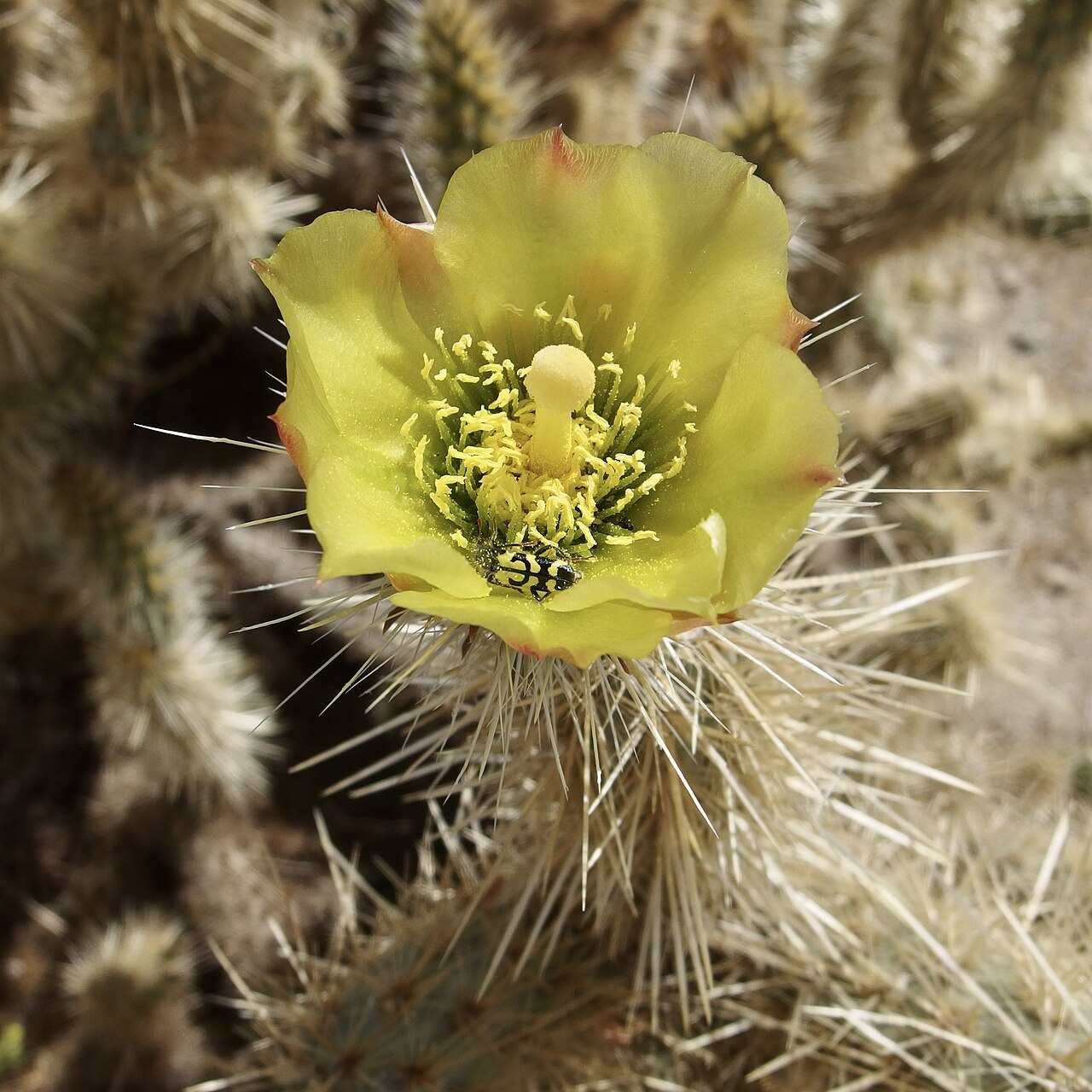
The flowers open in spring, mainly from about April to May, at the ends of the joints. They are cup-shaped, about 1 1/2 to 2 inches across, pale yellow to greenish-yellow, often with bronze, red or brown tinges on the outer petals, with many yellow stamens around a pale style. Bees crawl deep into the flowers.
Fruit & Seeds
The fruits are dry, spiny and knobby when ripe, like those of other buckhorn-type chollas, and contain pale seeds. They do not become fleshy and juicy like prickly pear fruits.
Look-alikes
Buckhorn cholla (Cylindropuntia acanthocarpa) of Arizona and the eastern Mojave and Sonoran deserts is similar and was once considered the same species; Gander’s cholla is generally shorter and more compact, with denser, straw-colored spines, and grows farther west. California cholla (Cylindropuntia californica) of coastal San Diego County is lower and sprawling, and the two intergrade where their ranges meet. Teddy bear cholla (Cylindropuntia bigelovii) has a single trunk and very dense, silvery-gold spines on joints that detach easily.
Quick Facts
| Scientific Name | Cylindropuntia ganderi (C.B. Wolf) J. Rebman |
| Family | Cactaceae (cactus family) |
| Plant Type | Shrubby cholla cactus |
| Mature Height | 1–4 ft |
| Mature Spread | 2–5 ft |
| Growth Rate | Slow |
| Sun Exposure | Full sun |
| Water Needs | Very low |
| Soil Type | Rocky, gravelly or sandy, very well-drained soils |
| Soil pH | About 7.0–8.5 |
| Bloom Time | April–May |
| Flower Color | Pale yellow to greenish-yellow, often tinged bronze or red |
| Fall Color | None (evergreen succulent stems) |
| Fruit | Dry, spiny, knobby fruits |
| Deer Resistant | Yes (very spiny) |
| USDA Hardiness Zones | 8–11 |
Native Range
Gander’s cholla is native to the western Sonoran Desert. USDA PLANTS lists it only for California in the United States. Most of its range lies in Baja California, Mexico, where a second variety, var. catavinensis, grows in the central desert. The typical variety, var. ganderi, reaches north into southern California.
In California it grows on the western edge of the Colorado Desert (the California portion of the Sonoran Desert): in eastern San Diego County, including much of Anza-Borrego Desert State Park, in southern Riverside County around the Santa Rosa Mountains, and in western Imperial County. It is most common on the desert slopes below the Peninsular Ranges.
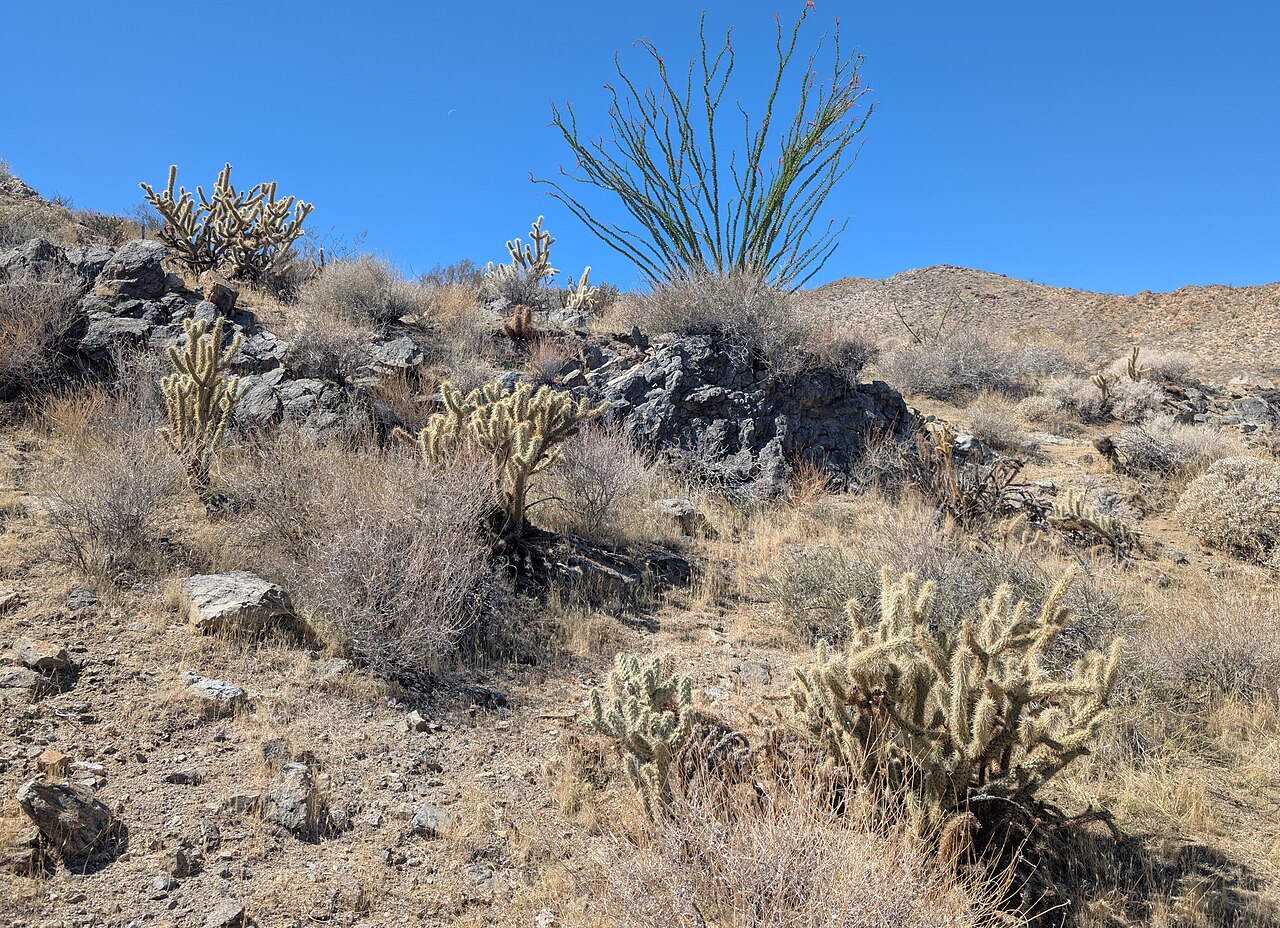
It grows on rocky hillsides, alluvial fans (bajadas), canyon slopes and the edges of washes in desert scrub, often with ocotillo, creosote bush, brittlebrush, desert agave and barrel cactus. Where its range meets coastal San Diego County it intergrades with California cholla.
📋 Regional plant lists featuring Gander’s Cholla: California & Nevada
Growing & Care Guide
Gander’s cholla is an excellent, tough plant for desert gardens in southern California and the low deserts, where it needs almost no care once established. It is occasionally sold by native and cactus nurseries. Plant it where its spines will not be a hazard.
Light
Give it full sun. It grows on open, sunny desert slopes and becomes weak and stretched in shade.
Soil & Water
It needs rocky, gravelly or sandy soil with perfect drainage. It is extremely drought-tolerant; in its native region it needs little or no supplemental water once established. Water occasionally during the first summer. Too much water, especially in winter, leads to rot.
Planting Tips
Plant it well away from paths, patios, play areas and places where pets run. Handle joints and plants with thick gloves, tongs, or a rolled-up newspaper or carpet strip. Spines and glochids are painful and difficult to remove. Never dig chollas from the wild: much of its California range is in state parks and protected lands, and collecting is illegal there without a permit.
Pruning & Maintenance
Little or no maintenance is needed. Remove dead joints with tongs if you wish, and pick up fallen joints so they do not root where you do not want them.
Propagation
Like most chollas, it is easy to grow from cuttings. Let a joint callus for a week or two, then set it in dry, gritty soil and water lightly once it begins to root. It can also be grown from seed, though more slowly.
Safety Note
The spines are sharp and barbed, and the tiny glochids lodge in skin. Use tweezers for large spines and tape or glue for glochids. Keep it away from children and pets.
Landscape Uses
- Desert gardens: a tough, low-water accent for southern California desert landscapes
- Wildlife gardens: shelter and nest sites for desert birds
- Barrier plantings: a dense, spiny barrier along property edges, away from paths
- Pollinator gardens: spring flowers for native bees
- Wild areas: a characteristic cactus of Anza-Borrego and the western Colorado Desert
Wildlife & Ecological Value
Gander’s cholla is an important part of the desert scrub community in the western Colorado Desert.
For Pollinators
The cup-shaped flowers are visited mainly by native bees, including large cactus bees, which gather pollen and nectar and pollinate the flowers.
For Birds
Cactus wrens and other desert birds build nests in chollas, where the spines protect eggs and young from predators. In the photo at the top of this page, a bird’s nest is visible among the branches. Birds also perch on and forage around the plants.
For Mammals
Desert woodrats (packrats) are well known for using cholla joints in their nests for protection. Small mammals shelter beneath the spiny branches and may eat the fruits and seeds.
Ecosystem Role
Chollas create protected microhabitats in open desert. Seedlings of other plants, lizards and insects benefit from the shade and protection under the spiny branches, and the plant’s flowers and fruits feed desert animals.
Cultural & Historical Uses
The species is named for Frank F. Gander, a naturalist at the San Diego Natural History Museum who collected in the desert of San Diego County. The botanist Carl B. Wolf first described it as a subspecies of buckhorn cholla, Opuntia acanthocarpa subsp. ganderi.
Botanist Jon Rebman of the San Diego Natural History Museum and colleagues later treated it as a full species. Today it is placed in Cylindropuntia, the genus of chollas, separate from the flat-padded prickly pears (Opuntia).
The word cholla is a Mexican Spanish name for these cylindrical, branching cacti. Native peoples of the desert Southwest, including the Cahuilla, used cholla buds as food after removing the spines, though specific uses of Gander’s cholla are less well documented.
Frequently Asked Questions
Where does Gander’s cholla grow?
In the United States it grows only in southern California, on the western side of the Colorado Desert in San Diego, Riverside and Imperial counties, especially in Anza-Borrego Desert State Park. It also grows in Baja California, Mexico.
How is Gander’s cholla different from buckhorn cholla?
It was once considered a variety of buckhorn cholla. Gander’s cholla is generally shorter and more compact, with denser straw-colored spines, and grows farther west, in the California desert and Baja California.
When does Gander’s cholla bloom?
Mainly in April and May, with pale yellow to greenish-yellow flowers often tinged bronze or red.
Can I grow Gander’s cholla?
Yes, in hot, dry gardens with excellent drainage and full sun, especially in southern California. Use nursery-grown plants or cuttings from cultivated plants, and keep it away from paths.
How do I remove cholla spines?
Pull large spines with tweezers or pliers, pulling straight out. Remove tiny glochids with tape or a thin layer of white glue that you let dry and peel off. Use a comb to flick off attached joints.

Looking for a nursery that carries Gander’s Cholla?
Browse our native plant nursery directory: California

