
American Golden Saxifrage (Chrysosplenium americanum)
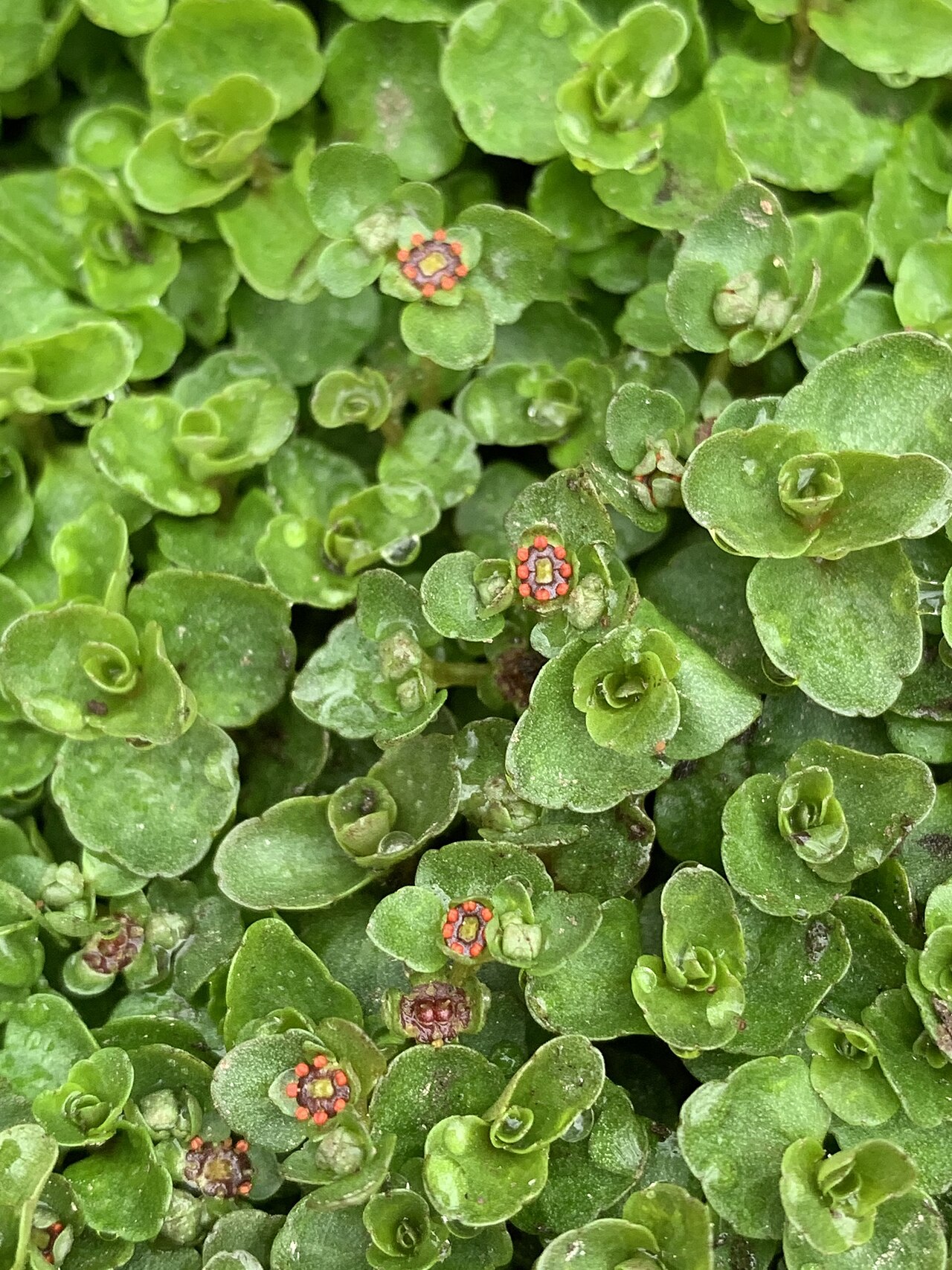
Chrysosplenium americanum, known as American Golden Saxifrage or water-mat, is a tiny, creeping perennial that forms bright green mats in cold springs, seeps and wet, shady stream banks of eastern North America. It belongs to the saxifrage family (Saxifragaceae). Its trailing stems root as they grow and carry small, rounded leaves only 1/4 to 3/4 inch long.
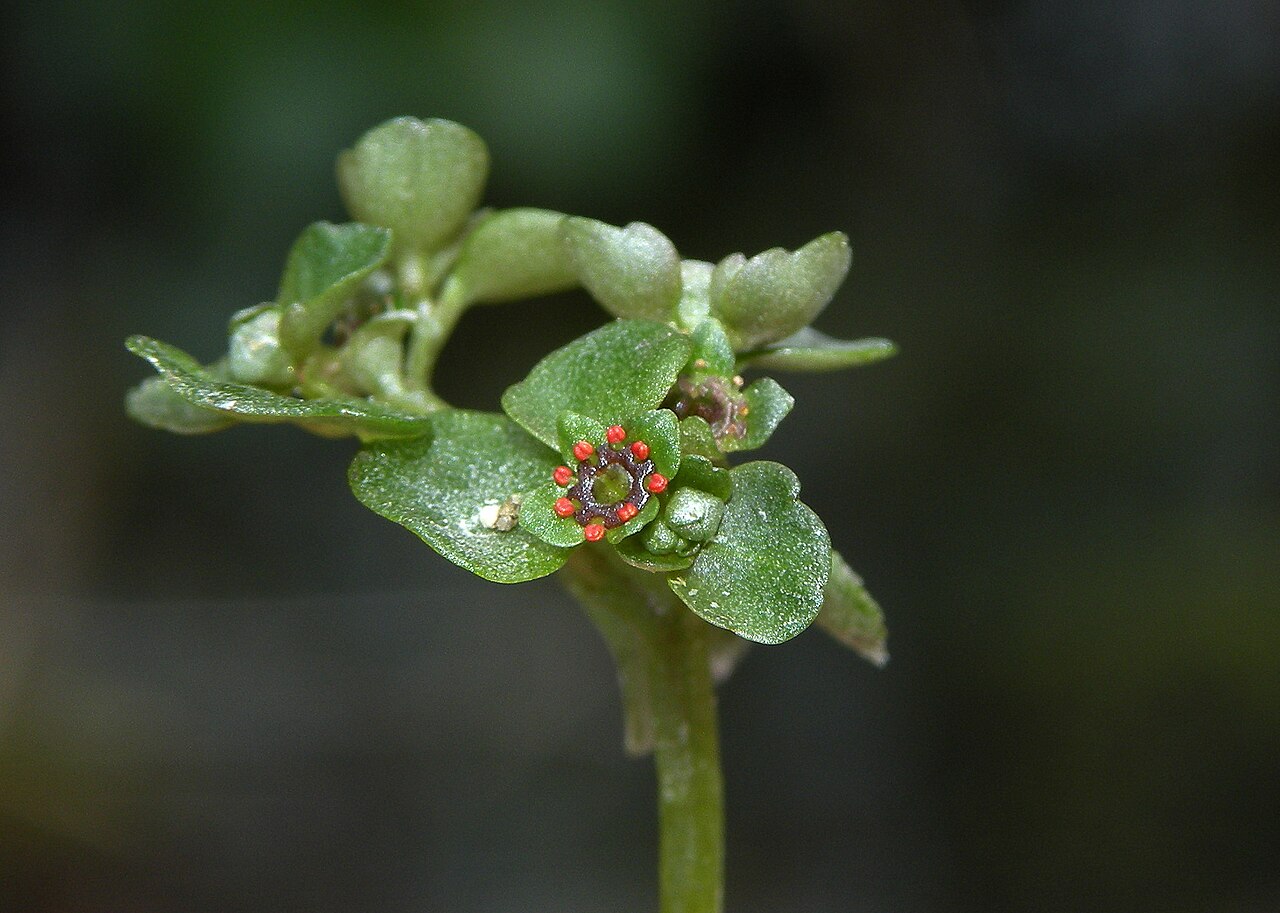
It is one of the earliest wildflowers of the year, blooming from March to May, often while snow still lingers nearby. The flowers are easy to overlook: they are only about 1/8 inch across, have no petals, and are green or yellowish-green, but each one holds a ring of red to orange anthers that gives the mats a speckled look on close inspection.
American golden saxifrage is a good indicator of clean, cold groundwater. It is rarely sold, but where it grows naturally it is worth protecting, and it can be used in shaded bog gardens and along spring-fed streams. Grow it only from propagated plants and never dig it from wild seeps.
Identification
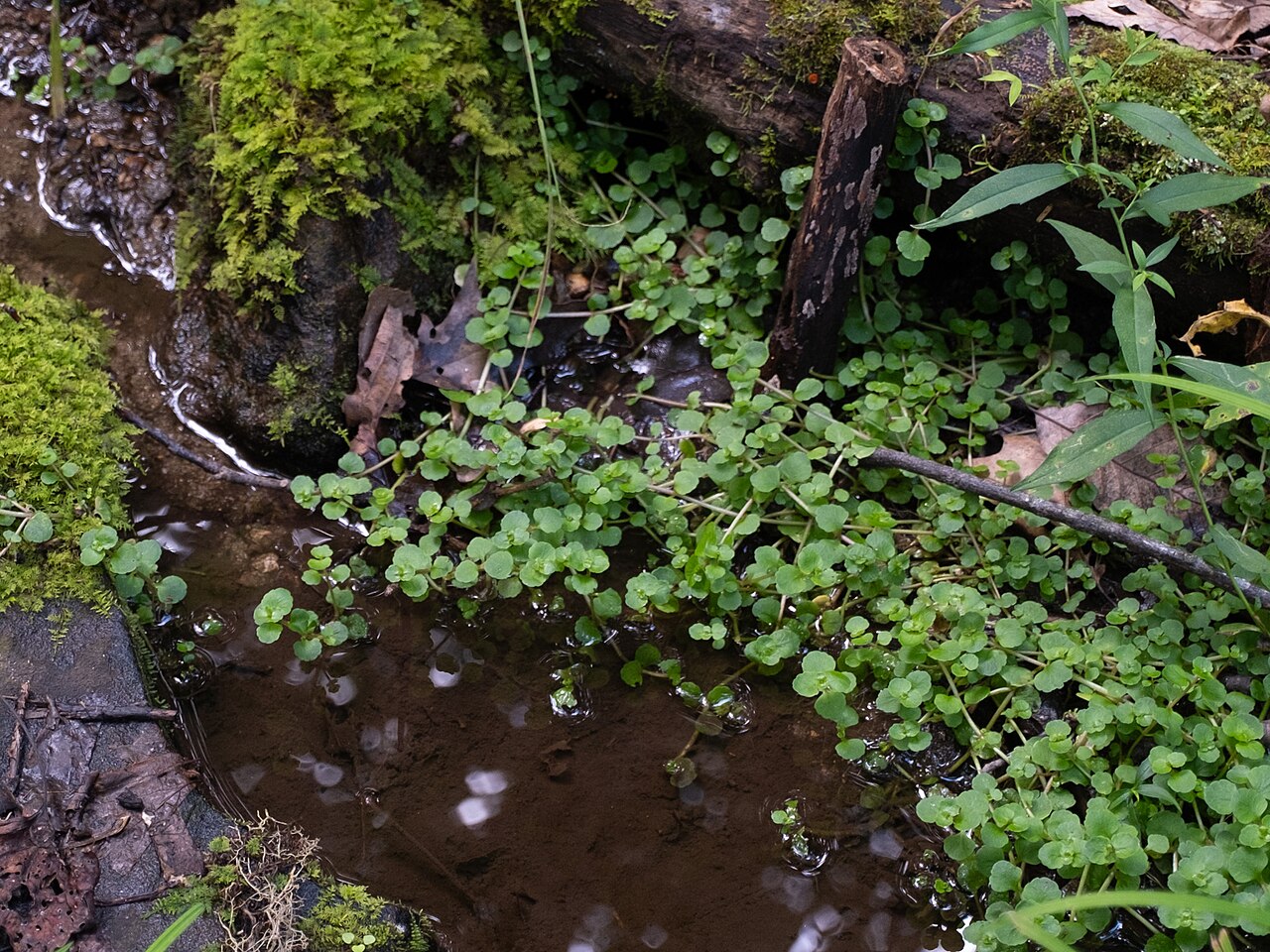
Look for low, bright green mats of small, round leaves in the mud or shallow water of shaded seeps and springs in early spring, dotted with tiny green flowers that have red-orange anthers.
Growth Habit
A low, mat-forming perennial. The slender, smooth stems creep along wet ground or through shallow water, branching and rooting at the nodes, with flowering tips rising 1 to 4 inches. Mats can cover several square feet in good sites and stay green from early spring until fall.
Leaves
Most leaves are opposite, a useful feature, though a few upper leaves may be alternate. They are rounded to broadly oval, 1/4 to 3/4 inch long, with short stalks and smooth or faintly scalloped edges. They are smooth, slightly fleshy and often a little shiny.
Flowers
The flowers grow singly or in small groups at the stem tips and in the upper leaf axils. Each is about 1/8 inch wide, with four (sometimes five) green to yellowish or purplish-tinged sepals and no petals. Eight short stamens with red to orange anthers surround a flat, lobed disk. Blooming begins in March in the South and continues into May in the North.
Fruit
The fruit is a small, cup-shaped capsule that opens at the top to expose many tiny, shiny reddish-brown seeds. Raindrops falling into the open cups splash the seeds out, a dispersal method called “splash-cup” dispersal.
Look-alikes
Its creeping mats can be mistaken for chickweed or for young plants of jewelweed, but neither has its tiny, petal-less flowers with red anthers. Western golden saxifrage (Chrysosplenium tetrandrum) of northern and western North America has alternate leaves and only four stamens. Moneywort (Lysimachia nummularia), a non-native groundcover of wet places, has round, opposite leaves but bright yellow, five-petaled flowers.
Quick Facts
| Scientific Name | Chrysosplenium americanum |
| Family | Saxifragaceae (saxifrage family) |
| Plant Type | Creeping, mat-forming herbaceous perennial |
| Mature Height | 1–4 in |
| Mature Spread | 1–3 ft (spreading) |
| Growth Rate | Moderate |
| Sun Exposure | Part shade to full shade |
| Water Needs | Very high; constantly wet soil or shallow water |
| Soil Type | Wet muck, mud or saturated sandy soil in seeps and springs |
| Soil pH | Slightly acidic to neutral (about 5.5–7.0) |
| Bloom Time | March–May |
| Flower Color | Green to yellowish-green with red-orange anthers |
| Fall Color | None notable |
| Fruit | Small, open, cup-shaped capsule with tiny seeds |
| Deer Resistant | Yes; rarely browsed |
| USDA Hardiness Zones | 3–7 |
Native Range
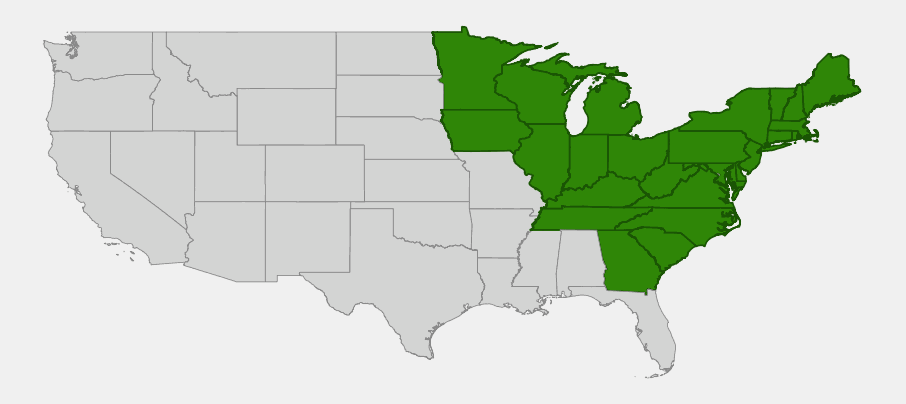
American golden saxifrage is native to northeastern North America. USDA PLANTS lists it as native in 25 states, from Maine and the other New England states west through New York, Pennsylvania, Ohio, Michigan and Wisconsin to Minnesota and Iowa, and south through the Appalachians to Virginia, West Virginia, Kentucky, Tennessee and North Carolina. In Canada it grows in southern Ontario and Quebec and in New Brunswick, Nova Scotia and Prince Edward Island.
It is most common in New England, New York, Pennsylvania and the northern Great Lakes states, and in the Appalachian Mountains. In Iowa, Illinois and Indiana it is local and restricted to cold seeps, and in Minnesota it grows in the eastern part of the state. Georgia and South Carolina records are outlying southern populations in the mountains, near the southern limit of its range.
It grows in shaded, constantly wet places fed by cold groundwater: springs and spring runs, seeps on slopes and at the base of bluffs, mucky stream banks, forested swamps and wet hollows in hemlock and hardwood forests. It often forms large mats with mosses and other plants of seepage areas.
📋 Regional plant lists featuring American Golden Saxifrage: New York, Pennsylvania & Northern New Jersey · Ohio & Indiana · Michigan, Wisconsin & Eastern Minnesota · Kentucky & Tennessee · Connecticut, Massachusetts & Rhode Island · New Hampshire, Maine & Vermont · Maryland, Virginia & West Virginia · Delaware, Southern New Jersey & Long Island · Illinois, Iowa & Missouri · Alabama, Georgia & Mississippi · North & South Carolina
Growing & Care Guide
American golden saxifrage is a specialist of cold, wet, shady ground. It is not a typical garden plant, but it can be grown where its needs are met, such as a shaded seep, a spring-fed stream or a carefully kept bog garden.
Light
Part shade to full shade. It grows naturally under trees and shrubs and suffers in hot sun, especially when the soil warms in summer.
Soil & Water
It needs soil that is saturated all year, ideally with cool, flowing groundwater. Mucky, organic or sandy soils at the edge of a spring or slow stream are ideal. It does not tolerate drying, and still, warm water is less suitable than cold seepage.
Planting Tips
Use plants or divisions from a native plant nursery or from a friend’s garden, never from wild seeps. Press pieces of the creeping stems into wet mud in spring, where they will root quickly. Combine it with skunk cabbage, marsh marigold and ferns to make a natural spring garden.
Pruning & Maintenance
No pruning is needed. Keep fallen leaves from smothering the mats in spring, and keep larger plants and invasive species, such as moneywort, from crowding it.
Propagation
It is easiest to propagate by division or by rooting pieces of stem in wet soil. Seed can be sown fresh on the surface of constantly moist, shaded soil.
Landscape Uses
- Shaded seeps and springs: a natural living mat for spring-fed ground
- Stream and pond edges: a low cover for wet, shaded banks
- Bog and rain gardens: for shaded, permanently wet areas
- Early spring interest: green mats and tiny flowers from March
- Wetland restoration: for seepage and spring habitats
Wildlife & Ecological Value
American golden saxifrage is part of the small, specialized community of plants and animals that live in cold springs and seeps.
For Pollinators
Its tiny, open flowers offer nectar from a disk at the center and are visited by small flies, gnats and other tiny insects that are active in early spring. It can also pollinate itself.
For Birds
Its mats provide cover for insects and other small animals that birds such as thrushes, warblers and waterthrushes hunt along seeps and streams.
For Mammals
It is rarely eaten by deer. Its mats shelter small invertebrates eaten by shrews and other small mammals.
Ecosystem Role
Its dense mats help hold mud and sand in place along springs and spring runs and give cover to salamanders, aquatic insects and snails that live in seepage habitats. Because it depends on clean, cold groundwater, it is a good sign that a spring or seep is healthy.
Cultural & Historical Uses
The genus name Chrysosplenium comes from the Greek chrysos, gold, and splen, spleen. The “golden” part refers to the yellow flowers of the Eurasian species, and the “spleen” part to an old belief that the plants could treat ailments of the spleen.
Golden saxifrages are not true saxifrages (Saxifraga), but they belong to the same family. American golden saxifrage is sometimes called water-mat, a name that describes its creeping mats in shallow water.
The splash-cup seed dispersal of golden saxifrages is a classic example in botany: the open capsules are shaped so that falling raindrops throw the seeds a short distance, helping new plants colonize nearby wet ground.
Frequently Asked Questions
Is American golden saxifrage really golden?
Not very. Its flowers are green or yellowish-green and have no petals. The red to orange anthers are the most colorful part. Some Eurasian relatives have brighter yellow flowers, which gave the genus its name.
Where can I find American golden saxifrage?
Look in early spring in shaded springs, seeps, swamps and wet stream banks in the Northeast, the Great Lakes states and the Appalachians.
Can I grow American golden saxifrage in my garden?
Only if you have a shaded spot that stays wet all year, such as a seep, spring or the edge of a cool stream. Use propagated plants; never dig it from the wild.
When does American golden saxifrage bloom?
It is one of the earliest wildflowers, blooming from March to May depending on latitude and elevation.
How are the seeds spread?
The fruit is an open cup. When raindrops fall into it, they splash the tiny seeds out onto nearby wet ground.

Looking for a nursery that carries American Golden Saxifrage?
Browse our native plant nursery directory: Connecticut, Delaware & Georgia · Illinois, Indiana & Iowa · Kentucky, Maine, Maryland, Massachusetts, Michigan & Minnesota · New Hampshire, New Jersey, New York, North Carolina & Ohio · Pennsylvania, Rhode Island, South Carolina, Tennessee, Vermont & Virginia · West Virginia & Wisconsin

