
Metz’s Ruellia (Ruellia metziae)
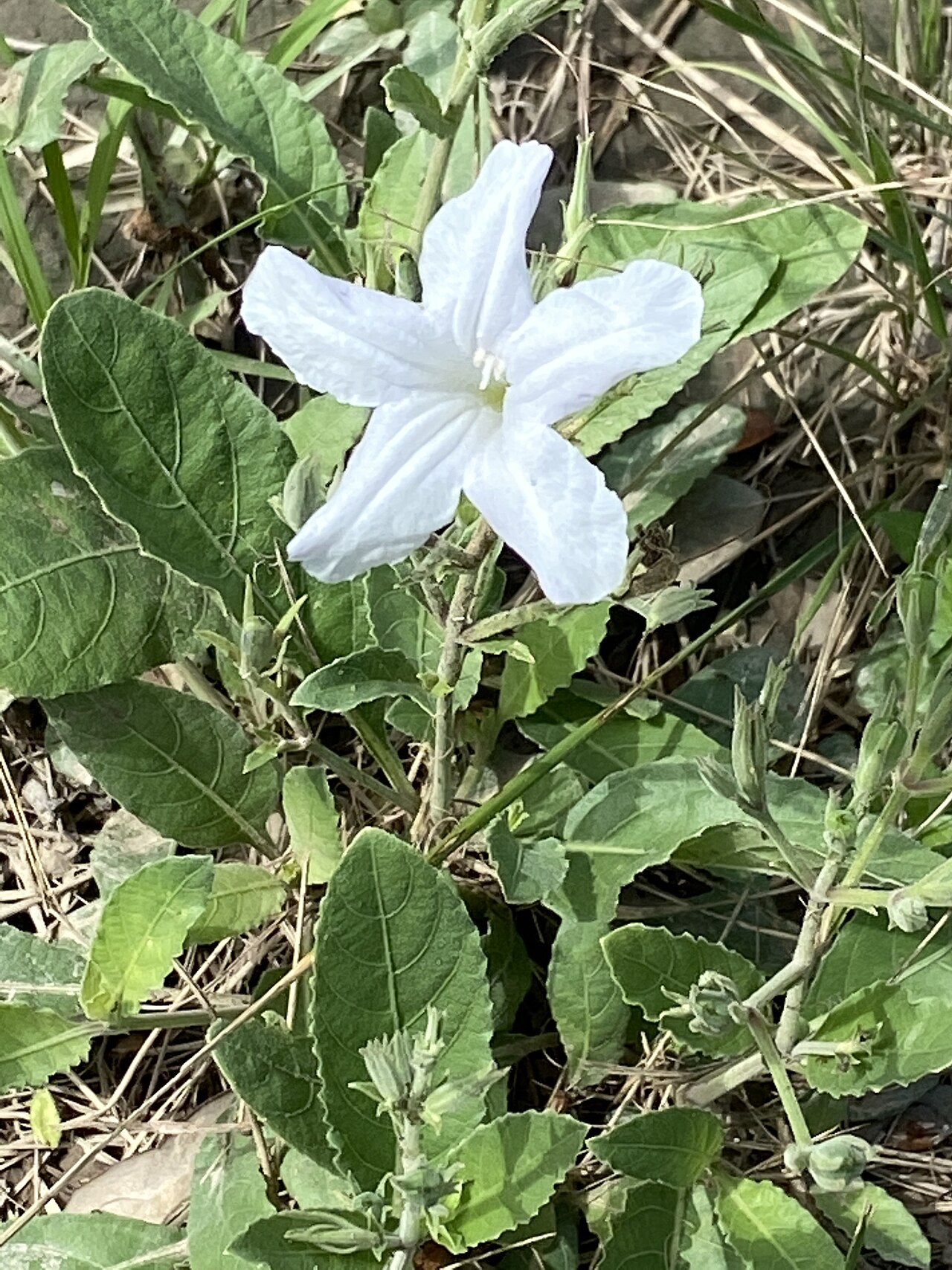
Ruellia metziae, known as Metz’s Ruellia or Metz’s wild petunia, is a perennial wildflower in the acanthus family (Acanthaceae). It grows 1 to 2 feet tall, with upright, softly hairy stems and paired oval leaves, and in summer it bears large white, funnel-shaped flowers 2 inches or more long. Most wild petunias have lavender to purple flowers, so its white flowers make it easy to recognize.
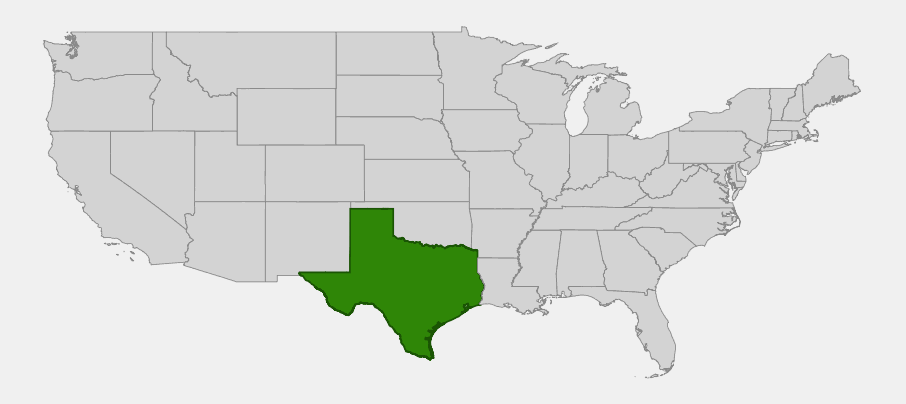
Metz’s ruellia is found only in Texas. It grows mainly on the Edwards Plateau and in the Hill Country, from the Lampasas Cut Plain south and southwest through Central Texas to the Balcones Escarpment around Austin and San Antonio and west to the area around Junction and Kinney County. It grows on limestone outcrops and gravelly soils, in thickets, open woods, fields and prairies.
It blooms mainly from June through August, with more flowers into fall after rain. It is a drought-tolerant native for Central Texas gardens, especially partly shaded beds under oaks and junipers, where its white flowers show up well.
Identification
Look for an upright, softly hairy wild petunia with paired oval leaves and large white, long-tubed, five-lobed flowers in summer, on limestone soils of Central Texas.
Growth Habit
Metz’s ruellia is a herbaceous perennial with one to several upright, usually unbranched or few-branched stems, 1 to 2 feet tall, from a woody root crown. The stems are covered in soft hairs. Plants die back to the ground in winter and resprout in spring.
Leaves
The leaves are opposite, oval to elliptic, about 2 to 4 inches long, with short stalks and smooth or slightly wavy edges. They are softly hairy, often grayish-green, with a pale midrib.
Flowers
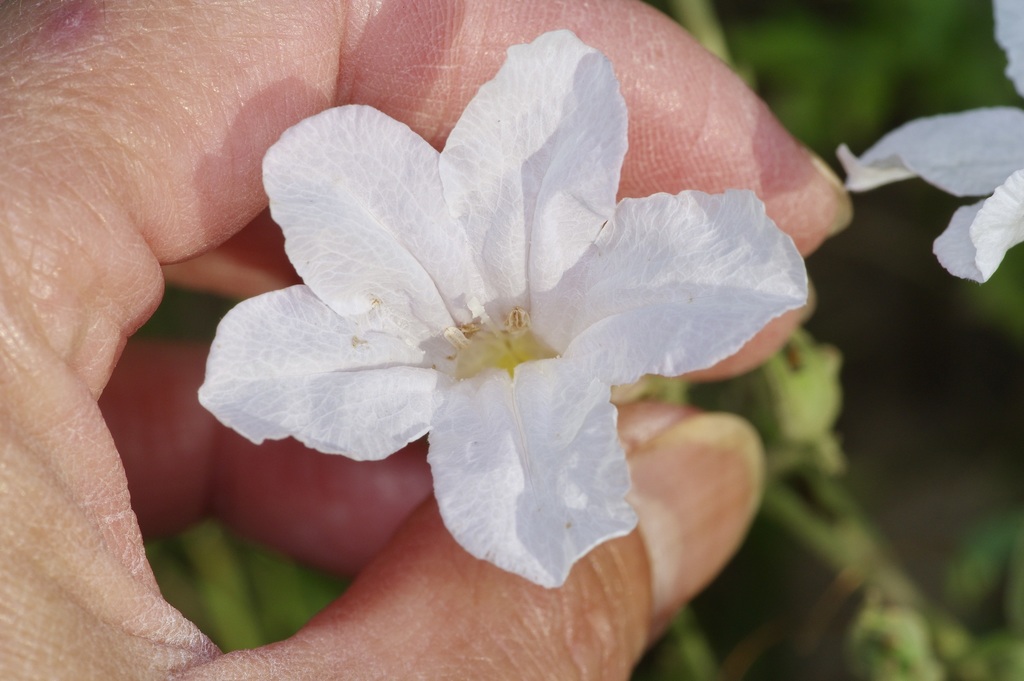
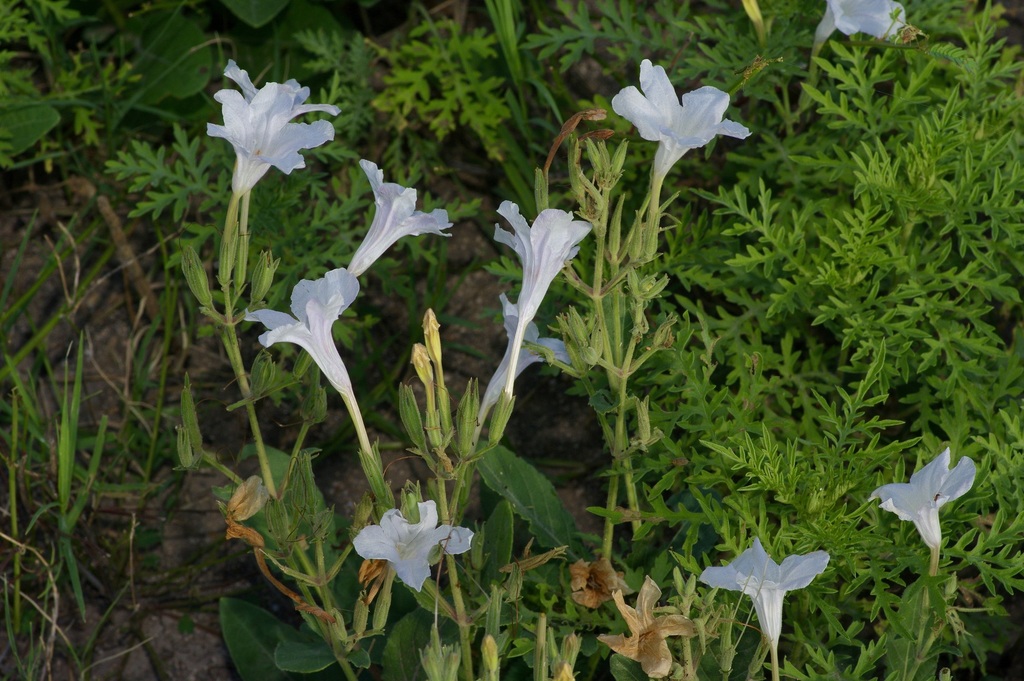
The flowers grow from the upper leaf axils, one or a few at a time. Each is a long, slender tube that widens into a funnel with five broad, rounded, slightly crinkled lobes about 1 1/2 to 2 inches across. They are pure white, sometimes faintly tinged lavender, with a pale yellowish throat. As in other wild petunias, each flower lasts only about a day, but new ones open over a long season, mostly June to August and later after rain.
Fruit & Seeds
The fruit is a narrow, club-shaped capsule that dries and splits open explosively, flinging the flat seeds a short distance from the plant, as in other Ruellia species.
Look-alikes
Other Texas wild petunias have lavender to purple flowers. Violet ruellia is a common, low, purple-flowered species of Texas, and fringeleaf wild petunia is a low, bushy plant with lavender flowers and hairy-edged leaves. Carolina wild petunia and smooth ruellia are mostly eastern species with lavender-blue flowers. Occasional white-flowered forms of these species exist, but Metz’s ruellia’s consistently white, long-tubed flowers, soft hairs and Edwards Plateau range set it apart.
Quick Facts
| Scientific Name | Ruellia metziae |
| Family | Acanthaceae (acanthus family) |
| Plant Type | Herbaceous perennial |
| Mature Height | 1–2 ft |
| Mature Spread | 1–1.5 ft |
| Growth Rate | Moderate |
| Sun Exposure | Full sun to part shade |
| Water Needs | Low; drought tolerant |
| Soil Type | Limestone, gravelly, rocky or clay loam; well-drained |
| Soil pH | Neutral to alkaline (about 7.0–8.5) |
| Bloom Time | June–August; sporadically into fall |
| Flower Color | White, sometimes faintly lavender-tinged |
| Fall Color | None notable |
| Fruit | Narrow capsule that ejects seeds |
| Deer Resistant | Moderately |
| USDA Hardiness Zones | 7–9 |
Native Range
Metz’s ruellia is endemic to Texas: it grows nowhere else in the world. USDA PLANTS lists it only from Texas, and the Lady Bird Johnson Wildflower Center describes its range as mainly the Lampasas Cut Plain south and southwest to Central Texas and the Edwards Plateau.
It is most often seen in the Hill Country and along the Balcones Escarpment, in counties such as Travis, Comal, Kendall, Bexar, Bandera, Kimble and Uvalde, and west to Kinney County. It has been seen in places such as Garner State Park on the Frio River and city parks in Boerne and San Antonio. It is fairly common within this limited range.
It grows on limestone outcrops, rocky and gravelly slopes, thin clay loams over limestone, thickets, juniper-oak woodlands and their edges, fields, prairies and roadsides, often in light shade.
📋 Regional plant lists featuring Metz’s Ruellia: South & West Texas
Growing & Care Guide
Metz’s ruellia is easy to grow in Central Texas and thrives on neglect. It is occasionally offered by native plant nurseries and plant sales in the Austin and San Antonio areas.
Light
Full sun to part shade. It grows naturally in open woods and thicket edges and does well in dappled shade under oaks, as well as in sun with some afternoon shade.
Soil & Water
Plant it in well-drained soil: rocky or gravelly limestone soil, thin clay loam or caliche. It is very drought tolerant once established and needs water only in long, hot droughts. Avoid poorly drained, soggy soil.
Planting Tips
Use it in a partly shaded native bed, a woodland edge, a rock garden or among grasses in a small meadow. Plant it in groups, about 12 inches apart, for a better show. Its white flowers stand out in the evening and in shade, and pair well with purple-flowered natives such as violet ruellia and mealy blue sage.
Pruning & Maintenance
Very little care is needed. Cut the dead stems back in winter. It may reseed nearby from its explosive capsules but is not aggressive.
Propagation
Grow it from seed collected just before the capsules split, sown in spring in a well-drained mix. It can also be divided in late winter or early spring or grown from stem cuttings in early summer.
Landscape Uses
- Shade gardens: white flowers that light up dappled shade under oaks
- Rock gardens: suits thin, rocky limestone soils
- Pollinator gardens: long-tubed flowers for bees and moths
- Native meadows: mixes with Hill Country grasses and wildflowers
- Xeriscapes: very drought tolerant once established
Wildlife & Ecological Value
Metz’s ruellia flowers through the hot Texas summer, when many other Hill Country wildflowers have finished blooming.
For Pollinators
Wild petunia flowers are visited by bees, especially long-tongued bees, and by butterflies and moths. Its long, white tubes are the kind of flowers often visited by moths at dusk. Wild petunias (Ruellia) are also larval host plants for the common buckeye butterfly and the Texan crescent.
For Birds
Ground-feeding birds such as doves and sparrows may eat the small seeds thrown from the capsules.
For Mammals
Deer browse it only lightly; it is moderately deer resistant in Hill Country gardens.
Ecosystem Role
As a Texas endemic, Metz’s ruellia is part of the distinctive flora of the Edwards Plateau and the Balcones Escarpment, which has many plants found nowhere else. It grows in the herb layer of juniper-oak woodlands and their open edges.
Cultural & Historical Uses
The genus Ruellia is named for Jean Ruel, a 16th-century French herbalist and physician. The species name metziae honors a woman named Metz; the -iae ending is used for names honoring women. The species was described by Texas botanist B. C. Tharp of the University of Texas.
Wild petunias are not related to garden petunias, which belong to the nightshade family. They share only the funnel-shaped flowers. Ruellia belongs to the acanthus family, along with shrimp plants and the ornamental acanthus.
Central Texas has several native species of Ruellia, which can be told apart by flower color, flower size, leaf hairs and growth habit. Metz’s ruellia, with its tall stems and large white flowers, is among the most distinctive.
Frequently Asked Questions
Is Metz’s ruellia a petunia?
No. It is a wild petunia in the acanthus family. It is not related to garden petunias, which are in the nightshade family.
Why are its flowers white?
Metz’s ruellia naturally has white flowers, unlike most wild petunias, which are lavender to purple. Its long white tubes may help attract evening-flying moths.
Where does Metz’s ruellia grow?
Only in Texas, mainly on the Edwards Plateau, in the Hill Country and along the Balcones Escarpment from the Austin area to San Antonio and west.
Does Metz’s ruellia need much water?
No. It is very drought tolerant once established and does best in well-drained, rocky or limestone soil.
Is Metz’s ruellia invasive like Mexican petunia?
No. It is a native Texas wildflower that reseeds only modestly. The invasive Mexican petunia (Ruellia simplex) is a different, non-native species.

Looking for a nursery that carries Metz’s Ruellia?
Browse our native plant nursery directory: Texas

