
Native Figs (Ficus)
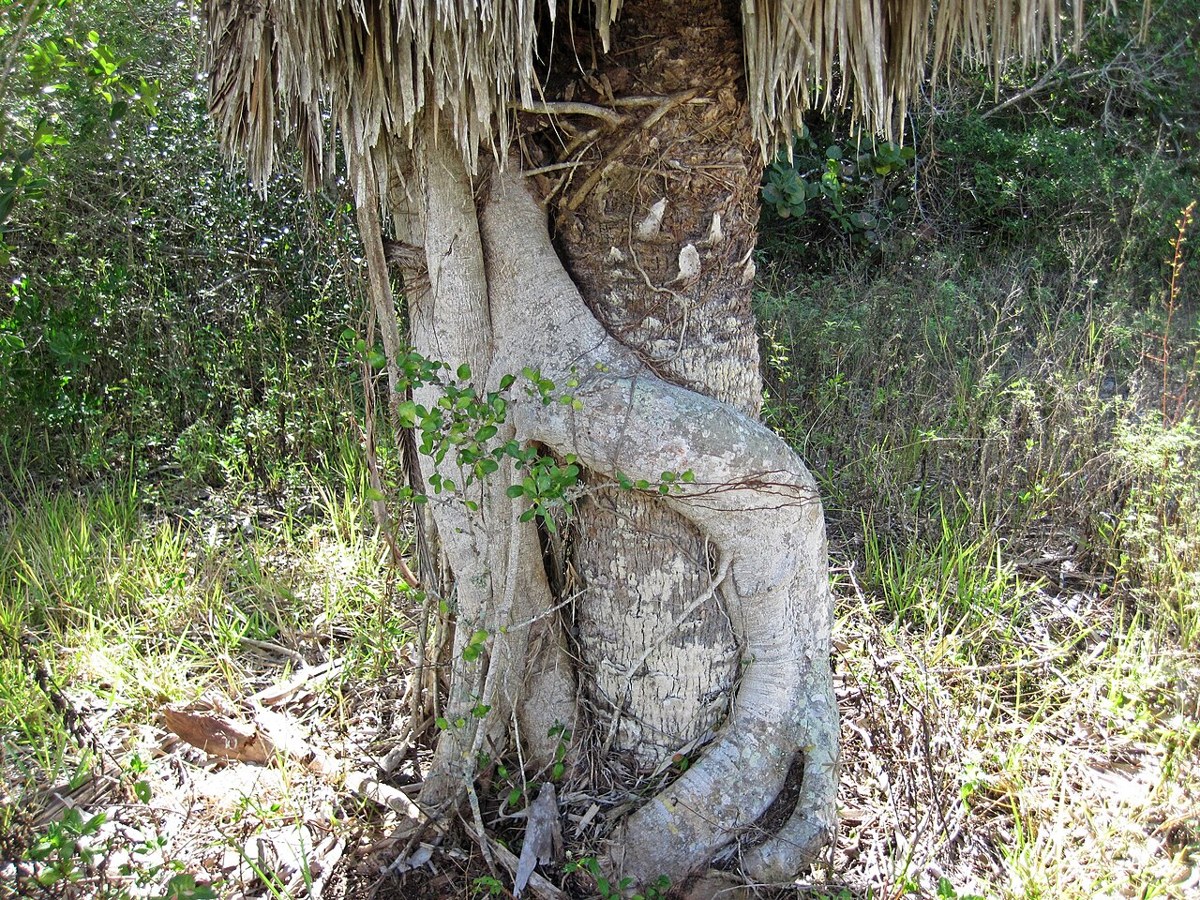
Figs (genus Ficus) are one of the largest genera of woody plants, with roughly 800 species of trees, shrubs and vines across the tropics and subtropics. Only two are native to the continental United States, and both grow wild only in southern Florida: the Florida strangler fig (Ficus aurea) and the shortleaf fig (Ficus citrifolia). Both are large, evergreen, tropical trees that start life high in another tree and send roots down to the ground. Neither is grown for its fruit.
The fig most Floridians plant, the edible fig (Ficus carica), is not native to the Americas at all. It comes from the Mediterranean and western Asia and has been grown in Florida since Spanish colonial times. The common hedge and houseplant figs, including weeping fig, Indian laurel fig, rubber tree and fiddle-leaf fig, are tropical Asian and African species, and several of them now spread on their own in South Florida.
If you came here from our Florida ornamental trees article, its “Fig” means the edible fig, a deciduous fruit tree for north and central Florida. This guide explains how to recognize Florida’s two native figs, where they grow, how to use them in South Florida landscapes, and how to tell them apart from the imported figs that are far more common in yards and hedges.
Identification
All figs share a few traits. Break a leaf or twig and a milky white latex oozes out. The leaves are alternate and simple, and each new leaf is wrapped in a pointed sheath (stipule) that falls off and leaves a ring-shaped scar around the twig. And the “fruit” is a syconium, a hollow, fleshy receptacle with hundreds of tiny flowers lining the inside, which is why fig trees never seem to flower.
Leaves
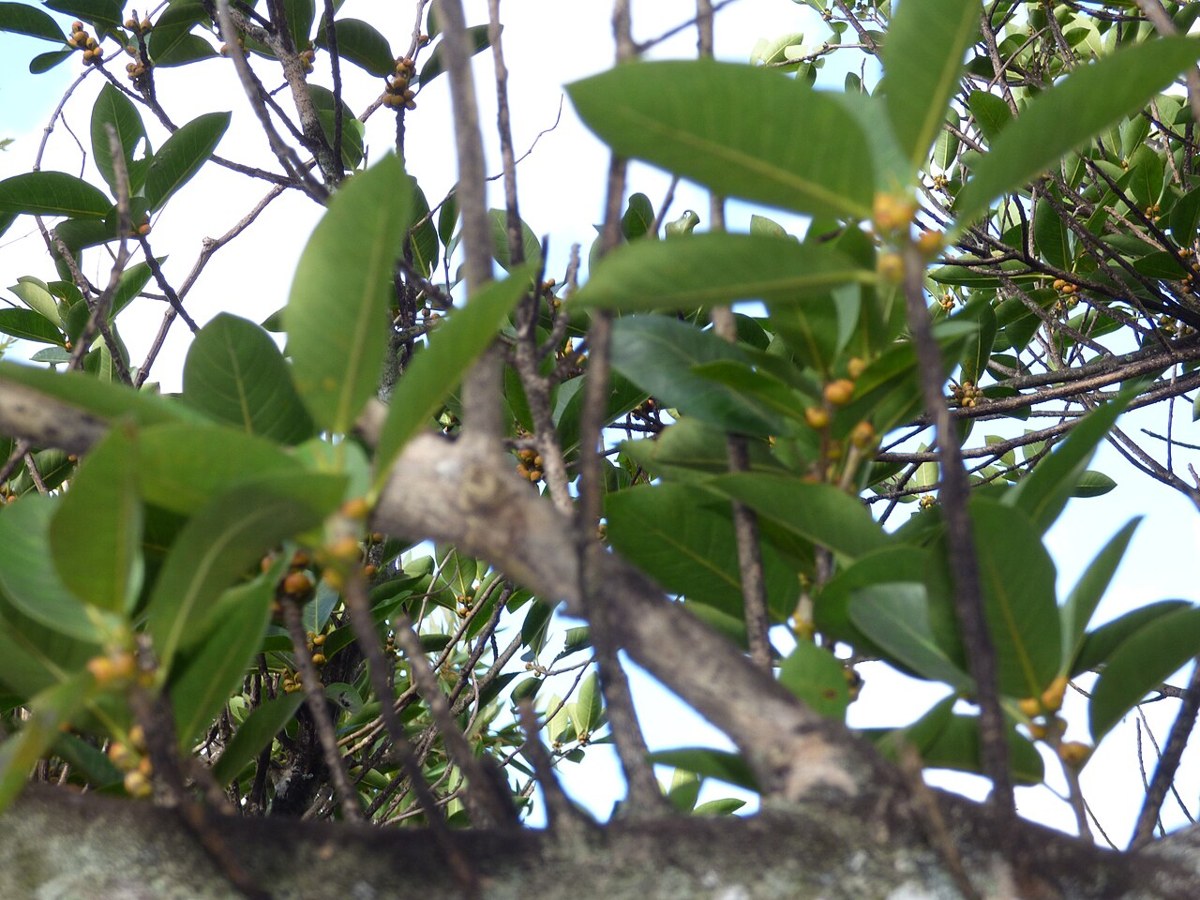
Florida strangler fig has thick, leathery, smooth, dark green leaves, oval to elliptic, about 2–5 inches long, with a pale yellow midrib, a wedge-shaped or rounded base and a short stalk. Shortleaf fig leaves are broader and thinner, oval to nearly heart-shaped at the base, on a longer stalk. The edible fig, by contrast, has large, rough, deeply three- to five-lobed leaves and drops them in winter.
Figs
The figs of both native species are small, under ¾ inch across. Florida strangler fig bears its figs in pairs directly against the twig with no stalk, ripening from green to yellow, then red or purplish. Shortleaf fig figs sit on short stalks and ripen yellow to red. Both fruit in flushes throughout the year.
Roots & Form
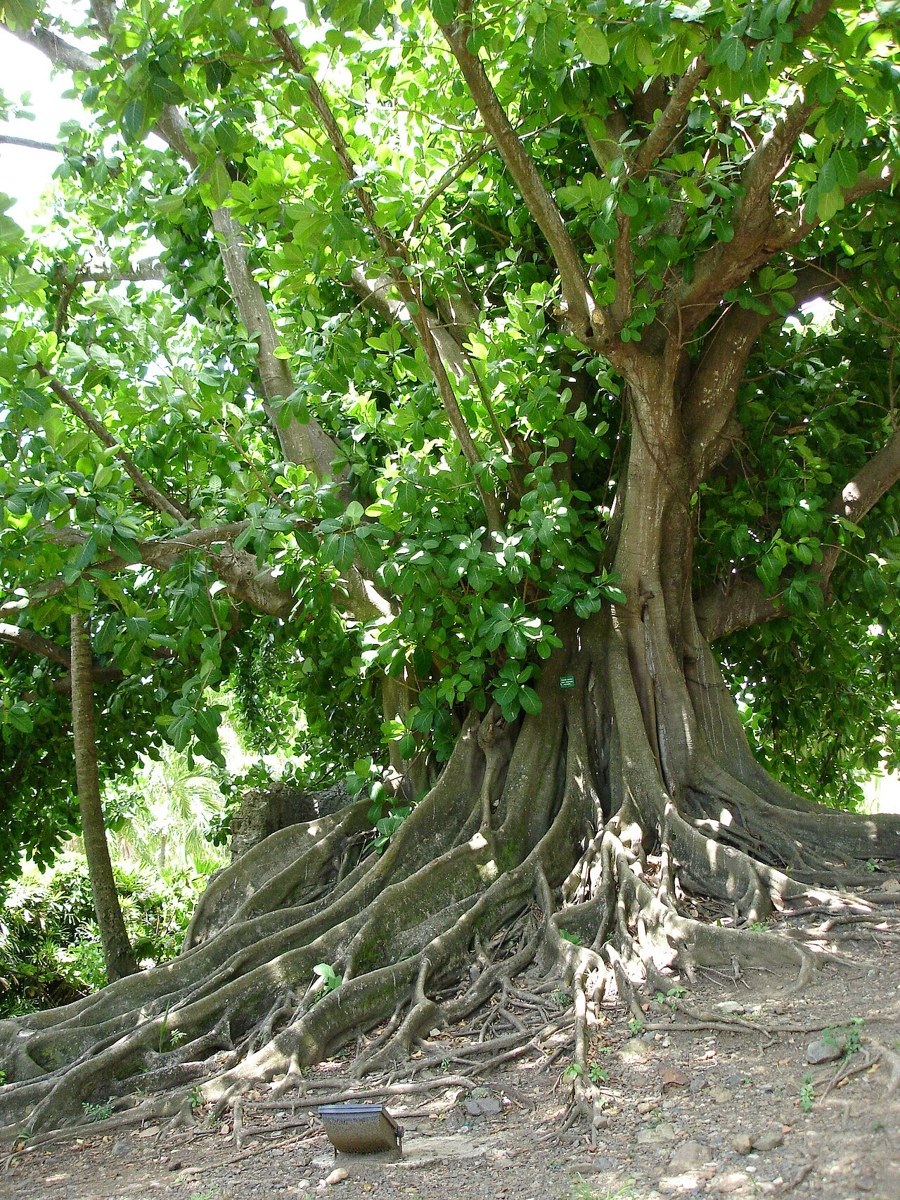
Most strangler figs start as epiphytes. Birds and other animals leave the seeds in the crown of a host tree, often a cabbage palm or live oak, where the seedling grows as a small shrub and sends long roots down the host’s trunk. When the roots reach the soil they thicken, fuse into a lattice and eventually form a trunk of their own, while the fig’s crown shades the host from above. Hardwood hosts usually die; cabbage palms often survive inside the fig for many years because palm trunks do not thicken. Shortleaf fig can start the same way but more often grows as a free-standing tree with aerial roots hanging from its branches. Both develop broad, buttressed trunks and wide-spreading surface roots.
Quick Facts
| Genus | Ficus |
| Family | Moraceae (Mulberry family) |
| U.S. Native Species | 2 in the continental U.S.: Florida strangler fig (F. aurea) and shortleaf fig (F. citrifolia), both in southern Florida |
| Plant Type | Large evergreen trees, often starting as epiphytes (hemiepiphytic stranglers) |
| Mature Height | About 30–60 ft; strangler fig occasionally taller |
| Mature Spread | About 30–60 ft or more |
| Growth Rate | Fast |
| Sun Exposure | Full Sun to Part Shade |
| Water Needs | Moderate; drought tolerant once established |
| Soil Type | Sand, limestone and organic hammock soils; adaptable if well drained |
| Bloom Time | Year-round (flowers hidden inside the fig) |
| Fruit | Small figs under ¾ in, yellow to red or purple, in flushes through the year |
| Deer Resistant | Mostly |
| USDA Hardiness Zones | 10–11 (strangler fig into warm parts of 9b); damaged by frost |
| Wildlife Value | Year-round fruit for many birds and mammals; host to fig wasps and several native caterpillars |
Native Range
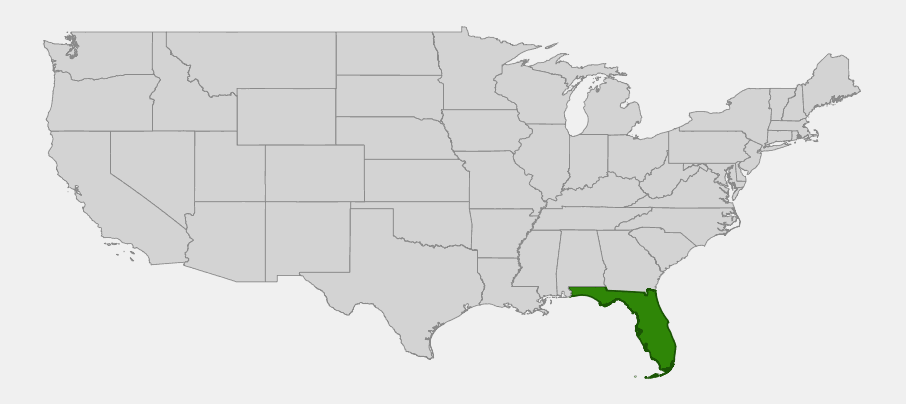
Florida’s two native figs are tropical trees at the northern edge of their range. The Florida strangler fig is the more common and widespread. It grows in hardwood hammocks, cypress swamps, shell mounds, mangrove edges and urban lots through the southern half of the Florida peninsula and the Keys, reaching north along both coasts into central Florida, where hard freezes limit it. It is also native to the Bahamas, the Caribbean and Central America.
The shortleaf fig, also called wild banyan tree, is much rarer in Florida. It is found mainly in the tropical hammocks of Miami-Dade County and the Florida Keys, with scattered records slightly farther north. It has a very large range beyond the United States, from the Caribbean through Mexico and Central America to South America, which is why the example in our photo comes from the island of Martinique.
No fig is native to any other state. Hawaii has many introduced figs but no native ones. In the rest of the South, the figs you see, whether edible figs in backyards or creeping fig on walls, are planted and non-native.
📋 Florida has no regional plant list yet. Browse more native trees in our native plant directory.
Native Species
The continental United States has only two native figs, and both have full Plant Native profiles.
Florida Strangler Fig (Ficus aurea)
Also called golden fig. The common native fig of South and central Florida, 30–60 ft tall with a broad, dense crown, thick leathery leaves and pairs of small stalkless figs. It usually begins as a strangler on cabbage palms or hardwoods and becomes a massive tree with a trunk made of fused roots. A superb wildlife tree for large properties and natural areas, but its roots are too aggressive for small yards.
Shortleaf Fig (Ficus citrifolia)
Also called wild banyan tree. A smaller, more open tree, usually 25–50 ft, with broader, thinner leaves on long stalks and stalked figs. In Florida it is native mainly in Miami-Dade County and the Keys, where it is uncommon. It is often grown in South Florida native landscapes as a less overpowering alternative to strangler fig, though it still needs plenty of room.
Non-Native Look-Alikes
Most figs in Florida yards, hedges and streets are imports. Some are harmless; several spread aggressively. The key difference from many of them is the need for a matching pollinator wasp: a fig can only produce seed where its own species of fig wasp lives, and the wasps of several Asian figs have arrived in Florida, allowing those figs to seed into natural areas.
Edible Fig (Ficus carica)
The fig of fig cookies and backyard orchards, native to the Mediterranean and western Asia. A deciduous shrub or small tree, 10–30 ft, with big, rough, lobed leaves and sweet fruit that does not need pollination in common Florida varieties such as ‘Celeste’ and ‘Brown Turkey’. It grows best in north and central Florida. It is not native, but it is not considered invasive in Florida; in California it has escaped along streams and is listed as an invasive plant there.
Weeping Fig (Ficus benjamina)
The familiar houseplant and South Florida hedge, from tropical Asia and Australia, with small, glossy, pointed leaves on drooping twigs. Outdoors it becomes a huge tree whose roots crack sidewalks, foundations and pipes, and hedges have been heavily damaged by the ficus whitefly since 2007.
Indian Laurel Fig and Other Banyans
Indian laurel fig or Chinese banyan (Ficus microcarpa) is listed by the Florida Invasive Species Council as a Category I invasive plant: its pollinator wasp is established in Florida and birds spread its seeds onto buildings, bridges and native trees, where it grows as a strangler. The council tree (Ficus altissima), Indian banyan (Ficus benghalensis) and rubber tree (Ficus elastica) are other large Asian figs planted in South Florida. Fiddle-leaf fig (Ficus lyrata) from Africa and creeping fig (Ficus pumila), a clinging vine from East Asia, are also common. If you want a big fig tree in South Florida, choose a native one.
Growing & Care Guide
Light
Both native figs grow best in full sun and tolerate part shade. Young plants grown in shade stretch toward light.
Soil & Water
They are adaptable to sand, limestone rock and organic hammock soils as long as water does not stand around the roots for long periods. Water new plantings regularly for the first growing season; afterward they are drought tolerant and need no fertilizer. Florida strangler fig has moderate tolerance of salt spray, but neither species belongs on the front line of the dunes.
Planting Tips
Plan for size. Native figs are large, fast trees with wide-spreading, surface roots that lift pavement and enter pipes, so plant them at least 30–40 ft from buildings, septic systems, pools and sidewalks. They are best in parks, large lots, buffer plantings and natural areas. Grow them only in Zones 10–11, or in the warmest parts of 9b where an occasional freeze will knock them back. Young plants can be grown in containers or as bonsai.
Pruning & Maintenance
Remove dead wood and any branches growing toward structures while the tree is young; large cuts on mature trees should be left to an arborist. Wear gloves when pruning, because the milky latex can irritate skin and stains clothing. Fallen figs can be messy over patios and driveways. If a strangler fig seedling appears in a palm next to your house, remove it while it is small.
Propagation
Native figs root readily from cuttings, including large branch cuttings, and from air layers. Seed works where the native fig wasps are present; sow the tiny seeds from ripe figs on the surface of a moist, sterile mix.
Landscape Uses
- Large shade and specimen trees for parks and big South Florida properties
- Wildlife habitat and bird gardens, for year-round fruit
- Hammock and hardwood restoration in South Florida
- Native replacements for weeping fig, Indian laurel fig and other imported banyans
- Bonsai and large container specimens
Wildlife & Ecological Value
For Pollinators
Each native fig depends on its own species of tiny fig wasp (genus Pegoscapus) for pollination. Female wasps squeeze into an immature fig through a pore at its tip, pollinate the flowers inside and lay eggs; their offspring mate inside the fig, and the new females carry pollen out to the next tree. Neither the fig nor the wasp can reproduce without the other, which is why native figs fruit in flushes year-round: there must always be figs ready for the next generation of wasps.
For Birds
Because they fruit through the year, native figs are a keystone food in South Florida. White-crowned pigeons, gray catbirds, red-bellied woodpeckers, blue jays, mockingbirds, cedar waxwings, warblers and many migrants eat the figs, and the dense crowns shelter nesting and roosting birds.
For Mammals and Other Wildlife
Raccoons, opossums and squirrels feed on fallen and hanging figs. Strangler figs are larval hosts for the ficus sphinx moth, and the hollow lattices of fused roots shelter lizards, tree frogs, snails and insects.
Ecosystem Role
Strangler figs are among the largest trees in South Florida’s tropical hammocks, and their epiphytic start lets them reach the canopy without waiting for a gap. Over decades, their fused root columns become habitat for ferns, orchids and bromeliads.
Cultural & Historical Uses
The Calusa and other Native peoples of South Florida lived among strangler figs on the shell mounds of the coast and islands, where large figs still grow today. Neither native fig has a significant role as food; the figs are small and dry compared with edible figs.
Edible figs arrived in Florida with Spanish settlers in the 1500s and have been a backyard fruit tree in north and central Florida ever since. The imported banyans and weeping figs became popular landscape trees in South Florida in the 20th century, with mixed results as their size and roots outgrew their sites.
Large Florida strangler figs are landmarks in many South Florida parks, including along the Gumbo Limbo Trail in Everglades National Park and on Sanibel Island, where they show the strangling habit in every stage.
Frequently Asked Questions
Is the edible fig native to Florida?
No. The edible fig (Ficus carica) comes from the Mediterranean and western Asia. It grows well in north and central Florida and is not considered invasive there, but Florida’s only native figs are the strangler fig and shortleaf fig of South Florida.
Can you eat the fruit of the Florida strangler fig?
The small figs are eaten by many birds and mammals, but they are tiny and bland and are not grown as a food crop for people. Plant an edible fig if you want fruit, and plant a native fig for wildlife.
Does a strangler fig really kill its host?
It often does when the host is a hardwood tree: the fig’s roots encircle the trunk and its crown shades the host’s leaves. Cabbage palms often survive for many years inside a fig because palm trunks do not grow wider.
How far from my house should I plant a native fig?
At least 30–40 ft from buildings, pools, septic systems and paved areas. Native figs are large, fast trees with aggressive surface roots, best suited to parks and large lots.
Are fig trees toxic to pets?
The milky latex of figs can irritate skin, eyes and mouths, and the leaves and sap of ornamental figs are listed as toxic to dogs and cats by the ASPCA, causing vomiting and skin irritation. Keep pets from chewing fig leaves and wear gloves when pruning.

Looking for a nursery that carries native figs?
Browse our native plant nursery directory: Florida

