
Native Birches (Betula)
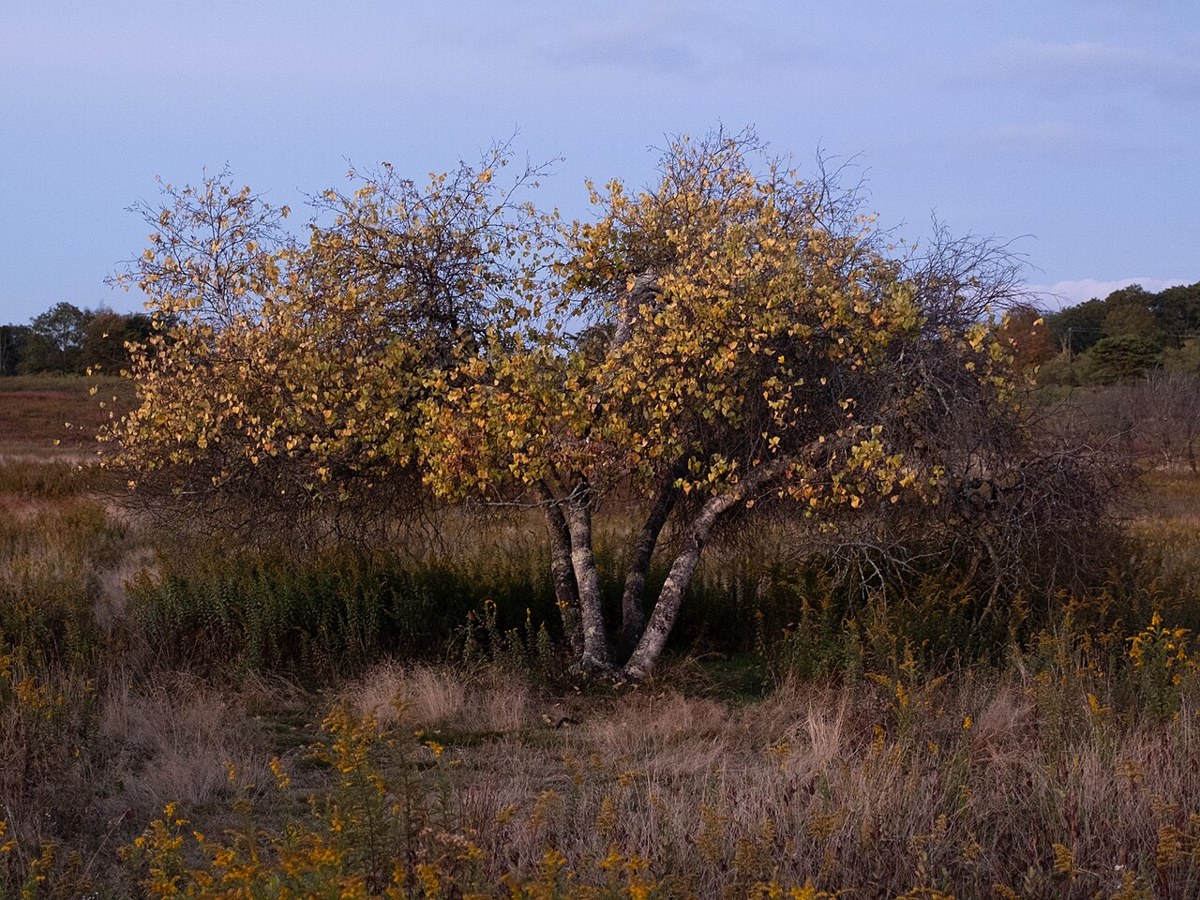
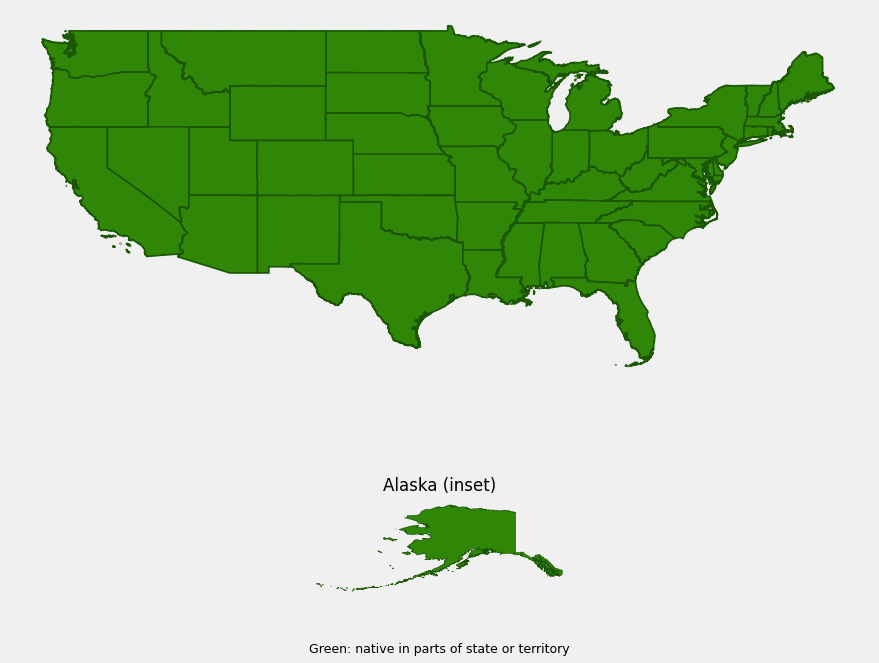
Birches (genus Betula) are deciduous trees and shrubs known for their striking bark, which may be chalky white, bronze, salmon-pink or nearly black, and often peels in thin, papery layers. The genus has several dozen species across the cooler parts of the Northern Hemisphere. About 15 are native to the United States, ranging from 100-foot forest trees to knee-high shrubs of arctic tundra, and between them they grow wild in every state except Hawaii.
Many of the white-barked birches sold for lawns are not native. European white birch and Himalayan birch are common in nurseries, and both are short-lived in much of the country because a native beetle, the bronze birch borer, kills them readily. Our native birches range from the famous paper birch of the North Woods to the heat-tolerant river birch of southern floodplains, and choosing the right one for your region makes the difference between a tree that lasts decades and one that dies in ten years.
In Massachusetts, the birches you will meet most are gray birch in old fields and on roadsides, paper birch and yellow birch in cooler woods and hills, and sweet (black) birch on rocky slopes. River birch is native along a few rivers in the northeast of the state, and the shrubby bog birch and the upland mountain paper birch are less common. So there are more native birches in Massachusetts than the two named in our tree article.
Identification
Birches belong to the birch family (Betulaceae) together with alders, hornbeams, hophornbeams and hazelnuts. Look for alternate, simple leaves with toothed (usually double-toothed) edges, horizontal lenticels (short dashes) on smooth young bark, and catkins.
Bark
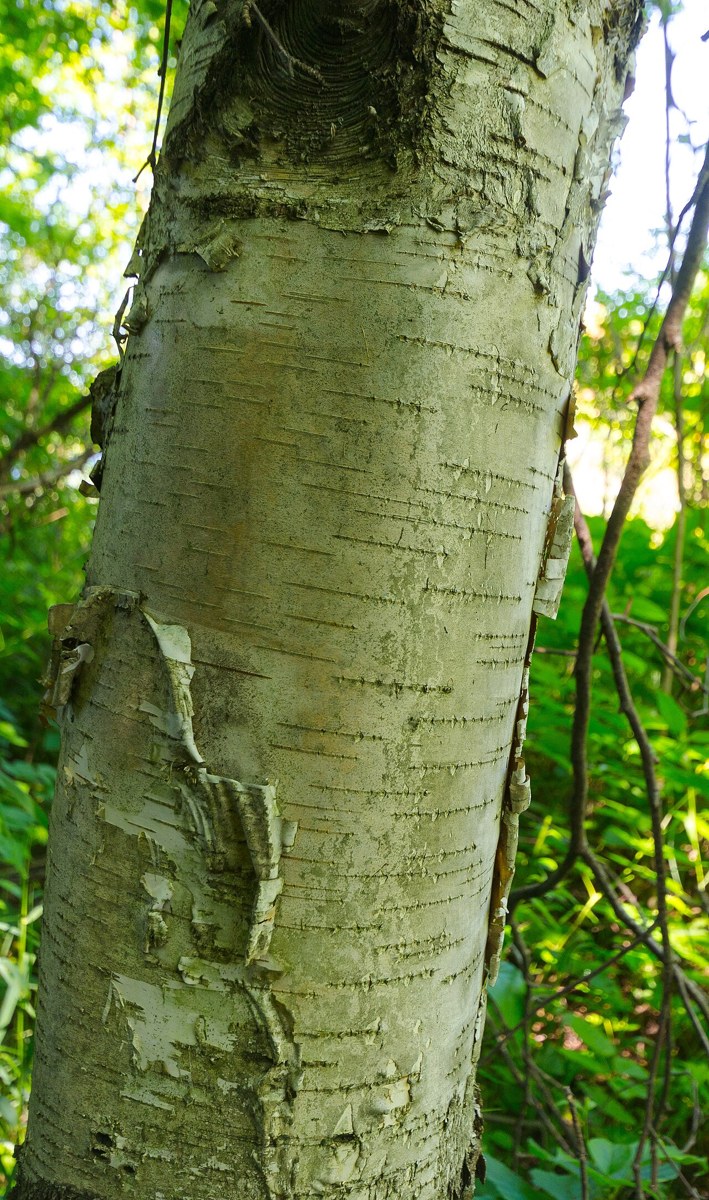
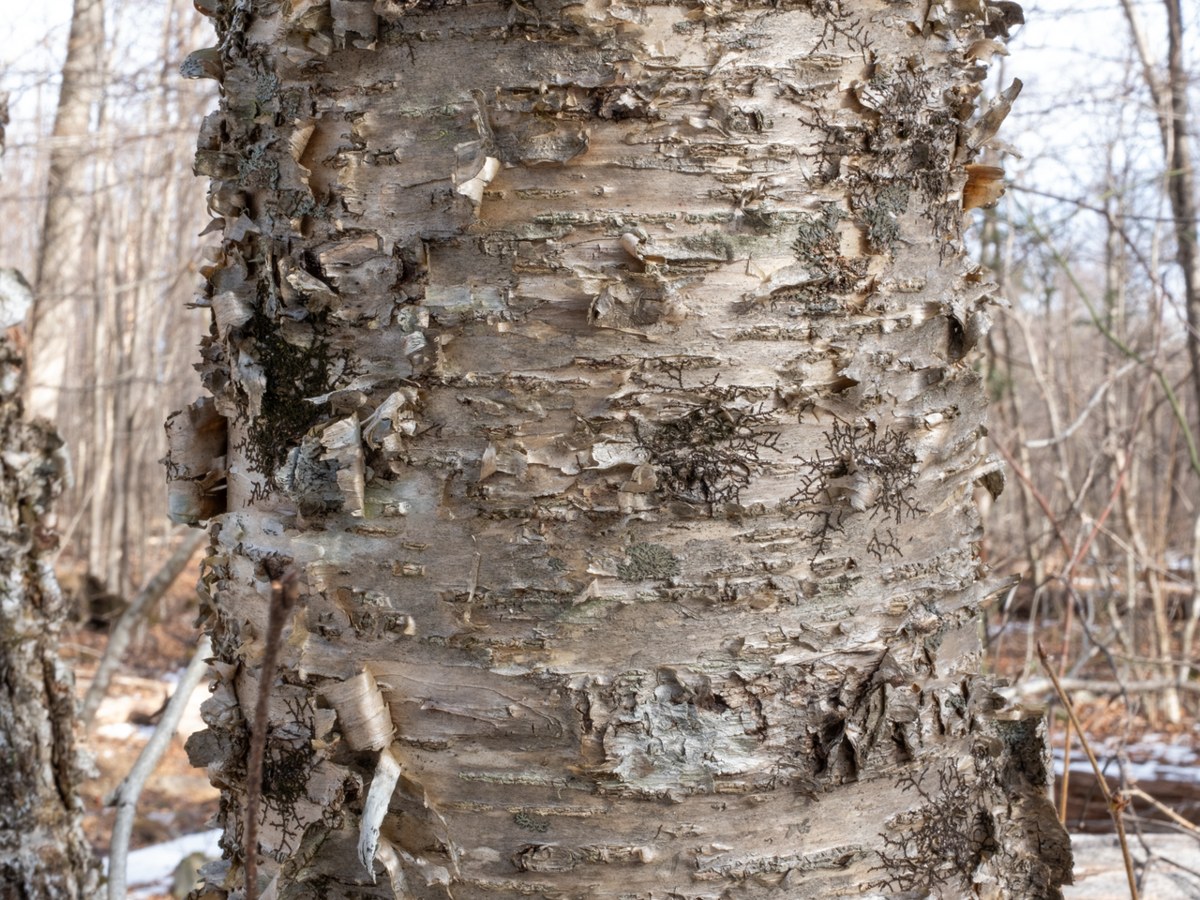
Bark is the best first clue. Paper birch has bright white bark that peels in wide, papery sheets, revealing orange inner bark. Gray birch is chalky grayish-white, does not peel readily, and has black, triangular patches below each branch. Yellow birch bark is bronze to silvery gold and curls in thin, shaggy ribbons. Sweet birch has dark, shiny bark like a cherry tree when young, breaking into large, dark plates with age. River birch has salmon-pink to cinnamon bark that peels in shaggy, curling layers on young trunks and turns dark and scaly at the base of old trees. Water birch of the West has glossy reddish-brown to almost black bark that does not peel.
Leaves
Gray birch leaves are triangular with a long, tapering tip, and flutter like aspen leaves. Paper birch leaves are oval with a rounded base. Mountain paper birch has heart-shaped leaf bases. River birch leaves are roughly diamond-shaped with a wedge-shaped base. Yellow and sweet birch leaves are oval with many fine, sharp teeth and straight, parallel side veins. The shrubby northern birches (bog, resin and dwarf birch) have small, rounded leaves under 1½ inches long. Most birches turn clear yellow in fall.
Twigs
Scratch a twig and smell it. Sweet birch and yellow birch twigs smell strongly of wintergreen; the others do not. Resin birch and Alaska birch have twigs dotted with resin glands.
Catkins & Seeds
Male catkins form in late summer and hang through winter at the branch tips, then lengthen and shed pollen in early spring. Female catkins are small and upright; they ripen into slender, cone-like clusters that fall apart on the tree, scattering tiny winged seeds and three-lobed scales. Alder “cones” by contrast are woody and stay on the tree. Most birches drop seed in late summer to winter, but river birch ripens its seed in late spring, which suits its life on floodplains where receding spring water leaves bare mud.
Quick Facts
| Genus | Betula |
| Family | Betulaceae (Birch family) |
| U.S. Native Species | About 15, plus natural hybrids |
| Plant Type | Deciduous trees and shrubs |
| Mature Height | Under 3 ft (dwarf and resin birch in the Arctic and alpine zones) to 60–100 ft (yellow and paper birch); most tree species 30–70 ft |
| Growth Rate | Fast when young; most species are relatively short-lived |
| Sun Exposure | Full Sun to Part Shade (yellow and sweet birch tolerate more shade) |
| Water Needs | Moist; river, water and bog birch grow in wet soils |
| Soil Type | Cool, moist, well-drained loams; river birch tolerates clay and periodic flooding |
| Soil pH | Mostly acidic (about 4.5–6.5); river birch becomes chlorotic in alkaline soil |
| Bloom Time | Early spring (catkins, before or with the leaves) |
| Fall Color | Yellow |
| Deer Resistant | No; deer and moose browse young birches |
| USDA Hardiness Zones | About 1–7 for northern species; river birch about 4–9 |
| Wildlife Value | Host to several hundred moth and butterfly species; seeds and buds feed finches, redpolls, siskins and ruffed grouse |
Native Range
The greatest variety of native birches is in the Northeast, Great Lakes and Appalachians, where paper, gray, yellow, sweet, mountain paper, bog and river birch all occur. Paper birch stretches across the northern tier and into the mountains of the West. Yellow and sweet birch follow the Appalachians south to Georgia, and river birch follows rivers and floodplains through the Southeast and the lower Midwest, from Massachusetts and Minnesota to northern Florida and eastern Texas, making it the only birch native across most of the South.
In the West, water birch is the common native birch along streams from Washington and Montana south to California, Arizona and New Mexico, and east to the Black Hills and western Nebraska. Paper birch grows in the northern Rockies and the Cascades, and the low, shrubby resin birch grows in subalpine wetlands and on mountain slopes. Alaska has its own birches, including Alaska birch, Kenai birch and the tundra dwarf birch.
Some birches have very small ranges. Virginia round-leaf birch is known in the wild from a single creek in Smyth County, Virginia, and is federally listed as threatened. Birches are absent or rare in the driest parts of the Great Plains and the desert Southwest, where they are confined to streamsides and mountain canyons.
📋 Find native birches on our regional plant lists: NH, ME, VT · CT, MA, RI · NY, PA, NJ north · DE, NJ south, NY Long Island · MD, VA, WV · NC, SC · GA, AL, MS · AR, LA, OK east, TX east · KY, TN · OH, IN · IL, IA, MO · MI, WI, MN east · ND, SD, MN west · NE, KS, CO east · UT, CO west · MT, WY · ID, OR east, WA east · OR west, WA west · AZ, NM · CA, NV · TX south/west/central · Alaska
Native Species
These are the native birches with full Plant Native profiles, grouped from the large eastern trees to the western, northern and rare species.
Paper Birch (Betula papyrifera)
The classic white birch of the North Woods, 50–70 ft tall, native across the northern states from Maine to Washington and into Alaska. Its bark was used for canoes. It needs cool summers and cool roots; south of its range, heat-stressed trees are often killed by bronze birch borer.
Gray Birch (Betula populifolia)
A small, often multi-stemmed tree, 20–30 ft, of the Northeast from Maine to Pennsylvania, New Jersey and Delaware. A pioneer of old fields, burns and sandy or rocky soils, it lives only a few decades. Chalky white bark with black triangles and triangular, long-tipped leaves.
Yellow Birch (Betula alleghaniensis)
The largest native birch, up to 100 ft, a long-lived tree of northern hardwood forests and the Appalachians. Shaggy bronze bark and wintergreen-scented twigs. Seedlings often start on rotting logs and stumps, leaving old trees perched on stilt-like roots. Valued for hardwood flooring and furniture.
Sweet Birch (Betula lenta)
Also called black or cherry birch, native from Maine to the mountains of Georgia and west to Ohio and Kentucky. Dark, cherry-like bark, strong wintergreen scent, and golden fall color. Historically the source of birch oil and birch beer. Tolerates drier, rockier soils than most birches.
River Birch (Betula nigra)
The birch for warm climates, native along rivers from Massachusetts and Minnesota to northern Florida and eastern Texas. Peeling salmon to cinnamon bark, 40–70 ft, often multi-trunked. The most heat-tolerant and borer-resistant birch, and tolerant of flooding and clay, but it needs acidic soil. The popular ‘Heritage’ is a cultivar of this species.
Mountain Paper Birch (Betula cordifolia)
Also called heartleaf birch. Similar to paper birch but with heart-shaped leaf bases, found in cool upland forests of the Northeast, the Great Lakes and at high elevations in the Appalachians south to North Carolina.
Water Birch (Betula occidentalis)
The common birch of western streams, a shrub or small tree 10–25 ft with clumps of slender stems and glossy, dark reddish bark that does not peel. Native from Alaska and Washington to California, Arizona and New Mexico. A good choice for riparian plantings in the interior West.
Bog Birch (Betula pumila)
A shrub, usually 3–10 ft, of fens, bogs and wet meadows in the northern states. Small, rounded, toothed leaves and dense, twiggy growth. It is uncommon to rare toward the southern edge of its range.
Resin Birch (Betula glandulosa)
A low shrub of subalpine and arctic wetlands and slopes, with twigs covered in warty resin glands and tiny, round leaves. It grows in Alaska and the western mountains, with outlying alpine populations in the Northeast.
Dwarf Birch (Betula nana)
A creeping or knee-high shrub of the arctic tundra in Alaska, with small, scalloped, round leaves. It turns the tundra red-orange in fall and is an important browse plant for caribou and ptarmigan.
Alaska Birch (Betula neoalaskana)
The white-barked tree birch of interior Alaska, closely related to paper birch, with resin-dotted twigs. It forms large stands after fire with white spruce and quaking aspen and is the birch tapped for Alaska’s birch syrup industry.
Kenai Birch (Betula kenaica)
A smaller tree birch of south-central Alaska, especially the Kenai Peninsula, with bark that is often grayish to reddish-brown rather than bright white.
Virginia Round-leaf Birch (Betula uber)
One of the rarest trees in North America, known in the wild only from a few trees along Cressy Creek in Smyth County, Virginia. It resembles sweet birch but has small, round leaves. Federally listed as threatened; some botanists treat it as a form of sweet birch.
Non-Native Look-Alikes
The birches most often confused with natives are the white-barked imports sold as lawn trees.
European White Birch (Betula pendula)
Also called silver birch, native to Europe and western Asia. White bark that develops black, diamond-shaped fissures at the base of the trunk, drooping (weeping) branch tips, and leaves with a long point and coarse double teeth. It is very susceptible to bronze birch borer and usually short-lived in hot summers, and it has escaped and naturalized in parts of the Northeast, the Great Lakes region and the Pacific Northwest. Cutleaf and weeping forms such as ‘Youngii’ are cultivars of this species.
Himalayan Birch (Betula utilis)
A Himalayan species whose variety jacquemontii has the whitest bark of any birch, often sold as “whitebarked Himalayan birch.” It is a striking specimen tree but is not native to North America and is also prone to borers and heat stress in much of the country.
Other Imports
Downy birch (Betula pubescens) of Europe and Japanese white birch (Betula platyphylla) are also planted. Where you want white bark, paper birch in the North or river birch for peeling bark in warmer regions are the native alternatives. Aspens and the pale-barked sycamore are sometimes mistaken for birch, but aspen bark does not peel in sheets and sycamore bark flakes off in jigsaw-puzzle patches.
Growing & Care Guide
Light
Most birches want sun on their crowns and shade over their roots. Paper, gray and river birch need full sun to grow well; yellow and sweet birch tolerate partial shade.
Soil & Water
Birches have shallow roots and suffer quickly in drought and in hot, compacted soil. Give them moist, acidic, well-drained soil and a wide circle of mulch. River birch tolerates wet, flood-prone and heavy soils better than any other birch but turns yellow (iron chlorosis) in alkaline soil. Water birch and bog birch grow in saturated soils. Water young birches deeply in dry spells, and keep established trees watered during long droughts, which are often what triggers borer attacks.
Planting Tips
Choose the native birch suited to your climate: paper or gray birch only where summers are cool (roughly Zone 6 and colder, and at higher elevations), yellow or sweet birch for cool, shaded woodland sites, river birch for most of the East, South and Midwest, and water birch in the interior West. Plant in spring. Birches transplant best when young. Avoid planting paper or European birch in hot, sunny, paved sites.
Pruning & Maintenance
Prune birches in late summer, fall or early winter. They “bleed” heavy sap if pruned in late winter and spring; the sap flow does not usually harm the tree, but pruning in the growing season can attract borers. Keep pruning to dead, damaged or crossing branches. The main pests are the native bronze birch borer, which attacks stressed trees, and birch leafminer, which browns leaves in early summer.
Propagation
Birches grow easily from fresh seed sown on the surface of moist soil; the tiny seeds need light to germinate. Collect catkins as they begin to break apart. Seeds of most northern species benefit from a few weeks of cold, moist stratification. River birch seed collected in late spring can be sown immediately.
Landscape Uses
- Specimen trees grown for bark interest (paper, river, yellow birch)
- Rain gardens, stream banks and pond edges (river, water and bog birch)
- Quick cover and old-field restoration (gray birch)
- Woodland gardens in cool regions (yellow, sweet and mountain paper birch)
- Wildlife plantings for birds and native caterpillars
- Native replacements for European white birch and Himalayan birch
Wildlife & Ecological Value
For Caterpillars
Birches are among the most valuable native trees for insects. They host the caterpillars of several hundred species of moths and butterflies, including the mourning cloak, Canadian tiger swallowtail, luna, polyphemus and many inchworms. Those caterpillars are a major food for nesting songbirds.
For Birds
Birch seeds feed common redpolls, pine siskins, American goldfinches and chickadees through the winter. Ruffed grouse eat birch buds and catkins, and yellow-bellied sapsuckers drill rows of holes in birch bark to feed on sap, which in turn feeds hummingbirds and insects in early spring.
For Mammals
White-tailed deer, moose and snowshoe hares browse birch twigs. Beavers cut birches along streams, and porcupines feed on the inner bark. In the Arctic, dwarf birch is eaten by caribou, and ptarmigan feed on its buds.
Ecosystem Role
Paper and gray birch are pioneer trees that move quickly into burned, logged or abandoned land and shade the ground for slower, longer-lived trees. Yellow birch is a long-lived member of the northern hardwood forest with sugar maple and beech. River and water birch hold stream banks together.
Cultural & Historical Uses
Paper birch bark was one of the most important materials of Native peoples across the northern forest. Waterproof, light and flexible, it was used for canoes, wigwam coverings, containers, baskets and scrolls. The Ojibwe and other Anishinaabe peoples still make birchbark canoes and baskets. Bark should be taken only from fallen trees; peeling bark from a living birch scars it and can kill it.
Sweet birch was once the commercial source of wintergreen oil (methyl salicylate), distilled from its twigs and bark, and it was used to flavor birch beer. The oil is now made synthetically. Concentrated wintergreen oil is highly toxic if swallowed, especially to children. Birch sap can be boiled into a dark, tangy syrup, made commercially in Alaska and Canada, though it takes far more sap than maple syrup.
Yellow birch is a valuable hardwood for flooring, cabinets and furniture, often sold simply as “birch.” Paper birch is the state tree of New Hampshire, and it is used for small turned goods such as spools and toothpicks.
Frequently Asked Questions
Which birches are native to Massachusetts?
Gray, paper, yellow and sweet (black) birch are the common native tree birches, and river birch is native along some rivers in the northeast of the state. Bog birch and mountain paper birch are less common. European white birch and Himalayan birch are planted but not native.
Why do white birches die so often in yards?
Most yard birches are paper birch or European white birch planted in hot, dry, sunny sites. Stressed trees are attacked by the bronze birch borer, a native beetle, which kills European and Himalayan birches especially easily. River birch is the most resistant.
Which birch is best for the South or the Midwest?
River birch. It is native to the Southeast and lower Midwest, tolerates heat, wet soil and clay, and resists borers. Give it acidic soil.
How do I tell a gray birch from a paper birch?
Gray birch bark does not peel readily and has black triangular patches below each branch, and its leaves are triangular with a long tip. Paper birch bark peels in wide sheets, and its leaves are oval with a rounded base. Gray birch is a smaller, often multi-trunked tree.
Are birches a problem for allergies?
Birch pollen is a common spring allergen, shed by the male catkins in April and May in most of the country. People with birch pollen allergy may also react to some raw fruits. The leaves and bark are not known to be toxic to people or pets, but wintergreen oil distilled from sweet birch is poisonous if swallowed.

Looking for a nursery that carries native birches?
Browse our native plant nursery directory: Alabama, Alaska, Arizona & Arkansas · California · Colorado, Connecticut, Delaware, Florida & Georgia · Idaho, Illinois, Indiana, Iowa & Kansas · Kentucky, Louisiana, Maine, Maryland, Massachusetts, Michigan, Minnesota, Mississippi, Missouri & Montana · Nebraska, Nevada, New Hampshire, New Jersey, New Mexico, New York, North Carolina, North Dakota, Ohio & Oklahoma · Oregon · Pennsylvania, Rhode Island, South Carolina, South Dakota, Tennessee, Texas, Utah, Vermont & Virginia · Washington · West Virginia, Wisconsin & Wyoming

