
Native Rabbitbrushes (Chrysothamnus and Ericameria)
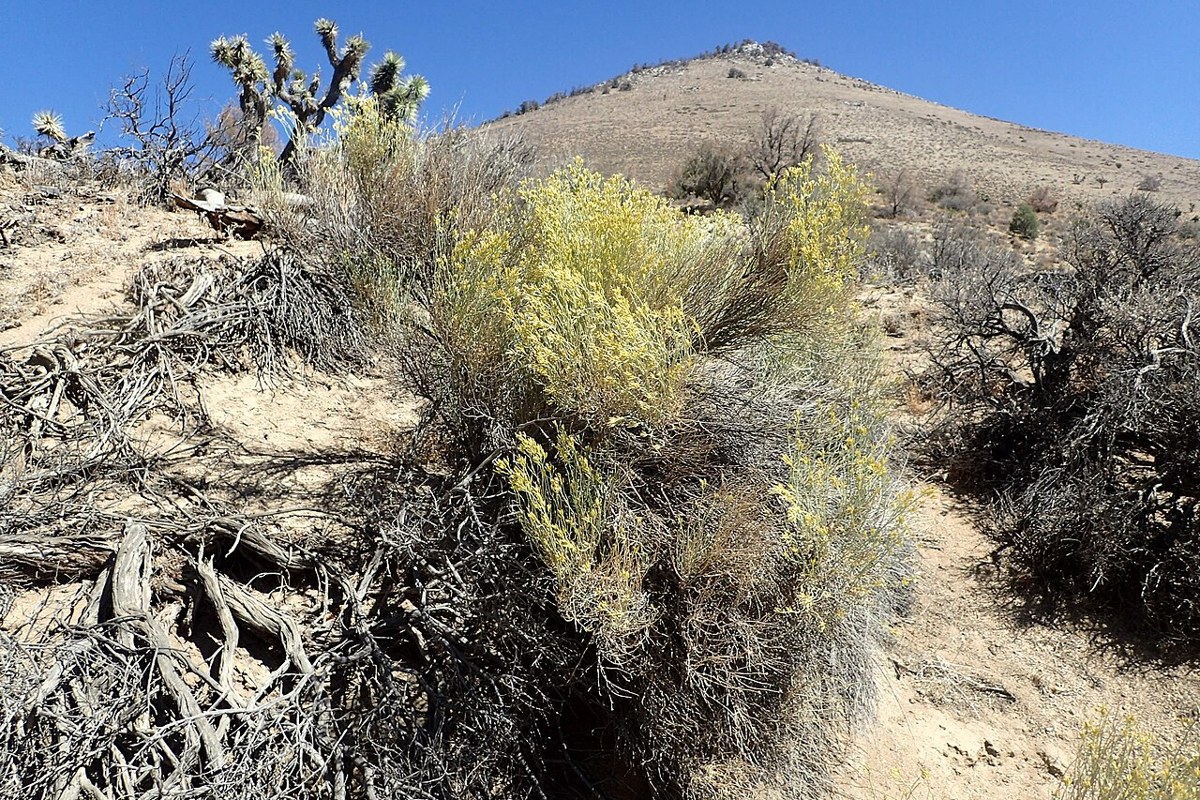
Rabbitbrushes are tough, twiggy shrubs of the American West that cover dry hillsides, roadsides and desert flats with brassy yellow flowers in late summer and fall, when little else is blooming. The name covers two closely related genera in the aster family. Chrysothamnus includes yellow or green rabbitbrush and about ten other species. The biggest and most familiar rabbitbrush, rubber rabbitbrush, was long called Chrysothamnus nauseosus but is now placed in Ericameria, a larger genus of some 35 species that also includes the shrubs Californians call goldenbushes.
Every rabbitbrush and goldenbush is native to western North America, and most are native to California. There are no non-native rabbitbrushes in American gardens, so anything sold under the name is a native plant, though not always one native to your particular area. The two you will meet most are rubber rabbitbrush, a gray-green shrub up to about 7 ft, and yellow rabbitbrush, a smaller green shrub with sticky, often twisted leaves. Both are among the most important late-season nectar plants in the West.
If you arrived from our California flowering shrubs article, a few corrections are worth knowing. Rabbitbrush flowers are yellow, not red. Rabbitbrushes are plants of full sun and dry, well-drained ground, not moist shade, and in California they grow mainly east of the Sierra Nevada crest, in the Great Basin and Mojave deserts, and in the high mountains, rather than in the western foothills. Their foliage is gray-green or green, and it is the late flowers, not the leaves, that draw butterflies and native bees.
Identification
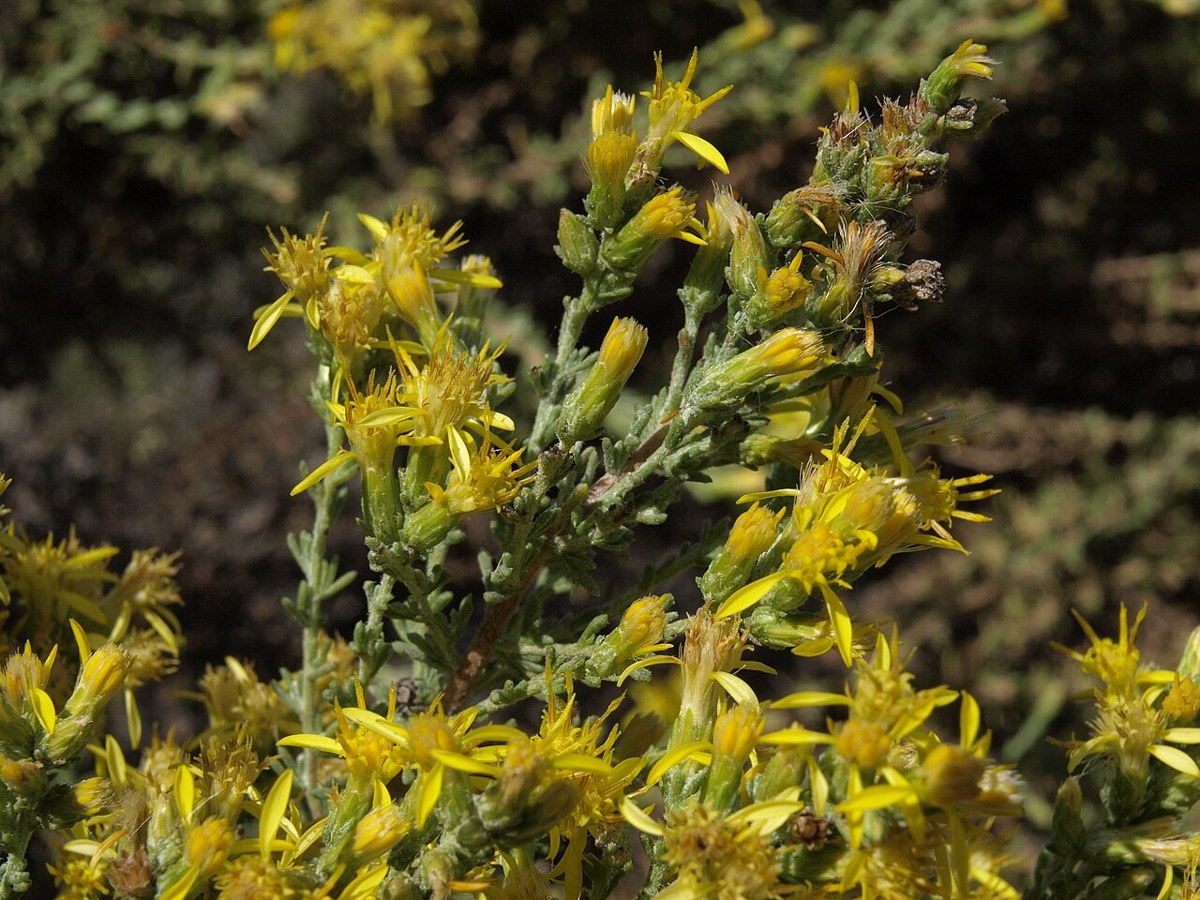
Rabbitbrushes are many-stemmed shrubs, usually 1–7 ft tall, with narrow, often thread-like leaves and dense, rounded or flat-topped clusters of small yellow flower heads at the ends of the branches. Each head is narrow and cylinder-shaped, made of a few tubular disk flowers and no petal-like rays, and is wrapped in overlapping, straw-colored bracts arranged in vertical rows. After flowering, the heads release small seeds tipped with fluffy white bristles that drift on the wind, so a rabbitbrush in early winter looks dusted with tan fluff.
Rubber Rabbitbrush
Rubber rabbitbrush (Ericameria nauseosa) is the large one, typically 2–7 ft tall and as wide. Its flexible stems are covered in a dense, white to gray-green felt, its leaves are narrow and gray-green, and its large clusters of pale to golden yellow flowers appear from August to October. Crushed foliage has a strong, medicinal smell. It is extremely variable, with more than 20 named varieties differing in color, hairiness and leaf width.
Yellow (Green) Rabbitbrush
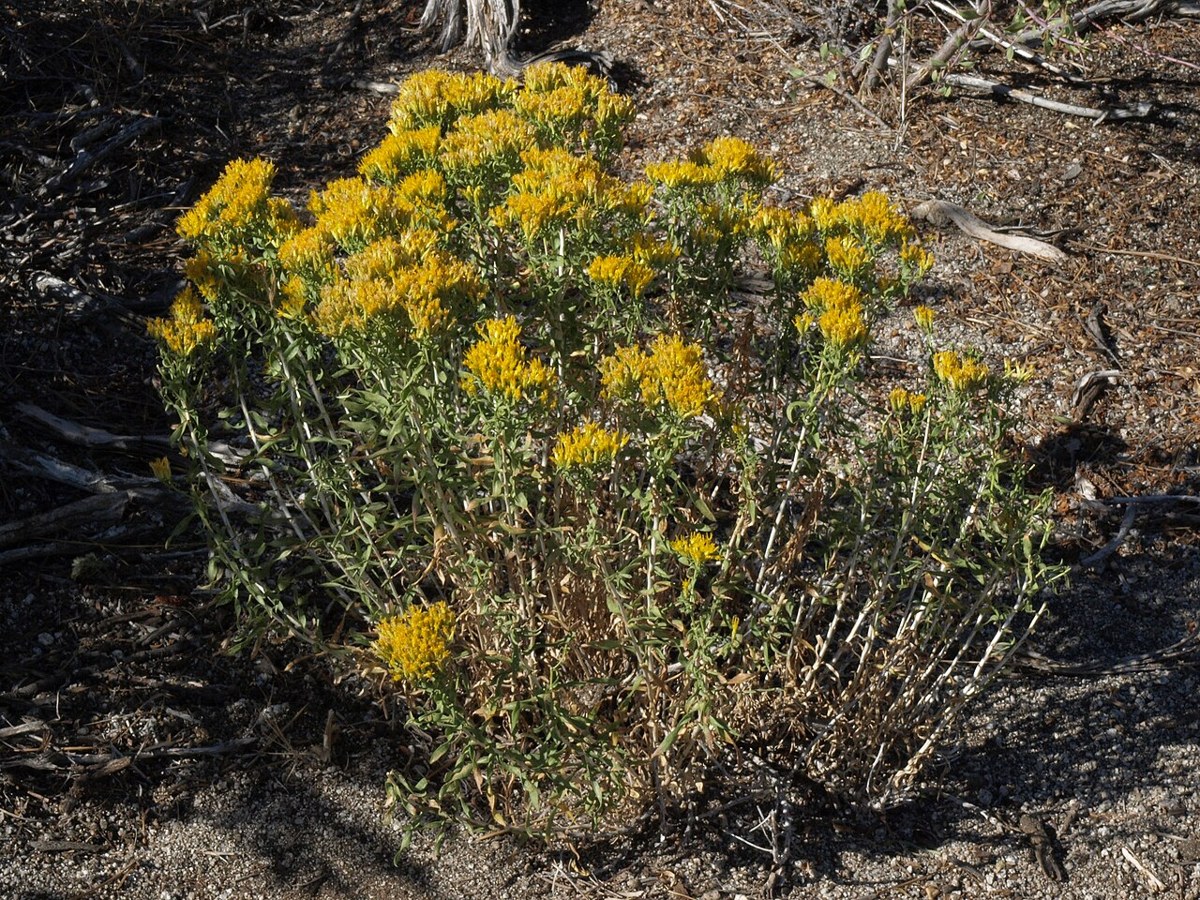
Yellow rabbitbrush (Chrysothamnus viscidiflorus) is usually 1–3½ ft tall, with brittle, whitish, hairless stems, green leaves that are often twisted and sticky, and smaller, looser clusters of bright yellow flowers. It tends to grow with big sagebrush on higher, cooler sites than rubber rabbitbrush. The quickest test: rubber rabbitbrush twigs are felty and flexible; yellow rabbitbrush twigs are smooth and snap easily.
Goldenbushes
Many Ericameria species called goldenbushes have small, crowded, heath-like or resin-dotted leaves, and some have short yellow rays around each head, so they look more like tiny daisies. California goldenbush of coastal dunes and turpentine bush of desert mountains are examples. Narrowleaf goldenbush is unusual in blooming in spring rather than fall.
Quick Facts
| Genera | Chrysothamnus and Ericameria |
| Family | Asteraceae (Aster family) |
| U.S. Native Species | About 10 Chrysothamnus and about 35 Ericameria, all native to western North America |
| Plant Type | Deciduous to evergreen shrubs and subshrubs |
| Mature Height | Under 1 ft (dwarf alpine species) to about 7 ft (rubber rabbitbrush); most 1–4 ft |
| Mature Spread | About 1–6 ft |
| Growth Rate | Fast |
| Sun Exposure | Full Sun |
| Water Needs | Low; very drought tolerant once established |
| Soil Type | Sandy, gravelly or rocky, well-drained soils; many tolerate alkaline and somewhat salty soils |
| Bloom Time | Mostly August–October (narrowleaf goldenbush in spring) |
| Flower Color | Yellow |
| Deer Resistant | Moderately; mule deer and pronghorn browse rabbitbrush mainly in fall and winter |
| USDA Hardiness Zones | About 4–9 (rubber and yellow rabbitbrush to Zone 3 or 4) |
| Wildlife Value | Major late-season nectar source for butterflies, native bees and other insects; winter browse and cover |
Native Range
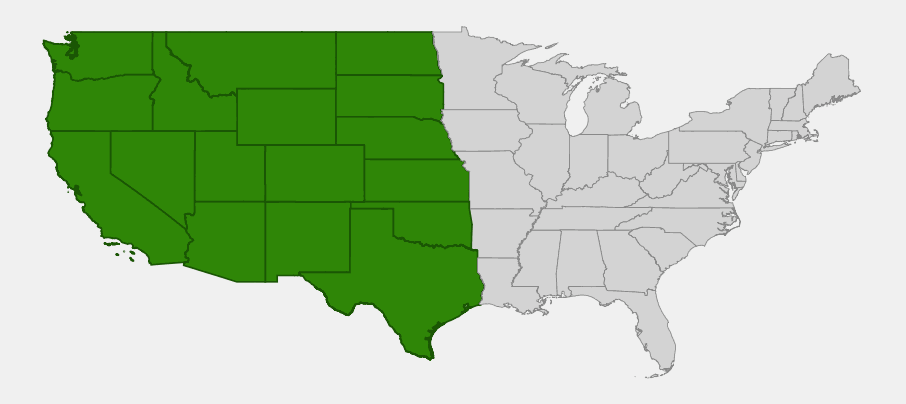
Rabbitbrushes are plants of the arid and semi-arid West. Rubber rabbitbrush has the widest range, from southern British Columbia and Saskatchewan south through Washington, Oregon, California, Nevada, Idaho, Montana, Wyoming, Utah, Colorado, Arizona and New Mexico, and east onto the western Great Plains in the Dakotas, Nebraska, western Kansas, the Oklahoma Panhandle and western Texas. Yellow rabbitbrush covers much of the same interior West but stays west of the Plains. In New Mexico, rubber rabbitbrush is widely known by its Spanish name, chamisa.
The Ericameria goldenbushes are concentrated in California and the desert Southwest. California has the greatest diversity, including coastal species such as California goldenbush on dunes from the Bay Area to Los Angeles County, chaparral species such as wedgeleaf goldenbush on rocky slopes, and desert and mountain species in the Mojave, the Great Basin and the Sierra Nevada. Turpentine bush reaches west Texas, and narrowleaf goldenbush grows in the deserts of California, Nevada, Utah and Arizona.
In California, rubber rabbitbrush and yellow rabbitbrush grow mostly east of the Sierra Nevada crest and in the Mojave Desert, the Modoc Plateau and the high mountains, with scattered populations in the inner Coast Ranges and southern California mountains. None of the rabbitbrushes or goldenbushes is native east of the Great Plains.
📋 Find native rabbitbrushes on our regional plant lists: CA, NV · AZ, NM · UT, CO west · ID, OR east, WA east · MT, WY · ND, SD, MN west · NE, KS, CO east · TX south/west/central
Native Species
These are the most widespread and garden-worthy rabbitbrushes and goldenbushes. Every species with a full Plant Native profile is linked.
Rubber Rabbitbrush (Ericameria nauseosa)
Also called chamisa and gray rabbitbrush; formerly Chrysothamnus nauseosus. The largest and most widespread rabbitbrush, 2–7 ft, with felty gray-green stems and big heads of yellow flowers in fall, native from the Dakotas and Texas to the Pacific states. It thrives on poor, disturbed soil and resprouts after fire. A superb, nearly indestructible fall-blooming shrub for dry western gardens, though it can seed itself around.
Yellow or Green Rabbitbrush (Chrysothamnus viscidiflorus)
Smaller, 1–3½ ft, with smooth, pale stems and green, sticky, often twisted leaves. Common in sagebrush steppe and open pine forest from Washington and Montana to California, Arizona and New Mexico. Several subspecies vary in leaf width and hairiness.
California Goldenbush (Ericameria ericoides)
Also called mock heather. A low, rounded shrub, 1–3 ft, with tiny, crowded, heath-like leaves and yellow flower heads with short rays in late summer and fall. Endemic to California’s coastal dunes and sandy bluffs, and an excellent plant for coastal gardens and dune restoration.
Wedgeleaf Goldenbush (Ericameria cuneata)
A small, compact shrub of granite cliffs and rocky slopes in the mountains and deserts of California, Nevada, Arizona and New Mexico. Its small, wedge-shaped, resin-dotted leaves and fall flowers make it a fine rock-garden plant where drainage is perfect.
Narrowleaf Goldenbush (Ericameria linearifolia)
The spring-blooming goldenbush, 2–5 ft, covered in daisy-like yellow flowers with showy rays from March to May. Native to the deserts and dry foothills of California, Nevada, Utah and Arizona. One of the showiest native shrubs of the Mojave in spring.
Turpentine Bush (Ericameria laricifolia)
A dense, rounded evergreen shrub, 1–3 ft, with short, needle-like, resinous leaves that smell of turpentine, and bright yellow flowers in fall. Native to rocky desert slopes and grasslands from California and Nevada to west Texas. A neat, small shrub for desert gardens.
Parry’s Rabbitbrush (Ericameria parryi)
A small rabbitbrush, usually 1–3 ft, of mountain slopes and open forests in the Sierra Nevada, Great Basin and Rocky Mountains. It has green leaves and narrow, elongated flower clusters in late summer and fall.
Golden Fleece (Ericameria arborescens)
A taller goldenbush, up to about 10 ft, of California chaparral in the Coast Ranges and Sierra Nevada foothills, with narrow, resin-dotted leaves and dense clusters of yellow flowers in late summer and fall. It is one of the few rabbitbrush relatives that does grow in the western foothills, and it reseeds readily after fire.
Non-Native Look-Alikes
There are no non-native rabbitbrushes or goldenbushes in American gardens or wild lands: every species in both genera is native to western North America. A few other yellow-flowered plants are mistaken for them.
Brooms
Scotch broom (Cytisus scoparius), French broom (Genista monspessulana) and Spanish broom (Spartium junceum) are Mediterranean shrubs in the pea family with green, broom-like stems and yellow flowers. They bloom in spring, not fall, their flowers are pea-shaped, and they are aggressive invasive plants in California and the Pacific Northwest. Remove them wherever possible.
Native Look-Alikes
Broom snakeweed (Gutierrezia sarothrae) is a smaller native subshrub, usually under 2 ft, with tiny yellow daisy-like heads in fall; it is toxic to livestock. Goldenrods (Solidago) are herbaceous perennials that die back to the ground each winter. Big sagebrush, which often grows with rabbitbrush, has gray, three-toothed, strongly aromatic leaves and inconspicuous flowers.
Growing & Care Guide
Light
Full sun. In shade rabbitbrushes grow lanky, flower poorly and often rot.
Soil & Water
Give them lean, sandy, gravelly or rocky soil with excellent drainage. They tolerate alkaline and moderately salty soils. Water a new planting every week or two through its first summer, then little or not at all; established plants live on natural rainfall in most of the West. Rich soil and regular summer irrigation produce floppy, short-lived plants and can cause root rot, so rabbitbrushes are poor choices for watered lawns or shady, moist beds. California goldenbush wants sandy coastal soil.
Planting Tips
Plant in fall or early spring so roots establish before summer heat. Choose the species and form native to your area: rubber or yellow rabbitbrush for the Great Basin, Rocky Mountain and desert West, California goldenbush for coastal gardens, and golden fleece or wedgeleaf goldenbush for California chaparral and rock gardens. Space rubber rabbitbrush 4–6 ft apart.
Pruning & Maintenance
Rubber rabbitbrush can be cut back hard, to about 6–12 inches, in late winter every few years to keep it dense and tidy; it resprouts vigorously, as it does after fire. Lighter shaping after the seed fluff blows away keeps other species compact. Pull unwanted seedlings while small. Pests are rarely a problem, although gall-forming flies and aphids are common and harmless.
Propagation
Sow fresh seed in late fall or winter on the soil surface; it germinates readily, and a short period of cold, moist stratification helps. Seed viability drops after a year or two. Softwood cuttings in early summer also root.
Landscape Uses
- Fall color and pollinator gardens in dry western yards
- Waterwise and xeriscape plantings, highway and roadside revegetation
- Erosion control on dry slopes and disturbed or mined ground
- Informal hedges and screens (rubber rabbitbrush)
- Coastal dune gardens and restoration (California goldenbush)
- Rock gardens (wedgeleaf goldenbush, turpentine bush, dwarf rabbitbrushes)
Wildlife & Ecological Value
For Pollinators
Rabbitbrush blooms when most of the West is dry and brown, so in September and October a single rubber rabbitbrush can be covered with butterflies, native bees, wasps, flies and beetles. It is an important fall nectar source for migrating monarchs and painted ladies in the interior West, and for many solitary bees. Goldenbushes do the same job on the California coast and in the deserts.
For Birds
Sparrows and finches eat the seeds and shelter in the dense shrubs, and insect-eating birds feed on the many insects that visit the flowers and live in the twigs.
For Mammals
Mule deer, pronghorn and elk browse rubber rabbitbrush in fall and winter, when other forage is scarce, and jackrabbits and cottontails both eat and hide under it, which is one likely source of the common name. Livestock generally avoid it in summer.
Ecosystem Role
Rabbitbrushes are among the first shrubs to return after fire, grazing or road building, holding soil and providing cover while slower shrubs such as sagebrush and bitterbrush recover. Their stems host many specialist insects, including several gall flies that form cottony or swollen galls on the twigs.
Cultural & Historical Uses
Native peoples of the Great Basin and Southwest made good use of rabbitbrush. The flowers give a bright yellow dye that Navajo (Diné) weavers have long used for wool, and the flexible stems were used for baskets; Hopi weavers of Third Mesa make colorful wicker plaques from rabbitbrush and sumac stems. The stems were also used for arrow shafts, windbreaks and fuel.
Rubber rabbitbrush earned its name from the small amount of natural rubber in its stems and roots, which was chewed as gum by some Native peoples. During the Second World War the U.S. government studied it as a possible domestic rubber source, but the yield was too low to be practical.
The species name nauseosa refers to the shrub’s strong smell. The genus name Chrysothamnus means “golden shrub,” and Ericameria means “heath-like parts,” for the tiny, heather-like leaves of many goldenbushes.
Frequently Asked Questions
What color are rabbitbrush flowers?
Yellow, from pale lemon to deep gold depending on the species and variety. No rabbitbrush has red flowers.
Is rabbitbrush native to California?
Yes. Rubber rabbitbrush and yellow rabbitbrush are native in California, mainly east of the Sierra Nevada, in the deserts and in the high mountains, and California also has many native goldenbushes in the same genus as rubber rabbitbrush, including California goldenbush on the coast and golden fleece in the chaparral.
Is it Chrysothamnus or Ericameria?
Both. Botanists moved rubber rabbitbrush and some related species from Chrysothamnus to Ericameria in the 1990s based on their differences in flower structure and relationships. Yellow (green) rabbitbrush and about ten others remain in Chrysothamnus. Nurseries still often sell rubber rabbitbrush as Chrysothamnus nauseosus.
Does rabbitbrush cause allergies?
Rabbitbrush is mostly pollinated by insects and is often blamed for fall hay fever that is really caused by wind-pollinated plants such as ragweed, sagebrush and Russian thistle blooming at the same time. Some people are sensitive to it, but it is not a major airborne pollen source.
How do I keep rubber rabbitbrush from getting leggy?
Grow it in full sun in lean soil with little water, and cut it back hard to 6–12 inches in late winter every few years. It resprouts quickly and blooms on the new growth the same fall.

Looking for a nursery that carries native rabbitbrushes?
Browse our native plant nursery directory: Arizona · California · Colorado · Idaho & Kansas · Montana · Nebraska, Nevada, New Mexico, North Dakota & Oklahoma · Oregon · South Dakota, Texas & Utah · Washington · Wyoming

