
Native Fritillaries (Fritillaria)
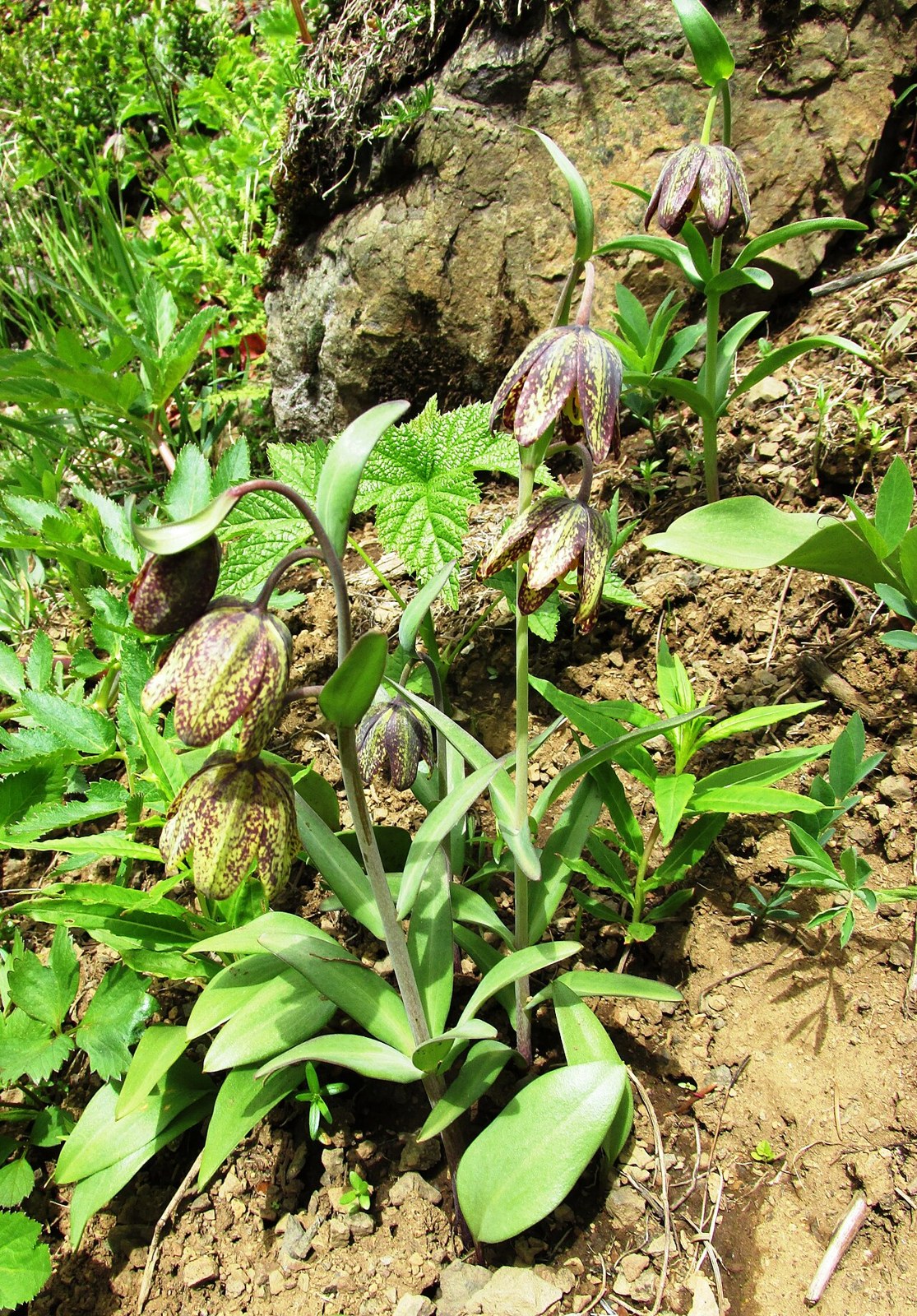
Fritillaries (genus Fritillaria) are spring-blooming bulbs in the lily family (Liliaceae), famous for their nodding, bell-shaped flowers, many of them checkered or mottled like a game board. The name comes from the Latin fritillus, a dice box, perhaps for that checkered pattern. There are roughly 130 to 140 species across the temperate Northern Hemisphere, most in Europe, the Mediterranean, the Middle East and central Asia.
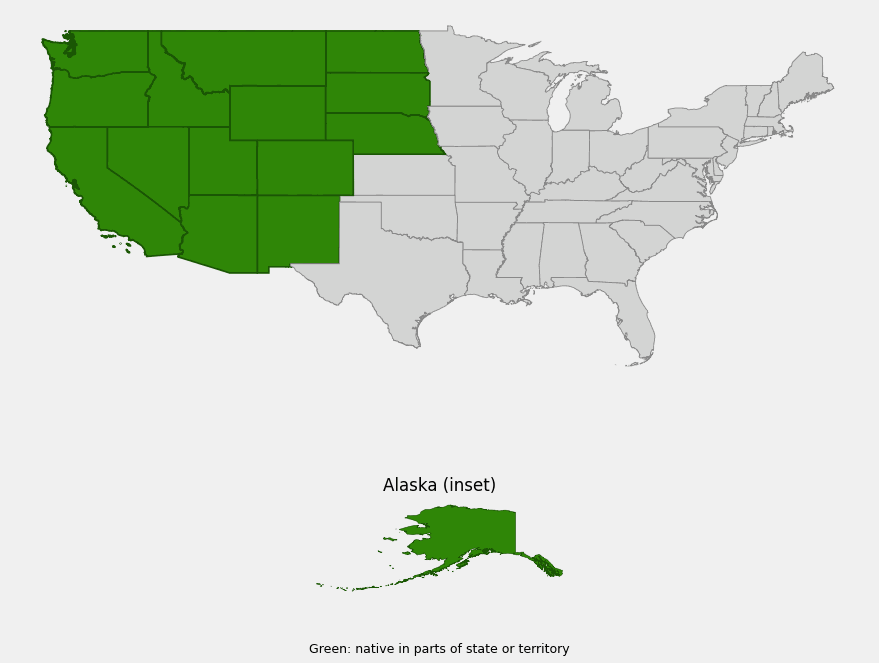
About 20 species are native to the United States, and every one of them is western. They range from chocolate lily of the Alaska and Pacific Northwest coasts to yellow fritillary of the sagebrush hills, checker lily of Pacific Coast woodlands, spotted fritillary of the Rocky Mountains and Great Plains edge, and scarlet fritillary, one of the few hummingbird-pollinated lily-family plants, in southern Oregon and northern California. California alone has more than a dozen species, several of them rare.
If you came here from our guide to plants of the lily family, the fritillaries most often sold as bulbs, crown imperial, snake’s head fritillary and Persian lily, are Eurasian. Native fritillaries are rarely sold and are best grown from nursery-raised seed or bulbs in gardens with dry summers. This page covers how to recognize the native species, where they grow and how they differ from the imported garden bulbs. Gardeners east of the Rockies should know that no fritillary is native there.
Identification
Fritillaries look like small, nodding lilies. The combination of nodding bells, narrow leaves (often in whorls) and a scaly bulb, plus the frequent checkered pattern, makes the genus easy to recognize.
Bulbs
Fritillaries grow from small, fragile bulbs made of a few fleshy scales, often surrounded by many tiny rice-grain bulblets. These bulblets gave chocolate lily its other name, rice root. The bulbs lack the papery coat of a tulip or onion, so they dry out quickly when dug.
Leaves
Leaves are narrow to lance-shaped, smooth and often grayish-green, arranged either alternately or in whorls of three or more around the stem, sometimes both on one plant. Checker lily and chocolate lily have conspicuous whorls; yellow fritillary has only a few narrow leaves. Many plants produce only a single basal leaf for several years before they are old enough to flower.
Flowers
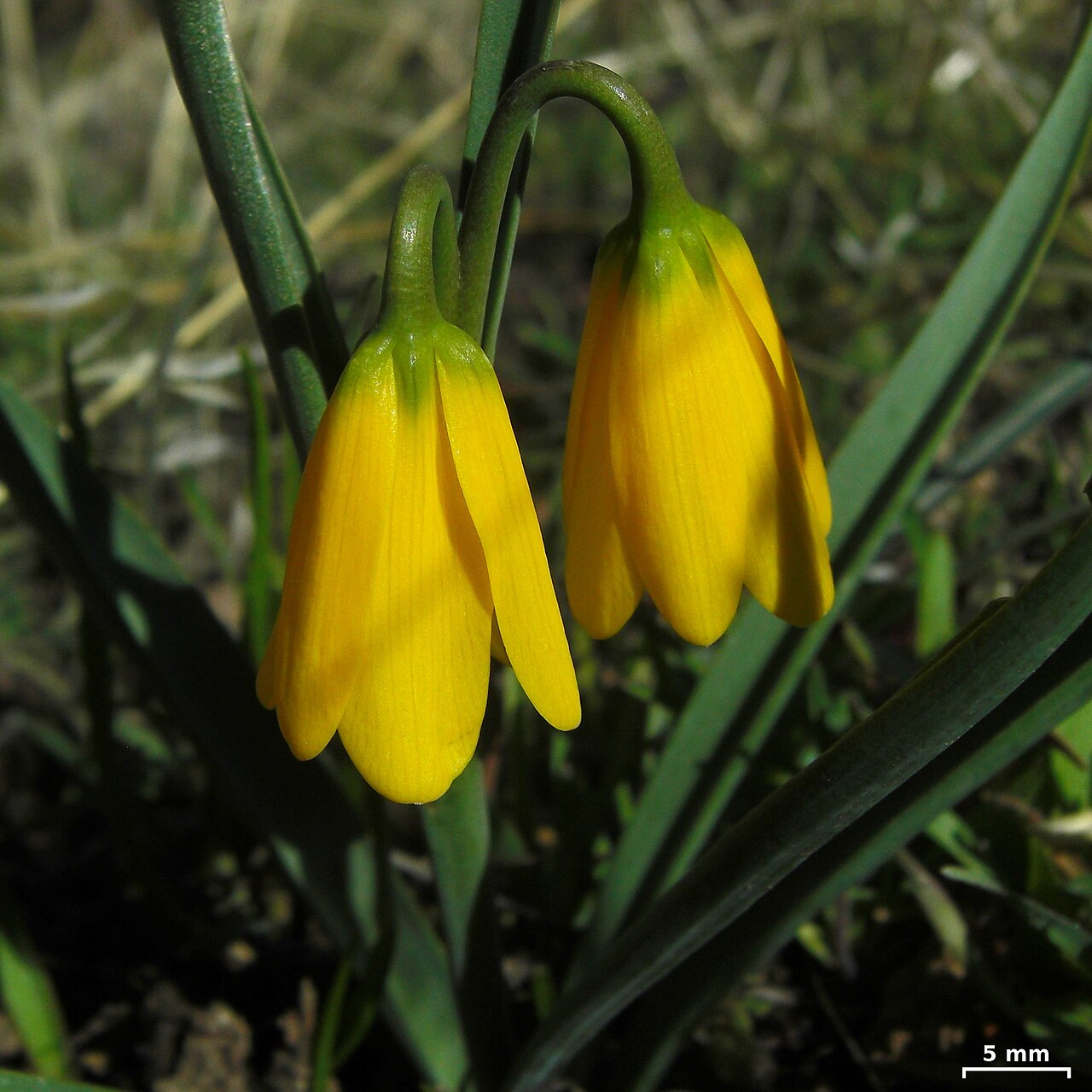
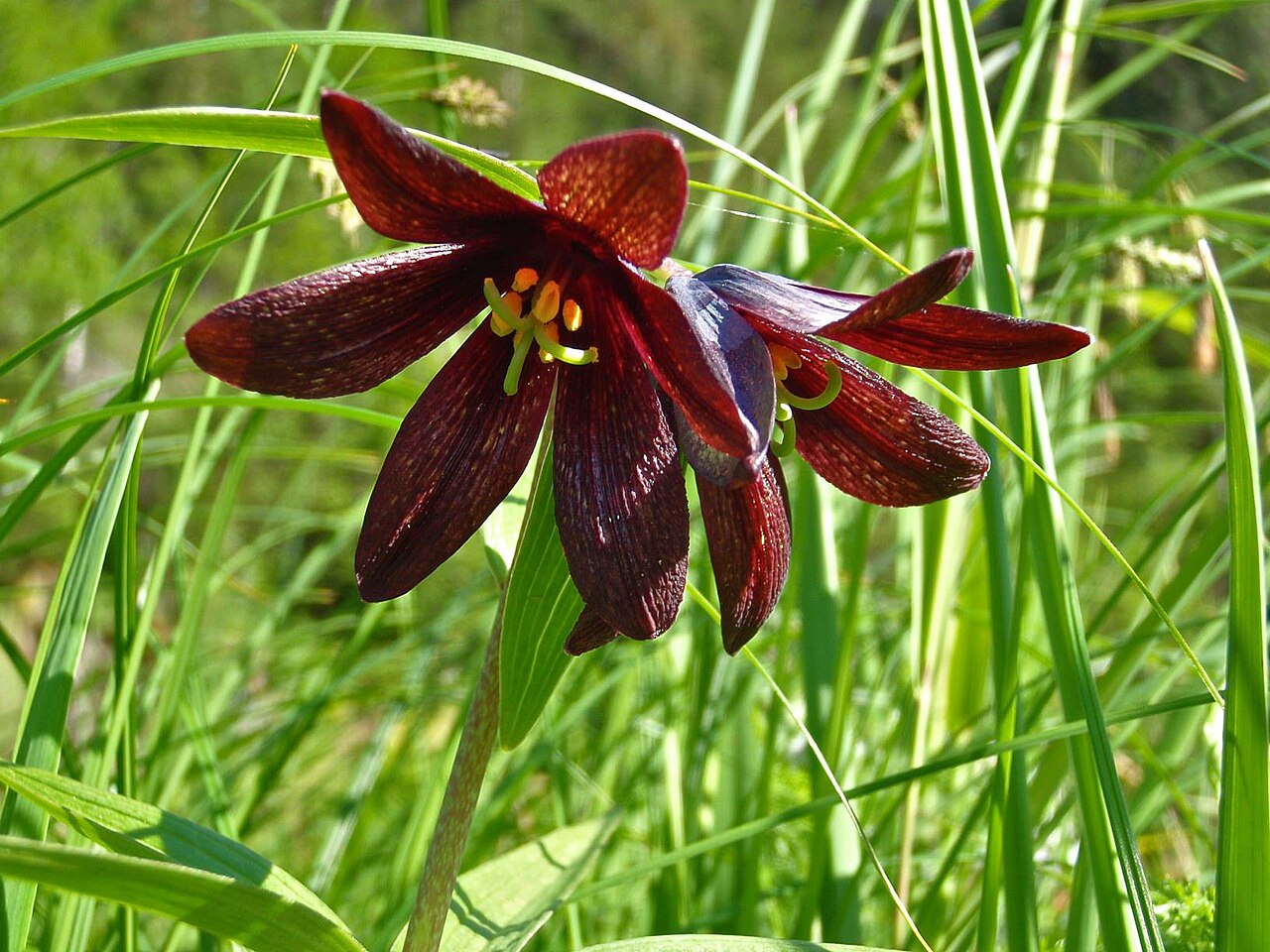
Flowers have six tepals (petals and sepals that look alike) forming a nodding bell or open, saucer-like cup, usually one to several per stem, on plants 4 to 24 inches tall. Colors are distinctive: chocolate lily is dark brown-purple; checker lily is mottled purple-brown and yellow-green; spotted fritillary is brownish-purple with yellow and white spots; yellow fritillary is clear yellow, aging to orange or red; scarlet fritillary is scarlet with yellow checkering and recurved tips. At the base of each tepal is a nectary, a shiny gland or groove that is a good identification feature.
Fruit & Seeds
The fruit is an upright, six-sided or six-winged capsule that splits open in summer, releasing flat, papery seeds that blow short distances. In spotted fritillary the large upright capsules are often more noticeable than the dark nodding flowers.
Scent
Some native fritillaries smell. Chocolate lily has an unpleasant odor that attracts the flies that pollinate it; fragrant fritillary (F. striata) of California is sweetly scented.
Quick Facts
| Scientific Name | Fritillaria (genus) |
| Family | Liliaceae (Lily) |
| U.S. Native Species | About 20, all in the western states and Alaska |
| Plant Type | Spring-blooming perennial bulbs, dormant in summer |
| Mature Height | 4–24 in, depending on species |
| Mature Spread | 3–6 in per plant; slowly forming small groups |
| Growth Rate | Slow; seedlings take 3–6 years to flower |
| Sun Exposure | Full sun to part shade, depending on species |
| Water Needs | Moist in spring, dry in summer for most; chocolate lily needs moisture all season |
| Soil Type | Well-drained gravelly, sandy or rocky loam; heavy clay for a few California species |
| Soil pH | Slightly acidic to neutral (about 5.5–7.5) |
| Bloom Time | February–July, from low elevations to high mountains |
| Flower Color | Brown-purple, mottled purple and green, yellow, scarlet or white |
| Fall Color | None; foliage dies back by early summer |
| Wildlife Value | Pollinated by bees, flies and (scarlet fritillary) hummingbirds; bulbs eaten by rodents and bears |
| Deer Resistant | Moderately; deer browse some species |
| USDA Hardiness Zones | About 3–9 across the genus; check each species |
Native Range
Native fritillaries are entirely western. yellow fritillary is the most widespread, found in sagebrush steppe, grasslands and open pine woods from British Columbia and Washington south to northern California and east to Idaho, Nevada, Utah, Montana and Wyoming. spotted fritillary has the widest range overall, from Oregon and California east across the Great Basin and Rocky Mountains to the western Dakotas and the Nebraska panhandle, and south to Arizona and New Mexico.
Along the Pacific Coast, checker lily grows in woodlands, grasslands and rocky slopes from British Columbia through western Washington and Oregon to central California. chocolate lily grows in moist meadows, beaches and forest openings from Alaska’s Aleutian Islands and Gulf Coast south along the British Columbia coast to northwestern Washington, and it is also native to northeastern Asia. scarlet fritillary is found in the foothills and mountains of southwestern Oregon and northern California, barely reaching western Nevada.
California is the center of diversity, with species such as mission bells (F. biflora), adobe lily (F. pluriflora), fragrant fritillary (F. striata) and Purdy’s fritillary (F. purdyi), many of them on clay or serpentine soils and several of them rare. Oregon’s Gentner’s fritillary (F. gentneri) is federally listed as endangered. No fritillary is native east of the western Great Plains.
📋 Regional plant lists covering native fritillary ranges: Western Oregon & Washington · Idaho, Eastern Oregon & Washington · California & Nevada · Montana & Wyoming · Utah & Western Colorado · Arizona & New Mexico · Dakotas & Western Minnesota · Nebraska, Kansas & Eastern Colorado · Alaska
Native Species
These are the native fritillaries most often seen in the wild or grown by native-plant gardeners. Click a name for its full growing guide.
Chocolate Lily (Fritillaria camschatcensis)
Native to: Alaska and the Pacific coast south to northwestern Washington, and northeastern Asia. Twelve to 24 inches tall, with whorls of glossy leaves and nodding, dark brown-purple, bell-shaped flowers in early summer. Its unpleasant smell draws fly pollinators. Grows in moist meadows and coastal grasslands and needs steady moisture. Also called rice root or Kamchatka fritillary.
Checker Lily (Fritillaria affinis)
Native to: British Columbia, western Washington and Oregon, and California south to the central coast and Sierra foothills. Very variable, 6 to 30 inches tall, with whorled leaves and one to several nodding bells mottled purple-brown and yellow-green. Grows in oak woodlands, prairies and rocky slopes in sun or part shade. The most commonly grown native fritillary in Pacific Northwest gardens.
Yellow Fritillary (Fritillaria pudica)
Native to: Washington, Oregon and northern California east to Idaho, Nevada, Utah, Montana and Wyoming. A small, 4- to 8-inch bulb with one or two nodding yellow bells that age to orange or brick red, blooming in very early spring. Grows in sagebrush and grasslands that are dry by summer. Plant it in a sunny, gravelly spot that you can leave dry after bloom.
Spotted Fritillary (Fritillaria atropurpurea)
Native to: Oregon and California east to the western Dakotas and Nebraska and south to Arizona and New Mexico. Eight to 24 inches tall with narrow leaves and one to several nodding, saucer-shaped flowers, purple-brown speckled with yellow and white. Easily overlooked in flower but noticeable in fruit. Grows in sagebrush, pine forests and mountain meadows.
Scarlet Fritillary (Fritillaria recurva)
Native to: southwestern Oregon and northern California, barely reaching western Nevada. One to 3 feet tall with brilliant scarlet bells checkered yellow inside and tipped with recurved tepals. Pollinated by hummingbirds. Grows in dry woodlands and chaparral openings. The showiest native fritillary, but it needs a dry summer and sharp drainage.
Mission Bells (Fritillaria biflora)
Native to: coastal California south to northern Baja California. A short plant with dark brown to greenish bells, growing in grasslands, often on clay. Also called chocolate lily in California, a reminder that common names overlap.
Adobe Lily (Fritillaria pluriflora)
Native to: the inner Coast Ranges and northern Sacramento Valley of California. Pink to rose-purple bells on heavy adobe clay soils. Rare and declining, and tracked as rare by the California Native Plant Society; enjoy it in the wild only.
Gentner’s Fritillary (Fritillaria gentneri)
Native to: southwestern Oregon and adjacent northern California. Deep red to purple bells with yellow flecks. Listed as endangered under the U.S. Endangered Species Act; never dig or collect plants.
Non-Native Look-Alikes
Almost every fritillary sold by bulb companies is Eurasian. They are not invasive in North America, but they are not native, and they should not be confused with the native species described above.
Crown Imperial (Fritillaria imperialis)
A dramatic, 2- to 4-foot plant from Turkey, Iran and the western Himalaya, with a ring of large, nodding orange, red or yellow bells crowned by a tuft of leaves. The whole plant and its large bulbs have a strong, musky, skunk-like smell, and the bulbs are poisonous if eaten. It is sometimes planted in the belief that its smell keeps rodents and moles away, although evidence for this is anecdotal.
Snake’s Head Fritillary (Fritillaria meleagris)
A small, 8- to 12-inch European meadow bulb with single, nodding bells boldly checkered purple and white, or pure white. It is the most familiar checkered fritillary and resembles checker lily, but its bells are larger and more sharply checkered, its leaves are fewer, narrow and alternate rather than whorled, and it prefers wet meadows. It is native to Europe, not North America.
Persian Lily (Fritillaria persica)
A tall, 2- to 3-foot bulb from Turkey to Iran with gray-green leaves and a spike of many small, bell-shaped dark plum-purple flowers. It is sometimes confused with chocolate lily, but its flowers are arranged in a long, narrow spike rather than a few large bells.
Other imports and lookalikes
Specialty bulb catalogs also sell F. michailovskyi, F. uva-vulpis and F. acmopetala from Turkey and the Mediterranean. Native western lilies (Lilium) are related but much larger, with big, often spotted orange or white flowers, and they bloom in summer rather than spring.
Growing & Care Guide
Native fritillaries are rewarding but specialized garden plants. Most grow naturally where winters and springs are wet and summers are long and dry, and they need a similar cycle in the garden. Always buy nursery-propagated bulbs or grow them from seed; never dig wild plants, which rarely survive and several species are rare or protected.
Light
Yellow fritillary, spotted fritillary and scarlet fritillary prefer full sun to light shade. Checker lily grows in sun or part shade under oaks. Chocolate lily grows in full sun in cool coastal climates and part shade where summers are warmer.
Soil & Water
Most species need excellent drainage: gravelly or sandy loam, a raised bed or a rock garden. Water through winter and spring while the plants are in leaf, then let them go dry once the foliage yellows in early summer. Summer watering often rots the bulbs. The exception is chocolate lily, which grows in moist meadows and needs consistently damp, humus-rich soil and cool summers.
Planting Tips
Plant bulbs in fall, about 3 to 5 inches deep and 4 to 6 inches apart, handling them gently and planting immediately because they dry out quickly. Set bulbs on a little coarse sand or grit to improve drainage. Gardeners outside the Pacific Northwest and the interior West will find most native species difficult; growing them in deep pots with a gritty mix that can be kept dry in summer is often more successful.
Pruning & Maintenance
Let the leaves die back naturally so the bulbs can store energy for next year. Mark the location, since the plants disappear by summer. Protect bulbs from gophers, voles and squirrels with wire baskets. In much of the northern United States, the invasive red lily leaf beetle attacks fritillaries as well as lilies; hand-pick adults and larvae.
Propagation
Sow fresh seed in fall in pots of gritty mix left outdoors for winter cold; seedlings appear in spring and take about three to six years to flower. Many species, especially chocolate lily and checker lily, produce rice-grain bulblets around the main bulb that can be separated and grown on when the plants are dormant.
Landscape Uses
- Rock gardens, gravel gardens and dry slopes in western gardens (yellow, spotted and scarlet fritillary)
- Oak woodland and prairie restorations in the Pacific Northwest and California (checker lily, mission bells)
- Moist meadow and coastal gardens in Alaska and the Northwest (chocolate lily)
- Pots and bulb frames for collectors in wetter climates
- Early-spring interest among native bunchgrasses and sagebrush
Wildlife & Ecological Value
For Pollinators
Yellow fritillary is one of the earliest nectar sources for native bees in sagebrush country. Chocolate lily is pollinated mainly by flies drawn to its smell, and checker lily is visited by bees and flies. scarlet fritillary is pollinated by hummingbirds, which visit its red, tubular bells in spring, an unusual adaptation in the lily family.
For Birds
Besides hummingbirds visiting scarlet fritillary, birds make little use of fritillaries; ground-feeding birds may eat a few seeds.
For Mammals
Pocket gophers, ground squirrels and voles dig and eat fritillary bulbs, and brown bears dig chocolate lily bulbs in coastal Alaska meadows. Deer and elk may nip the flowers and leaves.
Ecosystem Role
Fritillaries are part of the spring wildflower display of western grasslands, sagebrush steppe and oak woodlands, much of which has been lost to development, grazing, invasive annual grasses and changing fire patterns. Several species are rare: Gentner’s fritillary is federally endangered, and adobe lily and other California species are protected or tracked as rare. Protecting native bunchgrass and oak habitats protects these bulbs.
Cultural & Historical Uses
The bulbs of several native fritillaries were traditional foods for Indigenous peoples of the Pacific Northwest, Alaska and the interior West. Chocolate lily bulbs, with their clusters of rice-like bulblets, were dug, cooked and eaten along the North Pacific coast, and yellow fritillary bulbs were gathered in the Columbia Plateau and Great Basin. Some fritillary bulbs, including those of crown imperial, contain toxic alkaloids, and wild native fritillaries should not be dug, so this history should not be taken as a guide to foraging.
Eurasian fritillaries have a long garden history. Crown imperial was introduced to European gardens from Turkey in the 1500s and appears in many Dutch flower paintings, and snake’s head fritillary was a celebrated wildflower of English hay meadows. Bulbs of several Asian species are used in traditional Chinese medicine; that use is history and culture, not advice.
Native fritillaries have been prized by Western rock gardeners and bulb collectors for more than a century, and native-plant societies in Oregon, Washington and California monitor their rare species.
Frequently Asked Questions
Are any fritillaries native to the eastern United States?
No. All native North American fritillaries grow in the West, from Alaska and the Pacific Coast east to the Rocky Mountains, the western Dakotas and the Nebraska panhandle. Fritillaries grown in eastern gardens, such as crown imperial and snake’s head fritillary, are from Europe and Asia.
Is chocolate lily native?
Yes. chocolate lily (Fritillaria camschatcensis) is native to Alaska, the coast of British Columbia and northwestern Washington, as well as northeastern Asia. In California, the name chocolate lily is also used for the native F. biflora.
Is crown imperial a native plant?
No. Crown imperial (Fritillaria imperialis) comes from Turkey, Iran and the western Himalaya. It is not invasive in North America, but it is not native, and its bulbs are poisonous.
Can I grow native fritillaries in my garden?
Yes, if you can give them dry summers and good drainage, as in much of the West. Checker lily and yellow fritillary are the easiest. Buy nursery-propagated bulbs or grow them from seed; never dig wild plants. In wet-summer climates, grow them in pots that can be kept dry in summer.
When do native fritillaries bloom?
From late winter to midsummer, depending on species and elevation. Mission bells and yellow fritillary may bloom in February or March at low elevations; spotted fritillary and chocolate lily bloom in late spring to early summer in the mountains and the North.
Are fritillary bulbs poisonous?
Some are. Crown imperial bulbs and those of several other fritillaries contain toxic alkaloids. Although some native fritillary bulbs were eaten traditionally, they are hard to identify safely, several species are rare, and they should not be dug or eaten. Keep bulbs away from pets and children.

Looking for a nursery that carries Native Fritillaries?
Browse our native plant nursery directory: Alaska & Arizona · California · Colorado · Idaho · Montana · Nevada, New Mexico, North Dakota & Nebraska · Oregon · Utah & South Dakota · Washington · Wyoming

