
Plains Snakecotton (Froelichia floridana)
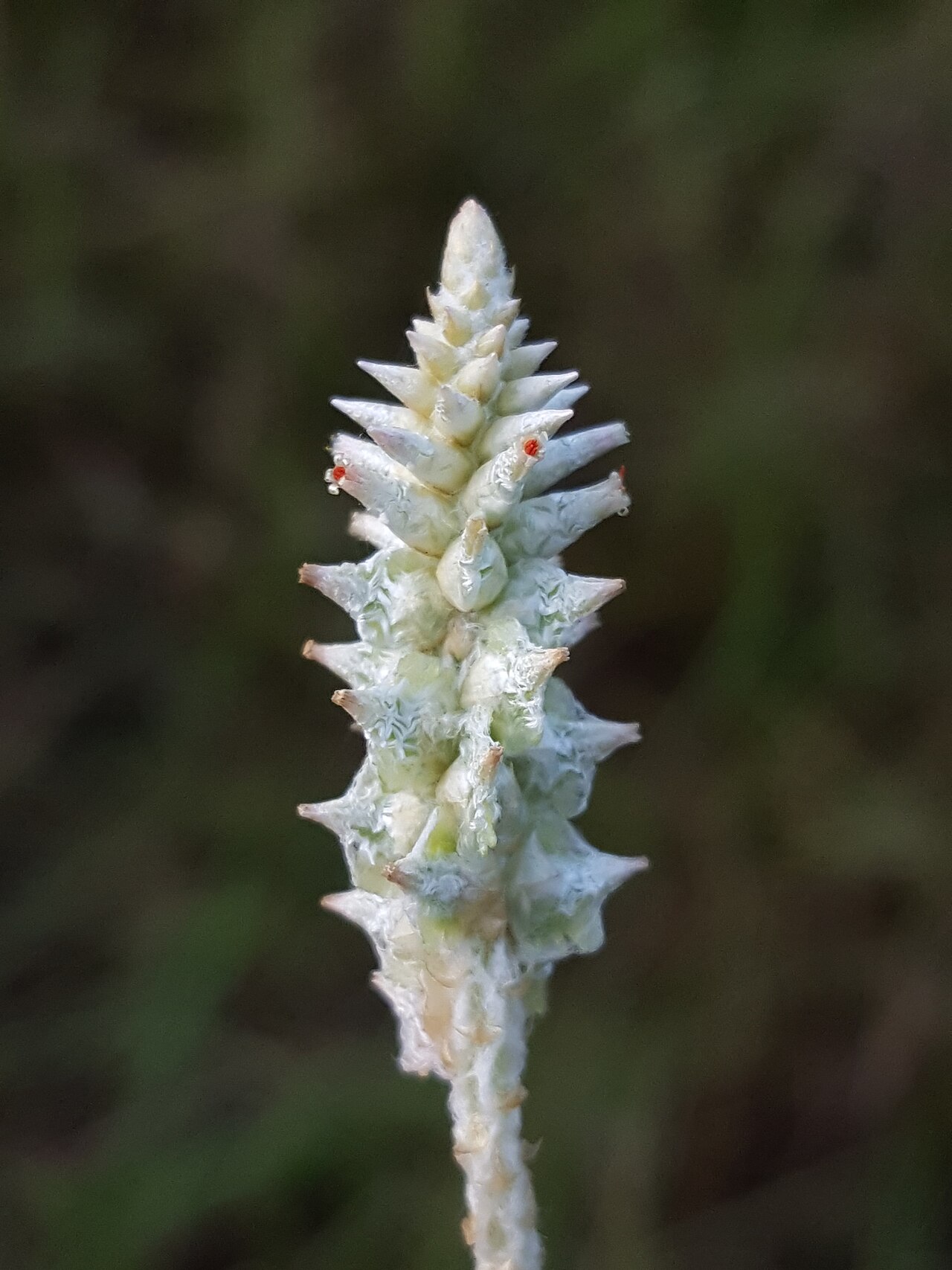
Froelichia floridana, known as Plains Snakecotton, field snakecotton, prairie cottonweed or large cottonweed, is a native annual of dry, sandy ground in the central and eastern United States. It grows in sand prairies, sandhills, pine barrens, dunes, old fields and roadsides, from the Great Plains and the upper Midwest to the Gulf Coast, Florida and the Carolinas.
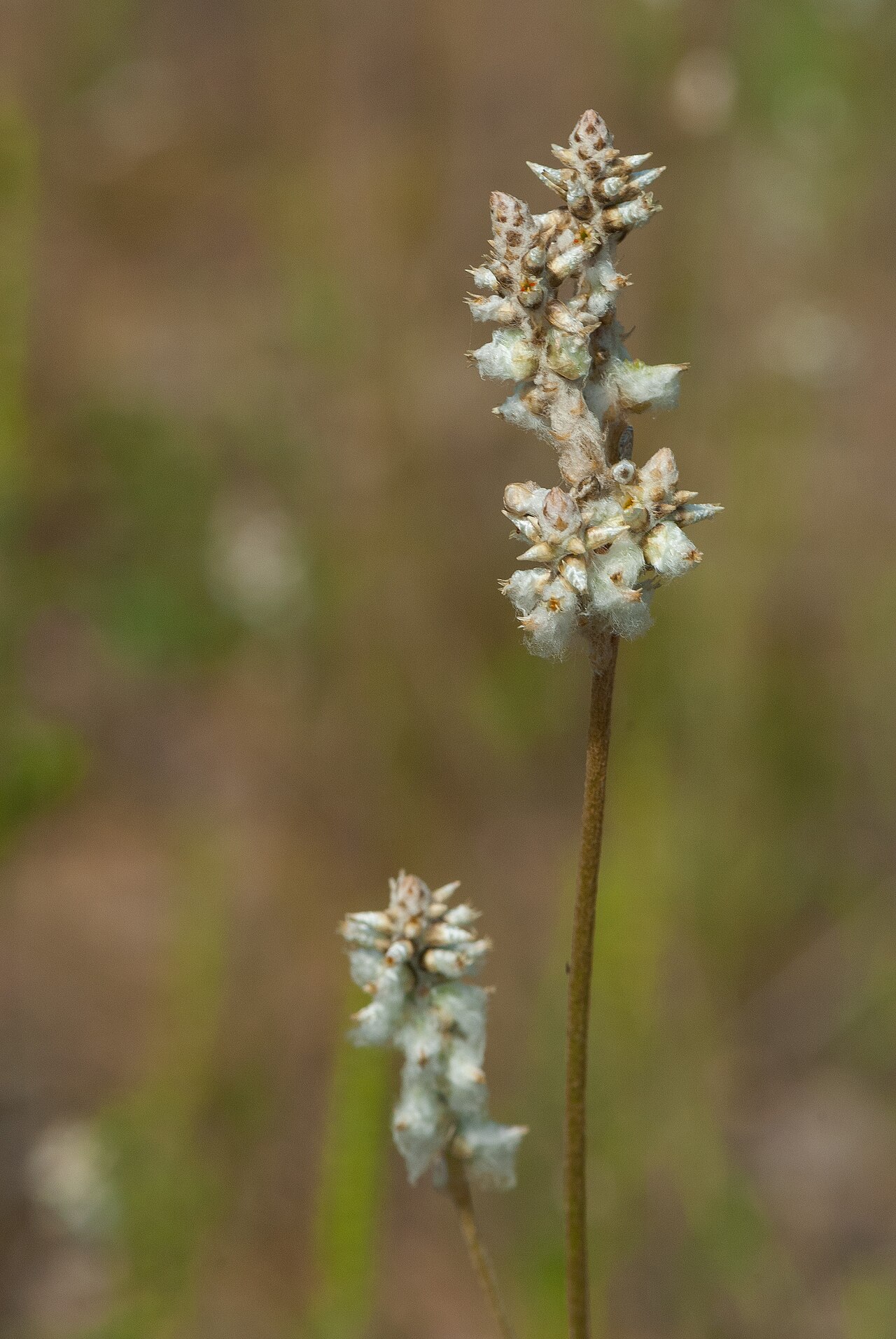
It is an unusual-looking plant. A low pair or two of narrow, hairy leaves sends up slender, nearly bare stalks 1 to 3 feet tall, topped with narrow spikes of tiny flowers wrapped in dense, white wool. The fuzzy, snake-like spikes give the plant its common names. It blooms from early summer into fall, when many other sand-prairie plants have finished.
Plains snakecotton is a member of the amaranth family. It is not a showy garden flower, but it is an interesting, low-maintenance annual for sandy native plantings, and a reliable sign of the open, sandy habitats it depends on. This guide covers how to identify it, where it grows, how to grow it and its role in sand prairies.
Identification
Plains snakecotton is easy to recognize once you have seen it: tall, slender stalks with leaves crowded near the base and narrow, woolly white spikes at the top, on dry, sandy ground.
Growth Habit
Plants are annuals with an erect main stem, usually 1 to 3 feet tall and occasionally taller, sometimes branched near the base. The stems are slender, green to reddish and covered with soft hairs. Most of the leaves are on the lower third of the plant, so the upper stems are long and nearly leafless.
Leaves
The leaves are opposite, narrowly oblanceolate to elliptic, about 1 to 4 inches long, with smooth edges. Their upper surface is green and sparsely hairy, and the underside is more densely hairy, often grayish. Lower leaves may wither by the time the plant is in full flower.
Flowers
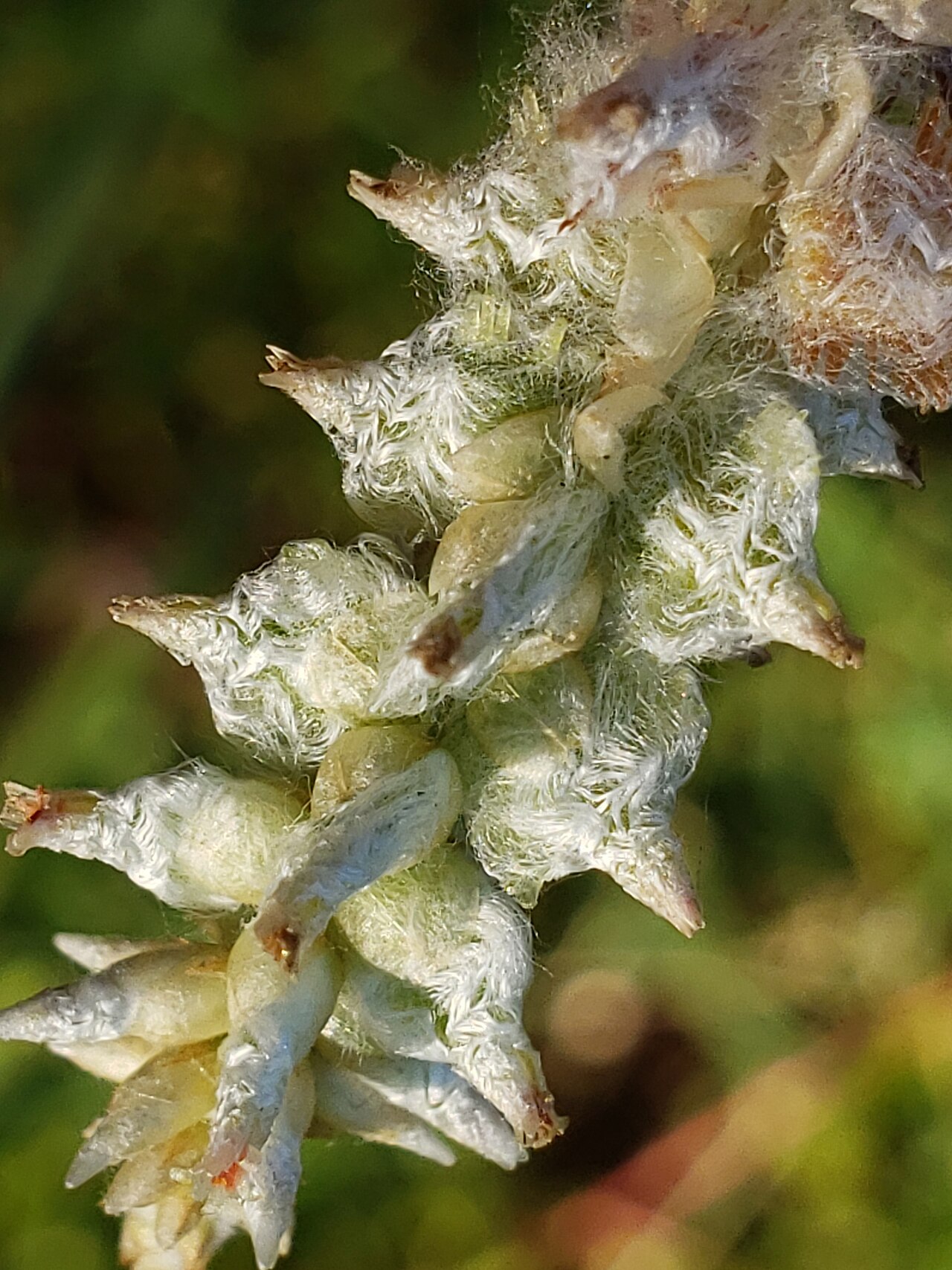
Tiny flowers are densely packed in narrow, cylindrical spikes, about 1/2 to 1 inch thick and up to several inches long, at the tips of the stalks. There are no showy petals: each flower is enclosed in a tube-shaped calyx covered with long, white, cottony hairs, and small, papery bracts sit below it. The spikes look grayish-white to cream and woolly from a distance. Flowering runs from about June into October.
Fruit
As the fruit develops, the hardened calyx tube around each single seed develops toothed or winged crests along its sides, giving the spike a spiky texture. The calyx falls with the seed inside, and its hairs help it catch on fur, clothing or wind.
Look-alikes
Slender snakecotton (Froelichia gracilis) is smaller and more branched from the base, with thinner, shorter spikes, and is often found on gravel, railroad ballast and roadsides; it is introduced in parts of the East. Woolly white heads of pussytoes (Antennaria) are much lower and form mats. Plantains (Plantago) have spikes from a basal rosette but are not woolly in the same way.
Quick Facts
| Scientific Name | Froelichia floridana (Nutt.) Moq. |
| Family | Amaranthaceae (amaranth family) |
| Plant Type | Annual wildflower |
| Mature Height | 1–3 ft (occasionally to about 3 1/2 ft) |
| Mature Spread | 6–12 in |
| Growth Rate | Fast |
| Sun Exposure | Full sun |
| Water Needs | Low |
| Soil Type | Dry sand or sandy loam |
| Soil pH | Acidic to neutral (about 5–7.5) |
| Bloom Time | June–October |
| Flower Color | White to grayish-cream, woolly |
| Fall Color | Stems may redden; spikes turn tan |
| Fruit | Single seed enclosed in a crested, hairy calyx |
| Deer Resistant | Seldom browsed |
| USDA Hardiness Zones | Annual; grows wherever it is native (about 3–10) |
Native Range
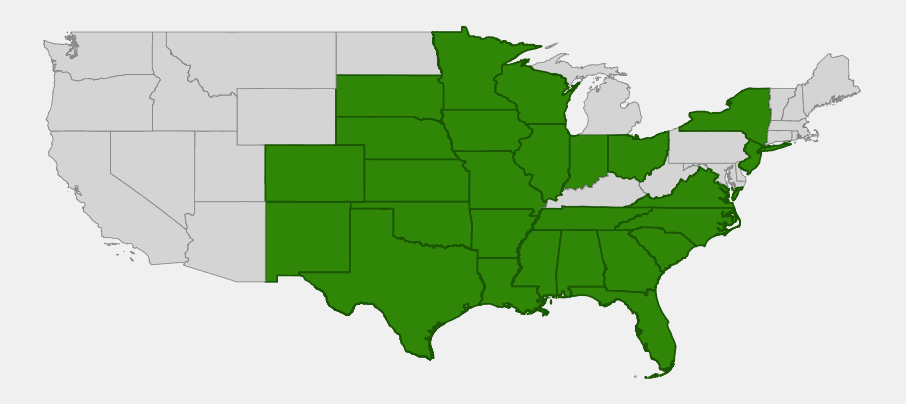
Plains snakecotton is native to the central and eastern United States and northern Mexico. USDA PLANTS lists it in about 30 states. Its core range runs from the sand prairies of Minnesota, Wisconsin, Iowa, Illinois and Indiana west across Nebraska, Kansas, South Dakota and Oklahoma to eastern Colorado and New Mexico, south through Texas and Louisiana, and east across the Gulf states to Florida, Georgia and the Carolinas.
On the northeastern edge of its range, it has been reported from Ohio, New Jersey, New York and Virginia, where it is scattered and uncommon. NatureServe treats it as introduced in Delaware and Kentucky, and the Maryland Biodiversity Project treats it as introduced in Maryland, so those states are not shown on the map. Two varieties are often recognized: var. floridana, mainly on the southeastern coastal plain, and var. campestris, the plant of the plains and Midwest sand prairies.
Typical habitats are dry, open, sandy places: sand prairies and savannas, sandhills, pine and oak barrens, inland and coastal dunes, sandy river terraces, old fields, roadsides and railroad embankments. It often appears where sand has been disturbed, and it is common in fallow sandy fields.
📋 Regional plant lists featuring Plains Snakecotton: New York, Pennsylvania & Northern New Jersey · Ohio & Indiana · Michigan, Wisconsin & Eastern Minnesota · Kentucky & Tennessee · Nebraska, Kansas & Eastern Colorado · Maryland, Virginia & West Virginia · Delaware, Southern New Jersey & Long Island · Illinois, Iowa & Missouri · Alabama, Georgia & Mississippi · North & South Florida · North & South Carolina · Arkansas, Louisiana, Eastern Oklahoma & Eastern Texas · South & West Texas · North Dakota, South Dakota & Western Minnesota
Growing & Care Guide
Plains snakecotton is rarely sold, but it is easy to grow from seed in the right spot. It needs sun and sand, and it does the rest itself, often reseeding in open patches year after year.
Light
Grow it in full sun. It is a plant of open sand with little competition, and in shade or among tall, dense vegetation it is quickly crowded out.
Soil & Water
Dry, sandy soil is ideal, including poor, acidic sands where few other plants thrive. It needs no fertilizer and little or no supplemental water once seedlings are established. Rich, moist garden soil favors weeds that will outcompete it.
Planting Tips
Sow seed in fall or early spring on bare, loose sand, pressing it lightly into the surface. It is a good choice for a sand garden, the sunny edge of a sand prairie planting, or a patch of open sand among bunchgrasses and other low wildflowers. Leave a few bare spots so it can reseed.
Pruning & Maintenance
No pruning is needed. Let the spikes ripen and drop their seeds in fall; you can pull the dead stalks afterward or leave them for winter interest. Because it can spread readily on open, disturbed sand, pull unwanted seedlings while they are small if it moves where you do not want it.
Propagation
Grow it from seed. Collect spikes in fall when they turn tan and dry, and rub off the woolly fruits. Seed sown outdoors in fall gets natural winter conditions; seed sown in spring usually germinates as soil warms. Plants are annual, so they must be renewed from seed each year, which they usually do on their own.
Landscape Uses
- Sand gardens and sand prairie plantings: an unusual, woolly-spiked annual for dry, open sand
- Naturalistic meadows: fuzzy white spikes from summer into fall
- Restoration of sandy sites: a native annual that colonizes open, disturbed sand
- Dried arrangements: the woolly spikes hold their shape when dried
- Educational and native plant gardens: an interesting example of a native amaranth
Wildlife & Ecological Value
Plains snakecotton is a small part of sand-prairie and sandhill communities, but it adds late-season flowers and seeds to habitats where food can be scarce.
For Pollinators
The tiny flowers are visited by small bees, flies and other insects. Their woolly covering hides most of the flower, and the plant is not a major nectar source, but it flowers late in the season when sand prairies have few other blooms.
For Birds
Seed-eating birds such as sparrows and juncos may eat the small seeds in fall and winter. The plants also add structure to open sand where birds forage.
For Mammals
Small mammals may eat the seeds. The hairy plants are seldom browsed by deer or livestock.
Ecosystem Role
Plains snakecotton is a pioneer of open sand. It is one of the annual plants that fill gaps between bunchgrasses in sand prairies and sandhills, especially after fire, grazing or other disturbance. Its presence often marks the specialized, dry, sandy habitats that support rare plants and insects in the Midwest and Southeast.
Cultural & Historical Uses
The genus Froelichia honors Joseph Aloys von Froelich, an 18th–19th century German physician and botanist. The species was first described by Thomas Nuttall as Oplotheca floridana, from Florida, and later moved to Froelichia by the French botanist Alfred Moquin-Tandon.
The common names snakecotton and cottonweed describe the cottony, serpent-like spikes. Its other names, including field snakecotton, plains snakecotton and prairie cottonweed, reflect its wide range from the Southeast to the Great Plains.
Outside its native range, plains snakecotton has become a weed in some places, including parts of Queensland, Australia, and it can spread in sandy crop fields in North America. Within its native range, though, it is a natural member of sand prairie and sandhill communities, and in some northern states it is uncommon enough to be valued as a sand-prairie indicator.
Frequently Asked Questions
Is plains snakecotton a perennial?
No. It is an annual that grows from seed each year, blooms from summer into fall and dies after setting seed. It often reseeds in open, sandy spots.
Why is it called snakecotton?
Its narrow flower spikes are covered in dense, white, cottony hairs, and their long, slender shape reminded people of snakes.
Where does plains snakecotton grow?
In dry, sandy places across the central and eastern United States: sand prairies, sandhills, barrens, dunes, old fields and sandy roadsides, from Minnesota and Wisconsin to Texas, Florida and the Carolinas.
Can I grow plains snakecotton in my garden?
Yes, if you have dry, sandy soil and full sun. Sow seed in fall or early spring on bare sand. It is not suited to rich, moist garden soil.
Is plains snakecotton weedy?
It can spread readily on open, disturbed sand and is considered a weed in some crop fields and outside its native range. In a native sand garden it is easy to control by pulling seedlings.

Looking for a nursery that carries Plains Snakecotton?
Browse our native plant nursery directory: Alabama & Arkansas · Colorado, Florida & Georgia · Illinois, Indiana, Iowa & Kansas · Louisiana, Minnesota, Mississippi & Missouri · Nebraska, New Jersey, New Mexico, New York, North Carolina, Ohio & Oklahoma · South Carolina, South Dakota, Tennessee, Texas & Virginia · Wisconsin

