
Slender Bush Clover (Lespedeza virginica)
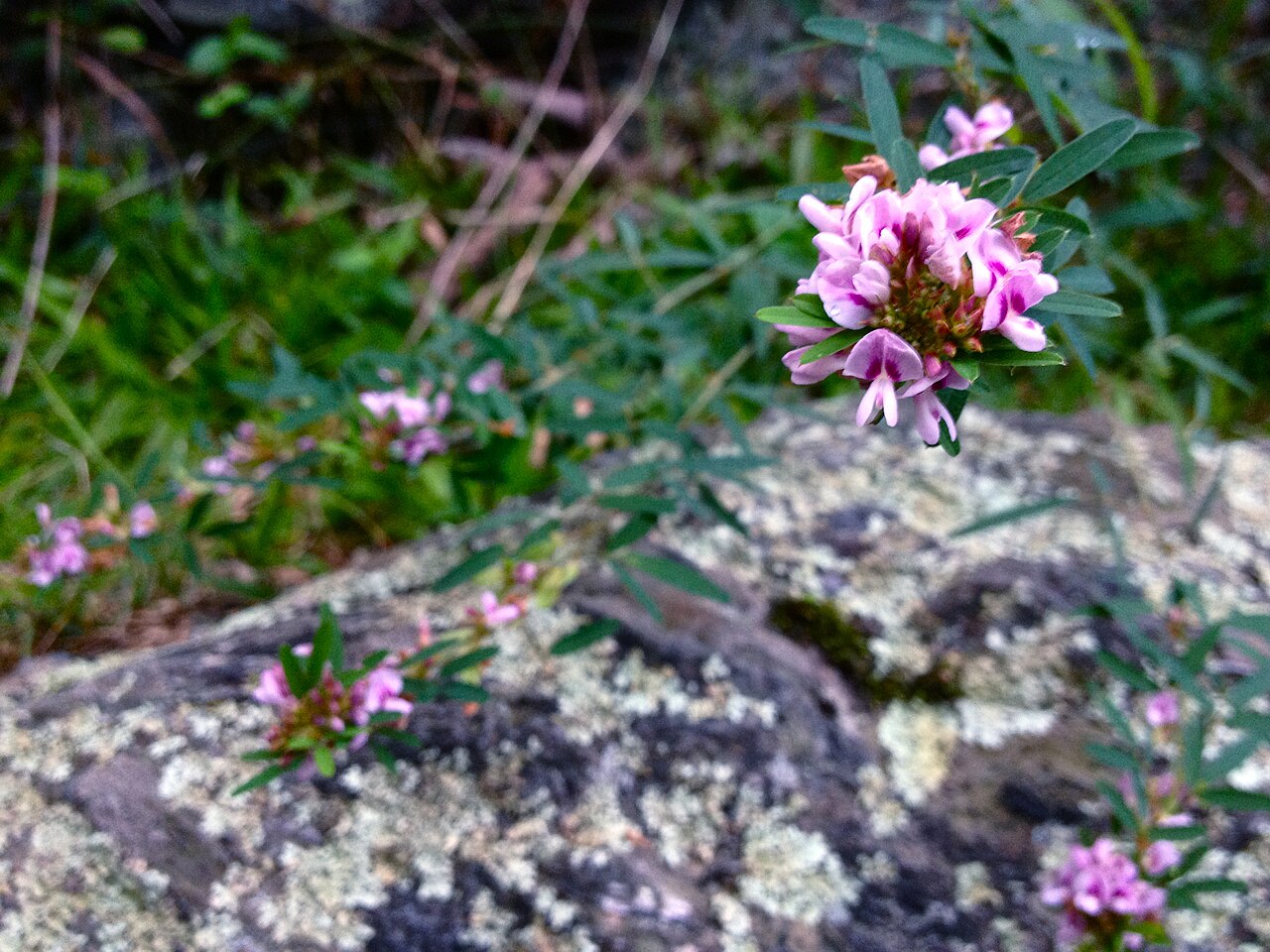
Lespedeza virginica, known as Slender Bush Clover or slender lespedeza, is a native perennial legume of dry, open woods, prairies, savannas and barrens in the eastern and central United States. It grows 1 to 3 feet tall, with slender, upright stems crowded with narrow, three-part leaves, and in late summer it bears small clusters of rosy-purple pea flowers in the upper leaf axils.
It is one of about a dozen native bush clovers in eastern North America. Like other legumes, it hosts nitrogen-fixing bacteria in its roots, enriching poor soils. Its flowers are visited by bees, its leaves feed the caterpillars of several butterflies, and its seeds are eaten by quail, turkeys and songbirds.
Slender bush clover is often confused with sericea lespedeza (Lespedeza cuneata), an aggressive invasive plant from Asia. Learning the difference matters: the native plant is a valuable, well-behaved part of prairies and open woods, while sericea lespedeza is one of the most damaging invaders of grasslands in the central and southern United States.
Identification
Look for slender, upright stems densely covered with narrow, three-part leaves and, in late summer, small clusters of rosy-purple pea flowers near the top, in dry, open, sunny ground.
Growth Habit
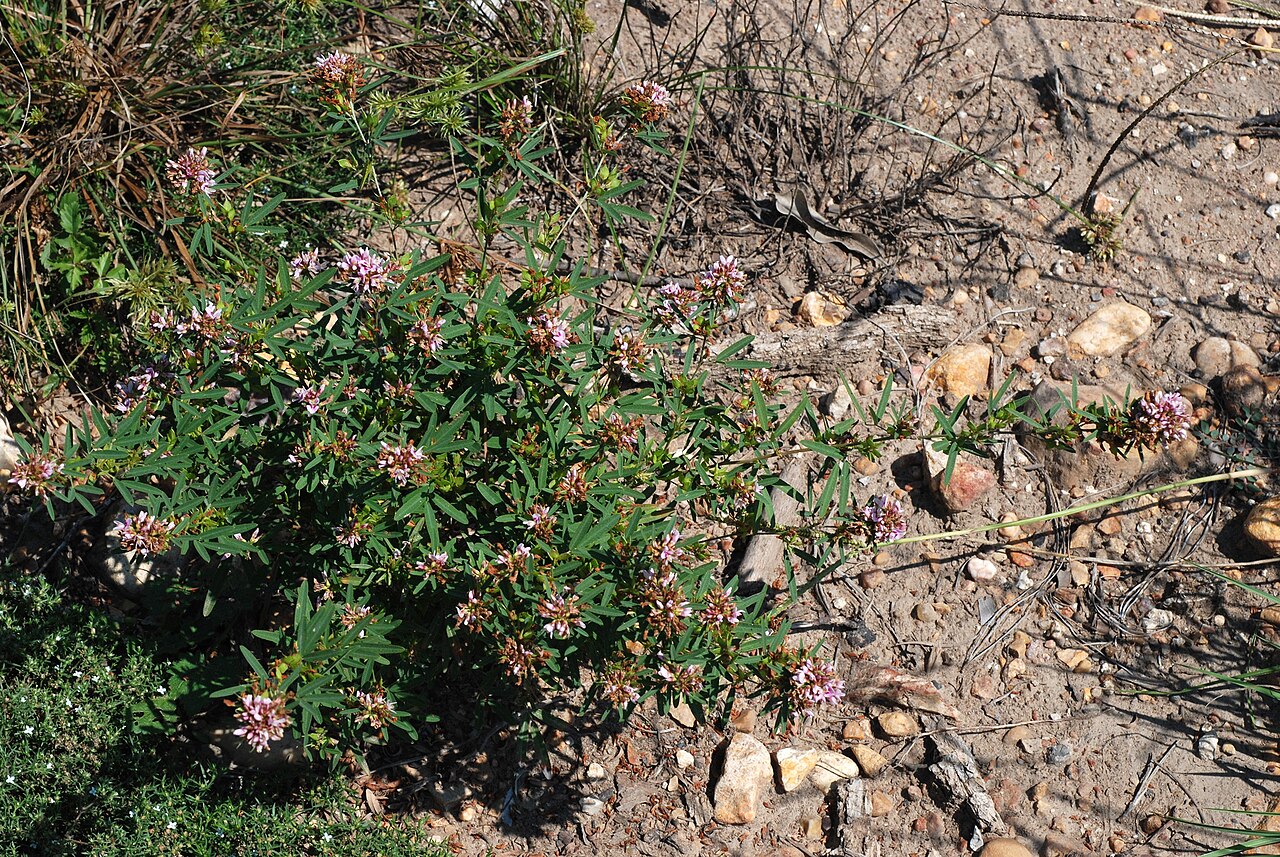
Slender bush clover is an upright perennial, 1 to 3 feet tall, with one or several slender, unbranched or sparingly branched stems from a woody root crown. The stems are finely hairy. Plants often grow singly or in small groups among grasses rather than in dense stands.
Leaves
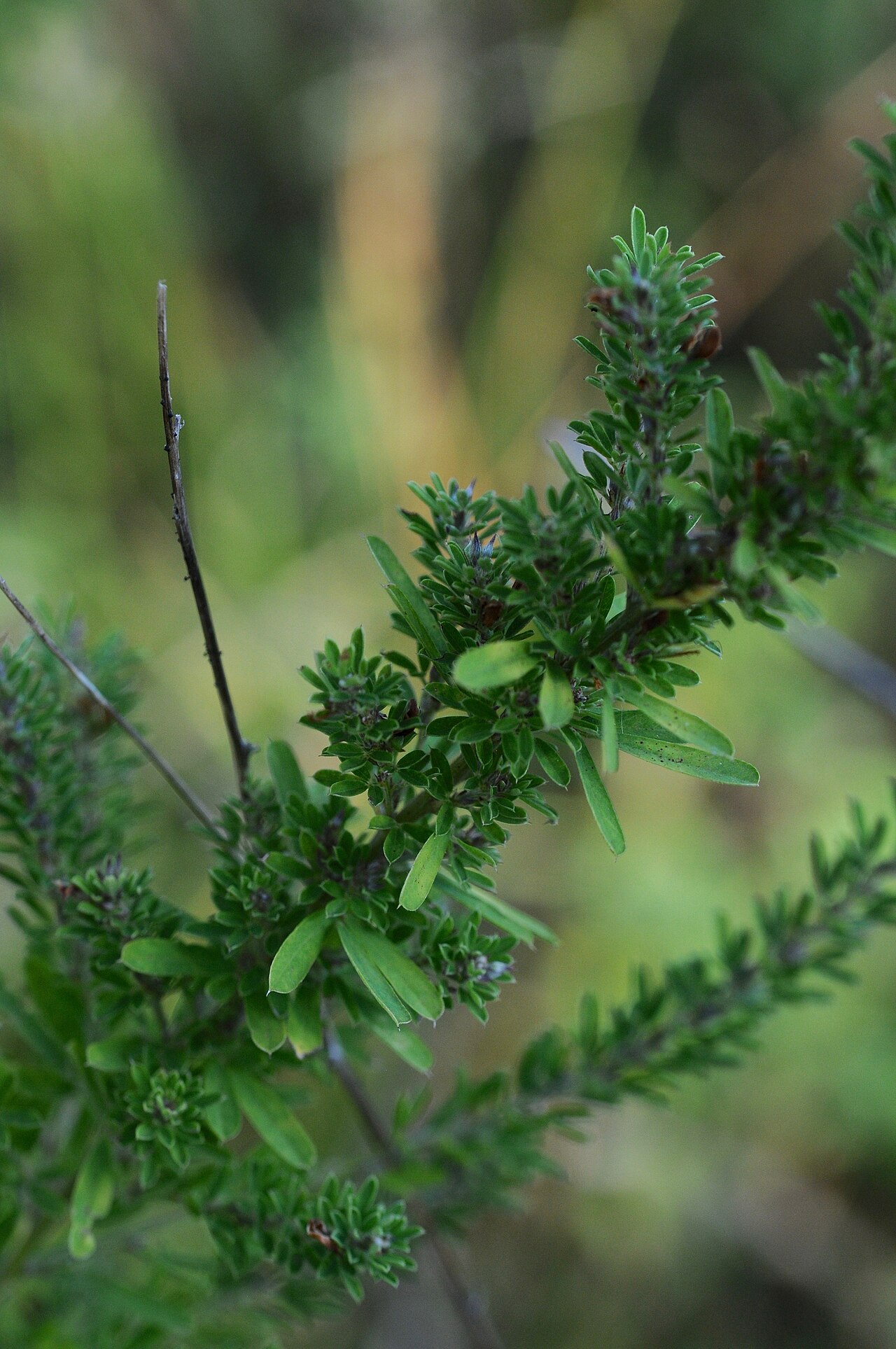
The leaves are alternate and crowded along the stem, each with three narrow, linear to narrowly oblong leaflets, 3/4 to 1 1/4 inches long and less than 1/4 inch wide, with rounded or slightly pointed tips. They are smooth or finely hairy above and slightly paler beneath, and are held upright, close to the stem.
Flowers
The flowers are typical pea flowers, about 1/4 inch long, pink to rosy purple with a darker spot at the base of the upper petal. They grow in short, compact clusters of a few to several flowers in the upper leaf axils, on stalks shorter than the leaves. Like other bush clovers, it also produces tiny, closed, self-pollinating flowers that never open. Bloom time is July to September.
Fruit & Seeds
Each flower produces a small, flat, oval, one-seeded pod about 1/4 inch long, which stays closed. The seeds ripen in fall and are held on the stem into winter.
Look-alikes
Sericea lespedeza (Lespedeza cuneata) is the most important look-alike. It is an invasive Asian species that forms dense stands. Its leaflets are wedge-shaped, broadest near the squared-off, abruptly pointed tip, and its flowers are creamy white with purple markings. Slender bush clover has linear leaflets that are not wedge-shaped, and rosy-purple flowers. Round-headed bush clover (L. capitata) has broader, silky leaflets and dense, round heads of creamy flowers. Other native bush clovers, such as L. violacea and L. intermedia, have wider, oval leaflets.
Quick Facts
| Scientific Name | Lespedeza virginica |
| Family | Fabaceae (pea family) |
| Plant Type | Herbaceous perennial legume |
| Mature Height | 1–3 ft |
| Mature Spread | 6–12 in |
| Growth Rate | Moderate |
| Sun Exposure | Full sun to part shade |
| Water Needs | Low; dry to medium soil |
| Soil Type | Sandy, rocky, gravelly or clay soils; poor soils |
| Soil pH | Acidic to neutral (about 5.0–7.0) |
| Bloom Time | July–September |
| Flower Color | Pink to rosy purple |
| Fall Color | Stems and leaves turn tan to bronze |
| Fruit | Small, flat, one-seeded pod |
| Deer Resistant | No; browsed by deer and rabbits |
| USDA Hardiness Zones | 4–9 |
Native Range
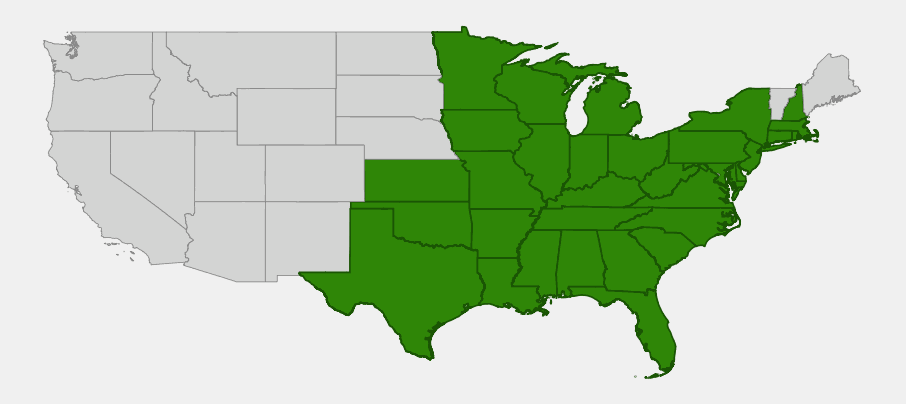
Slender bush clover is native to eastern and central North America. USDA PLANTS lists it as native in Ontario and in 32 states, from southern New England and New York west to Michigan, Wisconsin, Minnesota, Iowa and Kansas, and south to northern Florida, Louisiana and Texas.
It is most common in the Southeast, the Ozarks, the Ohio Valley and the mid-Atlantic. At its northern edge it is uncommon, reaching southeastern Minnesota, southern Wisconsin and Michigan, and southern New Hampshire. In Texas it grows mainly in the eastern and central parts of the state, and in Oklahoma mainly in the east.
Its habitats are dry and open or lightly shaded: open oak and pine woods, woodland edges, savannas, sandy and rocky prairies, glades and barrens, old fields, and roadsides. It is often found on poor, sandy or rocky soils, and benefits from fire, which keeps woody plants from shading it out.
📋 Regional plant lists featuring Slender Bush Clover: New York, Pennsylvania & Northern New Jersey · Ohio & Indiana · Michigan, Wisconsin & Eastern Minnesota · Kentucky & Tennessee · Nebraska, Kansas & Eastern Colorado · Connecticut, Massachusetts & Rhode Island · New Hampshire, Maine & Vermont · Maryland, Virginia & West Virginia · Delaware, Southern New Jersey & Long Island · Illinois, Iowa & Missouri · Alabama, Georgia & Mississippi · North & South Florida · North & South Carolina · Arkansas, Louisiana, Eastern Oklahoma & Eastern Texas
Growing & Care Guide
Slender bush clover is easy to grow in a sunny, dry spot with lean soil, and it is sold as seed by many native seed companies for prairie and savanna plantings.
Light
Full sun is best. It tolerates light shade, such as the edge of open woods, but flowers less there.
Soil & Water
It grows in sandy, rocky, gravelly or clay soils and prefers them lean and well-drained. Once established, its deep taproot makes it very drought-tolerant. Avoid rich, fertilized or constantly wet soil.
Planting Tips
Sow seed in fall, or in spring after scarification and cold stratification. Add the right rhizobia inoculant for Lespedeza when sowing into soil where bush clovers have not grown. Plant it among short to medium grasses such as little bluestem, where it can lean on its neighbors.
Pruning & Maintenance
Little care is needed. Cut or burn the old stems in late winter or early spring. Protect young plants from rabbits and deer, which like to eat them.
Propagation
Grow it from seed. The seed coat is hard, so scarify it with sandpaper or a brief hot-water soak, then cold-stratify it for about 10 days to a month. Plants have a taproot and do not divide or transplant well once established.
Landscape Uses
- Prairie and meadow plantings: fine texture and late-summer color among grasses
- Dry, poor soils: fixes nitrogen and thrives where many plants struggle
- Savanna and woodland edge restoration: a natural companion of oaks and native grasses
- Wildlife plantings: seed for quail and songbirds, leaves for butterfly caterpillars
- Pollinator gardens: late-summer flowers for native bees
Wildlife & Ecological Value
Native bush clovers like this one are valuable for wildlife throughout their range.
For Pollinators
Bumblebees, leafcutter bees and other native bees visit the flowers. Bush clovers are larval host plants for several butterflies, including the eastern tailed-blue, the silver-spotted skipper, the hoary edge and cloudywings.
For Birds
The seeds are eaten by northern bobwhite quail, wild turkeys and songbirds, especially in fall and winter, when they stay on the stems.
For Mammals
White-tailed deer and rabbits browse the leaves and stems, which are high in protein.
Ecosystem Role
As a legume, it works with nitrogen-fixing bacteria in its roots to add nitrogen to poor soils, benefiting nearby plants. It is part of fire-maintained prairies, savannas and open woodlands.
Cultural & Historical Uses
The genus Lespedeza is named for Vicente Manuel de Céspedes, a Spanish governor of East Florida in the late 18th century; a misspelling of his name became the genus name. The species name virginica means “of Virginia.”
Several Asian bush clovers, especially sericea lespedeza (Lespedeza cuneata) and bicolor lespedeza (L. bicolor), were widely planted in the United States in the 20th century for erosion control, forage and wildlife food. Both have since become invasive. Native species like slender bush clover provide the same wildlife benefits without the risks.
Like other bush clovers, slender bush clover produces two kinds of flowers: showy, open flowers that insects pollinate and tiny, closed flowers that pollinate themselves. The closed flowers produce seed even when pollinators are scarce.
Frequently Asked Questions
How can I tell slender bush clover from sericea lespedeza?
Slender bush clover has narrow, linear leaflets and rosy-purple flowers. Invasive sericea lespedeza has wedge-shaped leaflets with squared-off tips and creamy white flowers with purple markings, and forms dense stands.
Is slender bush clover invasive?
No. It is native to the eastern and central United States and grows as scattered plants among grasses.
Does slender bush clover improve soil?
Yes. Like other legumes, it hosts nitrogen-fixing bacteria in root nodules and adds nitrogen to the soil.
What wildlife uses slender bush clover?
Bees visit the flowers, several butterflies use it as a caterpillar host, quail and turkeys eat the seeds, and deer browse the leaves.
When does slender bush clover bloom?
From July to September.

Looking for a nursery that carries Slender Bush Clover?
Browse our native plant nursery directory: Alabama & Arkansas · Connecticut, Delaware, Florida & Georgia · Illinois, Indiana, Iowa & Kansas · Kentucky, Louisiana, Maryland, Massachusetts, Michigan, Minnesota, Mississippi & Missouri · New Hampshire, New Jersey, New York, North Carolina, Ohio & Oklahoma · Pennsylvania, Rhode Island, South Carolina, Tennessee, Texas & Virginia · West Virginia & Wisconsin