
Snow Trillium (Trillium nivale)
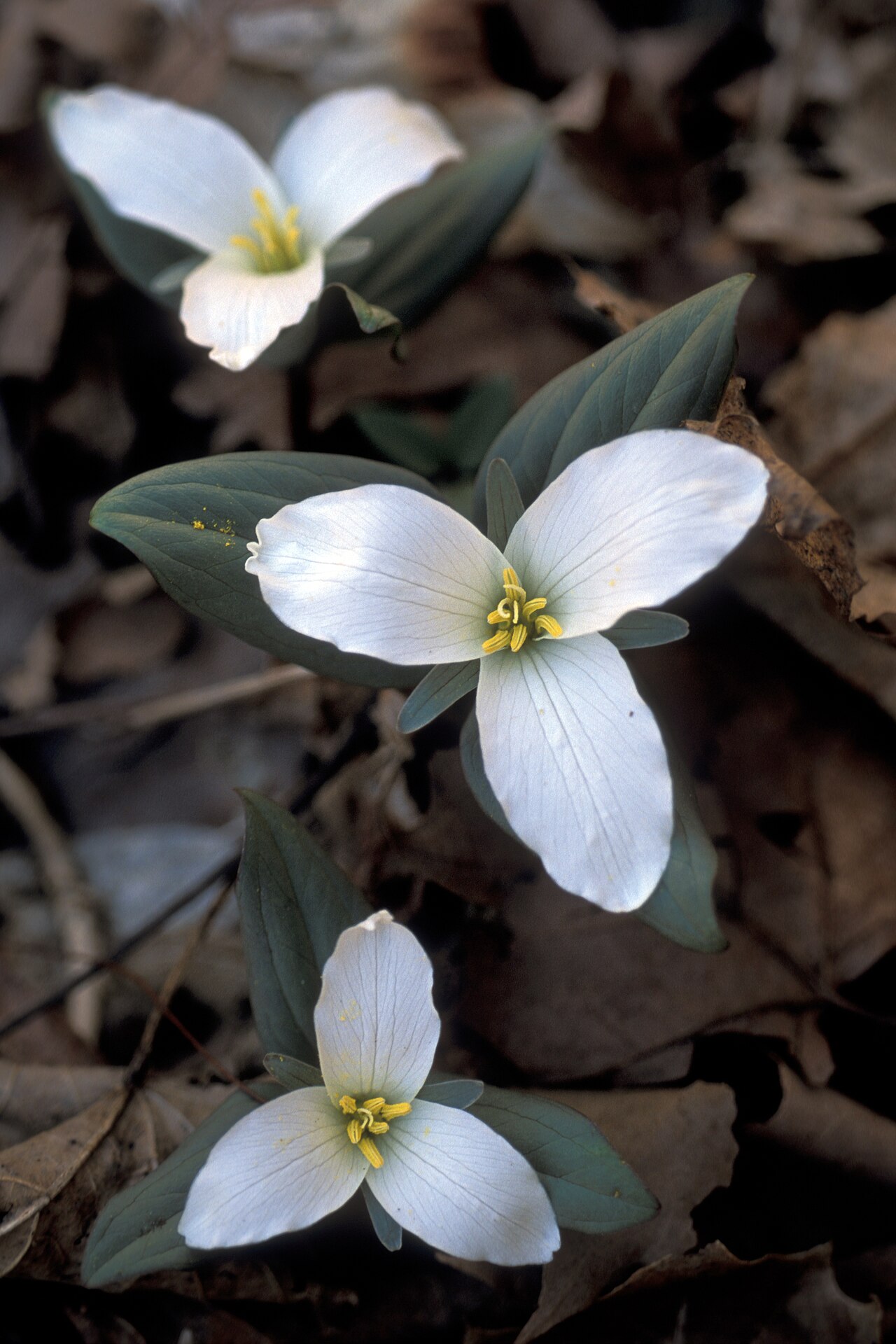
Trillium nivale, known as Snow Trillium or dwarf white trillium, is the smallest and earliest-blooming trillium in North America. In late winter or very early spring, often while patches of snow remain, it raises a single pure white flower only 2 to 6 inches above the leaf litter, framed by three small, oval, blue-green leaves.
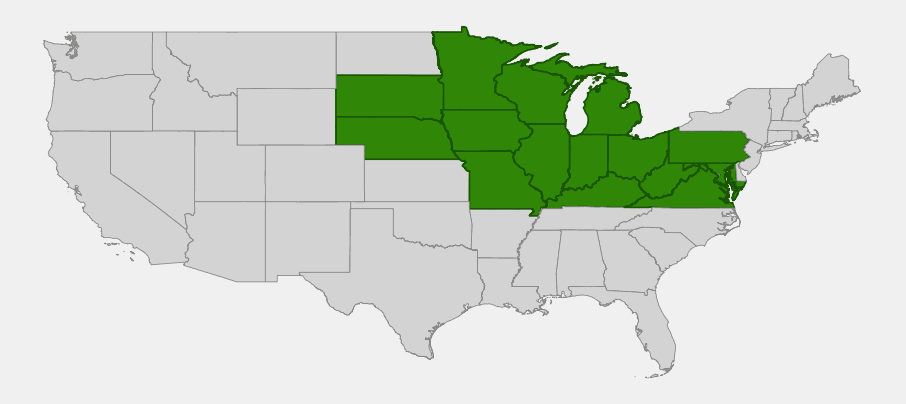
It is a plant of the Midwest and the upper Ohio Valley, from Minnesota, Wisconsin and Michigan south to Missouri and Kentucky, and east to Pennsylvania, Maryland and the Virginias. It usually grows on limestone or dolomite: on rocky wooded slopes, at the base of bluffs, and in rich, well-drained floodplain woods. It is uncommon to rare in much of its range and is listed as a rare or protected species in several states.
For gardeners, snow trillium is a delightful, slow-growing treasure for a shaded rock garden with alkaline soil. Buy only nursery-propagated plants, and never dig them from the wild. This guide covers how to identify it, where it grows, how to grow it, and its role in the early spring woods.
Identification
Snow trillium is easy to recognize because nothing else blooms so early and so small: a tiny plant with three leaves and one white, three-petaled flower.
Growth Habit
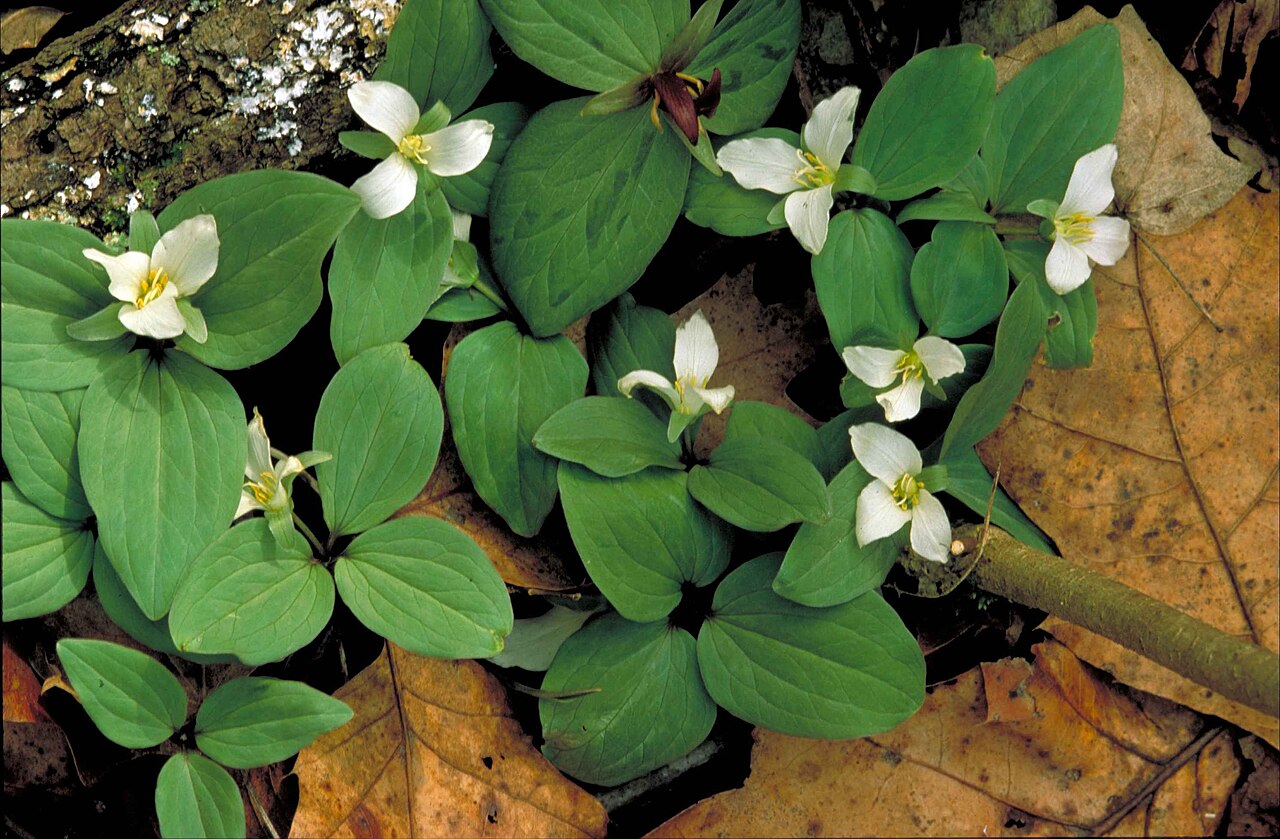
A small, spring-ephemeral perennial growing from a short, thick rhizome. Each stem is only 2 to 6 inches tall at flowering and may stretch a little taller as the fruit ripens. Plants often grow in small clumps or colonies. The leaves wither by early summer, and the plant is dormant the rest of the year.
Leaves
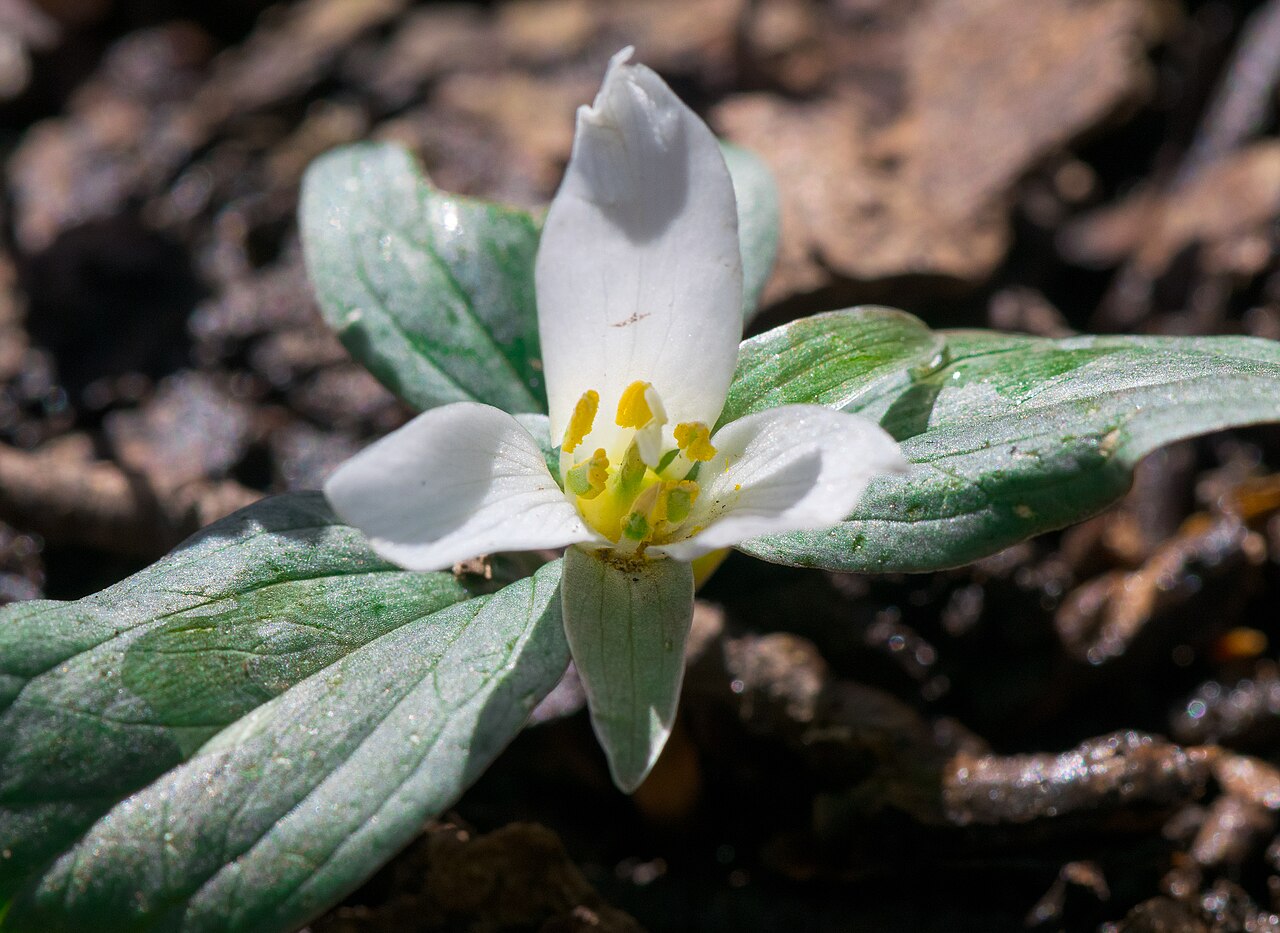
Three leaves are held in a whorl at the top of the stem. They are oval to egg-shaped, about 1 to 2 inches long, with short stalks, and are a distinctive dull blue-green without any mottling.
Flowers
A single flower sits on a short stalk above the leaves, usually upright or slightly nodding. It has three pure white, oval petals about ¾ to 1½ inches long, often with slightly wavy edges, three small green sepals, six yellow anthers and a three-parted stigma. Bloom is very early: from late February in the south to April in the north, often a few weeks before most other spring wildflowers. Older flowers may turn pinkish.
Fruit & Seeds
The fruit is a small, three-lobed, greenish to purplish berry-like capsule that ripens in late spring. The seeds have a fleshy attachment (an elaiosome) that ants carry back to their nests, spreading the seeds a short distance.
Look-alikes
Large-flowered trillium (T. grandiflorum) is much taller, with large, stalkless green leaves and larger flowers, and blooms weeks later. Nodding trillium has its flower hanging below broad leaves. Drooping trillium is larger, with a long flower stalk. Hepatica and harbinger-of-spring bloom at the same time but have very different leaves and flowers.
Quick Facts
| Scientific Name | Trillium nivale Riddell |
| Family | Melanthiaceae (bunchflower family; formerly Liliaceae) |
| Plant Type | Herbaceous perennial; spring ephemeral |
| Mature Height | 2–6 in |
| Mature Spread | 3–6 in per stem; slowly forms small clumps |
| Growth Rate | Slow |
| Sun Exposure | Part shade (sun in early spring, shade in summer) |
| Water Needs | Medium; moist in spring, drier in summer |
| Soil Type | Well-drained, humus-rich loam or rocky soil, often over limestone or dolomite |
| Soil pH | Neutral to alkaline (about 6.5–8.0) |
| Bloom Time | Late February–April |
| Flower Color | White |
| Fall Color | None; dormant by summer |
| Fruit | Small, three-lobed capsule with ant-dispersed seeds |
| Deer Resistant | No; deer browse trilliums |
| USDA Hardiness Zones | 4–7 |
Native Range
Snow trillium is native to the central and north-central United States. USDA PLANTS lists it in 15 states: Minnesota, Wisconsin, Michigan, Iowa, Illinois, Indiana, Ohio, Missouri, Kentucky, Nebraska, South Dakota, Pennsylvania, Maryland, Virginia and West Virginia. It is most frequent in the driftless area of southwestern Wisconsin, southeastern Minnesota and northeastern Iowa, and in parts of Ohio, Indiana and Illinois.
Elsewhere it is scattered and local. At the western edge of its range it reaches eastern Nebraska and southeastern South Dakota along the Missouri River valley, and in the East it extends to western Pennsylvania, western Maryland and the mountains of West Virginia and Virginia, where it is rare. It is listed as rare, threatened or endangered in several states.
It grows in rich, well-drained deciduous woods, especially on limestone and dolomite: rocky wooded slopes, the base of bluffs, ravines and elevated floodplain terraces. These are often maple-basswood or oak forests where early spring sunlight reaches the ground before the trees leaf out.
📋 Regional plant lists featuring Snow Trillium: Illinois, Iowa & Missouri · Ohio & Indiana · Kentucky & Tennessee · Michigan, Wisconsin & Eastern Minnesota · Maryland, Virginia & West Virginia · New York, Pennsylvania & Northern New Jersey · Nebraska, Kansas & Eastern Colorado · North Dakota, South Dakota & Western Minnesota
Growing & Care Guide
Snow trillium can be grown by patient gardeners in the Midwest and similar climates, but it is slow and seldom available. Buy only plants that are clearly labeled as nursery-propagated from a reputable native plant nursery, and never dig plants from the wild; wild trilliums are slow to establish and wild collection has damaged many populations. It is protected in several states.
Light
It needs bright light in early spring, when it blooms, and shade the rest of the year. A spot under deciduous trees or shrubs, or on the north or east side of a rock garden, is ideal.
Soil & Water
Plant in well-drained, humus-rich soil that is neutral to alkaline. A gritty mix with limestone chips or dolomite gravel works well. Keep the soil moist in spring; it tolerates drier conditions in summer once dormant, but should not stay soggy.
Planting Tips
Plant rhizomes about 2 inches deep in early fall, or set potted plants in spring. Because the plant is tiny, give it a place at the front of a woodland garden or in a rock garden where it will not be smothered by larger plants or heavy leaf litter. Mark its location so you do not dig into it while it is dormant.
Pruning & Maintenance
No pruning is needed. Let the leaves die back naturally. A light, fine leaf mulch in fall is fine, but do not bury the crowns under thick mulch. Protect plants from deer and rabbits if browsing is a problem.
Propagation
It can be grown from seed, but this is very slow: seed needs alternating warm and cold periods to germinate, and seedlings may take several years to bloom. Established clumps can be divided carefully when dormant. Seed should be sown fresh, before it dries out.
Landscape Uses
- Woodland gardens: the first trillium of the year, often in bloom with the snow still around
- Rock gardens: a tiny plant for a shaded, limestone rock garden
- Spring ephemeral collections: pairs well with hepatica, bloodroot and Dutchman’s breeches
- Early pollinator support: one of the first flowers for early-flying bees and flies
- Wild viewing: admire it in limestone woods of the Midwest in March and April
Wildlife & Ecological Value
As one of the very first wildflowers to bloom, snow trillium is a small but important part of the early spring woods.
For Pollinators
Its flowers open when few others are available and are visited by early-season insects such as small bees and flies that come out on warm late-winter days.
For Birds
It has little direct value to birds.
For Mammals
White-tailed deer and rabbits browse trilliums, and heavy deer browsing can reduce or eliminate populations.
Ecosystem Role
Like other trilliums, snow trillium has seeds with fatty elaiosomes that ants carry to their nests, eat, and then discard, effectively planting the seeds. It is part of the spring-ephemeral community that uses the brief window of sunlight before the trees leaf out, and it helps capture nutrients in the forest floor in early spring.
Cultural & Historical Uses
The species was described in 1835 by John Leonard Riddell, a botanist and physician who worked in Ohio. The species name nivale means “of the snow”, for its habit of blooming so early that snow can still be on the ground.
Trilliums are often called wake-robins because they bloom as robins return in spring. Snow trillium, appearing even earlier than most, is one of the first signs of spring in many Midwestern woods, and wildflower walks in parks such as those of the driftless area often feature it.
Trilliums are long-lived but slow to reproduce, and digging plants from the wild has hurt populations of several species. Conservation groups encourage gardeners to buy only nursery-propagated plants and to leave wild trilliums where they grow. Trilliums are not food plants and should not be eaten.
Frequently Asked Questions
When does snow trillium bloom?
Very early, from late February in the south of its range to April in the north, often while patches of snow remain.
How big is snow trillium?
It is tiny, usually only 2 to 6 inches tall, with a single white flower about 1 to 2 inches across.
Can I grow snow trillium in my garden?
Yes, in a shaded woodland or rock garden with well-drained, neutral to alkaline soil. Buy only nursery-propagated plants, and never dig wild plants.
Is snow trillium rare?
It is uncommon to rare in much of its range and is listed as a rare or protected plant in several states, especially at the edges of its range.
How are its seeds spread?
By ants, which carry the seeds to their nests for the fatty elaiosome attached to each seed.

Looking for a nursery that carries Snow Trillium?
Browse our native plant nursery directory: Illinois, Indiana & Iowa · Kentucky, Maryland, Michigan, Minnesota & Missouri · Nebraska & Ohio · Pennsylvania, South Dakota & Virginia · West Virginia & Wisconsin

