
Drooping Trillium (Trillium flexipes)
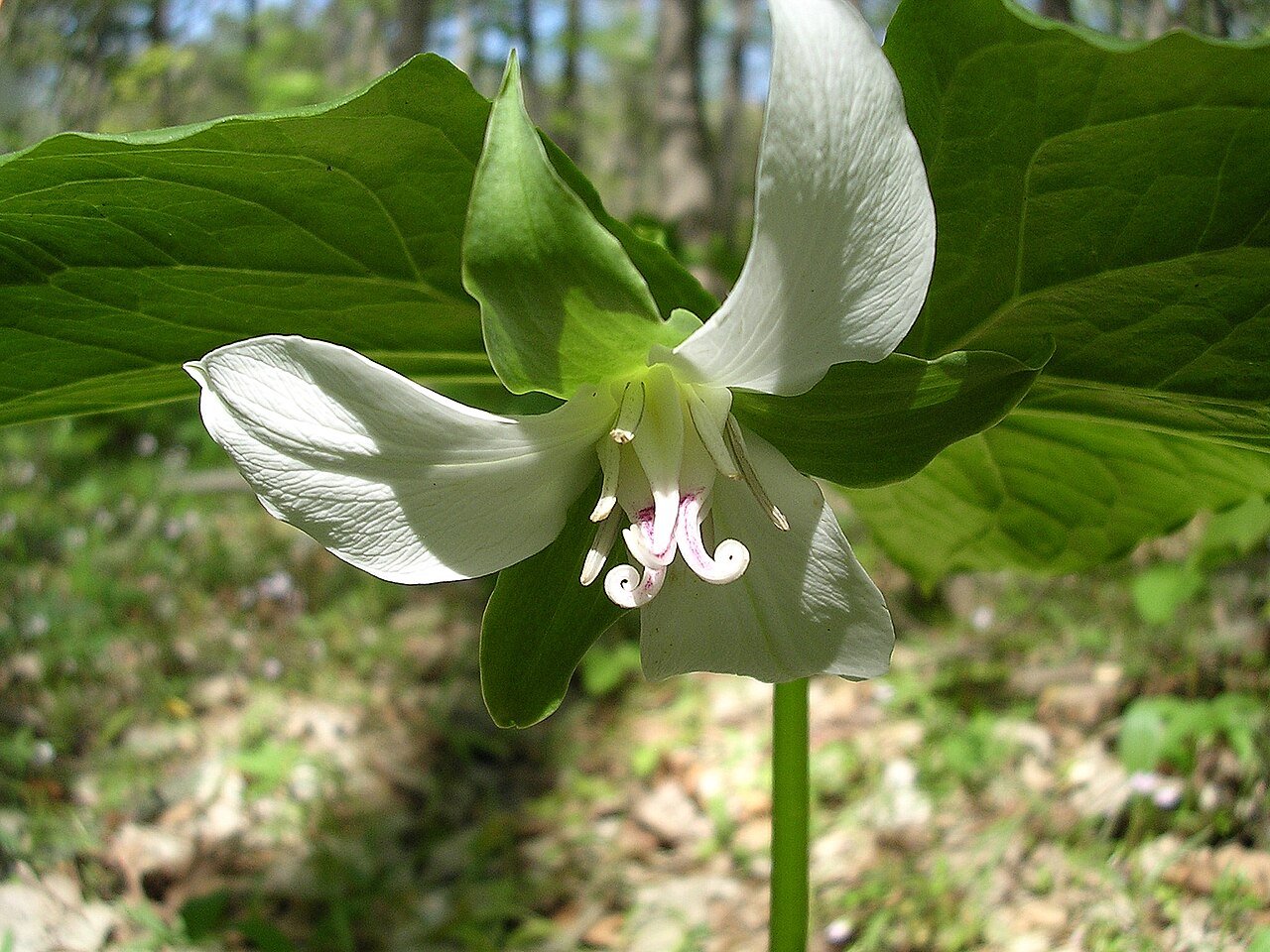
Trillium flexipes, known as Drooping Trillium (USDA: nodding wakerobin) and also as bent trillium or declined trillium, is a spring wildflower of rich deciduous woods in the Midwest, Ohio Valley and upper South. It belongs to the trillium family (Melanthiaceae, formerly placed in the lily family). Like all trilliums it has its parts in threes: a single stem 8 to 20 inches tall carries a whorl of three broad leaves, and from their center rises a single flower with three sepals and three petals.
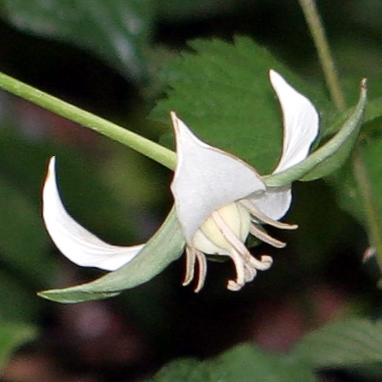
Its name describes its most distinctive trait. The large flower, usually white and 2 to 4 inches across, sits on a long stalk (the flexipes, or “bent foot”) that holds it horizontally or drooping at or below the leaves. Inside are long, cream-colored anthers and a white to pinkish ovary. In late summer the flower becomes a plump, fragrant, pinkish-red to white berry.
Drooping trillium grows on moist, rich, often limestone-based slopes, ravines and floodplains, often in large colonies. Like most trilliums it is slow to grow from seed, and wild plants are sometimes dug for sale. Never dig trilliums from the wild, and buy only from nurseries that propagate their own plants.
Identification
Drooping trillium is a large, white-flowered trillium whose flower is held on a long stalk and often hangs at or below the leaves. Check the color of the ovary and anthers to separate it from similar species.
Growth Habit
A clump-forming herbaceous perennial that grows from a short, thick underground rhizome. Each stem is 8 to 20 inches tall and unbranched. Plants emerge in early spring, flower in April and May, and the foliage dies back by mid to late summer.
Leaves
Three broad leaves form a whorl at the top of the stem. Each is 3 to 8 inches long, diamond-shaped to nearly round, with a short pointed tip and no leaf stalk. They are plain green, without mottling, and often overlap one another.
Flowers
A single flower, usually 2 to 4 inches across, rises on a stalk 1 1/2 to 5 inches long. The stalk may be held straight out, angled downward or drooping, so the flower is often partly hidden beneath the leaves. Petals are broad, white and slightly recurved; maroon, pink or cream forms occur in some populations. The six stamens have long, cream to white anthers, and the ovary is white to pale pink. Flowers have little or a faint, slightly musty scent.
Fruit
The fruit is a fleshy, six-angled berry about 1 inch long that ripens pink-red to whitish in late summer and has a fruity scent. The seeds carry oily appendages (elaiosomes) that attract ants.
Look-alikes
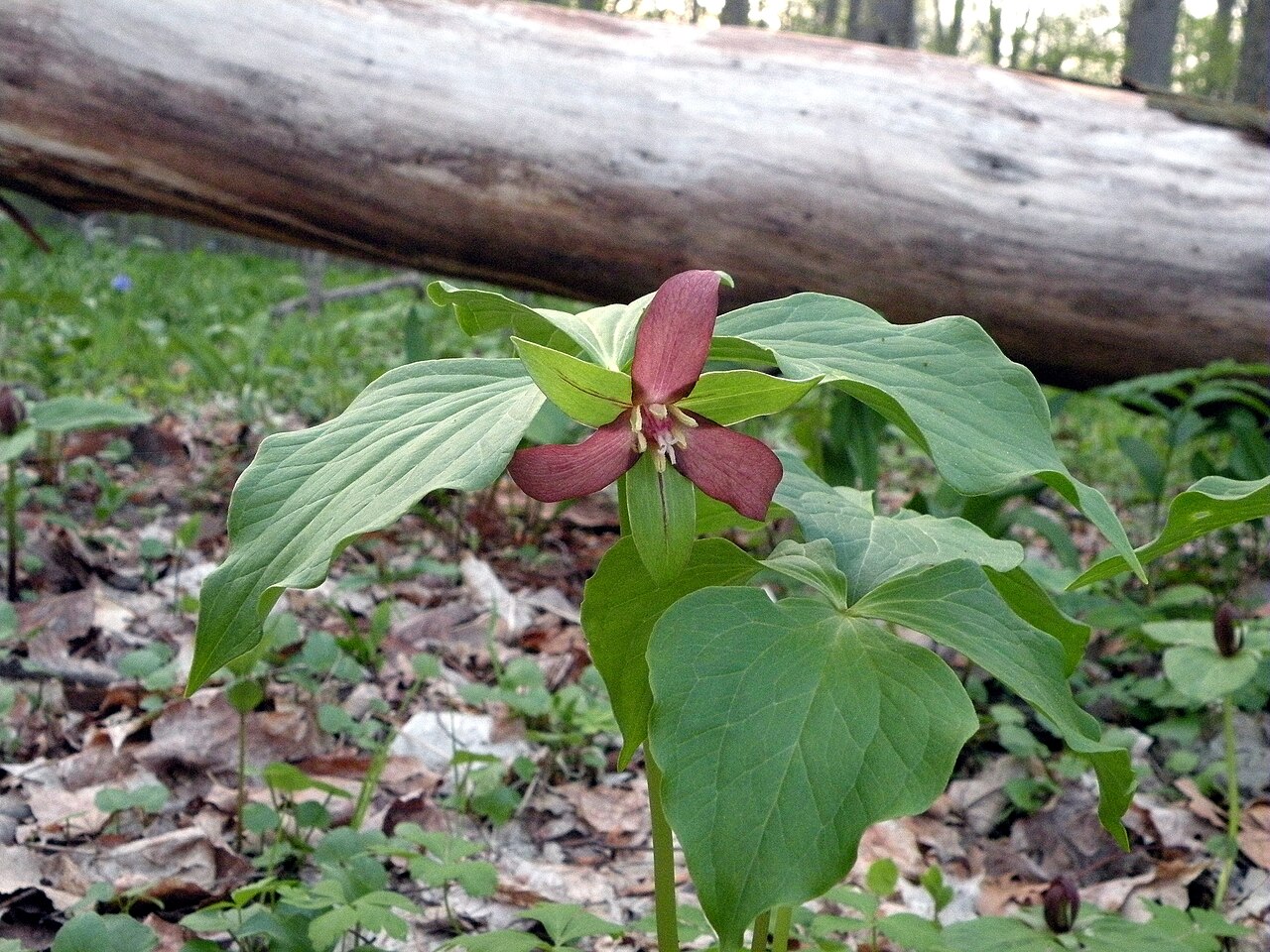
Red Trillium (Trillium erectum), especially its white forms, has a dark purple to maroon ovary, shorter dark anthers and a foul smell; the two species sometimes hybridize. White Trillium (T. grandiflorum) holds its flower upright above the leaves and has wavy-edged petals that turn pink with age. Nodding trillium (T. cernuum) has a smaller flower that hangs on a short, curved stalk well below the leaves and pinkish anthers. Prairie Trillium (T. recurvatum) has stalkless maroon flowers and mottled leaves.
Safety & Conservation
Trillium roots and berries are not considered food and may cause stomach upset if eaten; keep pets and children from chewing on them. Drooping trillium is common in parts of the Midwest but rare at the edges of its range, and trilliums recover slowly from picking: cutting the leaves and flower can weaken or kill the plant for years. Never pick or dig wild trilliums.
Quick Facts
| Scientific Name | Trillium flexipes |
| Family | Melanthiaceae (trillium family) |
| Plant Type | Spring ephemeral herbaceous perennial |
| Mature Height | 8–20 in |
| Mature Spread | 8–12 in; slowly forms clumps |
| Growth Rate | Slow |
| Sun Exposure | Partial to full shade |
| Water Needs | Medium; moist but well-drained in spring |
| Soil Type | Rich, humusy loam; often over limestone |
| Soil pH | About 6.0–7.5 (neutral to slightly alkaline) |
| Bloom Time | April–May |
| Flower Color | White (sometimes maroon, pink or cream) |
| Fall Color | None; foliage goes dormant by late summer |
| Fruit | Fleshy, six-angled pink-red to whitish berry |
| Deer Resistant | No; deer browse trilliums heavily |
| USDA Hardiness Zones | 4–8 |
Native Range
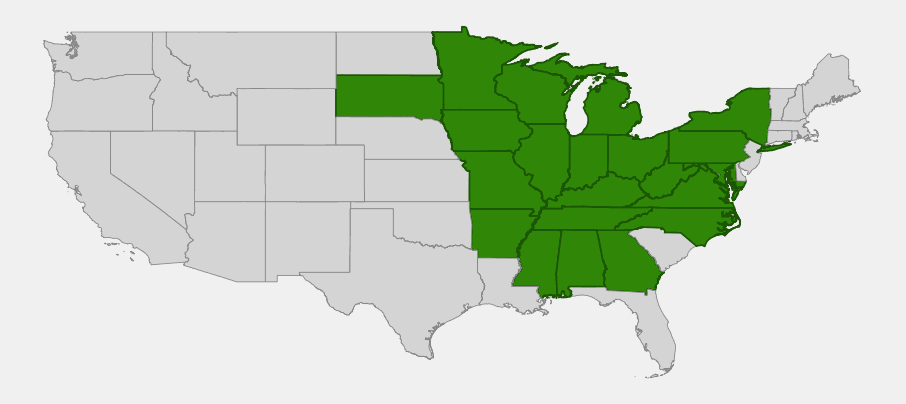
USDA PLANTS lists drooping trillium as native in the lower 48 states and Canada, with records from 21 states and from Ontario. Its core range runs through the Midwest and Ohio Valley: Illinois, Indiana, Ohio, Kentucky, Tennessee, Missouri, Iowa, southern Michigan, southern Wisconsin and southeastern Minnesota. It extends east into western New York, Pennsylvania, West Virginia, Maryland and Virginia, and south through the Cumberland Plateau and Appalachians to northern Alabama and Georgia.
In Arkansas it grows in rich woods of the Ozarks. Records from South Dakota, Mississippi and North Carolina are outlying, and it is rare in several eastern states at the edge of its range, such as New York and Maryland. In Canada it is known from a small area of southwestern Ontario.
Typical habitats are rich, moist deciduous woods, wooded ravines, north-facing slopes, bluff bases and floodplain forests, often over limestone or other calcium-rich rock. It grows with sugar maple, beech, basswood and other hardwoods and often forms large colonies in undisturbed woods.
📋 Regional plant lists featuring Drooping Trillium: New York, Pennsylvania & Northern New Jersey · Ohio & Indiana · Michigan, Wisconsin & Eastern Minnesota · Kentucky & Tennessee · Maryland, Virginia & West Virginia · Delaware, Southern New Jersey & Long Island · Illinois, Iowa & Missouri · Alabama, Georgia & Mississippi · North & South Carolina · Arkansas, Louisiana, Eastern Oklahoma & Eastern Texas
Growing & Care Guide
Drooping trillium is one of the easier trilliums to grow in a shady woodland garden with rich, moist soil. It is slow to establish but long-lived. Buy only nursery-propagated plants: many trilliums sold cheaply are dug from the wild, which depletes wild populations.
Light
Partial to full shade, ideally under deciduous trees that let in spring sunshine before they leaf out and shade the plants in summer.
Soil & Water
Plant in rich, moist, well-drained soil with plenty of leaf mold or compost. It tolerates neutral to slightly alkaline soil better than many trilliums. Keep the soil evenly moist in spring; it tolerates drier conditions after it goes dormant in summer.
Planting Tips
Plant dormant rhizomes in late summer or fall, about 2 to 4 inches deep, or set out potted plants in spring. Space them about a foot apart. Mulch with shredded leaves each fall to imitate the forest floor. Mark their location so they are not disturbed while dormant.
Pruning & Maintenance
Do not cut the leaves after flowering; the plant needs them to store energy for next year. Let the foliage yellow and die back naturally. Protect plants from deer, which browse trilliums heavily, and from slugs on emerging shoots.
Propagation
Divide large, established clumps in late summer or fall, keeping a growing bud on each piece of rhizome. Seed can be sown fresh, before it dries, in a shaded bed; germination takes one to two years, and seedlings may need five to seven years or more to bloom.
Landscape Uses
- Woodland gardens: a large-flowered spring trillium for rich, shady soil
- Shade borders: combine with ferns, wild ginger and other spring wildflowers
- Naturalized woods: forms slowly spreading colonies over many years
- Wildflower restoration: part of the native spring flora of rich hardwood forests
- Native plant collections: a showy and less common trillium for collectors
Wildlife & Ecological Value
Drooping trillium plays several roles in the spring woods, from feeding early insects to relying on ants and other animals to spread its seeds.
For Pollinators
The flowers are visited by bees, flies and beetles in spring. Because the flower often hangs below the leaves, many visitors are small insects that crawl among the foliage.
For Birds
Ground-feeding birds may eat the fleshy berries. The plants grow in rich woods that are home to many warblers, thrushes and other forest birds.
For Mammals
White-tailed deer browse trilliums heavily, and overbrowsing has caused declines in many woods. Small mammals may eat the fruit and help spread seeds.
Ecosystem Role
The seeds have oily elaiosomes that attract ants, which carry the seeds to their nests, eat the appendages and discard the seeds in nutrient-rich soil, a process called myrmecochory. Large, healthy trillium colonies are a sign of undisturbed, deer-balanced forest.
Cultural & Historical Uses
The species was described by the naturalist Constantine Samuel Rafinesque in the nineteenth century. The name flexipes comes from Latin for “bent foot,” referring to the flexible flower stalk. The genus name Trillium refers to the parts in threes.
Trilliums are often called wakerobins because they bloom in early spring, around the time robins return. Several Native American peoples used various trilliums in traditional medicine, particularly the roots, and the common name birthroot applied to some species reflects such uses. These uses are not safe as home remedies.
Drooping trillium is a favorite of spring wildflower walks in the Midwest, where large colonies can carpet rich woods in April and May. Because it grows slowly and does not recover well from picking or digging, many parks and preserves ask visitors to admire it without touching.
Frequently Asked Questions
How can I tell drooping trillium from white red trillium?
Look inside the flower. Drooping trillium has long, cream anthers and a white to pale pink ovary. The white form of red trillium has a dark purple ovary and shorter, darker anthers.
Why is it called drooping trillium?
Its large flower sits on a long, flexible stalk that often bends so the flower hangs at or below the leaves.
Can I pick or dig wild trilliums?
No. Picking the leaves and flower can weaken or kill the plant, and digging depletes wild colonies. Buy nursery-propagated plants.
Does drooping trillium spread?
Slowly. Clumps enlarge over the years, and ants carry seeds to new spots nearby. Seedlings take many years to flower.
When does drooping trillium bloom?
In April and May, before the trees fully leaf out. The plant goes dormant by mid to late summer.

Looking for a nursery that carries Drooping Trillium?
Browse our native plant nursery directory: Alabama & Arkansas · Georgia · Illinois, Indiana & Iowa · Kentucky, Maryland, Michigan, Minnesota, Mississippi & Missouri · New York, North Carolina & Ohio · Pennsylvania, South Dakota, Tennessee & Virginia · West Virginia & Wisconsin