Western Redbud (Cercis occidentalis)
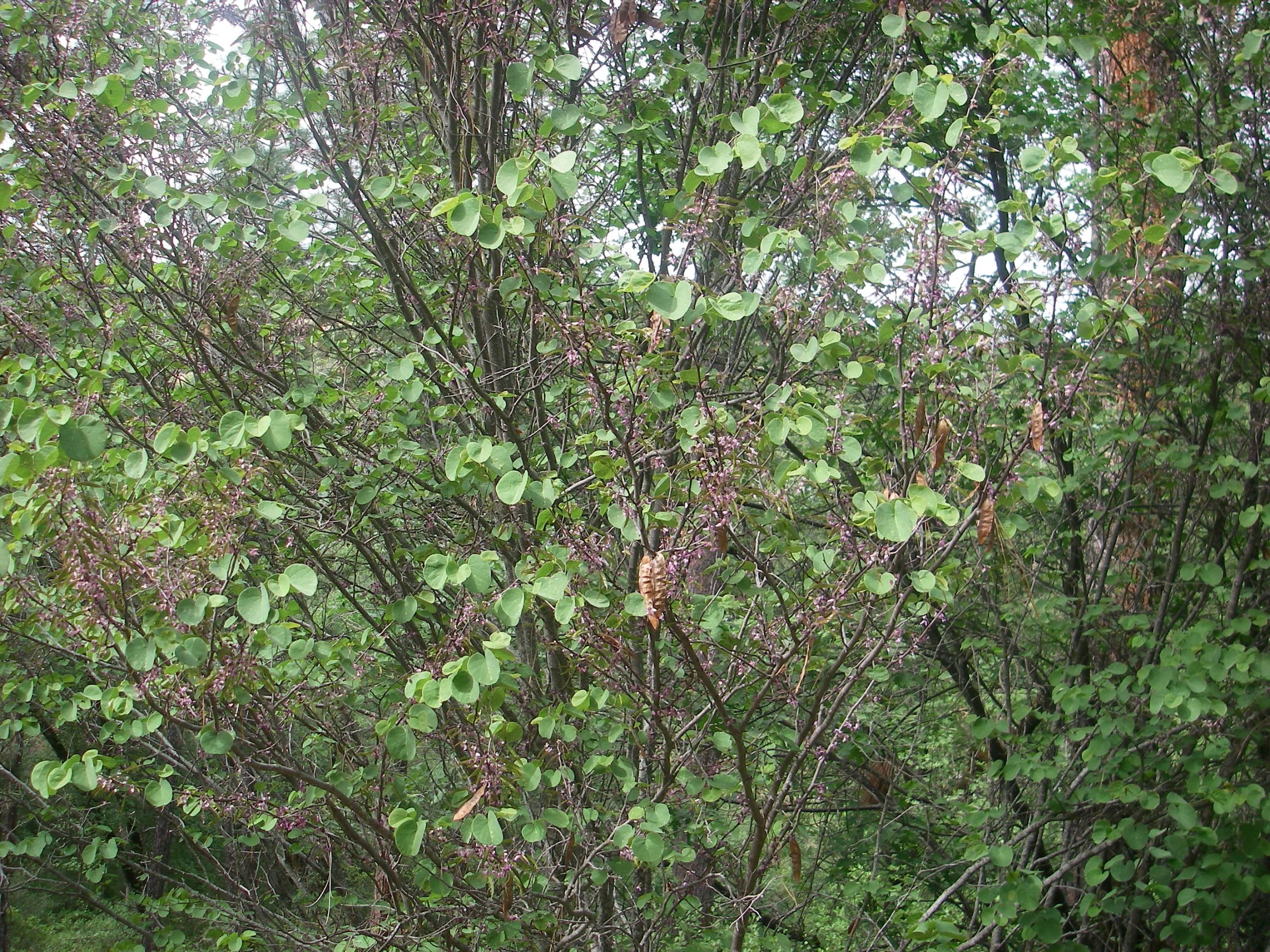
Cercis occidentalis (treated by some current authorities as a synonym of Cercis orbiculata), commonly known as Western Redbud or California Redbud, is one of the most dramatic native shrubs of the dry foothill and canyon country of the American West. A member of the Fabaceae (legume family), it is close kin to the better-known Eastern Redbud (Cercis canadensis), but is adapted to a much drier, more exposed life — rocky slopes, canyon washes, and chaparral margins rather than moist eastern woodlands.
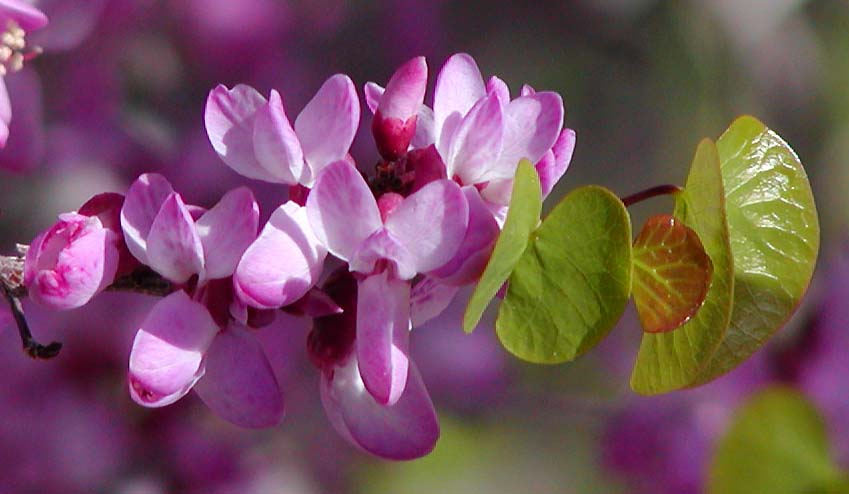
In early spring, before the leaves emerge, Western Redbud explodes into bloom with masses of small, pea-like magenta-to-rose-pink flowers that stud the bare branches so thickly they can seem to glow from a distance, often set off against the gray rock and dull winter chaparral around them. As the flowers fade, the plant leafs out in rounded, heart-shaped blue-green leaves, followed later in the season by flattened, papery seed pods that turn tan to reddish-brown and persist on the branches well into winter, rattling in the wind.
Western Redbud typically grows as a large, dense, multi-stemmed shrub 10 to 20 feet tall and wide, though it can be trained as a small single-trunked tree. It is exceptionally drought tolerant once established and asks for almost nothing beyond good drainage and sun, making it one of the most reliable, lowest-maintenance flowering natives for dry Southwestern and California gardens.
Identification
Western Redbud is most recognizable in late winter and early spring, when its bare, twiggy branches are covered in small, bright magenta-pink flowers before any leaves appear. Out of bloom, the rounded, dense shrub shape and distinctive heart-shaped leaves remain reliable identifiers through the growing season.
Bark & Stems
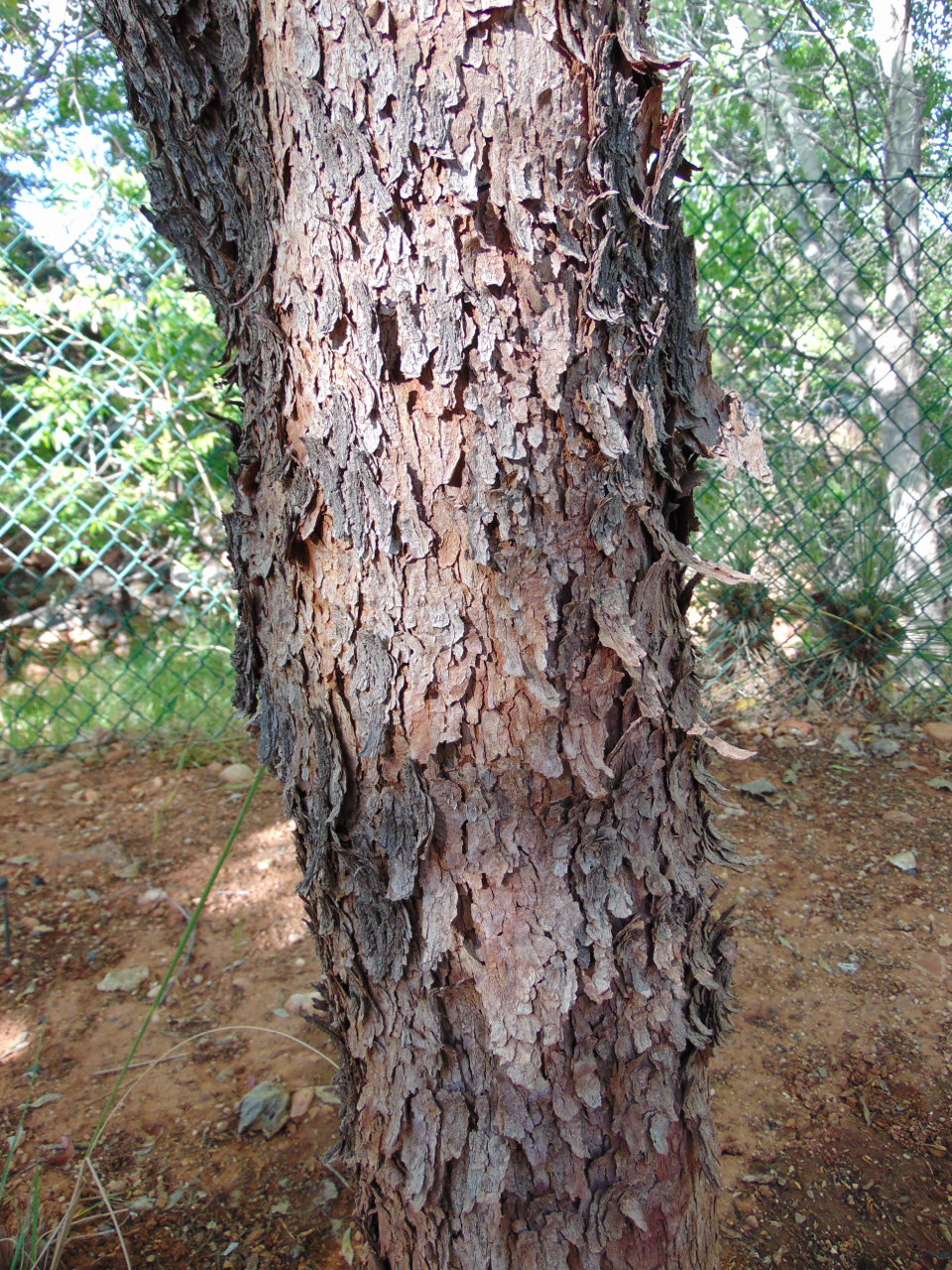
Young twigs are slender, reddish-brown, and somewhat zigzagged between nodes. On older stems and trunks, the bark becomes gray-brown and develops a shaggy, flaking or scaly texture, with curling plates that lift away from the trunk, especially noticeable on mature, tree-form specimens. The plant typically produces multiple stems from the base, creating a dense, rounded silhouette.
Leaves
Leaves are simple, alternate, and nearly round to broadly heart-shaped (cordate), 2 to 3.5 inches across, with a smooth margin and a distinctive notch at the leaf tip. They emerge bluish-green to blue-gray and leathery, turning yellow to orange in fall before dropping. The rounded, almost coin-like leaf shape is one of the most reliable identification features of the genus Cercis as a whole.
Flowers
Flowers appear in dense clusters directly on bare twigs and even on older wood (a trait called cauliflory), typically from February through April depending on elevation and latitude, well before the leaves emerge. Each small pea-shaped flower is magenta to rose-pink, about 1/2 inch long, and the sheer density of bloom along the branches is what gives the plant its show-stopping early-spring display.
Fruit & Seeds
After flowering, Western Redbud produces flattened, oblong seed pods 2 to 3.5 inches long, reddish when young and maturing to a dry, papery tan or reddish-brown. The pods persist on the shrub well after the seeds inside have matured, often remaining through winter and adding textural interest to the bare winter silhouette. Each pod contains several small, hard seeds.
Quick Facts
| Scientific Name | Cercis occidentalis (syn. Cercis orbiculata) |
| Family | Fabaceae (Legume) |
| Plant Type | Deciduous Shrub / Small Tree |
| Mature Height | 10–20 ft |
| Mature Spread | 10–20 ft |
| Growth Rate | Slow to Moderate |
| Sun Exposure | Full Sun to Partial Shade |
| Water Needs | Low |
| Soil Type | Well-drained; rocky, sandy, or clay-loam |
| Soil pH | 6.5–8.0 (neutral to alkaline) |
| Bloom Time | February – April |
| Flower Color | Magenta to rose-pink |
| Fall Color | Yellow to orange |
| Fruit | Flat, papery tan to reddish-brown seed pods |
| Deer Resistant | Moderate (young growth may be browsed) |
| USDA Hardiness Zones | 7–10 |
Native Range
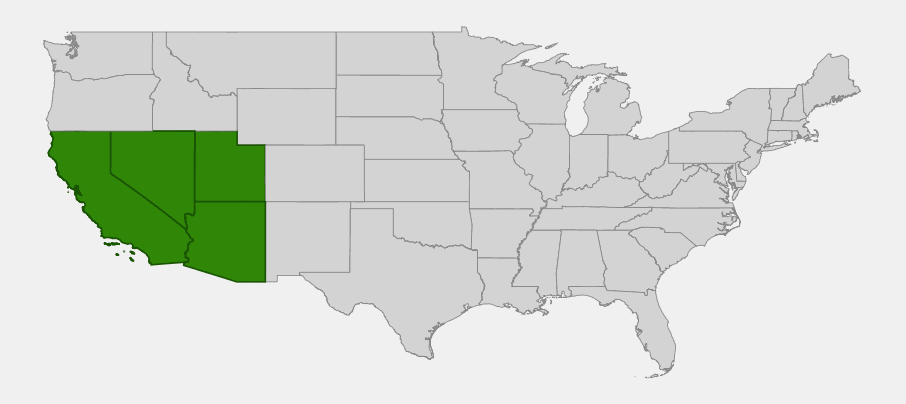
Western Redbud is native to the dry foothills, canyons, and chaparral of the southwestern United States, with its range centered on California — from the Sacramento Valley foothills and Coast Ranges south through the Sierra Nevada foothills and into Southern California’s mountains and canyons — and extending east into southern Nevada, southwestern Utah, and central and southeastern Arizona. It generally grows between about 1,000 and 6,000 feet elevation.
Within this range, Western Redbud favors dry, rocky slopes, canyon bottoms, and washes where winter and spring moisture is followed by a long dry season. It is a characteristic understory and edge species of foothill woodland, chaparral, and mixed oak woodland, often growing on the thin, well-drained soils of canyon walls and rocky outcrops where few other flowering shrubs can establish.
Because of its popularity as an ornamental, Western Redbud is widely planted well outside this native range, including in gardens throughout the Pacific Northwest and parts of the eastern United States; it is not considered invasive in these areas, but gardeners outside its native Southwest range should recognize it as an introduced ornamental rather than a locally native plant.
📋 Regional plant lists featuring Western Redbud: Arizona & New Mexico · Utah & Western Colorado
Growing & Care Guide
Western Redbud is one of the easiest and most rewarding flowering natives to grow in dry-summer climates. It thrives on neglect once established and is a staple of low-water, fire-wise landscaping throughout its native range.
Light
Plant in full sun for the heaviest spring bloom; Western Redbud also tolerates partial shade, particularly in hotter interior climates, though flowering will be somewhat reduced. It is not suited to deep or full shade.
Soil & Water
Western Redbud is adapted to lean, rocky, well-drained soils and is notably intolerant of summer irrigation once established — soggy soil, especially in summer, promotes root rot and shortens the plant’s life. It performs best with little to no supplemental water after the first one to two years, relying instead on winter and spring rainfall. It tolerates a wide range of soil types, including clay, as long as drainage is adequate, and adapts well to alkaline soils.
Planting Tips
Plant container-grown stock in fall, giving roots the cool, moist winter season to establish before the first dry summer. Choose a site with excellent drainage, such as a slope or raised bed, and avoid low spots where water collects. Water regularly through the first one to two growing seasons to establish a deep root system, then taper off sharply — established plants generally need no irrigation beyond natural rainfall within their native range.
Pruning & Maintenance
Western Redbud needs minimal pruning. Remove dead, damaged, or crossing branches after flowering in late spring. The plant can be shaped into a single-trunked small tree by selectively removing lower and competing stems while young, or left to grow as its natural dense, multi-stemmed shrub. Avoid heavy pruning or shearing, which sacrifices the natural branching pattern that makes the spring bloom so striking.
Landscape Uses
Western Redbud’s drought tolerance and dramatic bloom make it valuable across many garden styles:
- Specimen planting for a dramatic, early-spring floral display
- Dry slope and erosion control on rocky, well-drained sites
- Fire-wise and xeriscape gardens throughout the dry Southwest
- Foothill and chaparral habitat restoration
- Hedgerow or screen when grown as a multi-stemmed shrub
- Wildlife gardens — early blooms support emerging pollinators
Wildlife & Ecological Value
Western Redbud is a significant early-season resource in the dry foothill and chaparral ecosystems where it grows, flowering well before most other shrubs in its habitat.
For Pollinators
The dense, early-spring flower clusters are a critical nectar and pollen source for native bees emerging from winter dormancy, including bumblebees and mason bees, at a time when few other plants are in bloom. Honeybees also visit heavily. The timing makes Western Redbud an outsized contributor to early-season pollinator nutrition in its native range.
For Birds
The dense branching structure provides nesting sites and cover for small songbirds, while seeds in the dry pods are eaten by some seed-eating birds through fall and winter.
For Mammals
Deer and other browsers will eat young foliage and twigs, particularly on young plants, though mature shrubs tolerate light browsing well. Small mammals use the dense shrub form for cover.
Ecosystem Role
As a nitrogen-fixing legume, Western Redbud helps enrich the thin, rocky soils typical of its chaparral and foothill habitat, benefiting neighboring plants. Its deep, drought-adapted root system also helps stabilize slopes and canyon walls prone to erosion after the dry season.
Cultural & Historical Uses
Western Redbud holds a long history of use among California Indigenous peoples, particularly in basketry. The flexible young branches, especially those that had resprouted after pruning, coppicing, or fire, were prized by weavers for their strength and for the reddish color they could take on, and were used as both structural and decorative material in coiled and twined baskets by a number of California tribes. Shoots were often deliberately encouraged through pruning to produce the long, straight, pliable stems favored for weaving.
Beyond basketry, the plant’s spectacular, reliable spring bloom made it a natural marker of the changing seasons for people living in the foothill and canyon country where it grows, and it remains one of the most widely recognized harbingers of spring across its native range today.
Western Redbud has no documented food or medicinal use among Indigenous peoples beyond its role as a basketry material, and it should not be regarded as an edible or medicinal plant.
Frequently Asked Questions
Is Western Redbud the same plant as Eastern Redbud?
No. They are closely related species in the same genus, Cercis, but Western Redbud (Cercis occidentalis) is adapted to dry Southwestern chaparral and foothill habitats, while Eastern Redbud (Cercis canadensis) is native to moister eastern woodlands. Western Redbud tends to be more shrubby and is noticeably more drought tolerant.
Does Western Redbud need regular watering?
No, not once established. It is adapted to a dry summer climate and can develop root rot if watered too often in summer. Water regularly only during the first one to two years after planting, then reduce significantly.
Why didn’t my Western Redbud bloom well this year?
Light bloom is often linked to insufficient winter chilling, too much shade, overly rich or overwatered soil, or over-pruning in the wrong season. Full sun, lean soil, and minimal summer water generally produce the best flowering.
Can Western Redbud be grown as a small tree instead of a shrub?
Yes. While it naturally grows as a dense, multi-stemmed shrub, selectively removing competing stems and lower branches while the plant is young can train it into a small single- or multi-trunked tree form.
Is Western Redbud native outside the Southwest?
No. It is native only to parts of Arizona, California, Nevada, and Utah. It is commonly planted as an ornamental well beyond this range, including in the Pacific Northwest, but gardeners elsewhere should treat it as an introduced ornamental rather than a native plant for their region.

Looking for a nursery that carries Western Redbud?
Browse our native plant nursery directory: Arizona · California · Nevada · Utah