Pawpaw vs. Serviceberry: Choosing a Native Fruit Tree for Your Site
Last updated: November 6, 2026
If you want a native tree that feeds you as well as the birds, two names come up again and again: pawpaw and serviceberry. Both are small trees, both produce edible fruit, and both are native to large parts of North America.
They are not interchangeable, though. They differ in fruit, pollination needs, light, soil, size and native range, and those differences usually decide the question for you before taste ever comes into it.
This guide compares the two side by side, then shows where each one fits in a yard. Serviceberry here means the genus Amelanchier, which includes several species; pick the one native to your area.
Plan at a Glance
| Site | Pawpaw: sheltered, deep, moist but well-drained soil. Serviceberry: almost any well-drained yard spot, including borders and patios |
| Size | Pawpaw 15–30 ft tall and wide (NC State). Downy serviceberry 15–25 ft tall, 10–15 ft wide (NC State); other serviceberries range from shrubs to small trees |
| Sun | Both tolerate shade; both fruit best in full sun |
| Soil | Both need good drainage; avoid waterlogged ground |
| Maintenance | Pawpaw: two or more trees, early shade and watering. Serviceberry: one tree is enough; watch for rust and fire blight |
| Best regions | Pawpaw: eastern U.S. from FL and TX north to NY, MI and se. NE. Serviceberry: some species native to every U.S. state except Hawaii |
Start With Your Site, Not the Fruit
Walk your yard and answer four questions before choosing. How many trees can you fit? How much sun does the spot get? Does the soil drain after rain? Is the tree native where you live?
Space is the biggest filter. Kentucky State University’s pawpaw program notes that pawpaws are usually self-incompatible and recommends planting at least two genetically different trees for fruit. NC State Extension describes downy serviceberry as self-fruitful, so it does not need a partner.
If you only have room for one small tree, serviceberry is usually the better choice. If you can fit two or more trees at about 8 feet apart, which is Kentucky State’s spacing guideline, a pawpaw pair or small pawpaw grove becomes realistic.
Side-by-Side Comparison
Pawpaw vs. Serviceberry at a Glance
| Trait | Pawpaw | Serviceberry |
|---|---|---|
| Fruit | Large (over 3 in), custard-like, displays Aug–Oct (NC State) | Small (under 1 in), blueberry-like, displays May–Aug (NC State, downy serviceberry) |
| Pollination | Usually needs a genetically different second tree (Kentucky State) | Downy serviceberry is self-fruitful (NC State) |
| Light | Grows in shade; best fruit in open exposure (Kentucky State) | Full sun to shade; fruiting cultivars best in full sun (UMN Extension) |
| Soil | Deep, fertile, slightly acid, well drained (Kentucky State) | Well drained; avoid wet, poorly drained soil (UMN Extension) |
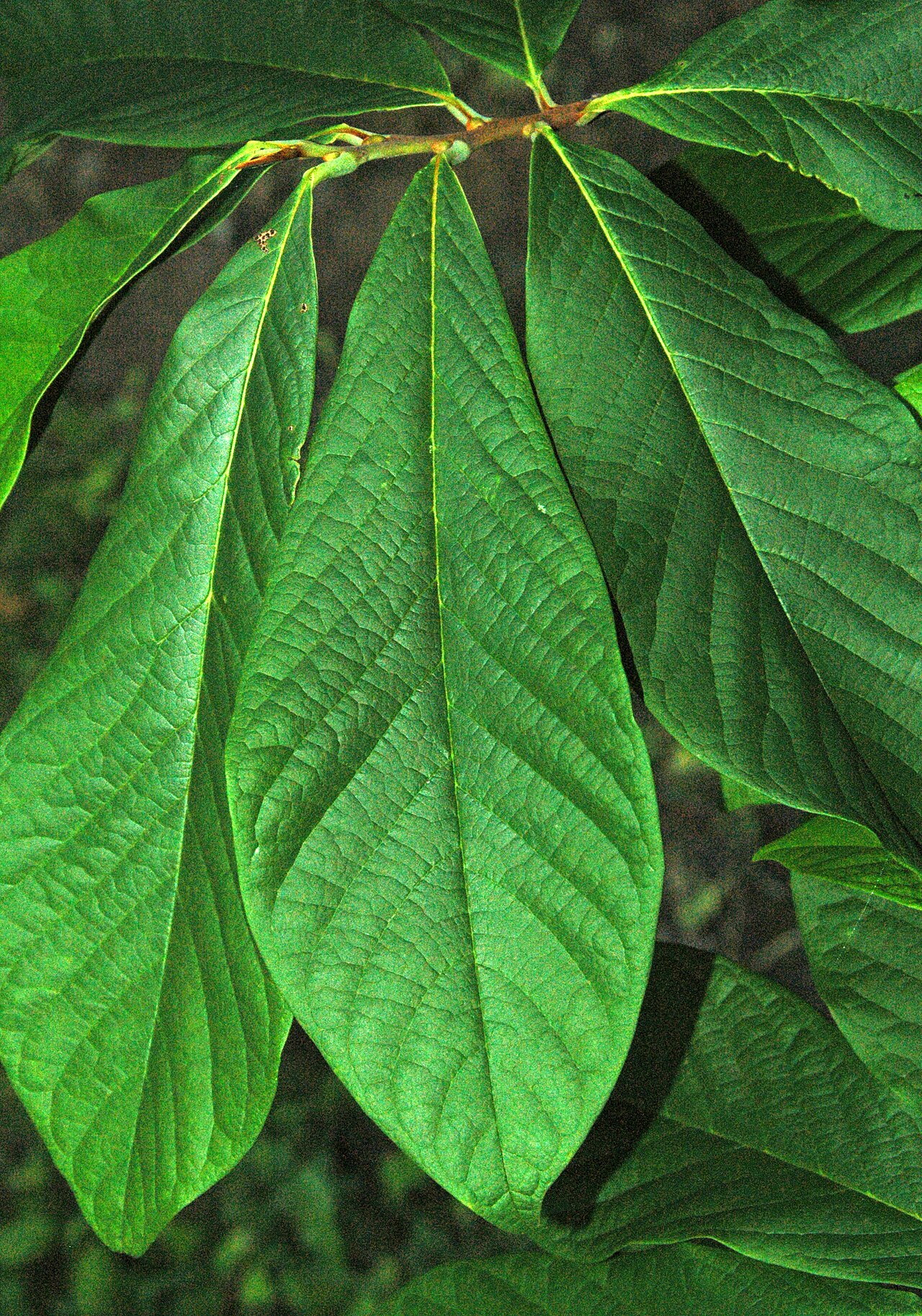
| Wind | Needs some shelter because of its large leaves (Kentucky State, Purdue) | No special shelter noted |
| Wildlife | Zebra swallowtail host; deer do not feed on it (Purdue) | Birds and mammals eat the fruit; host for red-spotted purple (NC State) |
| Common problems | Pawpaw peduncle borer can destroy flowers (NC State) | Cedar-apple rust, fire blight, leaf spot and others (NC State) |
| Suckering | Forms patches from root suckers (Alabama Extension) | Can sucker into a shrubby form if suckers are left (NC State) |
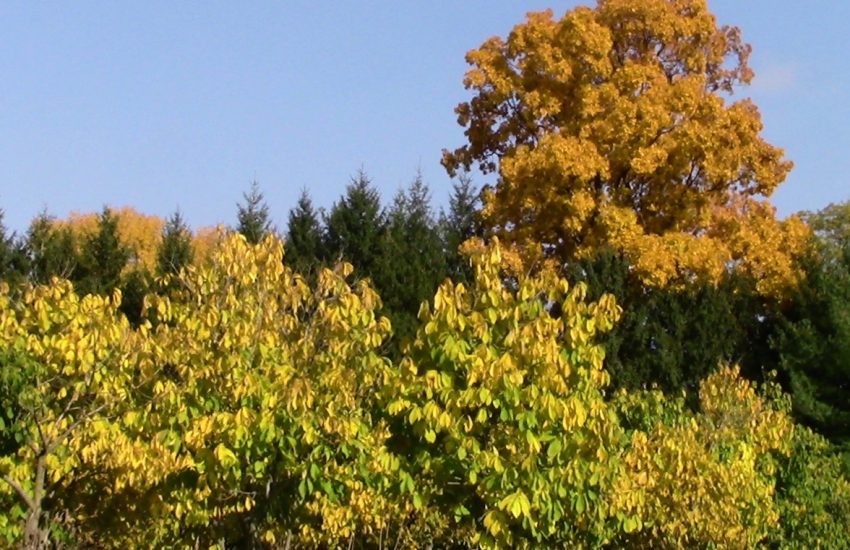
| Fall color | Yellow (NC State) | Yellow to red (UMN Extension) |
Fruit: Size, Timing, and Who Gets It
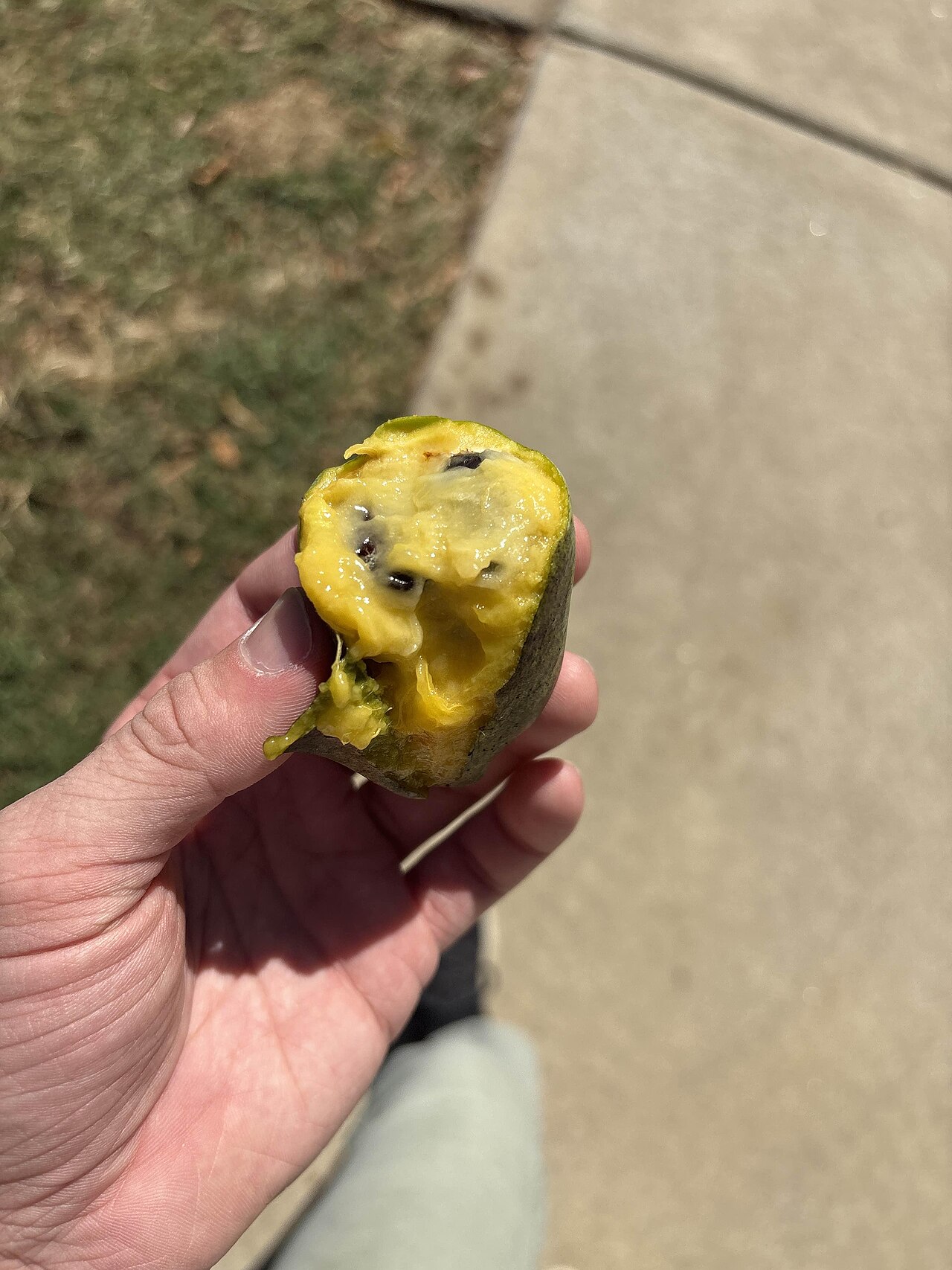
Pawpaw fruit is big. NC State lists it at more than 3 inches long, with a soft, banana-custard flavor, ripening from August to October. Alabama Extension notes that ripe fruit is perishable and that trees should be checked daily during harvest.
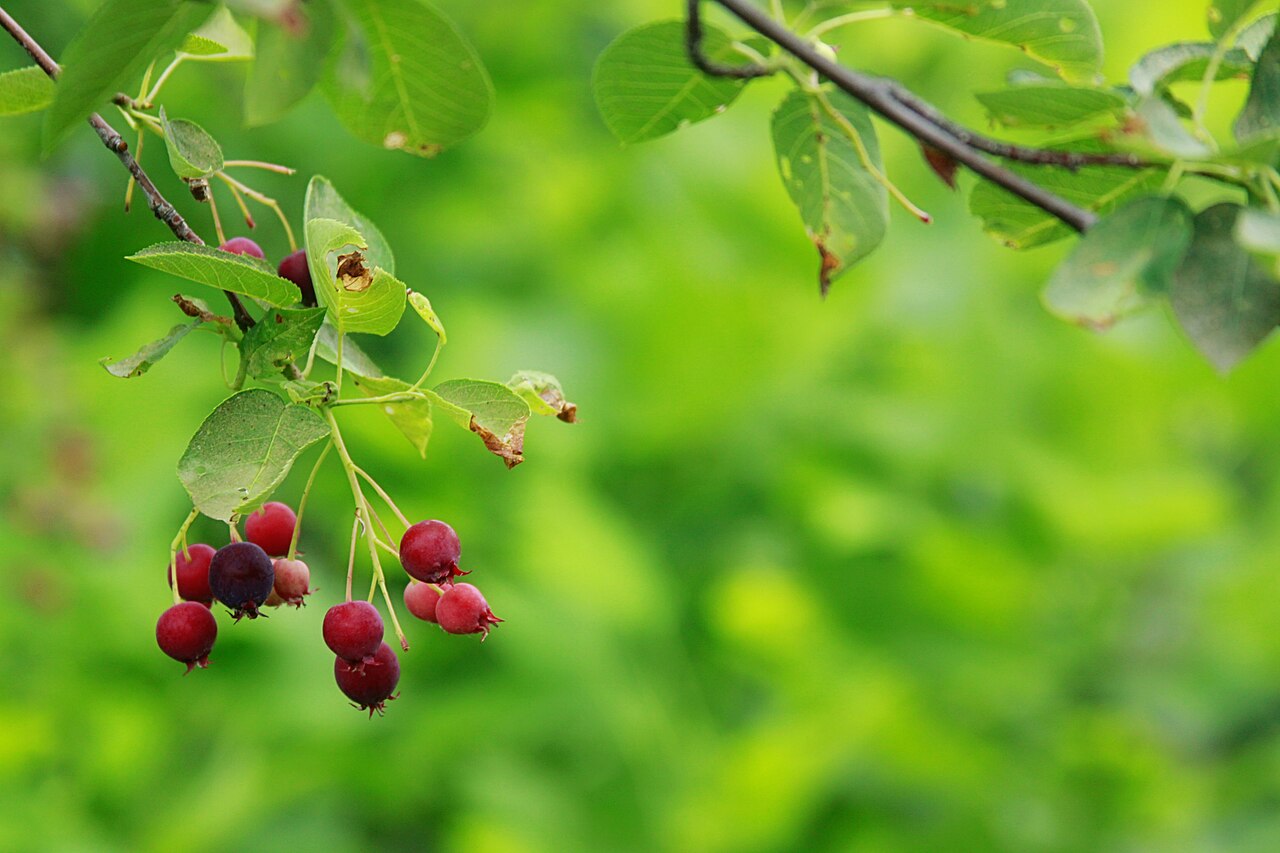
Serviceberry fruit is small. NC State compares downy serviceberry’s taste to highbush blueberry but slightly sweeter. The University of Minnesota Extension says the fruit ripens to dark purple in June and is used fresh or in jams, jellies and pies.
The bigger difference is competition. NC State notes that serviceberry fruits are eaten by songbirds and mammals, so expect to share. Purdue reports that deer do not feed on pawpaw leaves, twigs or fruit.
One safety note on pawpaw. NC State lists it with low-severity poison characteristics: the skin and seeds can cause stomach upset, and handling the fruit can irritate skin in some people. Eat only the ripe flesh.
Where Each Tree Fits in a Yard
Choose pawpaw for a sheltered, moist corner
The Lady Bird Johnson Wildflower Center lists pawpaw’s habitat as flood plains, bottomlands, ravines and depressions. In a yard, that translates to a low but well-drained spot near a woodlot edge, out of strong wind.
Kentucky State notes that young trees need shade for their first year or two, so plan temporary shade if the site is open. Our guide to protecting a newly planted pawpaw explains how.
Plant at least two. If an existing pawpaw flowers but never sets fruit, a missing partner is the first thing to check in our pawpaw pollination checklist.
Choose serviceberry for small spaces and four-season interest
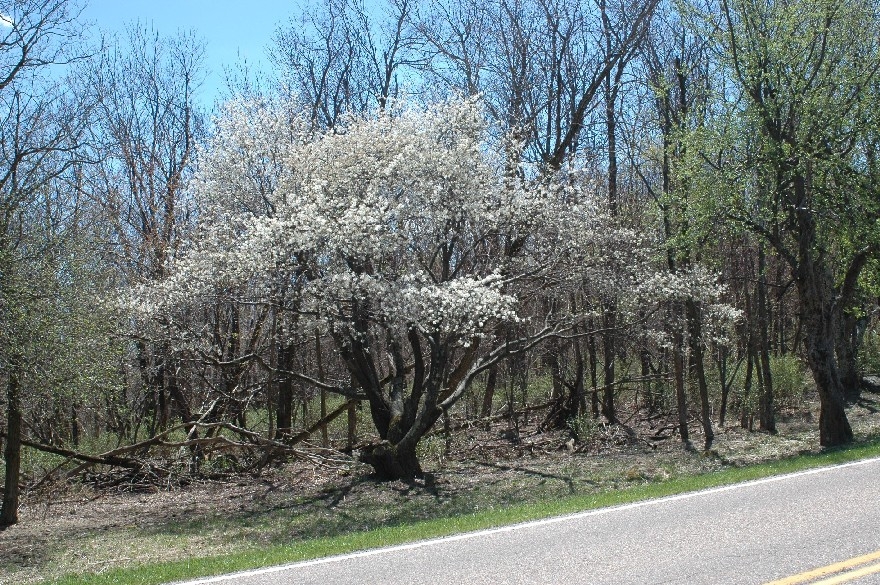
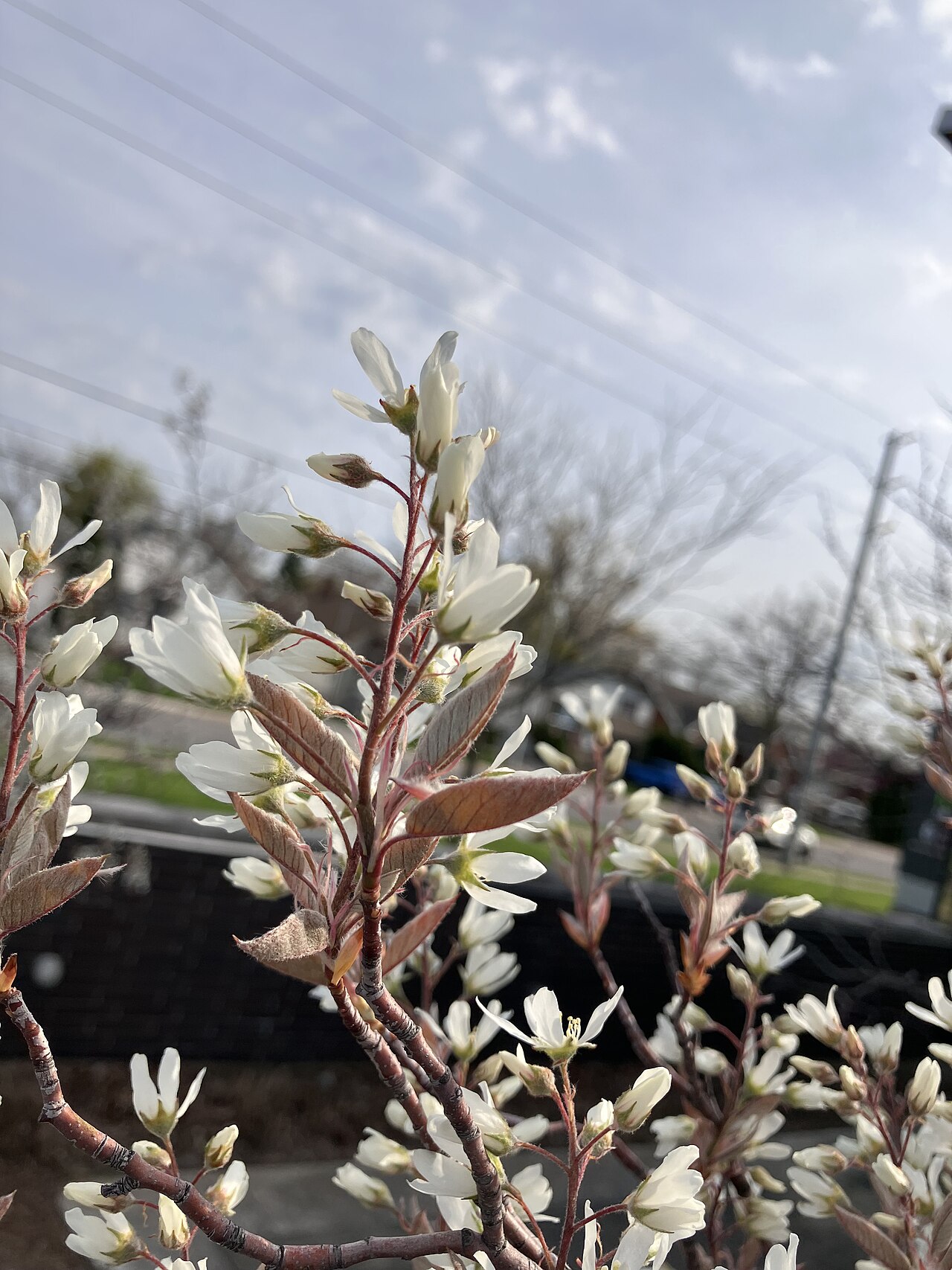
UMN Extension describes serviceberry as a large shrub or small tree used as a specimen, in group plantings and as borders, backdrops and screens. It offers white spring flowers, yellow to red fall color and smooth gray bark.
That makes it the more flexible design tree. A single-trunk serviceberry suits a patio corner or front-yard specimen, and multi-stemmed forms work in a mixed border or informal screen. Soil matters for both forms; see our guide to the best soil for serviceberry.
Or plant both
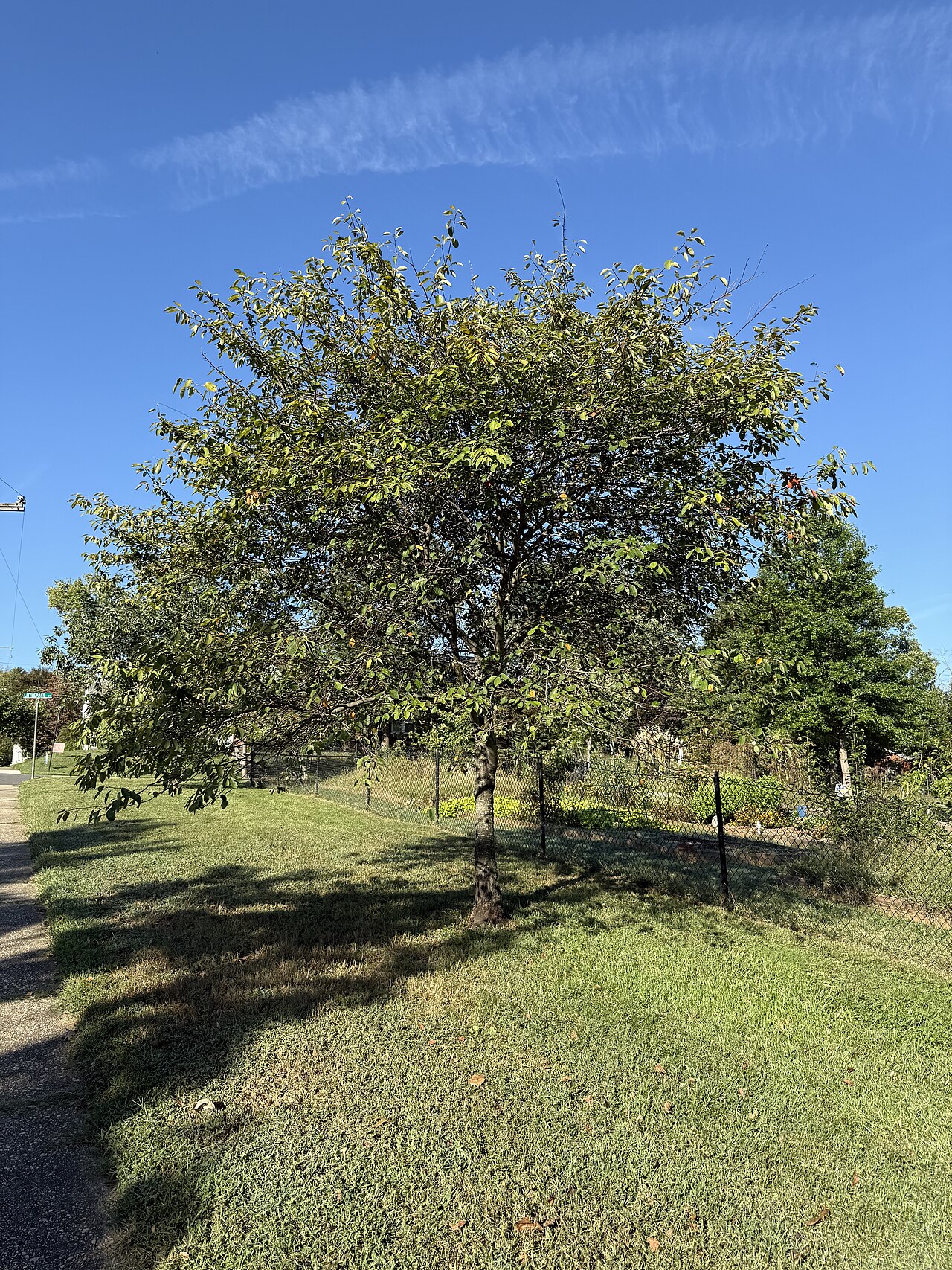
On a larger lot the two work together. Serviceberry flowers early and fruits in early summer; pawpaw fruits in late summer and fall. Put the serviceberry in the sunniest, most visible spot and the pawpaws in the sheltered corner.
Plant Palette: Choosing the Right Species
Serviceberries vary a lot by region and size. Use the table to find species native near you, then confirm with your state’s native plant resources.
Plant Palette
| Plant | Role | Height | Sun / moisture | Native range |
|---|---|---|---|---|
| Pawpaw (Asimina triloba) | Large-fruited tree for a sheltered grove | 15–30 ft | Sun to shade; moist, well drained | FL to TX, north to w. NY, s. Ont., MI, IL, se. IA and se. NE |
| Downy serviceberry (A. arborea) | Specimen tree; self-fruitful | 15–25 ft in gardens | Full sun to part shade; well drained | N.B. to FL, west to e. MN, e. NE and ne. TX |
| Allegheny serviceberry (A. laevis) | Specimen or multi-stem tree | Up to about 25 ft as a multi-trunk | Sun to shade; dry to moist | Nf. to s. Ont., south to DE, KY and IA; mountains to GA and TN |
| Shadblow serviceberry (A. canadensis) | Shrubby screen or border | Up to about 30 ft | Sun to shade; moist to wet | ME to GA, west to c. NY |
| Saskatoon serviceberry (A. alnifolia) | Fruiting shrub for the West and northern Plains | 4–15 ft | Sun to shade; dry to moist | S. Man. to AK, south to nw. IA, n. NE, NM, AZ and CA |
Heights from NC State Extension (pawpaw, downy serviceberry) and the Lady Bird Johnson Wildflower Center (others); ranges from the Wildflower Center. NC State notes that the nursery trade often sells downy serviceberry as A. canadensis, so check labels.
How Many Trees Do You Need?
| Pawpaw for fruit | At least 2 genetically different trees, about 8 ft apart (Kentucky State) |
| Serviceberry for fruit | 1 tree; downy serviceberry is self-fruitful (NC State) |
| Small yard, one tree | Serviceberry |
| Room for 3 or more trees | A pawpaw group, with serviceberry as a sunny-edge specimen |
Installation Steps
Step 1: Test drainage. Both trees need well-drained soil. Fill a test hole with water; if it still holds water the next day, choose another spot.
Step 2: Buy container-grown stock. Kentucky State notes that pawpaw’s long taproot is easily damaged when trees are dug. NC State says downy serviceberry is slow to root after transplanting, so it benefits from careful planting too.
Step 3: Plant in spring. Purdue recommends spring planting for pawpaw, after budbreak. Plant serviceberry at the same time so both get a full season to root in.
Step 4: Shade young pawpaws. Kentucky State says young pawpaws usually need shade for the first year or two. Serviceberry needs no shading.
Step 5: Water and mulch. Water both trees through their first two summers and keep mulch pulled back from the trunks.
The First Three Years
- Year 1: water weekly in dry weather. Keep pawpaws shaded. Remove any suckers around serviceberry if you want a single-trunk tree.
- Year 2: start removing pawpaw shade gradually if growth is strong. Check serviceberry leaves and shoots for spots or dieback; NC State lists cedar-apple rust, leaf spot and fire blight among its diseases, so ask your extension office to confirm a problem before treating.
- Year 3: grafted pawpaws may fruit in as few as three years, per Kentucky State; seedlings usually take five to eight. Try hand pollinating the first pawpaw flowers.
- Every summer: net a serviceberry branch or two if you want fruit before the birds take it, and pick pawpaws daily once they start to soften.
Mistakes to Avoid
Planting one pawpaw and expecting fruit. One tree, or two grafted trees of the same cultivar, usually will not set fruit.
Putting pawpaw in an exposed, windy spot. Kentucky State and Purdue both recommend wind protection because of the large leaves.
Buying the wrong serviceberry. Species and labels vary. Choose one native to your region and check the scientific name.
Planting either tree in soggy ground. Both need good drainage.
Ignoring serviceberry suckers. NC State notes that downy serviceberry becomes shrubby if root suckers are left, and that its suckering habit can make it somewhat weedy. Remove suckers each year if you want a tree form.
Regional Choices
Pawpaw is a tree of the eastern United States. Outside its range, including New England, the northern Plains and the West, serviceberry is the clear native choice. Wikipedia notes that at least one Amelanchier species is native to every U.S. state except Hawaii.
In the West and northern Plains, Saskatoon serviceberry is the usual fruiting choice; UMN Extension says it produces the best-quality fruit. In the Southeast, downy serviceberry and pawpaw overlap, so you can choose either or both.
📋 See our regional native plant lists for Delaware, southern New Jersey and Long Island, Maryland, Virginia and West Virginia, North and South Carolina and Ohio and Indiana, which include both trees, plus Kentucky and Tennessee, New Hampshire, Maine and Vermont and western Oregon and Washington for serviceberries.
Frequently Asked Questions
Which tastes better, pawpaw or serviceberry?
They are very different. Pawpaw is soft and custard-like with a banana flavor. NC State compares downy serviceberry to a slightly sweeter highbush blueberry.
Do I need two serviceberries for fruit?
Not for downy serviceberry, which NC State lists as self-fruitful. Pawpaw usually needs a second, genetically different tree.
Which tree is better for a small yard?
Usually serviceberry. One tree will fruit, it tolerates a wider range of sites, and many forms stay small.
Which fruits first in the season?
Serviceberry. UMN Extension says the fruit ripens in June, while NC State gives pawpaw fruit display from August to October.
Will deer eat them?
Purdue reports that deer do not feed on pawpaw. NC State rates downy serviceberry only mildly resistant to deer damage, so protect young serviceberries where deer are common.
Sources
- Kentucky State University Pawpaw Program, Pawpaw Planting Guide and Pawpaw FAQ.
- Purdue Extension, HO-220: Growing Pawpaws.
- Alabama Cooperative Extension System, Pawpaw Production Guide (ANR-3095).
- NC State Extension Gardener Plant Toolbox, Asimina triloba and Amelanchier arborea.
- University of Minnesota Extension, Serviceberry.
- Lady Bird Johnson Wildflower Center plant pages for pawpaw, downy serviceberry, Allegheny serviceberry, shadblow serviceberry and Saskatoon serviceberry.
- Wikipedia, Amelanchier.