
Pokeweed (Phytolacca americana)
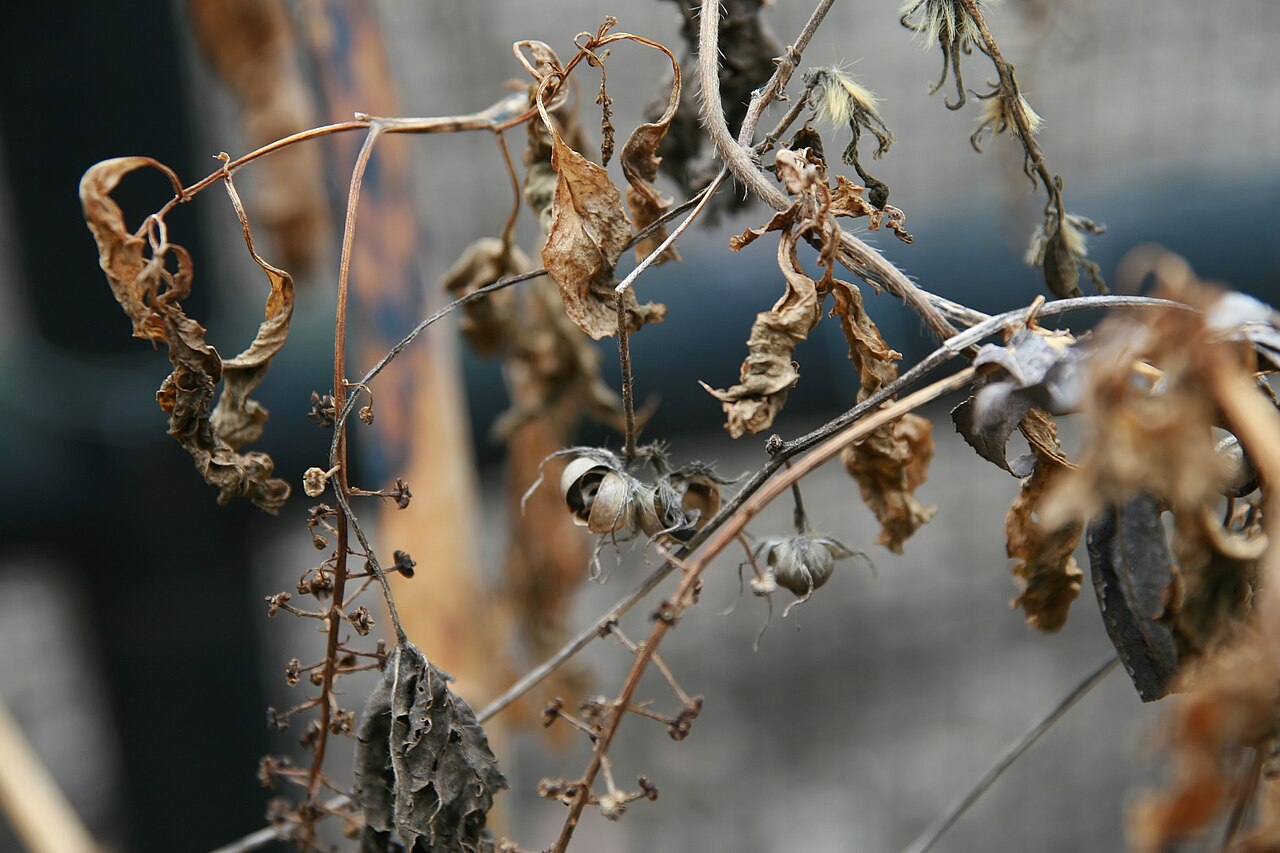
⚠ All parts of pokeweed are poisonous. The roots and unripe berries are the most toxic parts, but mature leaves, stems and ripe berries also contain dangerous compounds. Keep children and pets away from this plant, and never let livestock graze it. Call Poison Control (1-800-222-1222) if ingestion is suspected.
Phytolacca americana, commonly called Pokeweed or American Pokeweed, is a bold, fast-growing native perennial forb found across the eastern half of the United States. Each spring it sends up thick, succulent stems from a massive white taproot, quickly reaching 4 to 10 feet tall by midsummer. The stems ripen from green to a striking magenta-purple, setting off clusters of small greenish-white flowers that mature into drooping strings of dark purple-black berries by late summer.
Pokeweed thrives in disturbed ground — forest edges, fencerows, old fields, and the margins of gardens — where its enormous taproot and prolific seed production let it establish quickly. Despite its weedy reputation, it is a true native species and one of the most important late-summer and fall food sources for migrating and resident songbirds in its range.
This is a plant to recognize and respect rather than casually plant in a garden with children or pets. Below you will find how to identify it, where it grows wild, and why it matters so much to wildlife — along with a clear warning about its toxicity.
Identification
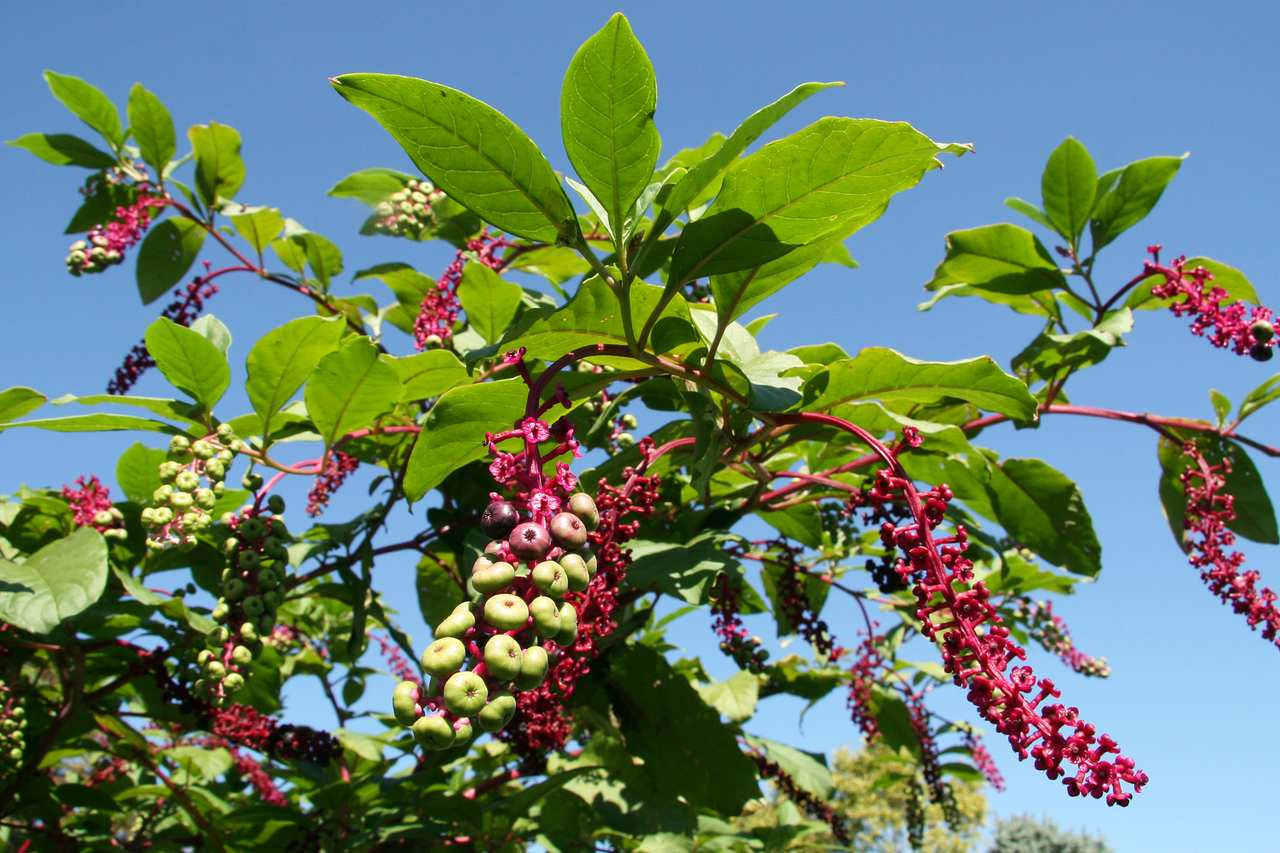
Pokeweed is unmistakable once you know its key traits: thick magenta stems, very large simple leaves, and drooping clusters of berries that ripen from green to deep purple-black.
Stems
Young stems are green and smooth, thickening and turning a vivid reddish-purple to magenta as the season progresses. A single plant can produce several stout, branching stems from one crown, giving the whole plant a shrub-like appearance by late summer even though it dies back to the ground each winter.
Leaves
Leaves are simple, alternate, egg-shaped to lance-shaped, 5 to 12 inches long, with smooth (untoothed) margins and a prominent pale midrib. They have an unpleasant odor when crushed. Foliage is largest and most lush in early-to-mid summer and often takes on a yellowish cast in fall before the plant dies back.
Flowers
Small, five-parted greenish-white flowers (about ¼ inch across) are borne in upright to slightly drooping spike-like racemes (called a “raceme” of flowers) opposite the leaves, blooming from early summer into fall. As the fruit sets, the flower stalks (pedicels) themselves often turn bright pink to magenta, a useful field mark even before the berries ripen.
Fruit & Roots
The berries are smooth, flattened-globe drupes about ⅜ inch across, ripening from green to deep purple-black in drooping clusters of 10 to 30. The juice is a deep magenta-red and stains strongly. Below ground, pokeweed has a large, pale, fleshy taproot that can grow several inches thick — this root is the most toxic part of the entire plant and should never be handled carelessly or dug up by anyone unfamiliar with it.
Quick Facts
| Scientific Name | Phytolacca americana L. |
| Family | Phytolaccaceae (Pokeweed) |
| Plant Type | Herbaceous Perennial Forb |
| Mature Height | 4–10 ft |
| Mature Spread | 3–6 ft |
| Growth Rate | Fast |
| Sun Exposure | Full Sun to Part Shade |
| Water Needs | Moderate |
| Soil Type | Adaptable; rich, disturbed or cultivated soils |
| Soil pH | 4.7–7.0 (acidic to neutral) |
| Bloom Time | June – September |
| Flower Color | Greenish-white |
| Fall Color | Foliage yellows; stems deep magenta |
| Fruit | Purple-black berries in drooping clusters — poisonous |
| Deer Resistant | Yes (toxic to mammals) |
| USDA Hardiness Zones | 4–8 |
Native Range
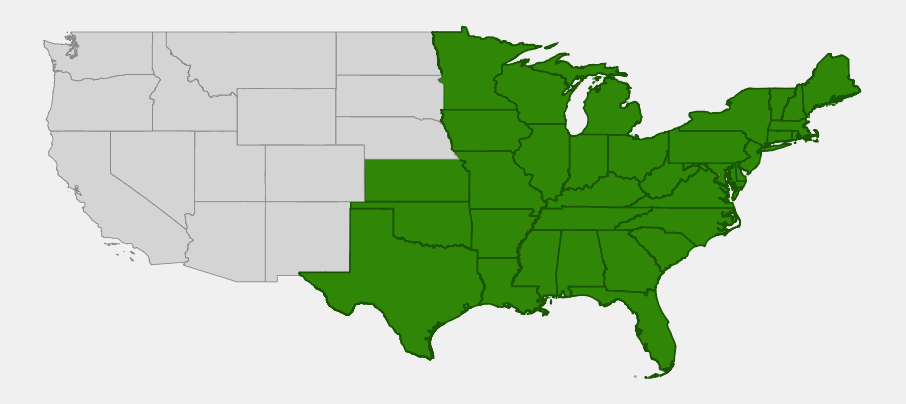
Pokeweed is native across the eastern half of the United States, from New England and the Mid-Atlantic south through the Southeast and west through the Midwest and into the eastern Great Plains. It is a familiar sight in disturbed, sunny-to-partly-shaded ground throughout this entire region.
Pokeweed has also spread well beyond its native range as an introduced plant, including scattered populations in California, the Pacific Northwest, and parts of Europe and Asia, where it is considered naturalized or weedy. Gardeners outside the eastern and central U.S. should check local status before encouraging it, since it readily self-sows and can be aggressive in disturbed soil.
Within its native range, pokeweed is found in forest edges and gaps, fencerows, old fields, floodplains, pastures, and disturbed or cultivated ground. It is especially common where birds perch and deposit seed, such as along fence lines and under trees.
📋 Regional plant lists featuring Pokeweed: New Hampshire, Maine & Vermont · Connecticut, Massachusetts & Rhode Island · New York, Pennsylvania & Northern New Jersey · Delaware, Southern New Jersey & Long Island · Maryland, Virginia & West Virginia · North & South Carolina · Georgia, Alabama & Mississippi · Arkansas, Louisiana & Eastern Texas/Oklahoma · Kentucky & Tennessee · Ohio & Indiana · Illinois, Iowa & Missouri · Michigan, Wisconsin & Eastern Minnesota · Nebraska, Kansas & Eastern Colorado
Growing & Care Guide
Pokeweed rarely needs planting on purpose — it usually arrives on its own, carried in by birds. If you decide to let it stand (or want to encourage it in a wildlife corner), it is one of the easiest native plants to grow.
Light
Pokeweed grows in full sun to part shade. Plants in full sun tend to be shorter and bushier with heavier fruiting; in shadier spots they stretch taller and lankier toward the light.
Soil & Water
It tolerates nearly any soil — sandy, loamy, or clay — as long as drainage is reasonable, and is remarkably unfussy about pH. Once established, its deep taproot makes it quite drought tolerant, though it grows fastest and lushest with regular moisture.
Planting Tips
Because pokeweed self-sows freely and the entire plant is toxic, think carefully before adding it to a garden visited by children or pets. If you want it in a wildlife or naturalized corner, simply allow volunteer seedlings to grow and remove any you do not want while they are small; mature plants are difficult to dig out because of the thick taproot.
Pruning & Maintenance
No pruning is required. The entire top growth dies back to the ground each winter and can be cut down in late fall or left standing for winter interest and bird foraging. To limit spontaneous spread, cut off spent fruit clusters before birds disperse the seed, wearing gloves since the juice stains and the plant is toxic to handle in quantity.
Propagation
Pokeweed propagates almost entirely by seed, most often distributed by birds after they eat the berries. Seed has a hard coat and benefits from cold, moist stratification over winter, which is why volunteer seedlings commonly appear the spring after a plant has fruited nearby.
Landscape Uses
Pokeweed is best suited to naturalized, wildlife-focused, or out-of-the-way areas rather than formal plantings:
- Wildlife corners and hedgerow edges where birds can feed undisturbed
- Restoration or naturalized meadows at the edge of woodland
- Bird-garden plantings paired with other fruiting natives like Elderberry and Dogwood
- Disturbed-ground stabilization on waste areas and old field edges
It is not recommended near play areas, vegetable gardens frequented by children, or anywhere livestock or grazing pets have access.
Wildlife & Ecological Value
Few native forbs match pokeweed’s value to wildlife, especially birds. Its late-summer and fall fruiting season fills a critical gap when many other food sources have already finished.
For Birds
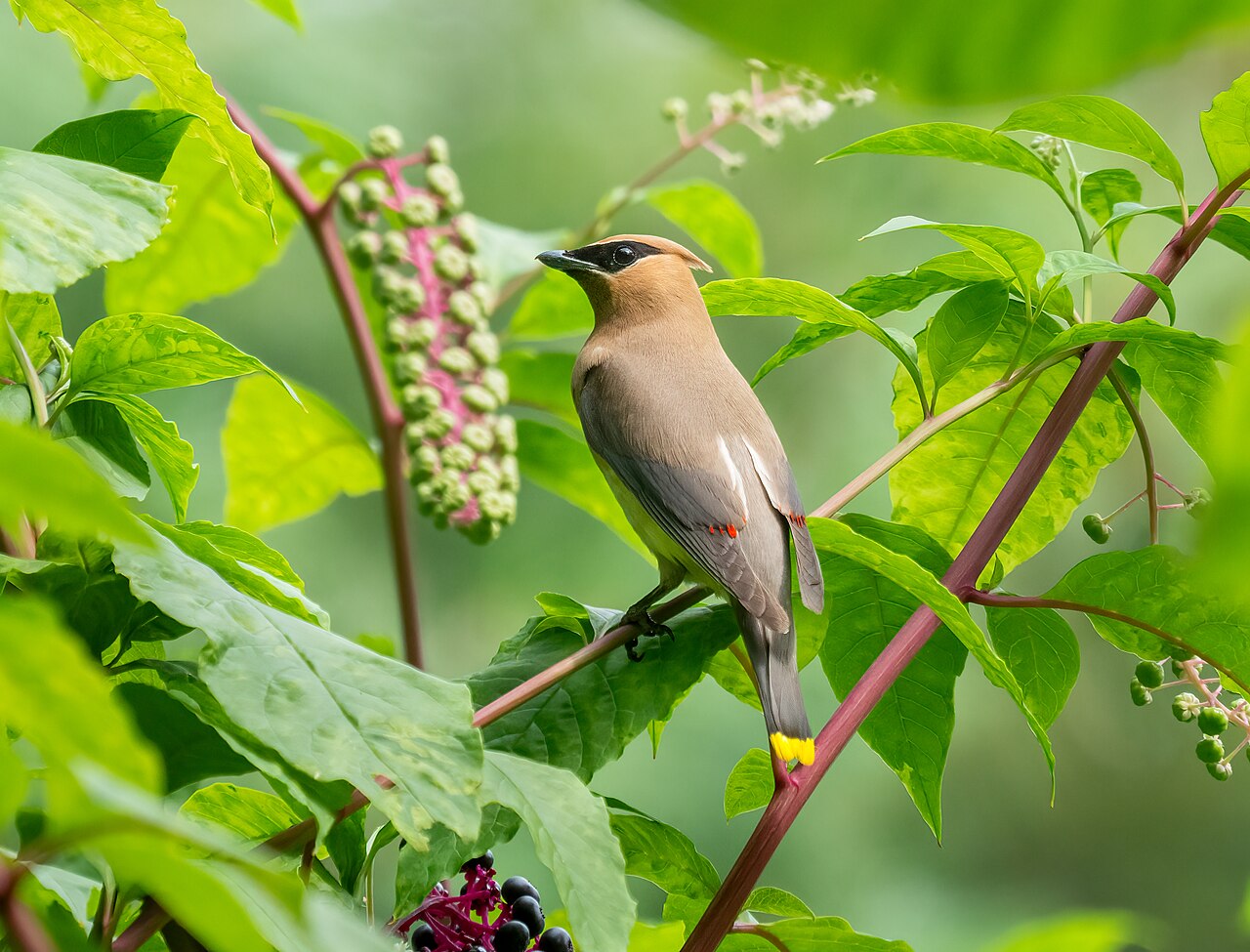
Pokeweed berries are a major late-season food source for dozens of bird species, including Gray Catbirds, Northern Mockingbirds, Northern Cardinals, Brown Thrashers, Cedar Waxwings, American Robins, Eastern Bluebirds, and many migrating warblers and thrushes. The berries ripen right as fall migration is underway, offering an energy-rich food supply for birds fueling up for long flights. Birds are largely unaffected by the toxins that make the berries dangerous to mammals, and they are the primary agents spreading pokeweed seed to new locations.
For Mammals
Unlike birds, mammals — including deer, livestock, and pets — are poisoned by pokeweed, which makes it naturally deer-resistant. A few small mammals, such as opossums, appear to tolerate limited amounts, but pokeweed should never be assumed safe for any pet or farm animal.
For Pollinators
The small summer flowers attract a range of native bees, honeybees, wasps, and other beneficial insects that visit for nectar and pollen over an unusually long bloom season running from June into fall.
Ecosystem Role
As a fast-growing pioneer species, pokeweed quickly colonizes disturbed and open ground, stabilizing soil and providing cover while slower-growing shrubs and trees establish around it. Its dense summer growth offers cover for ground-feeding birds and small animals, and its decline each winter returns nutrients to the soil.
Cultural & Historical Uses
Pokeweed has a long history in the folk foodways of the rural South and Appalachia, where the young spring shoots were traditionally prepared as “poke sallet” (also spelled “poke salat” or “poke salad”), a cooked green that appears in regional recipes, songs, and even an annual festival in some communities. This tradition reflects real regional food history, not a current recommendation — it required a specific, multi-step preparation that most home cooks today are not equipped to replicate safely, and even properly prepared poke sallet has caused serious poisoning when steps were skipped or shoots were harvested too late in the season. This page does not provide preparation instructions, and the plant should be treated as toxic rather than as a food source.
Indigenous peoples across pokeweed’s range used the plant medicinally and as a dye source; the deep magenta berry juice was historically used as an ink and fabric dye, and some accounts describe its use coloring documents, including reportedly some early American correspondence. These are historical uses, not guidance for modern use — pokeweed juice stains strongly and handling the plant in quantity carries real toxicity risk.
Today pokeweed is mostly known as a conspicuous roadside and fencerow plant, occasionally grown intentionally in wildlife gardens for its dramatic form and exceptional value to birds, but always with full awareness of its toxicity.
Frequently Asked Questions
Is pokeweed poisonous?
Yes. All parts of pokeweed — roots, stems, leaves, and berries — are poisonous to people, dogs, cats, and livestock. The roots and unripe berries are the most toxic. Ingestion can cause severe vomiting, diarrhea, and other serious symptoms. Keep pokeweed away from children, pets, and grazing animals, and never attempt to eat any part of it.
What is “poke sallet”?
Poke sallet is a traditional Southern Appalachian dish made from young pokeweed shoots using a demanding historical preparation. It is regional food history, not a safe modern practice — improper preparation has caused serious poisoning, and this page does not provide instructions for it.
Can birds eat pokeweed berries safely?
Yes. Birds appear largely unaffected by the toxins that make pokeweed dangerous to mammals, and dozens of species rely on the berries as an important fall food source. Birds are also the main way pokeweed seed gets spread to new sites.
Should I remove pokeweed from my yard?
That depends on your priorities. If you have young children, pets, or livestock with access to the area, removing it is reasonable. If you have a naturalized or wildlife-focused corner away from foot traffic, leaving some pokeweed standing provides excellent food for migrating and resident birds.
How do I control pokeweed if I don’t want it?
Pull young seedlings by hand while the taproot is still small — this is much easier than removing an established plant. For mature plants, repeated cutting before they fruit, combined with digging out as much of the taproot as possible, will eventually exhaust the plant. Wear gloves, since the juice stains and the plant is toxic to handle.

Looking for a nursery that carries native wildlife plants like Pokeweed?
Browse our native plant nursery directory: Alabama & Arkansas · Connecticut, Delaware, Florida & Georgia · Illinois, Indiana, Iowa & Kansas · Kentucky, Louisiana, Maine, Maryland, Massachusetts, Michigan, Minnesota, Mississippi & Missouri · New Hampshire, New Jersey, New York, North Carolina, Ohio & Oklahoma · Pennsylvania, Rhode Island, South Carolina, Tennessee, Texas, Vermont & Virginia · West Virginia & Wisconsin