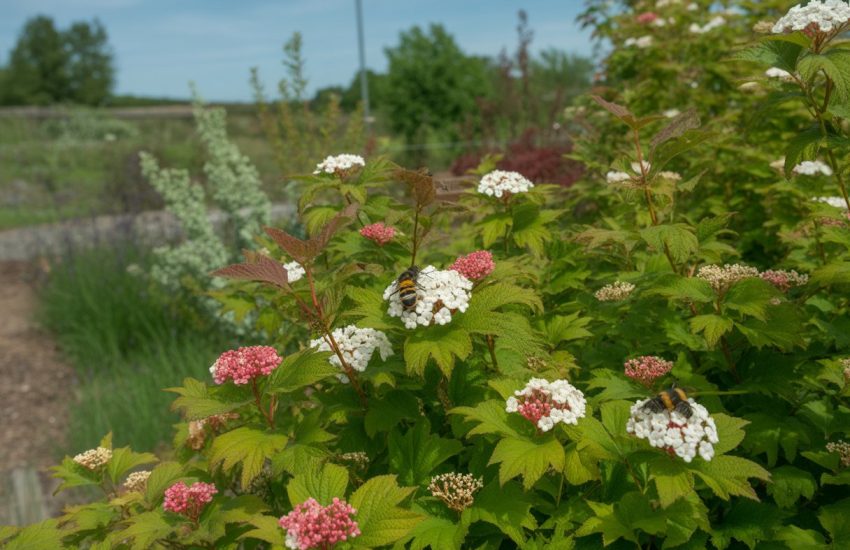
Downy Arrowwood (Viburnum rafinesqueanum)
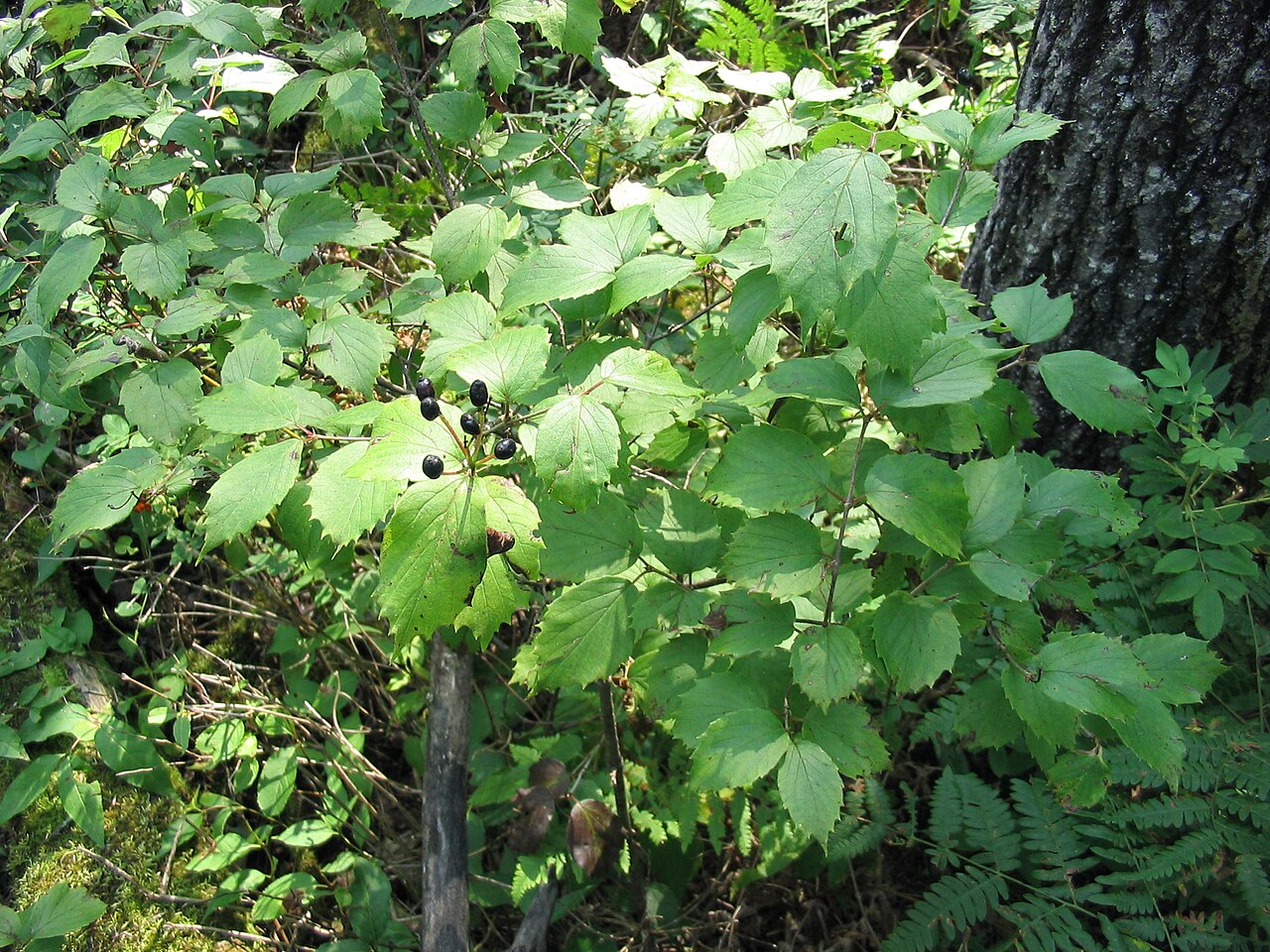
Viburnum rafinesqueanum, commonly called Downy Arrowwood, is a modest, deeply useful native shrub found across much of the eastern and central United States and adjacent Canada. Named for the eccentric 19th-century naturalist Constantine Rafinesque, it is among the smallest native viburnums, rarely topping 6 to 8 feet, which makes it an easy fit for gardens where a full-sized Arrow-wood Viburnum would be too much shrub for the space.
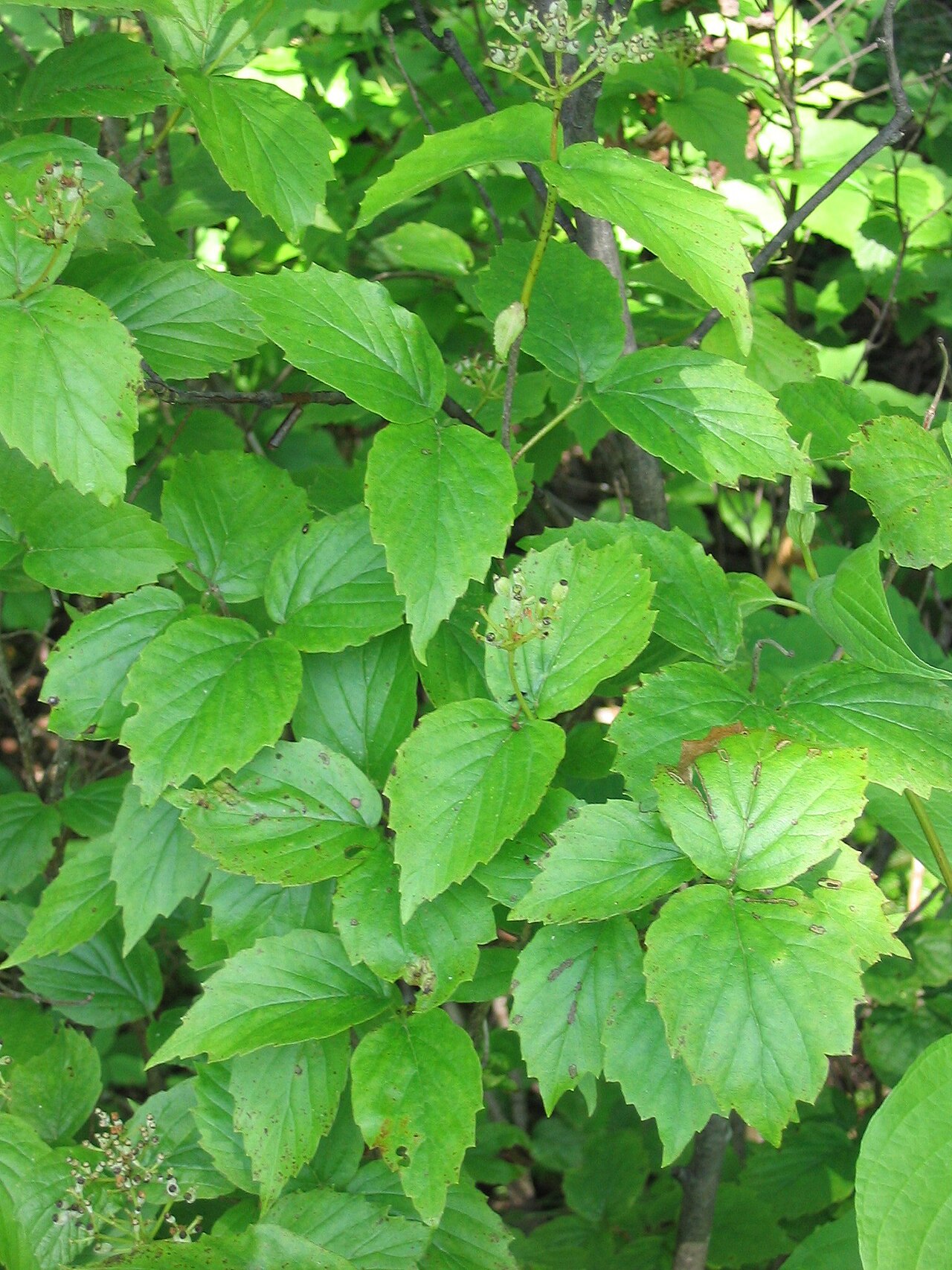
Downy Arrowwood is a deciduous, multi-stemmed shrub typically around 4 to 8 feet tall, with opposite, toothed leaves that are downy on the underside, especially along the veins, and small stipules at the base of each short leaf stalk — a detail absent in the similar and more commonly planted Arrow-wood Viburnum (Viburnum dentatum). Clusters of small, creamy white flowers appear in late spring, slightly earlier than Arrow-wood Viburnum, followed by blue-black fruit that ripens in fall alongside striking orange-red foliage.
This species is common in forest understories and along woodland margins throughout its range, where it tolerates both sun and considerable shade, though flowering and fruiting are best with at least a few hours of direct sun. It is a reliable, low-maintenance shrub for naturalistic plantings, woodland gardens, and wildlife habitat.
Identification
Downy Arrowwood is a compact, upright-oval shrub, usually 4 to 8 feet tall and nearly as wide, with multiple slender stems arising from the base. It can be distinguished from the similar Arrow-wood Viburnum by its smaller stature, shorter leaf stalks, earlier bloom time, and the small stipules at the base of each petiole, which Arrow-wood Viburnum lacks.
Bark & Stems
Stems are slender and gray-brown, with opposite branching typical of viburnums. Young twigs may show fine hairs, consistent with the “downy” common name, though the most reliably downy surface is the underside of the leaf.
Leaves
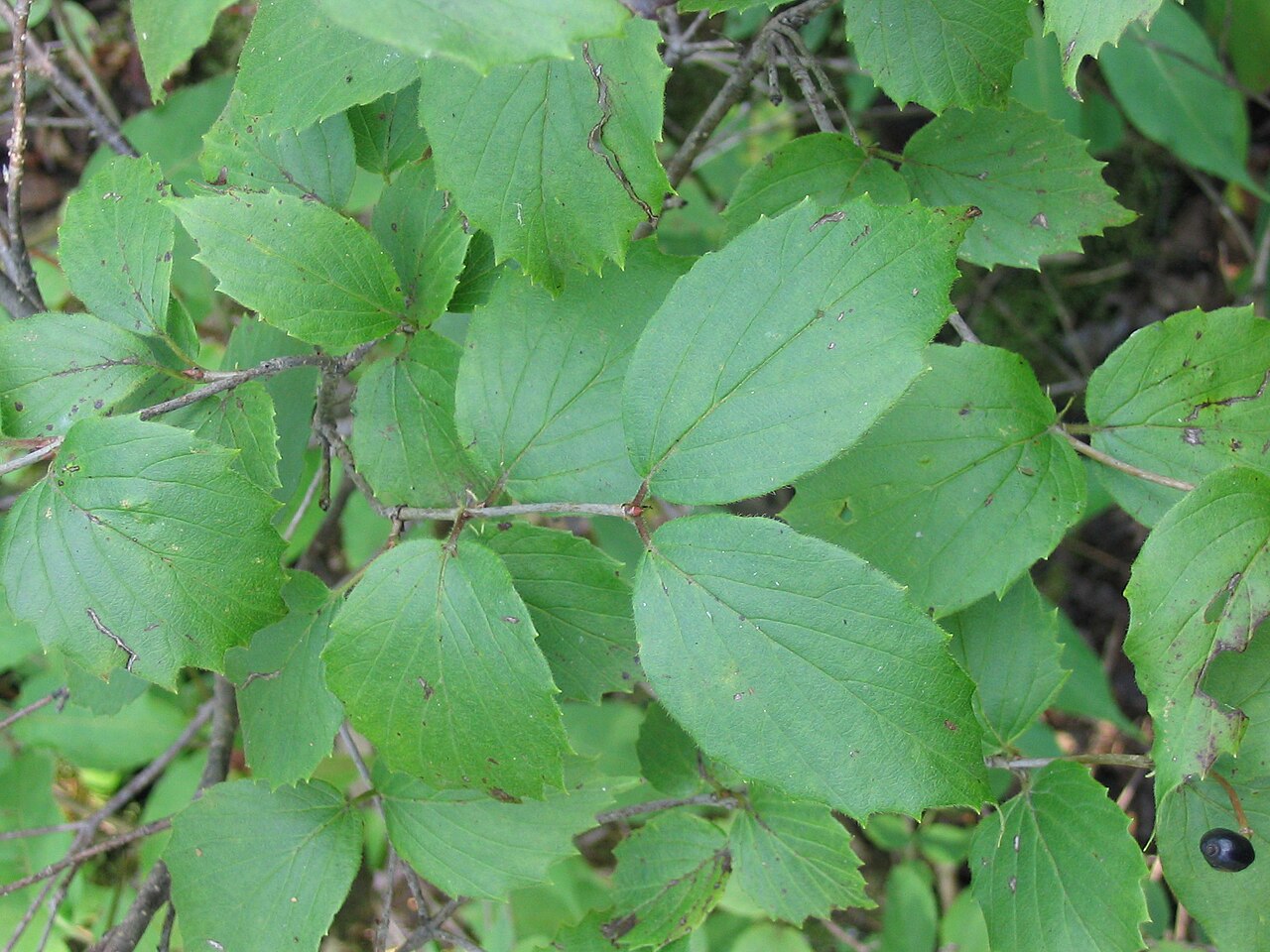
Leaves are opposite, simple, ovate to broadly elliptic, coarsely toothed along the margin, dull green and rough-textured above, and downy beneath, particularly along the veins. Petioles are short, less than half an inch, compared with the longer petioles of Arrow-wood Viburnum. Fall color is a good orange to red.
Flowers
Small, creamy white flowers are borne in flat-topped clusters (cymes) in May and June, slightly earlier than most Arrow-wood Viburnum populations. The flowers have a faint, somewhat unpleasant scent typical of many viburnums, which does not detract from their value to pollinators.
Fruit & Seeds
Fruit is an ellipsoid drupe that ripens from green to dark blue or nearly black by fall, borne in small clusters that stand out against the foliage before leaf drop. The fruit is primarily a wildlife food rather than one gathered for human use.
Quick Facts
| Scientific Name | Viburnum rafinesqueanum Schult. (syn. V. rafinesquianum) |
| Family | Adoxaceae (Viburnum/Moschatel), also treated in Viburnaceae |
| Plant Type | Deciduous Shrub |
| Mature Height | 4–8 ft |
| Mature Spread | 4–7 ft |
| Growth Rate | Slow to moderate |
| Sun Exposure | Full Sun to Part Shade |
| Water Needs | Low to Average |
| Soil Type | Dry to average upland soils; tolerates rocky or sandy ground |
| Soil pH | 5.5–7.5 |
| Bloom Time | May – June |
| Flower Color | Creamy white |
| Fall Color | Orange to red |
| Fruit | Dark blue-black drupes, for wildlife rather than people |
| Deer Resistant | Moderate (browsed occasionally, not a favorite) |
| USDA Hardiness Zones | 3–8 |
Native Range
Downy Arrowwood has one of the broadest native ranges of any eastern viburnum, extending from Quebec and Manitoba south to Georgia and west to the edges of the Great Plains in Oklahoma, Nebraska, and the Dakotas. It occurs across New England, the Mid-Atlantic, the Appalachians, the Midwest, and the Upper Midwest and northern Plains, making it a genuinely regional-scale native plant for most of the eastern half of the country.
Within this broad range, Downy Arrowwood is most common in dry to mesic upland forest understories and along woodland margins, often on rockier or sandier soils than those favored by Arrow-wood Viburnum. It tolerates everything from fairly deep shade, where it persists but flowers sparsely, to open, sunnier edges where bloom and fruit are heaviest.
The species is widespread and not considered at risk range-wide, though it is less commonly planted in gardens than its larger relative Arrow-wood Viburnum, despite being well suited to smaller landscapes and naturally dry sites.
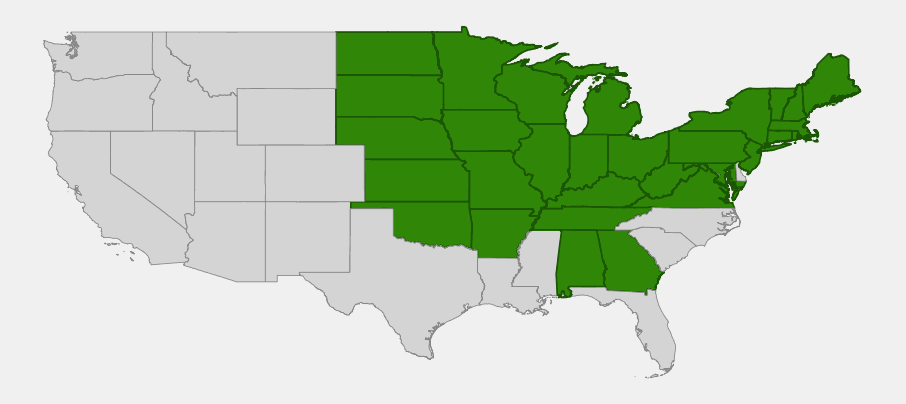
📋 Regional plant lists featuring Downy Arrowwood: Connecticut, Massachusetts & Rhode Island · New Hampshire, Maine & Vermont · New York, Pennsylvania & Northern New Jersey · Maryland, Virginia & West Virginia · Georgia, Alabama & Mississippi · Arkansas, Louisiana, Eastern Oklahoma & Eastern Texas · Kentucky & Tennessee · Ohio & Indiana · Illinois, Iowa & Missouri · Michigan, Wisconsin & Eastern Minnesota · North Dakota, South Dakota & Western Minnesota · Nebraska, Kansas & Eastern Colorado
Growing & Care Guide
Downy Arrowwood is an easy, adaptable shrub that asks very little once established, making it an excellent choice for gardeners who want a native viburnum without the larger footprint of Arrow-wood Viburnum. If you are new to growing viburnums from cuttings or division, our guide on how to propagate viburnum covers techniques that work well for this and other native species.
Light
Full sun to part shade suits this species well. It tolerates considerable shade and remains healthy in woodland understory settings, though flowering and fruiting are heaviest with at least four to six hours of direct sun.
Soil & Water
Downy Arrowwood prefers dry to average, well-drained soils and is notably more drought tolerant than many other viburnums, reflecting its natural habitat on rocky and sandy upland sites. Avoid consistently wet or poorly drained ground.
Planting Tips
Plant container-grown shrubs in spring or fall, spacing plants 4 to 6 feet apart for a naturalistic grouping or informal hedge. Because the species stays compact, it fits well into smaller garden beds where larger viburnums would eventually need significant pruning to control size.
Pruning & Maintenance
Little pruning is required. Remove dead, damaged, or crossing stems in late winter. Because this species, like most viburnums, blooms on the previous year’s wood, prune immediately after flowering if shaping is needed, rather than in late winter, to avoid removing the next season’s flower buds.
Propagation
Downy Arrowwood can be propagated from semi-hardwood cuttings taken in summer, or from seed collected in fall and given a period of cold stratification; germination can be slow and uneven, a trait shared with several native viburnums.
Landscape Uses
- Woodland gardens and naturalized forest-edge plantings
- Compact native hedging where a smaller shrub than Arrow-wood Viburnum is needed
- Dry, rocky slopes where many shrubs struggle
- Wildlife gardens for fall fruit and fall color
- Restoration plantings in upland forest understories
Wildlife & Ecological Value
Downy Arrowwood provides season-long value in the landscape, from early-summer nectar to fall fruit and cover, despite its modest size.
For Pollinators
The clustered white flowers attract a range of small native bees, flies, and other pollinating insects in late spring, offering an early-season nectar source in forest understories and woodland edges.
For Birds
Thrushes, waxwings, and other fruit-eating birds feed on the blue-black fruit in fall, and the dense, twiggy growth form offers useful nesting cover for small songbirds in open woodland and edge habitats.
For Mammals
Deer browse the foliage occasionally, though it is not a strongly preferred food source, and small mammals use the shrub layer it creates for cover in otherwise open upland forest.
Ecosystem Role
As a shade-tolerant understory shrub adapted to dry, often rocky upland soils, Downy Arrowwood fills a niche that many moisture-loving shrubs cannot occupy, adding structural diversity to forest understories across a very broad native range.
Cultural & Historical Uses
Downy Arrowwood carries the legacy of Constantine Samuel Rafinesque, the prolific and famously unconventional early American naturalist for whom the species is named. Unlike some of its relatives, it does not have a strong documented history of Indigenous or settler use for tools, food, or medicine; its primary historical role has been ecological rather than economic, as a common component of eastern forest understories.
In recent decades, native plant gardeners and restoration practitioners have taken a renewed interest in Downy Arrowwood precisely because of its modest size and tolerance of poor, dry soils, qualities that make it useful on difficult sites where larger or more demanding shrubs fail to establish.
Though it lacks the long list of documented traditional uses associated with some native shrubs, Downy Arrowwood’s quiet reliability across such a wide native range has made it an increasingly recommended choice for naturalistic and restoration plantings from New England to the northern Plains.
Frequently Asked Questions
How is Downy Arrowwood different from Arrow-wood Viburnum?
Downy Arrowwood is smaller, usually 4 to 8 feet versus the larger stature of Arrow-wood Viburnum, has shorter leaf stalks, blooms slightly earlier, and has small stipules at the base of each petiole that Arrow-wood Viburnum lacks.
Is Downy Arrowwood fruit edible?
The fruit is primarily valuable as wildlife food rather than for human consumption; it is not documented as a significant traditional food source the way some other native fruits are.
How much sun does Downy Arrowwood need?
It tolerates full sun to fairly deep shade, but flowering and fruiting are best with at least four to six hours of direct sun per day.
Does Downy Arrowwood tolerate dry soil?
Yes, it is notably more drought tolerant than many other viburnums, reflecting its natural habitat on dry, rocky, and sandy upland sites across its range.
When should I prune Downy Arrowwood?
Prune immediately after flowering if shaping is needed, since like most viburnums it sets next year’s flower buds on the current season’s growth; pruning in late winter removes those buds and reduces bloom.

Looking for a nursery that carries Downy Arrowwood?
Browse our native plant nursery directory: New York, New Hampshire & Ohio · Pennsylvania, Vermont & Virginia · Connecticut, Georgia & Massachusetts · Kentucky, Maine, Michigan & Minnesota · Illinois, Indiana, Iowa & Kansas · West Virginia & Wisconsin · Alabama & Arkansas