
Blackbead (Pithecellobium keyense)
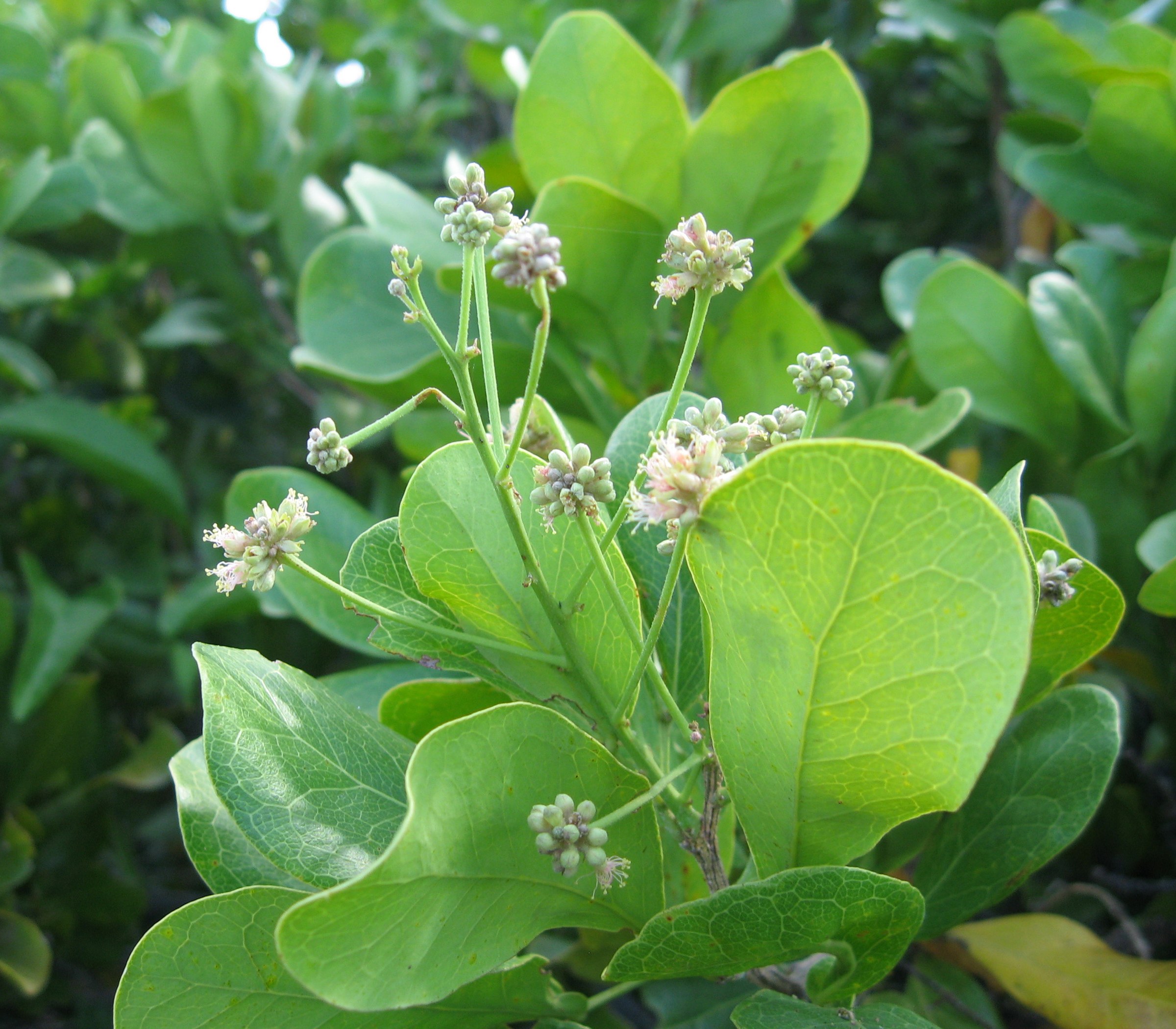
Pithecellobium keyense, commonly called Blackbead or Florida Keys Blackbead, is a native legume shrub or small tree found only in the coastal hammocks of extreme South Florida and the Florida Keys. A member of the pea family (Fabaceae), it belongs to the mimosoid clade alongside other “puffball” flowered trees such as mimosa and acacia, and it shares that group’s showy, fragrant flower heads. The common name comes from its distinctive seed pods, which coil like a watch spring and split open to reveal glossy black seeds set against a bright red aril.
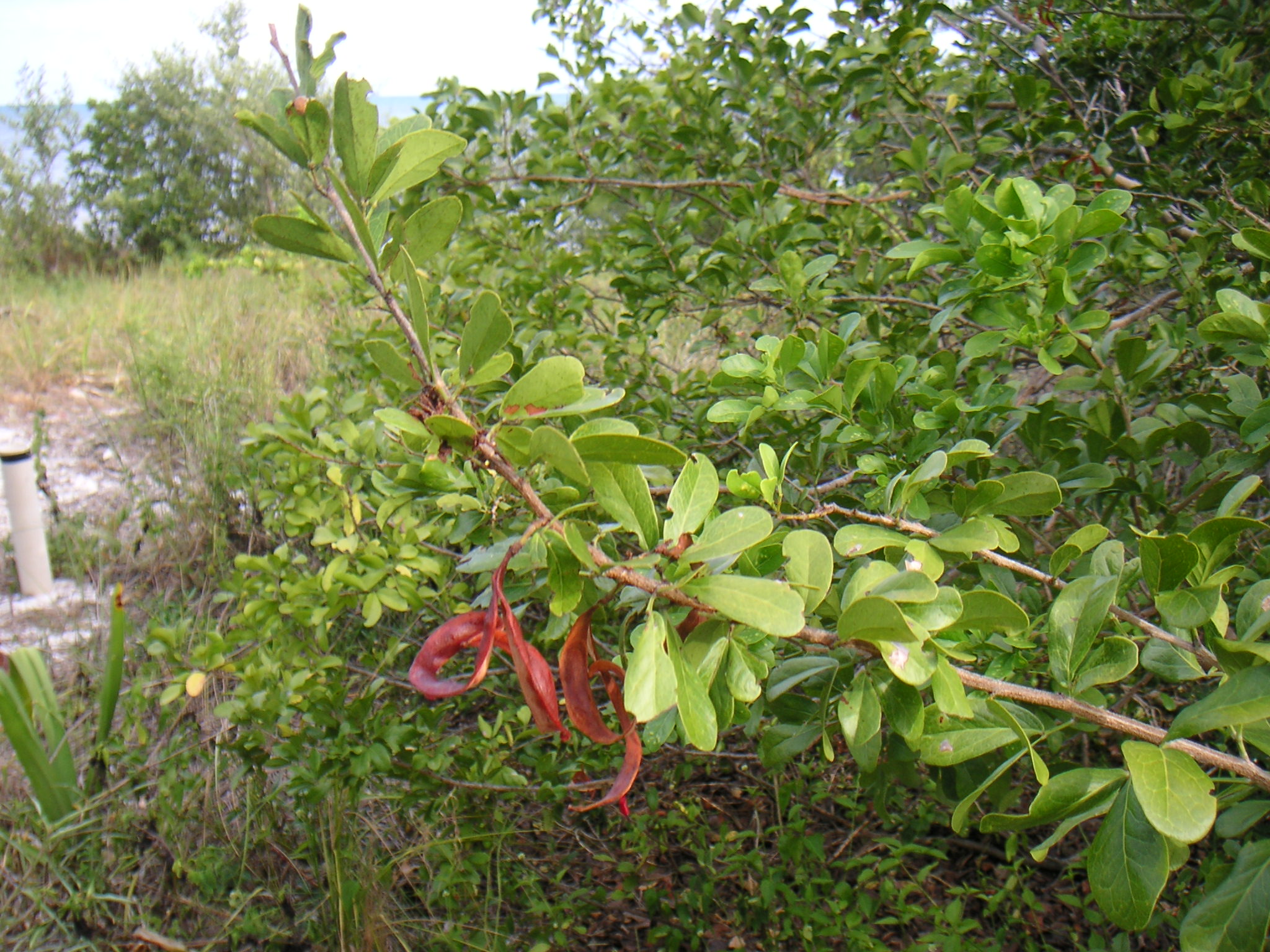
Blackbead grows as a large, irregular, often broader-than-tall shrub or small tree, usually 8 to 15 feet tall but occasionally reaching close to 19 feet in South Florida gardens. Its leathery, rounded leaflets and salt-tolerant toughness make it a durable choice for coastal landscapes, where it forms a dense, thorn-free thicket useful as a buffer planting, accent shrub, or clipped hedge. It is also an important larval host and nectar plant for an exceptional number of South Florida butterflies, including the federally endangered Miami blue.
Because its native range is so narrow — the Florida Keys and a thin strip of the adjacent mainland coast — Blackbead is a true regional specialty. It is listed as a threatened species by the state of Florida, so gardeners should always buy nursery-propagated plants, which are commonly available at South Florida native plant nurseries, and never dig or collect from the wild.
Identification
Blackbead is a large shrub or small tree with an irregular, spreading crown, often wider than it is tall. It typically grows on short trunks from which many branches arise close to the ground, giving older plants a dense, multi-stemmed habit rather than a single clean trunk.
Bark & Form
The bark is gray and develops shallow fissures with age. Growth is moderate, and plants mature at roughly 8 to 15 feet tall, occasionally to about 19 feet in favorable South Florida sites, usually spreading as wide as or wider than their height. There are no thorns or spines on this species, which sets it apart from some of its thorny legume relatives.
Leaves
The leaves are evergreen, leathery, and pinnately compound, typically with just 2 to 4 rounded leaflets about 2 inches long arranged on short branched stalks. The leaflet surface is glossy dark green above and paler below, giving the foliage a neat, tidy texture year-round.
Flowers & Fruit
Flowers are borne in small, semi-showy, globose (ball-shaped) heads made up of many tiny tubular blossoms with long, delicate stamens — the classic “powderpuff” look shared by many mimosoid legumes. Color ranges from white to deep pink; plants in the Florida Keys tend to have pink flowers, while mainland populations are usually white. The flowers are fragrant and can appear nearly year-round, with a peak from spring into summer.
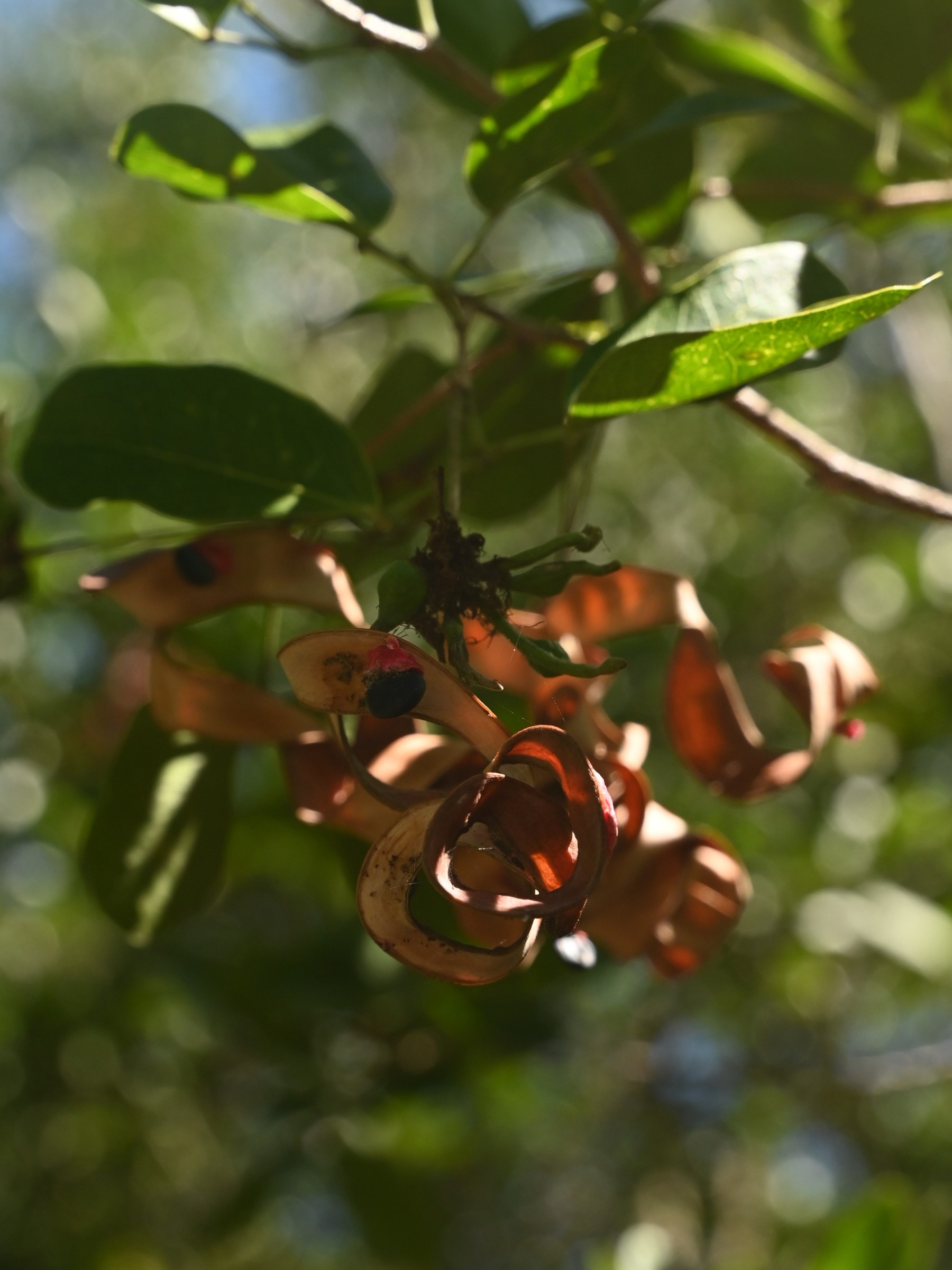
The fruit is a reddish-brown pod (legume) that coils tightly as it matures, then splits open to expose shiny black seeds, each attached to a bright red, fleshy aril. This striking color combination — black seed against red aril inside a curled brown pod — is the feature that gives the plant its common name and makes it easy to identify once fruiting begins.
Quick Facts
| Scientific Name | Pithecellobium keyense |
| Family | Fabaceae (Legume/Pea) |
| Plant Type | Evergreen shrub or small tree |
| Mature Height | 8–15 ft (occasionally to 19 ft) |
| Mature Spread | Often broader than tall |
| Growth Rate | Moderate |
| Sun Exposure | Full Sun |
| Water Needs | Low once established; high drought tolerance |
| Soil Type | Moist, well-drained sandy or limestone soils with organic topsoil |
| Salt Tolerance | Moderate; tolerates salt wind well, poorly tolerates prolonged salt-water flooding |
| Bloom Time | Nearly year-round; peak spring–summer |
| Flower Color | White to deep pink, fragrant |
| Fruit | Coiled reddish-brown pod with black, red-arilled seeds |
| Legal Status | Threatened in Florida; buy nursery-propagated stock only |
| USDA Hardiness Zones | 10b–11 |
Native Range
Blackbead is a true South Florida and Florida Keys specialty. Its U.S. range runs from the Keys of Monroe County north along both coasts to Martin County on the Atlantic side and Lee County on the Gulf side, where it becomes rare and scattered — in that western part of its range it is largely replaced by its thornier relative, cat’s-claw blackbead (Pithecellobium unguis-cati). Outside the United States, it also grows in the Bahamas, Cuba, Belize, and the Mexican states of Quintana Roo and Yucatán.
In the wild, Blackbead is a common element of coastal hammock thickets, growing in full sun on moist, well-drained sandy or limestone soils with a humusy top layer. It tolerates significant salt-laden wind, which is why it is often found along the edges of coastal hammocks, but it does not tolerate long-term flooding by salt or brackish water, though it shrugs off brief inundation from storm surge with little damage.
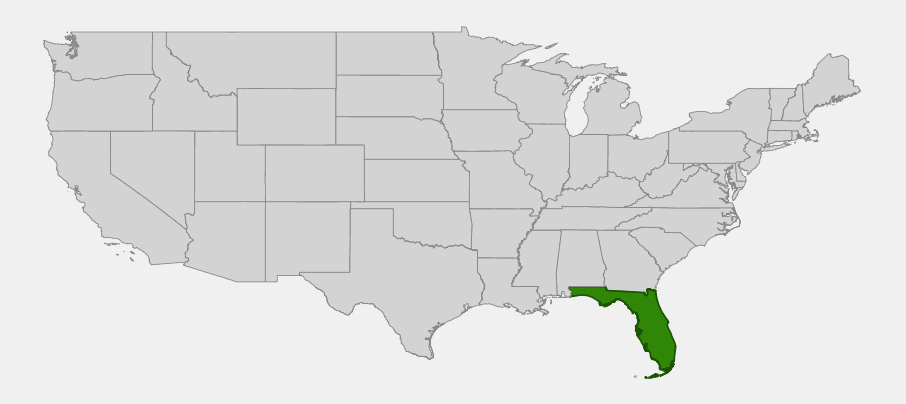
Blackbead’s range is far too narrow for any of Plant Native’s regional plant lists, which do not currently cover South Florida; it is not featured on a 📋 regional list.
Growing & Care Guide
Blackbead is an easy, low-maintenance choice for South Florida gardens that mimic its native coastal hammock conditions. It is commonly available at native plant nurseries in the region, making it an accessible and authentic native alternative to non-native hedge shrubs.
Light
Give Blackbead full sun for the best flowering and densest form. In the wild it grows along the sunnier edges of coastal hammocks rather than in deep shade, and garden plants perform best with at least six hours of direct sun.
Soil & Water
Plant Blackbead in moist, well-drained sandy or limestone soil with some organic content in the topsoil; it grows adequately in nutrient-poor soils but thrives with a humusy layer to root into. Drought tolerance is high, and established plants need no supplemental irrigation under normal South Florida rainfall patterns. Avoid sites that stay flooded with salt or brackish water for extended periods, though occasional storm-surge inundation causes little lasting harm.
Planting Tips
Choose a sunny spot near the coast or inland, allowing room for a mature spread that is often wider than the plant is tall. Because Blackbead is state-listed as threatened in Florida, source only nursery-propagated container stock — reputable South Florida native nurseries regularly carry it — and never collect plants or seed from wild populations.
Pruning & Maintenance
Blackbead tolerates shearing well and is often grown as a clipped hedge or screen, though it also looks good left to its naturally irregular, broad form as a specimen shrub. Remove dead wood as needed; otherwise it requires very little upkeep once established.
Landscape Uses
Blackbead’s toughness and wind tolerance make it versatile in coastal landscapes:
- Buffer or screen planting along property edges near the coast
- Accent or specimen shrub with its irregular, broad-crowned form
- Clipped hedge thanks to its dense, thornless branching
- Butterfly and pollinator gardens as a larval host and nectar source
- Restoration plantings in coastal hammock habitat
Wildlife & Ecological Value
Few small native trees in South Florida support as many butterfly species as Blackbead. It functions as both a larval host plant and a nectar source, making it a genuine wildlife workhorse for any hammock-style or pollinator garden.
For Butterflies
Blackbead is a larval host plant for the cassius blue, large orange sulphur, and the federally endangered Miami blue butterfly — a species now restricted to a handful of sites in the Florida Keys, where host plants like Blackbead are critical to its survival. As a nectar plant, it draws an even longer list of species, including the Florida duskywing, Florida white, giant swallowtail, great southern white, hammock skipper, mangrove skipper, Palatka skipper, southern broken-dash, three-spotted skipper, and twin-spot skipper, in addition to cassius blue, large orange sulphur, and Miami blue.
For Birds
The bright red arils attached to the black seeds are eaten by birds, which help disperse the seeds after the pods split open. The dense branching also offers useful cover for small birds moving through coastal thickets.
Ecosystem Role
As a common component of coastal hammock thickets, Blackbead adds structural density and food resources to a habitat type that has been heavily reduced by coastal development in South Florida. Its moderate salt-wind tolerance lets it anchor the sunnier, more exposed edges of hammocks, buffering more shade-dependent hammock species growing behind it.
Cultural & Historical Uses
Blackbead has no significant documented history of food, medicinal, or craft use, and none should be assumed or attempted — it is grown today purely as an ornamental and ecological restoration plant. Its chief value to people has always been horticultural and ecological: a tough, attractive, fragrant-flowered native for the hardest growing conditions South Florida’s coast can offer. Because wild populations are limited and the species carries threatened status in Florida, its primary “use” by conservation-minded gardeners today is as a propagated nursery plant that takes pressure off remaining wild stands.
Frequently Asked Questions
Is Blackbead the same plant as cat’s-claw blackbead?
No. Blackbead (Pithecellobium keyense) is thornless, while cat’s-claw blackbead (Pithecellobium unguis-cati) has small hooked thorns along its stems. The two are closely related and sometimes grow in the same coastal areas, with cat’s-claw blackbead more common toward the western (Gulf coast) edge of Blackbead’s range.
Are Blackbead seeds or pods edible?
No edible or medicinal use is documented for this species, and none should be assumed. The showy black seeds and red arils are food for birds and wildlife, not people.
Why are some Blackbead flowers white and others pink?
Flower color varies geographically: plants growing in the Florida Keys typically bloom pink, while mainland populations are usually white. Both forms are equally fragrant and attractive to pollinators.
Can I grow Blackbead outside South Florida?
Blackbead is only reliably hardy in USDA zones 10b–11 and needs the warm, frost-free conditions of coastal South Florida. It is not a realistic choice for gardens further north that experience freezing winter temperatures.
Is it legal to collect Blackbead seed or plants from the wild?
Blackbead is listed as a threatened species by the state of Florida. Always buy nursery-propagated plants from a reputable native plant nursery rather than collecting seed, cuttings, or whole plants from wild populations.
Gardeners looking to round out a South Florida coastal hammock planting often pair Blackbead with other native hammock trees; see our profiles of Wild Tamarind, Gumbo Limbo, West Indian Mahogany, and Pigeon Plum. For design ideas that put Blackbead’s butterfly value to work, see our guides to pollinator garden design, native hedgerows for birds, and encouraging beneficial insects in the landscape.

Looking for a nursery that carries Blackbead?
Browse our native plant nursery directory: Florida

