
Littlehip Hawthorn (Crataegus spathulata)
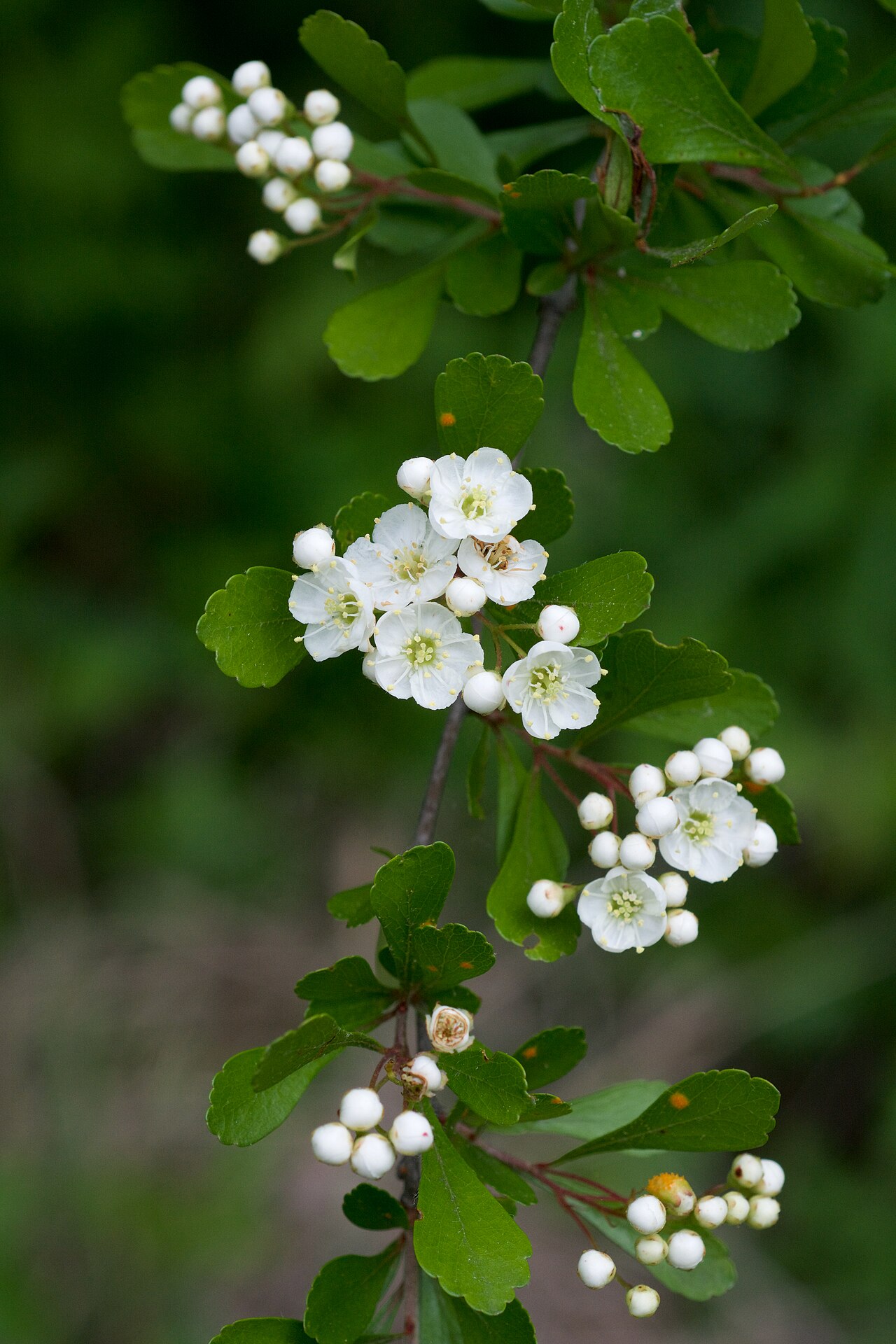
Crataegus spathulata, commonly known as Littlehip Hawthorn (also called pasture hawthorn, smallfruit hawthorn, or simply thornapple), is a small, graceful native tree of the southeastern and south-central United States. A member of the rose family (Rosaceae), it is one of the daintier hawthorns, with small, delicate, spatula-shaped leaves — the source of its species name, spathulata — that give the whole tree a fine, almost ferny texture quite different from the coarser foliage of many other hawthorn species.
This is a genuinely small tree for a hawthorn, typically reaching just 20 to 25 feet tall and 15 to 20 feet wide, armed with slender branches and stout thorns, and dressed in strikingly beautiful bark that exfoliates in multicolored patches of gray, brown, and honey-gold as the tree matures. In April it produces abundant clusters of small white flowers, followed by equally abundant clusters of tiny, bright red fruits in fall — “hips” that are smaller than those of most other hawthorns, which is where the common name comes from.
Littlehip Hawthorn is classified as globally secure (G5), but it is genuinely uncommon across parts of its range and is tracked as a rare, watch-listed species in some states, including North Carolina. For gardeners within its native range looking for a small flowering tree with four-season interest — spring flowers, fall fruit and color, and winter bark — it is an underused native well worth seeking out from a reputable native plant nursery.
Identification
Littlehip Hawthorn grows as a small deciduous tree, 20 to 25 feet tall and 15 to 20 feet wide, with an open, spreading crown of slender branches.
Bark & Branches
The bark is one of this species’ most ornamental features: multicolored and exfoliating, flaking away in patches of green, gray, brown, and honey-gold to reveal the different-colored layers beneath, a trait that becomes especially showy on mature trunks. The slender branches carry large, stout thorns, typical of the hawthorn genus.
Leaves
The leaves are small, dark green to bluish-green, and spatula-shaped (wider toward the tip, narrowing toward the base) — a distinctive, almost delicate leaf among hawthorns. In fall, the foliage turns attractive shades of red to orange before dropping.
Flowers & Fruit
Flowers open in April, carried in clusters of 20 to 30 small white blooms per cluster, in a flat-topped arrangement typical of the genus. The resulting fruits are small, bright red, thin-fleshed pomes (haws) containing three to five nutlets, ripening in September and October. They are notably smaller than the fruit of most other hawthorn species — hence “littlehip” — and are technically edible, though thin-fleshed and mealy, and are far more valuable as wildlife food than as a human snack.
Quick Facts
| Scientific Name | Crataegus spathulata |
| Family | Rosaceae (Rose) |
| Plant Type | Deciduous small tree |
| Mature Height | 20–25 ft |
| Mature Spread | 15–20 ft |
| Growth Rate | Moderate |
| Sun Exposure | Part Shade to Shade |
| Water Needs | Moist, well-drained; more drought tolerant once established |
| Soil Type | Adaptable; moist, well-drained preferred |
| Bloom Time | April |
| Flower Color | White |
| Fall Color | Red to orange |
| Fruit | Small bright red haws, September–October |
| Conservation Status | Globally secure (G5); rare/watch-listed in parts of its range (e.g. North Carolina) |
| USDA Hardiness Zones | 6–9 |
Native Range
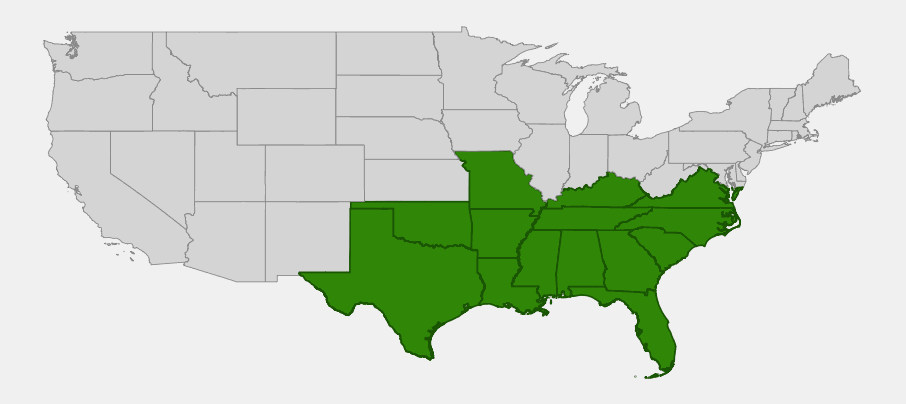
Littlehip Hawthorn is native to the Central and Southeastern United States, with confirmed populations in Alabama, Arkansas, Florida, Georgia, Kentucky, Louisiana, Mississippi, Missouri, North Carolina, Oklahoma, South Carolina, Tennessee, Texas, and Virginia. It is most common across the Gulf Coastal Plain and lower Mississippi Valley, becoming rarer toward the northern and eastern edges of its range.
In the wild it grows in scrub, pine-oak woodlands, bottomland forests, river banks, and rocky uplands, often over mafic or calcareous (limestone-influenced) substrates, as well as in oak savannas and old pastures — the source of the alternate common name “pasture hawthorn.” It tolerates part shade to full shade and prefers moist, well-drained soils, though established trees become more drought tolerant.
📋 Regional plant lists featuring Littlehip Hawthorn: Georgia, Alabama & Mississippi · Arkansas, Louisiana, Eastern Oklahoma & Eastern Texas · Illinois, Iowa & Missouri · Kentucky & Tennessee · Maryland, Virginia & West Virginia · North & South Carolina
Growing & Care Guide
Littlehip Hawthorn is an easygoing, adaptable small tree for gardeners across its range who want more shade tolerance than most flowering trees offer.
Light
This species is unusually shade-tolerant for a flowering hawthorn, thriving in part shade to full shade. It also grows in sunnier spots, but its natural comfort in low light makes it a useful option for wooded lots and understory plantings where many flowering trees struggle.
Soil & Water
Plant in moist, well-drained soil for best performance; the species is adaptable to a range of soil types, including those influenced by limestone or mafic rock. Once established, trees tolerate drought reasonably well, though consistent moisture during the first few years helps young trees get established.
Planting Tips
Choose a site with part shade to shade, especially in hotter parts of the range, and allow room for the eventual 15- to 20-foot spread. Because the bark is one of the plant’s best ornamental features, site it where its exfoliating, multicolored trunk can be appreciated up close, such as near a path or patio.
Pruning & Maintenance
Prune to remove dead, crossing, or damaged branches in late winter while dormant; avoid handling the thorny branches without gloves. Like other hawthorns, it can be susceptible to fire blight, cedar-hawthorn rust, cedar-quince rust, leaf blight, and leaf spot, along with insect pests such as leaf miners, lace bugs, and aphids, though it is not generally considered problem-prone when sited well.
Landscape Uses
Littlehip Hawthorn’s small size and shade tolerance make it versatile:
- Understory or woodland-edge specimen where part shade limits other flowering trees
- Four-season ornamental for spring flowers, fall fruit and color, and winter bark
- Wildlife hedgerow, where its thorns offer protected nesting sites
- Naturalized old-field or pasture-edge plantings, echoing its wild habitat
Wildlife & Ecological Value
Littlehip Hawthorn earns its keep in the garden as a genuine wildlife resource across three seasons.
For Birds
The small red fruits are an important food source for birds and small mammals through fall and into winter. Just as valuable is the tree’s dense, thorny branching, which provides well-protected nesting habitat — many birds specifically favor thorny shrubs and small trees like hawthorns for nests that are harder for predators to reach.
For Pollinators
The abundant spring flower clusters, each carrying 20 to 30 blooms, provide a reliable nectar source for native bees and other pollinating insects during the April bloom period.
Ecosystem Role
As a component of pine-oak woodlands, bottomland forests, and old pastures, Littlehip Hawthorn adds structural diversity to the understory and edge habitats where it grows, and its presence on calcareous or mafic substrates can indicate soil conditions valuable to a broader community of associated native plants.
Cultural & Historical Uses
No significant documented history of medicinal or craft use is recorded for this particular species, and none should be assumed. The small fruits are technically edible, with thin, mealy flesh typical of hawthorn haws, but they are far better left for the birds and small mammals that rely on them than gathered for eating. Historically, the tree’s abundance in old pastures across the South — reflected in the common name “pasture hawthorn” — suggests it was simply tolerated or left standing as livestock grazed around it, rather than cultivated for any particular use.
Frequently Asked Questions
How is Littlehip Hawthorn different from other native hawthorns?
Its small, spatula-shaped, bluish-green leaves give it a finer, more delicate texture than most hawthorns, and its fruit (“hips”) is notably smaller than that of related species — the source of the common name. Its strikingly multicolored, exfoliating bark also sets it apart from many other hawthorns as it matures.
Does Littlehip Hawthorn need full sun?
No — it is more shade-tolerant than most flowering hawthorns and grows well in part shade to full shade, in addition to sunnier sites.
Is Littlehip Hawthorn rare?
It is globally ranked as secure (G5), meaning it is not at risk range-wide, but it is genuinely uncommon in parts of its range and is tracked as a rare, watch-listed species in some states, including North Carolina. Buy only nursery-propagated stock.
Can you eat the fruit?
The small red haws are technically edible but have thin, mealy flesh and are not considered good eating by most people. They are far more valuable left on the tree as food for birds and wildlife.
For companion species sharing Littlehip Hawthorn’s woodland and savanna habitat, see our profiles of Longleaf Pine, Post Oak, and Parsley Hawthorn. For more on its wildlife and pollinator value, see our guides to native hedgerows for birds, pollinator garden design, and encouraging beneficial insects.

Looking for a nursery that carries Littlehip Hawthorn?
Browse our native plant nursery directory: Alabama & Arkansas · Florida & Georgia · Kentucky, Louisiana & Mississippi · Missouri · North Carolina & Oklahoma · South Carolina, Tennessee, Texas & Virginia

