Renovating an Overgrown Black Chokeberry: A Staged Pruning Plan
Last updated: November 5, 2026
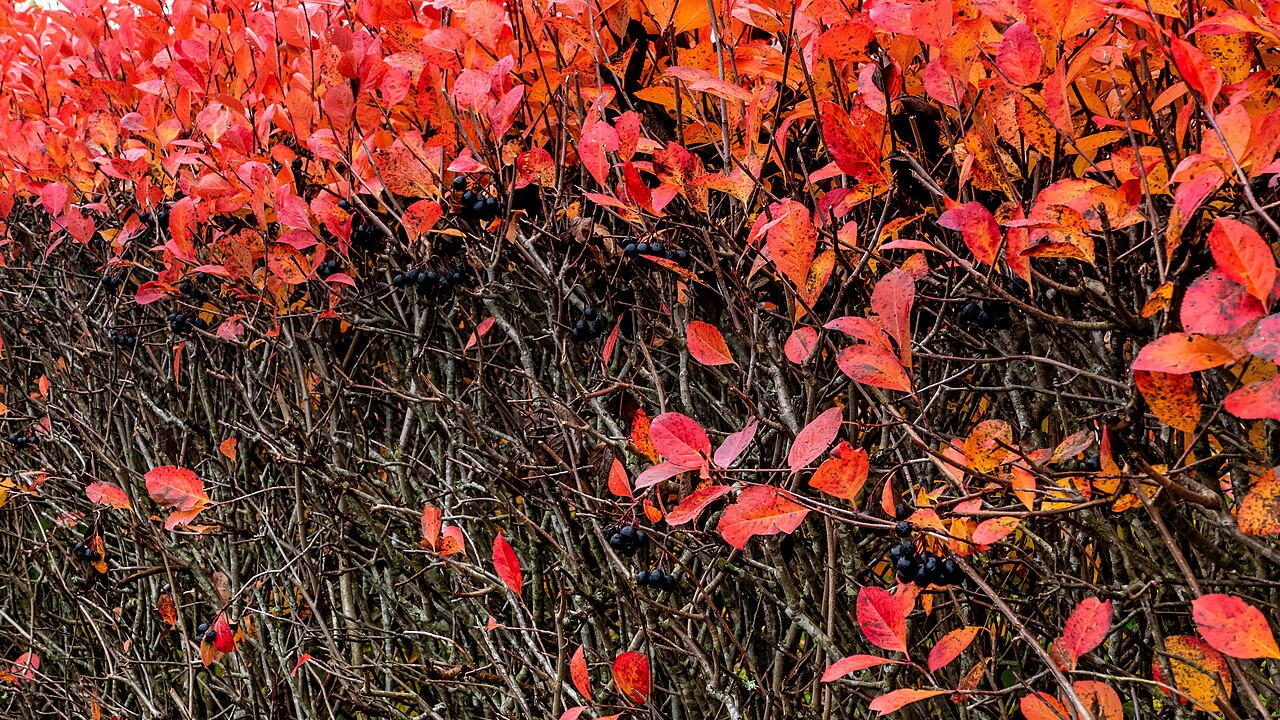
A black chokeberry left alone for a decade usually turns into a crowded clump. The stems get thick and gray, the leaves and fruit move up to the top, and the bottom fills with bare wood.
The good news is that black chokeberry is built for renewal. It sends up new canes from the base and roots every year, so you can replace old wood with young wood without starting over.
This guide lays out a three-year staged plan that keeps the shrub looking like a shrub the whole time. It also covers the faster option of cutting everything down, and what each approach costs you in flowers and fruit.
The Short Answer
- When: late winter or early spring, before buds break.
- Year 1: remove dead wood and about one-third of the oldest, thickest canes at ground level.
- Year 2: remove half of the remaining old canes and thin the new shoots to the strongest.
- Year 3: remove the last of the old canes and thin again.
- After that: take out the few oldest canes each year so the clump never gets overgrown again.
- The fast option: cut everything to a few inches, then expect no fruit for at least two years.
How Black Chokeberry Grows
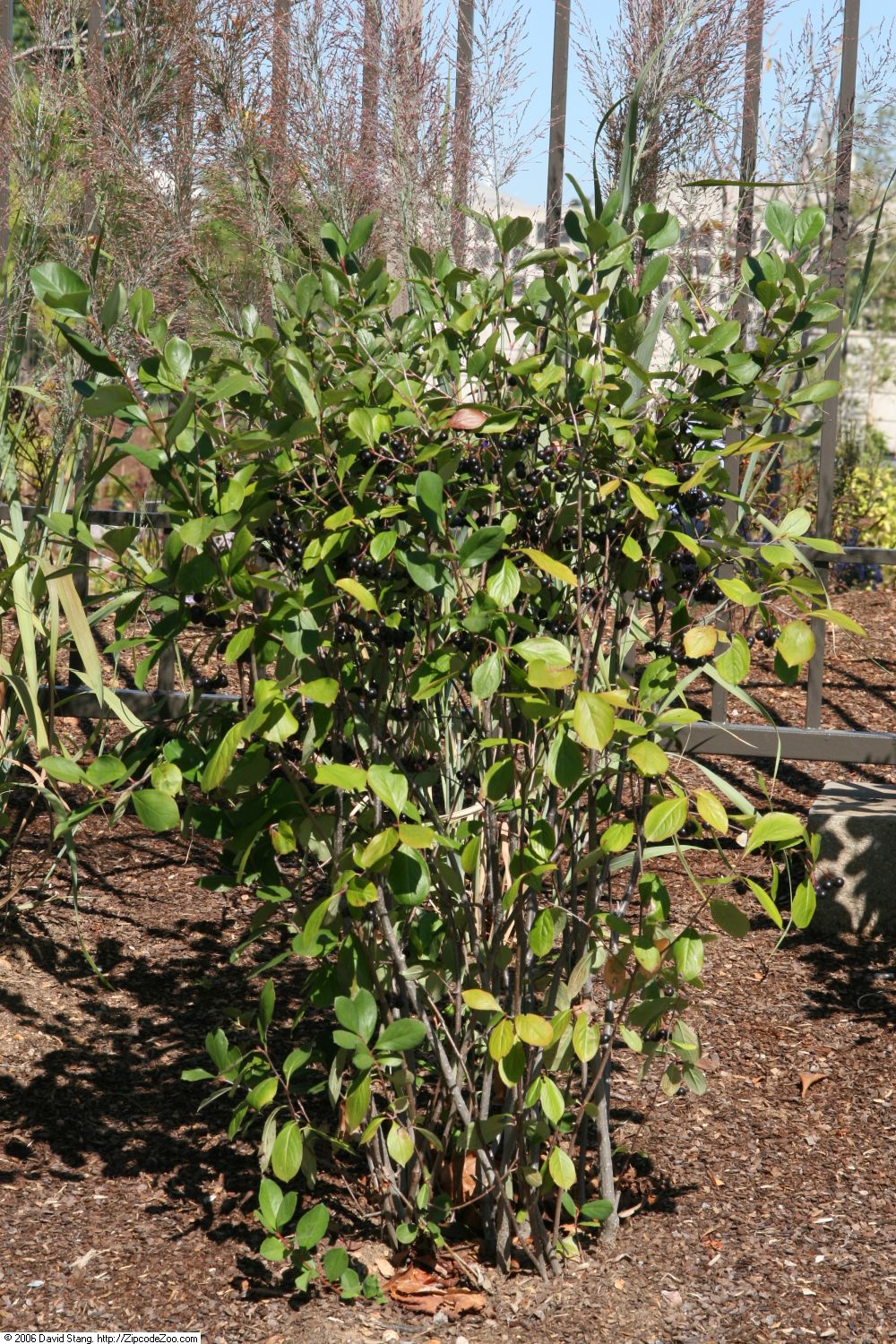
Black chokeberry is a multi-stemmed shrub. Instead of one trunk, it has a clump of canes, and it keeps adding more from the base and from spreading roots.
Mark Brand of the University of Connecticut describes the species as suckering profusely and forming dense plants and colonies. That steady supply of new canes is what makes renovation work.
Each cane has a productive lifespan. Iowa State University Extension reports that aronia canes reach maximum productivity at about three years old and become less productive as they age. Old canes keep their leaves and flowers near the top and shade out the center.
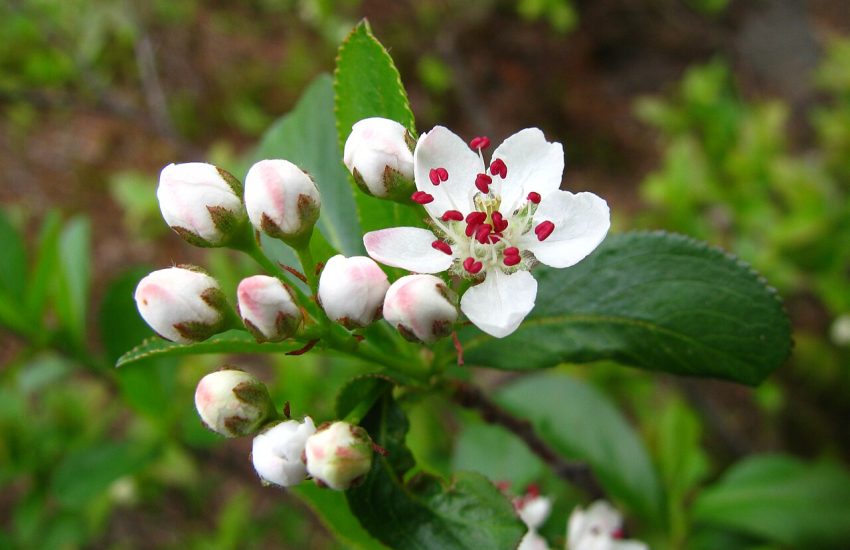
Flowers come from buds formed the previous summer at the shoot tips. That matters for how you cut: removing whole canes at the base keeps the flower buds on the canes you leave, while trimming the tips of every branch removes them.
Staged Renovation vs. Cutting to the Ground
| Staged (3 years) | Cut to the ground | |
| Looks during the work | Still a full shrub, just thinner | A stubble of stumps for a season |
| Flowers and fruit | Reduced, but some every year | None for at least two years |
| Bird cover | Kept | Lost until regrowth |
| Best for | Most yards, hedges, screens | Badly neglected or damaged clumps |
Step 1: Confirm It Needs Renovation
Not every big chokeberry is overgrown. A shrub that is full to the ground, flowers well, and fits its space only needs routine thinning.
Renovation makes sense when you see several of these signs:
- Most canes are thick, gray, and woody, with few young, smooth ones.
- The lower half is bare, and the leaves sit in a band at the top.
- Flowers and fruit appear only on the highest branches.
- The center is a tangle of dead or crossing stems.
- The clump has spread well past where you want it.
Before you cut, check the light too. A chokeberry that went leggy because a tree grew over it will go leggy again unless it gets more sun.
Step 2: Pick the Right Time
Iowa State recommends pruning aronia in late winter or early spring, before bud break, by cutting at the base of the crown. University of Minnesota Extension also calls the late dormant season the best time for most pruning, since wounds are exposed only briefly before growth starts.
Minnesota Extension lists chokeberry among shrubs that bloom on last year’s growth and can be pruned right after flowering. The Morton Arboretum gives the same after-bloom timing. Either window works for removing whole canes at the base.
Late winter has practical advantages for a renovation. With the leaves off, you can see every cane, judge its age, and reach the base without fighting foliage.
Avoid heavy cutting in late summer and fall. By then the shoot tips carry next year’s flower buds.
Step 3: Gather the Right Tools
Old chokeberry canes can be an inch or more thick at the base. University of Minnesota Extension notes that hand pruners handle cuts up to about 3/4 inch, while a pruning saw is the tool for branches over an inch.
For a renovation you’ll want:
- Sharp bypass hand pruners for thin canes and suckers.
- Loppers for mid-sized canes.
- A small pruning saw for the oldest canes at ground level.
- Gloves and eye protection. Kneeling into a dense clump puts twigs at eye height.
Our guide on how to prune trees and shrubs covers clean cuts and tool care in more detail.
Step 4: Year One — Remove the Oldest Third
Start with the easy cuts. Take out anything dead, broken, or obviously diseased, then any canes lying on the ground or rubbing against others.
Next, find the oldest, thickest canes. Iowa State’s general method for overgrown shrubs is to remove about one-third of the large, old stems at ground level in the first year.
Cut each one as close to the ground as you can. A tall stub just sprouts a cluster of weak twigs.
Spread your cuts around the clump rather than clearing one side. The goal is to open the center to light so new canes can grow in from the base.
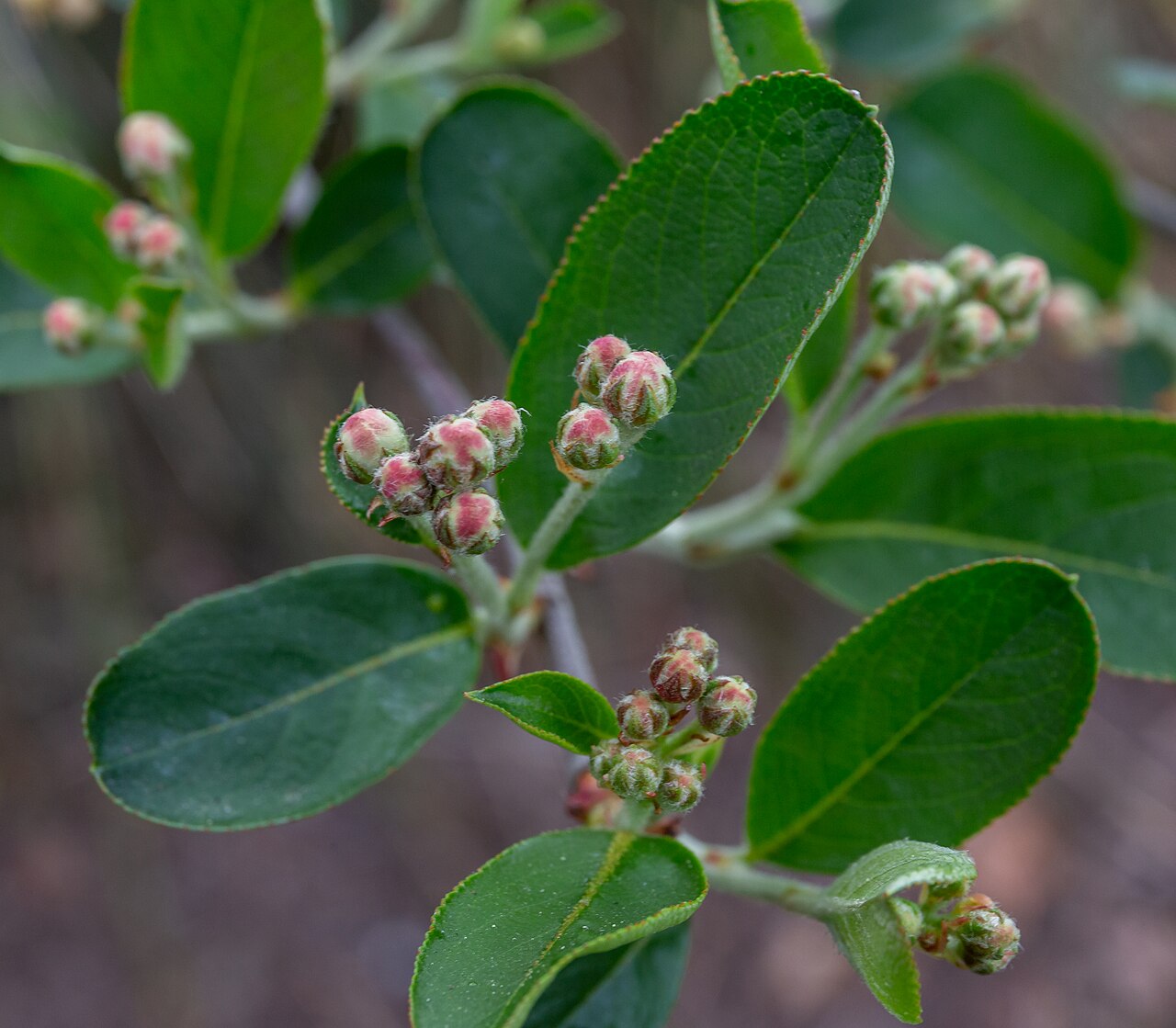
Leave the canes you keep untouched. Don’t head them back or shear the top to even it out. Those tips hold this spring’s flowers.
Step 5: Year Two — Take Half the Remaining Old Wood
The next late winter, you’ll find a crop of new shoots that came up through the opened center. Some will be strong and upright, others thin and crowded.
Iowa State’s three-year method calls for removing one-half of the remaining old stems in the second year. It also calls for thinning the new growth, keeping several well-spaced, vigorous shoots and removing the rest.
When choosing which new shoots to keep, favor ones that:
- Come up inside the footprint you want, not out in the lawn or path.
- Are spaced a few inches apart, not bunched together.
- Grow upright and look vigorous.
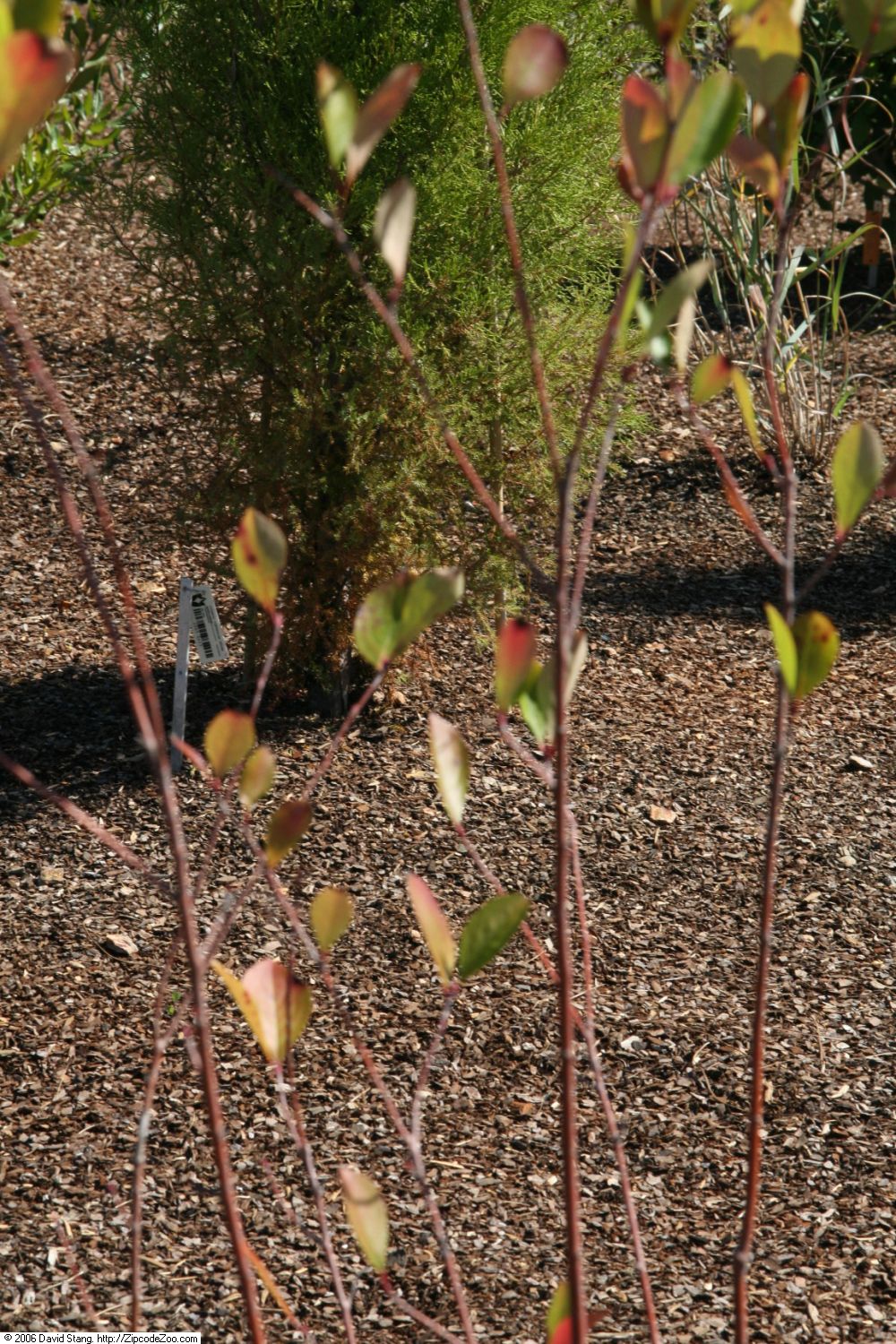
Shoots that come up well outside the clump are suckers from spreading roots. Cut them off at or just below the soil line now, while they’re small.
Step 6: Year Three — Finish the Job
In the third late winter, remove all the remaining old canes. Iowa State’s method also calls for thinning the new shoots again.
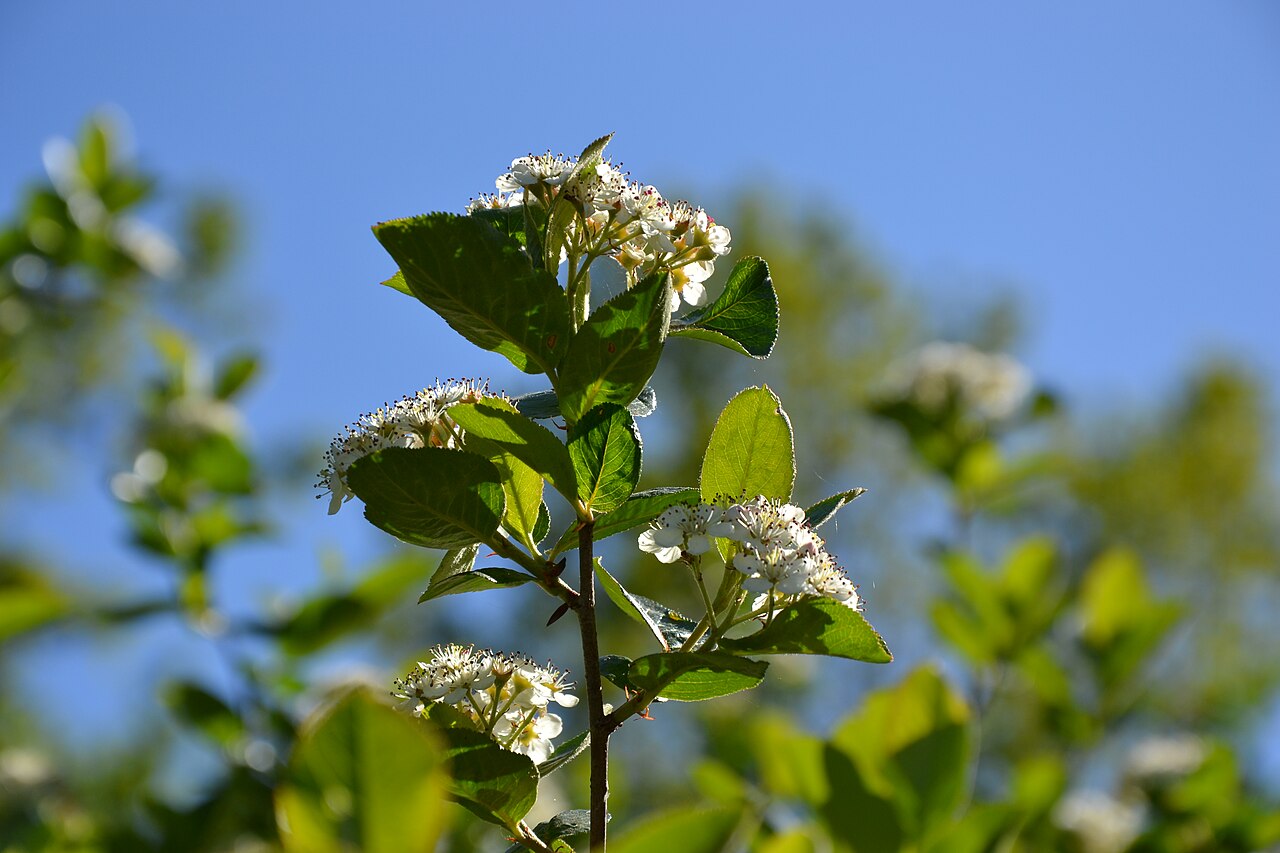
At this point the clump should be made up mostly of canes one and two years old, with good light reaching the center. Flowering should pick up as those canes approach the three-year mark that Iowa State identifies as peak productivity.
Step 7: Care for the Shrub Through the Renovation
Renovation is a lot of wood to lose. Good aftercare helps the roots push out strong replacements.
- Water in dry spells. Black chokeberry does best on moist but well-drained ground, according to the USDA plant guide. See our watering guide for shrubs and trees.
- Mulch the root zone. Iowa State recommends mulch to control weeds and hold moisture. Keep it a few inches off the canes. Our mulching techniques for native gardens show how.
- Keep string trimmers away. Iowa State warns that trimmer and mower damage to the canes can cost fruit and open the plant to disease.
- Skip the fertilizer. Iowa State notes aronia does not need overly fertile soil.
For general aftercare, our guide to caring for native shrubs covers the basics.
The Faster Option: Cutting It to the Ground
If the clump is badly neglected, storm-damaged, or full of dead wood, you can renew it all at once. Rutgers Cooperative Extension describes this as cutting all stems to within six inches of the ground in early spring, before growth starts.
Iowa State says aronia can be handled this way about every ten years, but no fruit will be produced for at least two years afterward.
The year after a hard cutback, the base will have sent up a thicket of new shoots. Iowa State’s guidance for renovated shrubs is to keep several strong, healthy shoots the following late winter and remove the rest at ground level.
Rutgers suggests doing this kind of cut no more often than every three to five years. For black chokeberry, a staged plan or annual thinning usually means you never need it.
Quick Reference
| Best timing | Late winter to early spring, before bud break. Right after bloom also works for whole-cane removal. |
| Where to cut | At ground level, removing the whole cane. |
| How much per year | About one-third of the oldest canes in year one, then half of what’s left in year two, then the rest. |
| What not to do | Shear the tips, leave tall stubs, or cut heavily in late summer and fall. |
| Fruit after staged plan | Reduced in the renovation years, but rarely gone. |
| Fruit after full cutback | None for at least two years. |
Keeping It From Getting Overgrown Again
Once the renovation is done, a few cuts a year keep the clump young. Iowa State recommends removing canes around five years old at the base each late winter or early spring to maintain fruit production and continually renew the plant.
In practice that means looking over the clump once a year and taking out the few oldest, thickest canes, plus any suckers outside the footprint. It takes minutes instead of a weekend.
If fruit is still sparse after the renovation, work through our checklist for black chokeberry not fruiting, starting with light and bloom weather.
If you’re managing a long chokeberry screen or wildlife hedge, stagger the work by section so birds always have cover. Our guide to native hedgerows for birds explains why that layered structure matters.
A Season-by-Season Plan
- Late winter: make the year’s renovation cuts at ground level. Remove suckers outside the footprint.
- Spring: watch new shoots emerge from the base. Protect them from deer and rabbits if browsing is common.
- Late spring: enjoy whatever bloom the remaining canes carry. If you prefer after-bloom pruning, make whole-cane cuts now instead.
- Summer: water in dry spells and keep mulch in place. Don’t trim, since next year’s flower buds are forming.
- Fall: mark the oldest canes with tape while you can still see the shrub’s shape, so next winter’s cuts are quick.
📋 More on this plant: read the full Black Chokeberry (Aronia melanocarpa) profile, or see it in our native plant lists for New Hampshire, Maine & Vermont, New York, Pennsylvania & Northern New Jersey, Maryland, Virginia & West Virginia, North Carolina & South Carolina, and Ohio & Indiana.
Frequently Asked Questions
Can I cut black chokeberry all the way to the ground?
Yes. It regrows from the base and roots. Iowa State notes you’ll get no fruit for at least two years afterward, so a staged plan is gentler if you want flowers and berries.
When is the best time to prune an overgrown black chokeberry?
Late winter or early spring, before the buds break, is the usual recommendation. Removing whole canes right after bloom also works. Avoid heavy cuts in late summer and fall.
How many canes should I remove each year?
For a renovation, start with about one-third of the oldest canes. Once the clump is renewed, removing the few canes that are around five years old each year keeps it productive.
Will renovation pruning reduce my berry crop?
Yes, somewhat, because every old cane you remove takes its flower buds with it. A staged plan keeps some fruit every year. A full cutback stops fruit for at least two years.
Can I just shear black chokeberry into a neat hedge?
You can, but shearing removes the shoot tips where flower buds form, and it does nothing about old wood at the base. Thinning whole canes keeps the shrub fuller and flowering.
Sources
- Iowa State University Extension, Yard and Garden, Growing Aronia in Iowa: cane productivity, pruning timing, five-year cane removal, ten-year cutback, trimmer damage, mulch.
- Iowa State University Extension, Yard and Garden, Pruning Large, Overgrown Shrubs: three-year staged method and full cutback follow-up.
- University of Minnesota Extension, Pruning trees and shrubs: dormant-season timing, chokeberry after-bloom list, tool sizes.
- Rutgers Cooperative Extension, Pruning Flowering Shrubs (FS1221): one-third renewal and six-inch rejuvenation cuts.
- Mark Brand, Aronia: Native Shrubs With Untapped Potential, Arnoldia 67(3), 2010: suckering and growth habit.
- USDA NRCS, Black Chokeberry Plant Guide: site preferences and thinning older stems.