
Pawpaw Leaves Browning at the Edges: Diagnosing the Site Before Treating
Last updated: November 5, 2026
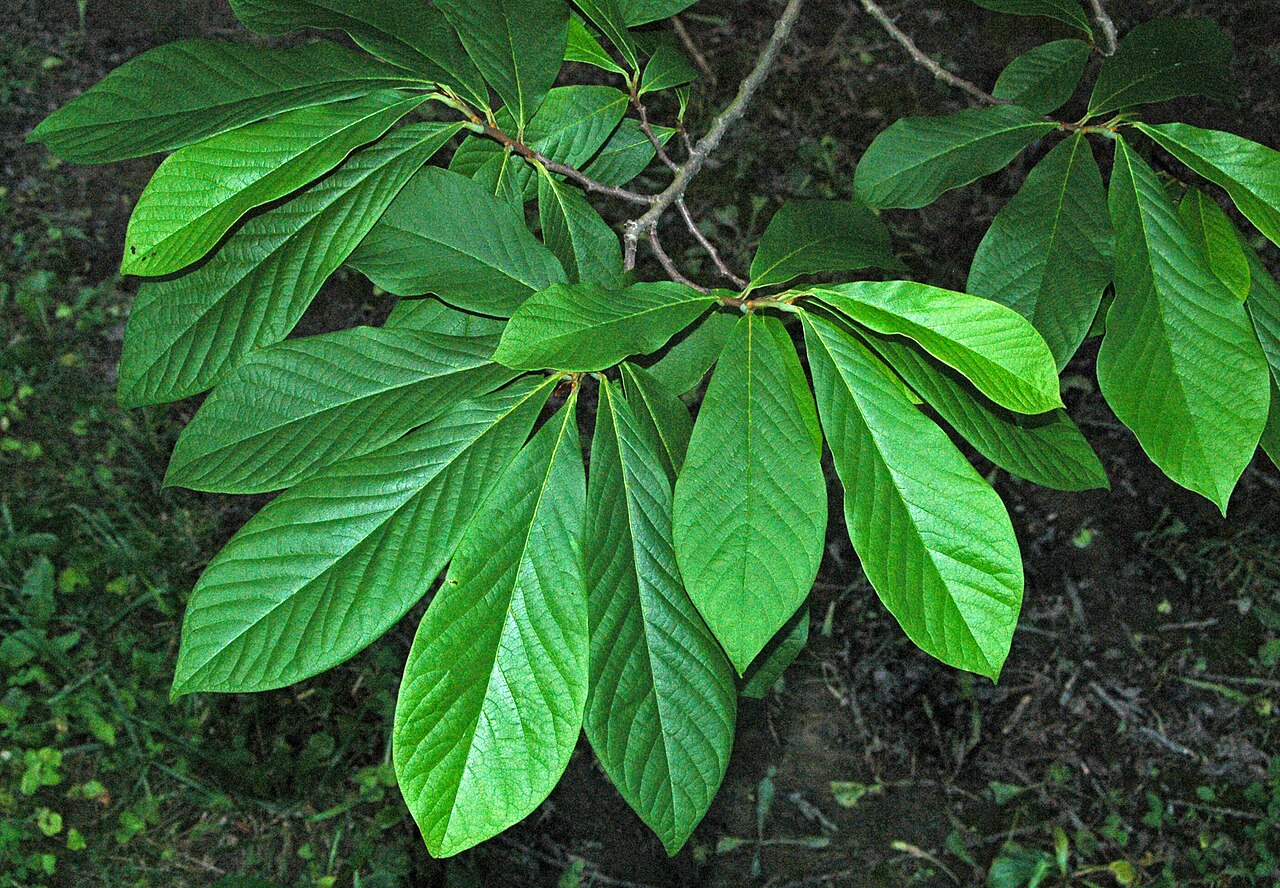
The big, tropical-looking leaves are half the reason people grow pawpaw. So when they start turning brown and crispy at the edges, it’s natural to reach for a spray or a bag of fertilizer.
Hold off. Brown leaf edges on pawpaw are usually a symptom of the site, not a disease. The leaf margin is simply the first place a water shortage shows, whatever caused it.
This guide walks you through the site checks first, so the fix you apply actually matches the problem.
The Short Answer
Brown, crispy edges on pawpaw (Asimina triloba) leaves usually point to leaf scorch: the leaves lost water faster than the roots could replace it. The most common reasons are:
- Dry soil during hot weather. Pawpaw is not drought tolerant.
- Too much sun or wind on a young or recently planted tree.
- Reflected heat from pavement, walls, or siding.
- Damaged or restricted roots from transplanting, construction, compaction, or soggy soil.
- Salt, fertilizer, or chemical injury in the root zone.
Spots with dark borders, holes, or webbing point to something else. Check those before you treat for scorch.
Why Pawpaw Leaves Brown at the Edges
The Morton Arboretum describes leaf scorch as a non-infectious condition. It happens when water evaporates from the leaves faster than the roots can supply it, and the leaf tissue dies.
The tips and edges go first because they’re the last parts of the leaf to receive water from the roots. Scorch can start as yellowing along the margins, then turn brown and dry. In severe heat it may jump straight to brown.
Pawpaw is set up for this problem. Its leaves are large, often up to a foot long, and they lose a lot of water. The tree evolved in shaded, moist forest understories, and Kentucky State University and Purdue both recommend wind protection because of those big leaves.
Read the Pattern First
| Edges brown mostly on the sunny or windy side | Exposure scorch. See Check 4. |
| Edges brown all over during a dry spell | Dry soil. See Check 2. |
| Edges brown while soil stays wet | Poor drainage or root damage. See Checks 3 and 5. |
| Edges brown near a driveway, road, or fertilized lawn | Salt or fertilizer. See Check 6. |
| Round spots with darker borders | Possibly fungal leaf spot. See Check 7. |
| Whole leaves yellow, then brown, in autumn | Normal fall color. See Check 1. |
Check 1: Rule Out Normal Fall Color
Start with the calendar. Pawpaw leaves turn yellow in fall before dropping, and NC State Extension lists the yellow fall color as an ornamental feature.
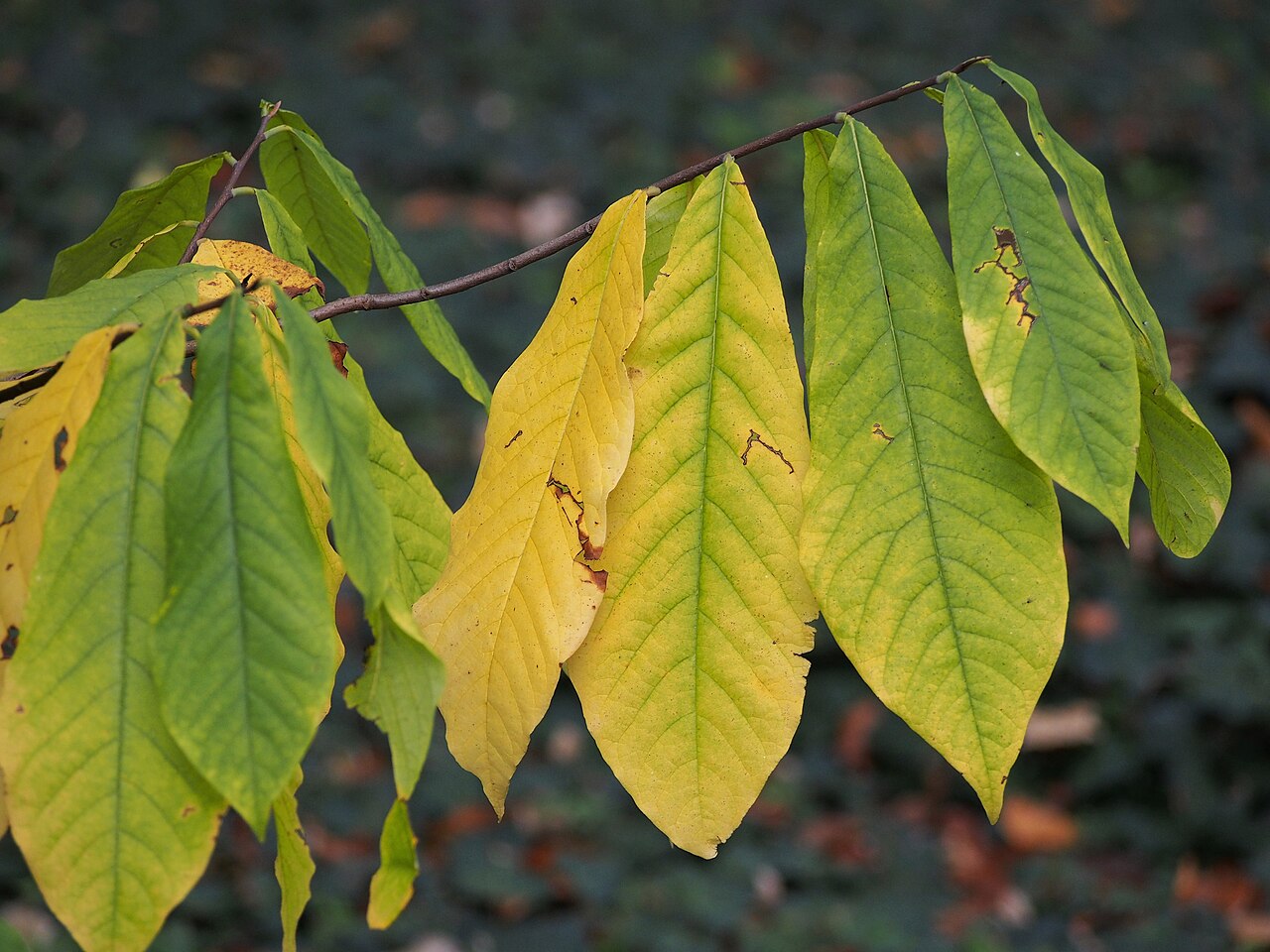
As autumn advances, yellow leaves brown and fall. That’s not a problem. Edge browning in June, July, or August, while the rest of the leaf is still green, is the pattern worth investigating.
The Morton Arboretum notes that scorch symptoms commonly develop in July and August, when temperatures are high and rainfall is low.
Check 2: Test Soil Moisture at Root Depth
This is the most common cause, and the easiest to confirm. Push a trowel or a long screwdriver into the soil a few feet from the trunk, then dig a small hole 6 to 8 inches deep.
- Dry and crumbly at depth: the tree is short of water. This is very likely your cause.
- Moist at depth: water supply is fine. Move on to Checks 3 through 6.
- Soggy or smelling sour: too wet. Go to Check 3.
Pawpaw needs more water than many native trees. Alabama Extension states that pawpaws are not drought tolerant and that 1 to 2 inches of water per week leads to the best growth. Kentucky State University stresses adequate soil moisture especially in the first two years after planting.
Lawn sprinklers often fool people. A daily light sprinkle wets the grass roots but may never reach a tree’s deeper roots. A slow, deep soak works better, which is what The Morton Arboretum recommends for scorch during extended dry weather.
Check 3: Look for Poor Drainage
Brown edges on a tree standing in wet soil seem contradictory, but they’re common. Roots in waterlogged soil are starved of oxygen and stop absorbing water well, so the leaves show the same dry-edge symptoms.
Purdue Extension is direct about it: pawpaws will grow in heavy soils but will not survive waterlogged conditions. Kentucky State University calls good drainage essential.
After a soaking rain, watch how long water stands at the base of the tree. If puddles linger for a day or more, or the soil stays saturated for days, drainage is part of your problem.
Fixes take time. Stop any extra irrigation, keep mulch pulled back from the trunk, and redirect downspouts or runoff away from the tree. For a new planting, Alabama Extension suggests raised berms where drainage is poor.
Check 4: Map Sun, Wind, and Reflected Heat
Walk around the tree and compare the sides. The Morton Arboretum notes that scorch is often worse on the side most exposed to prevailing winds, strong sunlight, or reflected heat from brick walls or asphalt.
Ask these questions:
- Is the tree young or recently planted? Kentucky State University and Purdue say young pawpaws are very sensitive to full sun and usually need shade for the first year or two.
- Is it in an open, windy spot? Wind strips moisture from big leaves fast.
- Is there pavement, a south- or west-facing wall, or light siding nearby? Those surfaces bounce heat and light back onto the leaves.
- Did a nearby shade tree come down recently? A sudden jump in exposure can scorch a tree that was fine for years.
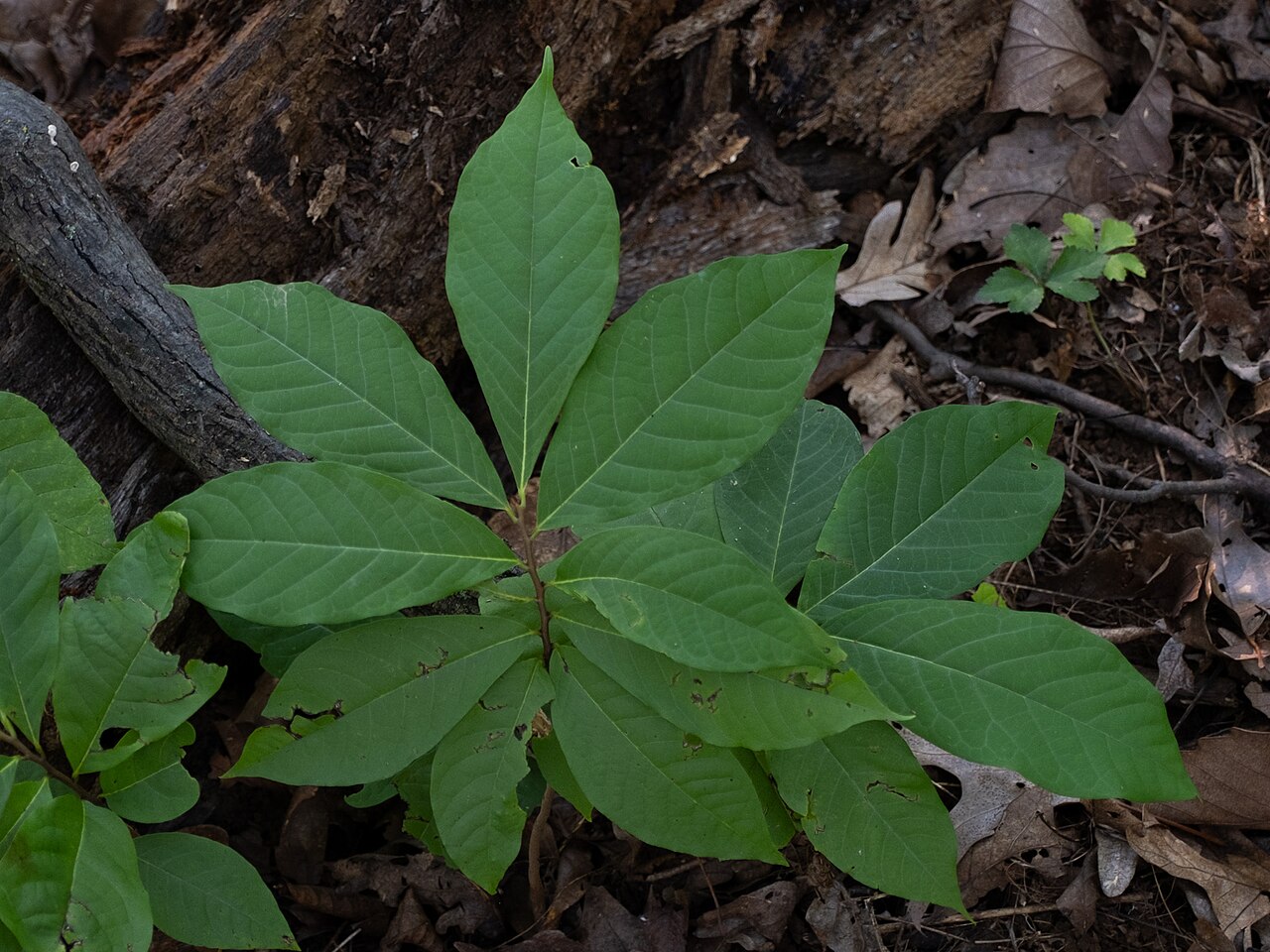
Mature pawpaws can handle full sun if they get enough water, and they fruit best there. Young trees and trees on hot, exposed sites are the ones that scorch. For new trees, our guide to protecting a newly planted pawpaw from sun and water stress covers shade cloth and windbreaks step by step.
Check 5: Think About What Happened to the Roots
Sometimes the water is there, but the roots can’t use it. The Morton Arboretum lists several less obvious causes of scorch: root damage from construction or recent transplanting, soil compaction, restricted root space, poor drainage, and girdling roots.
For pawpaw, root injury is a bigger deal than for many trees. Kentucky State University describes pawpaw roots as fleshy and brittle with very few fine root hairs, which is why the species is difficult to transplant.
Think back over the last year or two:
- Was the tree planted or moved in the last two seasons?
- Was there trenching, a new patio, a fence line, or utility work nearby?
- Do vehicles or foot traffic regularly cross the root zone?
- Was it planted from a pot-bound container without loosening circling roots?
Alabama Extension notes that pawpaw root systems are shallow and advises cultivating cautiously around them. Repeated tilling, edging, or digging bulbs in the root zone can cause the same kind of injury.
Root problems take time to fix. Protect the root zone with mulch instead of turf, keep traffic off it, and water consistently while new roots grow.
Check 6: Look for Salt, Fertilizer, or Chemical Injury
The Morton Arboretum names high concentrations of de-icing salt, fertilizer, or chemicals as other causes of scorch.
- De-icing salt: trees near driveways, sidewalks, or roads where salt or salty snow is piled in winter are at risk.
- Fertilizer: a heavy dose of fertilizer, especially on dry soil, can injure roots. The Morton Arboretum advises against fertilizing trees or the surrounding lawn in summer when soil is dry.
- Herbicides: lawn weed killers can injure trees through drift or root uptake. Alabama Extension warns that systemic herbicides can move into pawpaw through its root suckers. See our guide to pawpaw root suckers for why that matters.
A soil test is worth doing if you suspect a soil problem. Pawpaw grows best in slightly acidic soil around pH 5.5 to 7, according to Kentucky State University and Purdue. Clemson Extension adds that pawpaws grow fine on most soils with adequate calcium, as determined by a soil test.
If your pawpaw grows near a black walnut, you can likely cross that off the list. Alabama Extension notes that pawpaw is not adversely affected by black walnut’s allelopathic chemicals.
Check 7: Rule Out Leaf Spot and Leaf-Feeding Insects
Before settling on scorch, make sure the damage really starts at the edge. Several pawpaw problems can look like browning at a glance.
Fungal leaf spot. Alabama Extension describes pawpaw leaf spot as tan spots with brown borders that turn into dark brown to black lesions, favored when leaves stay wet for long periods. Clemson notes a related disease that causes black spots on leaves in humid climates but doesn’t kill the tree. Spots scattered across the leaf blade, rather than a band along the margin, point to leaf spot.
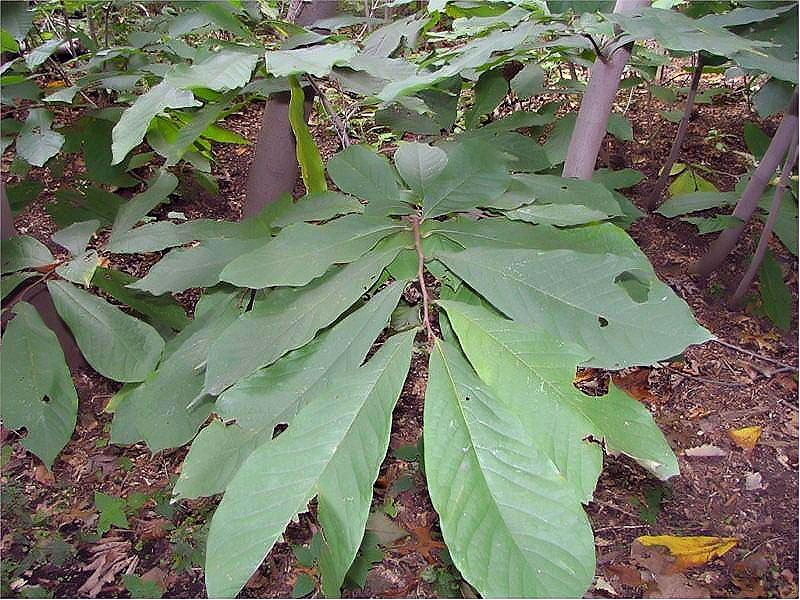
Chewing damage. Zebra swallowtail caterpillars feed on young pawpaw leaves, and Japanese beetles can skeletonize foliage. Missing tissue, holes, or lacy leaves are insect signs, not scorch. Clemson and NC State note that zebra swallowtail feeding rarely harms established trees.
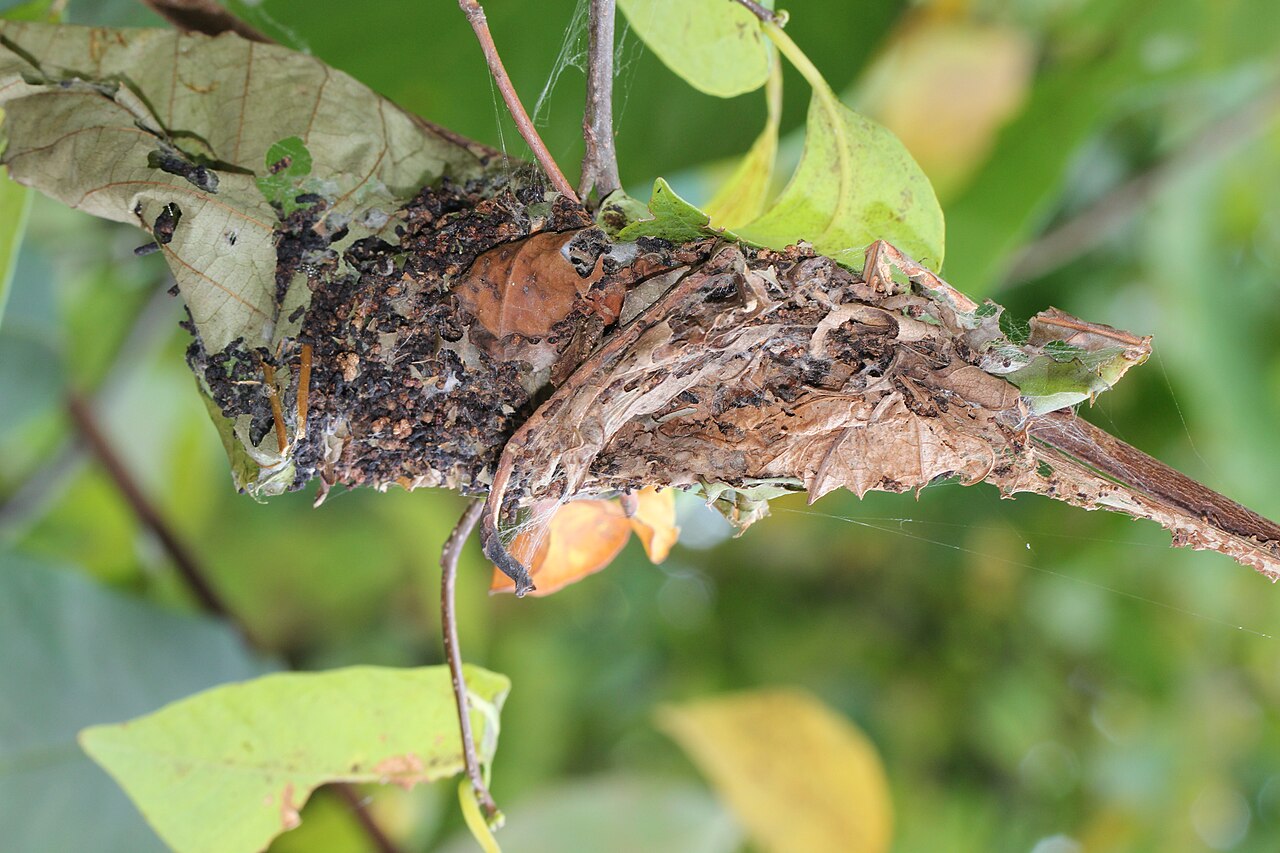
Webworms and leafrollers. Alabama Extension describes the Asimina webworm and pawpaw leafroller, whose larvae tie leaves together with silk and feed inside. The tied leaves eventually die and turn brown. Alabama Extension recommends removing infested parts of the tree.
If you’ve confirmed a pest or disease, hold off on general-purpose sprays. Pawpaw has few serious pests, and Clemson notes there are no fungicides labeled for use on pawpaws. Ask your local extension office before treating.
Troubleshooting at a Glance
| Dry soil at 6 to 8 inches, hot weather | Water slowly and deeply. Add mulch. |
| Young tree, worst on the south or west side | Add shade cloth on the exposed side. |
| Soggy soil, standing water after rain | Stop watering, redirect runoff, improve drainage. |
| Recent planting or digging nearby | Root injury. Water consistently, mulch, protect the root zone. |
| Near salted pavement or freshly fertilized lawn | Salt or fertilizer injury. Flush with deep watering, stop the source. |
| Bordered spots across the leaf | Possible leaf spot. Rake fallen leaves, improve airflow, ask extension. |
| Holes, webbing, or tied leaves | Insects. Prune out webbed clusters; leave swallowtail caterpillars. |
Treat the Site, Not the Leaves
Brown edges won’t turn green again. The goal is to stop new damage, so judge success by the leaves that grow next, not the ones already scorched.
The Morton Arboretum notes that scorch alone is not enough to kill an otherwise healthy plant. Good cultural care that promotes root growth is the treatment.
- Water deeply during dry spells. A slow soak over the root zone, repeated when the soil a few inches down is dry.
- Mulch. The Morton Arboretum recommends 3 to 4 inches of organic mulch such as woodchips, leaf mold, or bark, kept off the trunk. Our guide to mulch choices for native beds compares materials.
- Add temporary shade or a windbreak for young trees on exposed sites.
- Fix the drainage if the soil stays wet.
- Stop the source of salt, fertilizer, or herbicide.
- Skip summer fertilizer. Feed only based on a soil test, and only in early spring.
Leave scorched leaves on the tree. They still shade the branches and do some work until they drop in fall.
If leaves are yellowing rather than browning, the causes overlap but aren’t identical. Our guide to troubleshooting yellowing leaves covers nutrient and watering patterns.
A Season-by-Season Plan
- Early spring: refresh mulch, check the soil test, and apply any needed fertilizer before growth takes off. Redirect downspouts if drainage was an issue.
- Late spring: put up shade cloth on young trees before the first heat wave. Check new leaves for webbing or leafroller activity.
- Summer: check soil moisture weekly in dry weather and water deeply. Watch the sunny and windy sides of the tree for early edge browning.
- Fall: expect yellow fall color. Rake and remove leaves with heavy leaf spot; leave healthy ones as mulch.
- Winter: keep de-icing salt and salty snow piles away from the root zone.
📋 More on this plant: read the full Paw Paw (Asimina triloba) profile, or see it in our native plant lists for Georgia, Alabama & Mississippi, Delaware, Southern New Jersey & Long Island, Illinois, Iowa & Missouri, Ohio & Indiana, Maryland, Virginia & West Virginia, and North Carolina & South Carolina.
Frequently Asked Questions
Why are my pawpaw leaves turning brown on the edges?
Most often it’s leaf scorch from dry soil, strong sun, wind, or reflected heat, especially on young trees. Damaged roots, poor drainage, and salt or fertilizer injury cause the same symptom. Check soil moisture at root depth first.
Will brown pawpaw leaves turn green again?
No. Scorched tissue is dead. Fix the cause, and judge recovery by the new leaves that follow.
Can pawpaw grow in full sun without scorching?
Established pawpaws can, if they get enough water, and they fruit best in full sun. Young trees are much more sensitive and usually need partial shade for their first year or two.
Should I spray a fungicide on browning pawpaw leaves?
Not for edge browning, which is usually environmental. Clemson Extension notes there are no fungicides labeled for pawpaw. If you see spots with dark borders, ask your local extension office to confirm the cause.
Is it a bad sign if my pawpaw drops some brown leaves in summer?
Some leaf drop during severe drought is a stress response. Water deeply, mulch, and watch for healthy new growth. If the whole tree wilts while the soil is moist, look closely at drainage and the roots.
Sources
- The Morton Arboretum, Leaf Scorch: causes, symptoms, exposure patterns, and treatment.
- Alabama Cooperative Extension System, Pawpaw Production Guide: water needs, shallow roots, berms, black walnut tolerance, leaf spot, webworm, leafroller, herbicide uptake.
- Clemson Cooperative Extension HGIC, Pawpaw: soil and calcium, leaf diseases, no labeled fungicides, insect pests.
- Kentucky State University, Pawpaw Planting Guide: soil pH, drainage, wind protection, root system, young-tree moisture and shade.
- Purdue Extension, HO-220: Growing Pawpaws: waterlogging, full sun vs. seedlings, wind protection.
- North Carolina Extension Gardener Plant Toolbox, Asimina triloba: fall color, zebra swallowtail feeding.

