Managing Black Chokeberry Suckers Along a Path or Lawn
Last updated: November 5, 2026
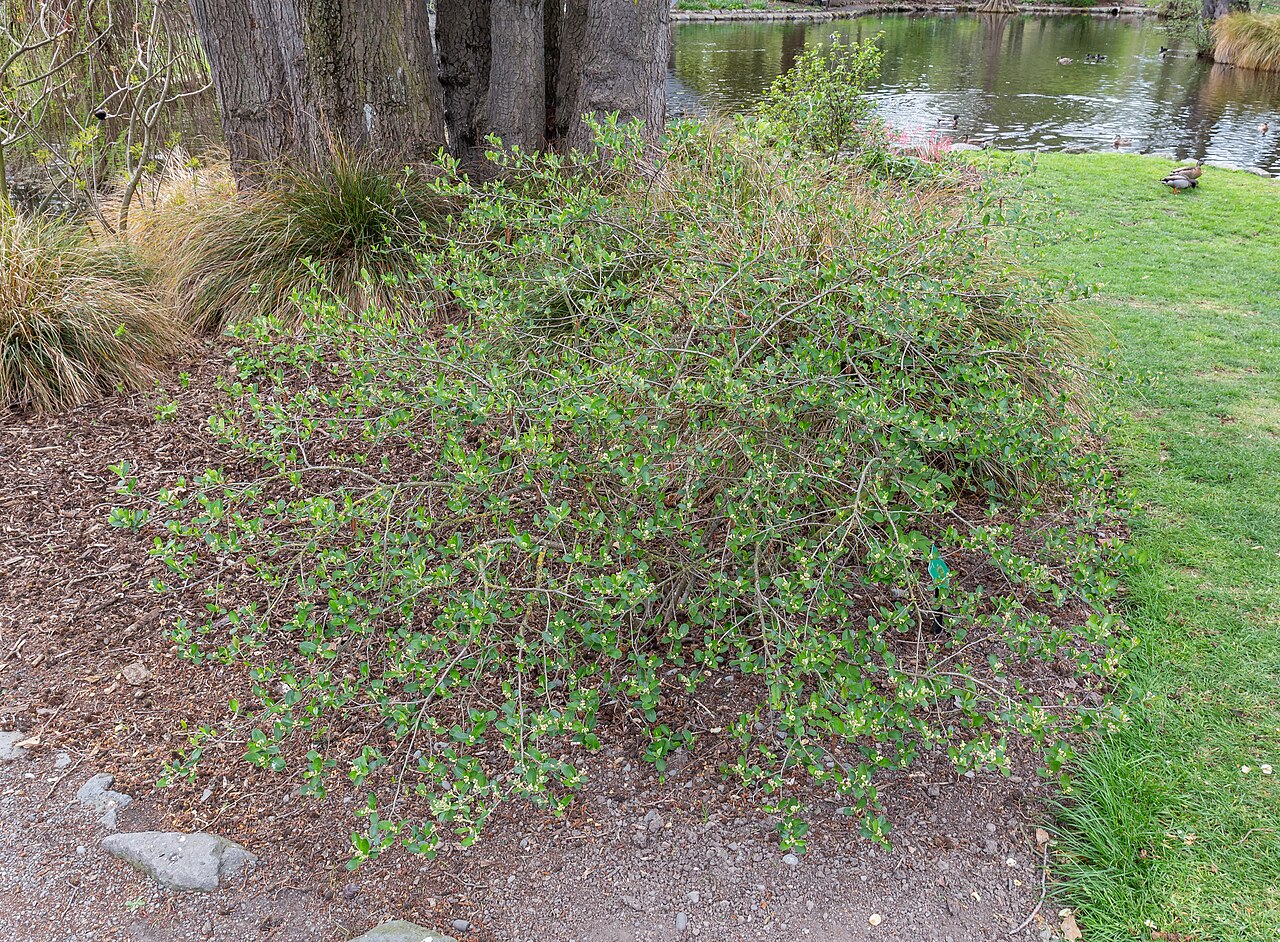
Plant one black chokeberry and, a few years later, you may find a dozen. New shoots pop up in the mulch, at the edge of the lawn, and between the stepping stones of a nearby path.
That spreading habit is a feature in a wildlife thicket or on a slope. Next to a walkway or a neat lawn edge, it becomes a chore.
This guide explains where those shoots come from and how to keep them on your side of the line. It focuses on mechanical methods: cutting, mowing, mulch buffers, and edging, with no chemicals needed.
The Short Answer
- Why it spreads: black chokeberry forms rhizomes and sends up suckers to build a colony.
- Best control: cut unwanted shoots at or just below the soil line, every time they appear.
- In lawn: regular mowing keeps stray shoots down. Keep the mower off the main canes.
- Along a path: leave a mulched buffer between the clump and the edge so suckers are easy to spot and remove.
- Edging can slow shallow spread, but expect to check along it each year.
- Avoid spraying suckers with weed killer. They’re attached to the parent plant.
How Black Chokeberry Spreads
Black chokeberry is a multi-stemmed shrub that naturally grows into a small colony. Mark Brand of the University of Connecticut writes that chokeberries readily form rhizomes and sucker to form colonies, though in a non-aggressive manner.
Other sources put it more bluntly. The North Carolina Extension Gardener Plant Toolbox says black chokeberry “spreads freely and suckers profusely,” and the Lady Bird Johnson Wildflower Center notes the same.
Not every planting behaves the same, though. The USDA plant guide notes that some references report frequent suckering, while very little suckering was seen in chokeberry windbreaks in the Northern Plains. The guide also points out that some new shoots around established plants come from layering, where low branches root where they touch the ground.
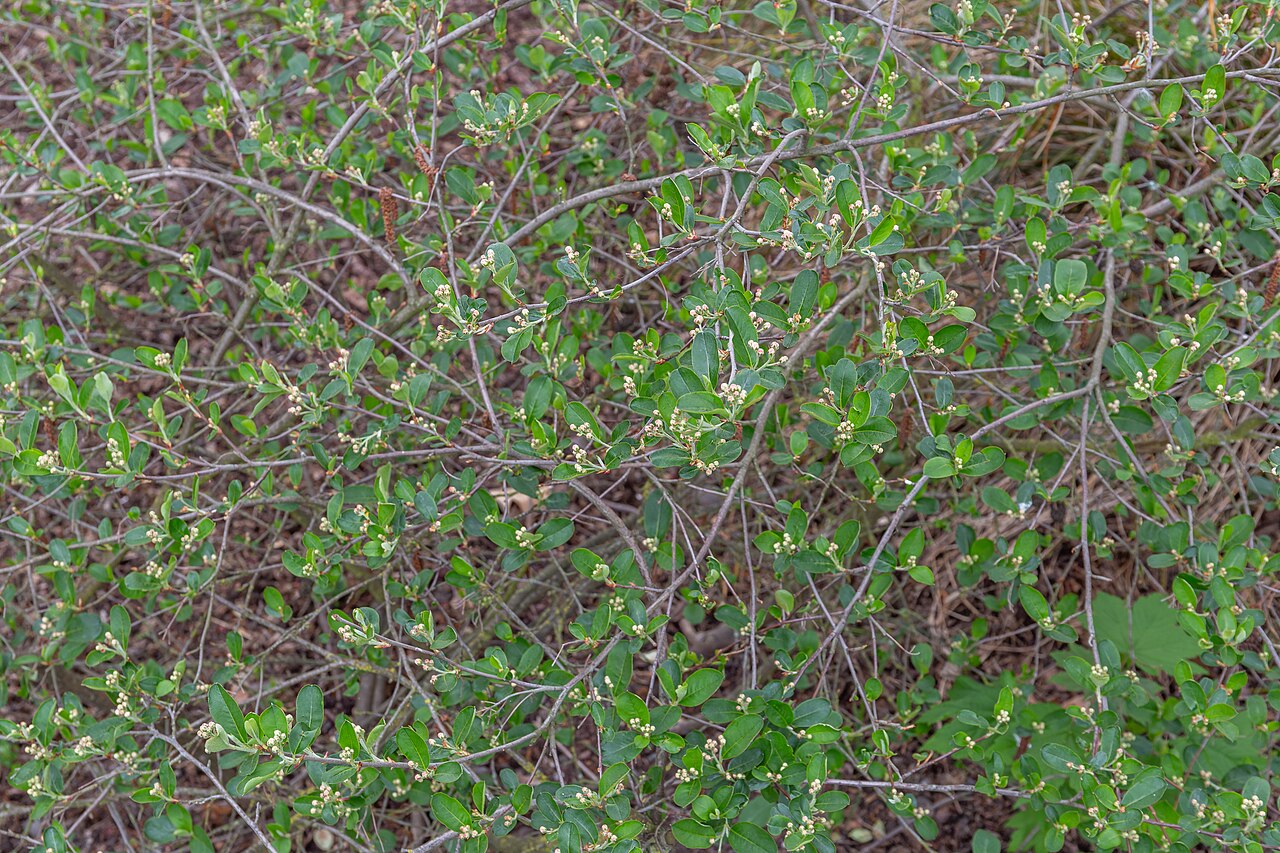
The practical upshot: expect some new shoots around the base every year, and more where soil is loose, moist, and mulched.
Where the New Shoots Come From
| Basal canes | Come up from the crown, inside the clump. These are the shrub’s replacement wood. Keep the best ones. |
| Root suckers | Come up from spreading roots or rhizomes, often some distance out. These are the ones that reach paths and lawns. |
| Layered stems | Low branches that rooted where they touched the soil. Cut the connecting branch or lift it off the ground. |
Step 1: Decide Where Spread Is Welcome
Before you cut anything, draw a mental line. Where can the clump grow, and where must it stop?
Many gardeners find it helps to think in zones:
- Keep zone: the footprint you want the shrub to fill. New canes here are welcome.
- Buffer zone: a strip of mulch or groundcover between the shrub and the hard edge. Shoots here get removed.
- No-go zone: the path, lawn, or neighboring bed. Shoots here get cut or mowed every time.
The Morton Arboretum suggests planting black chokeberry toward the back of the border, partly because the plants tend to sucker. If you’re planting new, give it room. If it’s already crowding a path, the steps below will help.
Step 2: Find Where Each Shoot Starts
Pull back the mulch at the base of a stray shoot and follow it down a few inches. You’ll usually find one of three things.
A shoot rising from a horizontal root or rhizome is a sucker. A shoot rising from a low branch lying along the ground is a layered stem. A shoot coming straight from the crown is a basal cane.
Knowing which you’re dealing with tells you where to cut. Suckers and layers are cut at their connection point. Basal canes are managed by thinning, as described in our staged pruning plan for overgrown black chokeberry.
Step 3: Cut Suckers at or Just Below the Soil
University of Minnesota Extension advises removing suckers that come up from the roots. The Morton Arboretum recommends pruning out unwanted suckers to control black chokeberry’s size.
The technique is simple:
- Pull back mulch or soil to expose where the shoot meets the root.
- Cut it with sharp hand pruners as low as you can, at the root if possible.
- Replace the mulch.
Cutting at the soil line, rather than a few inches up, leaves no stub to resprout a cluster of new shoots. Expect some to come back anyway. Each cut weakens that section of root over time.
Small suckers are much easier than big ones. A walk along the edge once in late winter and again in early summer catches most of them while they’re still pencil-thin.
For tool care and clean cuts, see our guide on how to prune trees and shrubs.
Step 4: Let the Mower Handle Shoots in the Lawn
Shoots that come up in turf are the easiest to manage. Regular mowing cuts them off before they can grow into canes.
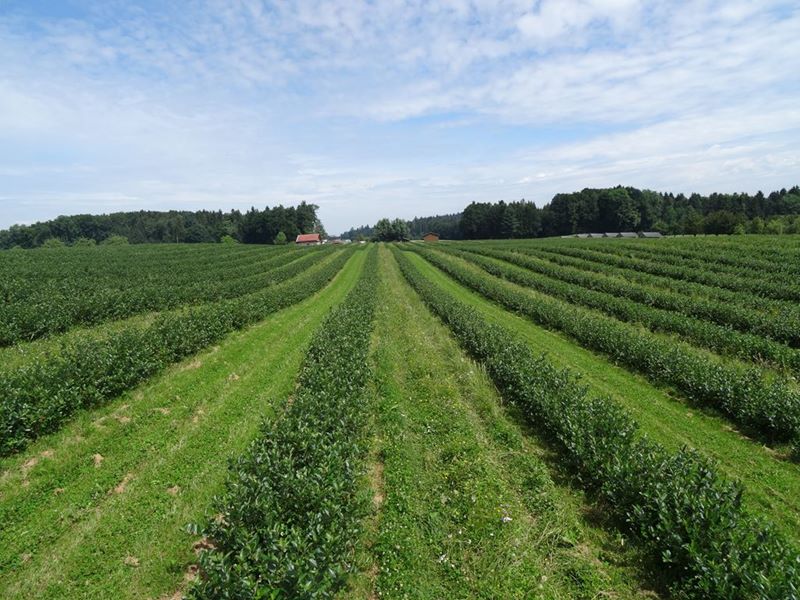
This works on the same idea the USDA plant guide describes for farm plantings, where shallow cultivation can stop the spread of shoots and suckers. Repeatedly removing the top growth keeps the root from building a new cane.
Be careful near the shrub itself. Iowa State University Extension warns that string trimmers and mowers used under aronia can damage the canes, costing fruit and leaving the plant open to disease.
The cleanest setup is a mulched ring around the shrub with the lawn beyond it. Mow along the outer edge of the mulch, never into it, and hand-cut anything inside the ring.
Step 5: Build a Buffer Along Paths
Paths are trickier than lawns, because you can’t mow gravel or pavers. A buffer strip between the shrub and the path gives you room to work.
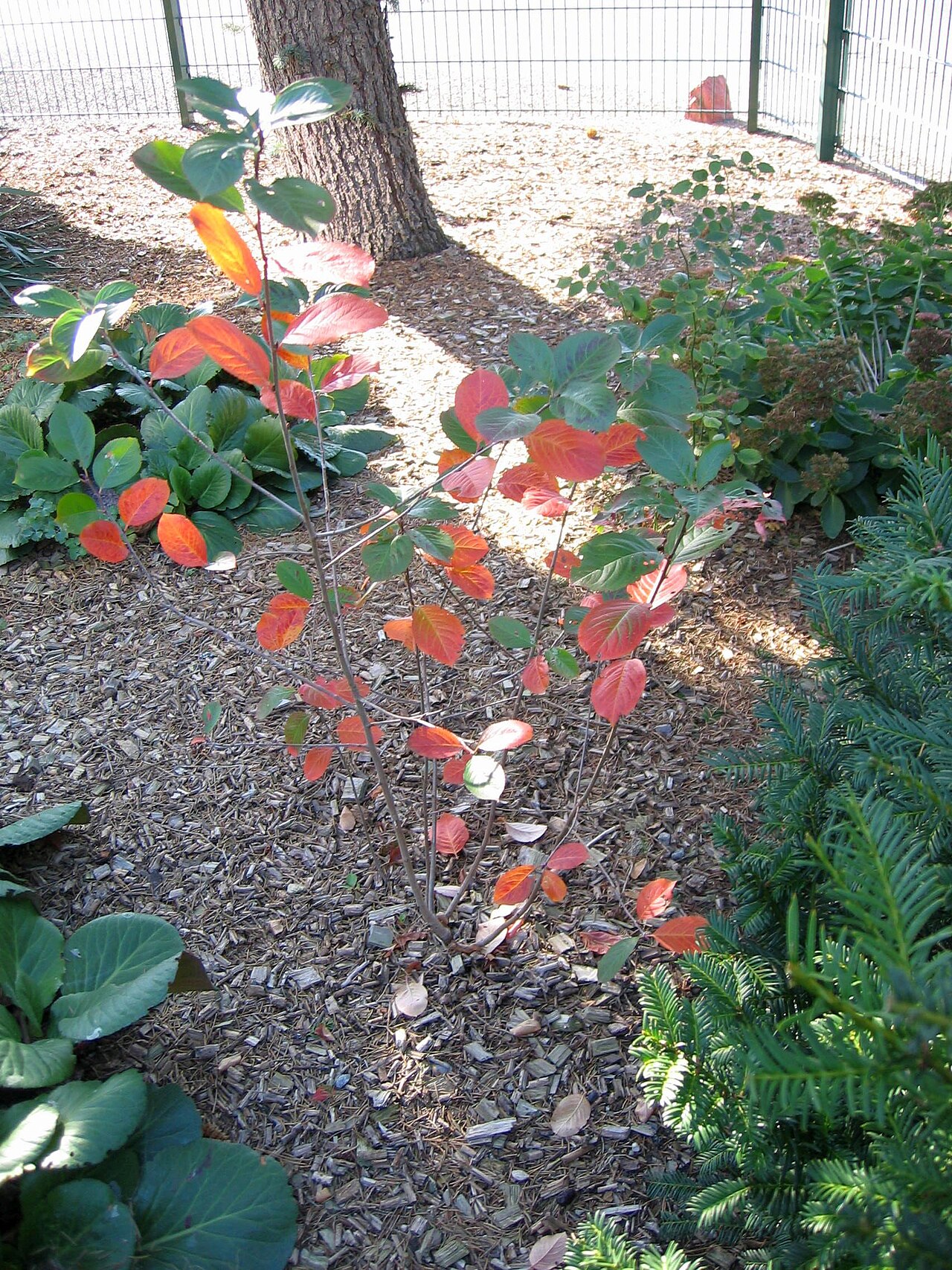
Mulch is the simplest buffer. Suckers stand out against bare wood chips, and they pull or cut easily in loose mulch. Our guide to mulching techniques for native gardens covers depth and keeping mulch off the stems.
Canes leaning into the path are a separate issue from suckers. Remove the leaning cane at the base instead of trimming its tip. Shearing the path side flat removes the shoot tips, where next year’s flowers form.
Step 6: Consider Edging, With Realistic Expectations
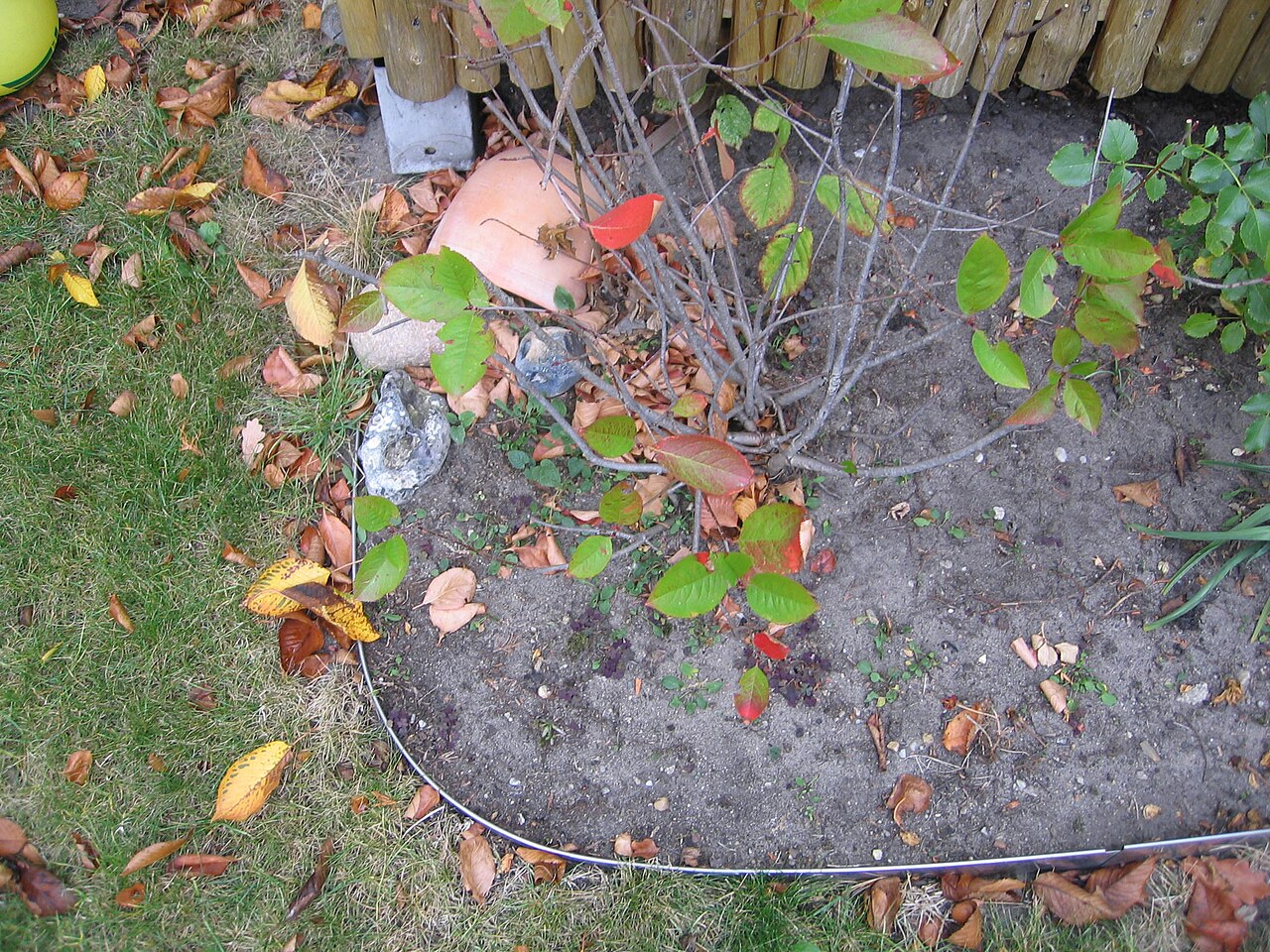
A solid lawn or bed edging, like the one in the photo above, gives a clear line and keeps mulch and grass apart. It can also slow shallow roots and make escapes obvious.
We couldn’t find published research on root barriers for black chokeberry specifically. Treat edging as a helpful line to work along, not a guarantee. Shoots may still come up just outside it, so walk the edge each season.
If you install edging next to an established clump, avoid slicing through the main root zone right beside the canes. Work at the outer edge of the planting.
Step 7: Skip the Weed Killer
It’s tempting to spray suckers in a lawn or path. Don’t.
Root suckers are part of the same plant. A product that moves through the plant can travel from the sucker back toward the parent. Because suckers share the parent’s root system, cutting and mowing are the safer tools. If you’re considering any pesticide near a shrub you want to keep, read the full label first and ask your local extension office.
Step 8: Put the Extra Shoots to Use
A sucker dug up with a good piece of root attached can become a new plant. Brand notes that chokeberries transplant and establish easily, even with modest aftercare.
Dig in early spring or fall, keep as much root as you can, and replant at the same depth in a new spot. Water through the first dry spells.
Or let the colony do what it does best somewhere else. A spreading clump of chokeberry is excellent cover for birds at the edge of a yard. See our guides to creating a backyard habitat and native hedgerows for birds for ideas.
Its close relative red chokeberry also suckers, according to Brand, so switching species won’t solve a spreading problem.
Quick Reference
| Shoot inside the clump | Keep if well placed. Thin extras during annual pruning. |
| Shoot in the mulch buffer | Pull back mulch and cut at the root. |
| Shoot in the lawn | Mow regularly. Keep the mower off the main canes. |
| Shoot between pavers | Cut as low as possible, every time it appears. |
| Low branch rooting | Cut the branch or lift it off the soil. |
| Cane leaning over the path | Remove the whole cane at the base. Don’t shear the side. |
A Season-by-Season Plan
- Late winter: walk the edge and cut any suckers outside the keep zone. Do your annual cane thinning at the same time.
- Spring: top up mulch in the buffer zone. Dig and move any suckers you want to keep as new plants.
- Early summer: make a second pass along paths and edging while new shoots are still small.
- Summer: mow lawn edges regularly. Keep string trimmers away from the canes.
- Fall: note where shoots came up this year. That’s where next year’s will appear too.
If the clump has also grown tall and woody, combine sucker control with renovation. And if fewer berries are your other complaint, our checklist for black chokeberry not fruiting covers light, pruning, and bloom weather.
📋 More on this plant: read the full Black Chokeberry (Aronia melanocarpa) profile, or see it in our native plant lists for New Hampshire, Maine & Vermont, New York, Pennsylvania & Northern New Jersey, Maryland, Virginia & West Virginia, North Carolina & South Carolina, and Ohio & Indiana.
Frequently Asked Questions
Is black chokeberry invasive?
No. It’s native to eastern North America and spreads by suckers to form colonies. Brand describes that spread as non-aggressive, but it can still outgrow a small space.
How do I stop black chokeberry from spreading into my lawn?
Keep a mulched ring around the shrub, mow along its outer edge, and cut any shoots inside the ring at the root. Regular mowing keeps stray shoots in the turf from becoming canes.
Can I pull black chokeberry suckers instead of cutting them?
Small shoots in loose mulch sometimes pull out with a bit of root. Larger ones usually snap at the surface and resprout, so cutting at or below the soil line is more reliable.
Will a root barrier stop black chokeberry suckers?
Edging can slow shallow spread and gives you a clear line to maintain. We found no published research on barriers for this species, so plan to check along the edge each year.
Can I transplant black chokeberry suckers?
Yes. Dig them with as much root as possible in early spring or fall and keep them watered. Chokeberries transplant and establish easily, according to Brand.
Sources
- Mark Brand, Aronia: Native Shrubs With Untapped Potential, Arnoldia 67(3), 2010: rhizomes, suckering, colonies, and ease of transplanting.
- North Carolina Extension Gardener Plant Toolbox, Aronia melanocarpa: spreading and suckering habit.
- USDA NRCS, Black Chokeberry Plant Guide: layering, variable suckering, and cultivation to stop spread.
- Lady Bird Johnson Wildflower Center, Aronia melanocarpa: suckering habit and growing conditions.
- The Morton Arboretum, Black chokeberry: placement in the border and pruning out suckers.
- University of Minnesota Extension, Pruning trees and shrubs: removing suckers from the roots.
- Iowa State University Extension, Growing Aronia in Iowa: mower and trimmer damage to canes.