New England Aster Winter Cleanup: What to Leave and What to Remove
Last updated: November 5, 2026
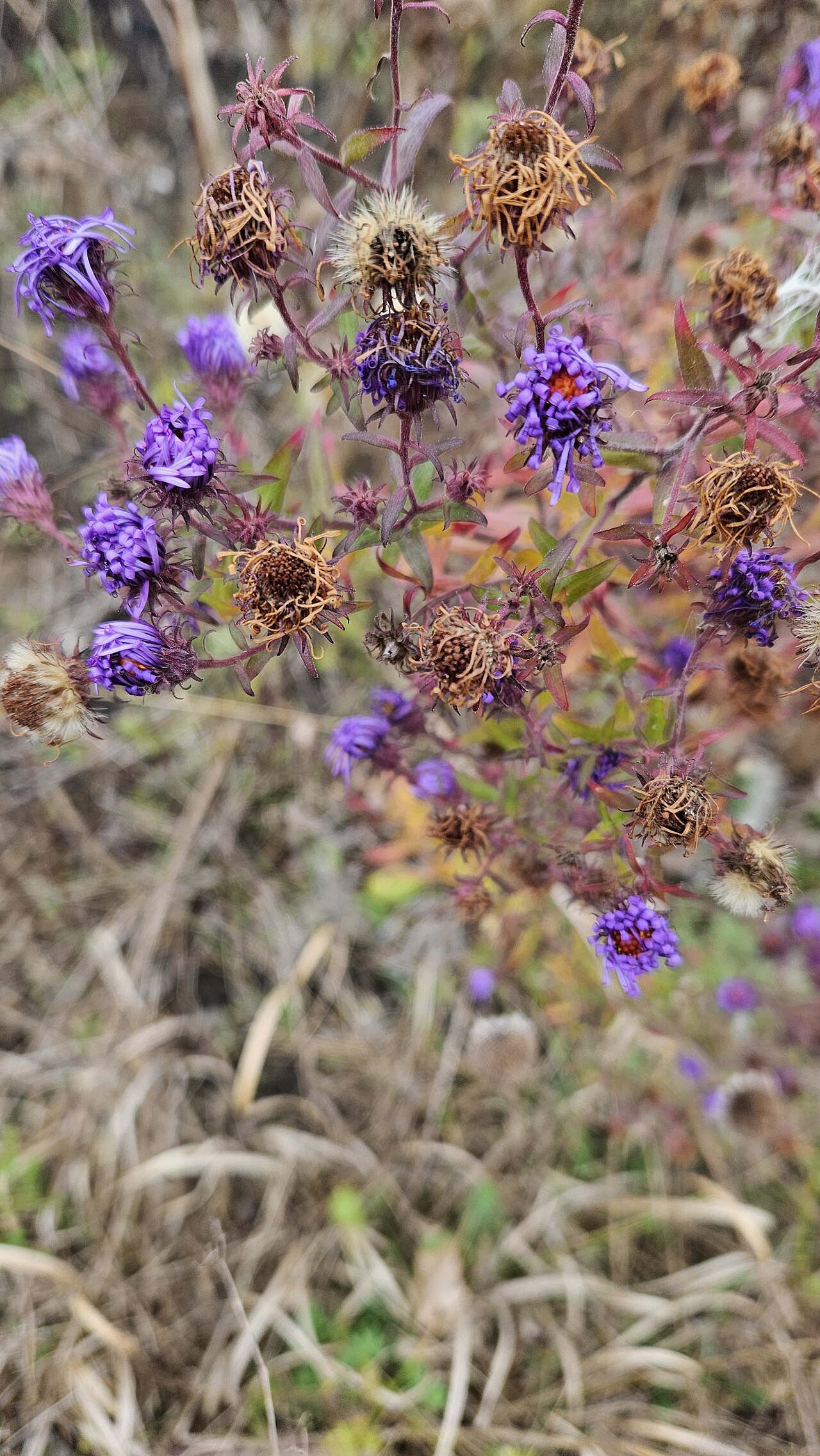
Your New England aster has finished blooming. What’s left is a tangle of brown stems, fuzzy seed heads, and maybe some leaves with white powder on them.
The old habit is to cut it all to the ground and haul it away in fall. For this plant, that throws away food for birds and shelter for insects, and it doesn’t help the aster.
A better approach is selective. Leave most of the plant standing through winter, remove the few things that cause problems, and do the real cutback in spring. Here’s how to decide what goes and what stays.
The Short Answer
For New England aster (Symphyotrichum novae-angliae) after bloom:
- Leave: healthy stems, seed heads, and the leaves that fall around the base.
- Remove in fall: foliage heavily coated with powdery mildew or covered in leaf spots or rust.
- Remove completely: any plant diagnosed with aster yellows.
- Optional: seed heads near beds where self-sown seedlings are a problem, and stems flopped over paths.
- Cut back the rest in spring, once the weather has warmed and new shoots appear.
What the Plant Is Doing Over Winter
New England aster is a perennial that dies back to its crown each winter. The above-ground stems are finished once frost ends the bloom, and new shoots come from the crown in spring.
What does change is what those stems do for wildlife. The seeds ripen in fluffy heads that hold on into winter. Wikipedia notes the seeds are an important fall and winter food source for songbirds.
The hollow and pithy stems matter too. The Xerces Society notes that many native bees nest inside plant stems, and that leaving perennial stems standing provides shelter for insects that nest in them.
Leave or Remove at a Glance
| Healthy stems | Leave until spring. Shelter for insects, perches for birds. |
| Seed heads | Leave most of them. Cut a few only where seedlings are unwanted. |
| Fallen leaves at the base | Leave as winter mulch, unless they’re diseased. |
| Mildewed or spotted foliage | Remove in fall and bag or bury it. |
| Plants with aster yellows | Remove the whole plant, roots and all. |
| Stems blocking paths | Trim just those stems. Leave the rest. |
Step 1: Leave Healthy Stems Standing
Walk the plant and look at the stems. If they’re firm and the foliage is simply brown and dry, they can stay.
Standing stems do several jobs over winter. They hold seed heads up where birds can reach them. They catch snow and fallen leaves around the crown. And they give stem-nesting insects a place to spend the winter.
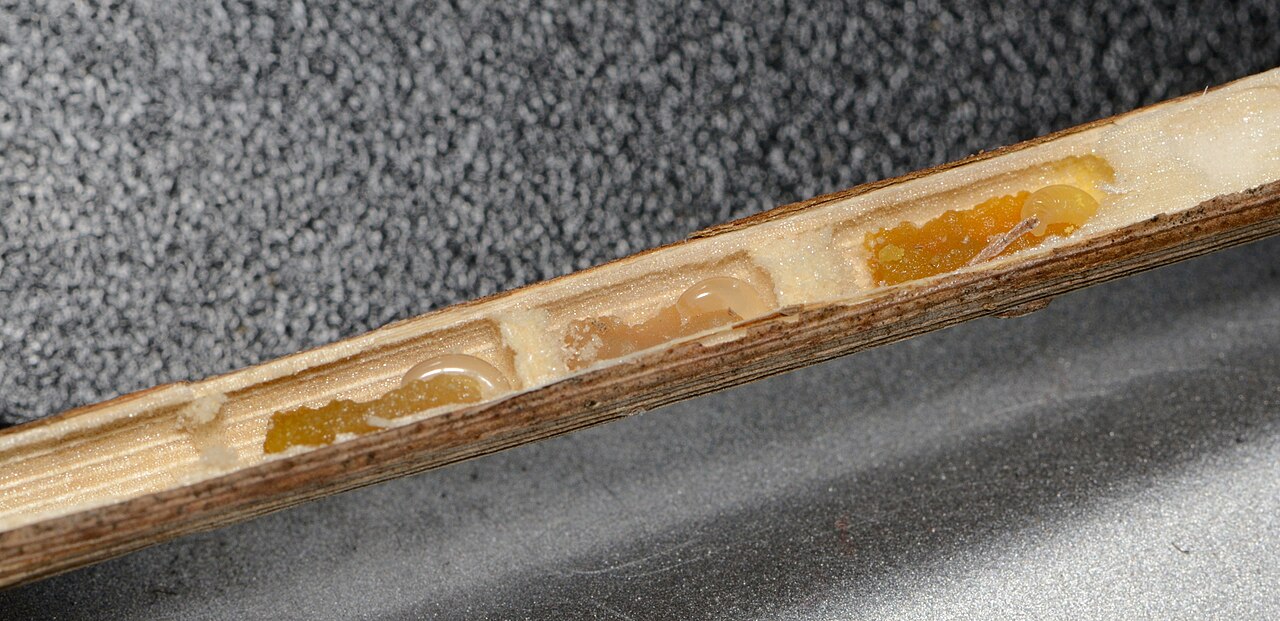
The Xerces Society notes that small carpenter bees often carve their nests in dead raspberry canes or wildflower stems. Cut stems in fall and haul them off, and any insects already settled inside go with them.
If tidiness is a concern, trim only the stems that lean over walkways or block a view. Wisconsin Extension’s horticulture staff advise cutting dead aster stems back to the ground in late winter. Waiting until spring, as covered in Step 5, is even better for the insects inside.
Step 2: Keep the Seed Heads for Birds
New England aster produces masses of small seeds, each with a tuft of hairs that carries it on the wind.
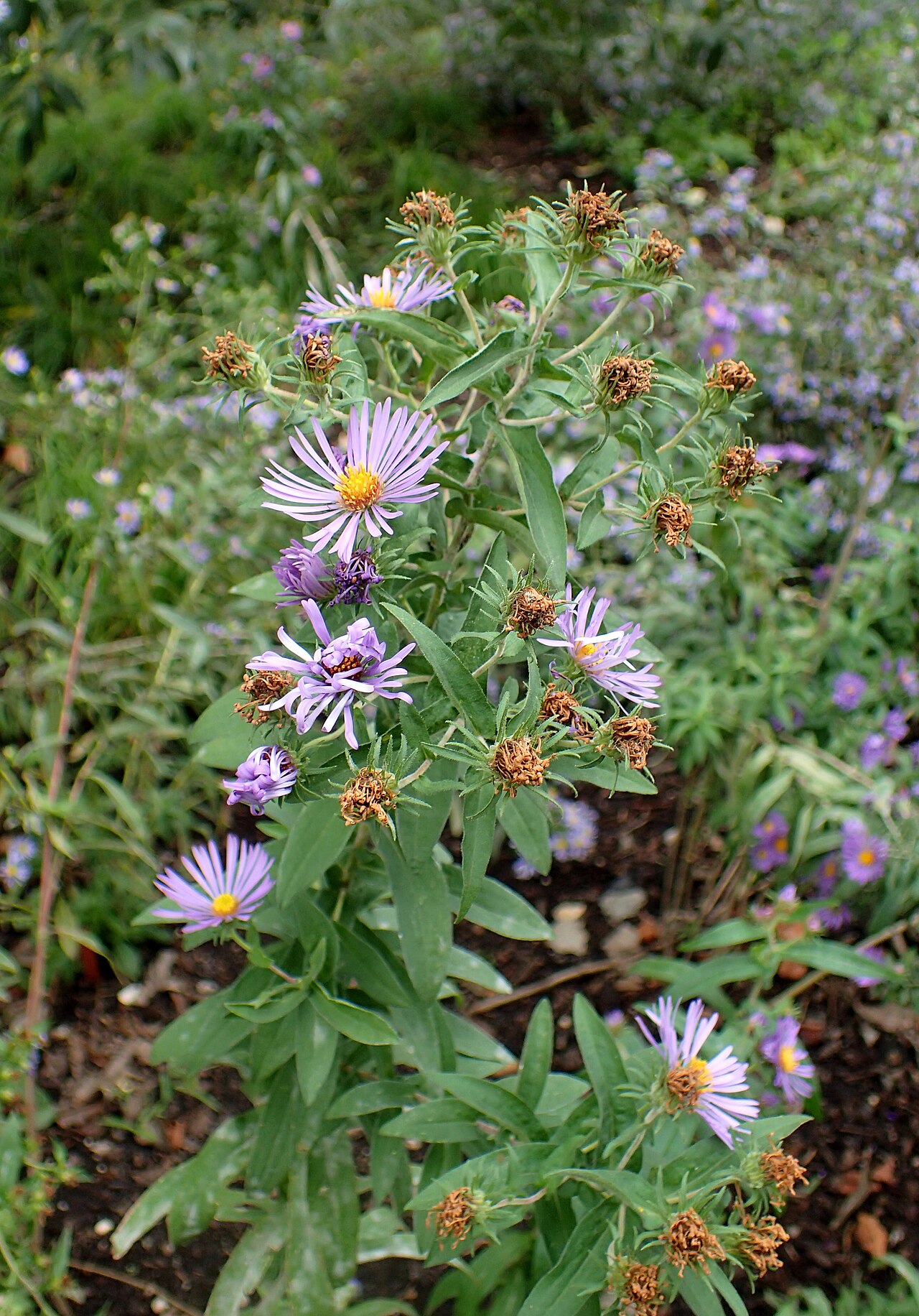
The Lady Bird Johnson Wildflower Center notes the seed heads stay intact for several weeks after the first frost. The Xerces Society points out that seed heads left on perennials feed goldfinches and other birds.
Leaving them is the simplest way to turn your aster into winter bird habitat. Our guide to attracting songbirds with native plants shows how asters fit into a planting that feeds birds year-round.
The one exception: if self-sown seedlings are crowding nearby beds, cut seed heads only on the stems closest to those beds. Our guide to New England aster crowding its neighbors covers seedling control in more detail.
Step 3: Remove Diseased Foliage
This is where fall cleanup earns its place. New England aster often gets powdery mildew late in the season. The Illinois Wildflowers site notes that it commonly appears during cool, moist fall weather.
Powdery mildew fungi survive in plant debris. Wisconsin Extension recommends removing and destroying infected plant debris at the end of the growing season, because it can serve as a source of spores the next year. Burn it where allowed, bury it, or hot-compost it.
Leaf spots and rust also turn up on this species. Treat heavily spotted or rusty leaves the same way.
You don’t need to strip every leaf. Focus on:
- Leaves coated in white powder or covered in dark spots.
- Diseased leaves that have dropped into a pile around the base.
- Plants with severe problems for several years in a row.
The stems themselves can often stay. If the browning started from the bottom of the plant in summer, our guide to New England aster leaves drying from the bottom helps sort normal leaf loss from disease.
Step 4: Pull Any Plant With Aster Yellows
Aster yellows is a disease that leaves flowers green, twisted, or leafy and stems yellowish or stunted. It’s caused by a phytoplasma spread by the aster leafhopper.
University of Minnesota Extension explains that the pathogen doesn’t survive in dead plant debris but does survive in the crown and roots of infected perennials. That’s why cutting the stems is not enough. Wisconsin Extension says infected plants should be removed promptly, since there is no cure.
If you’ve confirmed aster yellows, dig out the whole plant, including the crown and roots. UMN Extension suggests burying it completely or burning it where local rules allow. Don’t leave a living piece behind.
If you’re not sure, have it diagnosed by your local Extension office before removing a healthy-looking clump.
Step 5: Leave the Leaves, Then Wait for Spring
Healthy leaves that fall around the aster and its neighbors can stay right where they are. The Xerces Society notes that a layer of leaves insulates many overwintering insects and perennial crowns through the cold months.
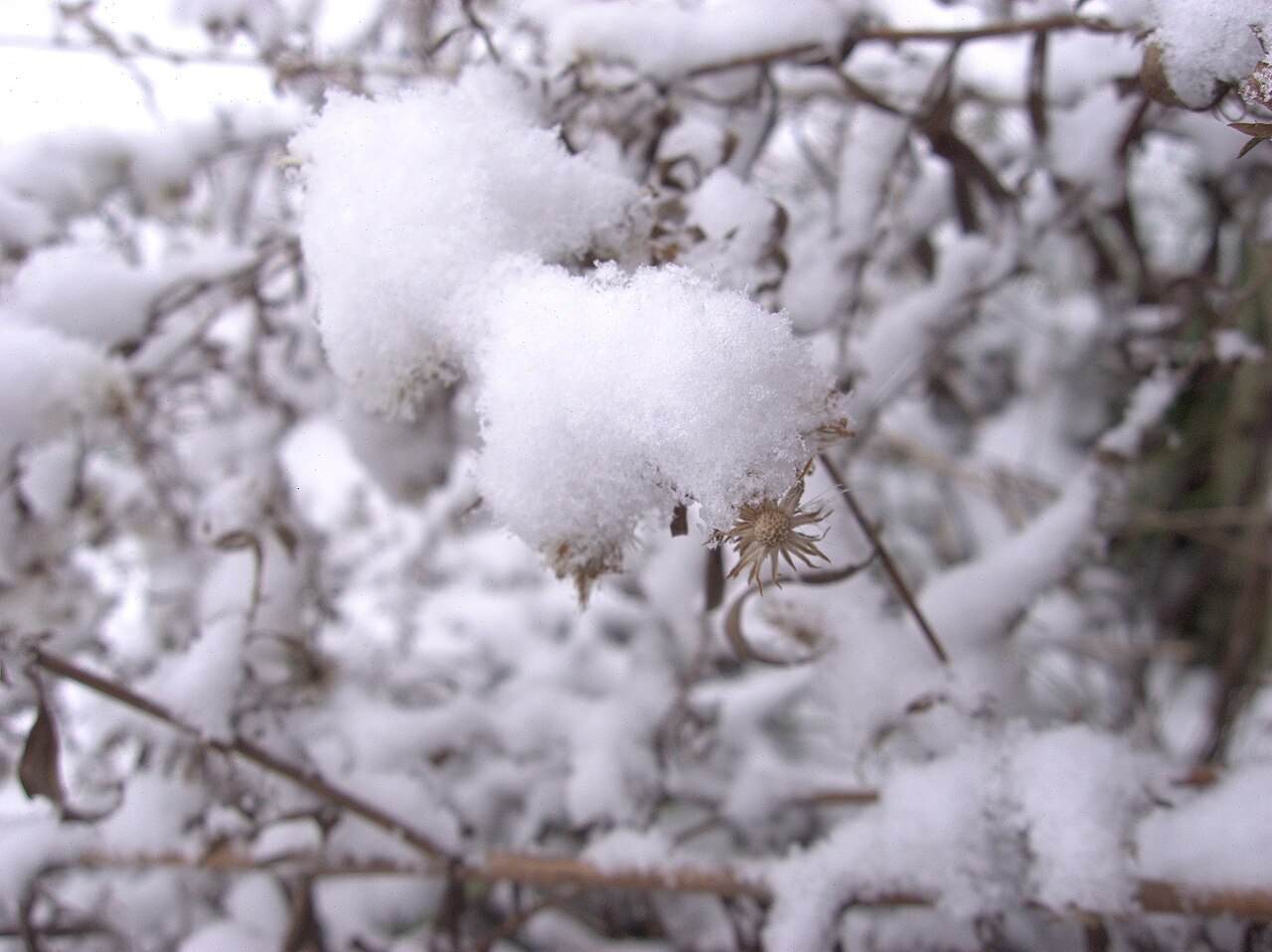
The Xerces Society advises raking leaves into beds rather than removing them, and avoiding shredding, which can destroy eggs, caterpillars, and cocoons. If you have extra leaves, a pile left to break down slowly becomes valuable leaf mold. See our guide to leaf mold benefits for gardens.
Step 6: Do the Real Cutback in Spring
Timing matters more than technique. The Xerces Society suggests waiting until spring is well underway before clearing garden debris.
Its practical cues are easy to remember:
- You’ve put away the winter coats and snow shovel.
- Nights are warm enough that you’d plant tomatoes.
- The lawn is growing fast enough to need mowing.
- Apple and pear trees have finished blooming.
For northern states, Xerces suggests mid-to-late April as the earliest time to cut back perennials. Some bees don’t emerge until late May, so later is better if you can stand the look.
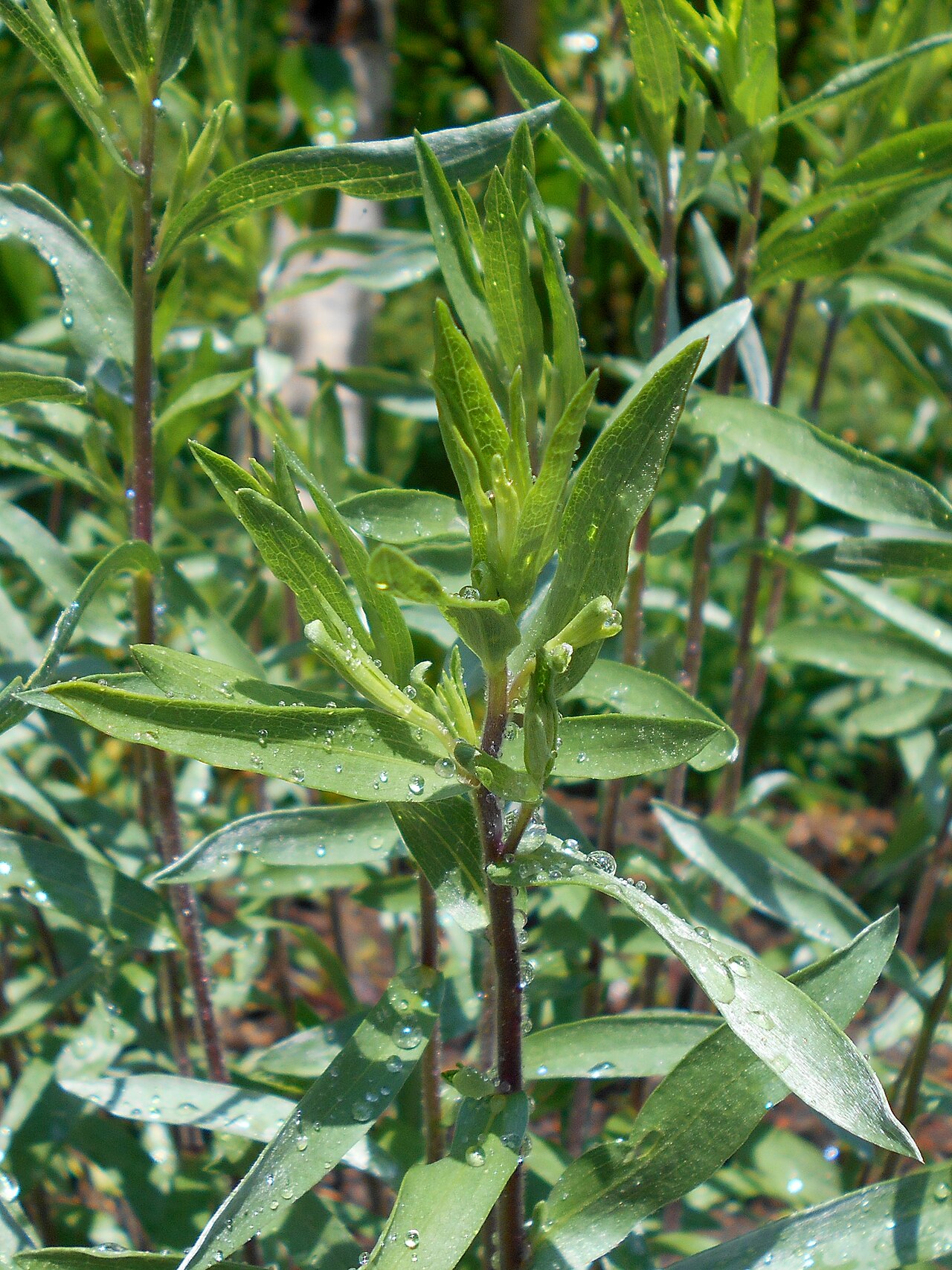
When it’s time, cut the old stems near the ground with sharp pruners. Watch for new shoots at the base and avoid cutting them.
Don’t bag the old stems right away. Lay them loosely in a back corner or at the edge of a bed for a few more weeks so late-emerging insects can still get out. Another option is to chop them into pieces and leave them as rough mulch under other plants.
Spring is also the time to divide the clump if it has gotten too big. Doing both jobs together saves a trip.
Quick Reference
| Healthy plant, fall | Leave everything standing. |
| White powder on leaves | Strip and dispose of infected foliage. Stems can stay. |
| Green, distorted flowers this year | Possible aster yellows. Confirm, then remove the whole plant. |
| Too many seedlings last spring | Cut seed heads on stems closest to the affected bed only. |
| Stems over a path or flattened by snow | Trim just those stems. |
| Spring, after apple bloom | Cut old stems near the ground. Leave them nearby for a few weeks. |
What to Do This Week
If it’s fall and the plant looks healthy: do nothing. Enjoy the seed heads and watch for finches.
If it’s fall and the leaves are mildewed or spotted: pull off the worst foliage and gather diseased leaves from the ground. Dispose of them away from the garden.
If it’s midwinter: only clear stems that are blocking paths or were flattened by heavy snow.
If it’s spring and the cues above line up: cut old stems near the ground, leave them nearby for a while, and divide the clump if needed.
A Season-by-Season Cleanup Plan
- After bloom (fall): remove diseased foliage and any plants with aster yellows. Leave everything else standing.
- Early winter: rake healthy leaves into the bed around the aster. Don’t shred them.
- Midwinter: leave stems and seed heads for birds. Trim only what blocks paths.
- Mid to late spring: once warm weather settles in, cut old stems near the ground. Leave the cuttings in a corner for a few weeks.
- Late spring: divide crowded clumps and pull unwanted seedlings while they’re small.
📋 More on this plant: read the full New England Aster (Aster novae-angliae) profile, or see it in our native plant lists for New Hampshire, Maine & Vermont, Connecticut, Massachusetts & Rhode Island, New York, Pennsylvania & Northern New Jersey, Maryland, Virginia & West Virginia, Ohio & Indiana, Michigan, Wisconsin & Eastern Minnesota, Illinois, Iowa & Missouri, North Dakota, South Dakota & Western Minnesota, and Nebraska, Kansas & Eastern Colorado.
Frequently Asked Questions
Should I cut back New England aster in the fall?
Not usually. Leaving healthy stems and seed heads through winter feeds birds and shelters stem-nesting insects. Do the main cutback in spring, and remove only diseased foliage in fall.
When is the best time to cut back New England aster?
In spring, once the weather has warmed. The Xerces Society suggests mid-to-late April at the earliest in northern states, and later is better for bees that emerge in late May.
Do birds really eat New England aster seeds?
Yes. The seeds are an important fall and winter food for songbirds, and the Xerces Society notes that seed heads left on perennials feed goldfinches and other birds.
What should I do with aster leaves that have powdery mildew?
Remove and dispose of them at the end of the season. Wisconsin Extension recommends burning where allowed, burying, or hot-composting infected debris, since it can carry spores into the next year.
How short should I cut New England aster stems in spring?
Cut them near the ground, taking care not to damage new shoots at the base. Lay the cut stems nearby for a few weeks before composting so late-emerging insects can escape.
Sources
- Xerces Society, Leave the Leaves!: leaving stems and seed heads, stem-nesting small carpenter bees, leaf litter as insulation, and avoiding shredding.
- Xerces Society, Don’t Spring Into Garden Cleanup Too Soon!: spring cleanup timing cues and mid-to-late April guidance for northern states.
- Wisconsin Horticulture (UW–Madison Extension), Powdery Mildew – Herbaceous Ornamentals and Aster Yellows: removing infected debris and infected plants.
- University of Minnesota Extension, Aster yellows: pathogen survival in crowns and roots, not in dead debris, and disposal.
- Wisconsin Horticulture (UW–Madison Extension), Aster, Symphyotrichum spp.: cutting dead stems back in late winter.
- Lady Bird Johnson Wildflower Center, Symphyotrichum novae-angliae: seed heads persisting after frost.
- Wikipedia, Symphyotrichum novae-angliae: wind-dispersed seeds and their value as winter food for songbirds.
- Illinois Wildflowers, New England Aster: powdery mildew in cool, moist fall weather.