New England Aster Leaves Drying From the Bottom: What to Inspect
Last updated: November 5, 2026
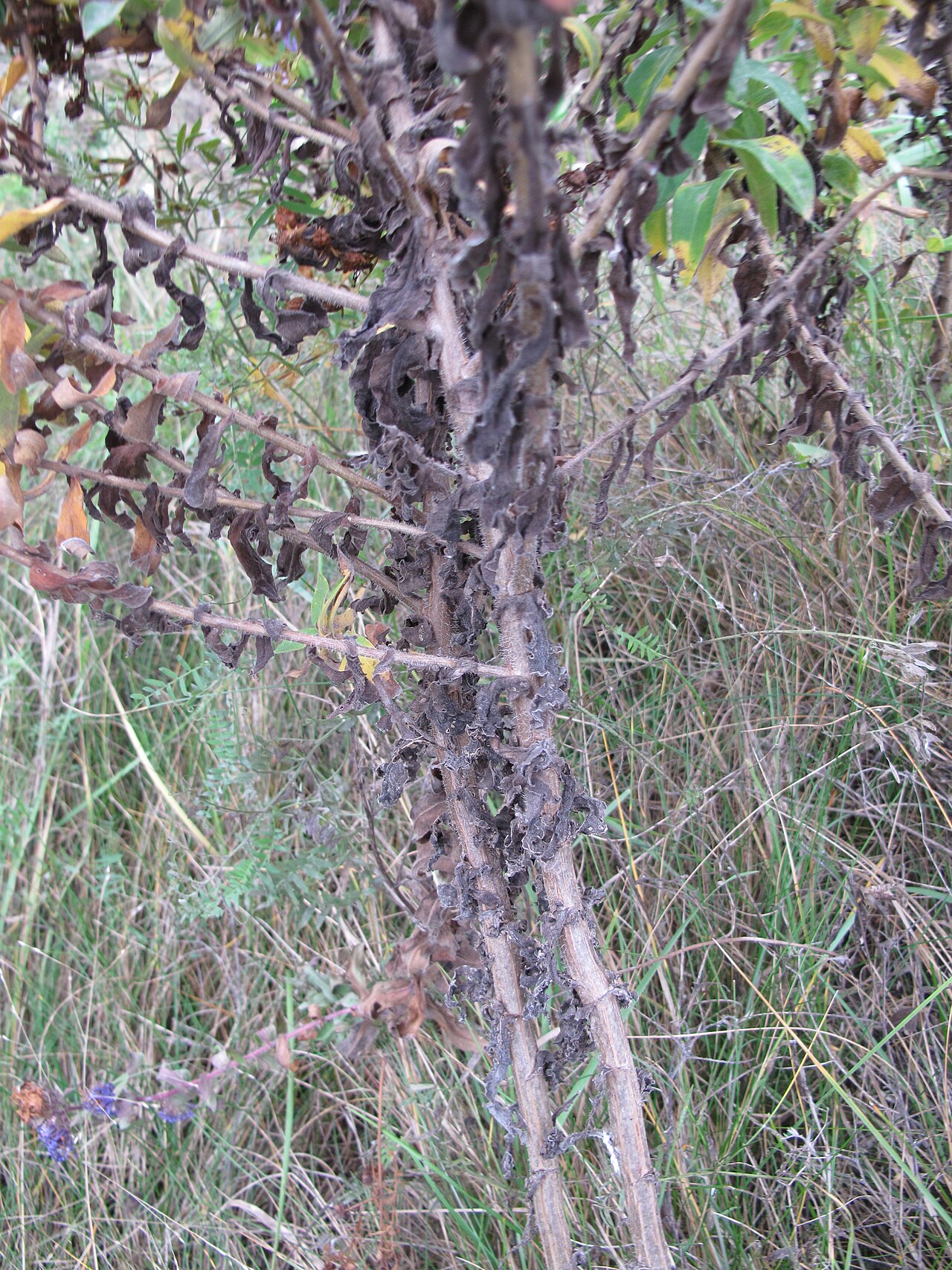
The top of your New England aster is full of buds. The bottom third of each stem, though, is lined with brown, crispy leaves.
It looks like the plant is dying from the ground up. In most cases it isn’t. New England aster is known for shedding its lower leaves, and that is often normal.
Still, drought, crowding, and a few leaf diseases and insects can speed it up or make it worse. This guide shows you what to inspect, in order, so you can tell normal aging from a problem worth fixing.
The Short Answer
Lower leaves on New England aster (Symphyotrichum novae-angliae) dry from the bottom up for a handful of reasons:
- Normal aging. The lowest leaves often wither by the time the plant flowers.
- Drought or heat stress, which makes the plant drop lower leaves early.
- Crowding and shade at the base of a dense clump.
- Powdery mildew, leaf spots, or rust, especially in humid weather.
- Sap-feeding insects such as lace bugs, plant bugs, aphids, or spider mites.
- Root or stem problems, which show up as wilting, not just dry lower leaves.
Why the Lower Leaves Go First
New England aster is a tall perennial with stout, leafy stems. Over the season, the leaves at the base sit in the shade of everything above them.
Wikipedia’s species account notes that the lower stem leaves often wither or drop by the time the plant flowers. Minnesota Wildflowers says the same: basal leaves and lower stem leaves wither away by flowering time.
So a plant in bloom with a bare or brown lower stem is behaving like a normal New England aster. The question is whether the browning is early, fast, or climbing high up the plant.
Normal or Not?
| Likely normal | Late summer or fall. Only the lowest leaves are affected. The top is green, budding, or blooming. Stems stay firm. |
| Worth a closer look | Browning starts in early or midsummer, or moves halfway up the stems within a few weeks. |
| Act soon | Whole stems wilt, stems are soft or discolored at the base, or new growth is yellow and stunted. |
Check 1: Note the Date and How High the Damage Goes
Start with two simple observations: when did it start, and how far up the stem has it reached?
Count the leaves from the ground up on three or four stems. If only the bottom few are dry and the plant is in bud or bloom, you are looking at normal leaf loss.
If the bottom half of the plant browned in July, something else is going on. Mark a stem with a twist tie at the highest brown leaf and check it again in a week. Fast upward movement points to stress, disease, or insects.
Check 2: Feel the Soil and Review the Summer
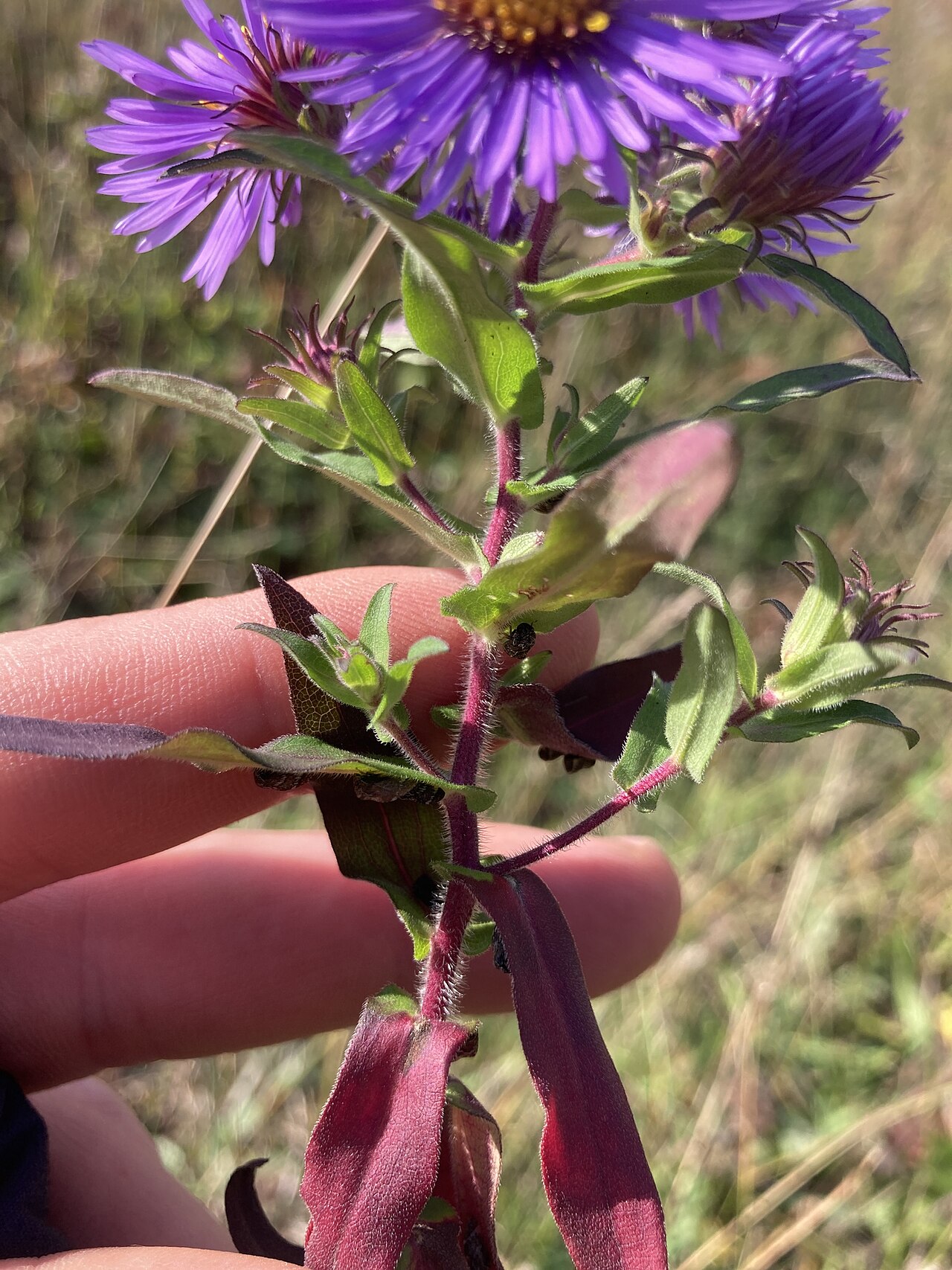
Drought is the most common cause of early lower-leaf loss. The Illinois Wildflowers site notes that this aster can become stressed by hot, dry weather, often dropping its lower leaves while the remaining leaves turn yellow or brown.
That fits its habitat. In the wild, New England aster grows in moist prairies, wet meadows, and along streams. It is rated Facultative Wetland across its range on the National Wetland Plant List, as reported by the Lady Bird Johnson Wildflower Center.
Push a finger or trowel 3 to 4 inches into the soil next to the clump:
- Dust-dry, during a hot spell: drought stress is the likely cause.
- Dry, and the plant sits in a sunny, sandy, or south-facing spot: it may be in a site that is too dry for it most summers.
- Soggy or sour-smelling: skip ahead to Check 6.
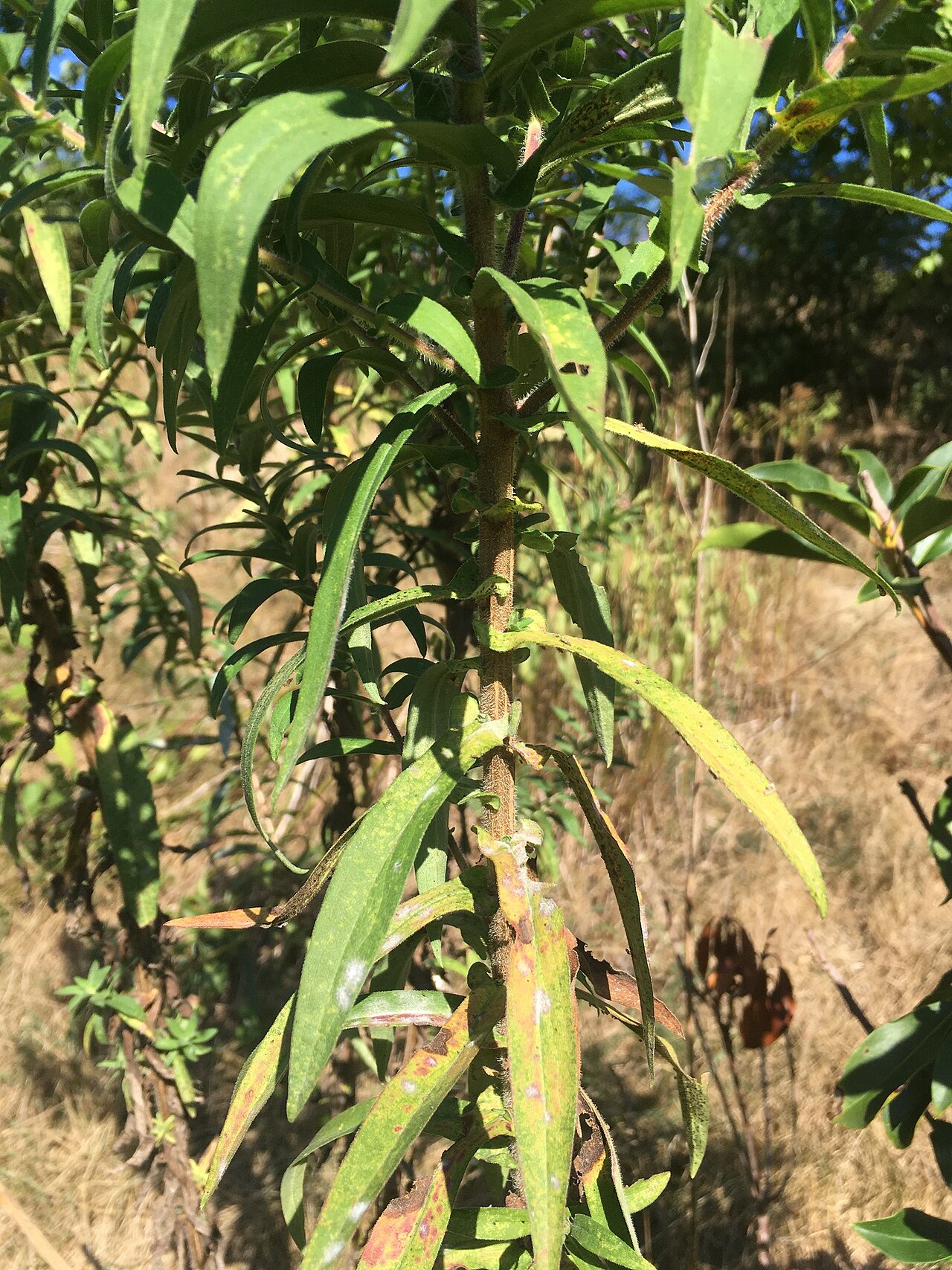
In a dry stretch, a slow, deep soak once a week does more than frequent light sprinkles. Water at the base rather than over the leaves. A few inches of shredded-leaf or wood-chip mulch, kept off the stems, helps hold moisture. See our mulching techniques for native gardens.
Lost leaves won’t grow back on the old stems. The goal is to stop the browning from climbing higher.
Check 3: Look Inside the Clump
Part the stems and look at the center of the plant. Is it a dense thicket of stems with little light or air reaching the bottom?
Crowded bases stay shaded and humid. Leaves there die back sooner, and leaf diseases thrive. Wisconsin Extension recommends spacing asters widely for good air circulation to limit powdery mildew. Nebraska Extension suggests thinning some stems by midsummer on very dense plants to reduce disease.
If the clump is packed, remove a few of the weakest stems at ground level. Next spring, consider dividing it. Old, overgrown clumps also tend to flop, which our guide to New England asters flopping covers in detail.
Check 4: Examine the Leaves for Powder, Spots, or Rust
Pick a few of the browning leaves plus some green leaves just above them. Look at both surfaces in good light.
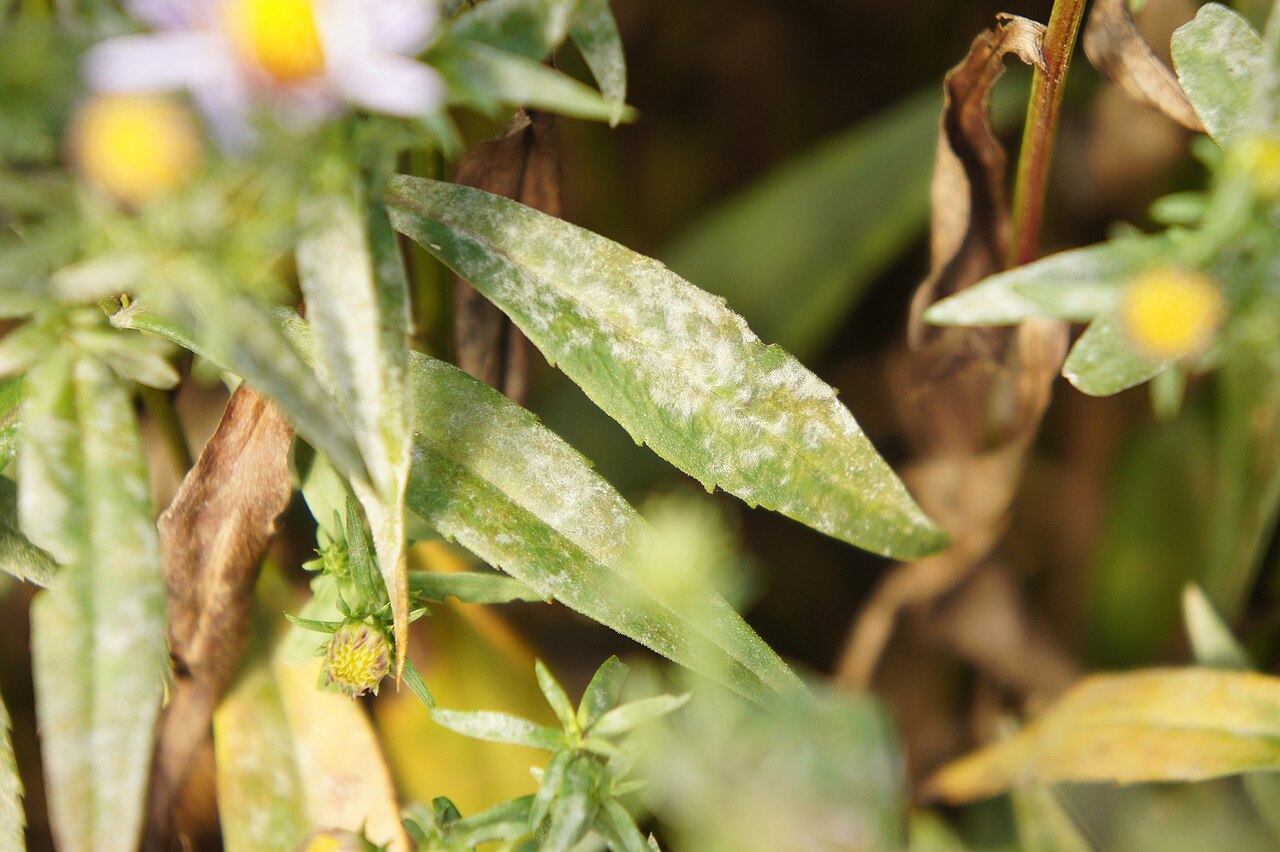
- White, dusty coating that rubs off: powdery mildew. NC State Extension lists some susceptibility, and Illinois Wildflowers notes it often appears during the cool, moist weather of fall.
- Dark spots or purple blotches: leaf spot fungi. Several are recorded on this species, including one that leaves purple stains.
- Orange, rusty, or brown pustules on the undersides: rust. Two rusts have been recorded on New England aster.
Wisconsin Extension describes powdery mildew as cosmetic and non-lethal on many plants. On a New England aster it mostly makes the lower half look shabby late in the year.
The practical fixes are cultural: more space, more sun, no overhead watering, and thinning dense clumps. Wisconsin Extension also advises removing infected debris at the end of the season, since the fungus survives in it. That is one of the few cases where some fall cleanup makes sense.
Check 5: Look Under the Leaves for Insects
Turn over several leaves just above the damaged zone. Use a hand lens if you have one.
The Illinois Wildflowers site lists several sap-feeders on New England aster, including the chrysanthemum lace bug, tarnished plant bug, four-lined plant bug, and potato aphid. NC State Extension adds spider mites, aphids, and leaf miners.
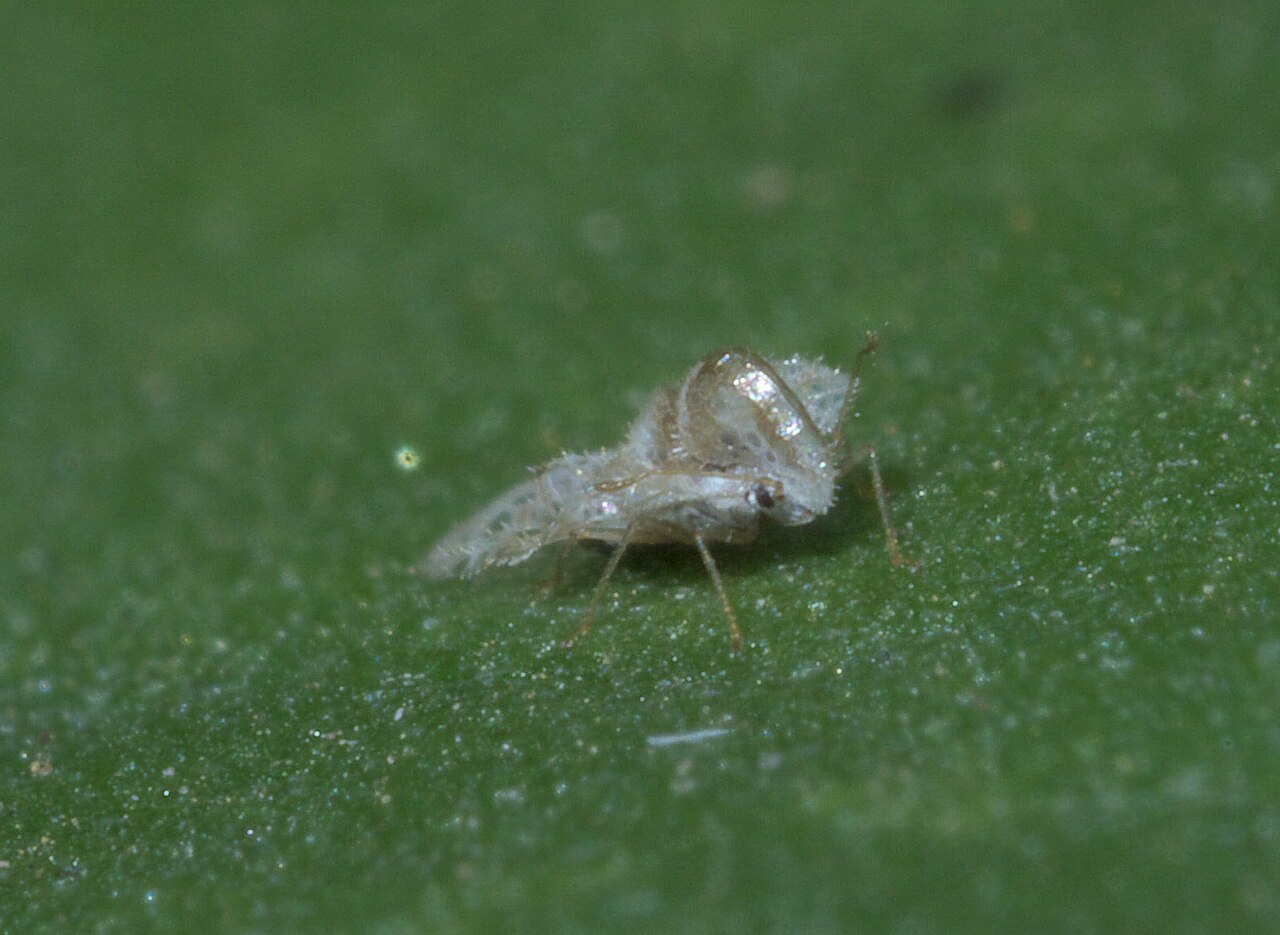
What to look for:
- Fine pale speckling on the upper surface, with tiny dark specks underneath: typical of lace bugs.
- Bronzed, finely dotted leaves with faint webbing: spider mites, especially in hot, dry weather.
- Winding pale tunnels inside the leaf: leaf miners.
- Clusters of small soft insects and sticky leaves: aphids.
Most of these are a normal part of a native plant’s insect community and rarely threaten an established clump. Spider mite trouble usually tracks drought, so watering helps.
Avoid broad insecticides, especially while the plant is blooming and covered with bees. If one pest is severe, start with the gentlest options in our guide to organic pest control for asters, and treat only the affected stems.
Check 6: Rule Out Root and Stem Problems
This is the check that matters most, because it’s the one problem that won’t fix itself.
Grip a few stems near the ground. They should feel firm and woody. Then look for these warning signs:
- Whole stems wilting even though the soil is moist.
- Soft, dark, or water-soaked tissue at the base of the stems.
- A sour smell from soil that stays wet for days.
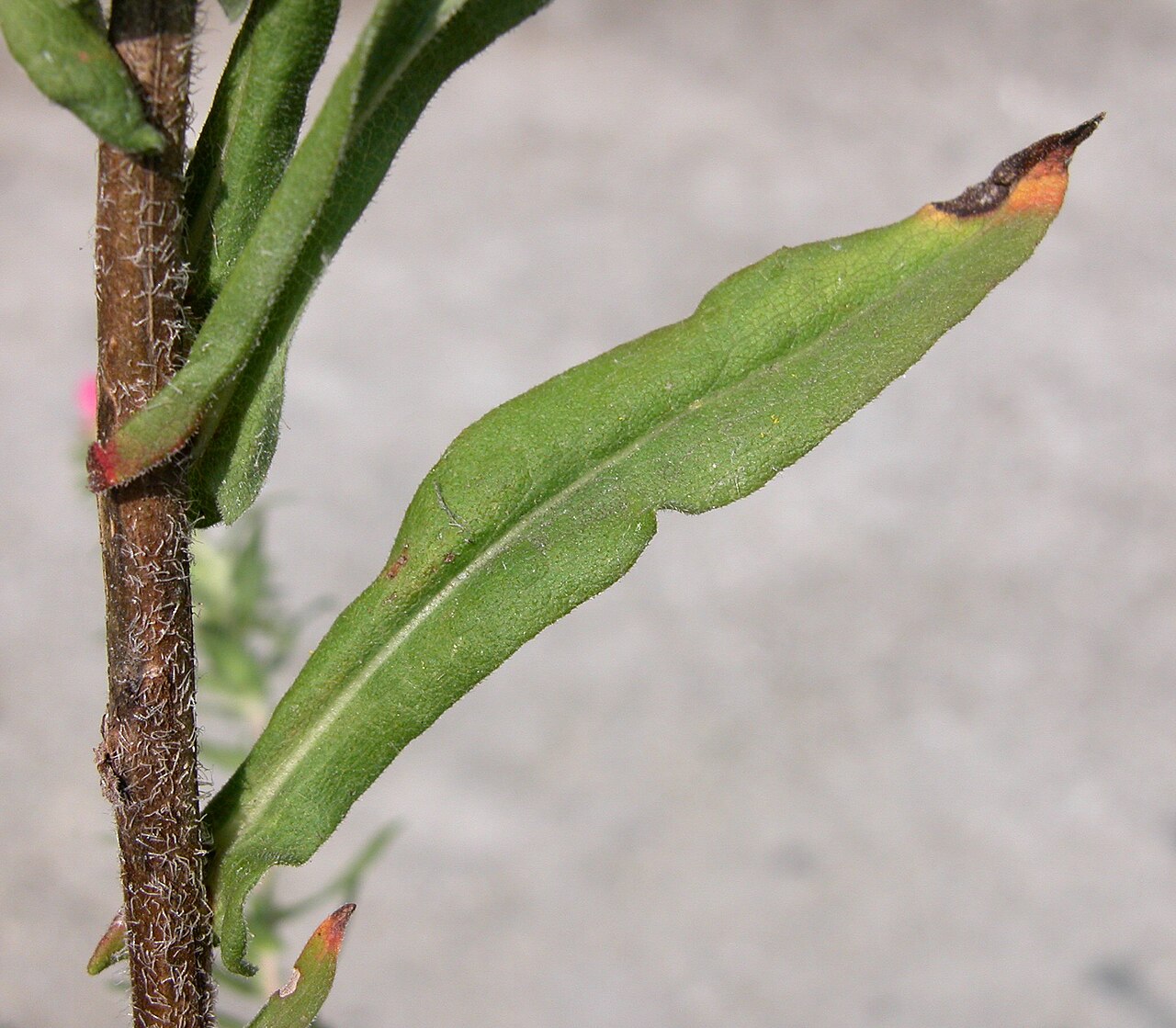
NC State Extension advises watching for aster wilt and stem rot. Its toolbox also links New England aster to southern blight, a soil-borne disease of herbaceous plants.
If stems are collapsing, cut out and bag the affected stems rather than composting them. Improve drainage before replanting in the same spot, and ask your local Extension office to confirm the diagnosis. Diseases that look alike can need very different responses.
Troubleshooting at a Glance
| Bottom few leaves brown at bloom time | Normal leaf loss. No action needed. |
| Browning in midsummer, dry soil | Drought stress. Water deeply once a week and mulch. |
| Dense clump, dark damp center | Crowding. Thin stems now, divide in spring. |
| White powder on leaves in fall | Powdery mildew. Improve airflow and remove infected debris after bloom. |
| Spots, purple blotches, or rusty pustules | Leaf spot or rust. Space plants, water at the base, clean up infected leaves. |
| Pale speckling or bronzing | Lace bugs or spider mites. Water in drought, avoid broad sprays. |
| Whole stems wilting, soft at the base | Possible wilt or stem rot. Remove affected stems and get a diagnosis. |
What to Do Now
If it’s normal leaf loss: hide it instead of fighting it. Plant shorter companions in front of the aster so its bare lower stems disappear behind them. Native grasses, aromatic aster, or other mid-height perennials work well.
If it’s drought: water deeply through the rest of the dry spell, mulch, and accept that this year’s lower leaves are gone.
If it’s disease or insects: thin the clump for airflow, stop overhead watering, and plan a partial cleanup of infected leaves after bloom. Leave healthy stems standing for wildlife.
If stems are collapsing: remove the affected stems and check drainage before anything else.
A Season-by-Season Plan
- Spring: divide crowded clumps and replant the vigorous outer pieces with room to breathe. Move plants struggling in very dry spots.
- Early summer: mulch the root zone. Thin very dense clumps by removing a few weak stems.
- Midsummer: water deeply during dry spells. Check under leaves every couple of weeks.
- Late summer – fall: expect some lower-leaf loss at bloom. Watch for mildew as nights cool.
- After bloom: remove heavily mildewed or spotted foliage. Leave healthy stems and seed heads for birds and overwintering insects.
📋 More on this plant: read the full New England Aster (Aster novae-angliae) profile, or see it in our native plant lists for New Hampshire, Maine & Vermont, Connecticut, Massachusetts & Rhode Island, New York, Pennsylvania & Northern New Jersey, Maryland, Virginia & West Virginia, Ohio & Indiana, Michigan, Wisconsin & Eastern Minnesota, Illinois, Iowa & Missouri, North Dakota, South Dakota & Western Minnesota, and Nebraska, Kansas & Eastern Colorado.
Frequently Asked Questions
Is it normal for New England aster to lose its lower leaves?
Yes. The lowest leaves often wither or drop by the time the plant flowers. It becomes a concern only when browning starts early in summer or climbs quickly up the stems.
Should I pull off the brown lower leaves?
You can if it bothers you, but it isn’t necessary for healthy plants. Removing leaves with mildew, spots, or rust does help reduce disease next year.
Can overwatering cause lower leaves to turn brown?
New England aster likes moist soil, but soil that stays waterlogged can lead to root and stem problems. If stems wilt in wet soil or feel soft at the base, improve drainage and get the problem diagnosed.
Is powdery mildew going to kill my aster?
Usually not. Wisconsin Extension describes powdery mildew as a cosmetic, non-lethal disease on many plants. Better spacing, more sun, and fall removal of infected leaves keep it in check.
How do I hide bare aster stems in fall?
Place shorter plants in front of the aster. Bunchgrasses and mid-height perennials cover the lower stems while the aster’s flowers rise above them.
Sources
- Wikipedia, Symphyotrichum novae-angliae: lower leaves withering by flowering, recorded leaf spots, rusts, powdery mildew, and leaf miners.
- Minnesota Wildflowers, New England Aster: basal and lower stem leaves wither by flowering time.
- Illinois Wildflowers, New England Aster: lower-leaf drop in hot dry weather, fall powdery mildew, and insects that feed on the plant.
- North Carolina Extension Gardener Plant Toolbox, Symphyotrichum novae-angliae: site needs, powdery mildew, aster wilt, stem rot, and insect pests.
- Wisconsin Horticulture (UW–Madison Extension), Powdery Mildew – Herbaceous Ornamentals and Aster: cosmetic nature of mildew, spacing, and removing infected debris.
- Nebraska Extension in Lancaster County, Plan for Late Summer Color with Asters: air circulation and thinning dense plants.
- Lady Bird Johnson Wildflower Center, Symphyotrichum novae-angliae: moist habitats and wetland indicator status.