
A Small Pawpaw Grove: Layout, Pollination Space, and Access Paths
Last updated: November 6, 2026
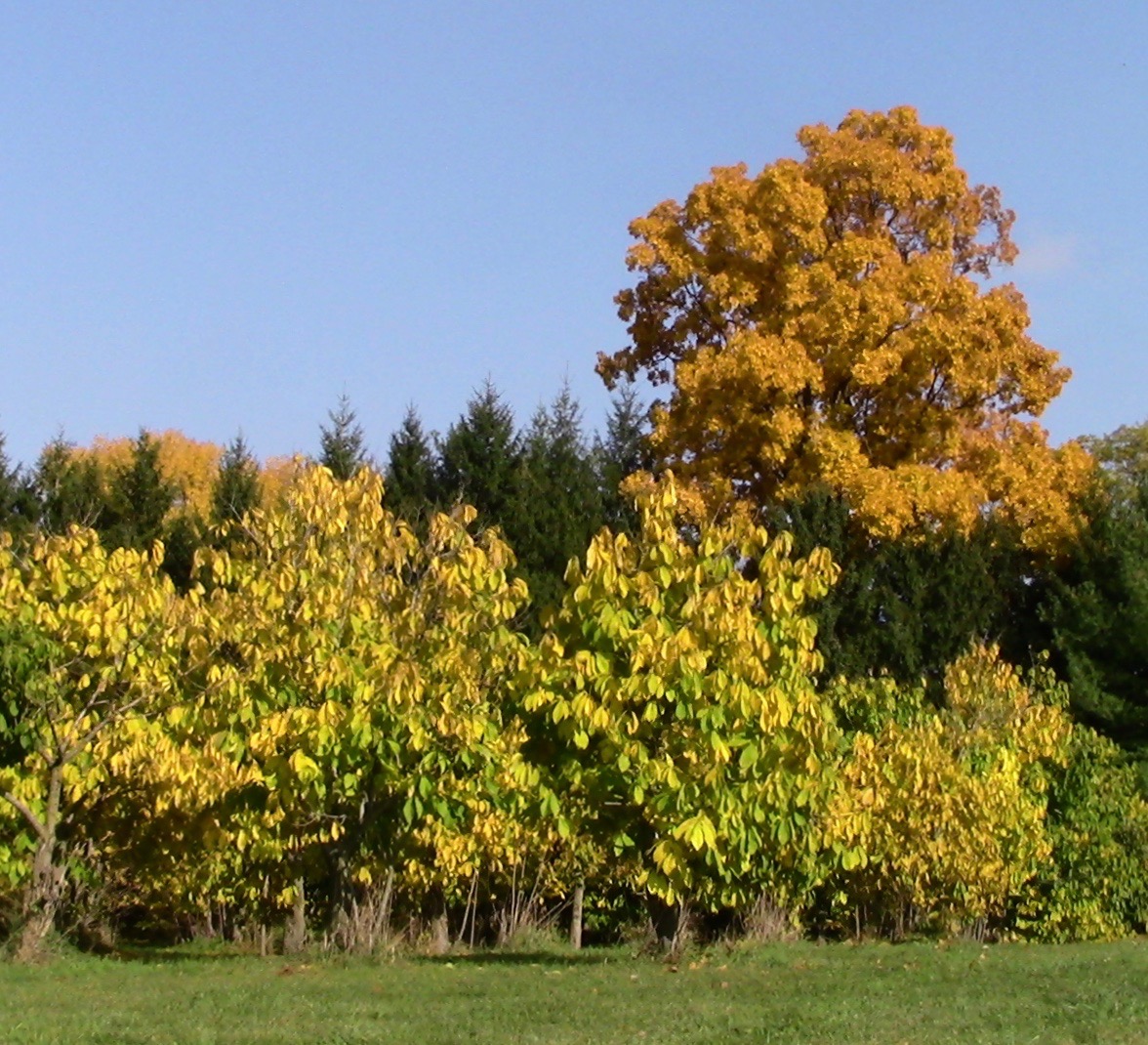
A single pawpaw is a handsome tree, but it rarely gives you fruit on its own. A small grove of three to six trees is the backyard version of what pawpaw does in the wild: a cluster of stems sharing light, roots and pollinators.
Planning that grove is mostly about space. The trees need room for two or more genetically different partners, light for fruit, a path to every trunk at harvest time, and an edge you can mow when root suckers wander.
This plan covers site choice, layout options, spacing, companion plants and the first three years. It assumes you live where pawpaw is native or grows well, and it gives alternatives if you don’t.
Plan at a Glance
| Site | Sheltered, well-drained ground with good sun; edge of a woodlot or a sunny corner of a yard |
| Size | 3 to 6 trees; roughly 30 × 25 feet for a five-tree cluster at maturity (see the spacing box) |
| Sun | Light shade for the first year or two; full sun or nearly so for the best fruit later |
| Soil | Deep, fertile, slightly acid and well drained; never waterlogged |
| Maintenance | Moderate: watering early on, mowing the edge, daily picking in the fruit season |
| Best regions | Eastern North America within or near pawpaw’s native range, roughly USDA zones 5 to 8 |
Assess the Site Before You Draw Anything
Start with drainage. Kentucky State University’s pawpaw program says good drainage is essential and that pawpaws will not thrive in heavy or waterlogged soil. Dig a test hole, fill it with water and watch it. If water still stands the next day, look for higher ground.
Next, look at light over the whole day. Kentucky State notes that pawpaw can fruit in shade, but the best yields come in open exposure. Its FAQ adds that heavily shaded trees produce very few fruits.
Then think about wind. Both Kentucky State and Purdue Extension recommend some protection from wind because of the large leaves. The lee side of a building, hedge or woodlot edge is ideal, as long as it is not also deep shade.
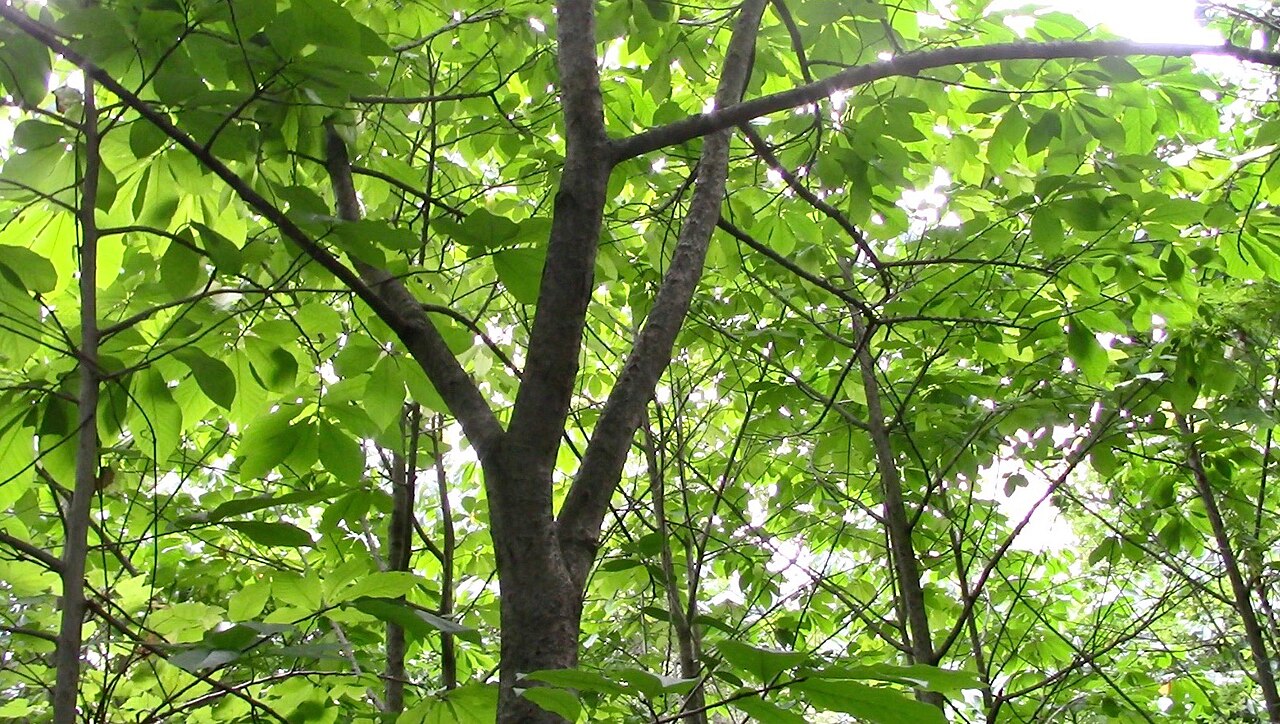
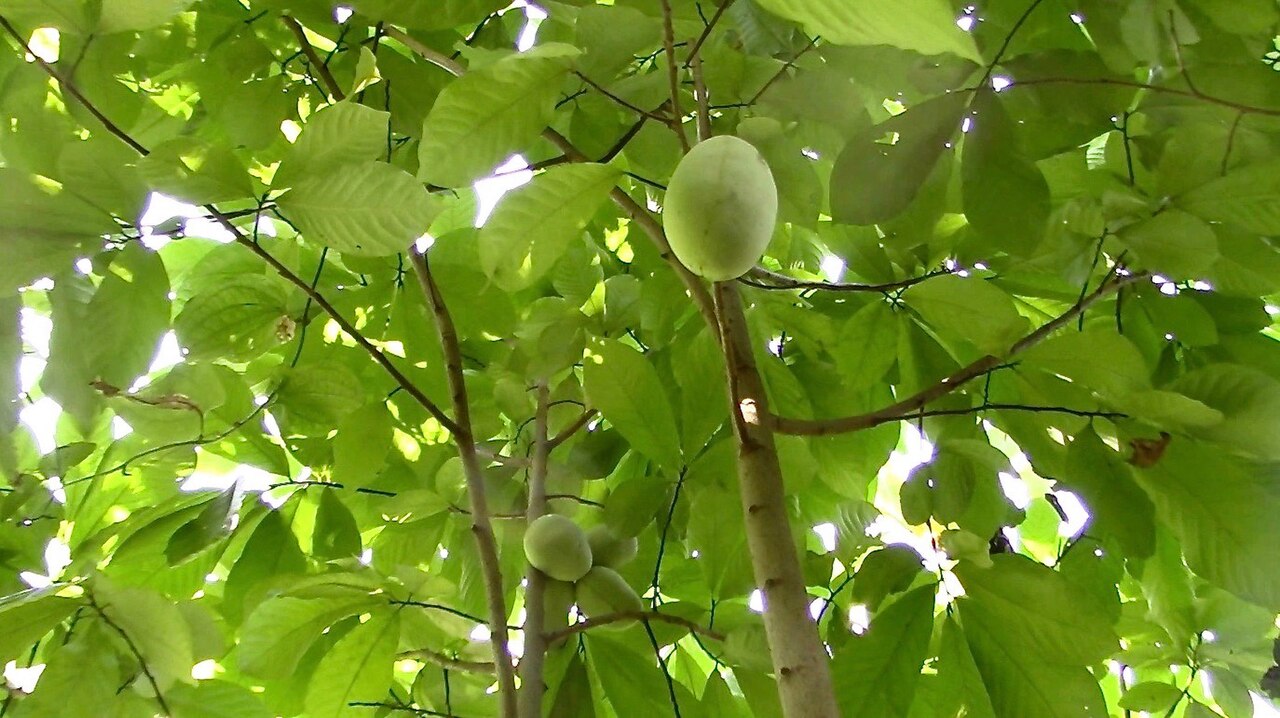
Finally, check what lies overhead and underground. Pawpaw is a small tree, but NC State Extension lists it at 15 to 30 feet tall and as wide. Keep the mature canopy outline clear of overhead lines and away from walls and roofs.
Before you dig, have underground utilities marked. In the United States you can call 811 a few days ahead. A grove is meant to stay put for decades, so it is worth getting the location right the first time.
What a “Grove” Means for Pawpaw
In the wild, a pawpaw patch is often one tree repeated. Alabama Cooperative Extension describes patches made of one or more “mother trees” plus many root suckers that look like separate trees.
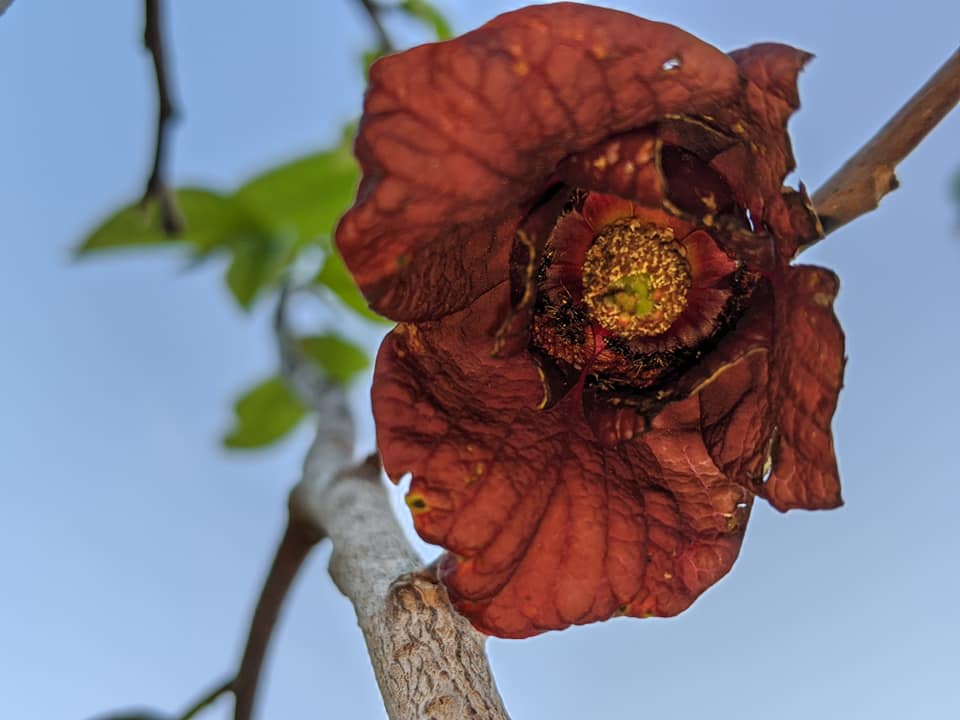
That matters for fruit. Pawpaw flowers are built to avoid self-pollination, and Kentucky State and Purdue both note that the trees are usually self-incompatible. Alabama Extension says flowers from a single clonal grove cannot pollinate each other.
So a garden grove should start with at least two genetically different trees. Kentucky State recommends two different cultivars, or at least two seedlings. Two grafted trees of the same cultivar will not work, according to its FAQ. Our pollination checklist for pawpaws that flower without fruiting covers the details.
Layout: Mixing Partners for Pollination
Alabama Extension advises including at least two cultivars with overlapping bloom periods. In a small grove, put different cultivars or seedlings next to each other rather than in separate blocks, so every tree has a partner nearby.
The natural pollinators are flies and beetles. Kentucky State calls them inefficient and undependable, and Alabama Extension suggests siting plantings near native pollinator habitat such as diverse woods and native grassland. A grove at the edge of a woodlot or meadow has an advantage here.
Plan for hand pollination too. Both Kentucky State and Purdue describe moving ripe pollen between clones with a small artist’s brush. Low branches you can reach from the path make that practical. Kentucky State notes that trees in full sun keep foliage down to the ground, while shaded trees lose their lower limbs.
Three layouts that fit a yard
Triangle or zigzag (3 to 5 trees). Place trees at the points of triangles so each one touches two or three neighbors. This is the most compact grove and the easiest to cross-pollinate.
Short row along a path. Line trees up along a fence or the edge of a woodlot with a mowed path on the sunny side. It is the simplest layout for picking.
Woodland-edge grove. Set the trees just outside an existing tree line so they get morning or afternoon sun and shelter from wind. Our spicebush woodland-edge plan shows how to layer shrubs and groundcovers in front of a planting like this.
Spacing and Quantity Guide
| Between trees | About 8 feet, per Kentucky State’s planting guide |
| Row plantings | 6 to 10 feet apart within a row and 15 to 20 feet between rows (Alabama Extension’s commercial guideline) |
| Mature size | 15 to 30 feet tall and wide (NC State); canopies in a grove will grow together |
| Weed-free band | 3 to 4 feet on each side of the trees (Alabama Extension) |
| Minimum trees | 2 genetically different trees; 3 to 6 gives more pollination partners |
| Five-tree cluster | Two staggered rows about 8 feet apart; roughly 30 × 25 feet including mature canopy (our estimate from the figures above) |
Designing Access Paths
Paths are not an afterthought in a pawpaw grove. Alabama Extension says trees should be checked and harvested every day during the harvest period, because fruit softens and becomes perishable quickly.
Run one main path along the sunny side of the grove, close enough to reach every trunk. In a two-row cluster, a single lane down the middle works. Alabama Extension recommends maintaining the paths between rows as mowed vegetation.
Make the path wide enough for your mower and a garden cart. Keep it outside the weed-free band so the mower never scrapes trunks or root flares.
The mowed edge does a second job. Pawpaws sucker from the roots, and a regularly mowed path is the easiest boundary for a grove that wants to grow outward. If you are unsure which shoots to keep, see our guide to pawpaw root suckers.
Layers Under and Around the Grove
Keep the area right around young trees simple: mulch or bare ground inside the weed-free band. Alabama Extension notes that pawpaw roots are shallow and that tillage should be done cautiously.
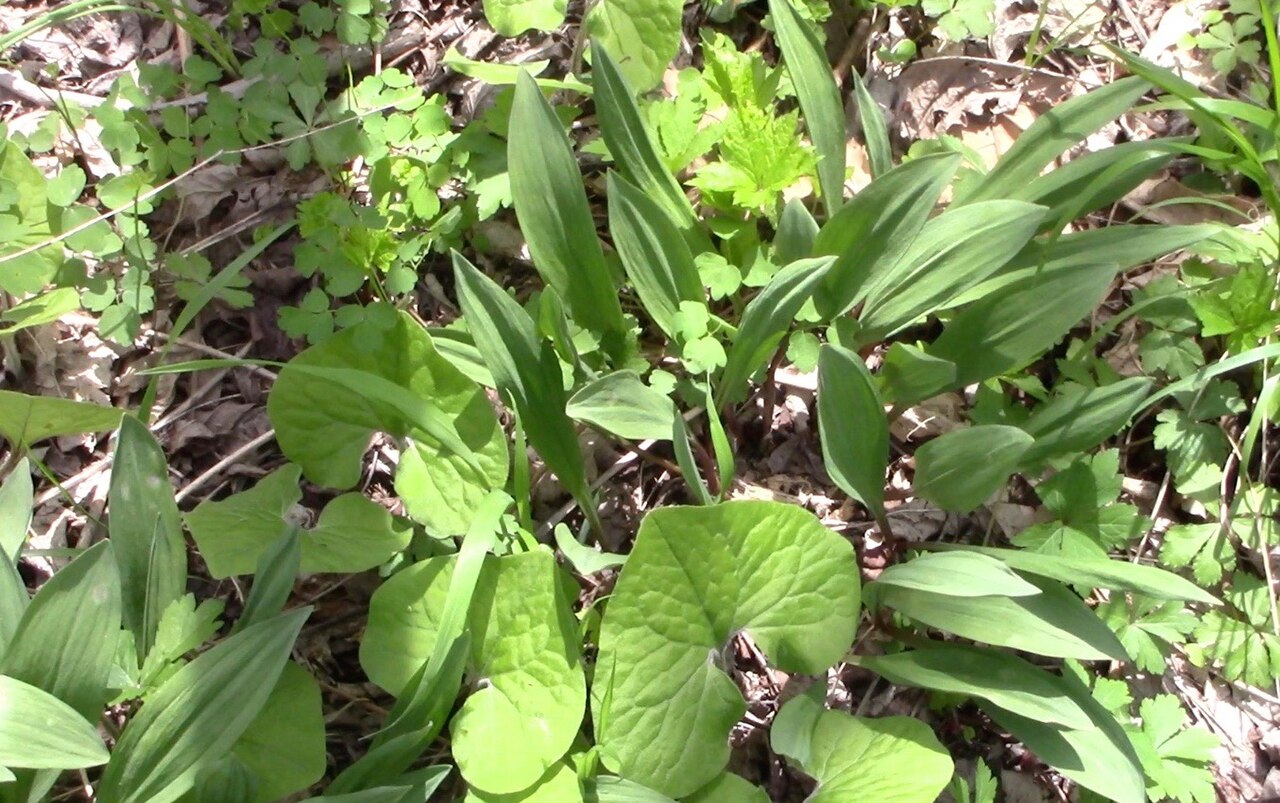
Outside the band, plant a low woodland layer at the shaded back of the grove and a shrub layer at its edge. Spicebush shares pawpaw’s moist, low-woods habitat. Christmas fern and wild ginger suit the shady side.
Keep these companions away from the sunny path side, where low branches and picking access matter most.
Plant Palette
| Plant | Role | Height | Sun / moisture | Native range |
|---|---|---|---|---|
| Pawpaw (Asimina triloba) | Grove trees | 15–30 ft | Sun to shade; moist, well drained | FL to TX, north to w. NY, s. Ont., MI, IL, se. IA and se. NE |
| Spicebush (Lindera benzoin) | Shrub layer at the grove edge | Usually to about 15 ft | Sun to shade; dry to wet | Sw. ME, c. MI and se. KS, south to FL and se. TX |
| Christmas fern (Polystichum acrostichoides) | Evergreen cover on the shady side | 1.5–2 ft | Part shade to shade; moist | N.S. to se. MN, south to c. FL and e. TX |
| Wild ginger (Asarum canadense) | Groundcover under the canopy | To about 8 in | Part shade to shade; moist | Que. and N.B. to Ont. and MN, south to FL and LA |
Heights and ranges from NC State Extension (pawpaw) and the Lady Bird Johnson Wildflower Center (all others). Check that each plant is native to your county before buying.
Installation, Step by Step
Step 1: Mark the layout. Stake each tree position and lay a hose along the planned path. Walk it with a mower or cart before you dig.
Step 2: Buy the right stock. Kentucky State notes that container-grown trees may establish better than field-dug trees because the long taproot is easily damaged. Choose at least two different cultivars, or seedlings, if you want fruit.
Step 3: Plant in spring. Purdue recommends transplanting in spring after budbreak, not in fall or winter. Alabama Extension adds that grafted trees should be planted with the graft several inches above the soil line.
Step 4: Shade the new trees. Alabama Extension suggests suspending 33 percent shade cloth over transplants shorter than 24 inches during their first year. Our article on protecting a newly planted pawpaw from sun and water stress shows simple setups.
Step 5: Water and mulch. Kentucky State says young trees need adequate soil moisture, especially in their first two years. Alabama Extension notes that mulch holds moisture but can attract mice and voles, so keep it pulled back from the trunk.
The First Three Years
Kentucky State notes that growth is slow for the first two years while the root system establishes. Seedlings usually take five to eight years to bear, and grafted trees may fruit in as few as three.
- Year 1, spring: plant, shade, and water deeply after planting. Mark trees so they are visible from the mower.
- Year 1, summer: water during dry spells, keep the weed-free band clear by hand, and leave the shade in place.
- Year 1, fall: tag each tree with its cultivar name so you always know which trees are partners.
- Year 2: remove the shade gradually if trees are growing well. Keep watering in drought and mow the path edge regularly.
- Year 3: add the fern and ginger layer on the shady side. Watch for first flowers on grafted trees and try hand pollination.
- Every year after: mow suckers that come up in the path, and decide whether to let others fill gaps inside the grove.
If leaves scorch along the edges during establishment, our guide to pawpaw leaves browning at the edges walks through the site checks.
Mistakes to Avoid
Planting one cultivar. A grove of identical grafted trees, or suckers from one wild tree, is effectively one plant for pollination.
Digging suckers from the woods. Kentucky State and Alabama Extension both say transplanting root suckers is usually unsuccessful.
Choosing deep shade. The trees will grow, but Kentucky State’s FAQ warns that heavily shaded trees produce very few fruits.
Ignoring drainage. Pawpaw grows along streams, yet extension sources stress well-drained soil. A soggy low spot is the wrong place.
Spraying near suckers. Alabama Extension warns that systemic herbicides sprayed on surrounding plants can be taken up by the main trunk through suckers. Mow or pull instead.
Squeezing the path. A path that is pleasant in year one can disappear once canopies fill in. Lay it out against the mature size, not the nursery size.
Choosing Plants for Your Region
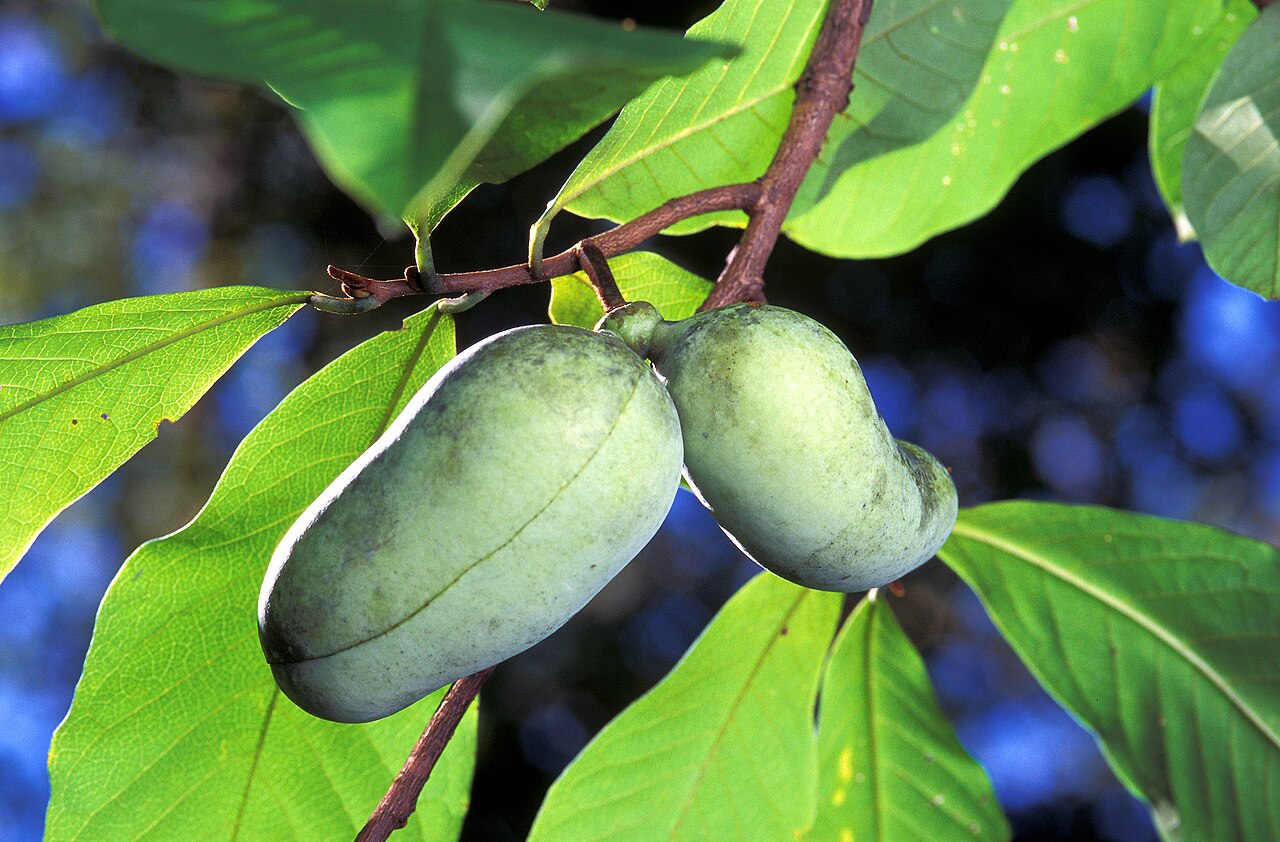
The Lady Bird Johnson Wildflower Center gives pawpaw’s native range as Florida to Texas, north to western New York, southern Ontario, Michigan, Illinois, southeastern Iowa and southeastern Nebraska. Kentucky State says it can be grown in USDA zones 5 to 8.
Near the Gulf Coast, Kentucky State warns that trees may not get enough winter chilling. Choose cultivars selected in a climate and latitude similar to yours.
In the Deep South, Alabama Extension notes that small-flower pawpaw (Asimina parviflora) grows on dry sites, though its fruit is much smaller. Outside pawpaw’s range, such as much of New England, the Plains and the West, build the grove around a locally native fruiting shrub or small tree instead; our pawpaw vs. serviceberry comparison covers serviceberry species for most regions.
📋 Pawpaw appears on our regional native plant lists for Delaware, southern New Jersey and Long Island, Maryland, Virginia and West Virginia, North and South Carolina, Georgia, Alabama and Mississippi, Ohio and Indiana, and Illinois, Iowa and Missouri.
Frequently Asked Questions
How many pawpaw trees do I need for fruit?
At least two genetically different trees. Kentucky State recommends two different cultivars or at least two seedlings. Two grafted trees of the same cultivar will not cross-pollinate.
How far apart should pawpaws be in a small grove?
Kentucky State suggests about 8 feet between trees. Alabama Extension’s commercial guideline is 6 to 10 feet within a row and 15 to 20 feet between rows.
Can a pawpaw grove grow in shade?
The trees grow in shade, and young trees prefer light shade. For fruit, Kentucky State says mature trees in full sun produce the most, and heavily shaded trees very little.
Will a pawpaw grove spread into my lawn?
It can. Pawpaws sucker from the roots, and wild patches are often one tree plus many suckers. A regularly mowed path or lawn edge keeps a grove in bounds.
Is pawpaw fruit safe for everyone?
NC State lists low-severity poison characteristics. The fruit skin and seeds can cause stomach pain, and handling the fruit causes skin irritation in some people. Eat only the ripe flesh, and try a small amount first.
Sources
- Kentucky State University Pawpaw Program, Pawpaw Planting Guide and Pawpaw FAQ: drainage, sun and shade, wind, zones, chilling, spacing, cross-pollination, transplanting and time to fruit.
- Purdue Extension, HO-220: Growing Pawpaws: site, transplanting rules and hand pollination.
- Alabama Cooperative Extension System, Pawpaw Production Guide (ANR-3095): groves and suckers, cultivars, row spacing, shade cloth, paths, weed-free bands, herbicide caution and harvest.
- NC State Extension Gardener Plant Toolbox, Asimina triloba: mature size and poison characteristics.
- Lady Bird Johnson Wildflower Center plant pages for pawpaw, spicebush, Christmas fern and wild ginger: native range, habitat and size.

