Little Bluestem in a Front-Yard Border: Repetition, Spacing, and Winter Structure
Last updated: November 6, 2026
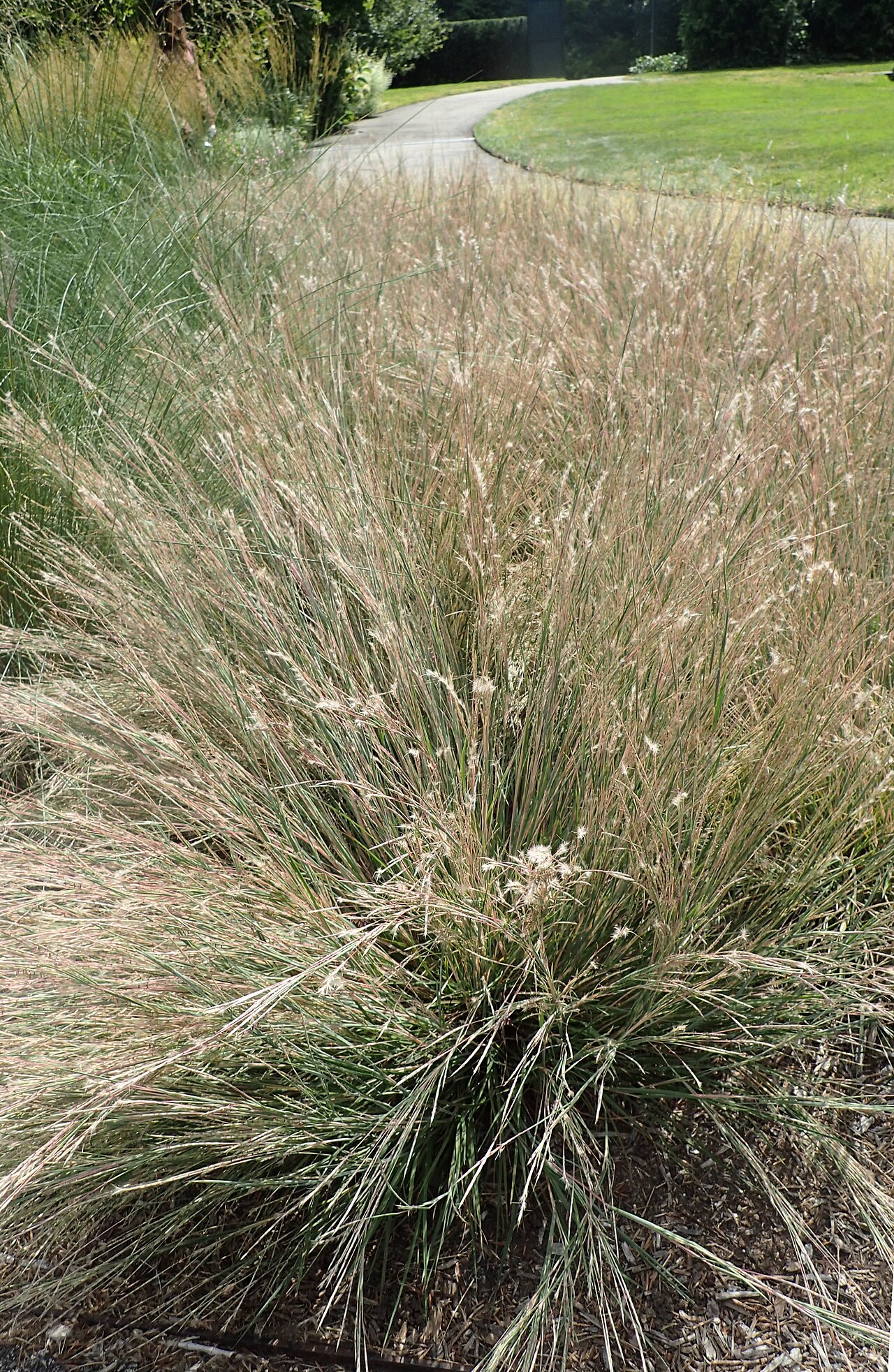
A front-yard border is seen every day, from the street, the driveway and the front door. It has to look intentional in July and still look intentional in January, which is where many perennial beds fall apart.
Little bluestem is one of the best native grasses for that job. It grows as an upright clump, turns copper in fall, and keeps that color standing through winter, so the border never goes completely blank.
This plan covers how to read your front-yard site, how far apart to set the clumps, how to repeat them so the bed reads as one design, which partners to use, and what the first three years of care look like.
Plan at a Glance
| Site | Sunny front-yard border along a walk, driveway, foundation or property line |
| Size | 4 to 6 feet deep, any length; the sample plan is 5 × 24 feet |
| Sun | Full sun; at least six hours of direct light |
| Soil | Dry to medium, well-drained; tolerates clay and poor soil, not standing water |
| Maintenance | Low: one late-winter cutback, light seedling editing |
| Best regions | Much of the U.S. and southern Canada east of the Rockies, where Schizachyrium scoparium is native; regional swaps below |
Read the Front-Yard Site First
Little bluestem is a warm-season prairie grass, and it is fussy about only a few things. NC State Extension says it performs best in average, dry to medium-moist, well-drained soil in full sun, and that it tolerates clay and infertile soil.
What it will not take is wet ground. The Lady Bird Johnson Wildflower Center notes it will not tolerate wetlands or sub-irrigated sites. Before you plant, watch where water sits after a heavy rain and where the downspouts empty. Keep the grass out of those spots.
Light matters just as much. The Wildflower Center lists sun to part shade, but in a garden, shade and rich soil are the usual reasons clumps open up and lean. If the border gets less than about six hours of sun, read our guide to little bluestem flopping over before you commit.
Front yards also come with a few site quirks of their own:
- Pavement edges reflect heat and dry out fast. Little bluestem handles that well once it is established.
- Snow piles from shoveling or plowing can flatten clumps. Leave a shovel-wide gap of low plants or gravel where snow will land.
- Sight lines at driveways and corners need to stay open. Keep anything taller than about 2 feet back from the street corner, and check local rules.
- Irrigation zones set for lawn often overwater a prairie bed. Cap or adjust spray heads that hit the border.
Why Repetition Makes the Border Work
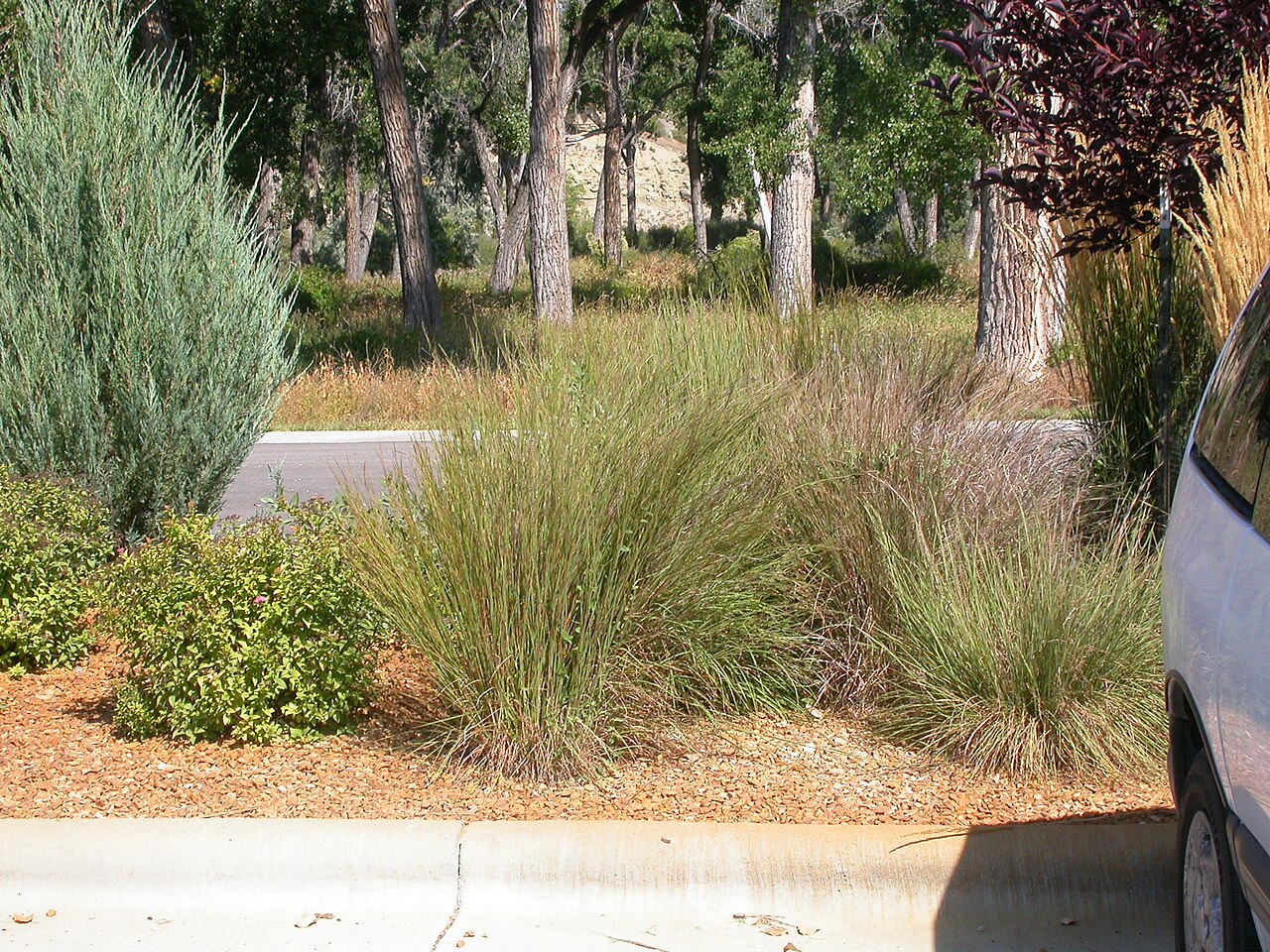
A single grass clump in a front bed tends to look like an accident. Three or five clumps, repeated at a steady rhythm along the border, look like a plan. That repetition is the main design idea of this layout.
Little bluestem suits repetition because it holds a fairly consistent shape. NC State describes it as an erect, clumping grass, 2 to 4 feet tall and 1.5 to 3 feet wide. Repeated clumps of the same height create a line the eye follows from the sidewalk to the front door.
There are two simple ways to repeat it:
- Rhythm: single clumps or pairs spaced at even intervals along the length of the bed, with flowering perennials between them. This works best in narrow borders.
- Drifts: groups of three to seven clumps planted as loose, elongated masses, repeated two or three times along the border. This works best in deeper beds and on corner lots.
The Wildflower Center calls little bluestem “wonderful planted en masse,” and drifts make the most of its fall color. Rhythm is easier to keep tidy in a small front yard.
Spacing: How Far Apart to Plant
Our little bluestem profile recommends 18 to 24 inches apart for quick coverage, or 2 to 3 feet apart for a looser, more naturalistic look. For a front-yard border, those two ranges translate into two different effects.
Spacing and Quantity Guide
- 18–24 inches on center: clumps knit into a continuous ribbon within a few seasons. Use this for drifts and for edging a walk.
- 2–3 feet on center: each clump stays readable as a separate fountain of stems. Use this for rhythm plantings with perennials between.
- Rough count: at 2 feet on center, a 24-foot row takes about 12 plants; at 3 feet, about 8.
- Front edge setback: keep the first row about 18 inches back from pavement so mature clumps arch over the edge rather than onto it.
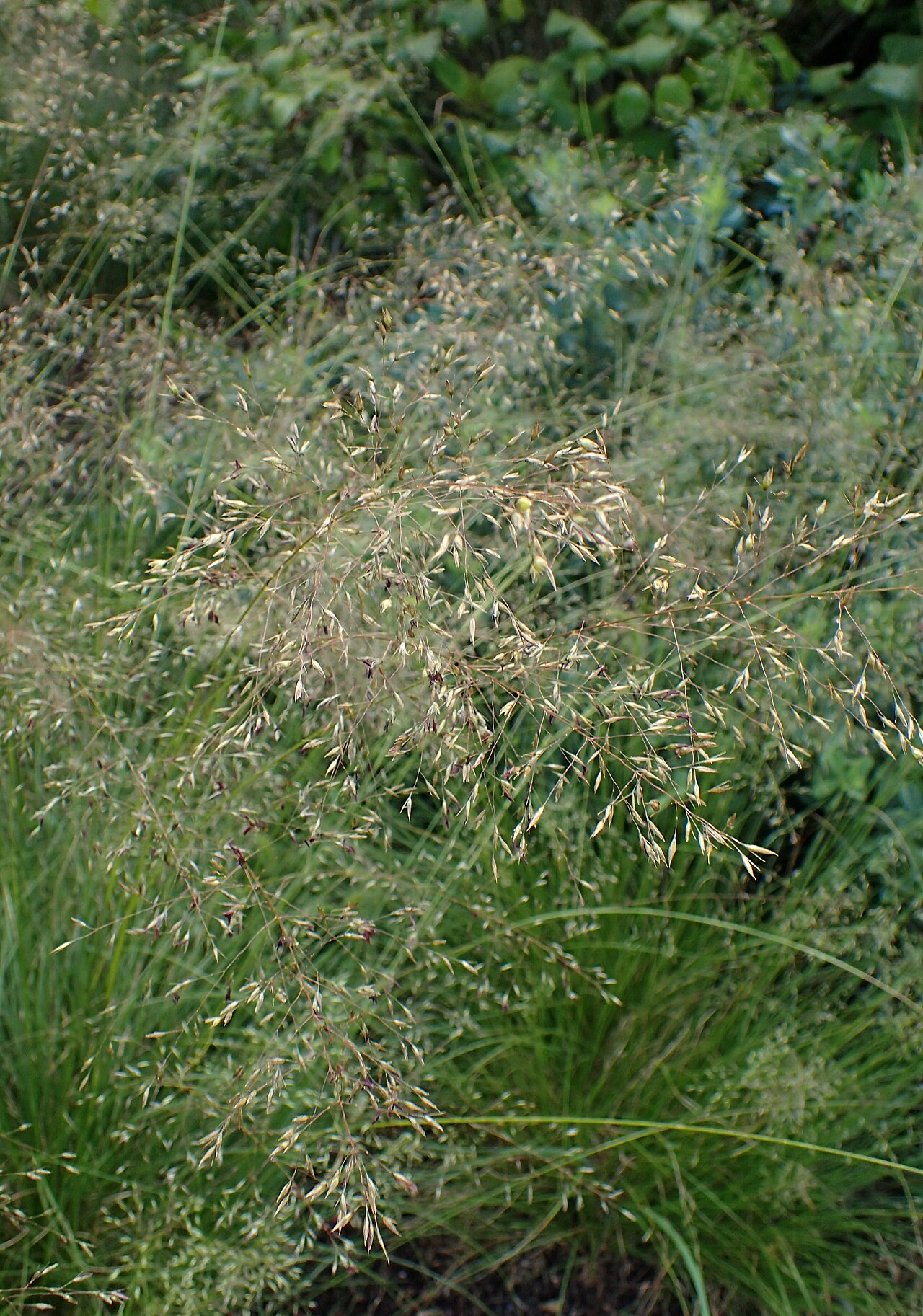
Wider spacing also leaves room for the companion plants below. Do not crowd the clumps to get an instant look. Little bluestem grows slowly in its first year, and tight spacing means you will be dividing sooner.
Layering: Front, Middle and Back
In a front-yard border viewed from the street, the tallest plants go at the back against the house, fence or property line, and the lowest go at the front edge. Little bluestem usually works best in the middle layer.
Front edge. Prairie dropseed forms a low, fine-textured mound and shares little bluestem’s preference for dry, sunny sites. Butterfly weed, at 1 to 2 feet, adds orange summer flowers at the same level.
Middle. Little bluestem clumps, repeated, with purple coneflower between them for summer bloom.
Back or ends. Aromatic aster blooms from September into November, right as the grass colors up. It can also anchor the corners of the bed.
If your border is narrow, around 3 to 4 feet, skip the back layer and alternate grass with one flowering perennial. Our narrow sunny border plan with blazing star and native grasses shows that approach in detail.
Plant Palette
Heights and ranges are from the Lady Bird Johnson Wildflower Center unless noted. Confirm each plant is native to your state and county before buying.
| Plant | Role | Height | Sun / moisture | Native range |
|---|---|---|---|---|
| Little bluestem (Schizachyrium scoparium) | Repeated structural grass, middle layer | 2–4 ft (NC State) | Sun / dry, well-drained | Que. and ME to AB and ID, south through much of the U.S. east of the Rockies |
| Prairie dropseed (Sporobolus heterolepis) | Front-edge grass mound | Up to about 3 ft | Sun / dry | Que. to Sask., locally south to NC, KY, e. TX and CO |
| Butterfly weed (Asclepias tuberosa) | Front-row summer color | 1–2 ft | Sun / dry to moist | Much of the eastern and central U.S. to CO and TX |
| Purple coneflower (Echinacea purpurea) | Summer bloom between grass clumps | Up to about 4 ft | Sun to part shade / dry to medium | GA to n.e. TX, north to NC, OH, IL and IA |
| Aromatic aster (Symphyotrichum oblongifolium) | Fall bloom at back or corners | Up to about 3 ft | Sun to part shade / dry to medium | PA to NC, west to n.e. WY and TX |
| Sideoats grama (Bouteloua curtipendula) | Alternate or companion grass for drier western sites | 1–3 ft | Sun to part shade / dry to medium | South-central Canada and much of the U.S. |
Regional Alternates
Little bluestem has a very wide range, but its partners do not. Purple coneflower, for example, is native to a band from Georgia and northeast Texas north to Ohio and Iowa, not the whole country. Swap partners to match where you live:
- Upper Midwest and northern Plains: keep prairie dropseed as the front-edge grass; it is native from Quebec to Saskatchewan.
- Southeast and Mid-Atlantic coast: prairie dropseed is only local in the Southeast, so use more butterfly weed and low asters at the front edge instead.
- Southern Plains and Texas: pair little bluestem with sideoats grama, which tolerates drier sites, and use aromatic aster for fall.
- Interior West: little bluestem reaches Idaho and the Rockies, but drier front yards there often suit shorter grasses better. Check your regional list, and see our plan for blue grama in a dry-site planting.
Sample Plan: 5 × 24 Foot Front Border
- Back line (3–4 ft from front edge): 3 aromatic asters, one at each end and one in the center.
- Middle line (about 2.5 ft from front edge): 8 little bluestem clumps at 3 feet on center, with 4 purple coneflowers set in the gaps.
- Front line (about 18 inches from front edge): 6 prairie dropseed and 4 butterfly weed, alternating in pairs.
- Total: about 25 plants. Mulch the gaps lightly the first year.
Installation Steps
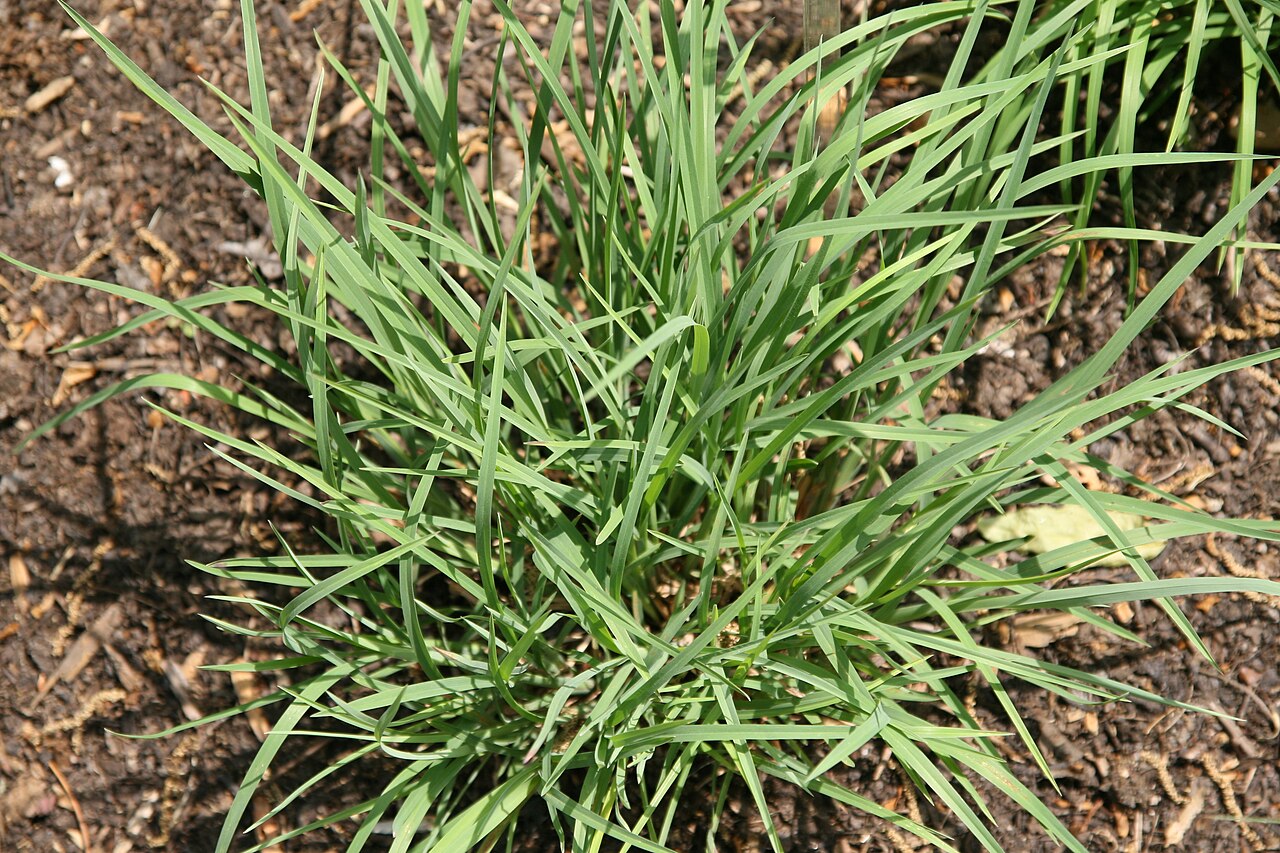
Step 1: Clear the bed. Remove turf and perennial weeds completely. Native grasses establish slowly and cannot outcompete lawn grass in their first season.
Step 2: Skip the compost. Little bluestem tolerates infertile soil, and rich soil encourages soft, floppy growth. Loosen compacted soil, but do not add fertilizer or heavy amendments.
Step 3: Lay out the pots first. Set every pot on the bed at its final spacing and look at it from the street and the front door. Adjust the rhythm before anything goes in the ground.
Step 4: Plant at the right depth. Set the top of the root ball level with the soil surface. Plant in spring after the soil warms, when warm-season grasses start growing.
Step 5: Mulch lightly. NC State advises keeping mulch away from the crown. A thin layer between plants is enough to slow weeds.
Step 6: Water through the first summer. Deep, infrequent watering helps roots reach down. Our guide to watering new little bluestem plugs through their first summer has a week-by-week approach.
Winter Structure: The Payoff
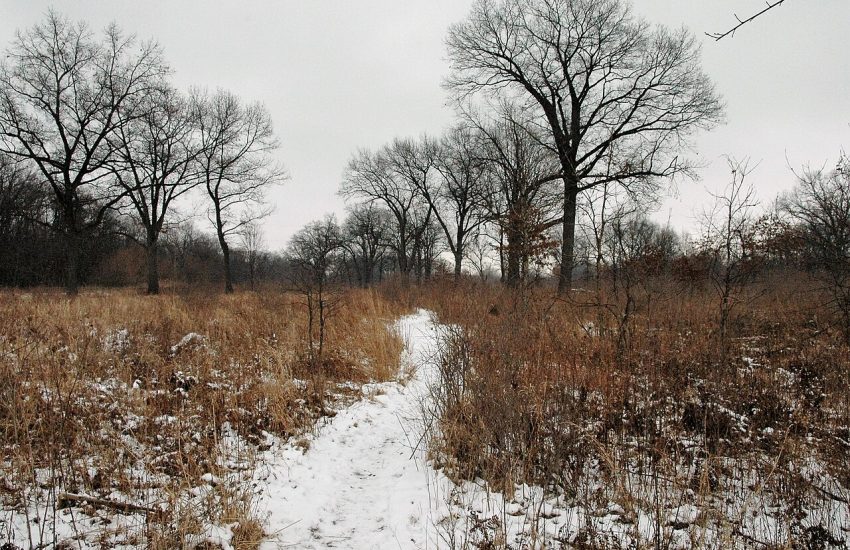
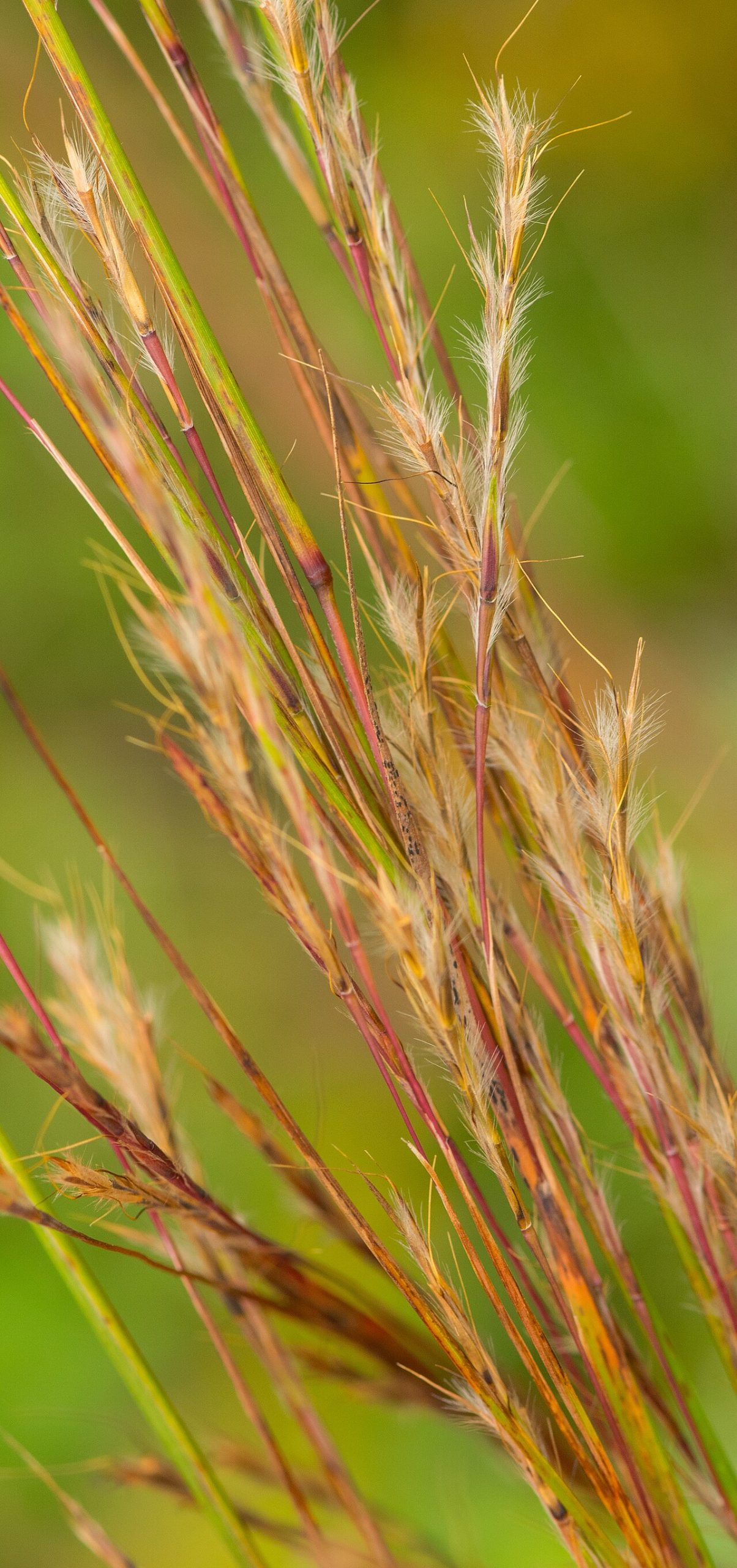
The reason to build a front border around little bluestem is the second half of the year. NC State describes its fall color as a warm copper that does not fade through winter, and the Wildflower Center describes the plant going golden with cotton-tufted seedheads in winter.
The Morton Arboretum notes fall color varies from orange to bronze to reddish. If you want a matched look, buy plants from the same source or choose one cultivar. If you prefer a natural look, seed-grown plants give a mix of tones.
To keep that winter structure:
- Leave the clumps standing until late winter or early spring. The seeds feed songbirds and small mammals, according to NC State.
- Leave coneflower and aster seedheads standing too, so the whole border reads as one winter composition.
- Keep snow piles off the clumps where you can.
For exact timing, see our guide on when to cut back little bluestem.
Choosing a Cultivar for a Small Front Yard
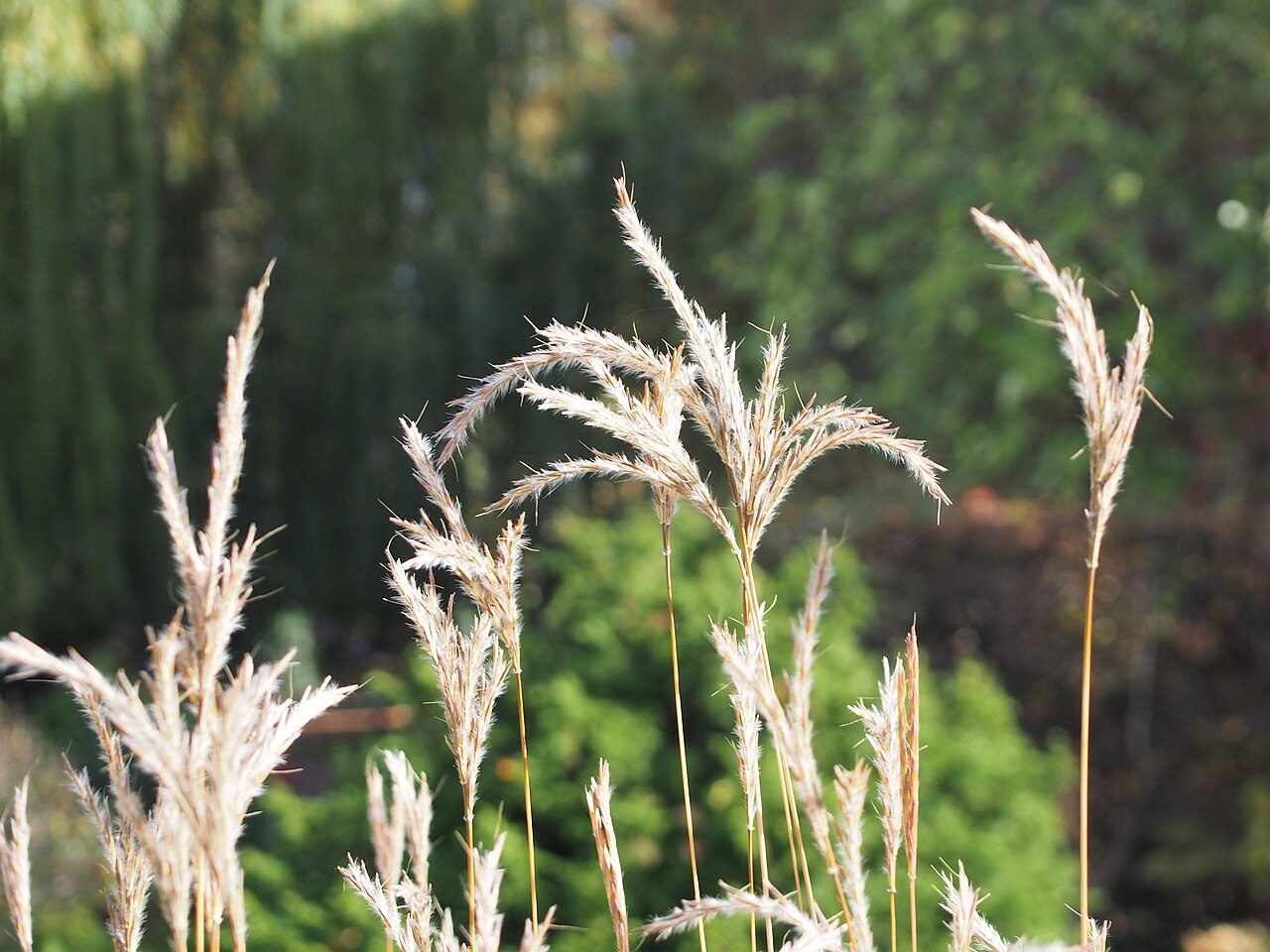
Straight species little bluestem is a good choice for most borders. Where space is tight, a compact selection holds a tidier shape. The Morton Arboretum lists several:
- ‘Carousel’: compact, about 2.5 feet, with copper, pink and mahogany fall tones.
- ‘Prairie Munchkin’: about 2.5 feet with a narrow habit.
- ‘Blaze’: 2 to 3 feet, upright, with red, purple and orange fall color that stays pinkish in winter.
- ‘Blue Heaven’: about 4 feet and upright, better for deeper beds.
Cultivars are clones of selected plants. For habitat value and genetic diversity, many native gardeners prefer seed-grown plants from a local source, and use cultivars only where shape really matters. If you are weighing a bigger grass for the back of the bed, compare sizes in our guide to little bluestem vs. switchgrass.
The First Three Years
- Year 1, spring: plant after the soil warms. Water deeply after planting.
- Year 1, summer: water during dry spells and pull weeds weekly. Expect little top growth while roots establish.
- Year 1, fall and winter: leave everything standing. Do not fertilize.
- Year 2, late winter: cut clumps back before new growth starts. NC State recommends cutting to the ground in late winter or early spring.
- Year 2, summer: water only in long droughts. Pull grass seedlings that appear in the gaps or walkway.
- Year 3: the border should look full. Replace any gaps, and edit self-sown seedlings to keep the rhythm clear.
Mistakes to Avoid
- Planting in rich, irrigated beds. Extra water and fertility make little bluestem lean. Keep it off lawn irrigation.
- Placing it in shade. Part shade is tolerated in the wild, but front-yard clumps stay upright best in full sun.
- Using only one or two clumps. Repetition is what makes a grass border look designed.
- Cutting back in fall. You lose the winter structure, the main reason to plant it.
- Ignoring seedlings. The Wildflower Center warns that little bluestem readily reseeds, and the Morton Arboretum notes it may self-seed excessively. In a small yard, pull extras each spring.
- Burying the crown in mulch. Keep mulch pulled back from the base of each clump.
📋 Find plants for your region: see the full Little Bluestem (Schizachyrium scoparium) profile or our native plant lists for Maryland, Virginia & West Virginia, North Dakota, South Dakota & Western Minnesota, Arkansas, Louisiana, Eastern Oklahoma & Eastern Texas, and South and West Texas.
Frequently Asked Questions
How far from the sidewalk should I plant little bluestem?
About 18 inches back from the edge. Mature clumps can be 1.5 to 3 feet wide (NC State), so this setback lets them arch toward the walk without blocking it.
Will little bluestem spread across my front yard?
It is a clumping grass and does not run like lawn grass. It does reseed, though, and the Wildflower Center calls it a ready reseeder. Pull seedlings in spring to keep the border pattern clean.
Does little bluestem stay attractive all winter?
Yes, in most years. NC State notes its copper fall color does not fade through winter. Heavy wet snow can flatten clumps, so keep snow piles away from them.
Can I plant little bluestem in clay soil?
Yes, as long as the clay drains. NC State and the Wildflower Center both list clay as acceptable. Avoid low spots where water stands after rain.
Is little bluestem deer resistant?
Both NC State and the Wildflower Center rate its deer resistance as high, which helps in front yards with deer traffic. No plant is completely deer-proof.
Sources
- NC State Extension Gardener Plant Toolbox, Schizachyrium scoparium: height and width, soil and light, clay tolerance, mulch away from crown, late-winter cutback, winter color, deer resistance, wildlife value.
- Lady Bird Johnson Wildflower Center, Schizachyrium scoparium: native distribution, mass planting, reseeding, intolerance of wet sites. Companion data from Wildflower Center pages for prairie dropseed, butterfly weed, purple coneflower, aromatic aster and sideoats grama.
- The Morton Arboretum, Little bluestem: fall color range, self-seeding, cultivar sizes.