A Five-Species Prairie-Style Bed: How to Balance Flowers and Grasses
Last updated: November 6, 2026
Most first prairie-style beds go wrong in one of two directions. Some are all flowers, which look great for six weeks and then turn into a gap-toothed patch of mulch and weeds. Others are mostly grass, which looks calm but rarely gets the color the gardener wanted.
A small bed with just five species can avoid both problems if the grasses and flowers each have a job. The grasses form a steady background, and the flowers come and go in front of it from early summer to frost.
This plan uses two native bunchgrasses and three native flowers, shows how many of each to buy for an 8 × 15-foot bed, and explains how to shift the balance toward more grass or more color.
Plan at a Glance
| Site | An open bed in the lawn, a sunny side yard, or a former foundation bed |
| Size | Sample plan 8 × 15 feet (120 square feet), about 50 plants |
| Sun | Full sun |
| Soil | Well-drained, average to dry; no amendments needed |
| Maintenance | Weeding in years 1–2, then one late-winter cutback |
| Best regions | Central and southern Midwest, Mid-South and Ozarks as written; swaps below for other regions |
Read the Site First
Every plant in this bed wants sun and drainage. The Wildflower Center lists little bluestem and prairie dropseed for dry sites, and NC State notes that butterfly weed does not transplant well because of its deep taproot, so it needs a spot where water does not sit.
Check drainage by digging a hole about a foot deep, filling it with water and seeing whether it empties within a day. If it doesn’t, this is the wrong mix for that spot; choose moisture-loving prairie plants instead.
If the bed runs along a walk or sits under windows, check heights against our guide to designing a native grass border that keeps windows and walkways clear.
Also look at the soil. Rich, heavily composted garden soil makes bunchgrasses grow tall and lean. Lean, unamended soil keeps the whole bed shorter and sturdier.
The Five Species and Their Jobs
Each plant here was picked for a role, not just for its flowers. Swapping one out works best if the replacement can do the same job.
1. Little bluestem: the matrix
Little bluestem is the background that holds the bed together. NC State lists it at 2 to 4 feet tall in narrow, upright clumps, and the Wildflower Center calls it “wonderful planted en masse,” turning from blue-green in late summer to gold with fluffy seed heads.
2. Prairie dropseed: the front edge
Prairie dropseed makes a fine-textured fountain 2 to 3 feet tall and wide, per NC State. Its flowers, which the Wildflower Center notes are fragrant, open from June to August. A band of it along the front gives the bed a clean, finished edge.
3. Butterfly weed: early-summer color
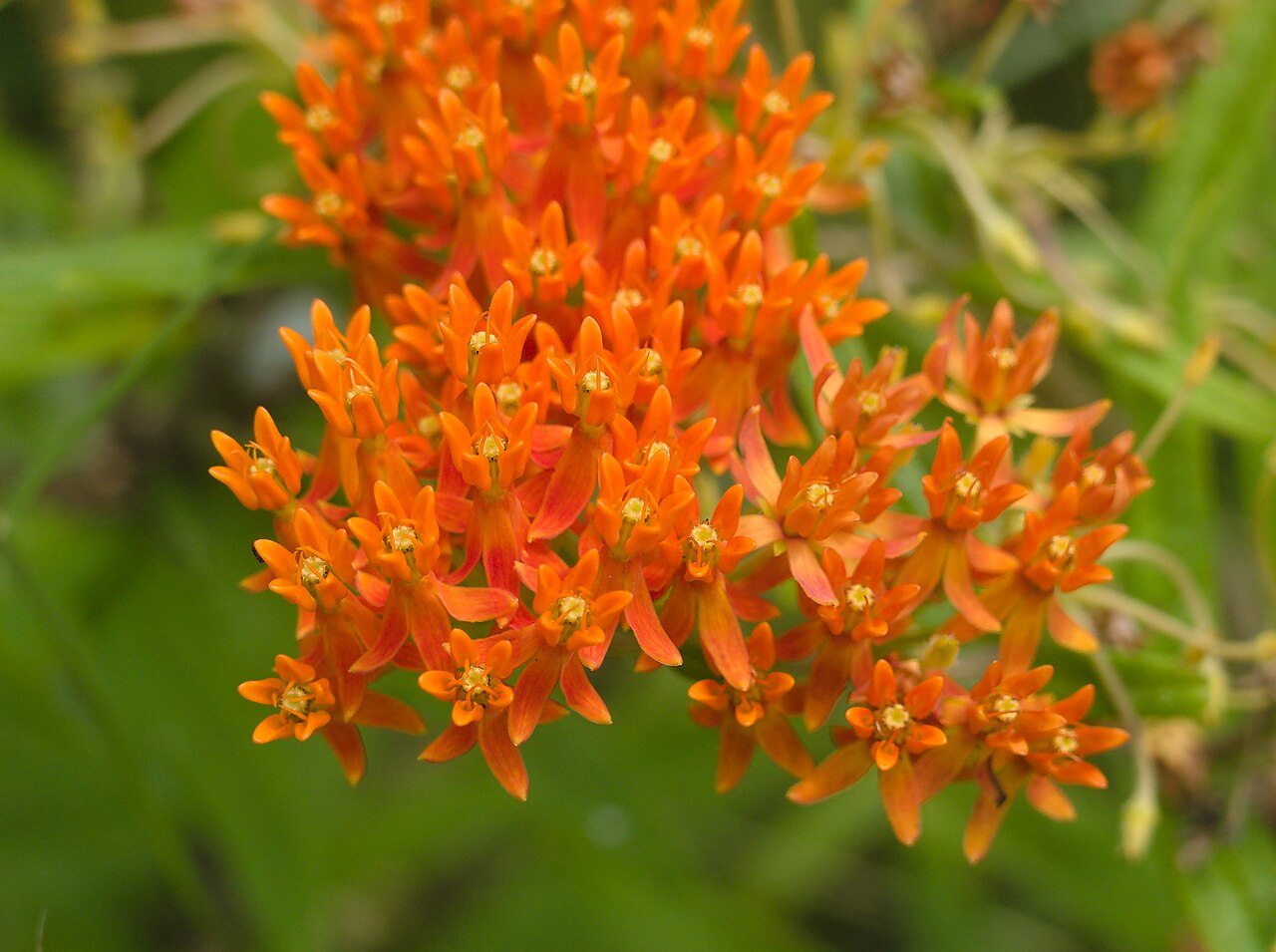
Butterfly weed brings bright orange to the front and middle of the bed. NC State lists it at 1 to 2 feet tall, flowering from late spring into midsummer. It is a monarch host plant, per the Wildflower Center.
Be patient: the Wildflower Center notes it can take two to three years to flower well. It can also be slow to show in spring, so check before assuming a plant has died; our guide to milkweed not returning in spring walks through it. NC State flags butterfly weed as a problem for dogs, cats and horses, so keep that in mind where pets graze.
4. Purple coneflower: midsummer mass
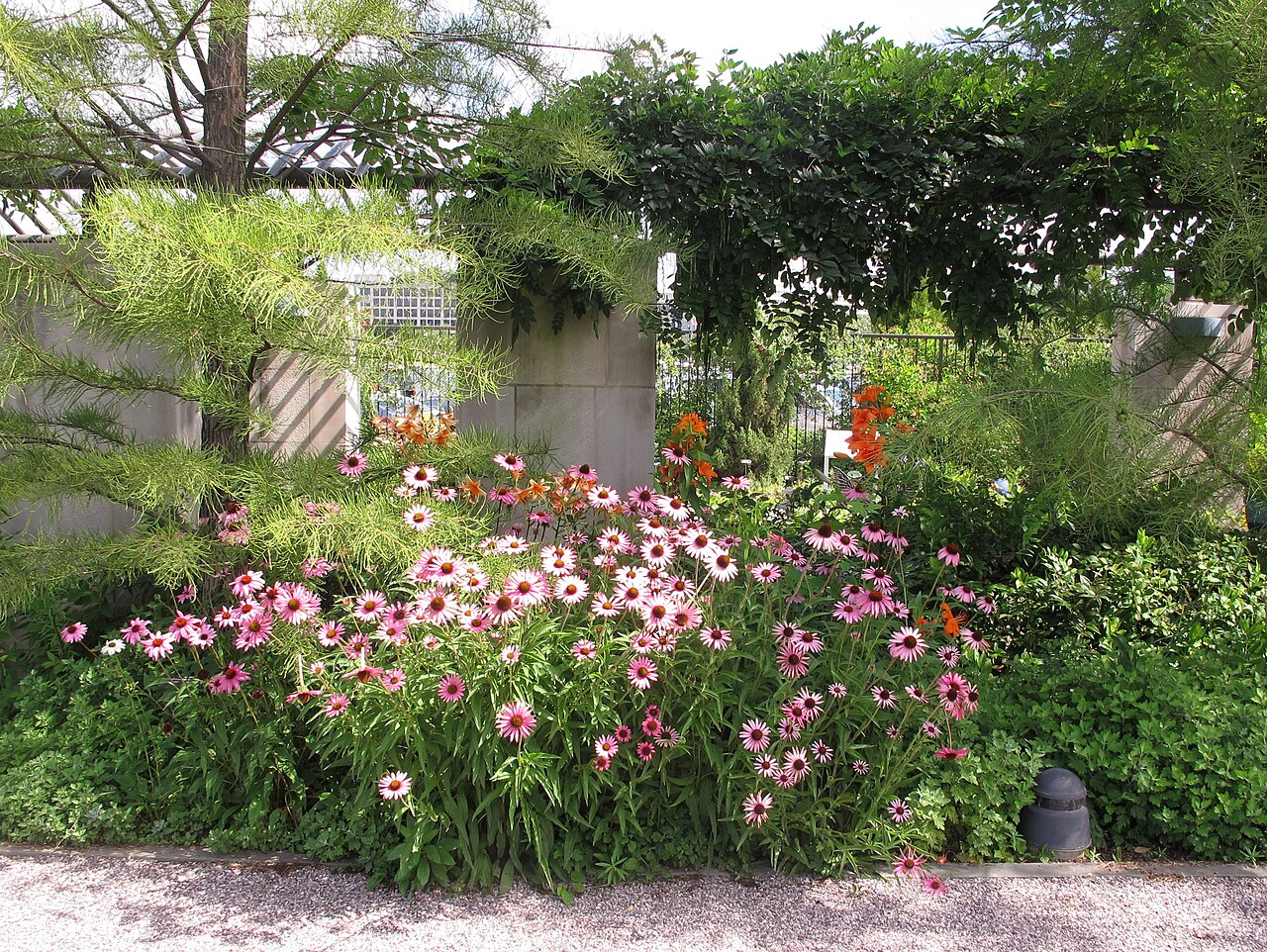
Purple coneflower is the bed’s showiest flower, at 3 to 4 feet tall and 1 to 2 feet wide according to NC State. It blooms through summer and, NC State notes, reseeds itself, so a few groups will slowly fill nearby gaps.
5. Aromatic aster: the fall finish
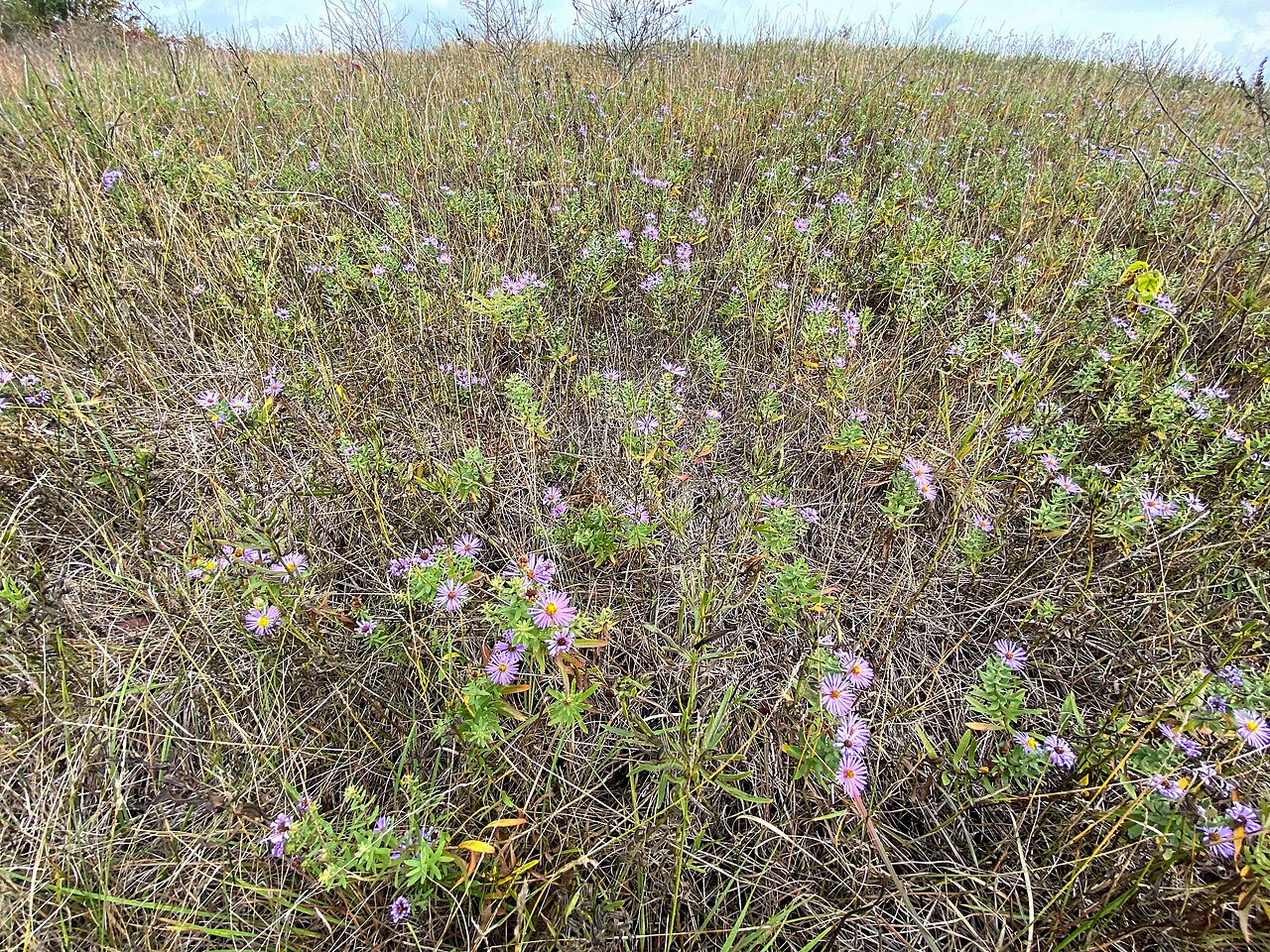
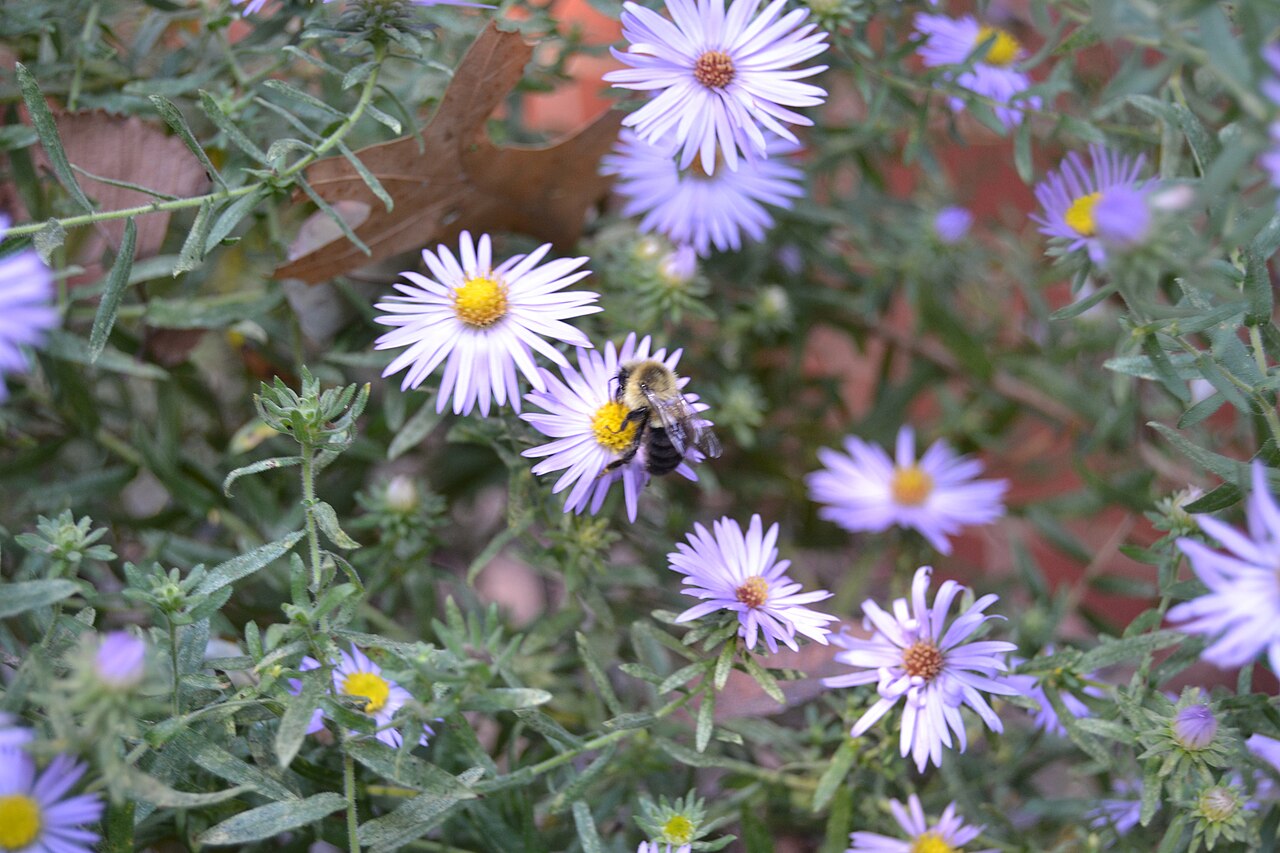
Aromatic aster carries the color into autumn. NC State describes dense, low mounds 1 to 3 feet tall that bloom from late summer until frost, one of the last flowers before a hard freeze. It spreads slowly by stolons, so give it the front corners where it can widen.
How Much Grass? Choosing Your Ratio
There is no single right ratio, but there is good guidance. The Lady Bird Johnson Wildflower Center says most meadow and prairie managers recommend that native grasses make up 50 to 80 percent of a meadow’s species.
For seeded plantings, the University of Northern Iowa’s Tallgrass Prairie Center compared three seed mixes. A mix seeded at one part grass to three parts flowers gave plenty of flowers but also a lot of bare ground and weeds. A one-to-one mix produced a similar number of flowers with little bare ground and fewer weeds.
Gardens are a little different. In a Wild Ones Journal article published by the Tallgrass Prairie Center, University of Minnesota grass expert Mary Hockenberry Meyer says a 50/50 ratio is fine, but most people will be happier with about one-third grasses and two-thirds wildflowers in a yard.
For a small planted bed, start near half grass. Go up toward 60 percent if weeds are your main worry, or down toward one-third if color matters most.
Plant Palette
Heights from NC State Extension; ranges from the Lady Bird Johnson Wildflower Center. Confirm each species is native to your state.
| Plant | Role | Height | Sun / moisture | Native range |
|---|---|---|---|---|
| Little bluestem (Schizachyrium scoparium) | Matrix grass, fall color | 2–4 ft | Sun / dry | Much of the U.S. east of the Rockies, into Canada and Mexico |
| Prairie dropseed (Sporobolus heterolepis) | Front-edge grass | 2–3 ft | Sun / dry | Que. to Sask., locally south to NC, KY, e. TX and CO |
| Butterfly weed (Asclepias tuberosa) | Early-summer color, monarch host | 1–2 ft | Sun / dry to medium, well-drained | New England to FL, west to TX, north through CO to MN; also Ont. |
| Purple coneflower (Echinacea purpurea) | Midsummer mass, seed heads | 3–4 ft | Sun to part shade / dry to medium | GA to extreme ne. TX, north to NC, OH, IL and IA |
| Aromatic aster (Symphyotrichum oblongifolium) | Fall color, front corners | 1–3 ft | Sun / dry to medium | PA to NC, west to ne. WY and TX |
Layout: Matrix, Drifts and Repeats
Garden designer Piet Oudolf, quoted in the same Tallgrass Prairie Center article, describes matrix planting as one species or a handful dominating a bed, with other plants blended into it. The article adds that these core grasses can be planted as close as 12 to 15 inches apart to cut weed competition and give the flowers something to lean on.
Cornell Cooperative Extension makes a related point about how a planting reads to neighbors: grouping plants in drifts that repeat across the bed makes it easier to “read” as intentional.
Put both ideas together:
- Back two-thirds: little bluestem planted about 15 inches apart as the matrix, with purple coneflower set into it in three groups of three.
- Front third: a loose band of prairie dropseed along the edge, with butterfly weed in two or three groups just behind it.
- Front corners: aromatic aster, where its slow spread widens the bed’s ends rather than crowding the coneflowers.
Quantities for an 8 × 15-Foot Bed
Balanced (about 55% grass):
- Little bluestem: 18
- Prairie dropseed: 10
- Purple coneflower: 9
- Butterfly weed: 6
- Aromatic aster: 7
More color (about one-third grass):
- Little bluestem: 12
- Prairie dropseed: 5
- Purple coneflower: 15
- Butterfly weed: 9
- Aromatic aster: 9
Both versions total about 50 plants, roughly one per 2½ square feet. Expect more weeding with the color-heavy version.
Bloom and Interest Through the Year
- Late spring to midsummer: butterfly weed in orange; the grasses fill in green.
- Summer: purple coneflower peaks; prairie dropseed flowers from June to August.
- Late summer to frost: aromatic aster; little bluestem turns from blue-green to gold.
- Winter: grass clumps, coneflower seed heads and butterfly weed pods stand until the spring cutback.
Regional Alternates
Purple coneflower is the most range-limited plant in this palette. The Wildflower Center gives its native range as Georgia to northeast Texas, north to North Carolina, Ohio, Illinois and Iowa.
- Great Plains: pale purple coneflower (Wisconsin to eastern Kansas, south to Georgia and east Texas, rare east of the Mississippi) fills the same role.
- Northeast and Upper Midwest: wild bergamot, native across most of the U.S. east of the Rockies, can take the coneflower’s place. It spreads by rhizomes, so the Wildflower Center suggests dividing it about every three years.
- Where aromatic aster isn’t native (it reaches only from Pennsylvania south and west): use a local, low fall aster from your regional list.
- Arid West: swap the grasses for blue grama or another local bunchgrass and pick flowers from your state’s list.
Installation Steps
- Clear the bed. Remove turf and perennial weeds completely. Prairie plants grow slowly above ground at first, so leftover weeds win early.
- Skip the compost. Rake the soil level and leave it lean.
- Lay out the grasses first. Set the little bluestem pots on a staggered 15-inch grid across the back two-thirds, then the prairie dropseed band at the front.
- Swap in the flowers. Remove grass pots where each flower group goes and set the coneflowers, butterfly weed and asters in their places.
- Plant and water. Plant at pot depth, water deeply, and spread a thin layer of shredded mulch between plants.
The First Three Years
UMN Extension notes that potted prairie plants establish faster than seed, which can take two to five years to reach full size, and that prairie grasses spend the first years building roots before they grow much above ground. The Xerces Society describes the same pattern: short-lived plants dominate early, and long-lived perennials and grasses take over by the third season.
- Year 1: Water weekly in dry spells. Weed every two to three weeks; the gaps between small plants are where weeds take hold. Don’t worry if butterfly weed barely flowers.
- Year 2: Cut everything back in late winter. Keep weeding. Fill any gaps left by plants that died with the same species, so the pattern stays readable.
- Year 3: The bed should close up. Thin coneflower seedlings and aster spread where they crowd the grasses, or where the balance has drifted from what you planned.
- Every year after: One late-winter cutback, and a check each summer on whether flowers or grasses are taking over.
Mistakes to Avoid
- Too few grasses. An all-flower bed leaves bare soil after bloom. The Tallgrass Prairie Center’s flower-heavy mix had the most bare ground and weeds.
- One of everything. Single plants of each species read as a collection, not a design. Plant in groups and repeat them. The same idea scales up in our guide to keeping a small meadow organized with paths and edges.
- Tall flowers at the front. Keep coneflowers in the matrix and the short butterfly weed and asters forward. The same short-to-tall logic applies when planning a meadow transition from the lawn edge.
- Rich soil. Compost and fertilizer make grasses and coneflowers taller and floppier.
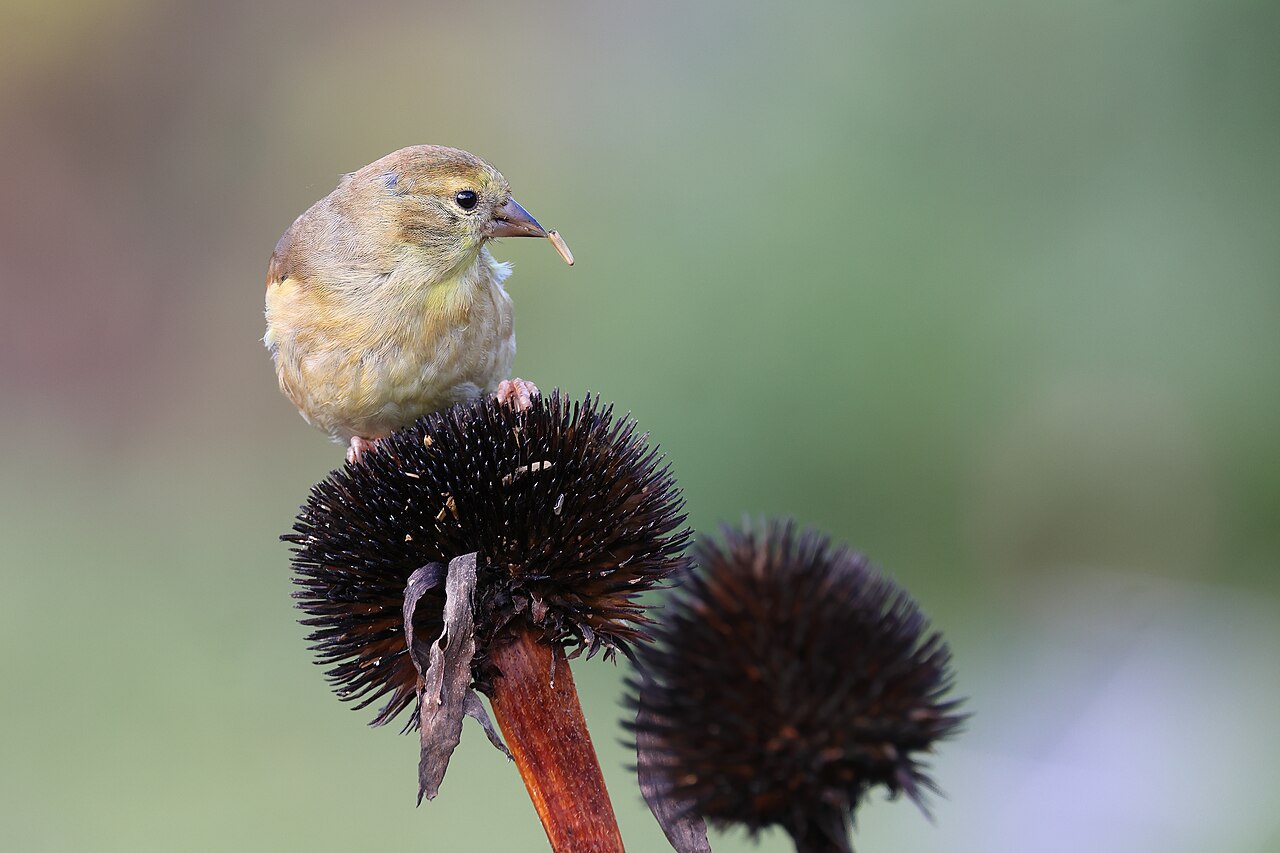
- Deadheading everything. Coneflower seed heads feed birds and add winter structure. See our guide to deadheading or keeping coneflower seed heads for a middle path.
📋 Find plants for your region: see our native plant lists for Illinois, Iowa & Missouri, Kentucky & Tennessee, and Arkansas, Louisiana, Eastern Oklahoma & Eastern Texas.
Frequently Asked Questions
What is a good grass-to-flower ratio for a prairie garden?
Meadow managers often use 50 to 80 percent grasses, per the Wildflower Center. In a small yard bed planted from pots, about one-third to one-half grasses balances color with weed control.
Can I make a prairie bed with only five species?
Yes. A few species repeated in groups often look more intentional than many single plants. Just make sure their bloom times cover early summer, midsummer and fall.
How far apart should I plant prairie plugs?
The Tallgrass Prairie Center article notes core grasses can go as close as 12 to 15 inches apart. This plan uses about 15 inches for the grass matrix and slightly wider spacing for the flowers.
Why are my prairie plants so small the first year?
They are growing roots. UMN Extension notes prairie grasses grow slowly above ground in the first years, with more top growth by the third year.
Should I cut the bed back in fall?
Wait until late winter. The standing grasses and seed heads give birds food and cover, and they look good in snow. See what to leave standing for winter interest.
Sources
- Kristine Nemec, Add Balance to Your Blooms, Wild Ones Journal, Fall 2024 (Tallgrass Prairie Center): seed-mix ratio study, Mary Hockenberry Meyer’s yard ratio, matrix planting and 12–15 inch spacing.
- Lady Bird Johnson Wildflower Center, Plant a Wildflower Meadow: 50 to 80 percent grasses and their roles.
- University of Minnesota Extension, Planting and Maintaining a Prairie Garden: establishment time and root growth.
- Xerces Society and Mahan Rykiel Associates, Mid-Atlantic Native Meadows: how meadows change over the first three seasons.
- Cornell Cooperative Extension, Putnam County, “Cues to Care” Can Help: drifts and repetition.
- NC State Extension Gardener Plant Toolbox: little bluestem, prairie dropseed, butterfly weed, purple coneflower, aromatic aster: sizes, bloom times, spread, toxicity flags.
- Lady Bird Johnson Wildflower Center plant database: little bluestem, prairie dropseed, butterfly weed, purple coneflower, aromatic aster, pale purple coneflower, wild bergamot: native ranges and habitat notes.