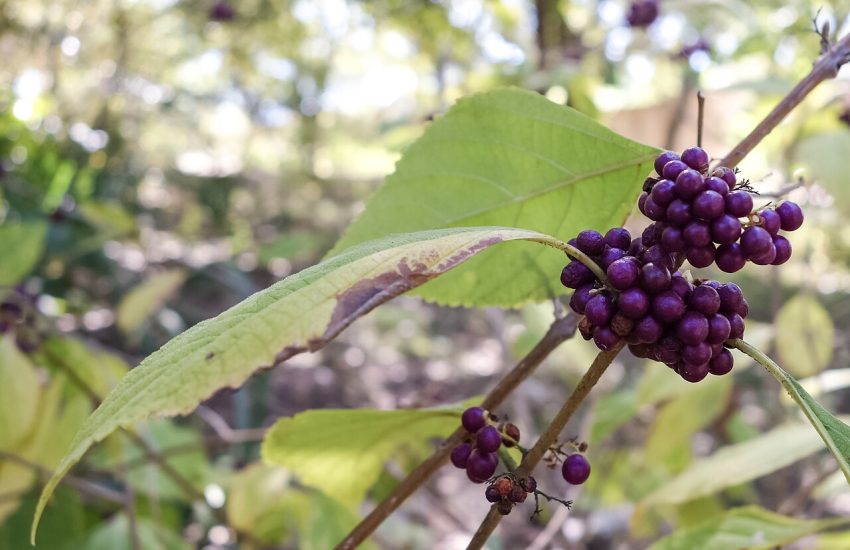
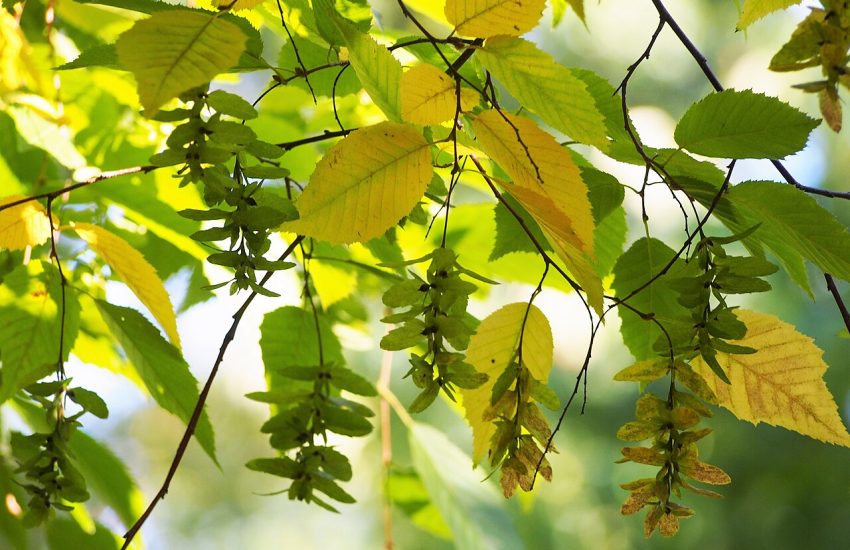
Native Alternatives to a Burning Bush Hedge: Match Color, Size, and Local Range
Last updated: November 7, 2026
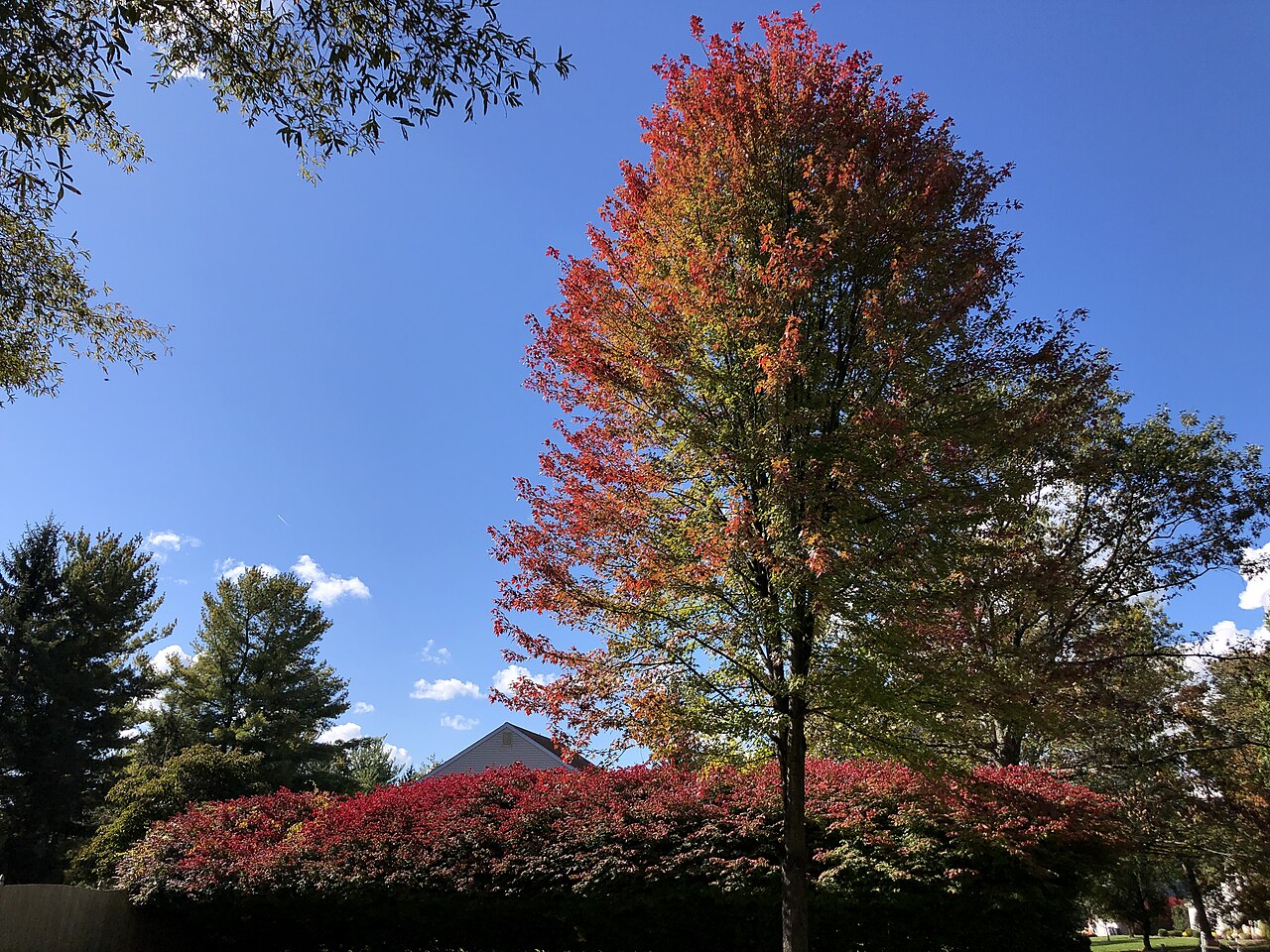
Burning bush earned its place in front yards with one trick: a few weeks of glowing red leaves each fall. That same shrub now sits on invasive plant lists across much of the East and Midwest.
Replacing a burning bush hedge is easier when you know exactly what it was doing for you. Usually that is fall color, a certain size, and a tidy row along a walk or property line.
This guide matches those three things with native shrubs, then checks each candidate against its native range. A good replacement for a Maryland yard may be the wrong pick in Minnesota or Oregon.
Plan at a Glance
| Site | An existing or planned burning bush hedge along a walk, foundation or boundary |
| Size | Most hedges are 5–10 feet tall and wide; plan the new shrubs by their own mature width |
| Sun | Full sun gives the strongest fall color for most replacements |
| Soil | Average to moist; blueberries and fothergilla need acidic soil |
| Maintenance | Low once established; less shearing than a burning bush hedge |
| Best regions | Eastern and central U.S. palette, with a Pacific Northwest alternate |
| Key decision | Pick for fall color first, then filter by size and your local native range |
Why Replace Burning Bush?
University of Maryland Extension describes burning bush (Euonymus alatus) as an East Asian shrub introduced to the U.S. around 1860. Birds eat its fruit and spread the seeds into woods, fields and coastal habitats, where it can form dense thickets.
NC State Extension notes that its invasive tendency has been recorded from Connecticut to South Carolina and west to Wisconsin. Penn State Extension adds that its tolerance of deep shade is central to how it invades woodlands.
Some states now regulate it. Penn State reports that Pennsylvania has declared it a noxious weed, making it illegal to buy, plant or propagate there, and UMD notes that it is a prohibited species under Maryland law.
Step 1: Assess What the Old Hedge Was Doing
Before you pull anything, measure and photograph the hedge in fall. Write down four things:
- Height and width. UMD gives 5 to 10 feet tall and wide for the common ‘Compactus’ type, occasionally reaching 20 feet.
- Sun. UMD notes burning bush colors poorly in shade, turning pale peach to muted red, so a shady hedge may never have been very red.
- Soil. Check whether the spot stays wet after rain or dries out fast.
- Function. Note whether the hedge screens a view, edges a walk or simply adds color. If privacy was the main job, our narrow-yard privacy planting guide helps decide where you need evergreens.
If you’re unsure about mature width, our guide to choosing a native hedge by mature width shows how to measure the planting band first.
Step 2: Match the Fall Color
UMD Extension suggests several native and non-invasive shrubs with showy fall color, including Virginia sweetspire, fothergilla, blueberries, fragrant sumac and oakleaf hydrangea. The NC State Extension Plant Toolbox lists the fall color for each of these.
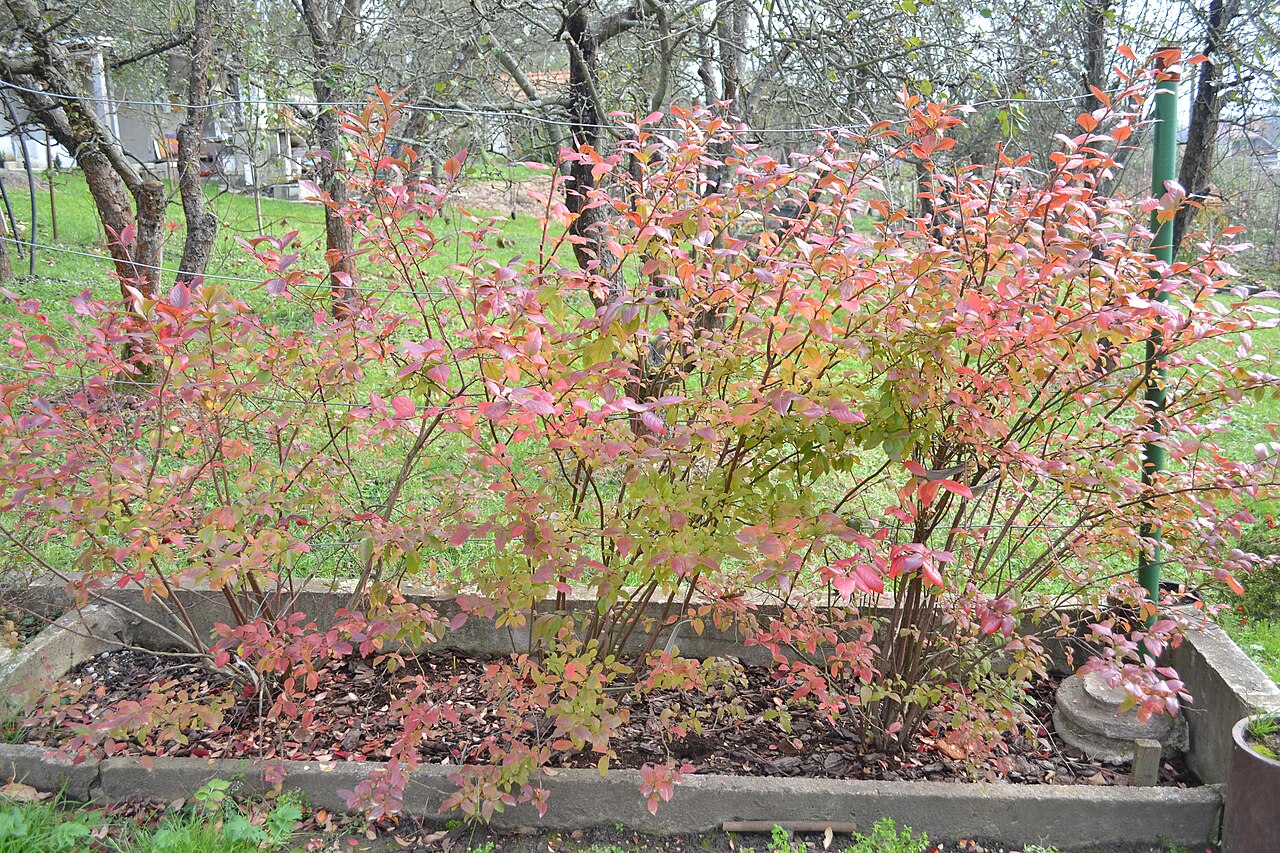
No native shrub matches burning bush’s uniform fluorescent red exactly. Instead, most offer a mix of red, orange, purple and gold that changes over several weeks.
- Closest to red: strawberry bush, winged sumac and Virginia sweetspire, which NC State lists as red to orange in fall.
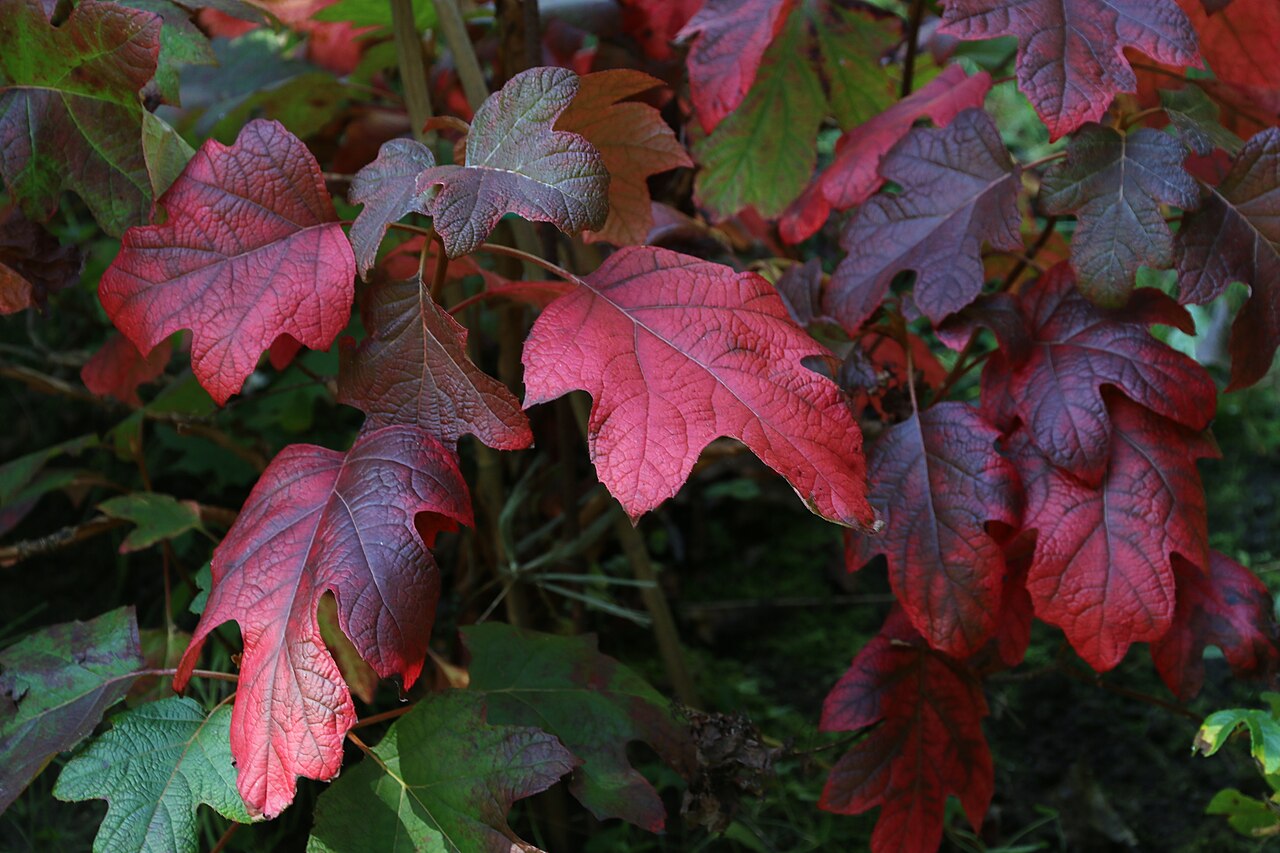
- Red-purple: oakleaf hydrangea and highbush blueberry.
- Mixed warm tones: fothergilla (yellow, orange and red) and red chokeberry (orange, pink and red).
For the strongest color, give these shrubs as much sun as their site needs allow. Shade dulls fall color in many shrubs, burning bush included.
Step 3: Match the Size
Burning bush hedges are often sheared to hold them at 4 or 5 feet. Natives replaced at the same spacing may need more room, or a shrub that naturally stays smaller.
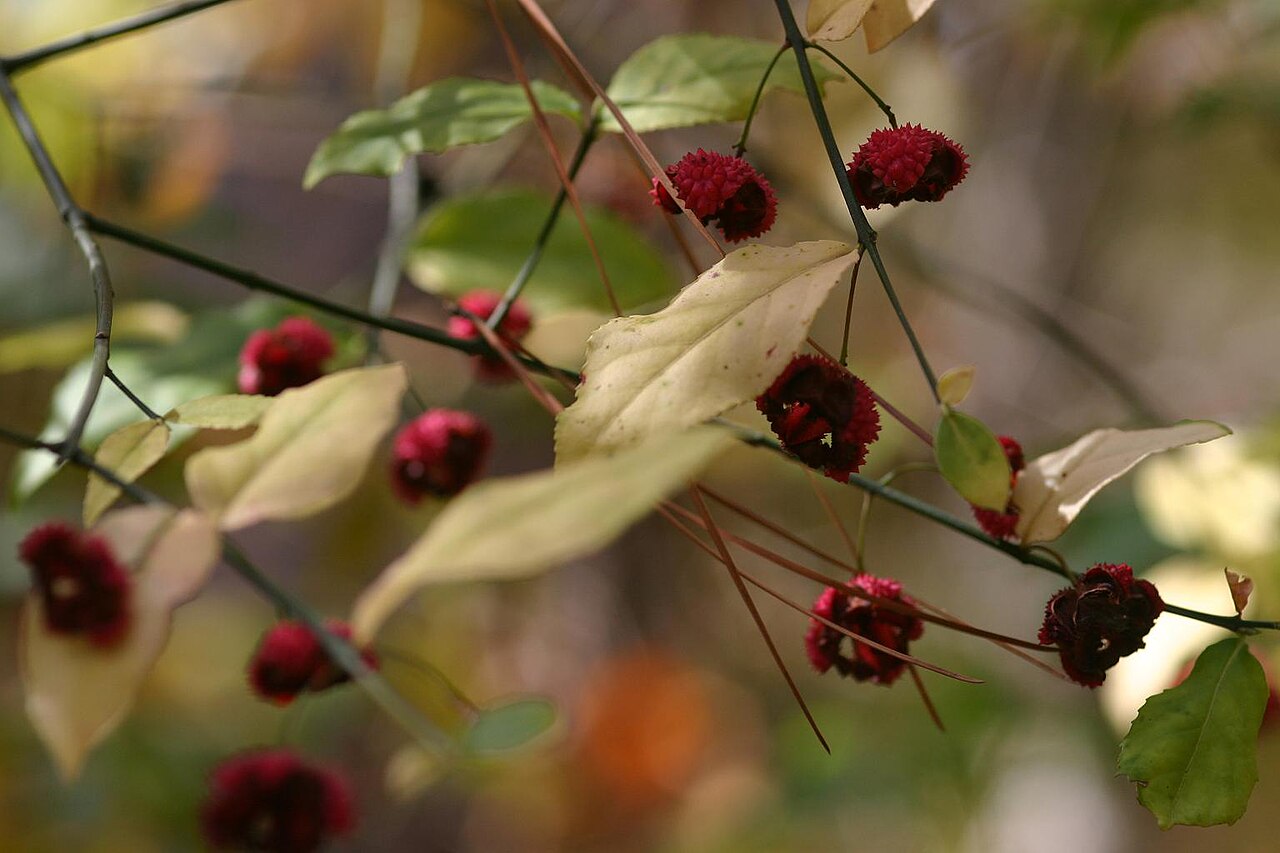
Strawberry bush is the closest relative. NC State lists it at 4 to 6 feet tall and wide, with red fall color, though it also notes deer readily eat its foliage and twigs.
Wahoo, another native euonymus, is far larger. NC State lists it at 12 to 25 feet tall, so it belongs in a boundary planting rather than a foundation hedge.
Virginia sweetspire and oakleaf hydrangea fill the middle range at 4 to 8 feet tall. If you need a shorter shrub, compare compact selections with the species using our guide to straight species and native cultivars.
Step 4: Check the Local Range
This is the step most burning bush swap lists skip. Several of the best fall-color shrubs have narrow native ranges.
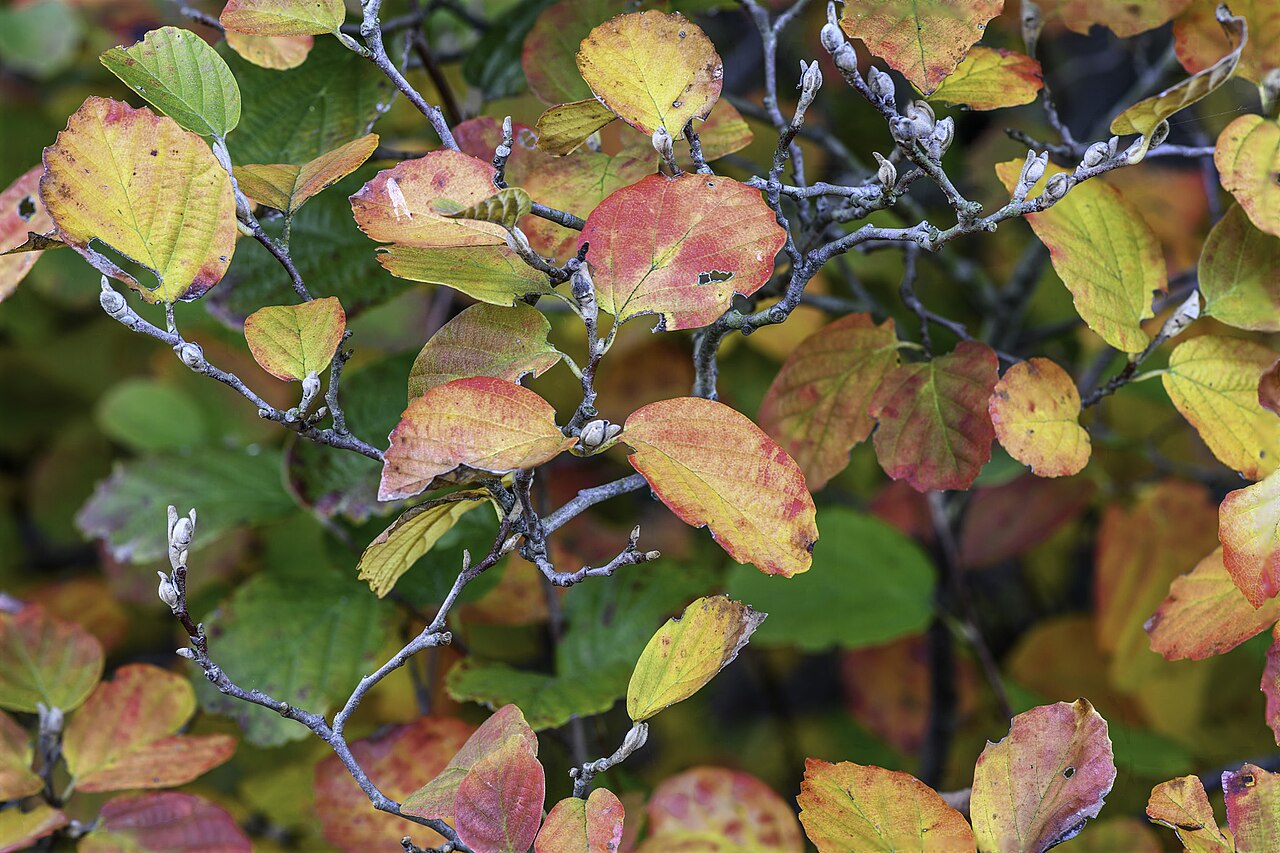
Large fothergilla is native to the mountains of the Southeast, according to NC State, and oakleaf hydrangea to the southeastern U.S. In New England or the upper Midwest, they are garden plants rather than local natives.
Our article on checking whether a plant is native to your area walks through county-level range checks. Use it on every shrub in the palette below before you buy.
Plant Palette: Fall Color, Size and Range
Height, width, fall color and native range are summarized from the NC State Extension Gardener Plant Toolbox. Confirm your county before buying.
| Plant | Role and fall color | Height × width | Sun / moisture | Native range |
|---|---|---|---|---|
| Strawberry bush | Native euonymus; red | 4–6 ft × 4–6 ft | Sun to shade; moist, well drained | Central and eastern U.S. |
| Virginia sweetspire | Hedge or mass; orange to red | 4–8 ft × 3–6 ft | Part shade; moist to wet | S. New Jersey to Kentucky and Oklahoma, south to Florida and Texas |
| Red chokeberry | Narrow hedge; orange, pink, red | 6–12 ft × 3–5 ft | Sun to part shade; moist to wet | Eastern Canada to central and eastern U.S. |
| Highbush blueberry | Fruit and fall color; yellow, orange, purple, red | 6–12 ft × 6–10 ft | Sun to part shade; moist, acidic | Eastern North America |
| Large fothergilla | Flowering hedge; yellow, orange, red | 6–12 ft × 6–10 ft | Sun to part shade; acidic | Southeastern mountains |
| Oakleaf hydrangea | Bold foliage; orange, purple, red | 4–8 ft × 4–10 ft | Sun to part shade; well drained | Southeastern U.S. |
| Winged sumac | Large, suckering mass; red | 7–15 ft × 10–20 ft | Sun to part shade; dry to moist | Central and eastern U.S. and parts of Canada |
| Wahoo | Large boundary shrub; gold to red | 12–25 ft × 15–25 ft | Sun to part shade; moist, well drained | Ontario and Nova Scotia to Florida, west to Montana and Texas |
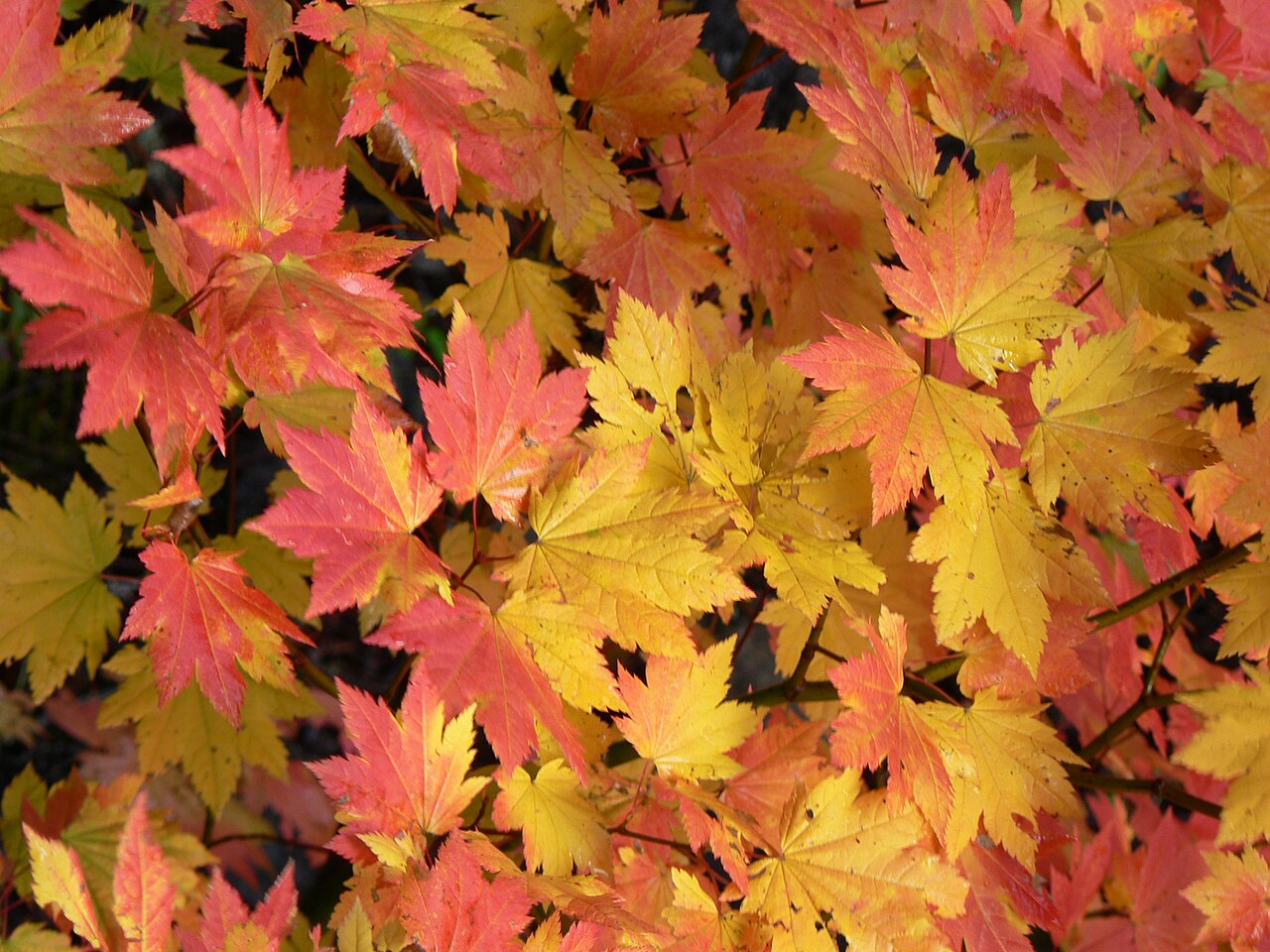
| Vine maple | Pacific Northwest alternate; yellow, orange, red | 10–25 ft × 15–20 ft | Sun to shade; moist | Pacific Coast states |
Regional Alternates
- Northeast and Great Lakes: red chokeberry, highbush blueberry, wahoo and strawberry bush where they occur locally.
- Mid-Atlantic and Southeast: Virginia sweetspire, oakleaf hydrangea, large fothergilla and strawberry bush.
- Plains and Midwest: wahoo, winged sumac and red chokeberry where local records support them.
- Pacific Northwest: vine maple, which NC State lists for California, Oregon and Washington.
- Interior West and Southwest: fewer shrubs color reliably; check your state native plant society list before choosing.
Installation: Replacing the Hedge
- Remove burning bush plants. Penn State notes young plants can be pulled by hand, and a hoe or root-wrenching tool removes most of the root system on larger plants.
- If you consider herbicide on large plants, follow your state extension service’s current guidance and the product label exactly.
- Watch for seedlings for a few years. UMD notes hundreds of seeds may germinate near a parent plant.
- Re-measure the band and space new shrubs by their mature width, not the old hedge spacing.
- Plant in fall or spring, water deeply, and mulch the whole band.
- Mix at least two or three species, so one pest or bad year can’t empty the whole row.
The First Three Years
- Year one: Water through dry spells and pull burning bush seedlings as they appear.
- Year two: Expect real fall color to begin as shrubs settle. Remove only dead or broken stems.
- Year three: The new hedge should close. Thin suckering shrubs such as winged sumac or chokeberry where they cross into paths.
Mistakes to Avoid
- Expecting an exact color match. Natives offer mixed reds and oranges rather than one uniform red.
- Choosing by color only. A southeastern shrub may struggle or be out of range farther north.
- Copying the old spacing. Native replacements often need more room than a sheared burning bush.
- Ignoring soil pH. Blueberries and fothergilla need acidic soil.
- Leaving seedlings. Burning bush keeps coming back from seed in nearby beds.
- Swapping one invasive for another. For a related swap, see our guide to native alternatives to Japanese barberry.
📋 Several palette shrubs appear on our North and South Carolina native plant list, and vine maple is on the Western Oregon and Western Washington list. Check the list for your region.
FAQs
What is the best native replacement for burning bush?
There is no single best one. For a similar size and red fall color in the East, Virginia sweetspire, strawberry bush and red chokeberry are good starting points, as long as they are native where you live.
Is there a native shrub that turns as red as burning bush?
Not quite. Strawberry bush, winged sumac and Virginia sweetspire come close, but most natives mix red with orange, purple or gold.
Is burning bush illegal to plant?
In some states, yes. Penn State Extension reports it is a noxious weed in Pennsylvania, and UMD Extension notes it is a prohibited species in Maryland. Check your state’s invasive plant rules.
How can I tell burning bush from native euonymus?
Penn State notes that the native species, including strawberry bush and wahoo, lack the corky wings found on burning bush stems.
Will my new hedge color well in shade?
Most shrubs color best in sun. In part shade, choose plants like oakleaf hydrangea or Virginia sweetspire, and expect softer color.
Sources
- University of Maryland Extension: Burning Bush
- Penn State Extension: Burning Bush
- NC State Extension Gardener Plant Toolbox: Euonymus alatus, Euonymus americanus, Euonymus atropurpureus, Itea virginica, Aronia arbutifolia, Vaccinium corymbosum, Fothergilla major, Hydrangea quercifolia, Rhus copallinum, Acer circinatum
- Lady Bird Johnson Wildflower Center: Itea virginica