
Sky-blue Lupine (Lupinus diffusus)
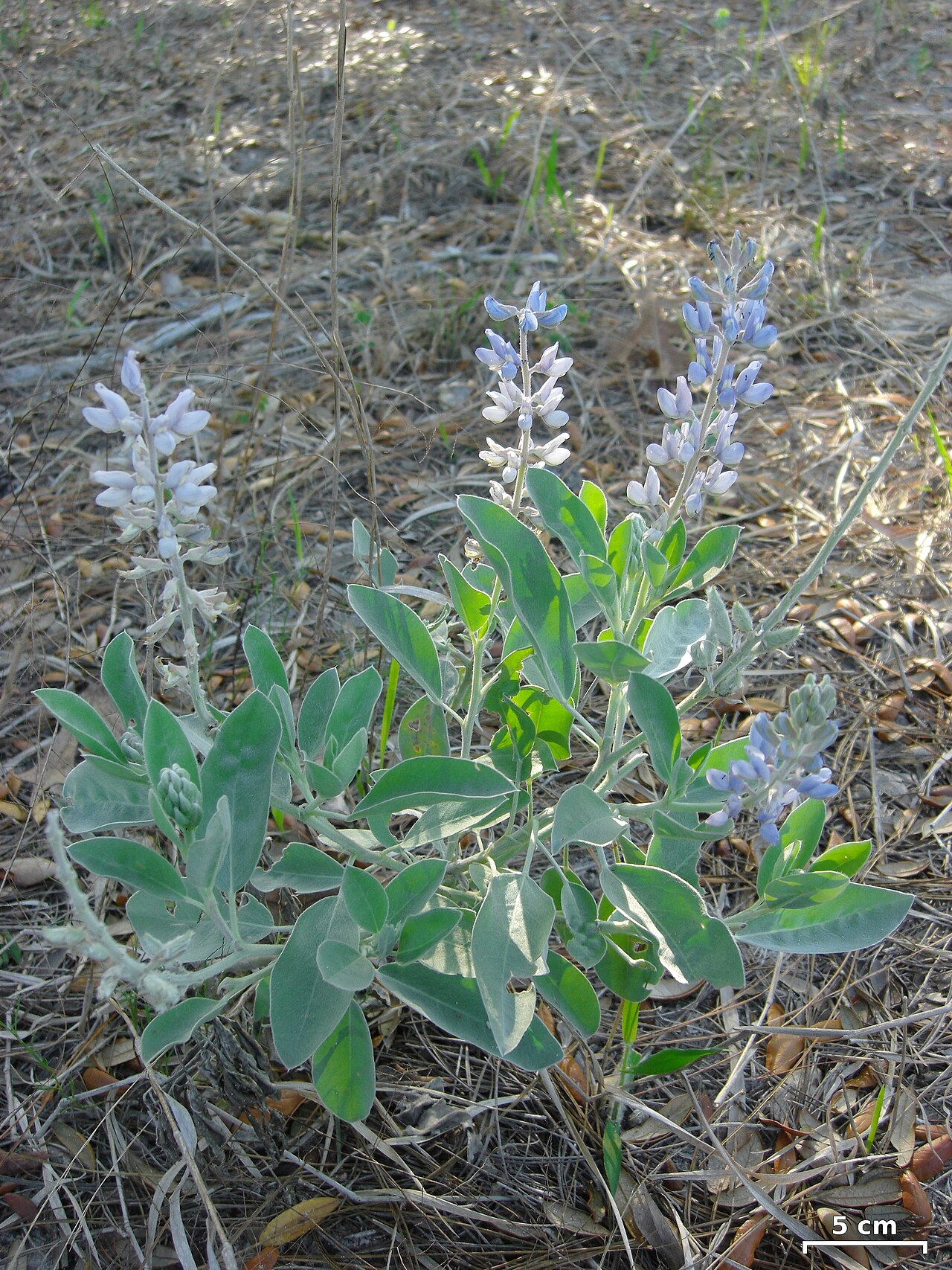
Lupinus diffusus, known as Sky-blue Lupine (also skyblue lupine, and listed by USDA PLANTS as Oak Ridge lupine), is a striking wildflower of the deep, dry sands of the southeastern Coastal Plain. In late winter and spring it raises upright spikes of soft sky-blue pea flowers above mounds of silvery, velvet-haired leaves. It belongs to the pea family (Fabaceae) and is one of the most recognizable spring flowers of Florida scrub and sandhills.
Unlike the familiar garden lupines and the western and northern wild lupines, which have leaves divided into a fan of leaflets, sky-blue lupine has simple, undivided, oval leaves. They are densely covered with short, silky hairs that give the whole plant a gray-green or silvery sheen and help it cope with the heat and glare of open white sand. Each flower has a pale cream or whitish spot on its upper petal, and the plant often blooms when little else in the scrub is in flower.
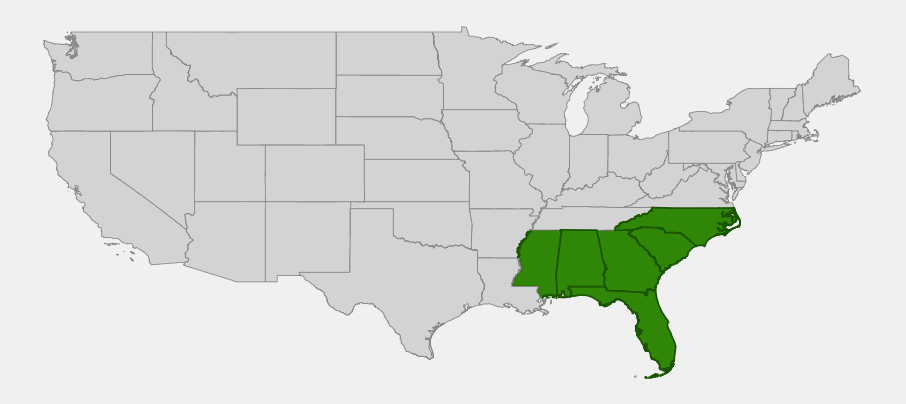
Sky-blue lupine is native from southeastern North Carolina south through the Carolinas and Georgia to central and south-central Florida, and west to Alabama and Mississippi. It is a short-lived perennial with a long taproot, so it is grown mostly from seed in sunny, sandy, well-drained sites. This guide covers how to identify it, where it grows, and how to establish it in a dry native garden.
Identification
Sky-blue lupine is easy to recognize in bloom. The combination of undivided, silvery-hairy leaves and spikes of blue pea flowers on bare, sandy ground is distinctive in the Southeast. The closely related lady lupine (Lupinus villosus), which shares some of the same habitats, has longer, shaggier hairs and pink to lavender flowers with a reddish-purple spot.
Stems & Habit
Plants grow from a deep taproot and form low, spreading clumps. The stems are thick, densely hairy and often sprawling at the base before turning upward, so a mature plant is usually 1 to 2 feet tall and 1 to 3 feet across. In poor sand plants are smaller; well-grown plants can make broad mounds.
Leaves
The leaves are simple (technically a single leaflet), elliptic to oval, about 2 to 4 inches long, on short stalks. Both surfaces are covered with fine, flat-lying, silky hairs, which give them a soft gray-green to silvery color. The plant keeps its leaves through the mild southern winter, so the silvery clumps are visible on the sand long before it flowers.
Flowers
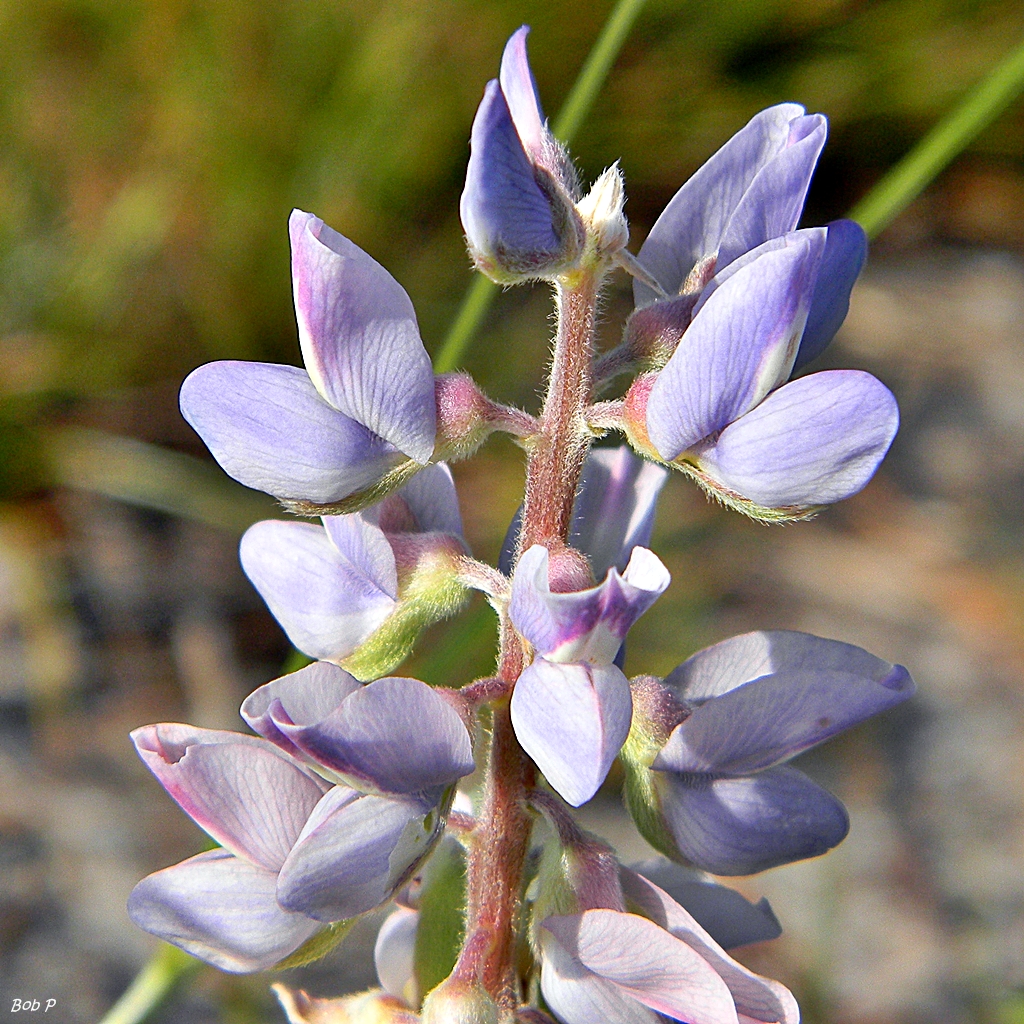
Flowers are borne in an upright, many-flowered spike or raceme at the end of each stem, often 6 to 12 inches long. The individual flowers are typical pea flowers, a little over half an inch long, pale to medium sky blue or blue-violet. The upper petal (the banner) carries a creamy white to yellowish spot in the center. In lupines this spot usually darkens to reddish-magenta after the flower is pollinated, which signals to bees that the nectar and pollen are gone.
In Florida the main bloom is from February through April, and farther north it flowers mainly in April and May. Scattered plants sometimes bloom out of season, even in summer.
Fruit & Seeds
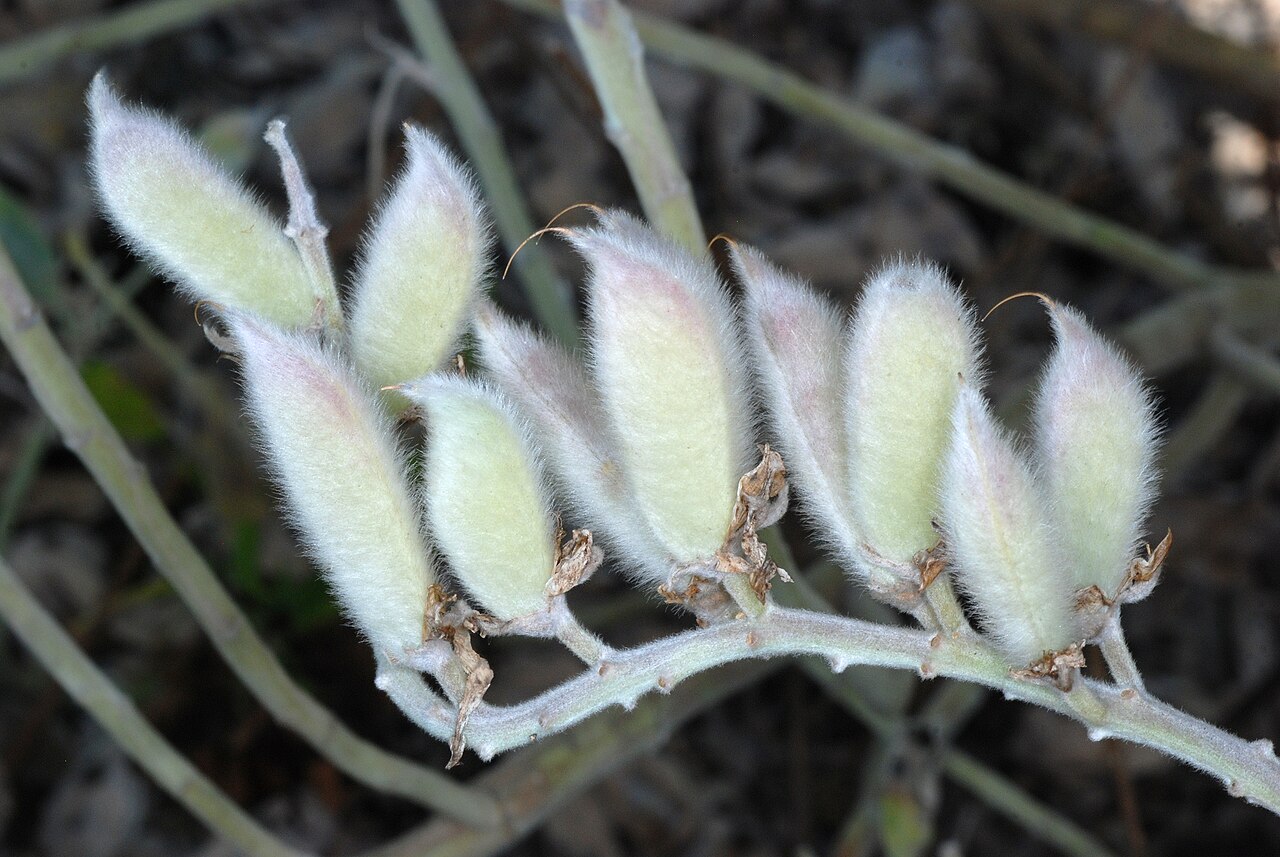
The pods are flattened, about 1 to 1½ inches long, and densely covered with long, silky, silvery hairs. Each holds several hard, mottled seeds. As the pods dry in late spring they split suddenly and twist, throwing the seeds a short distance from the plant. Like most lupine seeds, they are toxic if eaten.
Quick Facts
| Scientific Name | Lupinus diffusus (USDA symbol LUDI2) |
| Family | Fabaceae (pea family) |
| Plant Type | Short-lived herbaceous perennial with a deep taproot |
| Mature Height | 1–2 ft |
| Mature Spread | 1–3 ft |
| Growth Rate | Moderate |
| Sun Exposure | Full sun |
| Water Needs | Low; deep, dry, well-drained sand |
| Soil Type | Deep, infertile sand |
| Soil pH | Acidic (about 4.5–6.5) |
| Bloom Time | February–May (mainly March–April in Florida) |
| Flower Color | Sky blue to blue-violet, with a cream spot on the banner |
| Fall Color | None; evergreen silvery foliage through winter |
| Fruit | Flattened, densely silky-hairy pod with several seeds |
| Deer Resistant | Usually; foliage and seeds are toxic and seldom browsed |
| USDA Hardiness Zones | 8–10 |
Native Range
Sky-blue lupine is a southeastern Coastal Plain endemic. USDA PLANTS and the Lady Bird Johnson Wildflower Center record it in six states: North Carolina, South Carolina, Georgia, Florida, Alabama and Mississippi. It is most common in Florida and southern Georgia, and becomes scattered toward the northern and western edges of its range in the Carolinas and Mississippi.
In Florida it grows through the Panhandle and down the peninsula to about Lake Okeechobee and the sandy ridges of the southeast coast. It is especially characteristic of the Lake Wales Ridge and other ancient dune ridges of central Florida, the coastal scrub of the Atlantic coast, and the longleaf pine sandhills of north Florida and Georgia. Its habitat is open, sunny, deep sand with sparse ground cover: sand pine and rosemary scrub, scrubby flatwoods, turkey oak sandhills, old dunes and sandy roadsides and clearings.
Botanists have sometimes treated the scrub lupines of central Florida’s ridges as a separate species, Lupinus cumulicola, while others include them in L. diffusus. USDA PLANTS uses the name Lupinus diffusus with the common name Oak Ridge lupine.
📋 Regional plant lists featuring Sky-blue Lupine: North & South Florida · Alabama, Georgia & Mississippi · North & South Carolina
Growing & Care Guide
Sky-blue lupine is a wonderful plant for dry, sandy gardens in its native range, but it has particular needs. It wants full sun, deep, well-drained, infertile sand, and almost no care. Because of its long taproot it resents transplanting, so it is usually started from seed sown where it is to grow, or from small container plants set out young.
Light
Give it full sun. In the wild it grows in open sand between shrubs, and it declines when scrub and sandhills become shaded by dense oaks or pines.
Soil & Water
Deep, loose, well-drained sand is essential. It does poorly in loam, clay, or soil amended with compost, and it does not need fertilizer: like other legumes, it hosts nitrogen-fixing bacteria in its root nodules. Water young plants lightly until they are established, then leave them alone. Irrigation in summer heat can cause the crown and roots to rot.
Planting Tips
Sow seed in fall or early winter directly into bare sand where you want plants to grow. The hard seed coat germinates better if it is nicked or rubbed with sandpaper, or soaked in warm water overnight. If you buy container plants, choose small ones and plant without disturbing the root ball. Avoid mulching around the crown; bare or lightly covered sand suits it best.
Pruning & Maintenance
No pruning is needed. Let some pods ripen so the plant can reseed, since individual plants usually live only a few years. Keep the area open by removing encroaching shrubs and aggressive grasses. In larger natural areas, prescribed fire or occasional disturbance of the sand helps maintain the open conditions seedlings need.
Propagation
Propagate by seed. Collect pods as they turn brown and before they split, and let them finish drying in a paper bag. Scarify the seeds before sowing. Seedlings quickly develop a long taproot and should be moved, if at all, while very small. The plant cannot be divided.
Landscape Uses
- Scrub and sandhill gardens: with Florida rosemary, prickly pear, gopher apple and other dry-sand natives
- Spring pollinator gardens: an early nectar and pollen source for bumble bees and other native bees
- Coastal and inland dune plantings: on stable, sunny, well-drained sand
- Restoration: in scrub and sandhill restoration within its native range, from local seed
- Silver foliage accent: the evergreen silvery leaves stand out against white sand all winter
Wildlife & Ecological Value
Sky-blue lupine is an important early-season plant in dry sand habitats, where few other plants offer flowers in late winter.
For Pollinators
The flowers are pollinated mainly by bees, especially bumble bees and other large bees strong enough to push open the keel and release the pollen. The Lady Bird Johnson Wildflower Center notes the plant’s special value to native bees and bumble bees. Lupine flowers offer mostly pollen and only small amounts of nectar.
Lupines in general are also larval host plants for several butterflies in the blue and hairstreak families, whose caterpillars feed on the flowers, buds and young pods.
For Birds
The seeds are toxic to many animals, and birds generally do not rely on them. In scrub and sandhill habitats the plant is part of the open ground cover that ground-nesting and ground-foraging birds use.
For Mammals
The foliage and especially the seeds contain alkaloids, and deer and livestock usually avoid the plant. Small rodents may eat some of the seeds that fall to the ground.
Ecosystem Role
As a legume, sky-blue lupine fixes nitrogen through bacteria in its root nodules, adding a small amount of nitrogen to some of the poorest soils in the Southeast. It colonizes open sand after fire or disturbance, and its silvery hairs reflect sunlight and reduce water loss in a habitat where surface temperatures can be extreme.
Cultural & Historical Uses
The species was described by the English botanist Thomas Nuttall in 1818 in his Genera of North American Plants. The epithet diffusus means spreading, referring to the plant’s sprawling stems. The genus name Lupinus comes from the Latin for wolf, an old name for the cultivated European lupines.
Sky-blue lupine has no well-known history of human use. Like other lupines it should be considered poisonous, especially the seeds, and it should not be eaten by people or pets.
For naturalists in Florida and the Carolinas, the first silvery-blue lupine spikes on the white sand of the scrub are a familiar sign of spring. The plant appears often in photographs of Florida scrub and sandhills, and it is a favorite subject for photographers at preserves such as the Lake Wales Ridge State Forest and the coastal dunes of Palm Beach County.
Frequently Asked Questions
Is sky-blue lupine the same as Oak Ridge lupine?
Yes. USDA PLANTS lists Lupinus diffusus under the common name Oak Ridge lupine, while most Florida sources call it sky-blue (or skyblue) lupine. Both names refer to the same species.
Why are lupine leaves on this plant not divided?
Most lupines have palmately compound leaves with several leaflets, but sky-blue lupine and a few other southeastern species have simple, undivided leaves. They are technically compound leaves reduced to a single leaflet.
Is sky-blue lupine poisonous?
Yes. Like other lupines, its seeds and foliage contain alkaloids that are toxic to people, pets and livestock if eaten. Children are most at risk because of their size and curiosity.
Can I transplant sky-blue lupine?
It is very difficult. The plant has a long taproot that is easily broken, and moved plants rarely survive. Grow it from seed sown in place, or plant small container-grown seedlings.
When does sky-blue lupine bloom?
In Florida, mainly from February through April; farther north in Georgia and the Carolinas, mostly in April and May. Occasional plants bloom out of season.

Looking for a nursery that carries Sky-blue Lupine?
Browse our native plant nursery directory: Alabama · Florida & Georgia · Mississippi · North Carolina · South Carolina