
Little Floatingheart (Nymphoides cordata)
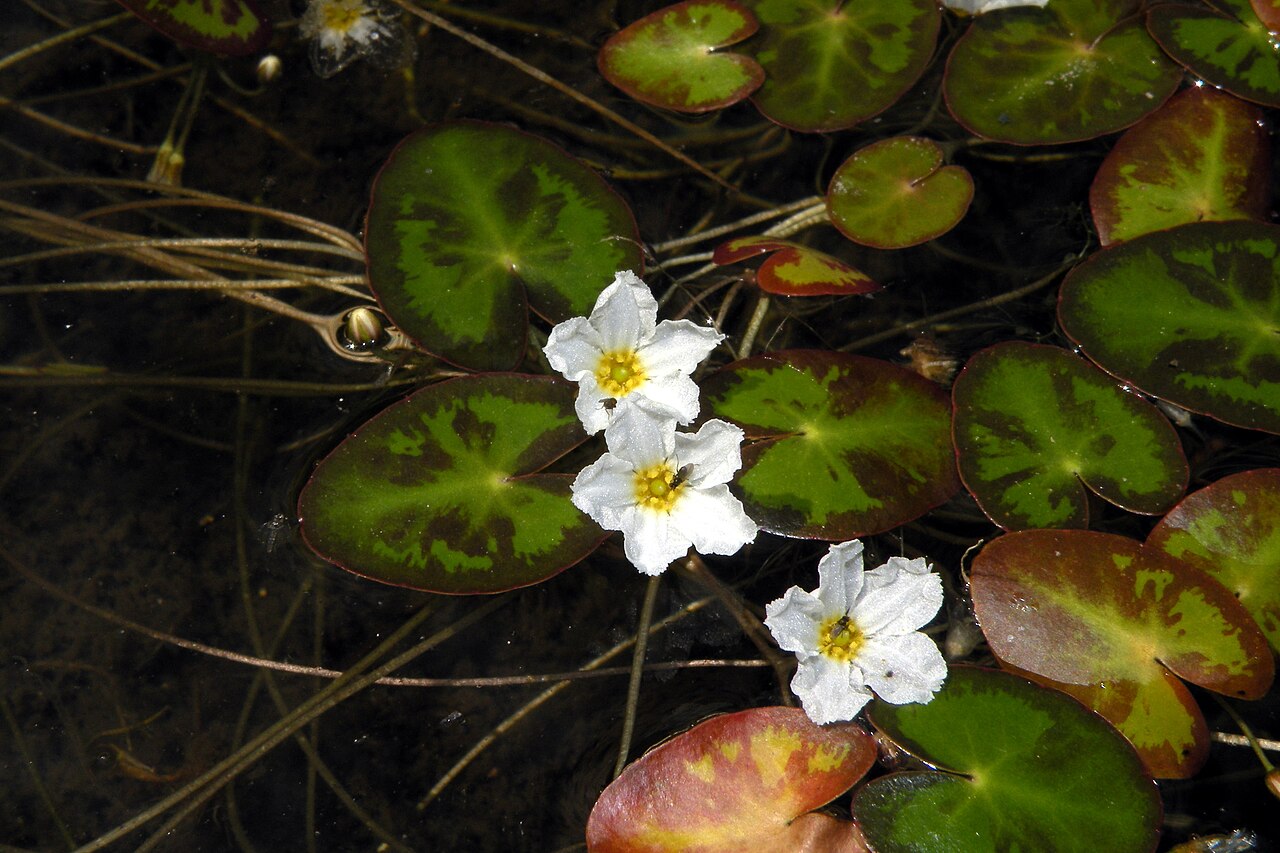
Nymphoides cordata, known as Little Floatingheart (also little floating-heart), is a small, delicate aquatic perennial of quiet, acidic ponds and lakes in eastern North America. Its heart-shaped leaves, only 1 to 3 inches long, float on the water like miniature water-lily pads, and through the summer small white, star-shaped flowers with yellow centers open just above the surface. It belongs to the bogbean family (Menyanthaceae), not to the water-lily family, even though it looks like a tiny water-lily.
One unusual feature of floatinghearts is the way their flowers and leaves grow. Each leaf blade sits at the end of a long, slender stalk that rises from the bottom, and the flowers, together with a cluster of short, thickened roots, sprout from a point just below the blade. These little root clusters can break away, sink and grow into new plants, which is how floatinghearts spread through a pond.
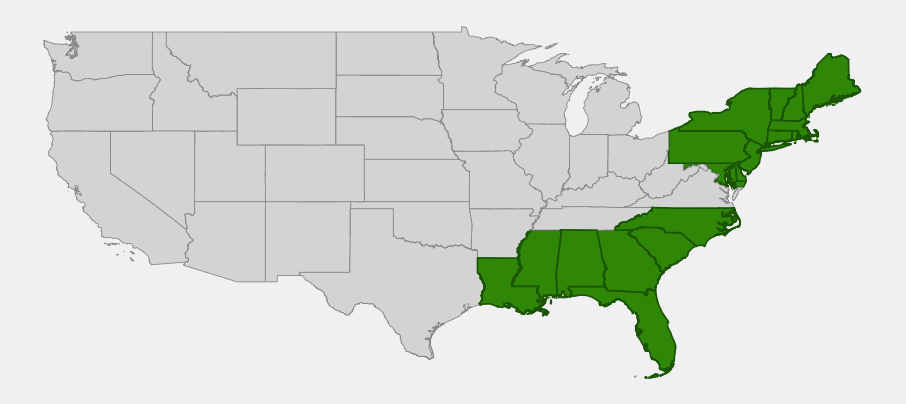
Little floatingheart has a split range along the Atlantic and Gulf coasts. It grows from Newfoundland and the Maritime provinces south through New England, New York and New Jersey to Maryland and Delaware, and again from the Carolinas south to Florida and west to Louisiana. In Florida it shares its habitat with the larger big floatingheart. It is a good choice for natural ponds and water gardens, and a native alternative to the invasive Asian yellow floatingheart.
Identification
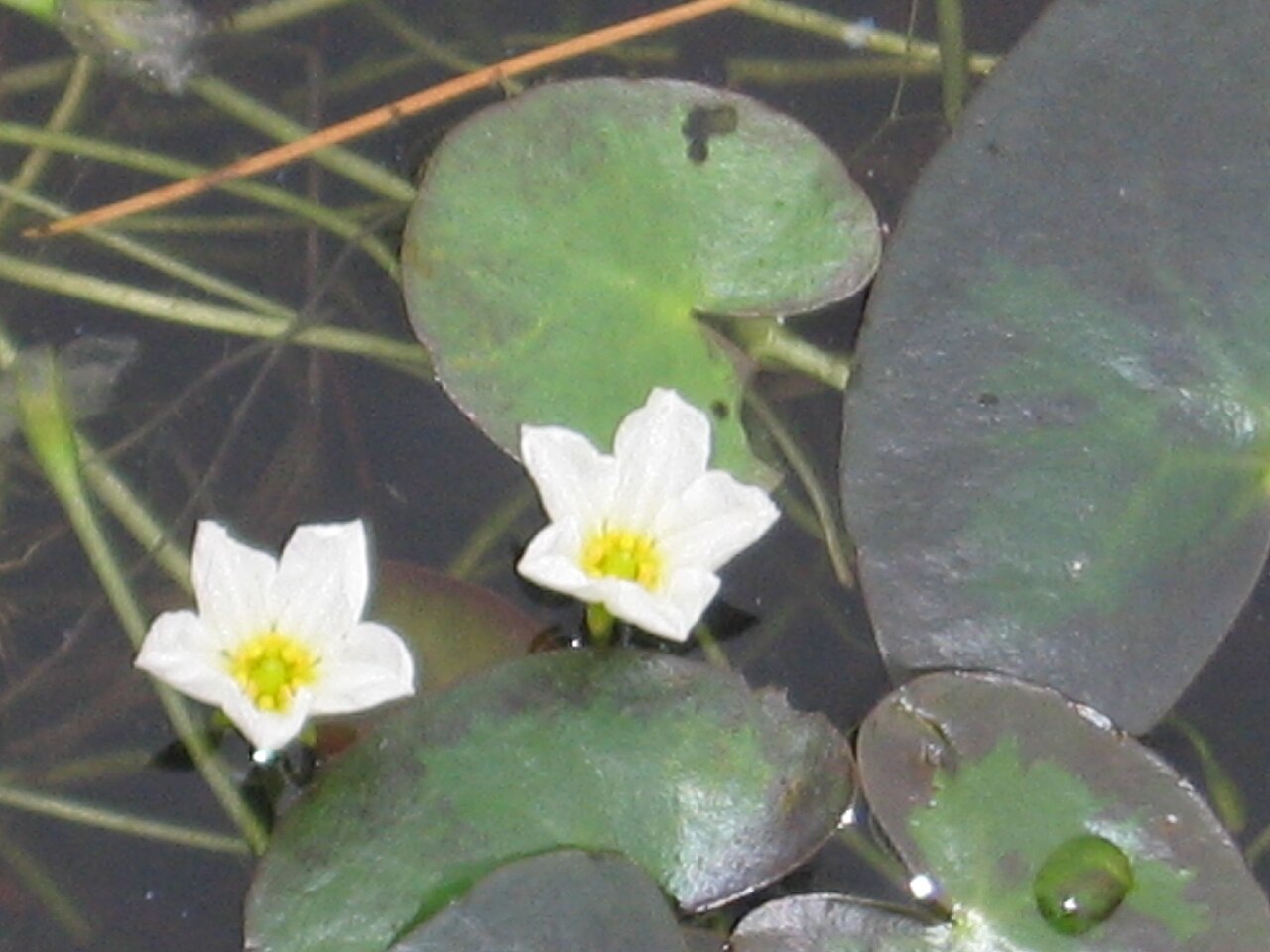
Little floatingheart is easy to overlook among larger floating plants. Look for small, heart-shaped floating leaves, often with purplish mottling, and white five-petaled flowers held just above the water in midsummer. The southeastern big floatingheart (Nymphoides aquatica) is similar but larger in every part.
Roots & Stems
The plant grows from slender rhizomes rooted in the soft mud of the pond bottom. From them, long, thin, stem-like leaf stalks rise to the surface. Just below each floating leaf blade there is a node that produces flowers and, later, a cluster of short, slender, fleshy roots, about ½ to 1 inch long. These root clusters are smaller and thinner than the banana-like roots of big floatingheart.
Leaves
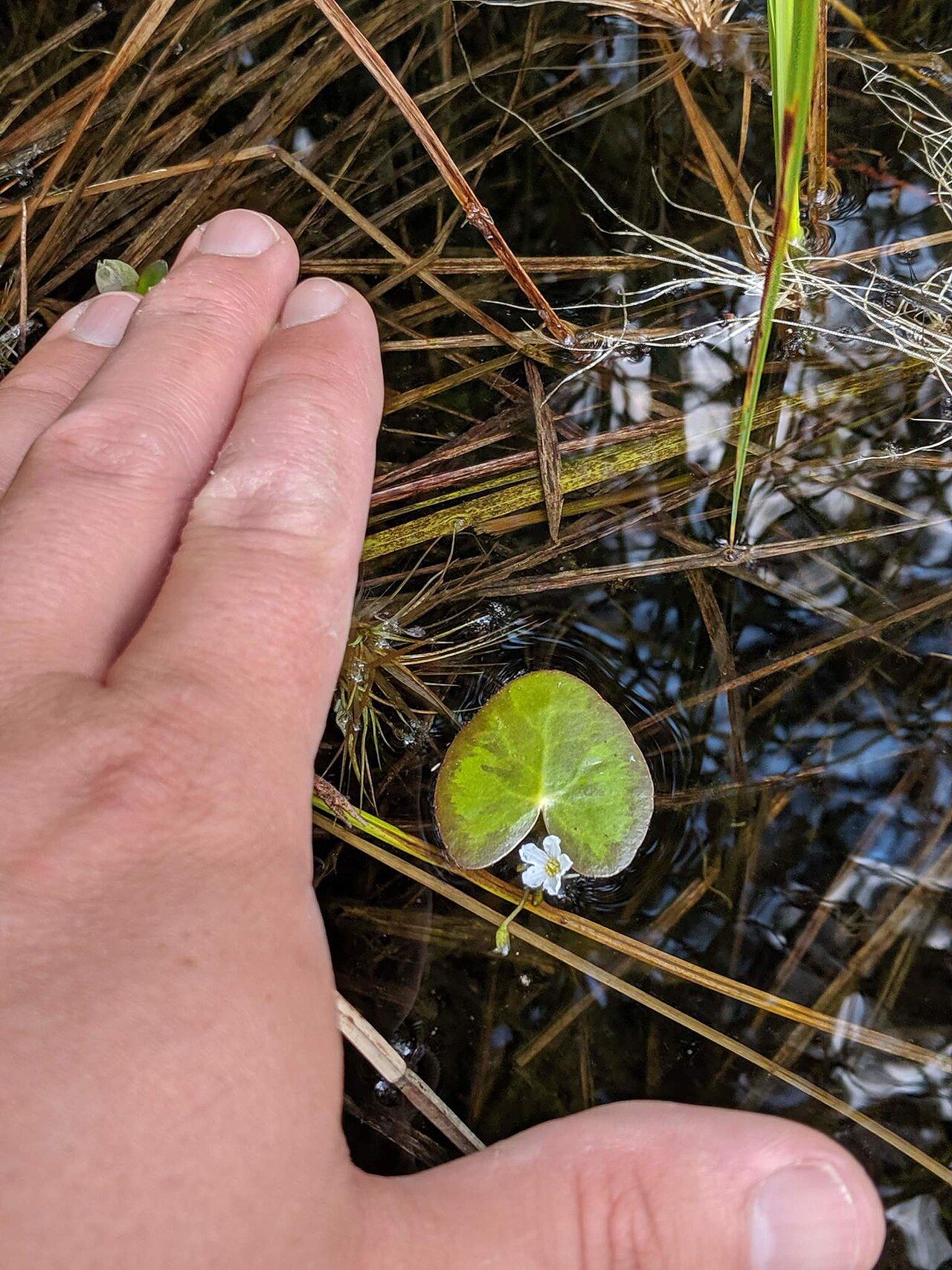
The floating leaves are heart-shaped to nearly round with a deep notch at the base, usually about 1 to 2½ inches long. The upper surface is smooth and green, often mottled or blotched with purple or brown. The underside is smooth and usually purplish. Many leaves turn reddish in late summer and fall. Big floatingheart has larger leaves, up to 6 inches or more, with a thick, rough, pitted underside.
Flowers
The flowers grow in small clusters (umbels) from the node just beneath the leaf blade. Each flower stands on a short stalk just above the water and is about ½ inch across, with five white petals (sometimes faintly pink-tinged) and a yellow center. Several flowers may open on the same cluster over a period of days. In the Northeast and Canada flowers appear mainly from June to August. In the South, flowering starts earlier and can continue into fall.
Fruit & Seeds
After flowering, the stalks bend down and the small capsules ripen underwater. Each capsule holds a few smooth, shiny seeds. Much of the plant’s spread, however, comes from vegetative reproduction: the root clusters and attached leaf break away in late summer and fall, drift, sink and root to form new plants.
Quick Facts
| Scientific Name | Nymphoides cordata (USDA symbol NYCO) |
| Family | Menyanthaceae (bogbean family) |
| Plant Type | Aquatic herbaceous perennial with floating leaves |
| Mature Height | Leaves float on the surface; grows in water about 1–6 ft deep |
| Mature Spread | Individual leaves 1–2½ in; colonies spread slowly |
| Growth Rate | Moderate |
| Sun Exposure | Full sun to light shade |
| Water Needs | Aquatic; still or slow-moving fresh water |
| Soil Type | Soft organic muck or sandy pond bottoms |
| Soil pH | Acidic (about 4.5–6.5); prefers soft, low-mineral water |
| Bloom Time | June–August in the North; spring to fall in the South |
| Flower Color | White with a yellow center |
| Fall Color | Floating leaves often turn red to purplish |
| Fruit | Small capsule ripening underwater |
| Deer Resistant | Yes; deer do not normally feed on it |
| USDA Hardiness Zones | 3–10 |
Native Range
Little floatingheart is native to eastern North America in two separated areas. USDA PLANTS records it in 18 states. In the North it grows in Maine, New Hampshire, Vermont, Massachusetts, Rhode Island, Connecticut, New York, New Jersey, Pennsylvania, Delaware and Maryland. In the South it reappears in North Carolina, South Carolina, Georgia, Florida, Alabama, Mississippi and Louisiana. In Canada USDA lists it from New Brunswick, Nova Scotia, Prince Edward Island and Newfoundland and Labrador, and it is also known from southern Quebec.
Throughout its range it is a plant of soft-water lakes and ponds, especially those that are acidic and low in nutrients. It grows in clear, still or slow water from shallow margins to depths of several feet, often among water-lilies, watershield and bladderworts. In the Northeast it is especially characteristic of the glacial lakes and kettle ponds of New England and the Atlantic coastal plain ponds of Cape Cod, Long Island and southern New Jersey.
In the Southeast it occurs mainly on the Coastal Plain, in ponds, lakes, sinkhole ponds and slow streams. In Florida it is less common than the larger big floatingheart, which grows in many of the same waters. Because shoreline development, nutrient pollution and water-level changes can alter soft-water ponds, populations near the edges of its range are tracked as rare by natural heritage programs in some states.
📋 Regional plant lists featuring Little Floatingheart: North & South Florida · Alabama, Georgia & Mississippi · North & South Carolina · Maryland, Virginia & West Virginia · Arkansas, Louisiana, Eastern Oklahoma & Eastern Texas · New York, Pennsylvania & Northern New Jersey · Delaware, Southern New Jersey & Long Island · Connecticut, Massachusetts & Rhode Island · New Hampshire, Maine & Vermont
Growing & Care Guide
Little floatingheart is a charming, small-scale native for natural ponds and water gardens. It is much less vigorous than water-lilies and spatterdock, so it suits small ponds, tubs and container water gardens where larger plants would take over. Buy plants from nurseries that sell native aquatics, and never collect from wild ponds.
Light
It flowers best in full sun to light shade. In heavy shade it produces fewer leaves and few flowers.
Soil & Water
Plant in a pond bottom or container of heavy, low-fertility soil or aquatic planting media, topped with a little sand or gravel. It prefers soft, slightly acidic water, like rainwater-fed ponds, and does poorly in very hard or nutrient-rich water, where algae and more aggressive plants outcompete it. Set the planting so the crown is in water about 6 inches to 2 feet deep; the leaf stalks lengthen to reach the surface.
Planting Tips
Plant rhizomes or potted plants in spring. In a natural pond, push the roots into the mud in a quiet, sunny spot. You can also start new plants simply by pressing a detached root cluster with its leaf into the soil of a submerged pot. Avoid fertilizer tablets, which promote algae.
Pruning & Maintenance
Little care is needed. Remove yellowing leaves if you want a tidier look, and thin crowded clumps every few years. In cold climates it dies back to the rhizome in winter; keep the crown below the ice line. Do not use herbicides or copper algaecides in ponds where it grows.
Propagation
The easiest method is to separate the root clusters that form beneath the leaves in summer and plant them in pots of soil set under water. Rhizomes can also be divided in spring. Seed can be sown on wet soil but is slower.
Landscape Uses
- Small ponds and water gardens: a dainty floating plant that will not overwhelm the pond
- Container water gardens: grows well in tubs and half-barrels with soft water
- Natural soft-water ponds: in restoration of acidic, nutrient-poor ponds within its native range
- Native alternative: to the invasive Asian yellow floatingheart (Nymphoides peltata)
- Wildlife ponds: adds shade and shelter for small aquatic animals
Wildlife & Ecological Value
Though small, little floatingheart contributes to the ecology of the soft-water ponds where it grows, providing shade, shelter and food for aquatic animals.
For Pollinators
The small white flowers are visited by flies, small bees and other insects that land on them at the water surface.
For Birds
Ducks and other waterbirds may eat the seeds and plant parts, and wading birds hunt among the floating leaves for small fish and invertebrates.
For Mammals
Muskrats and beavers may eat the plants, though it is not a major food. Deer do not normally feed on it.
Ecosystem Role
The floating leaves shade the water, providing cover for small fish, frogs, aquatic insects and snails, and their undersides support algae and invertebrates. Because it prefers clear, soft, low-nutrient water, a healthy population is a good sign of an unpolluted pond.
Cultural & Historical Uses
The species was first described by Stephen Elliott in the early 1800s as Villarsia cordata, and was later moved to Nymphoides. The genus name means “like Nymphaea,” the water-lily, which floatinghearts resemble, and cordata means heart-shaped, describing the leaves. It has also been known as Nymphoides lacunosa.
There is little recorded human use of this plant. Its value to people lies mainly in its beauty and as an indicator of clean, soft-water ponds and lakes.
Little floatingheart is sometimes confused with the invasive yellow floatingheart (Nymphoides peltata), an Asian species with yellow, fringed flowers that is regulated as a noxious weed in several states. Gardeners who want a floatingheart should choose native species such as little floatingheart or big floatingheart instead.
Frequently Asked Questions
Is little floatingheart a water-lily?
No. It looks like a miniature water-lily, but it belongs to the bogbean family (Menyanthaceae). Its flowers grow from a node on the leaf stalk just below the floating leaf, which is unlike any true water-lily.
How is little floatingheart different from big floatingheart?
Little floatingheart has smaller leaves (usually under 2½ inches) with smooth undersides and slender root clusters. Big floatingheart (Nymphoides aquatica) has larger leaves with rough, pitted undersides and thick, banana-shaped roots.
Will little floatingheart take over my pond?
It is far less aggressive than water-lilies or the invasive yellow floatingheart. It spreads gradually by root clusters and rhizomes, and excess plants are easy to remove.
Can I grow it in a container?
Yes. Plant it in a pot of heavy soil set in a tub, half-barrel or small pond, with the crown about 6 to 12 inches below the surface. Use rainwater or other soft water if you can.
Where is little floatingheart native?
It is native to eastern North America, from Newfoundland and the Maritimes south to Maryland and Delaware, and again from the Carolinas to Florida and Louisiana.

Looking for a nursery that carries Little Floatingheart?
Browse our native plant nursery directory: Alabama · Connecticut, Delaware, Florida & Georgia · Louisiana, Maine, Maryland, Massachusetts & Mississippi · New Hampshire, New Jersey, New York & North Carolina · Pennsylvania, Rhode Island, South Carolina & Vermont