
Bristleleaf Chaffhead (Carphephorus pseudoliatris)
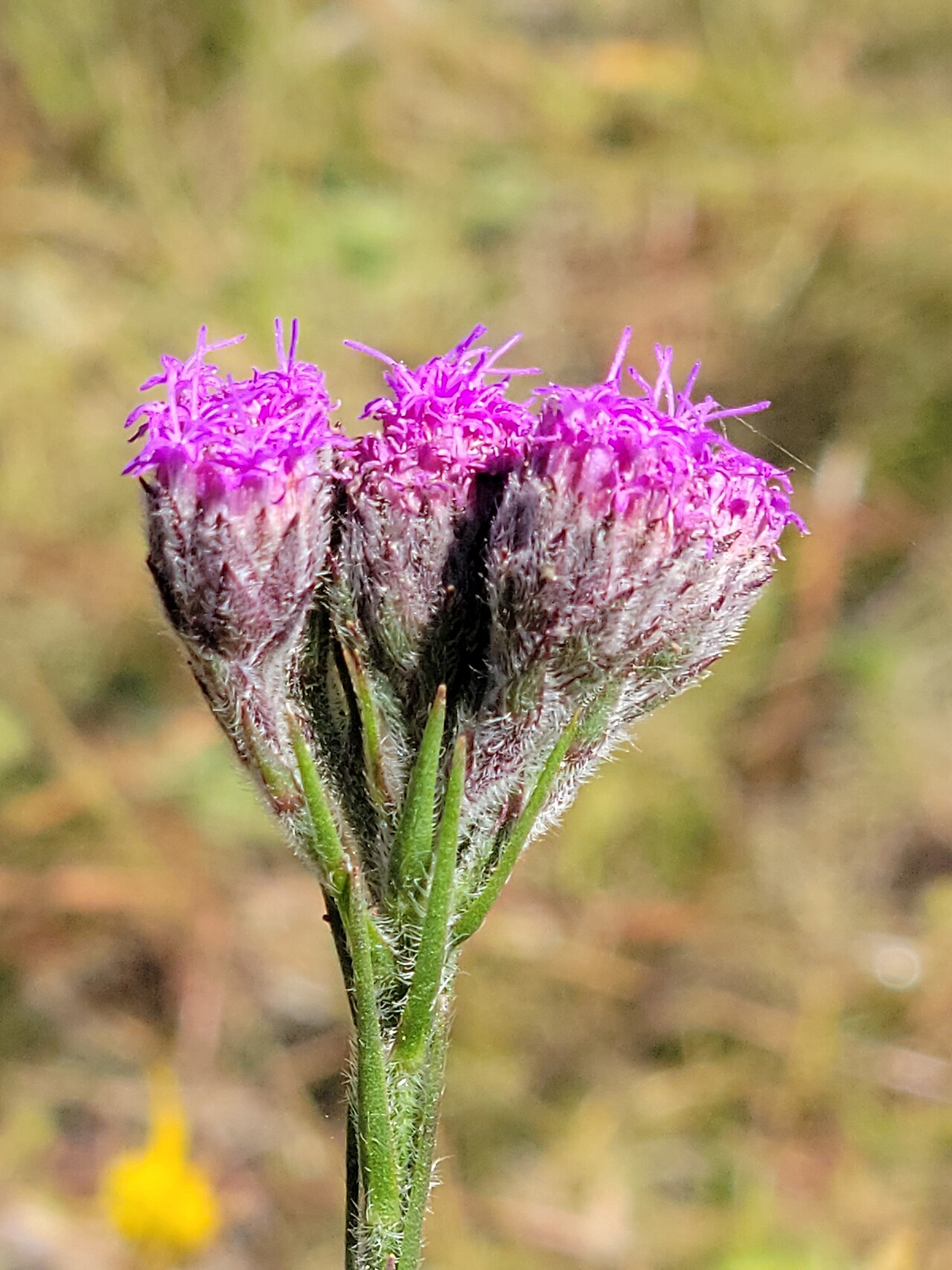
Carphephorus pseudoliatris, known as Bristleleaf Chaffhead, is a late-summer and fall wildflower of the wet pine savannas of the Gulf Coastal Plain. From a tuft of long, narrow, grass-like leaves it raises one or more hairy stems 1 to 3 feet tall, lined with short, bristle-like leaves and topped by a flat or rounded cluster of fuzzy, magenta to rosy purple flower heads. In bloom it adds a rich purple tone to savannas full of grasses, pitcher plants and yellow composites.
Bristleleaf chaffhead belongs to the aster family (Asteraceae) and to the same tribe as the blazing stars (Liatris) and Joe-Pye weeds. The species name pseudoliatris means “false Liatris,” and the two genera do look alike. Chaffheads are named for the small, papery scales (chaff) mixed among the florets on the head, which blazing stars lack. The common name “bristleleaf” refers to its narrow, stiff stem leaves.
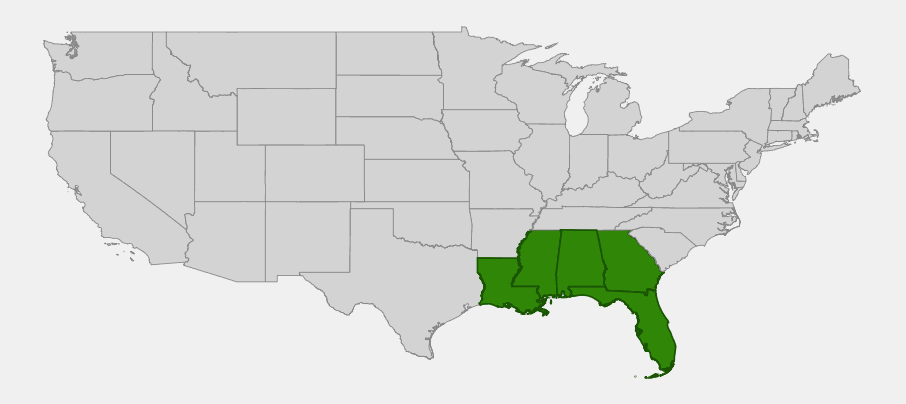
It grows only on the Gulf Coastal Plain, from southeastern Louisiana east through Mississippi and Alabama to the Florida Panhandle and southwestern Georgia. Like many savanna wildflowers it depends on frequent fire and has become scarcer as savannas have been drained, planted with pines, or left unburned. This guide covers how to identify it, where it grows, and how to include it in wet, sunny native plantings.
Identification
Bristleleaf chaffhead can be confused with blazing stars and with other chaffheads that grow in the same region. Its densely hairy stems, its narrow, bristle-like stem leaves and its flat-topped clusters of purple heads help separate it.
Leaves & Stems
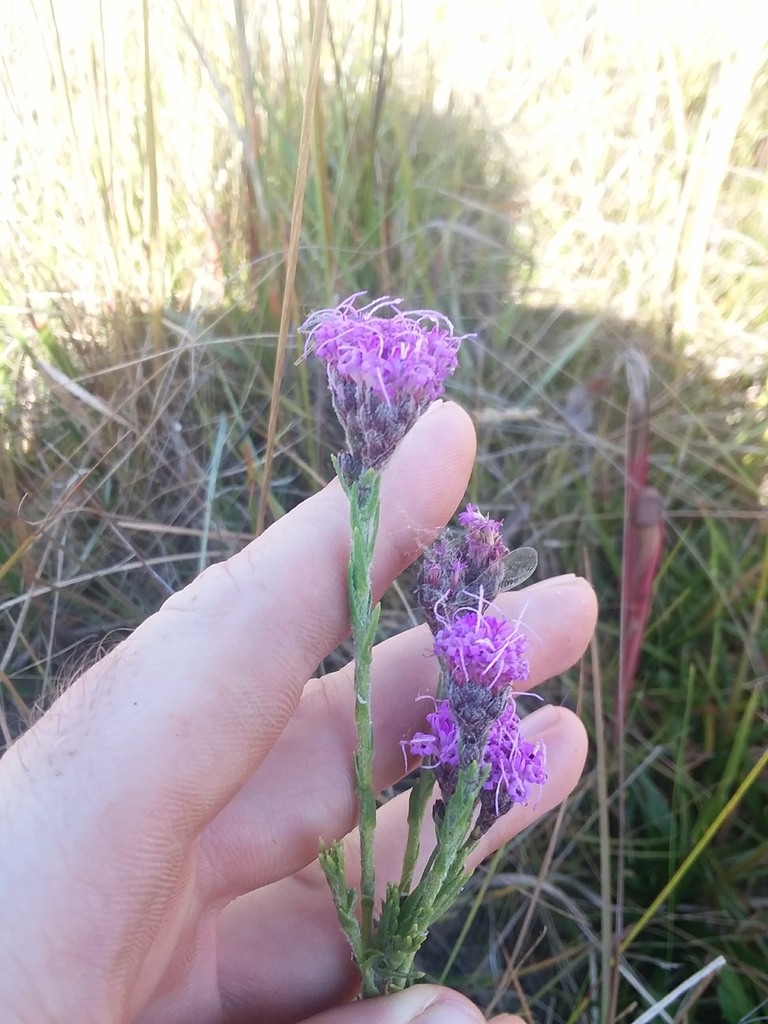
The basal leaves are long, very narrow and grass-like, often 4 to 16 inches long and less than a quarter inch wide, and they form a loose tuft that can be easy to overlook among grasses. The flowering stems are 1 to 3 feet tall, unbranched below and densely covered with soft, spreading hairs. The stem leaves are numerous, short and narrow, and they press upward along the stem, giving it a bristly look.
Flowers
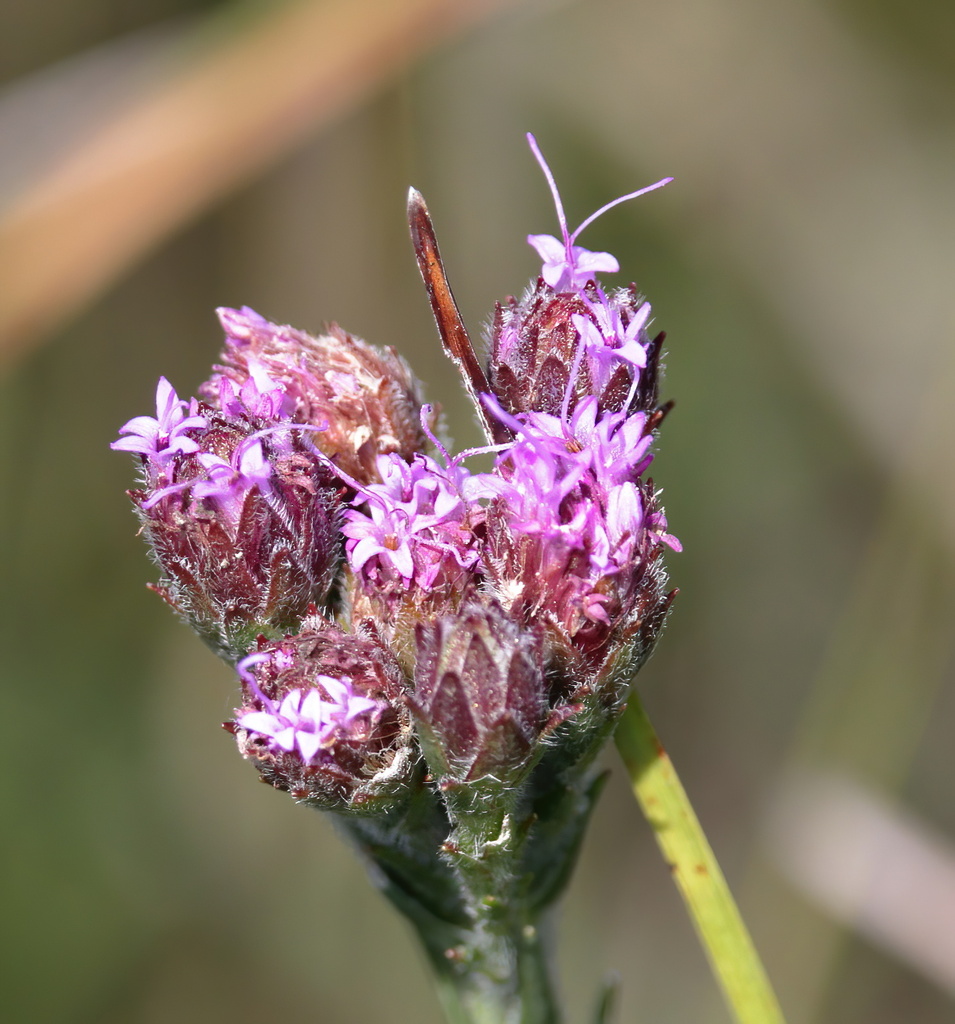
The flower heads are borne in a flat-topped to rounded cluster (corymb) at the top of the stem, sometimes with smaller side clusters. Each head is about ⅓ to ½ inch across and contains only disk florets, with no ray flowers. The florets are magenta to rosy purple, tubular with five spreading lobes, and the long, branched styles stick out beyond them and give the heads a fuzzy look. The bracts around each head are hairy and often purplish. It flowers mostly from July to October.
Fruit & Seeds
Each floret produces a small, ribbed achene topped by a ring of tawny, bristly hairs (pappus) that carry it on the wind. Small, papery scales (chaff) are mixed among the florets on the receptacle; this chaff is the key feature of the genus Carphephorus.
Similar Species
Carphephorus odoratissimus (vanillaleaf) has broad, smooth, vanilla-scented basal leaves and a large, open, branched flower cluster. Carphephorus paniculatus (hairy chaffhead) has broader leaves and a long, narrow, many-branched flower cluster. Blazing stars (Liatris, such as Blazing Star) usually have their heads in a long spike or raceme rather than a flat-topped cluster, and they lack chaff among the florets.
Quick Facts
| Scientific Name | Carphephorus pseudoliatris |
| Family | Asteraceae (aster family) |
| Plant Type | Herbaceous perennial wildflower |
| Mature Height | 1–3 ft in flower |
| Mature Spread | 6–12 in |
| Growth Rate | Slow to moderate |
| Sun Exposure | Full sun |
| Water Needs | Moist to wet; seasonally saturated |
| Soil Type | Acidic sand, peaty sand or sandy loam, low in nutrients |
| Soil pH | About 4.5–6.0 (acidic) |
| Bloom Time | July–October |
| Flower Color | Magenta to rosy purple |
| Fall Color | Basal leaves may turn bronze |
| Fruit | Small achene with a bristly tawny pappus |
| Deer Resistant | Not well documented |
| USDA Hardiness Zones | 8–9 |
Native Range
Bristleleaf chaffhead is a Gulf Coastal Plain endemic. USDA PLANTS and the Lady Bird Johnson Wildflower Center record it from five states: Louisiana, Mississippi, Alabama, Georgia and Florida. It ranges from the pine savannas of southeastern Louisiana east across coastal Mississippi and southern Alabama into the Florida Panhandle and southwestern Georgia.
In Florida it is a plant of the Panhandle, where it grows in wet pine savannas, wet flatwoods, seepage slopes and the edges of pitcher plant bogs. Much of the remaining habitat is on public lands, such as Eglin Air Force Base and the Apalachicola National Forest, where frequent prescribed fire keeps the savannas open. In Mississippi it grows in the coastal savannas of Jackson County and nearby areas.
It is closely tied to fire. Without regular burns, shrubs such as titi, gallberry and wax myrtle quickly overtop the low savanna flora, and bristleleaf chaffhead stops flowering and eventually disappears. Large areas of its former habitat have been converted to pine plantations, pasture and development.
📋 Regional plant lists featuring Bristleleaf Chaffhead: North & South Florida · Alabama, Georgia & Mississippi · Arkansas, Louisiana, Eastern Oklahoma & Eastern Texas
Growing & Care Guide
Bristleleaf chaffhead is rarely available commercially, but a few native nurseries and seed suppliers in the Gulf states offer it, mainly for savanna restoration. It is worth growing in a sunny, moist native meadow or bog garden within its range. Use nursery-grown plants or purchased seed rather than digging wild plants.
Light
Give it full sun. Even light shade reduces flowering, and in the wild it fades as shrubs close in.
Soil & Water
It needs acidic, low-nutrient soil that is moist to wet for much of the year, such as sandy or peaty soil in a low spot, rain garden or bog garden edge. Short dry spells are tolerated, but long droughts in heavy, dry soil are not. Do not fertilize.
Planting Tips
Plant small container plants in fall or late winter, 12 inches apart, among low grasses such as wiregrass, toothache grass or little bluestem. It looks best in groups, where its purple heads stand out against grasses in late summer and fall. A wet meadow corner or the drier rim of a pitcher plant bog is ideal.
Pruning & Maintenance
Leave the stems standing after flowering so the seeds can disperse, then cut or burn the planting in winter or early spring to imitate the fires that keep savannas open. Remove shrub seedlings and taller weeds that would shade it.
Propagation
Grow it from seed. Collect the fluffy seed heads in late fall, and sow the seed on the surface of a moist, sandy, acidic mix in fall or after a short cold, moist period. Germination can be irregular. Established clumps can also be divided carefully in late winter.
Landscape Uses
- Savanna and flatwoods restoration: a characteristic fall wildflower of Gulf Coast pine savannas
- Bog garden edges: pairs with pitcher plants and grass pink on the drier rim
- Wet meadows and rain gardens: late-season purple color in sunny, damp sites
- Pollinator plantings: late summer and fall nectar for butterflies and bees
- Native grass plantings: adds flowers to wiregrass and bluestem meadows
Wildlife & Ecological Value
Bristleleaf chaffhead blooms when many savanna plants have finished, making it a valuable late-season food source for insects.
For Pollinators
The fuzzy purple heads are visited by butterflies, skippers, bees and wasps. Its late flowering, from midsummer into fall, makes it an important nectar plant for migrating butterflies such as monarchs passing through the Gulf Coast in fall.
For Birds
Small seed-eating birds may take the achenes in fall and winter. More important, it is part of the savanna ground cover that supports birds such as Bachman’s sparrow, Henslow’s sparrow in winter, and, in Mississippi, the Mississippi sandhill crane.
For Mammals
There is little published information on mammals feeding on it. Deer browse many savanna wildflowers, but this species is not known as an important food.
Ecosystem Role
As a fire-adapted perennial, it resprouts from its base after burns and often flowers best the year after a fire. It is part of the extremely diverse herb layer of Gulf Coast pine savannas, which are among the most species-rich plant communities in North America.
Cultural & Historical Uses
The French botanist Henri Cassini, a specialist in the aster family, described the genus Carphephorus and this species in the early 1800s. The genus name comes from Greek words meaning “chaff-bearing,” for the scales among its florets, and the species name points to its resemblance to Liatris.
Chaffheads are a small genus found only in the southeastern United States. Bristleleaf chaffhead is limited to the Gulf Coastal Plain, while several of its relatives, such as hairy chaffhead, also grow along the Atlantic Coastal Plain.
Today bristleleaf chaffhead is valued mainly by botanists, land managers and native plant gardeners in the Gulf states. Its abundance in a savanna after a prescribed burn is a good sign of healthy, well-managed habitat, and it is increasingly included in seed mixes for savanna restoration.
Frequently Asked Questions
What is the difference between chaffheads and blazing stars?
They look similar, but chaffheads (Carphephorus) have small papery scales (chaff) among the florets of each head, while blazing stars (Liatris) do not. Chaffheads also usually have their heads in flat-topped or branched clusters rather than a single tall spike.
When does bristleleaf chaffhead bloom?
Mostly from July to October, with peak flowering in late summer and early fall.
Where can I see bristleleaf chaffhead?
Look in burned, wet pine savannas and flatwoods of the Florida Panhandle, southern Alabama, coastal Mississippi and southeastern Louisiana, especially on public lands managed with prescribed fire.
Can I grow bristleleaf chaffhead in my garden?
Yes, if you have full sun and acidic, moist to wet, low-nutrient soil within its range. Start with nursery-grown plants or purchased seed, and keep taller plants from shading it.
Why does it need fire?
Fire removes shrubs and dead grass that would shade the low savanna wildflowers. Bristleleaf chaffhead resprouts quickly after a burn and flowers most heavily in recently burned savannas.

Looking for a nursery that carries Bristleleaf Chaffhead?
Browse our native plant nursery directory: Alabama · Florida & Georgia · Louisiana & Mississippi