
Eustis Lake Beardtongue (Penstemon australis)
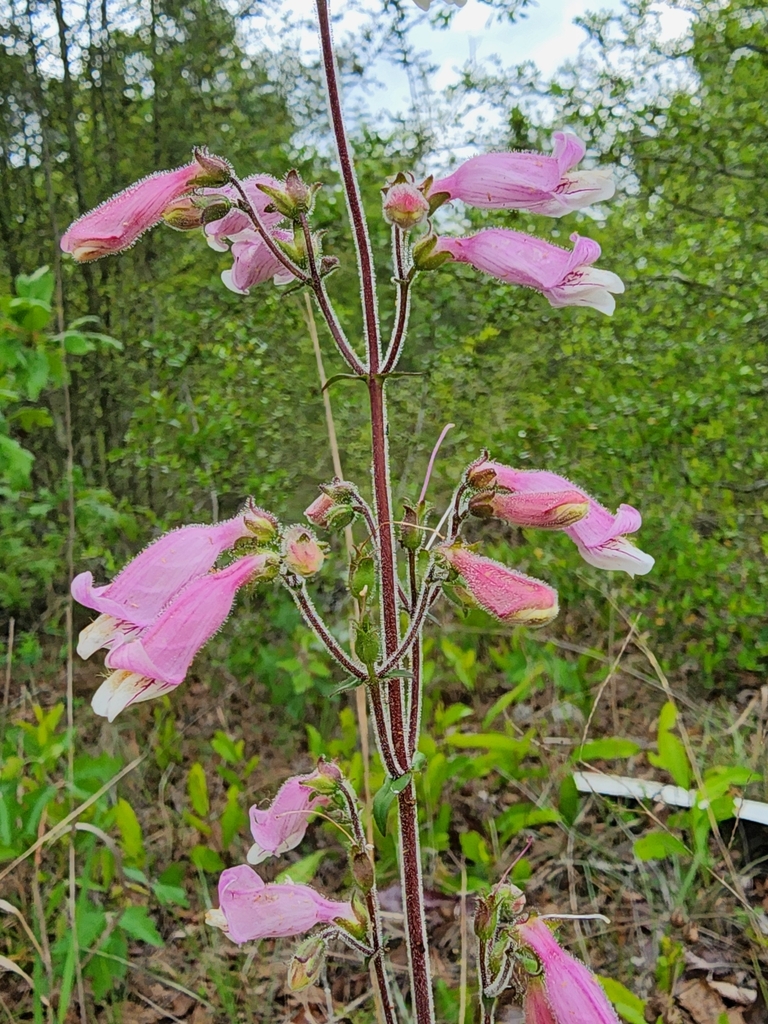
Penstemon australis, known as Eustis Lake Beardtongue (also Eustis Lake penstemon and southern beardtongue), is a spring-blooming wildflower of dry, sandy pinelands across the southeastern Coastal Plain. In April and May it raises slender, hairy stems 1 to 3 feet tall with tiers of rose-pink, tubular flowers that are white inside and striped with purple guide lines. It belongs to the plantain family (Plantaginaceae); older references place penstemons in the figwort or snapdragon family, Scrophulariaceae.
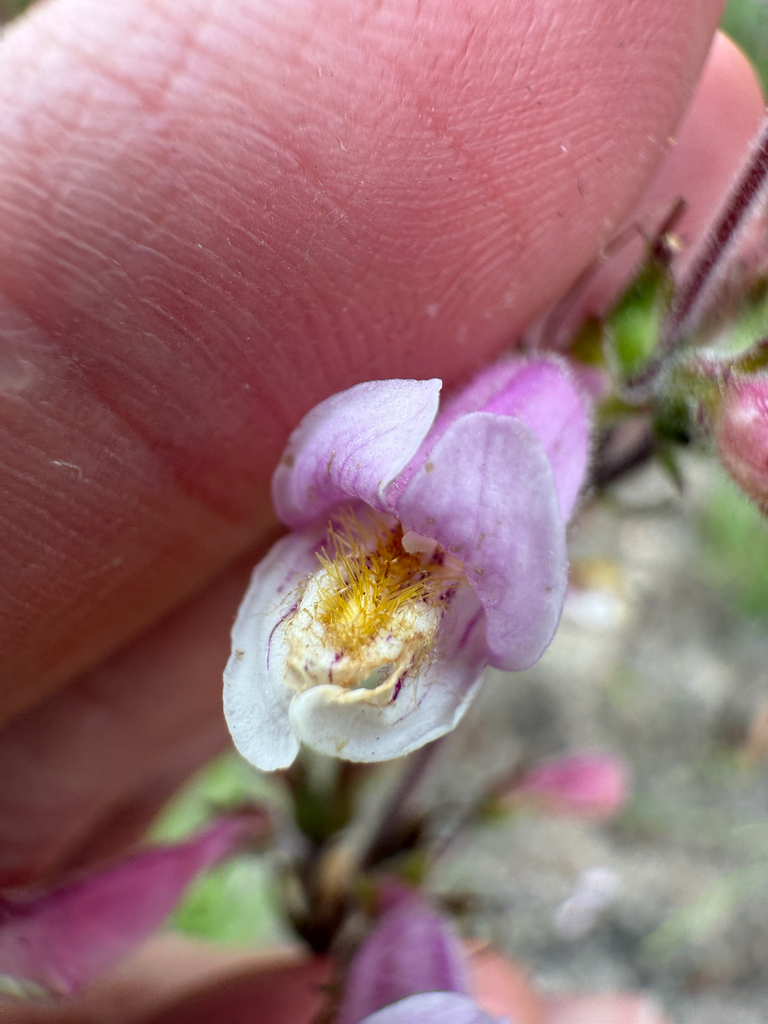
The name beardtongue comes from one of the flower’s five stamens. Four are fertile, but the fifth is sterile and flattened, lying along the floor of the flower like a tongue, and in this species its tip is covered with bright yellow hairs: the “bearded tongue.” The species name australis means southern, and the common name refers to Lake Eustis in central Florida.
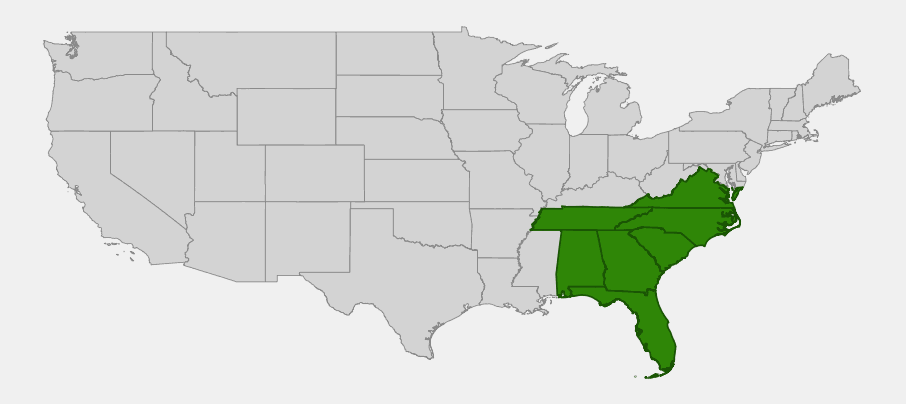
Eustis Lake beardtongue ranges from southeastern Virginia and Tennessee south through the Carolinas and Georgia to central Florida and Alabama. It is one of the few penstemons native to Florida and is an excellent, long-lived perennial for dry, sunny native gardens. Its flowers are pollinated mainly by native bees and are also visited by hummingbirds.
Identification
Eustis Lake beardtongue is a mid-sized penstemon with pink flowers and stiff, backward-pointing hairs on its stems. Its sandy pineland habitat and southern range set it apart from most other eastern penstemons, which have white or lavender flowers and grow in richer soils.
Stems & Habit
Each plant forms a basal rosette of leaves in winter and sends up one to several upright flowering stems in spring, usually 12 to 30 inches tall and occasionally a bit taller. The stems are often reddish-purple and covered with short, stiff hairs that point downward (retrorse hairs), sometimes mixed with sticky glandular hairs higher up.
Leaves
The basal leaves are spatula-shaped to oblanceolate, about 1¼ to 5 inches long, and persist through the winter. Stem leaves are arranged in five to eight opposite pairs, becoming smaller toward the top, lance-shaped, and often clasping the stem. They are usually hairy like the stems, and their edges may be smooth or slightly toothed and are often tinged red.
Flowers
The flowers are carried in an open, branched cluster (a thyrse) 3 to 10 inches long, with a few widely spaced tiers of flowers. Each flower is a two-lipped tube about ¾ to 1 inch long, pink to rose-purple on the outside and white inside, with dark purple nectar guide lines on the lower lip. The throat is densely woolly. The sterile stamen (staminode) extends to the mouth of the flower and is bearded with golden-yellow hairs. Flowering is mainly in April and May, starting in late March in Florida and lasting into June or early July farther north.
Fruit & Seeds
After flowering each flower forms a small, pointed, two-parted capsule about ¼ to ⅓ inch long. When it dries in summer it splits open and releases many small, angular brown seeds, which fall near the parent plant.
Quick Facts
| Scientific Name | Penstemon australis (USDA symbol PEAU) |
| Family | Plantaginaceae (plantain family); formerly Scrophulariaceae |
| Plant Type | Herbaceous perennial with an evergreen basal rosette |
| Mature Height | 12–30 in in flower |
| Mature Spread | 8–15 in |
| Growth Rate | Moderate |
| Sun Exposure | Full sun to part shade |
| Water Needs | Low; dry, well-drained soil |
| Soil Type | Sand, sandy loam, or thin rocky soil |
| Soil pH | Acidic (about 4.5–6.5) |
| Bloom Time | April–June (late March in Florida) |
| Flower Color | Pink to rose-purple outside, white inside with purple lines |
| Fall Color | Basal leaves often turn reddish-purple in winter |
| Fruit | Small pointed capsule with many tiny seeds |
| Deer Resistant | Moderate |
| USDA Hardiness Zones | 7–9 |
Native Range
Eustis Lake beardtongue is a southeastern species. USDA PLANTS and the Lady Bird Johnson Wildflower Center record it in seven states: Virginia, North Carolina, South Carolina, Tennessee, Georgia, Florida and Alabama. The Lady Bird Johnson Wildflower Center summarizes its range as the “Coastal Plain from Louisiana to southeastern Virginia,” so it may also occur farther west than the states listed by USDA.
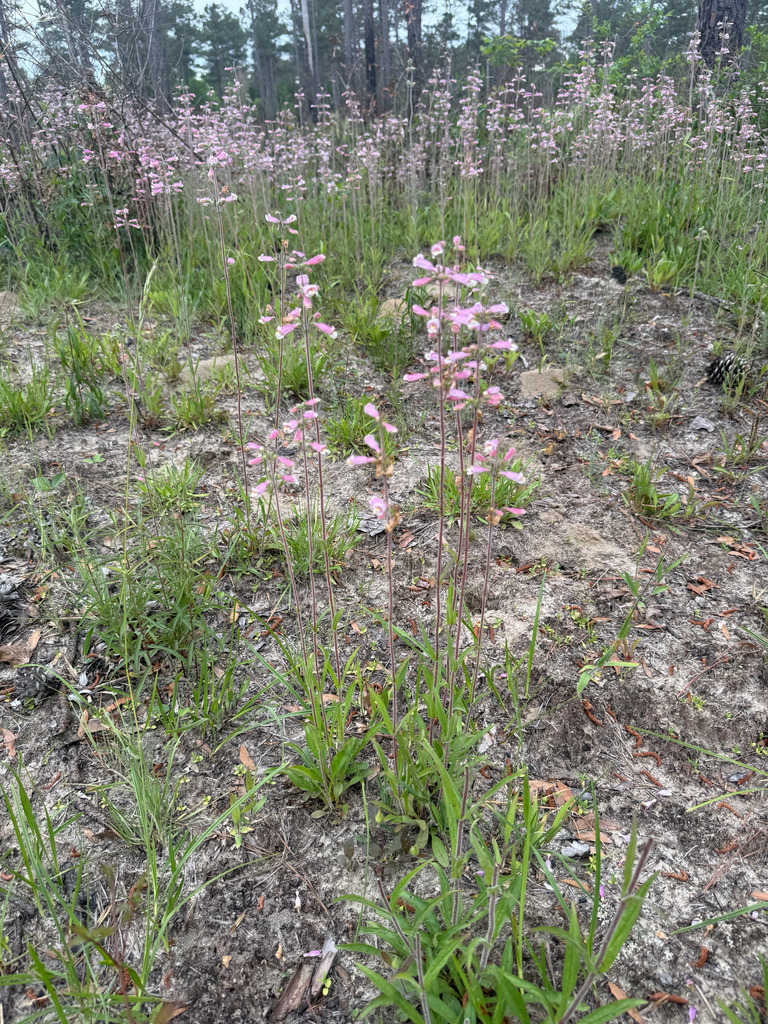
It is most common on the inner and outer Coastal Plain and the Fall Line sandhills of the Carolinas and Georgia. In Florida it grows in the Panhandle and in the northern and central peninsula. Its typical habitats are dry, open places: longleaf pine sandhills, dry pine flatwoods, thin upland woods, sandy roadsides and old fields.
Like other sandhill wildflowers, it depends on frequent fire or disturbance to keep its habitat open and sunny. It often flowers abundantly the spring after a winter burn, and populations decline where pinelands become shaded by hardwoods.
📋 Regional plant lists featuring Eustis Lake Beardtongue: North & South Florida · Alabama, Georgia & Mississippi · North & South Carolina · Maryland, Virginia & West Virginia · Kentucky & Tennessee
Growing & Care Guide
Eustis Lake beardtongue is one of the best penstemons for gardens in the Deep South, where many popular western and northern penstemons rot in heat and humidity. Given sun and sharp drainage, it is long-lived, drought tolerant and easy to grow.
Light
Full sun gives the best flowering, but it tolerates light shade or a few hours of afternoon shade, which the Lady Bird Johnson Wildflower Center notes is also suitable.
Soil & Water
Plant it in dry, well-drained sandy or gravelly soil. Avoid rich, heavy or poorly drained soil, where the crown can rot in summer rains. Water new plants until established; afterward it rarely needs watering except in long droughts. Do not fertilize.
Planting Tips
Plant container-grown plants in fall or late winter so roots can establish before spring growth. Space them about 12 inches apart, in groups of three or more for the best display. Keep mulch thin and away from the evergreen rosettes, or use a light gravel or pine needle mulch.
Pruning & Maintenance
Cut flowering stems back after seed has ripened, or leave them for natural reseeding. The evergreen basal rosettes should be left in place through winter. Keep taller grasses and weeds from shading the plants, especially in winter, when the rosettes are photosynthesizing.
Propagation
Sow seed outdoors in fall, or give it 4 to 8 weeks of cold, moist stratification before sowing in spring; the Lady Bird Johnson Wildflower Center notes that germination is best after cold-moist stratification. Plants usually bloom in their second year. Established clumps can also be divided in fall or winter.
Landscape Uses
- Sandhill and pineland gardens: with sky-blue lupine, golden aster and wiregrass
- Pollinator gardens: a spring nectar source for native bees and hummingbirds
- Rock gardens and dry borders: for sunny, sharply drained sites
- Restoration: in longleaf pine sandhill and flatwoods restoration within its range
- Southern penstemon: a heat-tolerant alternative to non-native penstemons in the Deep South
Wildlife & Ecological Value
Eustis Lake beardtongue blooms during the busy spring season in southern pinelands and supports a range of pollinators.
For Pollinators
Its flowers are pollinated mainly by bumble bees and other medium to large native bees, which crawl into the tube to reach the nectar and brush against the stamens. Smaller bees also collect pollen from the flowers. The Xerces Society lists it as having special value to native bees. Ruby-throated hummingbirds occasionally visit the flowers, and butterflies may sip nectar.
For Birds
Hummingbirds visit the flowers. Seeds are small and of minor importance to birds, but the plant contributes to the diverse ground layer that sandhill birds such as Bachman’s sparrows depend on.
For Mammals
Deer and rabbits sometimes browse the rosettes and stems, though penstemons are generally not preferred browse.
Ecosystem Role
It is a fire-adapted perennial of southern pinelands. Its evergreen basal rosette and deep root system survive low-intensity ground fires, and it flowers well in the open conditions that follow. It adds spring color and nectar to habitats dominated by grasses and summer- and fall-blooming wildflowers.
Cultural & Historical Uses
The species was described by the botanist John Kunkel Small in 1903. Small, who explored Florida extensively, named many plants from the state. The name australis (southern) reflects its position as one of the southernmost penstemons in the eastern United States.
There is little record of specific human uses for this species. Penstemons as a group are popular garden plants, and native plant enthusiasts in the Southeast have increasingly promoted Eustis Lake beardtongue as a locally adapted alternative to non-native ornamental penstemons.
Many people see it for the first time on roadsides and in state forests across Georgia and the Carolinas in spring, where its pink spikes stand out above the low grasses of recently burned pinelands.
Frequently Asked Questions
Why is it called beardtongue?
Penstemon flowers have one sterile stamen, called a staminode, lying along the floor of the flower like a tongue. In this species its tip is covered with yellow hairs, giving it a bearded look.
Is Eustis Lake beardtongue native to Florida?
Yes. It grows in the Florida Panhandle and the northern and central peninsula, and is one of only a few penstemons native to the state.
Does it attract hummingbirds?
Hummingbirds occasionally visit it, but its main pollinators are bumble bees and other native bees, which fit well into its pink tubular flowers.
How do I grow it from seed?
Sow seed outdoors in fall, or cold-moist stratify it for 4 to 8 weeks in the refrigerator before spring sowing. Seedlings usually bloom in their second year.
Will it grow in clay soil?
It prefers dry, sandy or rocky, well-drained soil and is likely to rot in heavy, wet clay. If your soil is heavy, plant it in a raised bed or berm with plenty of sand or gravel.

Looking for a nursery that carries Eustis Lake Beardtongue?
Browse our native plant nursery directory: Alabama · Florida & Georgia · North Carolina · South Carolina, Tennessee & Virginia