
Delicate Violet Orchid (Ionopsis utricularioides)
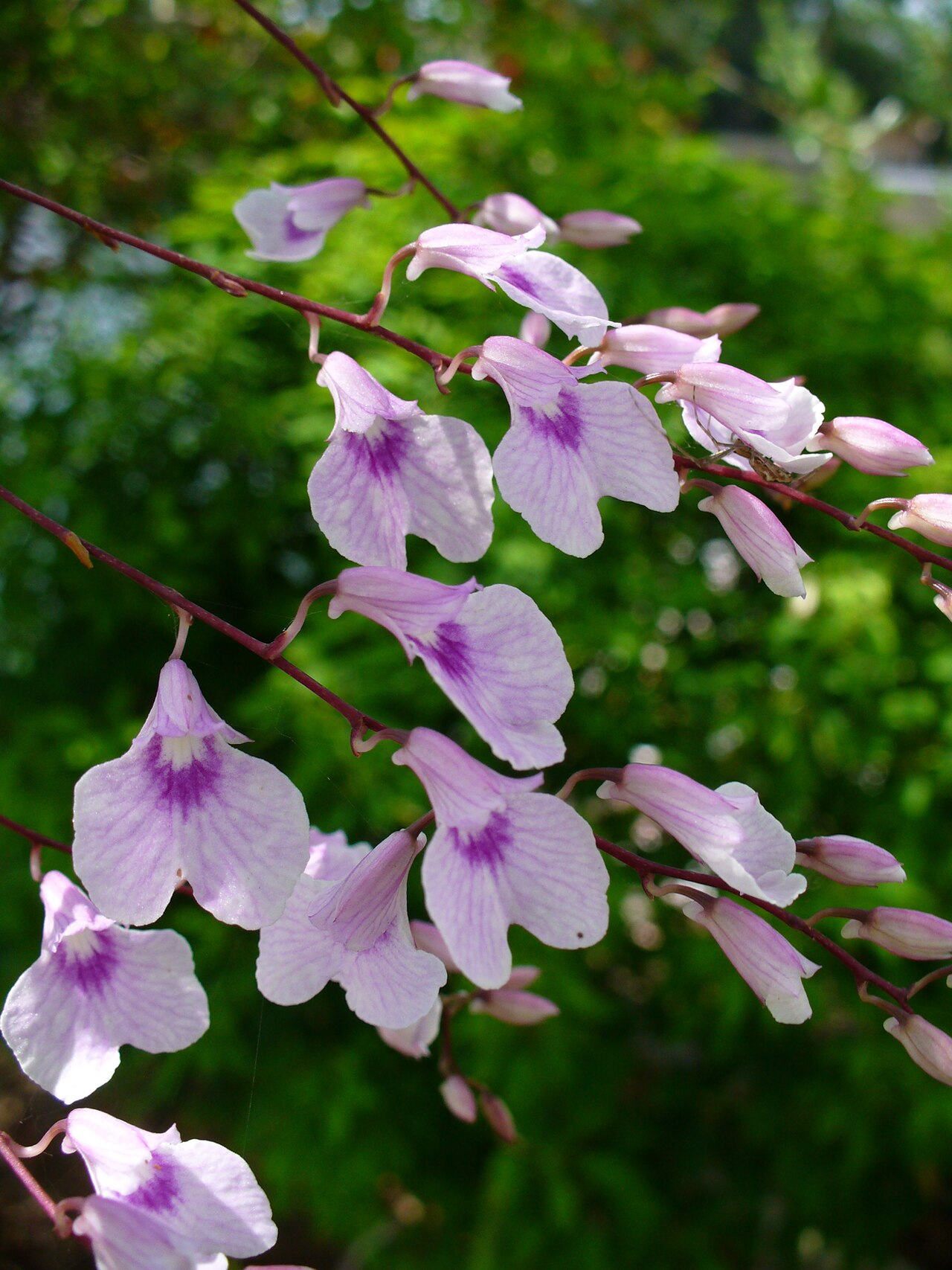
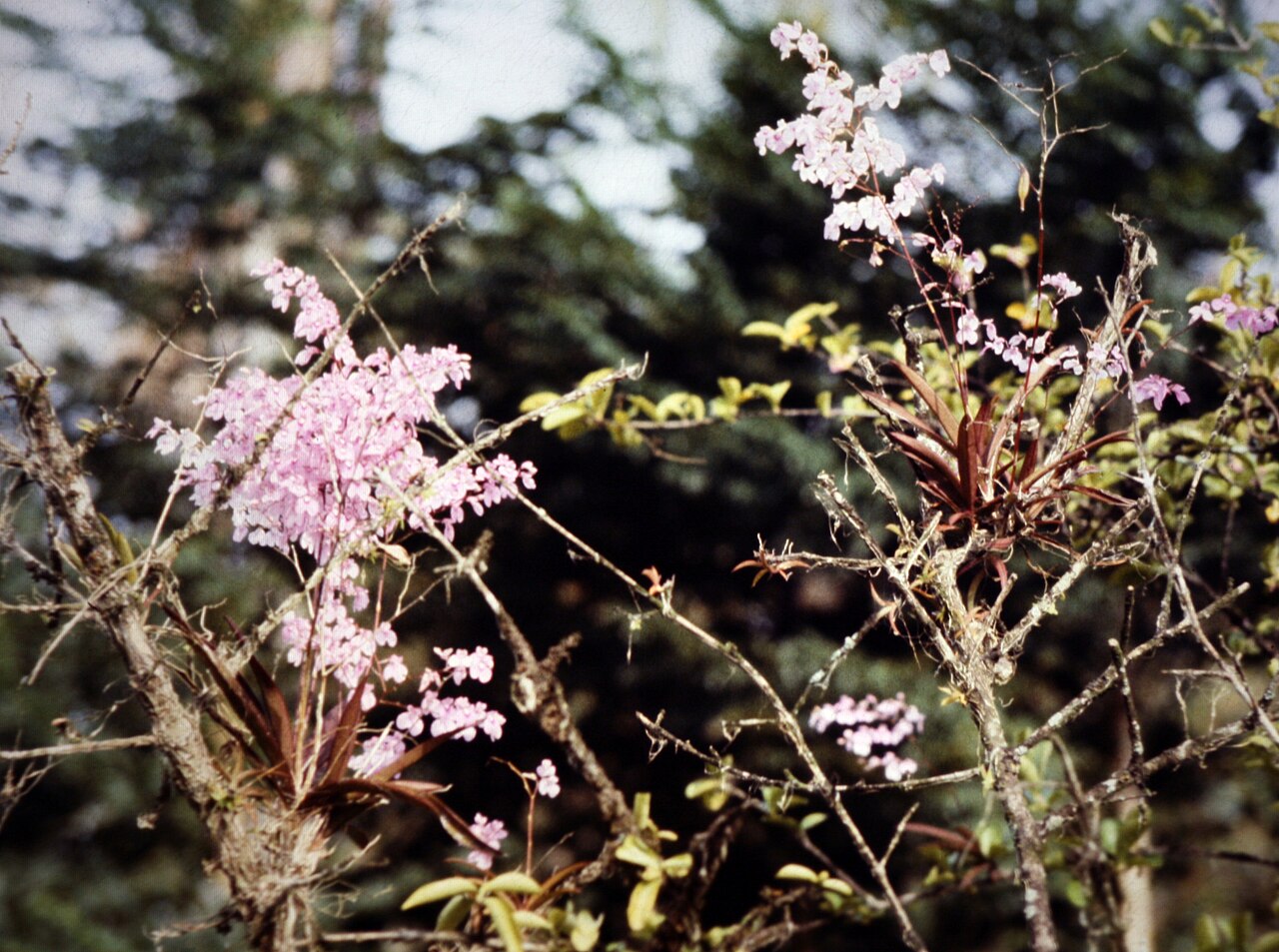
Ionopsis utricularioides, known as the Delicate Violet Orchid and in Puerto Rico as angelitos, is a small epiphytic orchid that sends out airy, branched sprays of tiny white to lavender flowers marked with violet. Its name means “violet-like,” and the flowers, with their broad, flat lips, do resemble small violets. It is a “twig epiphyte,” growing on the thin outer branches of trees and shrubs, including garden citrus and guava.
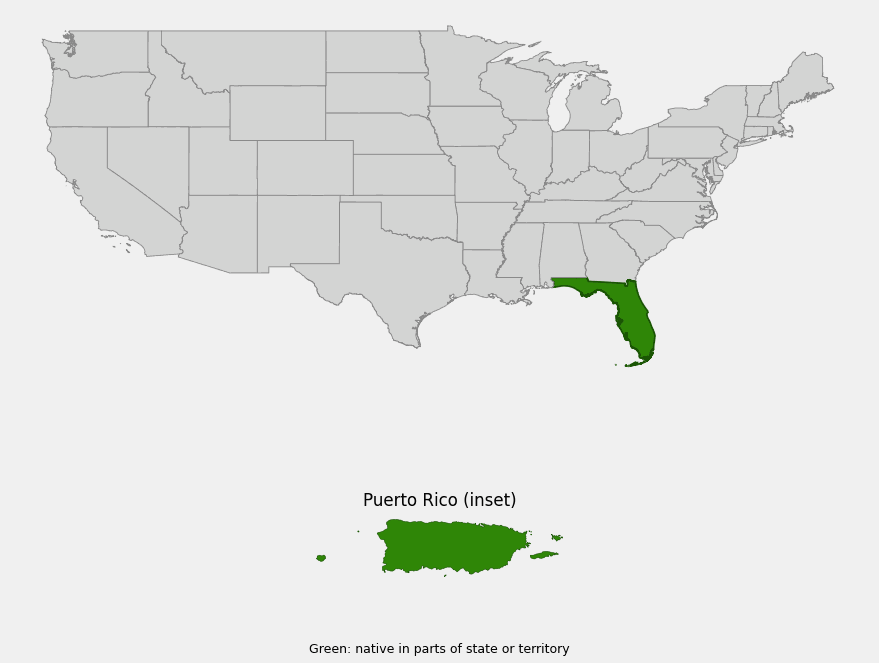
It is one of the most widespread orchids in the American tropics, found from Mexico and the West Indies to Paraguay and the Galápagos. USDA PLANTS lists it as native in Florida, Puerto Rico and the U.S. Virgin Islands. In Puerto Rico the Institute for Regional Conservation (IRC) records it in Guánica State Forest and Río Abajo State Forest. In Florida it is one of the state’s rarest orchids: the Atlas of Florida Plants lists it as state Endangered, and IRC ranks it critically imperiled in South Florida, known from only a handful of swamps.
This guide is for gardeners and orchid lovers in Puerto Rico and Florida. It covers how to recognize the delicate violet orchid, where it grows, and how to grow nursery-raised plants on a garden tree. Buy nursery-propagated plants only; never remove orchids from trees in the wild.
Identification
When not in bloom the delicate violet orchid is easy to miss: just a small fan of stiff leaves clinging to a twig. In flower, its long, branched sprays of many small, pale flowers are distinctive.
Leaves & Growth Habit
Plants are small and compact, with tiny pseudobulbs hidden at the base of a few stiff, narrow, strap- to lance-shaped leaves, often only a few inches long. In bright light the leaves are often tinged red or purple. A mass of thin, gray-white roots grips the bark.
Flower Sprays
The flower stalk (inflorescence) is slender, wiry and branched, often reddish, and can be much longer than the plant, carrying dozens of flowers in a loose, cloud-like spray. Flowers open over several weeks.
Flowers
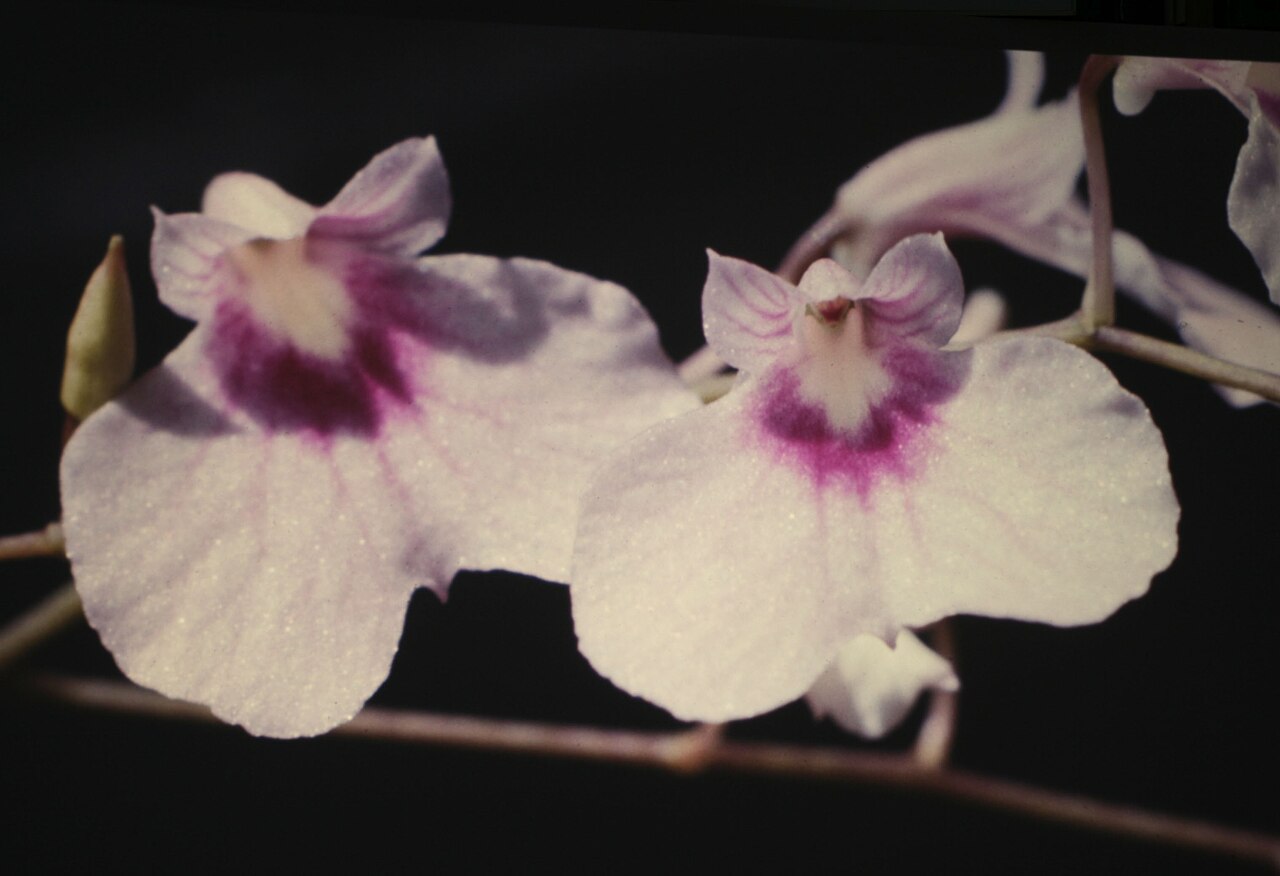
Each flower is small, usually well under an inch across. The lip is by far the largest part: broad, flat and notched into two lobes at the tip, white to pale lavender or pink, with darker violet veins or a violet blotch near the base. The small sepals and petals form a little hood over the column. Color varies from nearly white to rose-pink between plants.
Fruit & Seeds
Pollinated flowers form small capsules that split to release dust-like seeds. The seeds drift to new twigs and branches, where, as with all orchids, they need a partner fungus to germinate.
Quick Facts
| Scientific Name | Ionopsis utricularioides (Sw.) Lindl.; USDA common name: delicate violet orchid |
| Family | Orchidaceae (orchid family) |
| Plant Type | Small evergreen epiphytic orchid (twig epiphyte) |
| Mature Height | 2–6 in leaves; flower sprays often 1–2 ft long |
| Mature Spread | 2–6 in |
| Growth Rate | Moderate |
| Sun Exposure | Bright filtered light to partial sun |
| Water Needs | Moderate; roots should dry quickly after watering |
| Soil Type | Epiphytic; on twigs, small branches or a bare mount |
| Soil pH | Not applicable (epiphyte) |
| Bloom Time | Varies; flowers last several weeks |
| Flower Color | White to pale lavender or pink with violet veins |
| Fall Color | None; evergreen (leaves may redden in bright light) |
| Fruit | Small capsule with dust-like seeds |
| Deer Resistant | Yes; grows on twigs out of reach |
| USDA Hardiness Zones | 10b–12; frost-tender |
Native Range
Delicate violet orchid is native across the warmer parts of the Americas. Wikipedia reports it from Florida, Mexico (from Nayarit to Quintana Roo), all seven countries of Central America, much of the West Indies including the Cayman Islands, South America as far south as Paraguay, and the Galápagos Islands. IRC gives a similar range: the Greater and Lesser Antilles, South Florida, Mexico, Central America and South America. Within the area PlantNative covers, USDA PLANTS lists it as native in Florida, Puerto Rico and the U.S. Virgin Islands.
In Puerto Rico IRC records it in two conservation areas: Guánica State Forest, in the southern dry forest, and Río Abajo State Forest, in the northern karst, where it also grows over limestone. Like the closely related dancing-lady orchid, it readily colonizes the twigs of shade trees and fruit trees, and Puerto Rico’s orchid growers know it, along with Tolumnia variegata, as angelitos.
In Florida it reaches the northern limit of its range and is extremely rare. IRC lists it as present in Collier and Palm Beach counties, in strand swamps and disturbed wetlands, with records from Fakahatchee Strand Preserve State Park, Big Cypress National Preserve, Corkscrew Swamp Sanctuary and Arthur R. Marshall Loxahatchee National Wildlife Refuge. It is listed as possibly extirpated in Everglades National Park and Picayune Strand State Forest. The Atlas of Florida Plants lists it as state Endangered.
📋 Regional plant lists featuring Delicate Violet Orchid: Puerto Rico · North & South Florida
Growing & Care Guide
The delicate violet orchid is grown by orchid nurseries and hobbyists in both Puerto Rico and Florida. In Florida it is state Endangered, and wild plants anywhere are slow to replace, so buy nursery-propagated plants only and never take plants from trees in the wild. Like many twig epiphytes, it can be short-lived in cultivation, so regular care and good air movement matter.
Light
Give it bright, filtered light, like the outer branches of a lightly shaded tree. In the wild it grows where light and air reach the twigs. Reddish leaves usually mean plenty of light; dark green, floppy leaves mean too little.
Soil & Water
Grow it mounted on a twig, a small branch or a cork slab, not in a pot of soil. The roots must dry within a few hours after watering, but should not stay dry for long. Outdoors in Puerto Rico and South Florida, rain and dew may be enough during the wet season; water mounted plants in the morning during dry spells.
Planting Tips
Tie the plant to a small branch of a garden tree, such as citrus or guava, using soft string or fishing line, with its roots against the bark. Twigs about as thick as a finger, in a spot with good air movement, are ideal. In Florida, protect plants from frost by moving mounts indoors or under cover on cold nights.
Pruning & Maintenance
Cut off flower sprays when they finish. Feed lightly and often with a weak orchid fertilizer while the plant is growing. Avoid letting water sit in the base of the leaves overnight, which can cause rot.
Propagation
Large plants occasionally produce offsets that can be removed once rooted. Most nursery plants are raised from seed in sterile flasks in a laboratory, which lets growers offer the species without harming wild populations.
Landscape Uses
- Tree-mounted gardens: on citrus, guava and other garden trees
- Orchid collections: compact mounts with airy sprays of flowers
- Shade houses and patios: cork or twig mounts with good air flow
- Conservation plantings: nursery-raised plants on native trees in wildlife gardens
- Pollinator gardens: small flowers visited by bees
Wildlife & Ecological Value
Delicate violet orchid is one of many small epiphytes that live on the twigs of trees, adding to the canopy’s diversity without harming its hosts.
For Pollinators
The flowers are visited by small bees, which carry off the pollen packets (pollinia). Like many orchids in its group, it offers little nectar, relying on its showy lip to attract visitors.
For Birds
Small birds forage for insects among the twigs and leaves, but the orchid is not a food plant for birds.
For Mammals
It has no particular value for mammals.
Ecosystem Role
As a twig epiphyte, it takes water and nutrients from rain, mist and debris rather than from its host tree. In Florida it survives only in a few humid cypress strands and swamps, where shade, standing water and mist keep the air moist through the dry season.
Cultural & Historical Uses
The Swedish botanist Olof Swartz described this orchid in 1788 as Epidendrum utricularioides, and the English orchid specialist John Lindley later moved it to Ionopsis, giving the name Ionopsis utricularioides (Sw.) Lindl. Ionopsis means “violet-like,” for the shape of the flowers, and utricularioides means “like Utricularia,” the bladderworts, whose flowers also have a broad, flat lip.
In Puerto Rico the name angelitos is shared with Tolumnia variegata, another small orchid of twigs and fruit trees with a broad, skirt-like lip. Both are familiar to the island’s orchid growers and both turn up on citrus and coffee in rural gardens.
In Florida its rarity has made it an emblem of the state’s threatened orchids. The swamps where it survives, such as Fakahatchee Strand and Corkscrew Swamp, are famous for their native orchids, and the Atlas of Florida Plants lists it, like many of Florida’s native orchids, as state Endangered.
Frequently Asked Questions
Is the delicate violet orchid native to Florida and Puerto Rico?
Yes. USDA PLANTS lists Ionopsis utricularioides as native in Florida, Puerto Rico and the U.S. Virgin Islands.
Is it protected in Florida?
Yes. The Atlas of Florida Plants lists it as state Endangered, and IRC ranks it critically imperiled in South Florida. Never remove plants from the wild; buy nursery-propagated plants.
What is it called in Puerto Rico?
It is called angelitos, a name it shares with the dancing-lady orchid, Tolumnia variegata.
Why do my plants die after a year or two?
Twig epiphytes like this one are adapted to quick-drying perches and can be short-lived in cultivation, especially in pots or in stagnant air. Mount them on twigs or cork, give them bright light and good air movement, and water often enough that the roots never stay dry for days.
Can I grow it on my citrus tree?
Yes, in Puerto Rico and frost-free South Florida. Citrus and guava twigs are classic hosts. Tie a nursery-grown plant to a finger-thick branch in bright, filtered light.

Looking for a nursery that carries Delicate Violet Orchid?
Our nursery directory does not yet include Puerto Rico. Browse the native plant nursery directory by state: Alabama–Arkansas · California · Colorado–Hawaii · Idaho–Kansas · Kentucky–Montana · Nebraska–Oklahoma · Oregon · Pennsylvania–Virginia · Washington · West Virginia–Wyoming