
Hemp Dogbane (Apocynum cannabinum)
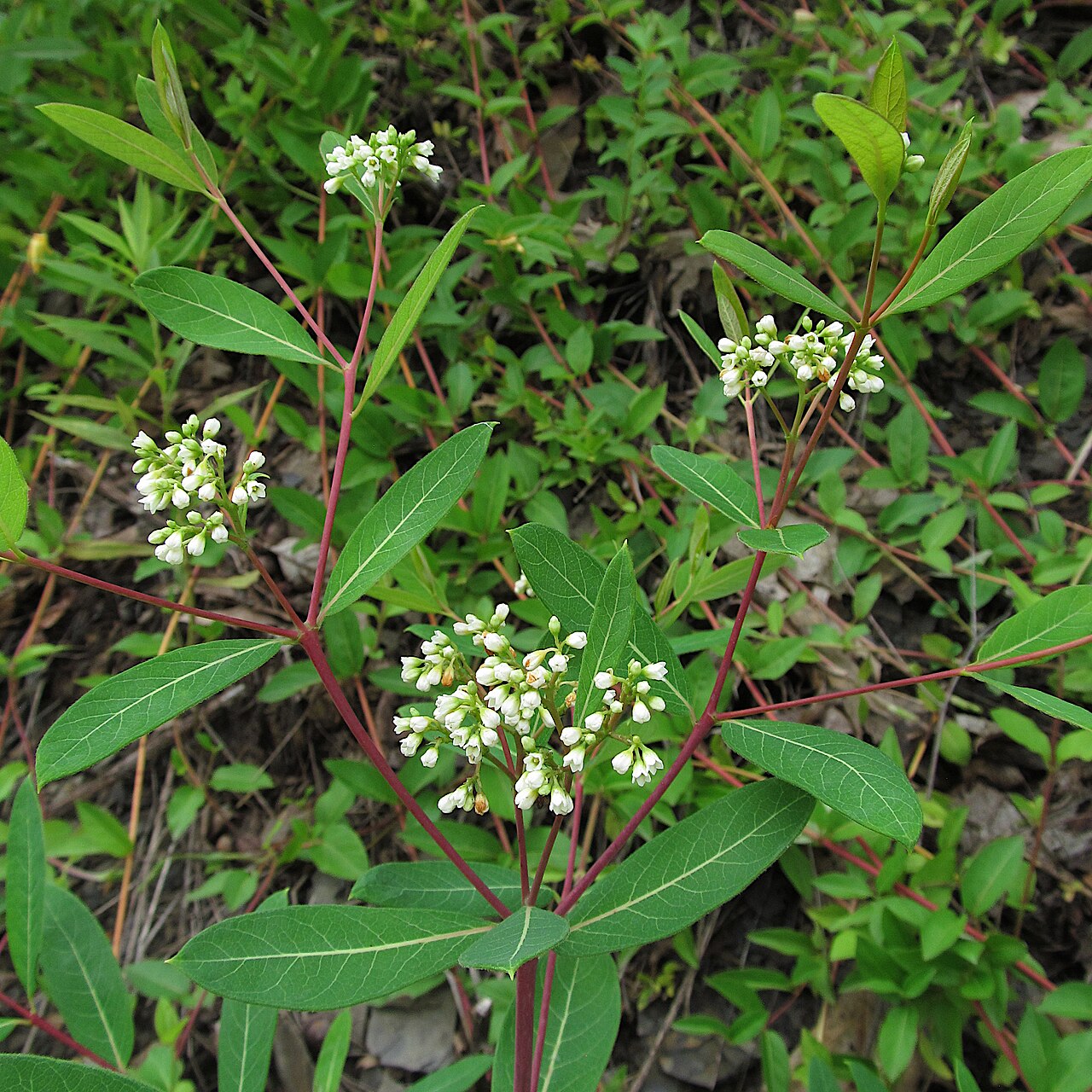
Apocynum cannabinum, known as Hemp Dogbane, Indian hemp (USDA: Indianhemp) or prairie dogbane, is a tough, upright perennial in the dogbane family (Apocynaceae), the same family that now includes the milkweeds. It grows 2 to 5 feet tall from deep, spreading roots, with reddish stems, smooth opposite leaves and a milky sap. In early to mid-summer it carries small clusters of greenish-white, bell-shaped flowers, followed by pairs of long, pencil-thin pods full of silky-tufted seeds.
Few native plants have a longer history of human use. The tough fibers in its stems were one of the most important cordage materials in North America. Native peoples across the continent twisted them into thread, bowstrings, fishing nets, snares and bags, which is the source of the names Indian hemp and cannabinum, “hemp-like.” The plant is also poisonous. All parts contain cardiac glycosides and other toxic compounds, and it should never be eaten by people or animals.
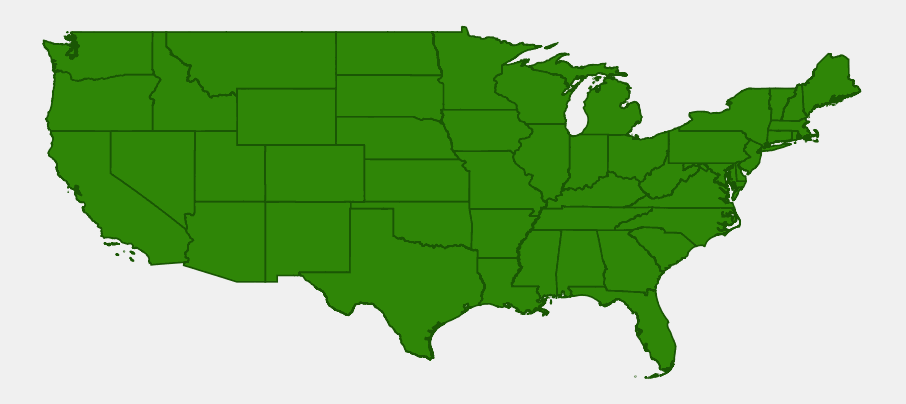
Hemp dogbane is native in every one of the lower 48 states and much of southern Canada. It grows in old fields, prairies, roadsides, thickets, riverbanks and lakeshores, and it thrives on disturbance. That makes it valuable for wildlife and erosion control, and also aggressive in a garden. This guide explains how to identify it, how it differs from milkweed, where it is useful, and how to handle it safely.
Identification
Hemp dogbane is often mistaken for a milkweed, since both have milky sap and long pods with silky seeds. Look at the branching, the reddish stems, the small flowers and the very thin pods to tell them apart.
Stems & Roots
Plants grow from deep, horizontal roots that can spread several feet a year and send up new shoots, so hemp dogbane usually grows in patches. The stems are upright, 2 to 5 feet tall, smooth or finely hairy, and often reddish or purplish, especially in sun. They are unbranched below and fork into several ascending branches near the top. Broken stems and leaves ooze a white, milky latex.
Leaves
The leaves are opposite, simple and untoothed, oval to lance-shaped, about 2 to 5 inches long, with short stalks or none. They are smooth or slightly hairy beneath and sometimes have a waxy, bluish bloom. In fall they turn a clear yellow, which makes patches easy to spot in old fields and along roads.
Flowers
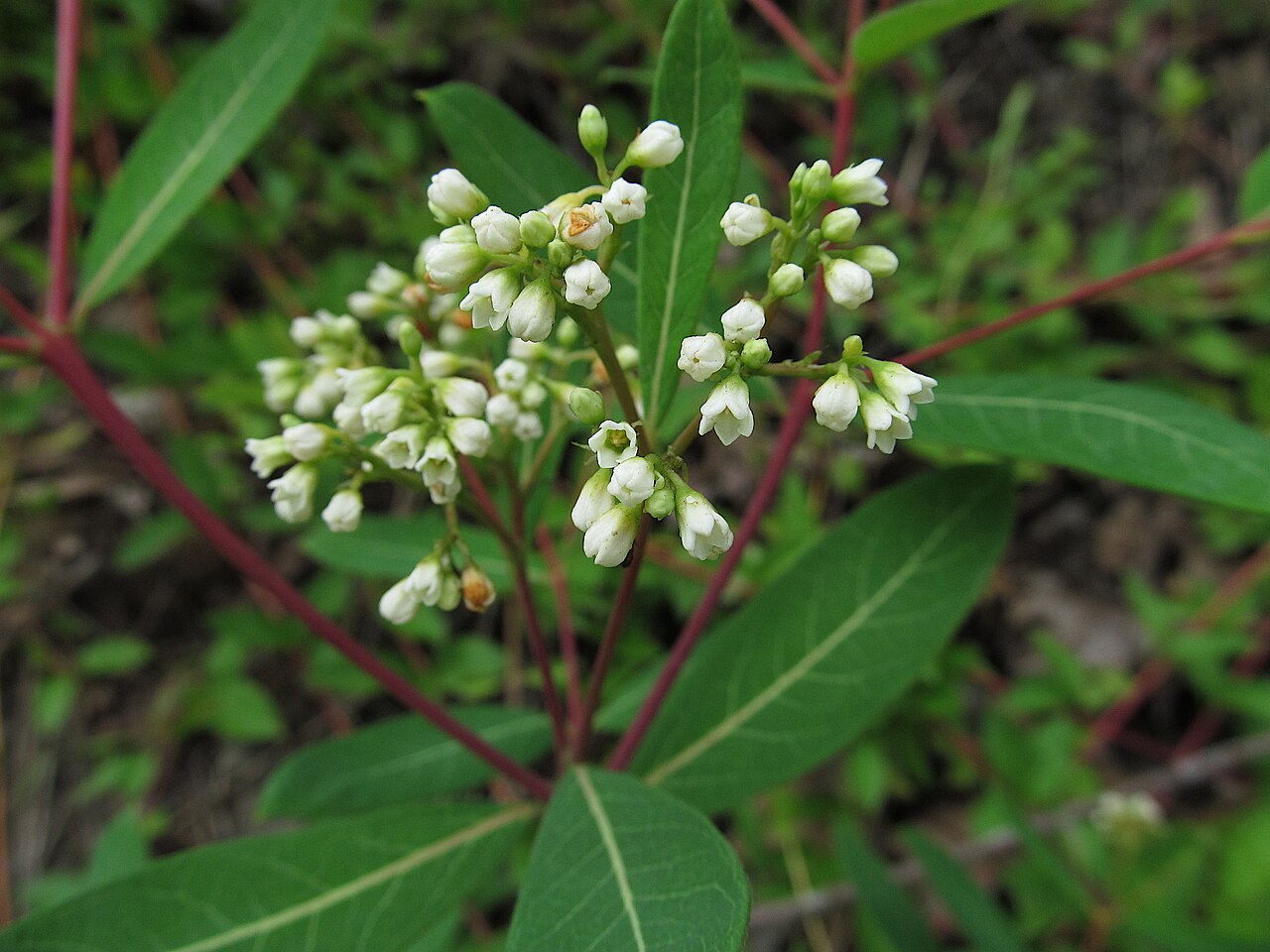
From late spring to midsummer (May to August, depending on latitude) the plant produces small, branched clusters of flowers at the stem tips and in the upper leaf axils. Each flower is a five-lobed bell or urn, only about 1/8 to 1/4 inch long, greenish white to white, and held upright. The clusters are usually overtopped by the leafy side branches. They are less showy and smaller than milkweed flowers.
Fruit & Seeds
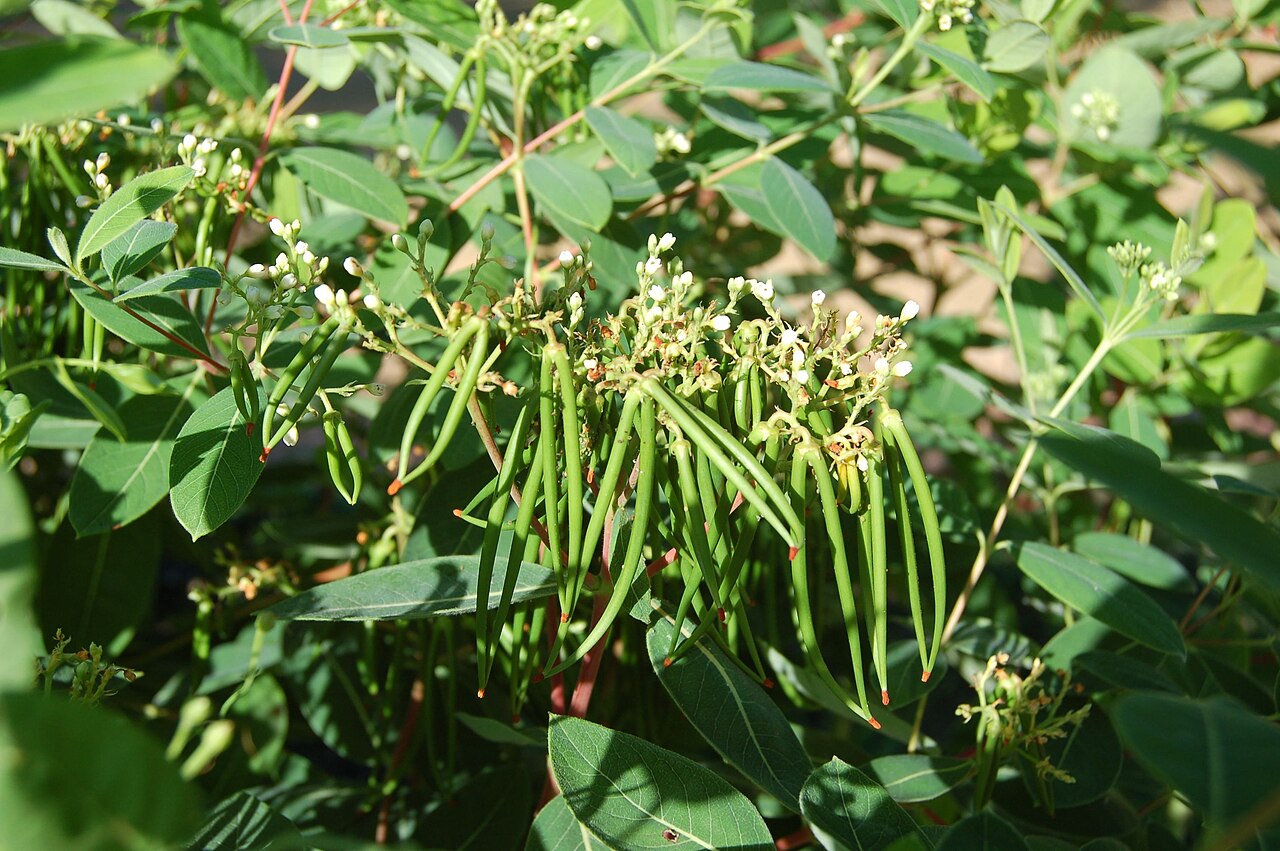
Pollinated flowers produce paired, slender, cylindrical pods (follicles) 4 to 8 inches long and only about 1/8 to 1/4 inch thick, which hang down like long beans. They ripen from green to reddish brown in late summer and split along one side in fall, releasing many small seeds, each with a tuft of silky white hairs that carries it on the wind.
Toxicity & Safety
Hemp dogbane is toxic to people, pets and livestock. All parts, including the sap, leaves, roots and seeds, contain cardiac glycosides (including cymarin) and resins that can cause vomiting, an irregular or slowed heartbeat and, in large doses, death. Grazing animals usually avoid the bitter green plant, but poisoning has been reported in livestock fed hay contaminated with dried dogbane. The milky sap can irritate the skin and eyes of sensitive people. Wear gloves when cutting or pulling it, keep it out of reach of children and pets, and never use it as food or as a home remedy.
Look-alikes
Common milkweed (Asclepias syriaca) has broader, softer leaves, an unbranched stem, large rounded clusters of pink, fragrant flowers, and fat, warty pods. Spreading dogbane (Apocynum androsaemifolium) is shorter, with drooping leaves and larger, pink-striped bell flowers. Intermediate plants between the two dogbanes are sometimes called Apocynum × floribundum.
Quick Facts
| Scientific Name | Apocynum cannabinum (syn. A. sibiricum, A. hypericifolium, A. pubescens, A. suksdorfii) |
| Family | Apocynaceae (dogbane family) |
| Plant Type | Herbaceous perennial with spreading roots; toxic |
| Mature Height | 2–5 ft |
| Mature Spread | 2–3 ft per stem cluster; spreads into colonies by roots |
| Growth Rate | Fast |
| Sun Exposure | Full sun to part shade |
| Water Needs | Low to medium; adaptable from moist to fairly dry soil |
| Soil Type | Adaptable: sand, loam, gravel or clay |
| Soil pH | About 5.5–8.0 |
| Bloom Time | May–August |
| Flower Color | Greenish white to white |
| Fall Color | Clear yellow |
| Fruit | Paired slender pods 4–8 in long; seeds with silky tufts |
| Deer Resistant | Yes; the bitter, toxic foliage is rarely browsed |
| USDA Hardiness Zones | 3–9 |
Native Range
Hemp dogbane has one of the widest ranges of any North American wildflower. USDA PLANTS and the Lady Bird Johnson Wildflower Center record it as native in all of the lower 48 states and the District of Columbia. In Canada it grows from British Columbia and Alberta east across the prairie provinces, Ontario and Quebec to New Brunswick, Nova Scotia and Newfoundland, and it reaches the Northwest Territories. It also extends south into northern Mexico.
It grows almost anywhere with some open sunlight: old fields, tallgrass and mixed-grass prairie, roadsides and railroad banks, pastures, thickets, woodland edges and clearings, and the gravel and sand bars, banks and floodplains of streams, rivers and lakes. In the arid West it is mostly found near water, in canyons, riparian zones and moist meadows. It is quick to colonize disturbed ground, and it is a common weed of reduced-tillage crop fields in the Midwest.
Botanists have described many varieties based on differences in hairiness, leaf shape and flower size across this huge range, and USDA lists more than a dozen synonyms. Most current treatments simply recognize one variable species.
📋 Regional plant lists featuring Hemp Dogbane: New York, Pennsylvania & Northern New Jersey · Idaho, Eastern Oregon & Eastern Washington · Ohio & Indiana · Montana & Wyoming · Michigan, Wisconsin & Eastern Minnesota · Kentucky & Tennessee · Nebraska, Kansas & Eastern Colorado · Utah & Western Colorado · Connecticut, Massachusetts & Rhode Island · New Hampshire, Maine & Vermont · Maryland, Virginia & West Virginia · Delaware, Southern New Jersey & Long Island · Arizona & New Mexico · Illinois, Iowa & Missouri · Alabama, Georgia & Mississippi · North & South Florida
Growing & Care Guide
Hemp dogbane is one of the easiest native perennials to grow and one of the hardest to get rid of. The Lady Bird Johnson Wildflower Center warns that it can become a serious weed because it is aggressive and difficult to control. Use it in large naturalized areas, prairies, meadows, roadsides and streambank plantings, not in small or formal beds, and keep in mind that it is toxic.
Light
It grows best in full sun and tolerates part shade along woodland edges. In heavier shade it becomes sparse and flowers poorly.
Soil & Water
Hemp dogbane accepts nearly any soil, from sand and gravel to heavy clay, and from moist floodplains to fairly dry upland fields. Its deep roots make it drought tolerant once established. It does not need fertilizer or supplemental watering except in the first season.
Planting Tips
Plant it where its spread is welcome or where something contains it: a large meadow, a prairie restoration, a ditch or stream bank, or a bed surrounded by lawn or pavement. Space plants 2 to 3 feet apart. Do not plant it near pastures, hayfields or play areas, since it is poisonous to livestock, pets and people.
Pruning & Maintenance
Leave stems standing through winter for their yellow fall color and for the fibers and seeds. Cut them back in late winter. To limit spread, mow or pull new shoots outside the planting area regularly, and remove pods before they split if you do not want seedlings. Established root systems are very persistent and difficult to dig out. Always wear gloves, since the milky sap can irritate skin.
Propagation
Seeds germinate best after 30 to 60 days of cold, moist stratification; sow them outdoors in fall or in spring after refrigeration. Root cuttings or divisions taken in early spring establish easily. Collect seed only in fall, when the pods have turned brown and begin to split.
Landscape Uses
- Prairie and meadow restoration: a long-lived native component of tallgrass and mixed-grass plantings
- Erosion control: deep, spreading roots help stabilize stream banks, ditches and slopes
- Pollinator plantings: early-summer nectar for small bees, wasps, flies and butterflies
- Natural fiber and cordage: stem fibers have been used for thread, rope and nets for thousands of years
- Large naturalized areas: a self-sustaining native for roadsides and field margins where its spread is acceptable
Wildlife & Ecological Value
Hemp dogbane is toxic to vertebrates, but it supports a set of insects that have evolved to handle its chemistry, and its flowers feed a wide range of pollinators in early summer.
For Pollinators
The small, fragrant flowers produce nectar and attract many small bees, including sweat bees and small carpenter bees, as well as wasps, flies, beetles, skipper butterflies and hairstreaks. It is a larval host for the snowberry clearwing moth (Hemaris diffinis), a day-flying, hummingbird-like moth, and for the dogbane tiger moth (Cycnia tenera). Monarch caterpillars do not feed on it, although it is often mistaken for milkweed.
For Birds
Birds rarely eat the foliage or seeds. Some songbirds, however, are known to strip the fine stem fibers and seed fluff to line their nests, and the colonies provide cover for ground-nesting birds in old fields.
For Mammals
Deer, rabbits and livestock usually avoid it because of its bitter, toxic sap. Animals are most at risk when dried plants end up in hay, where they are harder to recognize and avoid.
Ecosystem Role
The plant hosts a specialized insect community, most famously the iridescent dogbane leaf beetle (Chrysochus auratus), whose larvae feed on the roots and adults on the leaves. Several aphids and milkweed bugs also use it. Its fast-spreading roots let it colonize floods, fire scars and other disturbances, and it helps hold loose soil on riverbanks and gravel bars.
Cultural & Historical Uses
Hemp dogbane was one of the most important fiber plants of Native North America. Fibers stripped from the dried stems are fine, strong and resistant to rot, and they were twisted into thread, cordage, bowstrings, fishing lines and nets, snares, mats and bags. Archaeologists have found dogbane cordage thousands of years old in dry caves of the Great Basin and the Southwest. Many tribes harvested the stems in fall, after the plants had dried naturally in the field.
The plant was also used medicinally by several Native American groups and later by European-American doctors, who knew the root as “Canadian hemp” and used it as a heart stimulant and diuretic. Its strong cardiac effects make it dangerous, and it has no safe home medicinal use today.
The genus name Apocynum comes from Greek words meaning “away from dog,” an old name for a related plant that was said to poison dogs, and the species name cannabinum means “hemp-like,” for its fibers. It is not related to true hemp or cannabis. Interest in its fiber has revived among primitive-skills practitioners and natural-fiber artisans, who harvest dead stems in late fall and winter.
Frequently Asked Questions
Is hemp dogbane poisonous?
Yes. All parts contain cardiac glycosides and are poisonous to people, dogs, cats, horses and cattle. The milky sap can irritate skin. Wear gloves when handling it, keep it away from pastures and play areas, and never eat or use it as medicine.
How can I tell hemp dogbane from milkweed?
Hemp dogbane branches near the top, has reddish stems, small greenish-white flowers and very thin pods 4 to 8 inches long. Common milkweed has an unbranched stem, broader leaves, large round clusters of pink flowers and thick, warty pods.
Can monarch caterpillars eat hemp dogbane?
No. Monarchs lay their eggs only on milkweeds. Hemp dogbane feeds other insects, such as the dogbane leaf beetle, the dogbane tiger moth and the snowberry clearwing moth.
Is hemp dogbane invasive?
It is native throughout the lower 48 states, so it is not invasive, but it is aggressive. Its deep, spreading roots form large colonies and are hard to remove. Plant it only where it has room to spread.
Is it related to hemp or cannabis?
No. It was named “Indian hemp” because Native Americans used its strong stem fibers like hemp, for cordage, nets and thread. It is in the dogbane family, not the hemp family.

Looking for a nursery that carries Hemp Dogbane?
Browse our native plant nursery directory: Alabama, Arizona & Arkansas · California · Colorado, Connecticut, Delaware, Florida & Georgia · Idaho, Illinois, Indiana, Iowa & Kansas · Kentucky, Louisiana, Maine, Maryland, Massachusetts, Michigan, Minnesota, Mississippi, Missouri & Montana · Nebraska, Nevada, New Hampshire, New Jersey, New Mexico, New York, North Carolina, North Dakota, Ohio & Oklahoma · Oregon · Pennsylvania, Rhode Island, South Carolina, South Dakota, Tennessee, Texas, Utah, Vermont & Virginia · Washington · West Virginia, Wisconsin & Wyoming