
Running Clubmoss (Lycopodium clavatum)
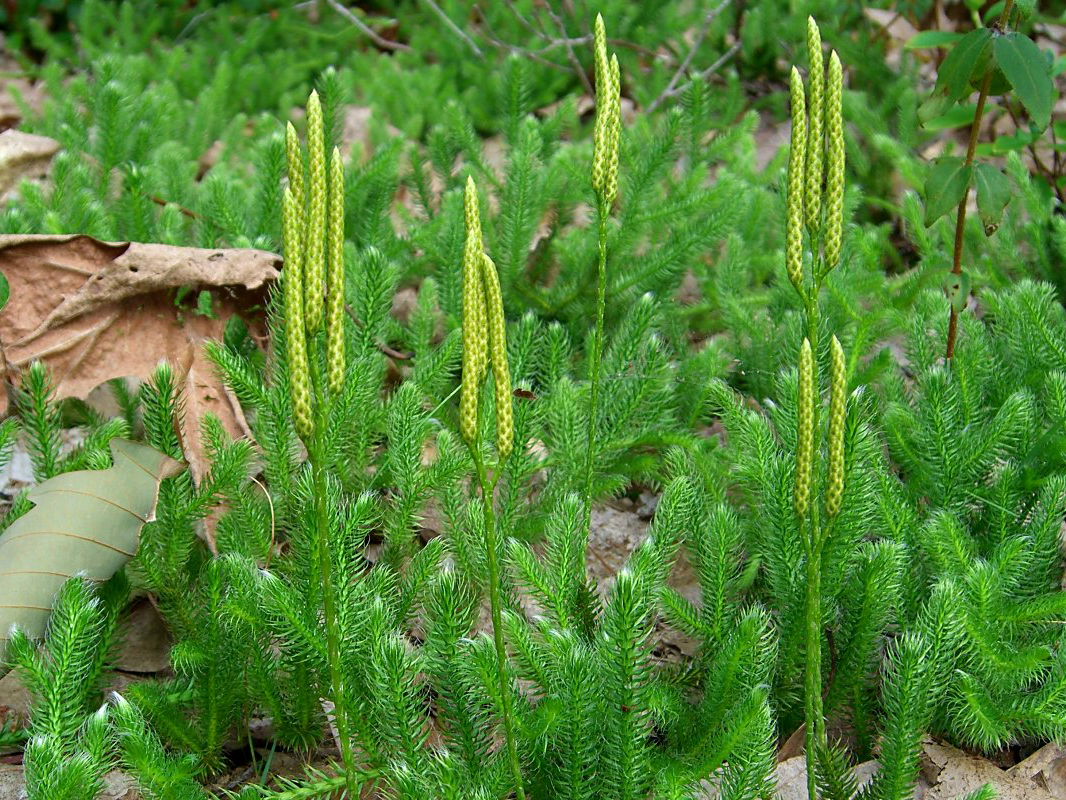
Lycopodium clavatum, the Running Clubmoss, is a creeping evergreen plant whose leafy stems run across the ground for many feet, rooting as they go and sending up short, bushy branches. It is the most widespread clubmoss in the world, found across the cooler parts of North America, Europe and Asia and on tropical mountains. In the United States it grows from Alaska and the Pacific Northwest across the northern states to New England and down the Appalachians, with an outlying population in the high mountains of Puerto Rico. It is also called stag’s-horn clubmoss, common clubmoss, wolf’s-foot clubmoss and running pine.
A clubmoss is not a moss. Clubmosses are lycophytes, an ancient group of vascular plants with true roots, stems and leaves that reproduce by spores, not seeds. Running clubmoss is easy to recognize by the fine, hair-like tips on its leaves, which give the shoots a soft, frosted look, and by its spore cones, which are held well above the foliage on long, slender stalks.
This is the clubmoss whose spores were sold as lycopodium powder, once used in flash photography, fireworks and pharmacy. It is very hard to transplant or propagate, and nursery-propagated stock is rarely available, so this page is an identification and appreciation guide. Never dig it from the wild. Like other clubmosses it contains toxic alkaloids and should never be eaten.
Identification
Running clubmoss is one of the easier clubmosses to identify. Look for long, surface-running stems, leaves with soft white bristle tips, and spore cones on long stalks.
Stems
The main stems creep along the surface of the ground or through moss and leaf litter, often for several feet and sometimes much farther, rooting at intervals. Short upright branches, usually 3 to 10 inches tall, rise from them and fork several times, giving each one a branched, antler-like shape that inspired the name stag’s-horn clubmoss.
Leaves
The leaves are narrow, crowded and spirally arranged, about 1/8 to 1/4 inch long, and bright green. Each leaf ends in a fine, white or pale hair-like bristle. Seen together, these bristles give the shoots a soft, slightly grayish sheen, and they separate running clubmoss from the similar stiff clubmoss (Lycopodium annotinum), whose leaves end in a short, sharp point instead.
Spore Cones
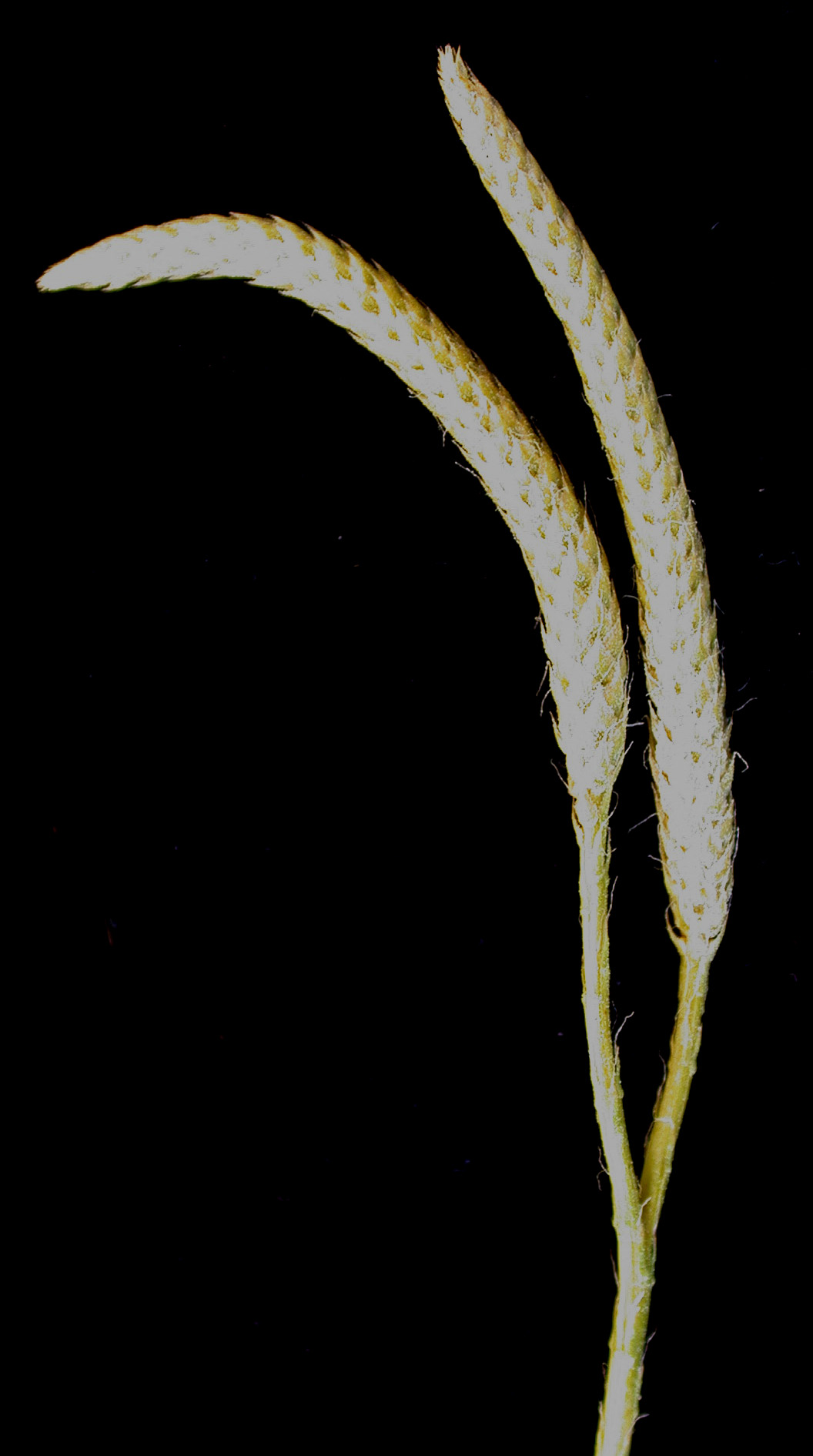
The fertile branches end in a long, slender stalk, usually 2 to 5 inches tall, with only a few small, scattered leaves. At the top it carries one to several narrow, cylindrical spore cones (strobili), each about 1 to 2 inches long. The cones are green at first, turn yellow as they ripen in late summer, and release clouds of fine yellow spores in fall. Plants with a single cone per stalk are sometimes treated as a separate species, one-cone clubmoss (Lycopodium lagopus).
Life Cycle
Like all clubmosses it has a two-stage life cycle. A spore can grow into a tiny underground gametophyte with no chlorophyll that lives on sugars from soil fungi and may take many years to mature. A new green plant grows from it after fertilization. Because this process is slow and uncertain, colonies spread mostly by their running stems.
Quick Facts
| Scientific Name | Lycopodium clavatum |
| Common Names | Running clubmoss (USDA), stag’s-horn clubmoss, common clubmoss, wolf’s-foot clubmoss, running pine |
| Family | Lycopodiaceae (clubmoss family) |
| Plant Type | Evergreen lycophyte (clubmoss); reproduces by spores |
| Mature Height | 3–10 in; spore stalks to about 12 in |
| Mature Spread | Running stems several feet long; colonies can cover many yards |
| Growth Rate | Very slow to establish; colonies spread steadily by surface stems |
| Sun Exposure | Full sun to part shade; open woods and clearings |
| Water Needs | Low to medium; well-drained soil |
| Soil Type | Acid, sandy, gravelly or peaty soils, often thin and infertile |
| Soil pH | Acid (about 4.5–6.0) |
| Bloom Time | Does not flower; spores released late summer–fall |
| Flower Color | None; spore cones green turning yellow |
| Fall Color | None; evergreen |
| Fruit | None; narrow spore cones (strobili) on long stalks |
| Deer Resistant | Yes; rarely browsed |
| USDA Hardiness Zones | 2–8 |
Native Range
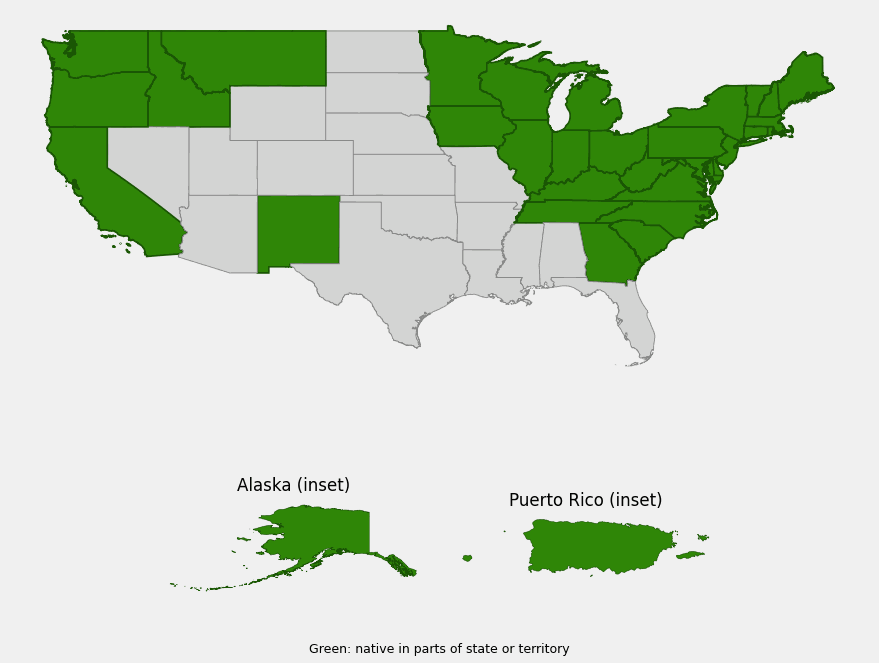
Running clubmoss has one of the widest ranges of any plant in North America. USDA PLANTS records it as native in Alaska, Puerto Rico, the District of Columbia and 32 other states: across the Pacific Northwest, northern California, Idaho and Montana, with outlying records in New Mexico, and from Minnesota and Iowa east to New England and south through the Appalachians to Georgia and South Carolina. In Canada it ranges from British Columbia to Newfoundland. It also grows in Europe, Asia, Central and South America and Africa.
It is most common in the northern Great Lakes states, New England, the Appalachian Mountains and the Pacific Northwest. In the Southeast it is largely restricted to the mountains, and in Puerto Rico it grows only at high elevations in the central and eastern mountains. In the western interior it is rare.
Unlike many clubmosses, running clubmoss favors fairly open ground. It grows in open woods and woodland edges, young forests, old fields, heaths, sandy or gravelly roadsides and banks, clearings and powerline cuts, and in the North in open conifer forests and tundra edges. It needs acid, nutrient-poor soil and is often found on sites that were disturbed decades earlier and have since been left alone.
📋 Regional plant lists featuring Running Clubmoss: New York, Pennsylvania & Northern New Jersey · Ohio & Indiana · Michigan, Wisconsin & Eastern Minnesota · Kentucky & Tennessee · Connecticut, Massachusetts & Rhode Island · New Hampshire, Maine & Vermont · Maryland, Virginia & West Virginia · Delaware, Southern New Jersey & Long Island · Illinois, Iowa & Missouri · Alabama, Georgia & Mississippi · North & South Carolina · Alaska · Puerto Rico · California & Nevada · Montana & Wyoming · Idaho, Eastern Oregon & Eastern Washington · Western Oregon & Western Washington
Growing & Care Guide
Running clubmoss is a plant to admire and protect rather than plant. It is very hard to transplant or propagate, and nursery-propagated stock is rarely, if ever, available. Never dig it from the wild or pull up its running stems for decorations. The sections below describe the conditions it grows in and how to look after colonies that already exist on your land.
Light
It tolerates more light than most clubmosses, growing in full sun to part shade in clearings, open woods and on banks. As a young forest closes in and shade deepens, colonies often decline.
Soil & Water
It grows in acid, well-drained, nutrient-poor soils, usually sandy, gravelly or thin and rocky, sometimes peaty. It tolerates dry periods but not waterlogged ground. Lime, fertilizer and rich garden soil work against it.
Planting Tips
This is not a plant to add to a garden. Dug pieces of stem carry few roots and depend on fungi in the soil, and they almost always fail. If a colony grows on your land, protect it: keep vehicles and mowers off it, avoid fertilizing or liming nearby, and do not cover it with mulch. For a planted native ground cover on sunny, acid, sandy ground, lowbush blueberry is widely available from nurseries.
Pruning & Maintenance
No maintenance is needed. Do not pull up the running stems for garlands; whole sections of a colony come up at once and regrow very slowly. On open sites, occasional removal of encroaching shrubs or invasive plants can help keep enough light on the colony.
Propagation
Running clubmoss spreads naturally by its surface stems and, rarely, by spores. Spores grow into underground gametophytes that need soil fungi and can take years to produce a new plant, so propagation from spores is not practical, and transplanted stems seldom establish. Leave all wild plants in place.
Landscape Uses
- Nature study: one of the most widespread and recognizable clubmosses, easy to find on open, sandy ground
- Woodland and meadow stewardship: colonies on old fields and clearings are worth protecting during mowing or construction
- Photography: frosted, bristle-tipped shoots and tall spore stalks are striking in late summer and winter
- Teaching: illustrates spore reproduction and the long history of lycophytes
Wildlife & Ecological Value
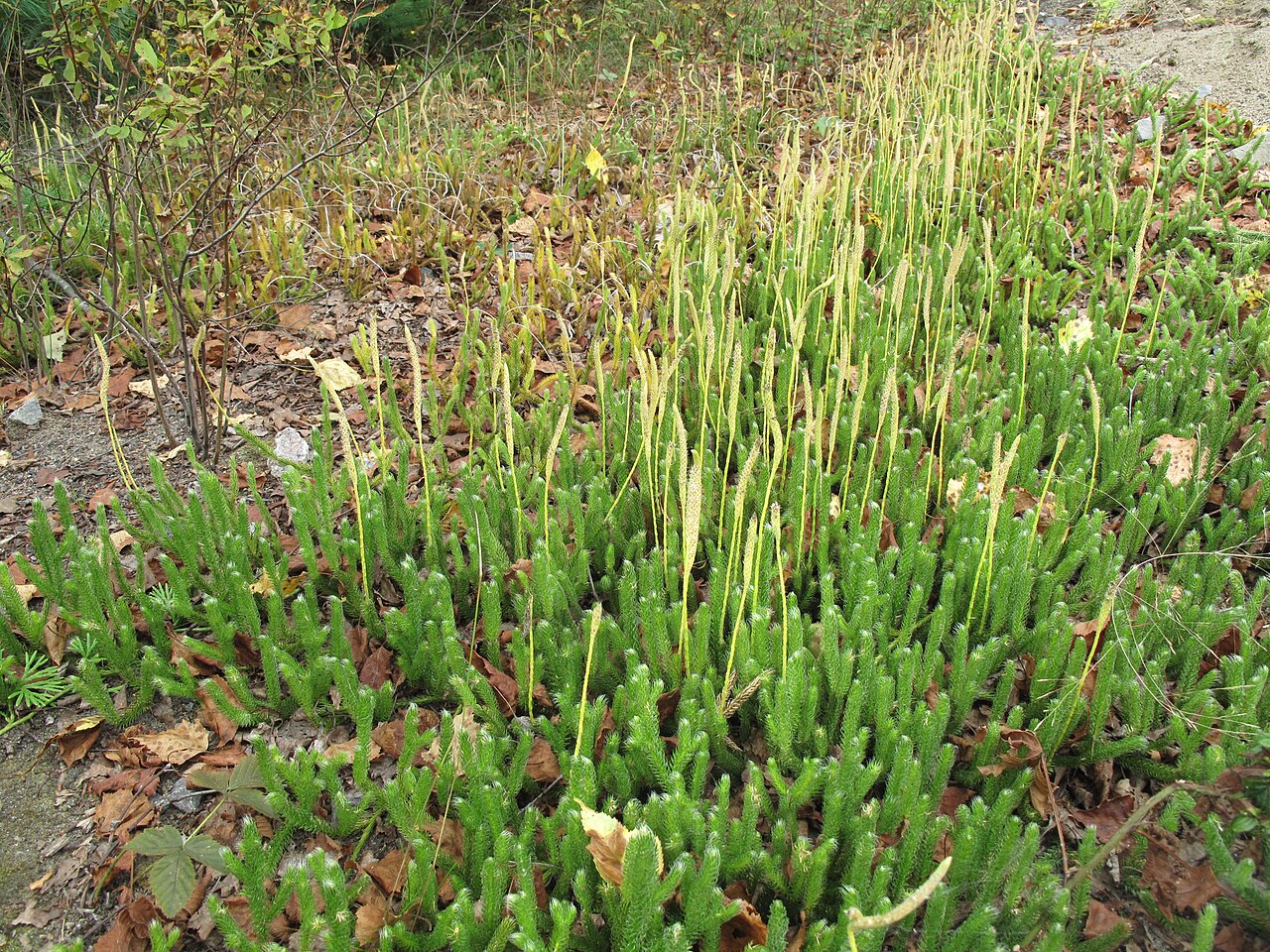
Running clubmoss is not an important food source for wildlife, but its evergreen mats provide cover and stay green through the winter.
For Pollinators
Clubmosses do not flower and produce no nectar, so running clubmoss has no value for pollinators. Its spores are carried by wind.
For Birds
The mats offer some cover for ground-dwelling birds and for the insects and spiders they eat. Birds do not generally feed on the plant.
For Mammals
Deer and other mammals rarely browse it, probably because of its tough texture and alkaloid content. Small mammals shelter under the running stems.
Ecosystem Role
Running clubmoss is often among the first long-lived evergreen ground covers on poor, acid soils after disturbance, and its colonies help hold sandy soil in place. Its underground gametophyte stage depends on mycorrhizal fungi, linking it to the fungal networks of the soil.
Cultural & Historical Uses
The spores of running clubmoss were collected in Europe and elsewhere and sold as lycopodium powder. The powder is very fine, water-repellent and flammable: a puff of it in a flame makes a bright flash, so it was used in early flash photography, fireworks and stage effects, and it was used to coat pills and as a dusting powder.
Like other clubmosses, running clubmoss was gathered for Christmas wreaths and garlands as “running pine”, and its long stems were especially prized for roping. Colonies recover slowly, and some states regulate commercial collection. Wreaths made from cultivated greenery are a better choice.
The name Lycopodium means “wolf’s foot”, from the resemblance of the branch tips to a paw, and clavatum means “club-shaped”, for the spore cones. Safety note: clubmosses contain lycopodium alkaloids that can be toxic, so never eat any part of the plant or use it in home remedies, and keep children and pets from chewing it.
Frequently Asked Questions
Is running clubmoss a moss?
No. It is a lycophyte, a vascular plant with roots, stems and leaves that reproduces by spores. It is more closely related to ferns than to true mosses.
Can I grow running clubmoss in my yard?
In practice, no. It is very hard to transplant or propagate, it depends on soil fungi, and nursery stock is rarely available. Wild plants should never be dug. If you already have a colony, protect it.
How do I tell running clubmoss from other clubmosses?
Look for long stems running on the surface of the ground, leaves ending in fine white hair-like tips, and spore cones raised on long, nearly leafless stalks. Stiff clubmoss has sharp-pointed leaves without hairs and stalkless cones.
Does running clubmoss grow in Puerto Rico?
Yes. USDA PLANTS lists it as native to Puerto Rico, where it grows only in the high mountains. It also grows on mountains in other tropical regions.
Is running clubmoss poisonous?
Clubmosses contain alkaloids that can be toxic if eaten. Do not eat it or use it as a home remedy, and keep pets and children from chewing on it. Handling the plant is not considered dangerous.

Looking for a nursery that carries Running Clubmoss?
Browse our native plant nursery directory: Alaska · California · Connecticut, Delaware & Georgia · Idaho, Illinois, Indiana & Iowa · Kentucky, Maine, Maryland, Massachusetts, Michigan, Minnesota & Montana · New Hampshire, New Jersey, New Mexico, New York, North Carolina & Ohio · Oregon · Pennsylvania, Rhode Island, South Carolina, Tennessee, Vermont & Virginia · Washington · West Virginia & Wisconsin