
Purpletop Tridens (Tridens flavus)
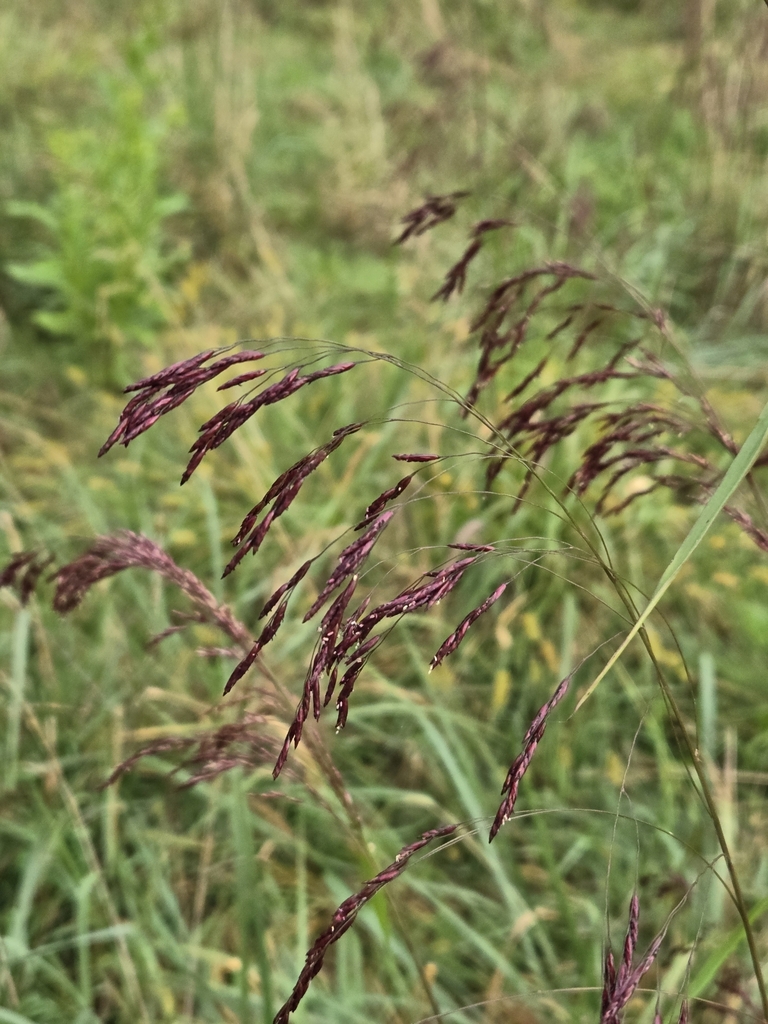
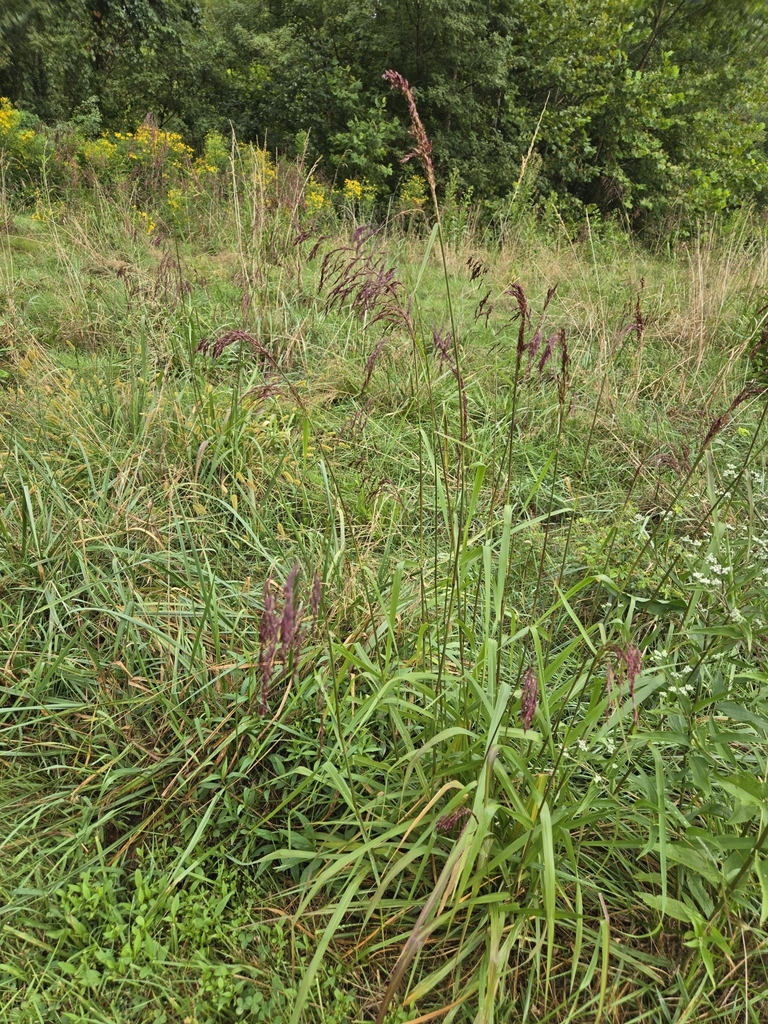
Tridens flavus, known as Purpletop Tridens or simply purpletop, is a tall, warm-season native bunchgrass of old fields, roadsides, meadows and open woods across the eastern and central United States. In late summer it sends up airy, open flower heads on stems 3 to 5 feet tall, and occasionally taller. The drooping branches carry shiny reddish-purple spikelets, and where the grass grows in masses, it can give whole fields a purple haze.
It is one of the most common native grasses in the East, and one of the few that thrive in mowed hayfields, pastures and roadsides as well as in prairies and woodland openings. It is also known as tall redtop and greasegrass, the latter because the fresh flower heads feel slightly oily to the touch.
Purpletop is attractive, tough and adaptable. It tolerates poor, dry or acidic soils and part shade, and it provides food and shelter for skippers, birds and other wildlife. This guide covers how to identify it, where it grows and how to use it in meadows, pollinator plantings and naturalistic gardens.
Identification
Purpletop tridens forms loose clumps of flat green leaves that are easy to overlook until late summer, when its tall purple flower heads appear. The flower heads are the easiest feature for identification.
Leaves & Clumps
The leaves are flat, 1/4 to 1/2 inch wide and up to about 2 feet long, mostly crowded near the base of the clump. The leaf sheaths are flattened and often have a few long hairs near the collar. The clumps grow from short, knotty rhizomes and stay fairly tidy.
Stems
Flowering stems rise well above the foliage, usually to 3 to 5 feet. The Lady Bird Johnson Wildflower Center gives a range of 2½ to 7 feet. The stems are stiff and smooth, with a few nodes.
Flower Heads
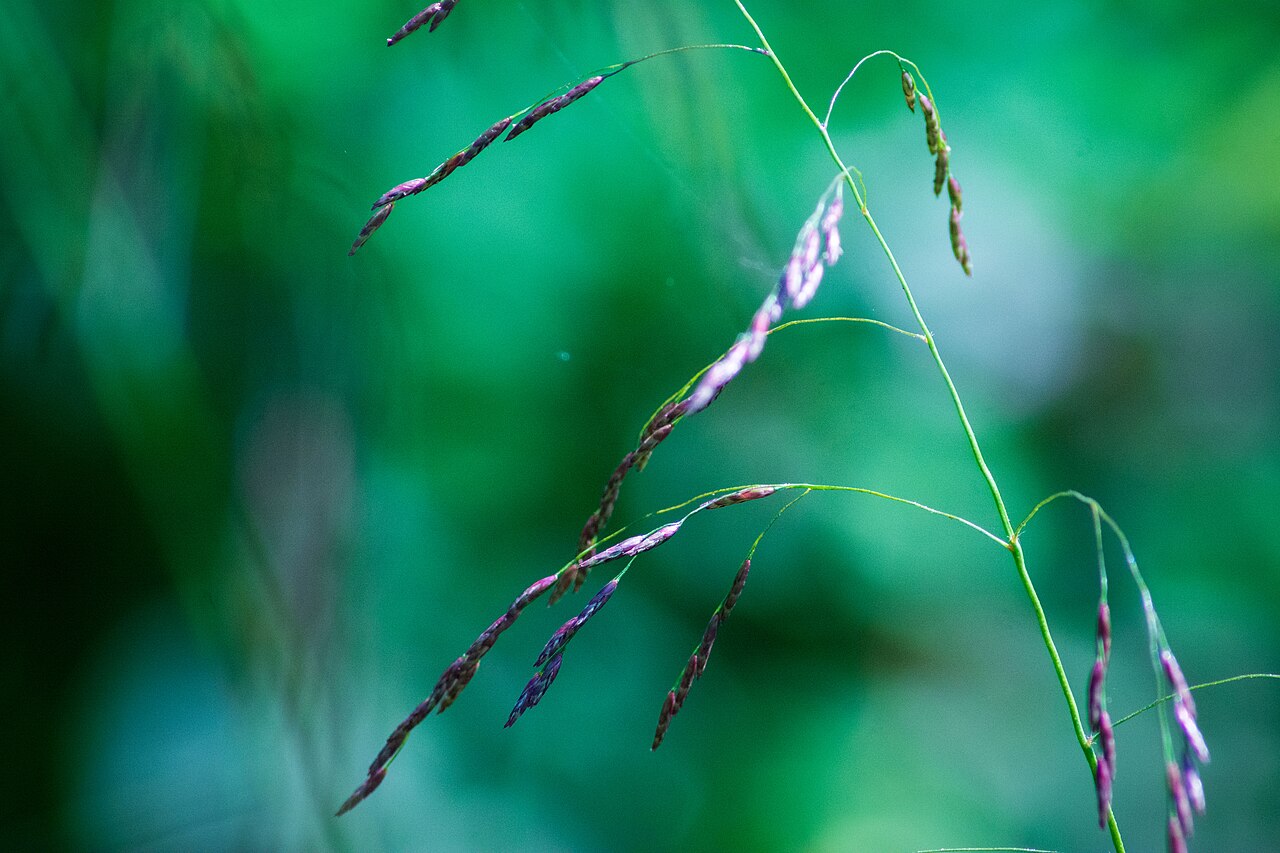
The panicle is open and pyramidal, 8 to 14 inches long or more, with slender branches that spread and droop at the tips. The spikelets are widely spaced along the branches, about 1/4 inch long, and shiny reddish purple to bronze, each with several florets. Fresh panicles often feel sticky or greasy. Plants bloom from August into October.
Fall & Winter
After flowering, the spikelets fall and the bare panicle branches turn tan. The foliage turns brown in fall, sometimes with reddish tints, and the dried stems often stand into winter.
Quick Facts
| Scientific Name | Tridens flavus |
| Family | Poaceae (grass family) |
| Plant Type | Warm-season perennial bunchgrass |
| Mature Height | 3–5 ft in flower (2½–7 ft extremes) |
| Mature Spread | 1–2 ft |
| Growth Rate | Moderate |
| Sun Exposure | Full sun to part shade |
| Water Needs | Low to moderate; drought tolerant |
| Soil Type | Sandy, loamy or clay soils; tolerates poor, acidic ground |
| Soil pH | About 5.0–7.0 |
| Bloom Time | August–October |
| Flower Color | Reddish purple to bronze spikelets |
| Fall Color | Tan to brown, sometimes reddish |
| Fruit | Small grains in spikelets; shed in fall |
| Deer Resistant | Moderately; grazed by livestock when young |
| USDA Hardiness Zones | 5–9 |
Native Range
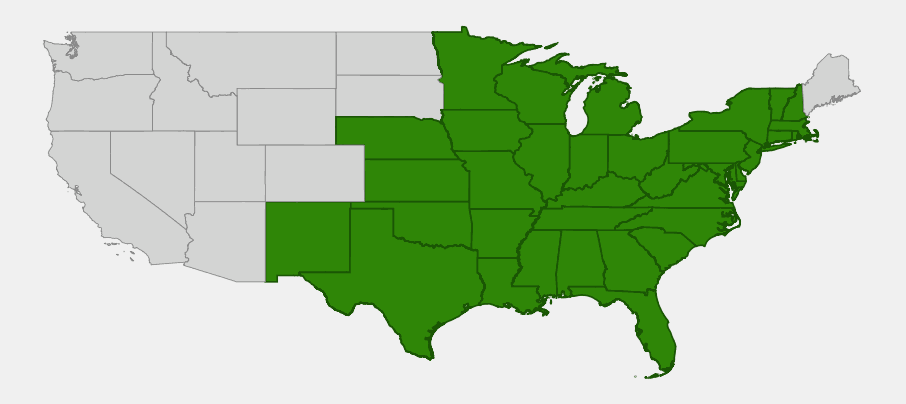
Purpletop tridens is native to the eastern and central United States and Mexico. The Lady Bird Johnson Wildflower Center gives its native distribution as southern New Hampshire to Illinois and Nebraska, south to Mexico. USDA PLANTS records it as native in 35 states and the District of Columbia, from New England, New York and the Great Lakes south to Florida and Texas, and west to Minnesota, Nebraska, Kansas, Oklahoma and an outlying record in eastern New Mexico.
USDA PLANTS also lists a California record, but that comes from an old collection far outside the species’ natural range, and the Lady Bird Johnson Wildflower Center’s native range does not include the West Coast. California is therefore not shown on this page’s map. In Canada, USDA PLANTS treats the grass as introduced in southern Ontario.
It grows in a wide variety of open and semi-open habitats: old fields, hayfields, pastures, roadsides, prairies, savannas, open woodlands and woodland edges, as well as power-line cuts and other disturbed ground. It is most abundant in the Southeast and lower Midwest.
📋 Regional plant lists featuring Purpletop Tridens: New York, Pennsylvania & Northern New Jersey · Ohio & Indiana · Michigan, Wisconsin & Eastern Minnesota · Kentucky & Tennessee · Nebraska, Kansas & Eastern Colorado · Connecticut, Massachusetts & Rhode Island · New Hampshire, Maine & Vermont · Maryland, Virginia & West Virginia · Delaware, Southern New Jersey & Long Island · Illinois, Iowa & Missouri · Alabama, Georgia & Mississippi · North & South Florida · North & South Carolina · Arkansas, Louisiana, Eastern Oklahoma & Eastern Texas · South & West Texas
Growing & Care Guide
Purpletop tridens is easy to grow and often shows up on its own in meadows and unmown areas. It is sold as seed and plugs by native plant suppliers and is common in eastern meadow seed mixes.
Light
It grows in full sun to part shade. The Lady Bird Johnson Wildflower Center lists part shade as its light requirement, and it does well along woodland edges and under scattered trees, where many prairie grasses struggle.
Soil & Water
It tolerates dry, poor, sandy, loamy or clay soils, and it is one of the better native grasses for acidic, worn-out farm soils. The Lady Bird Johnson Wildflower Center rates its water use as low. Water new plantings until they are established; after that, it needs no watering in most of its range.
Planting Tips
Sow seed in late fall or early spring at the surface or lightly covered, or plant plugs about 18 to 24 inches apart. Combine it with other warm-season grasses and late-summer wildflowers such as goldenrods, asters and mountain mints. Because it is fairly tall in flower, place it at the middle or back of a border.
Pruning & Maintenance
Cut or mow the old growth in late winter or early spring before new shoots appear. In meadows, mowing once a year, or prescribed burning where allowed, keeps it vigorous. Avoid frequent summer mowing if you want it to flower.
Propagation
Propagate by seed or by dividing clumps in spring. It self-sows moderately in open ground, which helps fill in meadows.
Landscape Uses
- Meadows and old-field restoration: a common, adaptable native grass
- Woodland edges and partial shade: tolerates more shade than most prairie grasses
- Roadsides and erosion control: grows on poor, dry, acidic soils
- Naturalistic gardens: airy purple flower heads in late summer
- Wildlife habitat: larval host for skippers; seeds and cover for birds
Wildlife & Ecological Value
Purpletop is wind-pollinated and doesn’t provide nectar, but it supports a wide range of wildlife.
For Pollinators
It is a larval host plant for grass-feeding skippers. The Lady Bird Johnson Wildflower Center lists the crossline skipper and broad-winged skipper as larval hosts. Caterpillars feed on the leaves and shelter in rolled leaf blades. The flowers are wind-pollinated, but the clumps provide shelter for many insects.
For Birds
Sparrows, juncos and other seed-eating birds eat the grains in fall and winter, and quail and wild turkeys use stands of purpletop for cover. The Lady Bird Johnson Wildflower Center notes its use as nesting material.
For Mammals
Livestock and deer graze the young foliage, which the Lady Bird Johnson Wildflower Center notes is readily eaten during early growth. Small mammals use the clumps for cover.
Ecosystem Role
As an early colonizer of old fields and roadsides, purpletop helps stabilize soil and adds organic matter, and it is often part of the transition from bare ground to native meadow and woodland. Its tolerance of shade and acidic soils lets it fill gaps where other prairie grasses can’t.
Cultural & Historical Uses
Linnaeus first described the grass in 1753 as Poa flava. The American agrostologist Albert Spear Hitchcock moved it to Tridens in the twentieth century. The genus name means three teeth, describing the three-toothed tips of the lemmas. The epithet flavus means yellow, which seems odd for a grass known for its purple flower heads.
Its common names reflect its features: purpletop and tall redtop for the colorful panicles, and greasegrass for the slightly oily feel of the fresh flower heads.
Purpletop is common enough that many people pass it every day on roadsides without noticing it. In late summer, when masses of it bloom together, it creates one of the most distinctive sights of the eastern landscape: fields washed in purple.
Frequently Asked Questions
Why is it called purpletop?
Because its open, drooping flower heads carry shiny reddish-purple spikelets in late summer. In large stands, they give fields and roadsides a purple haze.
Is purpletop tridens a good native grass for shade?
Yes, more than most prairie grasses. It grows in full sun to part shade and does well along woodland edges and in open woods.
When does purpletop bloom?
From August to October. The purple flower heads rise well above the leafy clumps and are most colorful when fresh.
Is purpletop tridens drought tolerant?
Yes. Once established it tolerates dry, poor and acidic soils with little or no watering.
Why is purpletop also called greasegrass?
Fresh flower heads feel slightly greasy or sticky when you run them through your fingers.

Looking for a nursery that carries Purpletop Tridens?
Browse our native plant nursery directory: Alabama & Arkansas · Connecticut, Delaware, Florida & Georgia · Illinois, Indiana, Iowa & Kansas · Kentucky, Louisiana, Maryland, Massachusetts, Michigan, Minnesota, Mississippi & Missouri · Nebraska, New Hampshire, New Jersey, New Mexico, New York, North Carolina, Ohio & Oklahoma · Pennsylvania, Rhode Island, South Carolina, Tennessee, Texas, Vermont & Virginia · West Virginia & Wisconsin