
Meadow Pink (Sabatia campestris)
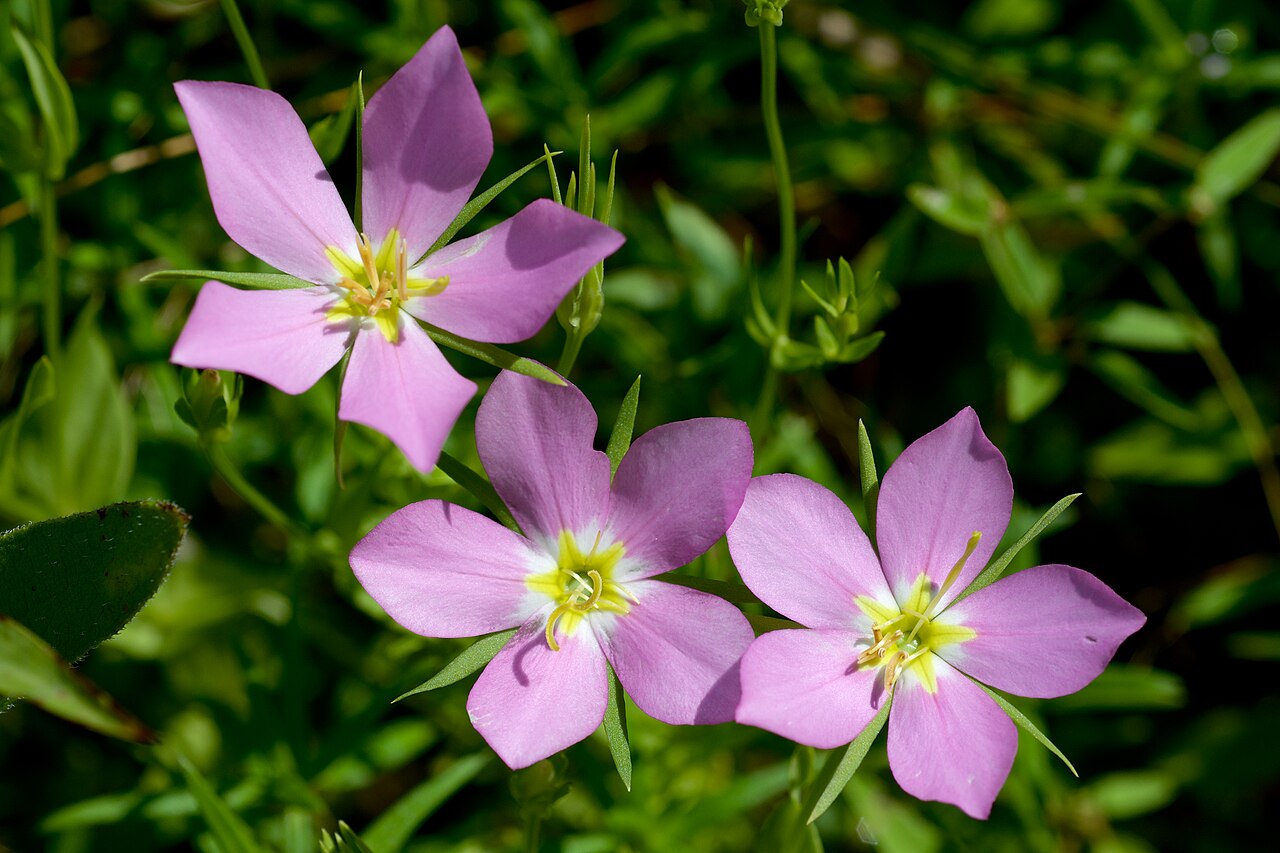
Sabatia campestris, known as Meadow Pink, Texas star or prairie rose-gentian, is a showy native annual wildflower of the south-central United States. It grows 6 to 20 inches tall, with slender, widely spreading branches and small, clasping leaves. From late spring into summer it is covered with bright pink, five-petaled flowers about 1 to 1½ inches across, each with a yellow, star-shaped center. In good years it forms sheets of pink in sandy prairies, glades and pastures.
It belongs to the gentian family (Gentianaceae), and it is one of about 20 Sabatia species, the rose-gentians, native to North America. Meadow pink is the most widespread rose-gentian of the prairies west of the Mississippi River, ranging from Illinois and Iowa south to Mississippi and Texas, and west to Kansas and Oklahoma.
Because it is an annual that reseeds readily, meadow pink is well suited to sunny prairie and meadow plantings, roadsides and wildflower gardens, where it can form colonies. This guide covers how to identify it, where it grows natively, how to grow it from seed, and its value for pollinators.
Identification
Meadow pink is recognized by its bright pink, star-centered flowers held on long stalks at the ends of widely spreading branches, and its long, narrow calyx lobes.
Growth Habit
It is an annual (sometimes a winter annual) with a single main stem that branches above into slender, spreading, alternate branches, making an open, airy plant 6 to 20 inches tall. The stems are smooth and four-angled or slightly winged.
Leaves
The leaves are opposite, stalkless, and oval to egg-shaped, ½ to 1½ inches long, with smooth edges. Their bases clasp the stem. They are smooth and medium green, and become smaller and more widely spaced toward the top of the plant.
Flowers
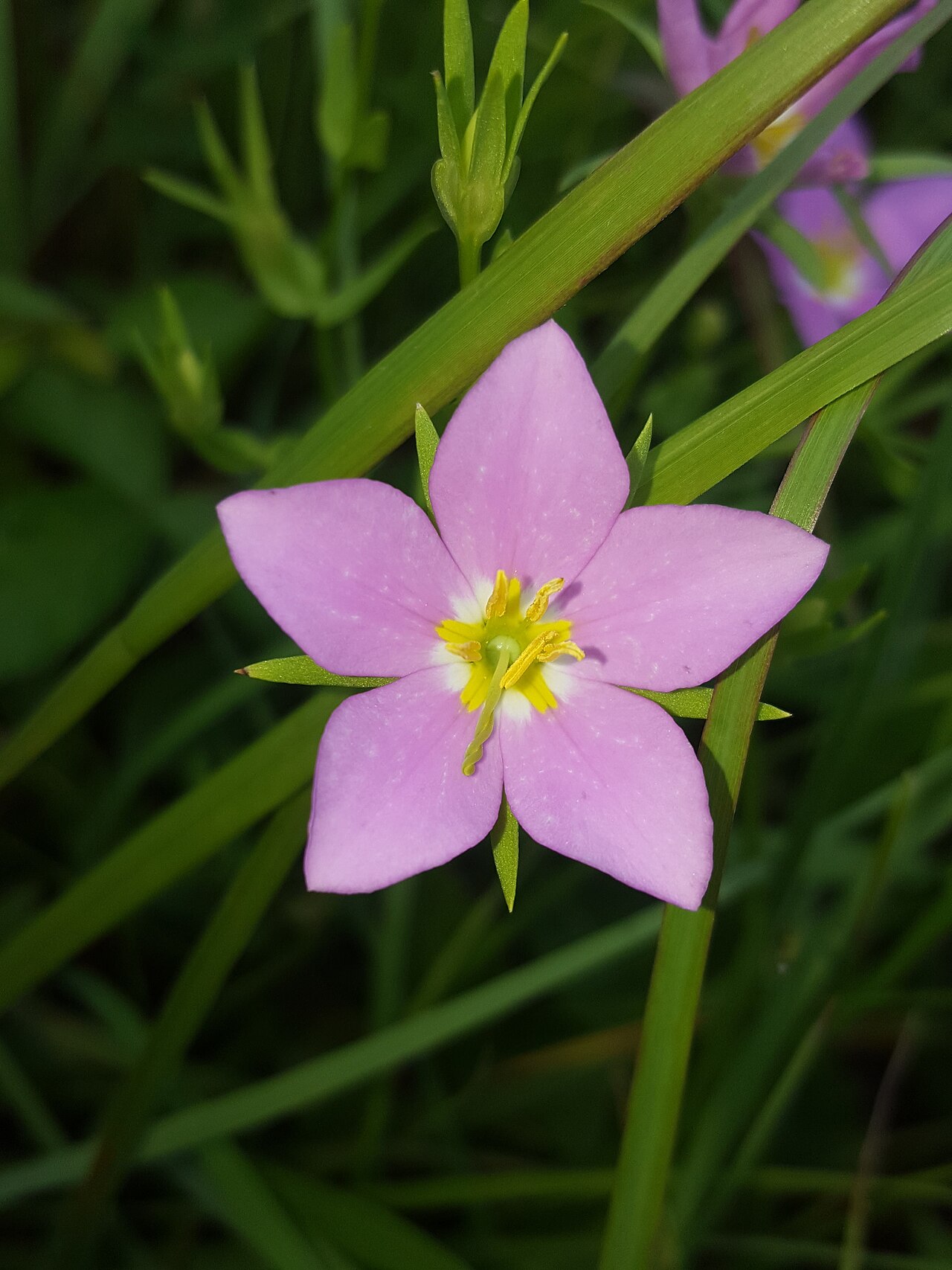
The flowers are borne singly on long stalks at the ends of the branches. Each is 1 to 1½ inches across, with five (sometimes more) bright pink to rose-lavender petals, rarely white, and a yellow star-shaped eye outlined in red at the center. The green calyx lobes are long and very narrow, about as long as the petals, and the calyx tube has distinct ridges or wings. Flowers appear mainly from May to July.
Fruit & Seeds
The fruit is a small, cylindrical capsule that splits to release many tiny, dust-like seeds in summer. The plant dies after setting seed.
Look-alikes
Rosepink (Sabatia angularis) has strongly square, winged stems with opposite branches forming a rounded, many-flowered plant, and short calyx lobes. Other rose-gentians such as Bartram’s Rose-Gentian grow in wetlands of the Coastal Plain and have more petals. Meadow pink’s alternate branching and long, narrow calyx lobes set it apart.
Quick Facts
| Scientific Name | Sabatia campestris |
| Family | Gentianaceae (gentian family) |
| Plant Type | Annual herb (forb) |
| Mature Height | 6–20 in |
| Mature Spread | 6–12 in |
| Growth Rate | Fast |
| Sun Exposure | Full sun to part shade |
| Water Needs | Low to medium |
| Soil Type | Sandy, sandy loam or medium loam soils |
| Soil pH | About 5.5–7.5 |
| Bloom Time | May–July |
| Flower Color | Bright pink to rose-lavender with a yellow center; rarely white |
| Fall Color | None (annual) |
| Fruit | Small capsule with many tiny seeds |
| Deer Resistant | Moderate (bitter gentian foliage) |
| USDA Hardiness Zones | Annual; reseeds in zones 5–9 |
Native Range
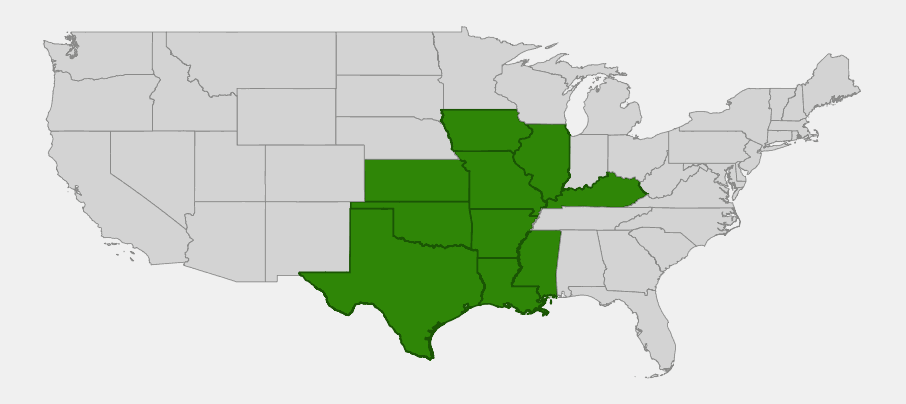
Meadow pink is native to the south-central United States. USDA PLANTS records it in 13 states; it is native in 10 of them, from Illinois and Iowa south through Missouri, Kentucky, Arkansas and Mississippi to Louisiana and eastern Texas, and west to Kansas and Oklahoma.
It is most common in the Ozarks and Ouachitas of Arkansas and Missouri, in eastern Oklahoma and Kansas, and in eastern and north-central Texas. It grows in sandy prairies, rocky glades and barrens, post oak and cedar flats, pastures, woodland edges, stream banks and roadsides, especially where the soil is sandy and the vegetation is kept open by fire, mowing or grazing.
USDA also lists records from Connecticut, Massachusetts and Maine, but Go Botany (Native Plant Trust) describes the New England plants as probable escapes from cultivation, so those states are not included as native range here.
📋 Regional plant lists featuring Meadow Pink: Arkansas, Louisiana, Eastern Oklahoma & Eastern Texas · Illinois, Iowa & Missouri · Nebraska, Kansas & Eastern Colorado · Kentucky & Tennessee · Alabama, Georgia & Mississippi
Growing & Care Guide
Meadow pink is easy to grow from seed in sunny, open spots with sandy or loamy soil. As an annual, it depends on reseeding, so it does best in meadow and prairie plantings where the soil is not heavily mulched and some bare ground remains.
Light
It flowers best in full sun to light shade. In the wild it grows in open prairies and glades and along woodland edges.
Soil & Water
Plant it in sandy, sandy loam or loamy soil that drains well. It tolerates dry soil once established but blooms longest with some moisture in early summer. Avoid rich, heavily fertilized soil, where competing plants crowd it out.
Planting Tips
Sow the tiny seed on the soil surface in late summer or early fall, as soon as it is ripe, and press it in lightly without covering it. Seedlings overwinter as small rosettes and bloom the following spring and summer. Mix the seed with sand to spread it evenly.
Pruning & Maintenance
No pruning is needed. Let the plants ripen and drop their seed before mowing or cutting them back. Light raking or occasional disturbance that exposes bare soil helps new seedlings establish.
Propagation
Propagate it from seed. Collect capsules when they turn brown in summer and sow the seed fresh. Once established, meadow pink often self-sows and develops into large colonies.
Landscape Uses
- Prairie and meadow plantings: bright pink early-summer color among native grasses
- Wildflower gardens: an easy, reseeding annual for sunny spots
- Roadsides and pastures: tolerates mowing after seed set and sandy soils
- Pollinator gardens: an open, accessible flower for bees
- Glade and barrens restoration: a characteristic annual of open rocky and sandy habitats
Wildlife & Ecological Value
Meadow pink adds both color and food for insects to open prairies and glades in early summer.
For Pollinators
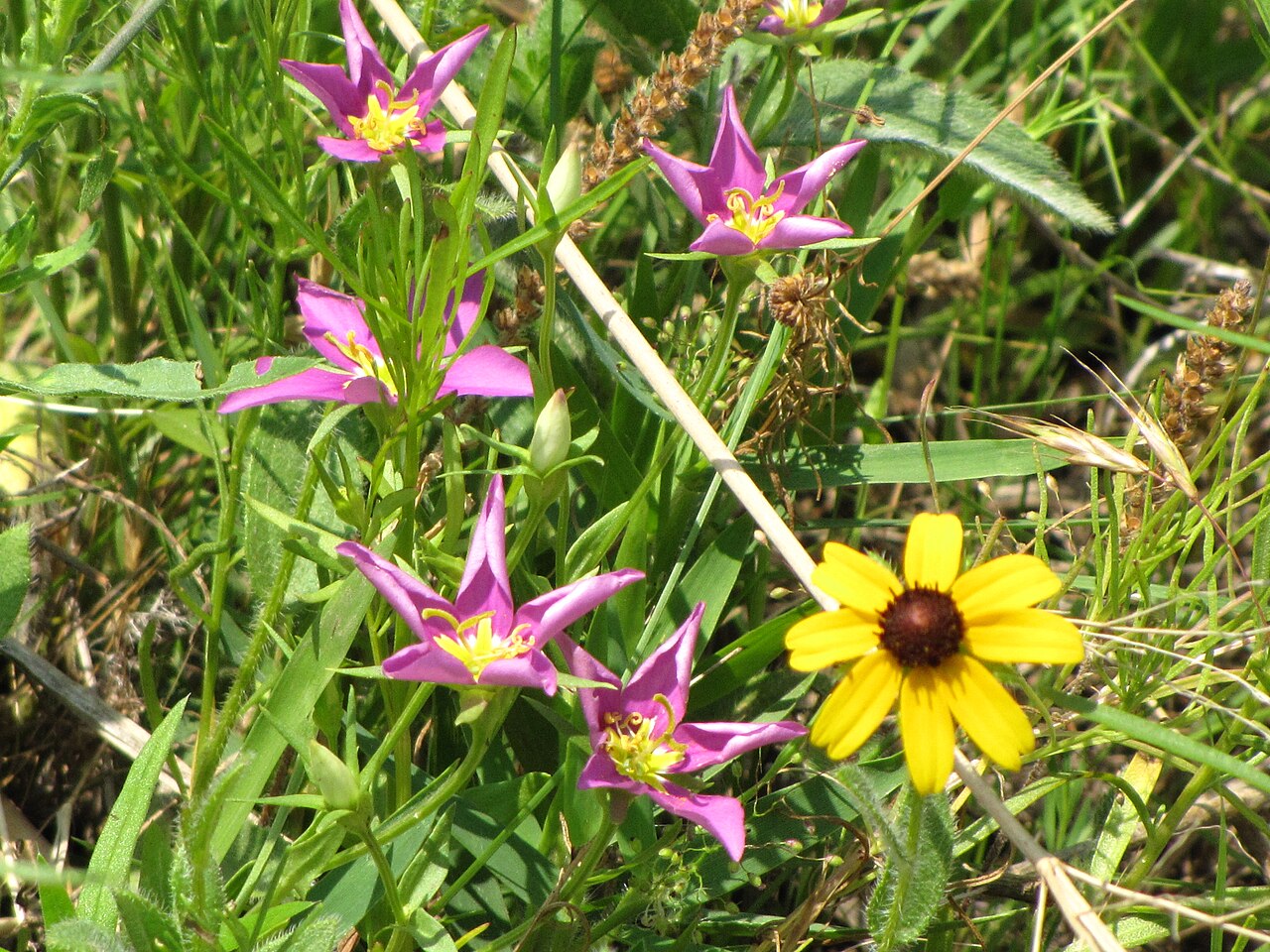
The open, bowl-shaped flowers are visited mainly by bees, including bumblebees, sweat bees and other native bees, which collect pollen from the prominent yellow anthers. Small butterflies and flies also visit.
For Birds
Birds make little use of the dust-like seeds, but the plant contributes to the diverse prairie vegetation that supports insect-eating birds.
For Mammals
Like many gentians, the foliage is bitter, and it is not a preferred food for deer or livestock.
Ecosystem Role
As an annual that colonizes open, sandy and rocky ground, meadow pink helps fill gaps in prairies and glades kept open by fire and grazing, and its flowers support native bees in early summer.
Cultural & Historical Uses
The English naturalist Thomas Nuttall, who explored Arkansas Territory in 1819, described Sabatia campestris in the 1830s. The genus Sabatia honors Liberato Sabbati, an 18th-century Italian botanist, and campestris means “of the fields,” referring to its open prairie habitat.
Many rose-gentians, including meadow pink, contain bitter compounds typical of the gentian family. Several species were used in folk medicine as bitter tonics, but there is no modern evidence supporting such uses, and the plants should not be eaten.
Its common name Texas star refers to its bright, star-shaped flowers and its abundance in parts of Texas. It is also sold by some native seed suppliers under that name.
Frequently Asked Questions
Is meadow pink an annual or a perennial?
It is an annual or winter annual. Plants bloom, set seed and die, but they reseed readily and come back each year from seed.
How do I grow meadow pink from seed?
Sow the tiny seed on bare soil in late summer or fall as soon as it is ripe, pressing it in without covering it. Seedlings overwinter and bloom the next spring and summer.
Is meadow pink the same as Texas star?
Yes. Meadow pink, Texas star and prairie rose-gentian are all common names for Sabatia campestris. Note that “Texas star” is also used for some other plants.
How is meadow pink different from rosepink?
Rosepink (Sabatia angularis) has strongly square, winged stems with opposite branches and short calyx lobes. Meadow pink has alternate branches and long, narrow calyx lobes.
Where does meadow pink grow?
In sandy prairies, glades, pastures and roadsides in the south-central United States, from Illinois and Iowa south to Louisiana and Texas.

Looking for a nursery that carries Meadow Pink?
Browse our native plant nursery directory: Arkansas · Illinois, Iowa & Kansas · Kentucky, Louisiana, Mississippi & Missouri · Oklahoma · Texas