
Narrowleaf Cow Wheat (Melampyrum lineare)
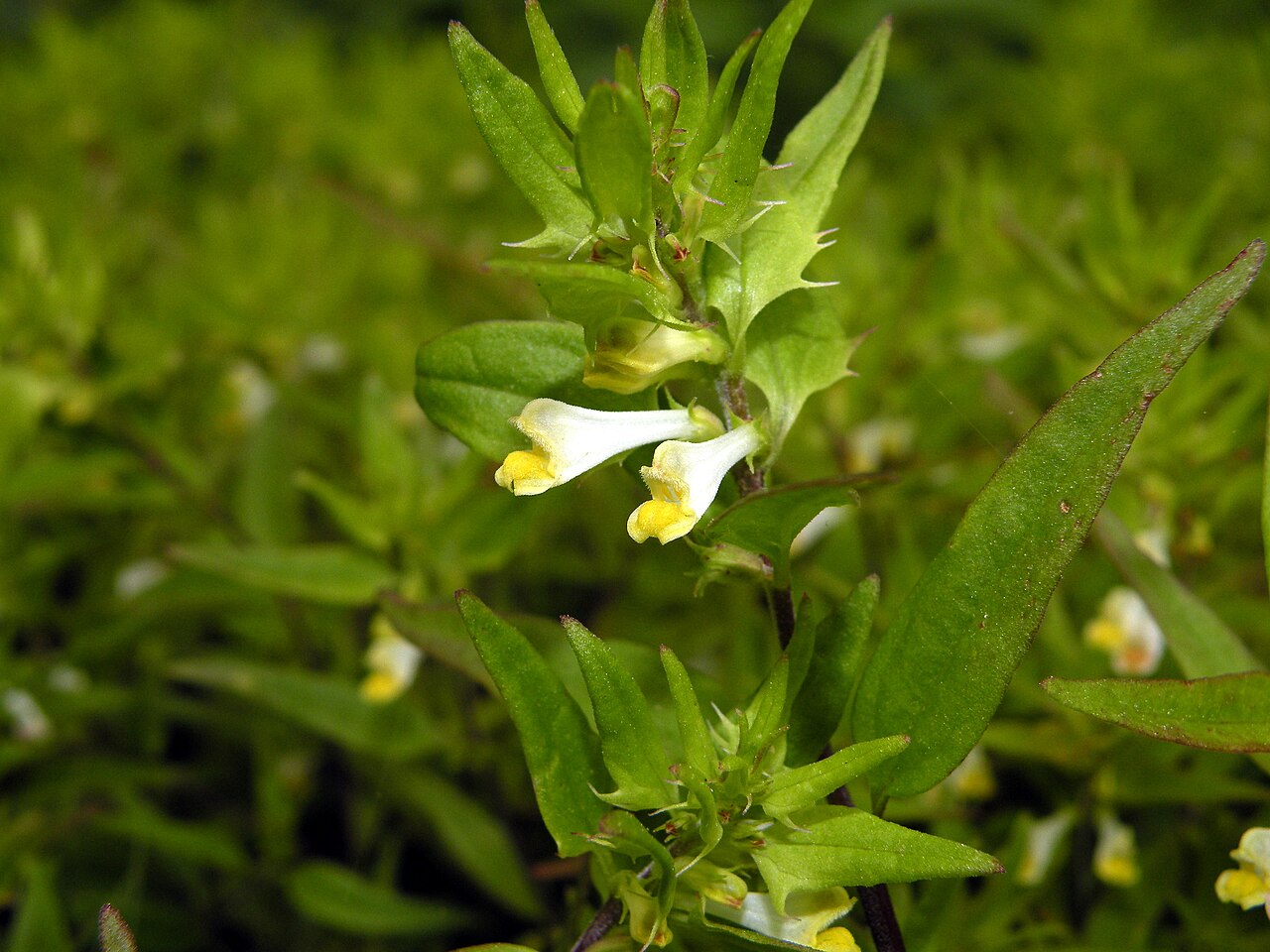
Melampyrum lineare, known as Narrowleaf Cow Wheat (USDA: narrowleaf cowwheat) or American cow-wheat, is a small annual wildflower of dry, acidic woods, pine barrens, heaths and bogs across northern North America. In summer it bears small, two-lipped white flowers with a bright yellow lower lip, tucked in the angles of its narrow, opposite leaves. It belongs to the broomrape family (Orobanchaceae), which includes many plants that live partly or entirely as parasites on other plants.
Cow wheat is a hemiparasite. It has green leaves and makes its own sugars by photosynthesis, but its roots also attach to the roots of nearby plants, such as pines, blueberries, oaks and other shrubs, and draw water and mineral nutrients from them. This dependence on living hosts, and its annual life cycle, mean it cannot be bought as nursery stock or transplanted. This page is an identification and appreciation guide rather than a growing guide.
Although it is easy to overlook, narrowleaf cow wheat is common in many northern pine and oak forests and often forms extensive patches. Its seeds are dispersed by ants, and its flowers are visited by bumblebees. This guide explains how to recognize it, where to look for it, and what role it plays in the forest.
Identification
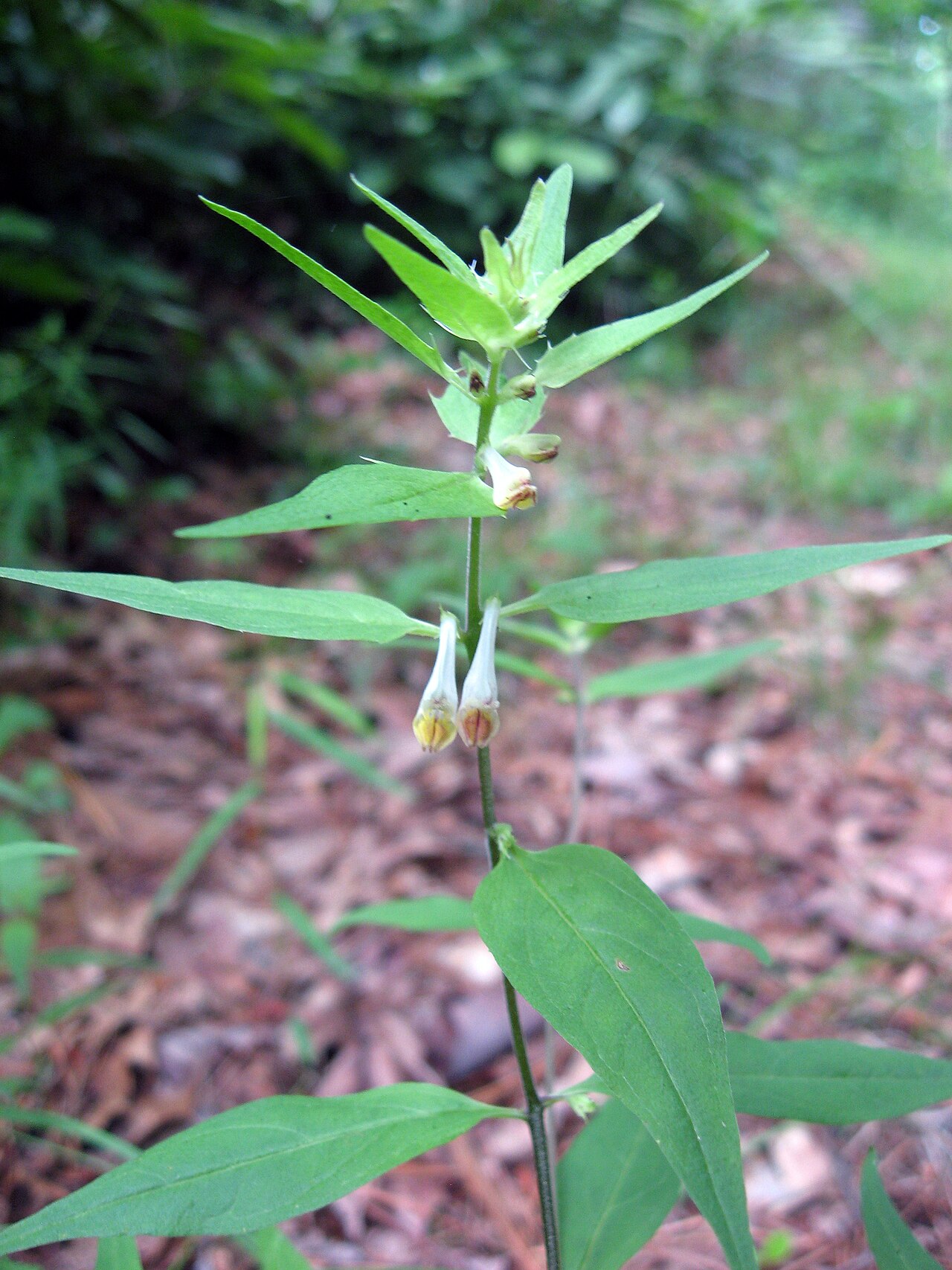
Narrowleaf cow wheat is a slender, branching annual with opposite leaves and single flowers in the leaf axils. The bristly-toothed upper leaves and the white flowers with a yellow lip are the best field marks.
Stems & Growth Habit
Plants are usually 4 to 16 inches tall, with a single slender stem that branches in the upper half into pairs of spreading or ascending branches. The stems are finely hairy, green to purplish. Plants growing in sun on dry, open ground are often small and bushy, while those in shade are taller and more open. Since it is an annual, the whole plant dies in fall after setting seed.
Leaves
The leaves are opposite, on very short stalks, and vary from narrowly linear to lance-shaped, usually 1 to 2½ inches long. The lower leaves have smooth edges. The upper leaves, which hold the flowers, are often broader at the base and have a few long, bristle-like teeth there, a feature that helps identify the plant. Leaf width varies widely between populations, and botanists recognize several varieties based on leaf shape.
Flowers
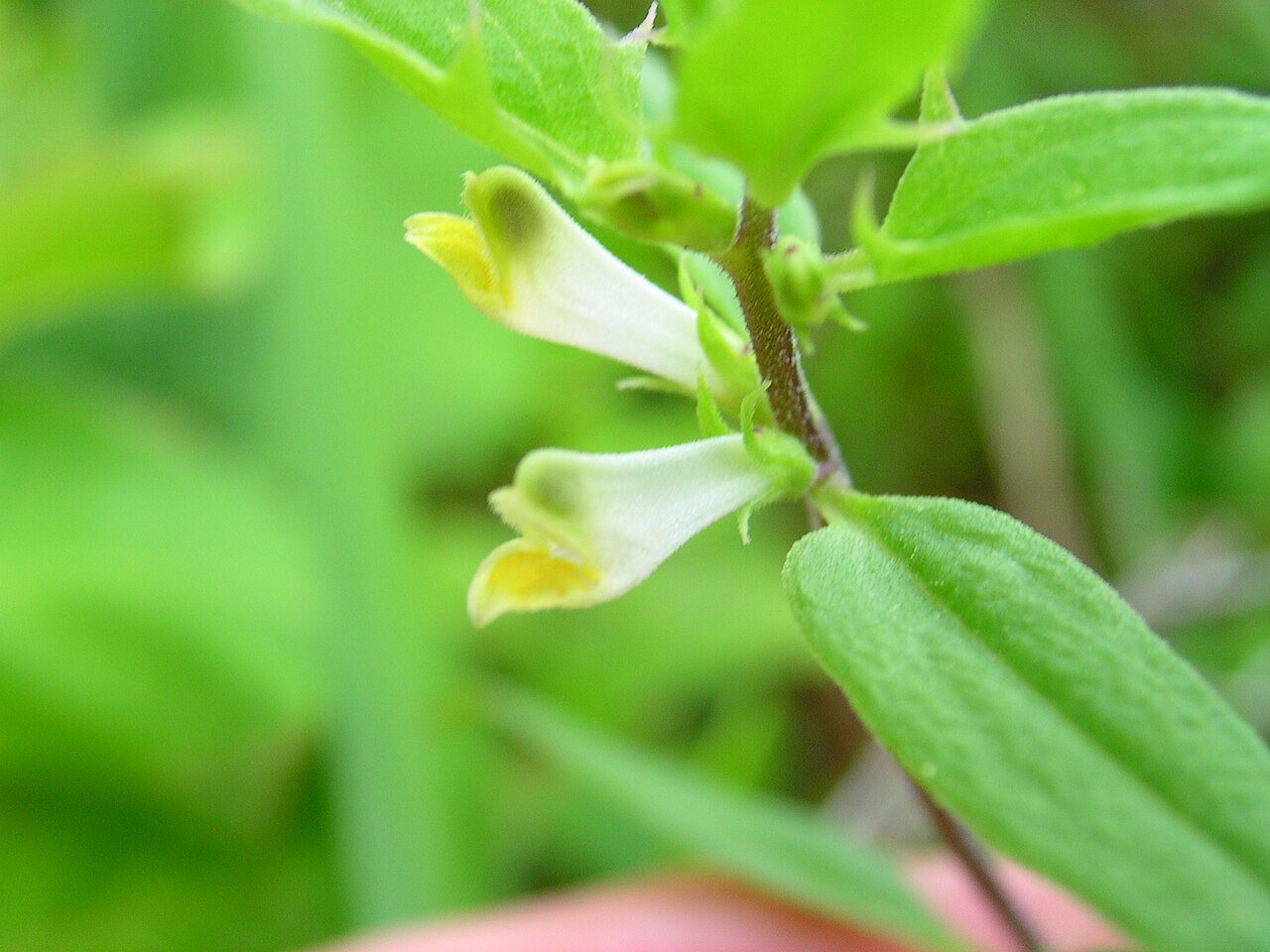
The flowers grow singly in the axils of the upper leaves, so they usually appear in pairs on opposite sides of the stem. Each flower is a slender, two-lipped tube about a third to half an inch long. The upper lip is white, sometimes tinged with pink or lavender, and arches over the stamens. The lower lip is three-lobed with a bright yellow patch, which marks the entrance for bees. Flowering lasts from about June to August, sometimes into September.
Fruit & Seeds
The fruit is a flattened, curved, pointed capsule about half an inch long, containing usually one to four large seeds. The seeds look somewhat like grains of wheat or like ant cocoons, and each carries a fatty appendage (elaiosome) attractive to ants, which carry the seeds away. The genus name, from the Greek for “black wheat,” refers to European cow wheats whose seeds were said to darken flour when they contaminated wheat grain.
Quick Facts
| Scientific Name | Melampyrum lineare |
| Family | Orobanchaceae (broomrape family; formerly Scrophulariaceae) |
| Plant Type | Annual hemiparasitic herb |
| Mature Height | 4–16 in |
| Mature Spread | 3–8 in |
| Growth Rate | Fast (completes its life cycle in one season) |
| Sun Exposure | Full sun to part shade |
| Water Needs | Low to moderate; dry woods to bogs |
| Soil Type | Acidic sandy, rocky or peaty soils |
| Soil pH | About 4.0–6.0 |
| Bloom Time | June–August (occasionally September) |
| Flower Color | White with a yellow lower lip; sometimes tinged pink |
| Fall Color | Plants may turn purplish before dying |
| Fruit | Flattened curved capsule with 1–4 ant-dispersed seeds |
| Deer Resistant | Not significantly browsed |
| USDA Hardiness Zones | 2–8 (annual; grows wherever its hosts do) |
Native Range
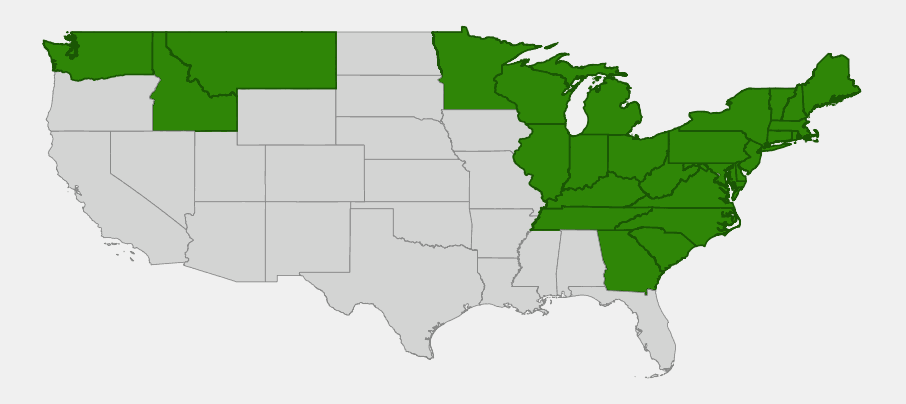
Narrowleaf cow wheat has a broad northern range. In Canada it grows from British Columbia and Alberta east across Saskatchewan, Manitoba, Ontario and Quebec to the Maritime provinces, Newfoundland and Labrador, and it reaches the French islands of Saint Pierre and Miquelon. In the United States USDA PLANTS records it from 27 states and the District of Columbia: across New England, New York, New Jersey and Pennsylvania, west through the Great Lakes states to Minnesota, and south along the Appalachians to North Carolina, Tennessee, South Carolina and Georgia.
A separate western portion of the range reaches the northern Rocky Mountains, in northeastern Washington, northern Idaho and western Montana, continuous with populations in British Columbia and Alberta. In the Midwest it extends south to Illinois, Indiana, Ohio and Kentucky, mostly in sandy or rocky acidic habitats. The southern Appalachian populations, in Georgia, the Carolinas and Tennessee, are mostly at higher elevations on rock outcrops and in dry pine-oak woods.
It grows in a wide range of habitats, but nearly always on acidic, nutrient-poor soils: dry pine and oak woods, jack pine and red pine forests, pine barrens, heaths and blueberry barrens, rocky ledges and outcrops, sandy clearings, and the margins of bogs. The narrow-leaved forms often grow in open, dry sites and bogs, while broader-leaved forms are found in shadier woods.
📋 Regional plant lists featuring Narrowleaf Cow Wheat: New York, Pennsylvania & Northern New Jersey · Idaho, Eastern Oregon & Eastern Washington · Ohio & Indiana · Montana & Wyoming · Michigan, Wisconsin & Eastern Minnesota · Kentucky & Tennessee · Connecticut, Massachusetts & Rhode Island · New Hampshire, Maine & Vermont · Maryland, Virginia & West Virginia · Delaware, Southern New Jersey & Long Island · Illinois, Iowa & Missouri · Alabama, Georgia & Mississippi · North & South Carolina
Can You Grow It?
Narrowleaf cow wheat is not available as nursery stock, and it should never be dug from the wild. As an annual hemiparasite, it depends on root connections with established host plants, which are broken by digging, and a transplanted plant would die within the season. It also needs to set seed every year to persist, so picking or disturbing plants harms the population.
Light
In the wild it grows in full sun to part shade, especially in open pine and oak woods, clearings and heaths. Populations often increase after thinning or fire opens the canopy.
Soil & Water
It is found on acidic, nutrient-poor, sandy, rocky or peaty soils, usually dry but sometimes in bogs. Fertile garden soils are unsuitable, and its survival depends on the presence of compatible host plants rather than on soil alone.
Planting Tips
The best way to “grow” cow wheat is to protect the habitat where it already occurs. Landowners with pine barrens, blueberry heaths or dry oak-pine woods may find it appearing on its own. Maintaining open conditions, avoiding fertilizer and leaving native shrubs like blueberries and huckleberries in place all benefit it.
Pruning & Maintenance
Leave plants undisturbed so they can set seed. Avoid mowing or raking patches during summer. Prescribed fire and other management that keeps pine barrens and heaths open helps the plant over the long term.
Propagation
Cow wheat reproduces only from seed. The large seeds are short-lived, are dispersed by ants and germinate near host plants. Researchers have occasionally raised cow wheats from fresh seed sown next to suitable hosts, but this is experimental and not a practical garden method. Do not collect seed from wild populations.
Where to See It
- Pine barrens: in New Jersey, Long Island, Cape Cod, the Albany Pine Bush and similar sandy pine forests
- Northern pine and oak forests: in jack pine and red pine stands of the upper Great Lakes, such as northern Michigan, Wisconsin and Minnesota
- Blueberry barrens and heaths: in New England, the Maritime provinces and the Appalachian heath balds
- Rocky ledges and outcrops: on granite and sandstone outcrops in the Appalachians and the Northeast
- Northern Rockies: in dry conifer forests of northeastern Washington, northern Idaho and western Montana
Wildlife & Ecological Value
Narrowleaf cow wheat is a modest plant, but it is part of a web of relationships with host plants, pollinators and ants.
For Pollinators
The two-lipped flowers are pollinated mainly by bumblebees, which push into the tube for nectar and pick up pollen on their backs. Small bees also visit. Like other cow wheats, it has small nectar glands on the leaves or bracts, called extrafloral nectaries, which attract ants and other insects.
For Birds
Cow wheat is not a significant food plant for birds, but it is part of the pine barrens and heath communities that support species such as the prairie warbler, eastern towhee, brown thrasher and, in the north, the Kirtland’s warbler in young jack pine.
For Mammals
The plant is small and not a significant food source for mammals. Rodents may eat the large seeds.
Ecosystem Role
As a hemiparasite, cow wheat taps the roots of a wide range of host plants, including pines, blueberries, huckleberries and other shrubs. Hemiparasites can reduce the vigor of their hosts slightly and so influence which plants dominate a community. Its seeds, with their fatty appendages, are collected by ants and carried to their nests, where the seeds may germinate. The seeds look much like ant cocoons, which may encourage ants to carry them.
Cultural & Historical Uses
The species was described in the 1790s by the French botanist Louis Desrousseaux, in Lamarck’s Encyclopédie Méthodique. The name lineare refers to its narrow, line-like leaves. The genus Melampyrum was named long before by Linnaeus for the European cow wheats, from the Greek melas, black, and pyros, wheat.
The common name cow wheat is borrowed from the European species, which were traditionally said to be eaten by cattle, or to grow among wheat. American cow wheat has no significant history of human use as food or medicine. Like many parasitic plants it should not be eaten.
Because it is common in dry pine and oak forests, narrowleaf cow wheat is familiar to botanists and hikers in the Northeast and the Great Lakes region. Its lifestyle as a green parasite and its seed dispersal by ants make it a good example of the many hidden relationships between plants and animals on the forest floor.
Frequently Asked Questions
Is narrowleaf cow wheat a parasite?
Yes, it is a hemiparasite. It has green leaves and photosynthesizes, but its roots attach to the roots of nearby plants, such as pines, blueberries and oaks, and take water and minerals from them.
Can I buy or transplant cow wheat?
No. It is not sold as nursery stock, and it cannot be transplanted, because it depends on root connections with established host plants and lives only one season. Never dig it from the wild. The best way to support it is to protect the dry woods, pine barrens and heaths where it grows.
Is it related to cow wheat in Europe?
Yes. It belongs to the same genus as the European cow wheats, such as common cow-wheat (Melampyrum pratense). Narrowleaf cow wheat is the only Melampyrum native to North America.
When does narrowleaf cow wheat bloom?
From about June to August, sometimes into September. Each plant produces flowers over several weeks.
How are its seeds spread?
By ants. The seeds have a fatty appendage that ants feed on, and they carry the seeds to their nests, often depositing them in places where they can germinate.

Looking for a nursery that carries Narrowleaf Cow Wheat?
Browse our native plant nursery directory: Connecticut, Delaware & Georgia · Idaho, Illinois & Indiana · Kentucky, Maine, Maryland, Massachusetts, Michigan, Minnesota & Montana · New Hampshire, New Jersey, New York, North Carolina & Ohio · Pennsylvania, Rhode Island, South Carolina, Tennessee, Vermont & Virginia · Washington · West Virginia & Wisconsin