
Mountain Ball Cactus (Pediocactus simpsonii)
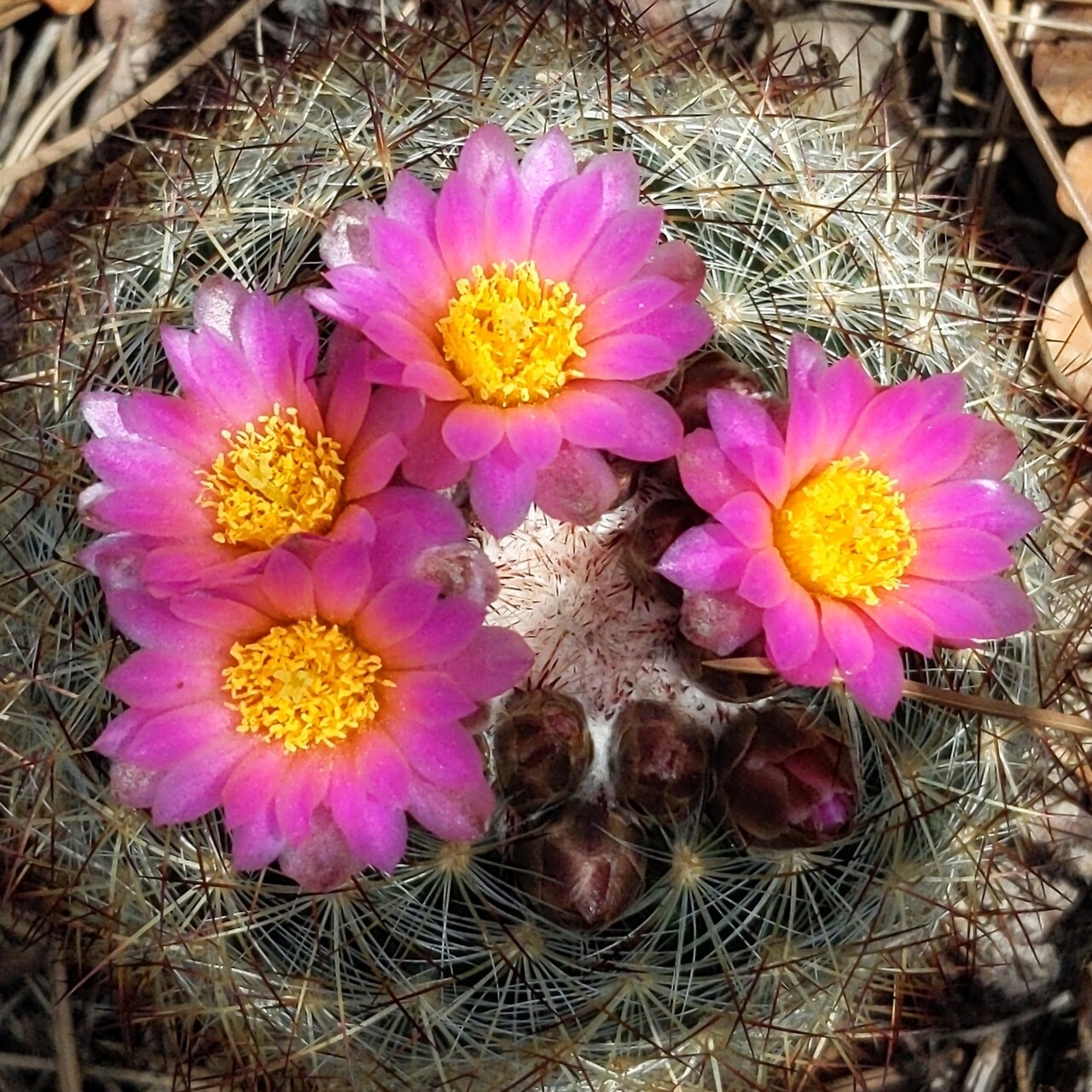
Pediocactus simpsonii, known as Mountain Ball Cactus, Simpson’s hedgehog cactus or Simpson’s footcactus, is a small, rounded cactus of the high, cold country of the American West. Its single (sometimes clustered) stems are usually 1 to 6 inches tall and wide, covered in star-like clusters of white and reddish-brown spines. In early spring, often while snow still lingers nearby, a ring of pink, magenta, white, cream or yellowish flowers opens on top of the stem.
It is one of the most cold-hardy cacti in North America. It grows in sagebrush steppe, mountain grasslands, pinyon-juniper and ponderosa pine woodlands and open rocky slopes, from about 4,000 feet to more than 11,000 feet, in Idaho, Montana, Wyoming, Colorado, Utah, Nevada, Arizona and New Mexico.
Mountain ball cactus is a prized plant for rock gardens and crevice gardens in cold, dry climates. Buy only nursery-grown, seed-raised plants and never dig cacti from the wild. Wild plants rarely survive transplanting, collecting harms native populations, and digging plants on public land is generally illegal without a permit.
Identification
Look for a low, rounded, heavily spined cactus no bigger than a softball, with whitish radial spines, darker central spines and spring flowers on top of the stem.
Growth Habit
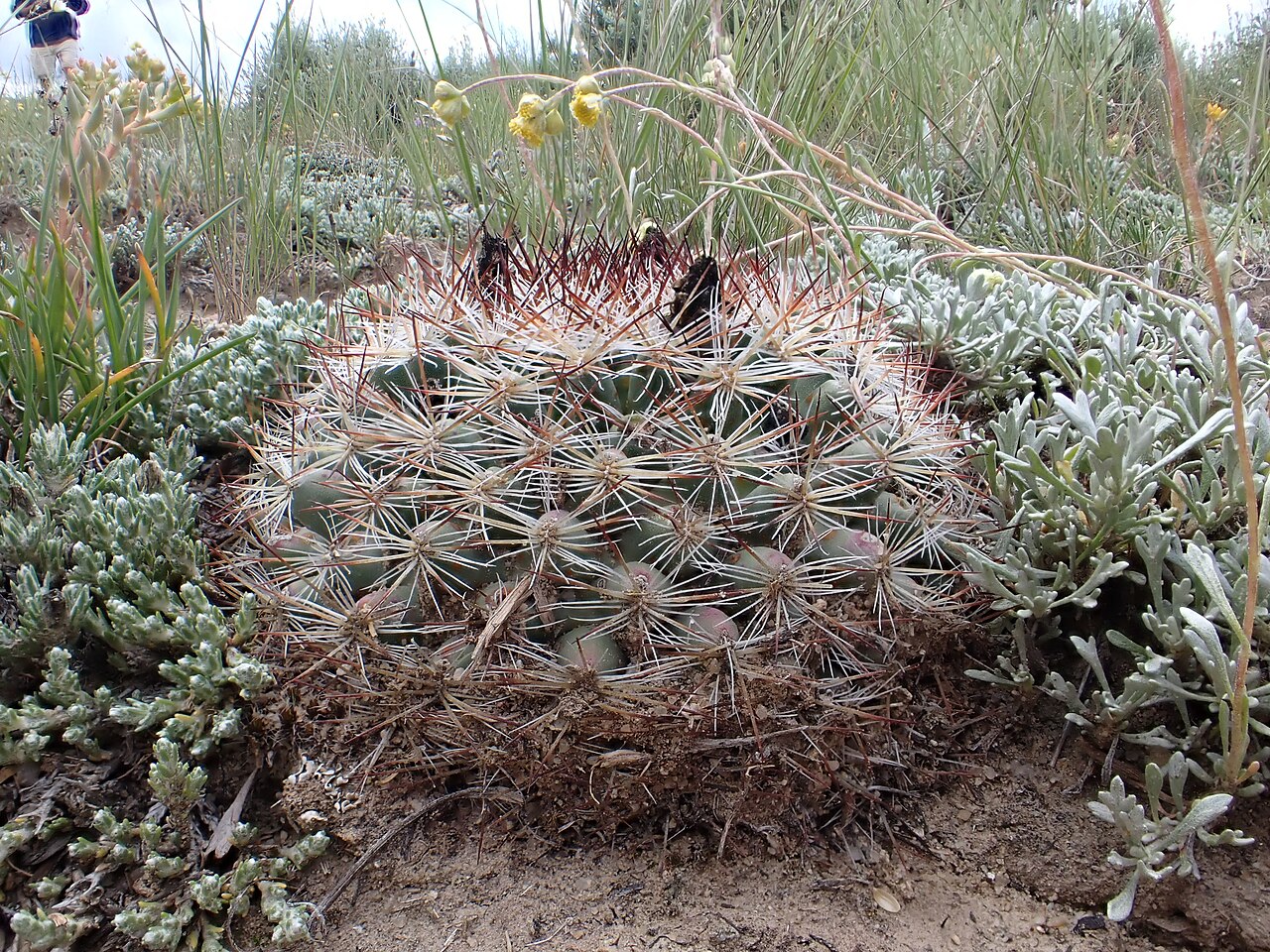
Stems are usually single, round to slightly egg-shaped, and about 1 to 6 inches tall and wide; old plants occasionally reach about 8 inches and sometimes form small clusters. In winter the stems shrink and pull down toward the soil, and in harsh sites they may be partly hidden in grass or gravel.
Spines
The stem surface is covered with small bumps (tubercles), each with an areole bearing about 15 to 35 white to cream, slender radial spines spreading like a star, and 4 to 11 stouter central spines that are reddish-brown to nearly black, often with paler bases. Spine color varies among populations, from mostly white to strongly reddish.
Flowers
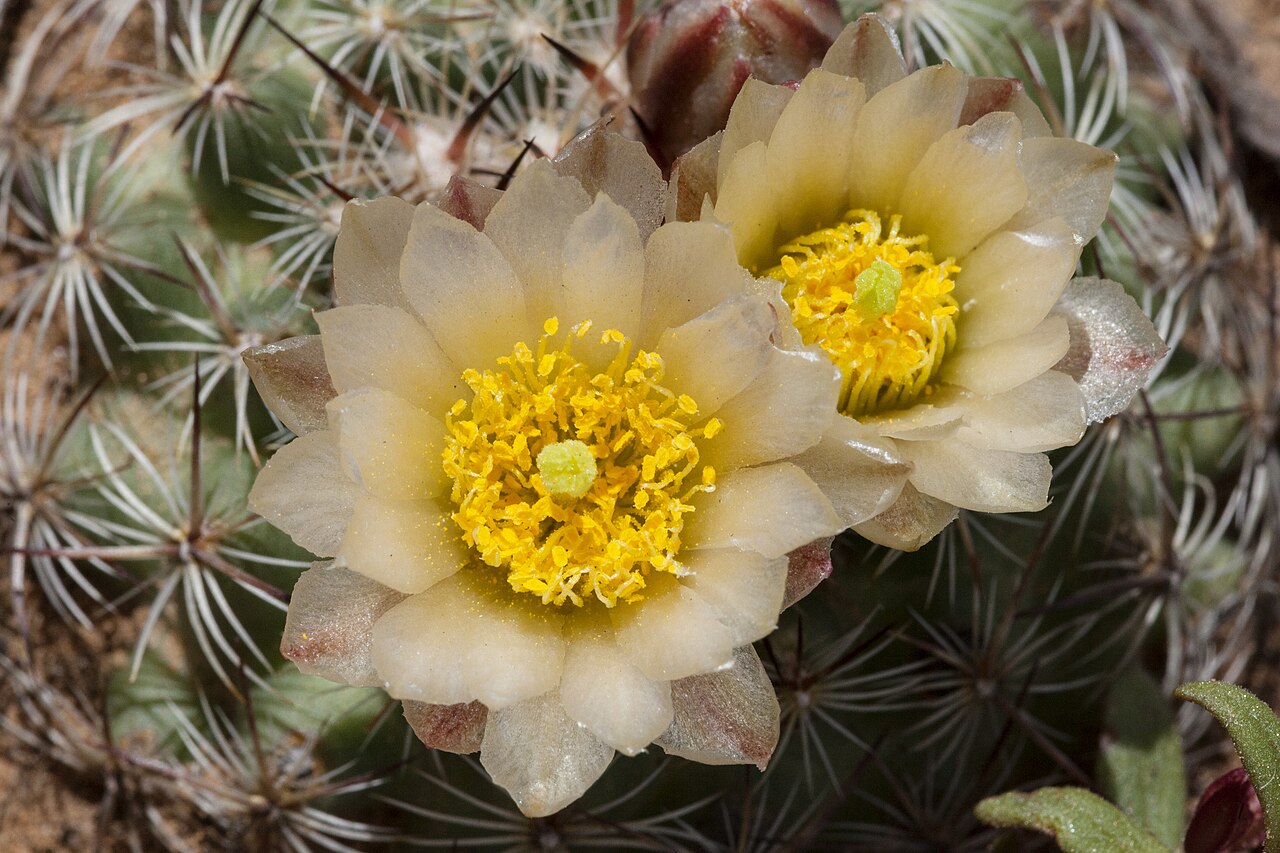
Flowers open in a ring near the top of the stem from about April to June, depending on elevation, and are about 3/4 to 1 1/4 inches across. Color varies from white to cream, yellowish, pink and deep magenta, often with a darker midstripe on the tepals. They open in sunshine and close at night.
Fruit
The fruit is a small, green, barrel-shaped berry that turns reddish-brown and dries, splitting along one side to release black, wrinkled seeds in summer.
Look-alikes
Spinystar (Escobaria vivipara, also called Coryphantha vivipara) has a groove on the upper side of each tubercle and flowers later in late spring and summer. Hedgehog cacti (Echinocereus), such as claret cup, have ribbed, cylindrical stems and flowers on the sides. In eastern Oregon and Washington, similar plants are often treated as a separate species, Pediocactus nigrispinus.
Quick Facts
| Scientific Name | Pediocactus simpsonii |
| Family | Cactaceae (cactus family) |
| Plant Type | Small globular cactus |
| Mature Height | 1–6 in |
| Mature Spread | 1–6 in |
| Growth Rate | Very slow |
| Sun Exposure | Full sun |
| Water Needs | Very low; extremely drought tolerant |
| Soil Type | Gravelly, rocky or sandy, very fast-draining soil |
| Soil pH | Neutral to alkaline (about 6.5–8.5) |
| Bloom Time | Spring (April–June) |
| Flower Color | Pink, magenta, white, cream or yellowish |
| Fall Color | None |
| Fruit | Small green to reddish-brown, drying berry |
| Deer Resistant | Yes |
| USDA Hardiness Zones | 4–8 |
Native Range
Mountain ball cactus is native to the interior West of the United States. USDA PLANTS records it from nine states: Arizona, Colorado, Idaho, Montana, Nevada, New Mexico, South Dakota, Utah and Wyoming. It is the most widespread species in its genus.
Its core range is the Colorado Plateau, the Rocky Mountains and the Great Basin: western and central Colorado, eastern and central Utah, northern Arizona and New Mexico, southern and central Wyoming, southwestern Montana, central and southern Idaho, and eastern and central Nevada. The South Dakota record is an outlying one at the far eastern edge of the range. Plants in eastern Oregon and Washington are usually treated as the separate species Pediocactus nigrispinus.
It grows in open, sunny, well-drained places: sagebrush steppe, mountain grasslands and parks, pinyon-juniper woodlands, open ponderosa pine and aspen woodlands, gravelly ridges and rocky slopes, from about 4,000 to more than 11,000 feet in elevation. Winters are long and cold in most of its range, and plants are often buried under snow.

📋 Regional plant lists featuring Mountain Ball Cactus: Idaho, Eastern Oregon & Eastern Washington · Montana & Wyoming · Utah & Western Colorado · Arizona & New Mexico · North Dakota, South Dakota & Western Minnesota · California & Nevada
Growing & Care Guide
Mountain ball cactus is hardy to bitter cold but fussy about moisture. It succeeds in dry, sunny rock or crevice gardens with perfect drainage, especially in the Interior West. In humid or wet-winter climates it is best grown in a pot or trough that can be kept dry.
Light
Full sun. It needs bright light year-round to stay compact and bloom.
Soil & Water
Use a very lean, gritty mix of crushed rock, coarse sand or pumice with little organic matter. Plant it so the base of the stem sits on gravel, not wet soil. Water lightly in spring and early summer, keep it drier in late summer and almost completely dry in fall and winter. Too much water, especially in warm weather or during winter, causes rot.
Planting Tips
Plant nursery-grown plants in spring in a raised rock garden, crevice garden, berm or trough. Set the plant slightly high, with a collar of gravel around the stem. Cold winters are fine and even helpful; wet, warm winters are the main danger.
Pruning & Maintenance
No pruning is needed. Keep fallen leaves and debris off the plant and keep weeds and grass from shading it. Protect seedlings and small plants from slugs and rodents.
Propagation
Grow from seed. Seeds usually germinate better after several weeks of cold, moist stratification. Seedlings are very slow and can take several years to flower. Never collect plants or seeds from the wild without permission.
Landscape Uses
- Rock and crevice gardens: a tiny, cold-hardy cactus for sunny, gravelly sites
- Troughs and containers: easy to keep dry in winter in humid climates
- Xeriscapes: very low water use in high, dry gardens
- Early spring color: one of the first cacti to bloom each year
- Collector plant: admired for its variable flower and spine colors
Wildlife & Ecological Value
Mountain ball cactus is a small but valuable early-season resource in high, dry western landscapes.
For Pollinators
Its early spring flowers are visited by native bees, including small solitary bees and bumble bees, along with flies and beetles. Because it blooms when few other flowers are open at high elevations, it is an important early food source.
For Birds
Its seeds and fruits are eaten occasionally by small birds and rodents, which can carry seeds to new sites.
For Mammals
Small rodents eat seeds and sometimes chew stems during dry periods. The dense spines discourage most larger animals.
Ecosystem Role
Like other small cacti, it is part of the diverse community of low perennials that live between shrubs and bunchgrasses in sagebrush and woodland ecosystems. It indicates intact, undisturbed habitat in many areas, and populations are slow to recover from collecting or heavy disturbance.
Cultural & Historical Uses
The species is named for James Hervey Simpson, a U.S. Army topographical engineer who led an 1859 expedition across the Great Basin of Utah and Nevada, where the cactus was collected. The genus name Pediocactus comes from the Greek pedion, meaning “plain,” for the plains where the first species were found.
Several other members of the genus Pediocactus are rare and federally protected, including Brady’s pincushion cactus and Peebles Navajo cactus, both of which grow in small areas of Arizona. Mountain ball cactus is the widespread, common species of the genus, but it is still vulnerable to illegal collecting.
Botanists recognize several varieties based on stem size and spine color, including the large var. robustior of the northern Great Basin and Columbia Plateau and the small var. minor of the southern Rockies.
Frequently Asked Questions
How cold-hardy is mountain ball cactus?
Very hardy. It grows naturally at high elevations with long, snowy winters and is usually rated to USDA zone 4 or colder, as long as it is kept dry in winter.
When does mountain ball cactus bloom?
In spring, from about April to June depending on elevation. It is often the first cactus to bloom in its range.
Can I dig a mountain ball cactus from the wild?
No. Wild-dug cacti rarely survive, collecting harms native populations, and removing plants from public land usually requires a permit. Buy nursery-grown, seed-raised plants.
Why is my mountain ball cactus rotting?
Usually because of too much water or poor drainage, especially in warm weather or winter. Grow it in very gritty soil and keep it dry from fall through winter.
What color are mountain ball cactus flowers?
They vary from white and cream to yellowish, pink and deep magenta, sometimes in the same area.

Looking for a nursery that carries Mountain Ball Cactus?
Browse our native plant nursery directory: Arizona · Colorado · Idaho · Montana · Nevada & New Mexico · South Dakota & Utah · Wyoming