
Upland Larkspur (Delphinium nuttallianum)
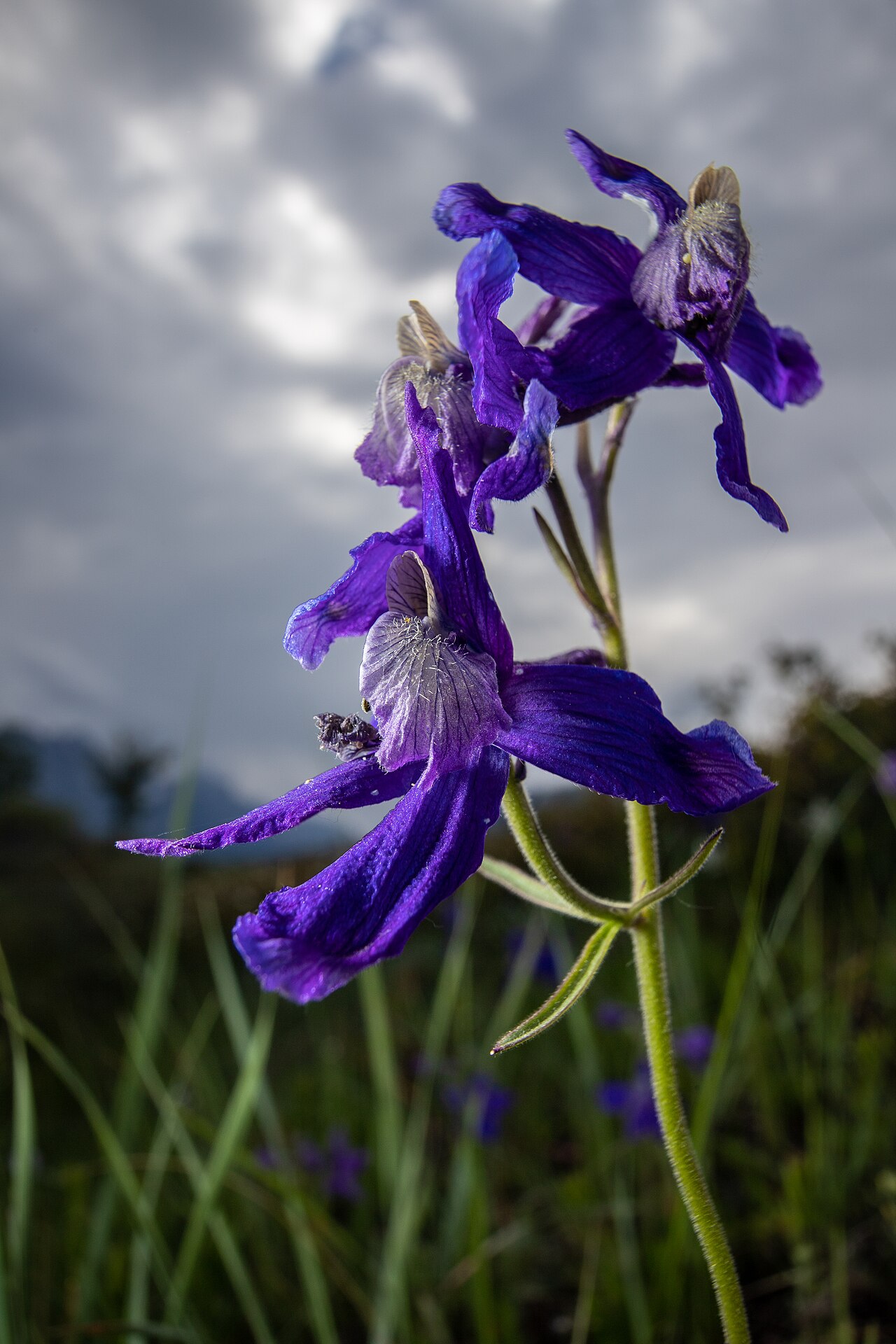
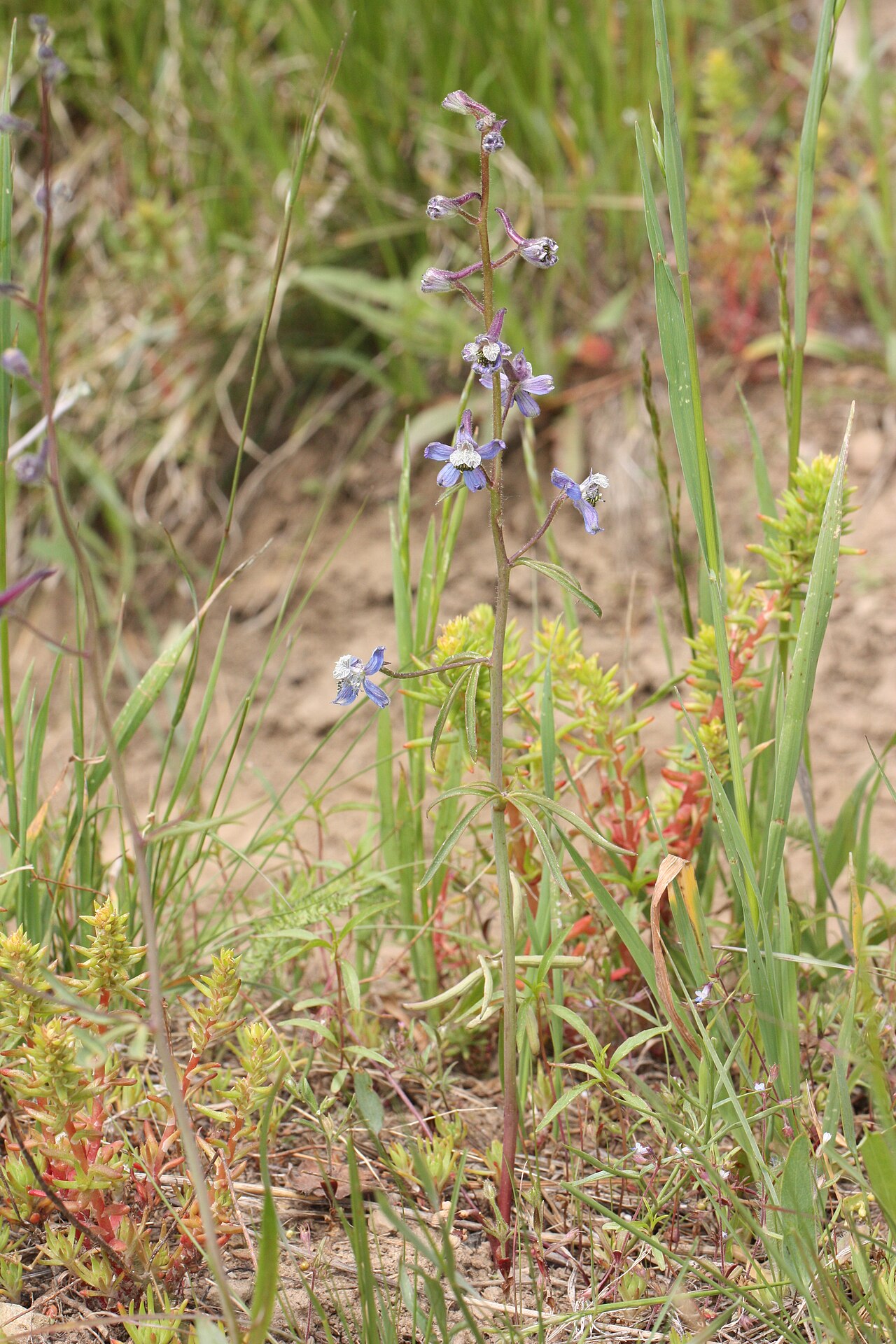
Delphinium nuttallianum, known as Upland Larkspur or Nuttall’s larkspur (USDA: twolobe larkspur), is a small spring wildflower of the dry foothills, sagebrush plains and open pine forests of the American West. It is a member of the buttercup family (Ranunculaceae). From a cluster of small, fleshy roots it sends up a slender stem 4 to 16 inches tall, with a few deeply divided leaves and a loose spike of brilliant blue-violet flowers, each with a long spur.
Upland larkspur is one of the first wildflowers of spring in much of the interior West, blooming from March at low elevations to July in the mountains. Its flowers are visited by bumble bees and hummingbirds. Soon after the seeds ripen in early summer, the whole plant withers and disappears underground until the next spring, an adaptation to the long, dry summers of its range.
All parts of upland larkspur are poisonous. It contains diterpenoid alkaloids that can be fatal to cattle, and it is one of the “low larkspurs” responsible for livestock losses on western rangelands. It is also poisonous to people, horses and pets. Enjoy it in the wild or in a naturalistic garden where livestock and children will not graze on it, and never eat any part of the plant.
Identification
Look for a single, slender stem in early spring with a few deeply cut leaves near the base and a short, open spike of deep blue to violet spurred flowers. The plant grows in dry, open places and vanishes by midsummer.
Roots & Stems
Each plant grows from a cluster of small, fleshy, tuber-like roots just below the surface. The single stem is usually unbranched, 4 to 16 inches tall (occasionally up to 2 feet), and easily snapped off at the base.
Leaves
Most leaves are near the base of the stem. They are round in outline and deeply divided, like a hand, into narrow, forking lobes. The basal leaves often wither by the time the plant is in full bloom.
Flowers
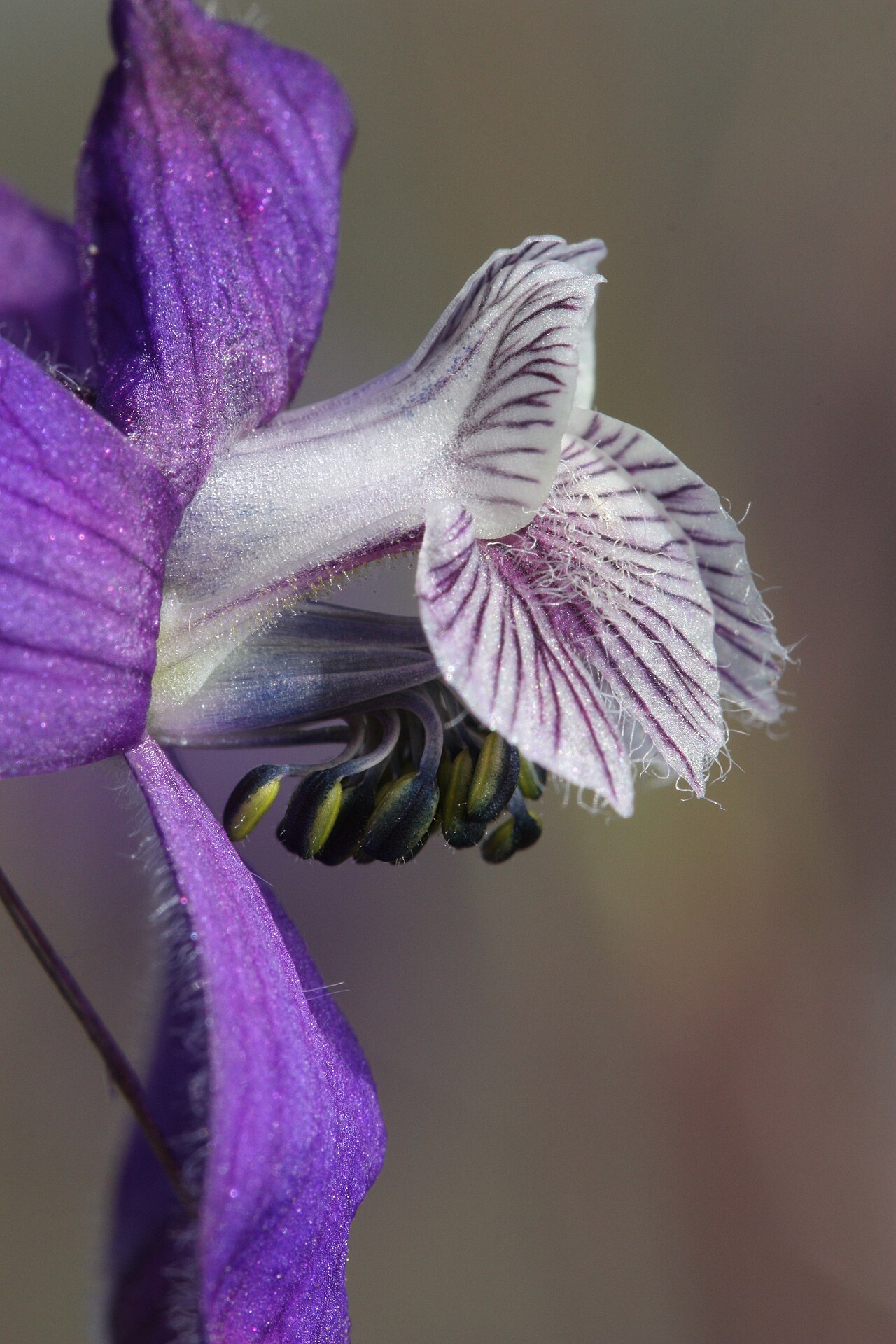
The flowers are borne in a loose spike of usually 3 to 15 flowers. Each flower is about 1 inch across, with five deep blue to purple, petal-like sepals; the upper sepal extends back into a spur about 1/2 to 3/4 inch long. In the center are four small true petals: two whitish upper petals marked with blue-purple lines and two blue lower petals with a notch that divides each into two lobes, the source of the name twolobe larkspur. Bloom time is March to July, depending on elevation.
Fruit & Seeds
Each flower produces three small pods (follicles) that split open along one side when ripe, releasing small, winged seeds. The fruits ripen in early summer, and the plant goes dormant shortly afterward.
Look-alikes
Menzies’ larkspur (D. menziesii) of the Pacific Northwest west of the Cascades and other low larkspurs are similar and best told apart by details of the roots, leaves and petals. Tall larkspurs such as tall larkspur (D. glaucum) grow 3 to 6 feet tall in moist mountain meadows. Monkshood (Aconitum) has a hood instead of a spur.
Safety & Toxicity
All parts of the plant, especially the young leaves and the seeds, contain toxic diterpenoid alkaloids. Larkspurs are among the leading causes of cattle deaths from poisonous plants on western rangelands, and upland larkspur is most dangerous in early spring, when it is one of the first green plants available. Sheep are much less sensitive than cattle, but horses can also be poisoned. The plant is poisonous to people, dogs and cats if eaten. Keep it out of pastures, wear gloves if you handle the seeds, and do not plant it where children or pets might chew on it.
Quick Facts
| Scientific Name | Delphinium nuttallianum |
| Family | Ranunculaceae (buttercup family) |
| Plant Type | Herbaceous perennial spring ephemeral; summer dormant |
| Mature Height | 4–16 in (rarely to 2 ft) |
| Mature Spread | 3–6 in |
| Growth Rate | Moderate in spring; dormant by midsummer |
| Sun Exposure | Full sun to part shade |
| Water Needs | Low; moist in spring, dry in summer |
| Soil Type | Well-drained sandy, gravelly or loamy soil |
| Soil pH | Slightly acidic to slightly alkaline (about 6.0–8.0) |
| Bloom Time | March–July (depending on elevation) |
| Flower Color | Deep blue to violet; upper petals whitish |
| Fall Color | None; dormant by summer |
| Fruit | Three small dry pods (follicles) with winged seeds |
| Deer Resistant | Yes; toxic and rarely browsed |
| USDA Hardiness Zones | 3–8 |
Native Range
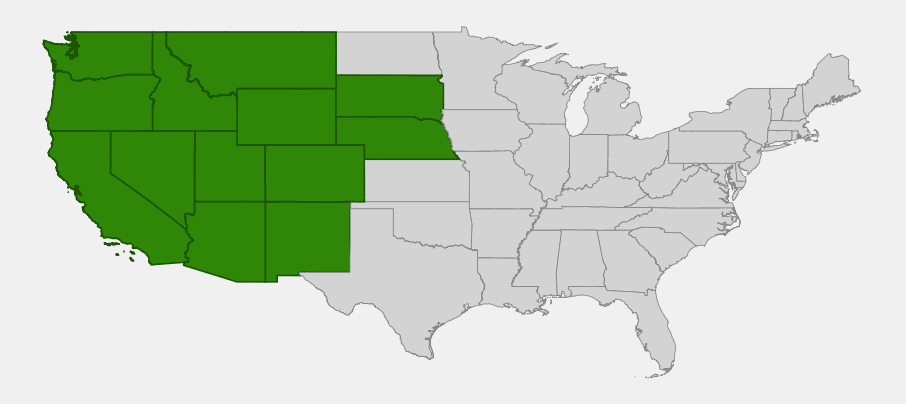
Upland larkspur is one of the most widespread larkspurs in the western United States. USDA PLANTS lists it as native in Canada and the lower 48 states, with records from 13 states: Washington, Oregon, California, Idaho, Nevada, Montana, Wyoming, Utah, Colorado, Arizona, New Mexico, South Dakota and Nebraska. In Canada it grows in southern British Columbia and southwestern Alberta.
The Lady Bird Johnson Wildflower Center describes the range as southwestern British Columbia south along the Cascade foothills to California, and east to Alberta, South Dakota, Nebraska, Colorado and Arizona. It is most common in the Columbia Basin, the Great Basin and the northern Rocky Mountains. In Washington and Oregon it grows mainly east of the Cascade crest. At the eastern edge of its range it reaches the Black Hills of South Dakota and the Pine Ridge country of northwestern Nebraska, and to the south it extends into the mountains and plateaus of northern Arizona and New Mexico.
It grows in dry foothills, valleys and sagebrush plains, open ponderosa pine and juniper woodlands, grasslands and mountain meadows that are moist in spring but dry out in summer. It ranges from low valleys to subalpine elevations.
📋 Regional plant lists featuring Upland Larkspur: Idaho, Eastern Oregon & Eastern Washington · Montana & Wyoming · Nebraska, Kansas & Eastern Colorado · Utah & Western Colorado · Arizona & New Mexico · North Dakota, South Dakota & Western Minnesota · California & Nevada
Growing & Care Guide
Upland larkspur is not a typical border plant: it blooms briefly in spring and then disappears. It is best in a dry, naturalistic garden, a sagebrush or prairie planting, or a rock garden in the West, where its summer dormancy matches the climate. Keep its toxicity in mind and do not plant it near pastures or where children and pets play.
Light
Plant it in full sun to light shade, such as an open slope or the edge of a dry pine woodland.
Soil & Water
It needs well-drained soil: sandy, gravelly or rocky loam. Moisture from winter snow and spring rain is enough. Once the plant goes dormant in summer, keep it dry; summer watering and heavy, wet soils can rot the fleshy roots.
Planting Tips
It is usually grown from seed sown directly where it is to grow, since the fleshy roots resent disturbance. Mark the spot, because the plant vanishes in summer. Combine it with bunchgrasses and other dry-land wildflowers such as balsamroot, buckwheats and penstemons, which fill in after it goes dormant.
Pruning & Maintenance
Little maintenance is needed. Let the plants set seed if you want them to self-sow, and do not cut back the foliage until it has withered. Wear gloves when handling seeds and seed heads.
Propagation
Sow fresh seed outdoors in fall so it receives the natural cold, moist period of winter; it germinates in spring. Seedlings take a few years to reach flowering size. Collect seed only where permitted and only from abundant populations, and never dig wild plants.
Landscape Uses
- Dry-land and xeriscape gardens: a spring flower that needs no summer water
- Sagebrush and prairie restoration: a native forb of western grasslands and steppe
- Rock gardens: a small, bright blue spring accent
- Hummingbird and bee gardens: an early nectar source for bumble bees and hummingbirds
- Wildflower viewing: one of the first blue flowers of spring in the interior West
Wildlife & Ecological Value
Despite its toxicity to livestock, upland larkspur is a valuable early-spring food source for native pollinators.
For Pollinators
The spurred flowers hold nectar deep inside, where long-tongued bumble bees and hummingbirds can reach it. Bumble bee queens just emerging from winter rely on early flowers like this one. Some bees rob nectar by biting holes in the spur.
For Birds
Broad-tailed, rufous, calliope and black-chinned hummingbirds, depending on the region, visit the flowers in spring. The seeds are not an important bird food.
For Mammals
The plant is toxic to cattle and can also poison horses. Sheep tolerate it better and sometimes graze it. Most wild herbivores eat little of it.
Ecosystem Role
As a spring ephemeral, upland larkspur uses the brief moist season in early spring to flower and set seed before summer drought. Its toxicity affects how ranchers manage grazing; land managers often delay grazing in larkspur areas or graze with sheep first.
Cultural & Historical Uses
The species is named for Thomas Nuttall (1786–1859), an English botanist and naturalist who traveled widely in North America and described many western plants. The genus name Delphinium comes from the Greek word for dolphin, referring to the shape of the flower buds, and the common name larkspur refers to the spur, said to resemble the long hind claw of a lark.
Larkspurs have long been known as poisonous to livestock. Scientists at the USDA Agricultural Research Service Poisonous Plant Research Laboratory in Logan, Utah, have studied them for decades, identifying the toxic alkaloids and developing grazing practices to reduce cattle losses. Low larkspurs such as this species are most dangerous in spring, before the grasses grow tall.
Some Native American peoples of the West used larkspurs to make blue dye, and some used them in medicine or as an insecticide against lice. Because the plants are toxic, these uses required knowledge and care. Today upland larkspur is valued mainly as one of the brightest blue wildflowers of the western spring.
Frequently Asked Questions
Is upland larkspur poisonous?
Yes. All parts are toxic to people, pets and livestock, especially cattle and horses. It contains diterpenoid alkaloids that can cause muscle weakness, paralysis and death. Never eat it, and keep it away from pastures.
Why did my larkspur disappear in summer?
Upland larkspur is a spring ephemeral. After it flowers and sets seed, the leaves and stem die back and the plant rests underground as fleshy roots until the next spring.
Can I grow upland larkspur in my garden?
Yes, in a dry, sunny, well-drained site in the West, preferably from seed sown in fall. Do not water it in summer, and do not plant it near livestock, small children or pets that might eat it.
What is the difference between low and tall larkspurs?
Low larkspurs, like this species, are under about 2 feet tall, bloom in spring in dry, open places and go dormant in summer. Tall larkspurs grow 3 to 6 feet tall in moist mountain meadows and bloom later in summer.
What pollinates upland larkspur?
Mainly bumble bees and hummingbirds, which can reach the nectar in the long spur.

Looking for a nursery that carries Upland Larkspur?
Browse our native plant nursery directory: Arizona · California · Colorado · Idaho · Montana · Nebraska, Nevada & New Mexico · Oregon · South Dakota & Utah · Washington · Wyoming