
Dimpled Trout Lily (Erythronium umbilicatum)
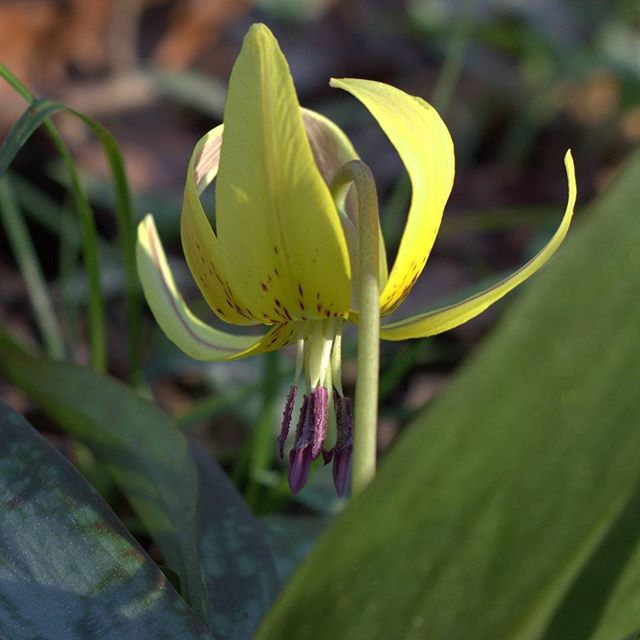
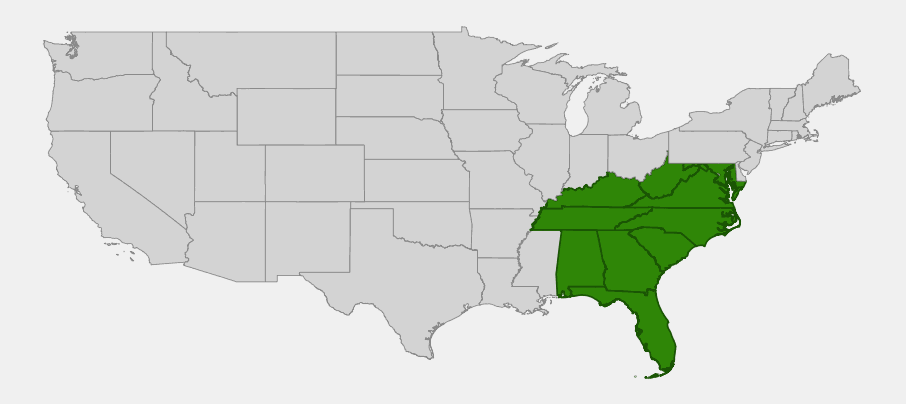
Erythronium umbilicatum, known as Dimpled Trout Lily (USDA: dimpled troutlily), and also called southern trout lily, is a small spring ephemeral of the lily family (Liliaceae). It is native to the southeastern United States, from Maryland, West Virginia, Virginia and Kentucky south through the Carolinas, Tennessee and Georgia to Alabama and the Florida Panhandle.
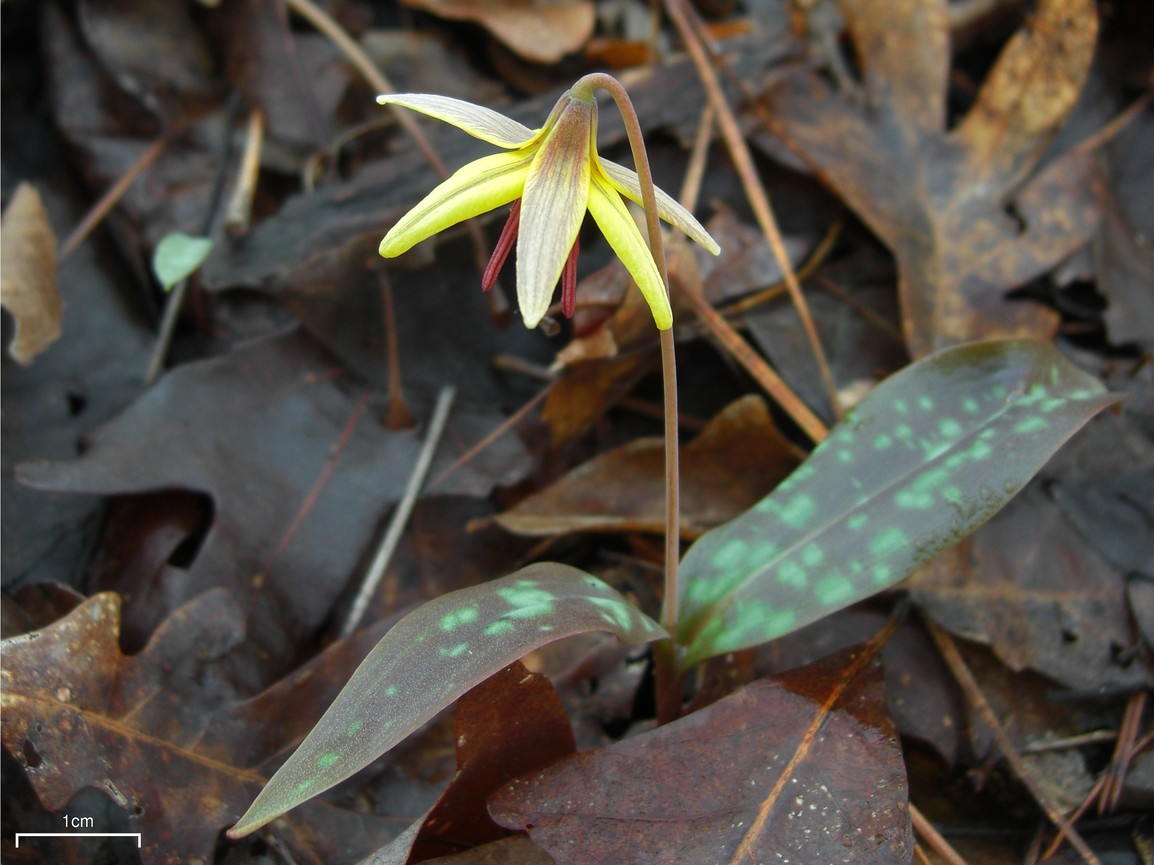
In late winter and early spring it sends up one or two glossy leaves mottled with brown and purple, like the sides of a trout. Flowering plants carry a single nodding yellow flower with six petal-like tepals that curve back as the flower opens in the sun. After flowering, the stalk bends to the ground, and the seed capsule ends in a small dimple, the feature that gives the plant its name and separates it from the more northern Trout Lily (Erythronium americanum).
It grows in rich deciduous woods, wooded slopes, bluffs and floodplain forests in the Piedmont, mountains and Coastal Plain. Like other spring ephemerals, it completes its growth before the trees leaf out and is dormant by early summer. It is a charming plant for southeastern woodland gardens, but it should never be dug from the wild; buy only nursery-propagated plants.
Identification
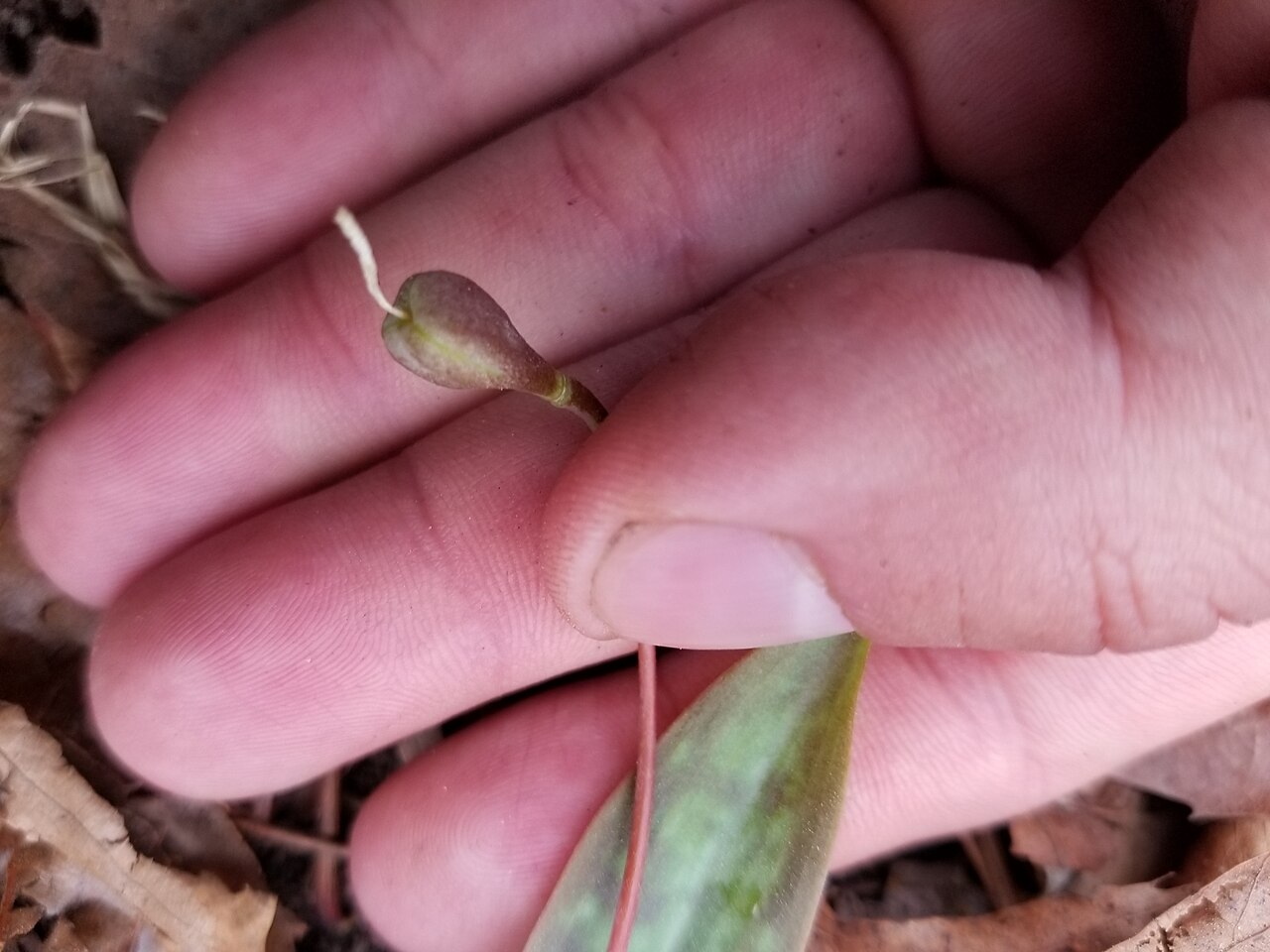
Dimpled trout lily looks much like other yellow trout lilies, but its seed capsule, which rests on the ground and has a small dimple at the tip, is the most reliable way to identify it.
Growth Form
A small perennial herb, 4 to 8 inches tall, growing from a deep, egg-shaped corm. Young or non-flowering plants produce a single leaf; flowering plants produce two leaves and one flower stalk. It is a spring ephemeral: the leaves appear in late winter and wither by late spring.
Leaves
The leaves are elliptic to lance-shaped, about 3 to 8 inches long, smooth and slightly fleshy, and usually mottled with brown or purplish blotches on a green background. They arise at ground level and sheath the base of the flower stalk.
Flowers
Flowers appear from about February to April, earlier in the south of its range. Each plant bears a single nodding flower about 1 to 2 inches across, with six yellow tepals that curve back strongly in sunlight. The outer tepals are often bronze, purplish or brown on the back. The six stamens have anthers that may be yellow, brown or purple. Flowers open in the morning and close at night and in cloudy weather.
Fruit
After flowering, the stalk bends down so that the developing capsule lies on or near the ground. The rounded capsule has a distinct dimple or depression at its tip, around the base of the withered style. It splits to release seeds that have small fatty attachments that attract ants.
Look-alikes
Trout Lily (Erythronium americanum) is very similar, but its capsule is held above the ground and lacks the dimple at the tip, and it usually forms large colonies of non-flowering single leaves. White Trout Lily (E. albidum) has white flowers. In flower, dimpled trout lilies tend to bloom more freely, with fewer non-flowering single leaves around them.
Safety
Trout lilies are not considered seriously poisonous, but they are not food plants, and their corms and leaves may cause stomach upset if eaten. Do not pick or dig them; picking the leaves weakens the plant, and digging destroys wild populations.
Quick Facts
| Scientific Name | Erythronium umbilicatum |
| Family | Liliaceae (lily family) |
| Plant Type | Herbaceous perennial; spring ephemeral |
| Mature Height | 4–8 in |
| Mature Spread | 3–6 in; slowly forms small colonies |
| Growth Rate | Slow |
| Sun Exposure | Spring sun, summer shade (under deciduous trees) |
| Water Needs | Moderate; moist in spring, drier in summer dormancy |
| Soil Type | Rich, humusy, well-drained woodland loam |
| Soil pH | About 5.5–7.0 |
| Bloom Time | February–April |
| Flower Color | Yellow, often bronze or purplish on the back |
| Fall Color | None; dormant by early summer |
| Fruit | Rounded capsule with a dimpled tip, lying on the ground |
| Deer Resistant | Moderately |
| USDA Hardiness Zones | 5–9 |
Native Range
Dimpled trout lily is a southeastern species. Its range centers on the Piedmont and the southern Appalachians, from Maryland, Virginia, West Virginia and Kentucky south through North Carolina, Tennessee, South Carolina and Georgia to Alabama, reaching the Florida Panhandle at its southern limit. It overlaps with the trout lily in the mountains and northern part of its range, and largely replaces it in the Piedmont and Coastal Plain of the Deep South.
It grows in rich, moist deciduous forests, often on slopes, bluffs and ravines, in mixed hardwood forests with beech, oaks, maples and tulip poplar, and on well-drained floodplain terraces. In Florida it is found in a few hardwood forests and bluffs along rivers in the Panhandle.
Like most spring ephemerals, it relies on the short window of sunlight before the forest canopy leafs out, and it is most abundant in old, undisturbed woodlands with deep leaf litter and rich soil.
📋 Regional plant lists featuring Dimpled Trout Lily: Kentucky & Tennessee · Maryland, Virginia & West Virginia · Alabama, Georgia & Mississippi · North & South Florida · North & South Carolina
Growing & Care Guide
Dimpled trout lily is a lovely early-spring plant for southeastern woodland gardens. A few specialist native nurseries offer nursery-propagated corms or plants; never collect them from the wild.
Light
Plant it under deciduous trees or shrubs, where it receives full sun in late winter and early spring and shade in summer. Its leaves need spring sunlight to store energy before the canopy closes.
Soil & Water
It needs rich, humusy, well-drained woodland soil, slightly acidic to neutral. Keep the soil moist during its winter and spring growth. In summer, when it is dormant, it tolerates drier conditions, but the soil should not bake or be heavily watered.
Planting Tips
Plant corms in fall about 3 to 5 inches deep, pointed end up, in groups. Mark their location, since the plants vanish by early summer. Combine them with ferns and later-emerging woodland plants that fill the space after the trout lilies go dormant.
Pruning & Maintenance
Let the leaves die back naturally; they feed the corm for next year. Leave fallen leaves in place as mulch. Avoid digging in the planting area, where corms are easily damaged.
Propagation
Sow fresh seed outdoors in late spring as soon as it is ripe; seedlings take several years to reach flowering size. Established clumps can be divided carefully when dormant in summer or early fall.
Landscape Uses
- Woodland and shade gardens: early yellow flowers under deciduous trees
- Spring ephemeral collections: one of the first wildflowers of the southern spring
- Naturalized woodlands: slowly forms colonies in rich, undisturbed soil
- Pollinator support: early pollen for spring bees
- Conservation plantings: nursery-propagated plants reduce pressure on wild colonies
Wildlife & Ecological Value
Dimpled trout lily blooms when few other flowers are open and supports early-season insects in southern forests.
For Pollinators
Its flowers provide early nectar and pollen for queen bumble bees, mining bees, sweat bees and flies. Trout lilies are the host flowers of the trout lily mining bee (Andrena erythronii), a solitary bee that collects pollen mainly from Erythronium.
For Birds
The plant is of little direct importance to birds, though ground-foraging birds find insects among spring ephemerals in the leaf litter.
For Mammals
Deer occasionally browse the leaves, and small mammals may eat the corms.
Ecosystem Role
Its seeds have fatty elaiosomes that ants carry back to their nests, dispersing the seeds short distances. As a spring ephemeral, it takes up nutrients from the soil early in the year, before the trees do, and returns them to the soil when its leaves decay.
Cultural & Historical Uses
The species name umbilicatum means “with a navel” and refers to the dimple at the tip of the seed capsule. It was long lumped with the common trout lily and was described as a separate species only in 1963, by the botanists Clifford Parks and James Hardin, based on southern populations.
The common name “trout lily” refers to the mottled leaves, which resemble the speckled sides of a brook trout. Other folk names for the group include dogtooth violet, for the tooth-like corm, and adder’s tongue, for the leaves or the emerging shoots.
Like many spring ephemerals, trout lilies may live for decades in undisturbed woods, slowly building colonies. Conservation groups encourage gardeners to buy only nursery-propagated trout lilies, since wild collection can destroy colonies that took many years to form.
Frequently Asked Questions
How is it different from the common trout lily?
The main difference is the fruit: in dimpled trout lily the stalk bends so the capsule rests on the ground, and the capsule has a dimple at its tip. The common trout lily holds its capsule above the ground without a dimple, and it usually forms larger colonies of single, non-flowering leaves.
When does it bloom?
From February to April, depending on location and weather, often earlier than the common trout lily where they grow together.
Can I dig some from the woods?
No. Wild plants should never be dug: the corms are deep and easily damaged, and wild colonies take decades to form. Buy nursery-propagated plants instead.
Why do the leaves disappear?
It is a spring ephemeral. It grows and flowers in late winter and spring while sunlight reaches the forest floor, then goes dormant underground by early summer.
Where does it grow?
In rich deciduous woods of the southeastern United States, from Maryland and Kentucky south to Alabama, Georgia and the Florida Panhandle.

Looking for a nursery that carries Dimpled Trout Lily?
Browse our native plant nursery directory: Alabama · Florida & Georgia · Kentucky & Maryland · North Carolina · South Carolina, Tennessee & Virginia · West Virginia