
Small’s Ragwort (Packera anonyma)
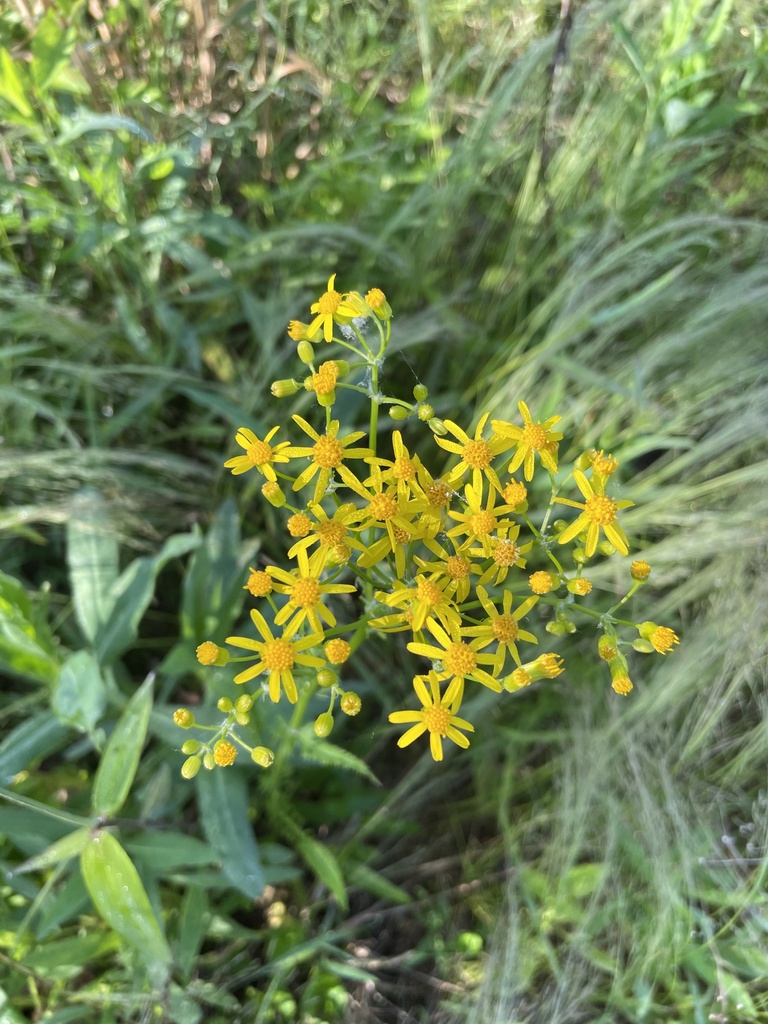
Packera anonyma, known as Small’s Ragwort, is a spring-blooming perennial wildflower of the aster family (Asteraceae) native to the eastern and southeastern United States. It is common in the Piedmont and southern Appalachians, where its broad, flat-topped clusters of small, bright yellow, daisy-like flower heads brighten roadsides, dry open woods, fields and rocky outcrops from April to June. It was formerly known as Senecio anonymus and Senecio smallii, and the common name honors the botanist John Kunkel Small.
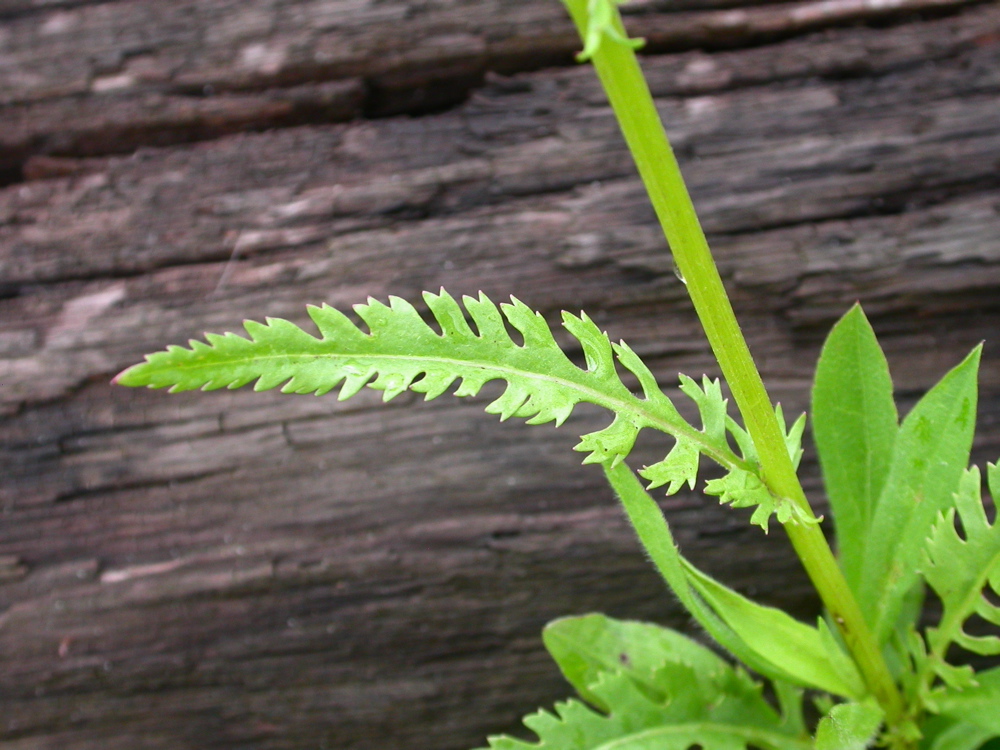
Each plant forms a rosette of toothed, lance-shaped basal leaves, from which rise one or more stems 1 to 2 1/2 feet tall with deeply cut, feathery leaves. A single stem can carry dozens of flower heads, so a roadside colony in full bloom is a mass of gold. The flowers attract many kinds of small bees, flies, butterflies and beetles.
Small’s ragwort is a tough, drought-tolerant plant for sunny, dry sites, meadows and roadsides, and it thrives in poor, rocky or sandy soil. Like other Packera and Senecio species, however, it contains pyrrolizidine alkaloids that are toxic to livestock and people. It should not be eaten or used in herbal teas, and it should not be planted in or near pastures or hay fields.
Identification
Small’s ragwort is one of several yellow-flowered ragworts (Packera) that bloom in spring in the East. Its combination of dry, open habitat, many small heads in a flat-topped cluster, and finely divided stem leaves helps separate it from the others.
Basal Leaves
The basal leaves form a rosette and are lance-shaped to narrowly elliptic, 2 to 6 inches long including the stalk, with toothed edges and a tapering base. They are often slightly woolly when young, especially near the base of the plant, and become smoother with age. They usually stay green through mild winters.
Stems & Stem Leaves
One to several flowering stems rise 1 to 2 1/2 feet tall. The stem leaves are alternate and deeply divided (pinnatifid) into narrow, toothed lobes, giving them a feathery look, and they become smaller toward the top of the stem.
Flowers
From April to June, each stem ends in a broad, flat-topped or slightly rounded cluster of 20 to 100 or more small flower heads. Each head is about 1/2 to 3/4 inch across, with usually 8 to 13 yellow ray flowers around a center of yellow to orange-yellow disk flowers. The green bracts around each head are of nearly equal length and often have dark tips.
Fruit & Seeds
Each flower produces a small, ribbed achene topped with a tuft of soft white bristles (pappus) that carries it on the wind. The fluffy seed heads appear in early summer.
Look-alikes
Golden Ragwort (Packera aurea) grows in moist woods and has heart-shaped basal leaves on long stalks. Roundleaf Ragwort (P. obovata) has rounded basal leaves and spreads by runners into patches. Butterweed (P. glabella) is a hollow-stemmed annual of wet ground with large, soft, deeply lobed leaves. Small’s ragwort has narrower basal leaves, more numerous and smaller heads, and grows in drier, sunnier places.
Quick Facts
| Scientific Name | Packera anonyma |
| Family | Asteraceae (aster family) |
| Plant Type | Herbaceous perennial (semi-evergreen basal rosette) |
| Mature Height | 1–2 1/2 ft |
| Mature Spread | 1 ft |
| Growth Rate | Moderate |
| Sun Exposure | Full sun to partial shade |
| Water Needs | Low to moderate; drought-tolerant |
| Soil Type | Dry to moderately moist sandy, rocky or clay soil |
| Soil pH | About 5.0–7.0 |
| Bloom Time | April–June |
| Flower Color | Bright yellow |
| Fall Color | None; basal leaves mostly persist |
| Fruit | Small achenes with white fluffy bristles |
| Deer Resistant | Yes; bitter and toxic |
| USDA Hardiness Zones | 5–9 |
Native Range
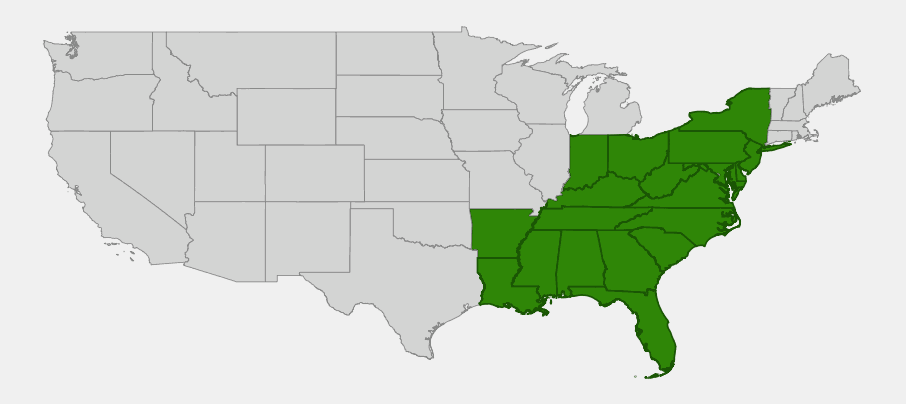
Small’s ragwort is native to the eastern and southeastern United States and does not occur in Canada. USDA PLANTS records it from 19 states and the District of Columbia, from New York, New Jersey, Pennsylvania, Ohio and Indiana south to Florida and west to Arkansas and Louisiana. The Atlas of Florida Plants lists it as native in Florida.
Its center of abundance is the Piedmont and the southern Appalachian Mountains of Virginia, the Carolinas, Georgia, Tennessee and Kentucky, where it is one of the most common spring roadside wildflowers. It becomes uncommon to rare toward the edges of its range; NatureServe ranks it rare or imperiled in states such as Pennsylvania, New Jersey, Delaware and Louisiana.
Typical habitats are dry open woods and woodland edges, fields, pastures, roadsides and road banks, granite and other rock outcrops, glades and power-line clearings, often in thin, poor soil. It readily colonizes disturbed, sunny ground.
📋 Regional plant lists featuring Small’s Ragwort: New York, Pennsylvania & Northern New Jersey · Ohio & Indiana · Kentucky & Tennessee · Maryland, Virginia & West Virginia · Delaware, Southern New Jersey & Long Island · Alabama, Georgia & Mississippi · North & South Florida · North & South Carolina · Arkansas, Louisiana, Eastern Oklahoma & Eastern Texas
Growing & Care Guide
Small’s ragwort is easy to grow in a sunny, dry to average spot and is especially useful on poor, rocky or sandy soils where other wildflowers struggle. Its main drawbacks are its toxicity to livestock and its tendency to self-sow in open ground.
Light
Full sun gives the most flowers. It tolerates light or partial shade, such as the edge of open woods, but flowers less there.
Soil & Water
Plant it in well-drained soil: sand, gravel, rocky loam or clay. It tolerates drought once established and does not need rich soil or fertilizer. Avoid soggy sites, where the rosettes rot.
Planting Tips
Plant in spring or fall about 1 foot apart. Use it in meadows, on slopes and road banks, in rock gardens and along the sunny edges of woodlands. Its early yellow flowers combine well with spring-blooming phlox, coreopsis and native grasses such as little bluestem. Do not plant it in or near pastures, paddocks or hay fields, because of the risk to livestock.
Pruning & Maintenance
Cut back the flower stems after seed is released, or earlier if you want to prevent self-sowing. The basal rosettes stay green through mild winters and need no care. Pull unwanted seedlings while they are small, wearing gloves.
Propagation
Sow fresh seed in summer or fall on the soil surface; it germinates readily. Plants can also be divided in early spring or fall. Buy plants or seed from native plant nurseries.
Landscape Uses
- Meadows and roadsides: early spring color in dry, sunny sites
- Rock gardens and slopes: thrives in thin, rocky soil
- Pollinator gardens: an early nectar and pollen source
- Woodland edges: bridges sun and light shade
- Restoration of disturbed sites: a quick, tough native colonizer
Wildlife & Ecological Value
Small’s ragwort is a valuable early-season flower for insects, though its toxic chemistry means few animals eat the plant itself.
For Pollinators
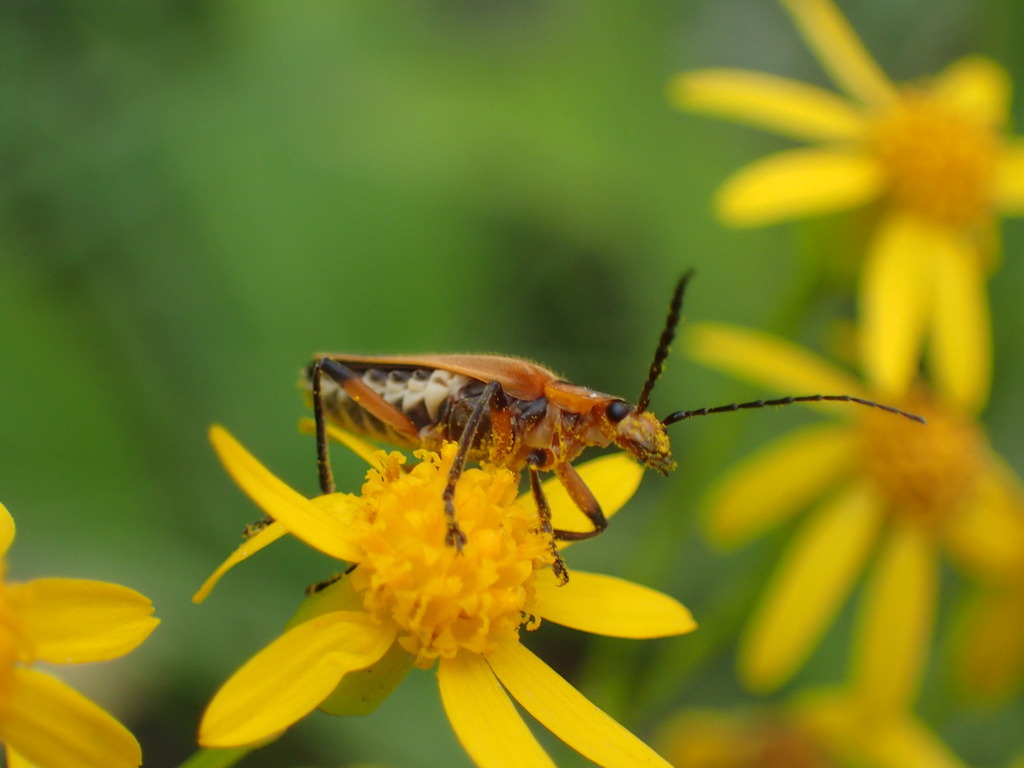
The flowers are visited by many small native bees, including sweat bees and mining bees, as well as honey bees, syrphid flies, small butterflies and beetles such as soldier beetles. Blooming in mid to late spring, it fills the gap between early spring wildflowers and summer composites.
For Birds
Some finches and sparrows eat the seeds, and insect-eating birds forage on the many insects attracted to the flowers. It is not a major bird food plant.
For Mammals
Deer, rabbits and livestock generally avoid it because it is bitter. When animals do eat it, especially in hay or when other forage is scarce, the alkaloids can damage the liver.
Ecosystem Role
Small’s ragwort colonizes bare, dry and disturbed ground such as road banks and outcrops, where its rosettes help hold soil. Its pyrrolizidine alkaloids are used by some insects for defense; a few specialized moths and beetles feed on ragworts and store these compounds.
Cultural & Historical Uses
The species was first named Senecio anonymus by Alphonso Wood. Later it was called Senecio smallii by Nathaniel Lord Britton, in honor of John Kunkel Small (1869–1938), a botanist at the New York Botanical Garden who studied the flora of the southeastern United States; the common name Small’s ragwort comes from that name. The genus Packera was described in 1976, and many North American ragworts with basal rosettes, including this one, were later moved into it from Senecio, keeping the oldest species name, anonyma.
Safety: Small’s ragwort, like other Packera and Senecio species, contains pyrrolizidine alkaloids. These compounds can cause serious, cumulative liver damage in horses, cattle, goats and other livestock, especially when dried plants end up in hay. They are also toxic to people and pets. Do not eat the plant or use it in herbal teas or remedies, and keep it out of pastures and hay fields.
Ragworts were once used in folk medicine, and some related species were sold as herbal remedies before their liver toxicity was recognized. Today Small’s ragwort is valued mainly as a cheerful, tough native wildflower of the Piedmont and mountain roadsides, and it is increasingly offered by native plant nurseries for dry meadows and pollinator plantings.
Frequently Asked Questions
Is Small’s ragwort poisonous?
Yes. It contains pyrrolizidine alkaloids that can damage the liver of livestock, pets and people if eaten. Do not eat it or use it as an herbal remedy, and keep it out of pastures and hay.
Is Small’s ragwort the same as golden ragwort?
No. Golden ragwort (Packera aurea) grows in moist woods and has heart-shaped basal leaves. Small’s ragwort grows in drier, sunny places and has narrow, toothed basal leaves.
Will Small’s ragwort spread in my garden?
It self-sows in open, sunny ground. Cut the flower stems after blooming if you want to limit seedlings.
When does Small’s ragwort bloom?
From about April to June, depending on latitude and elevation. It is one of the showiest spring roadside wildflowers in the Piedmont and southern Appalachians.
What was Small’s ragwort called before?
It was formerly named Senecio anonymus and Senecio smallii. Many older field guides list it under Senecio.

Looking for a nursery that carries Small’s Ragwort?
Browse our native plant nursery directory: Alabama & Arkansas · Delaware, Florida & Georgia · Indiana · Kentucky, Louisiana, Maryland & Mississippi · New Jersey, New York, North Carolina & Ohio · Pennsylvania, South Carolina, Tennessee & Virginia · West Virginia