
Hop Sedge (Carex lupulina)
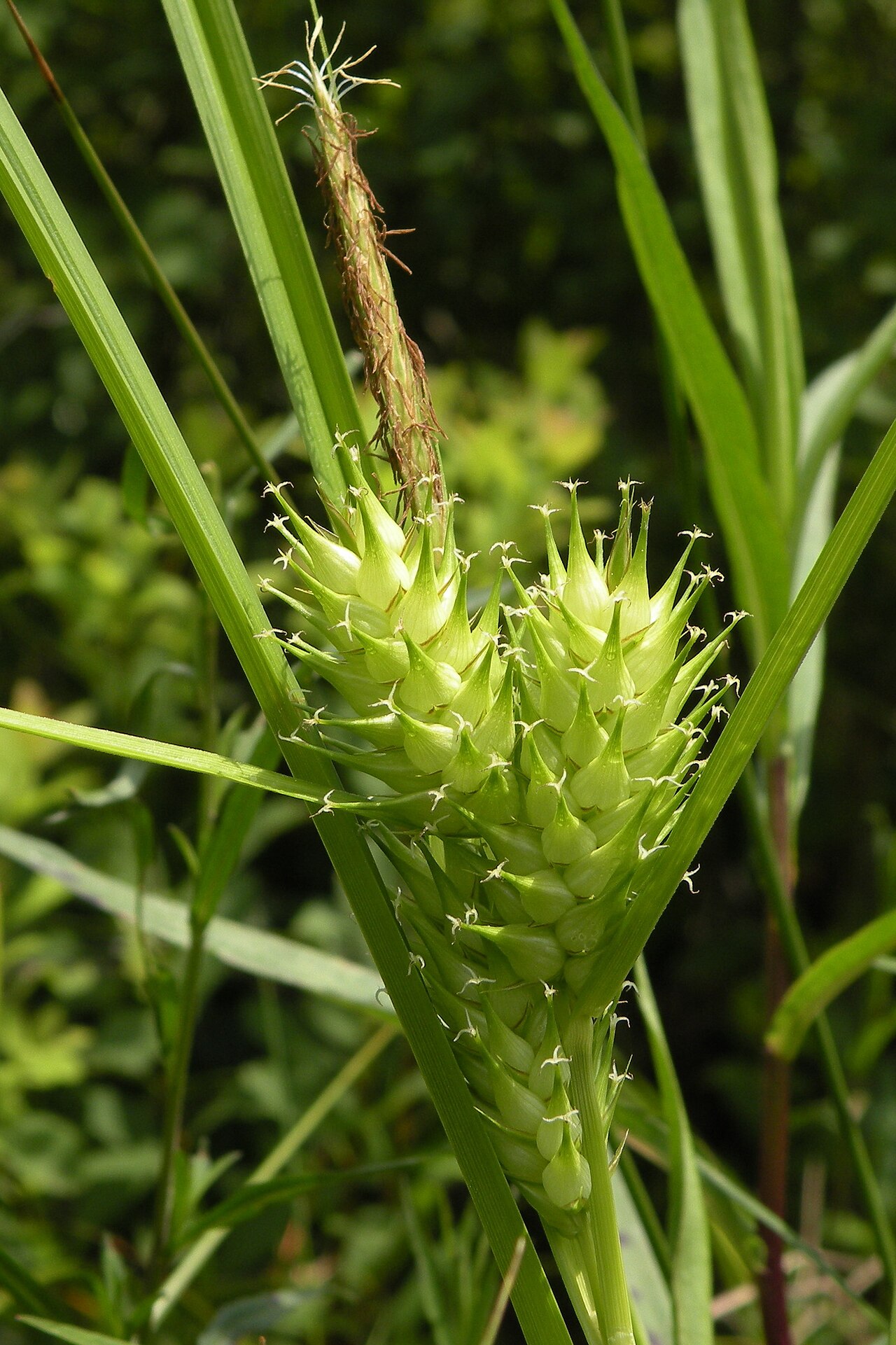
Carex lupulina, known as Hop Sedge, is a robust native sedge of swamps, wet woods, marsh edges and ditches across the eastern half of North America. It forms loose clumps 2 to 3 feet tall (sometimes to 4 feet) with broad, bright green leaves, and from late spring through summer it bears fat, cylindrical spikes covered with large, inflated, beaked sacs. These spikes look like the cones of hops (Humulus lupulus), which gives the plant both its common name and its species name, lupulina.
Hop sedge is an obligate wetland plant: it almost always grows where the soil is saturated or flooded for part of the year. It tolerates standing water, seasonal flooding and part shade, which makes it one of the best native sedges for rain gardens, pond edges, stormwater basins and wet woodland gardens. Its seeds are eaten by ducks and other wetland birds.
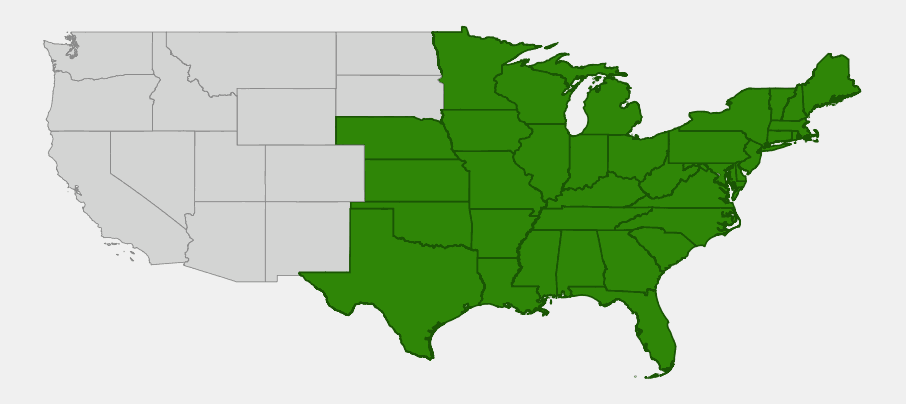
It is native from Nova Scotia, Quebec and Ontario south to Florida and east Texas, and west to Minnesota, Iowa, eastern Nebraska, Kansas and Oklahoma. It is easy to grow, long-lived and attractive, and it adds a bold texture to wet plantings, especially when the bright green spikes are at their best in early summer.
Identification
Hop sedge is one of the easiest large sedges to recognize. Look for its thick, cylindrical female spikes, 1 to 3 inches long, packed with large, inflated perigynia that taper to long beaks, on plants growing in wet ground.
Growth Habit
A clump-forming perennial sedge with short rhizomes, producing loose tufts of leafy stems 1 to 3 feet tall, occasionally 4 feet. The stems are triangular in cross section, as in most sedges, and somewhat spongy at the base. Old leaves stay on through winter in mild climates.
Leaves
The leaves are flat, bright green and relatively broad for a sedge, about 1/4 to 1/2 inch wide and up to about 2 feet long. They are often longer than the flowering stems, so the spikes may be partly hidden among the leaves. Leaf sheaths are thin and papery on the front side.
Spikes
Each flowering stem has one slender male (staminate) spike at the top and usually two to five female (pistillate) spikes below it. The female spikes are thick and cylindrical, about 1 to 3 inches long and up to 1 inch thick, with long, leaf-like bracts that stand above them. Flowering and fruiting run from about May to September.
Perigynia & Achenes
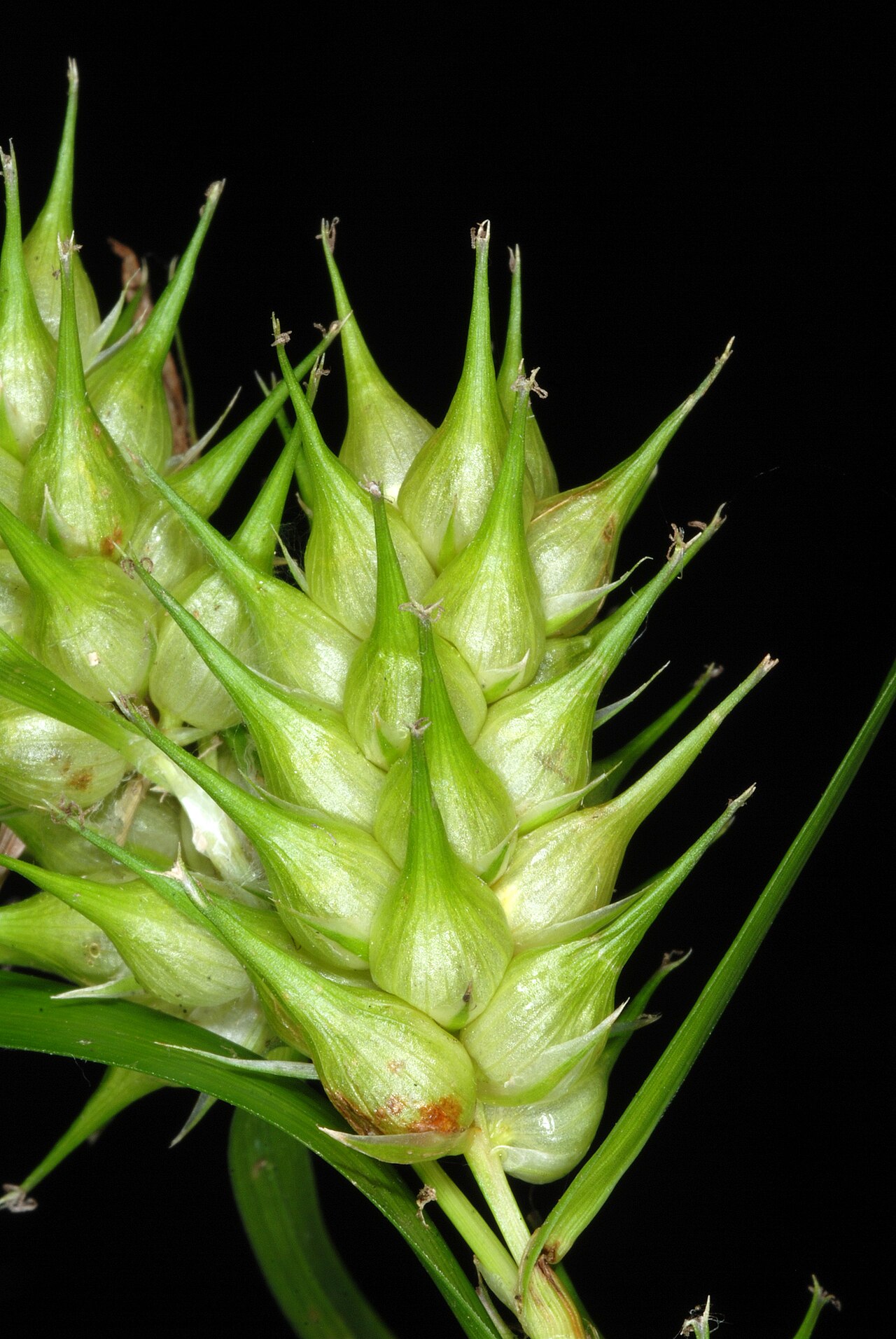
The perigynia, the sacs that enclose each seed, are the key feature. They are large, about 1/2 to 3/4 inch (12 to 20 mm) long, inflated, shiny and green, ripening to straw-colored, with prominent veins, and they taper gradually into a long beak ending in two teeth. Inside, the hard, three-sided achene is distinctly diamond-shaped, longer than wide.
Look-alikes
Sallow Sedge (Carex lurida) has similar spikes but smaller perigynia (usually under 10 mm) and a smaller achene. Gray’s sedge (C. grayi) has round, spiky, ball-like heads. Greater bladder sedge (C. intumescens) has only a few large perigynia per spike. Giant sedge (C. gigantea) of the Southeast is very similar and is separated by technical details of the perigynia and achenes.
Safety
Hop sedge is not toxic. Its leaf edges are mildly rough, as in many sedges, so wear gloves when dividing large clumps.
Quick Facts
| Scientific Name | Carex lupulina |
| Family | Cyperaceae (sedge family) |
| Plant Type | Clump-forming perennial sedge |
| Mature Height | 2–3 ft (to 4 ft) |
| Mature Spread | 1–2 ft |
| Growth Rate | Moderate |
| Sun Exposure | Full sun to part shade |
| Water Needs | High; wet soil to shallow standing water |
| Soil Type | Wet loam, muck, clay or silty soil |
| Soil pH | Acidic to neutral (about 5.0–7.5) |
| Bloom Time | Flowers and fruit May–September |
| Flower Color | Inconspicuous; green spikes |
| Fall Color | Green to tan; semi-evergreen in mild areas |
| Fruit | Large inflated perigynia with diamond-shaped achenes |
| Deer Resistant | Yes; seldom browsed |
| USDA Hardiness Zones | 3–9 |
Native Range
Hop sedge is native to eastern North America. USDA PLANTS lists it as native in the lower 48 states and in Canada, where it grows in New Brunswick, Nova Scotia, Ontario and Quebec. It is recorded from 35 states, from Maine to Florida and west to Minnesota, Iowa, eastern Nebraska, Kansas, Oklahoma and Texas.
It is common through much of the East and Midwest, especially in the Ohio and Mississippi valleys, the Great Lakes region and the Atlantic and Gulf coastal plains. In Texas it is limited to the wet forests of East Texas, and in Florida it occurs mainly in the northern part of the state. It is found at the western edge of its range in the eastern Great Plains, in wet woods and along streams.
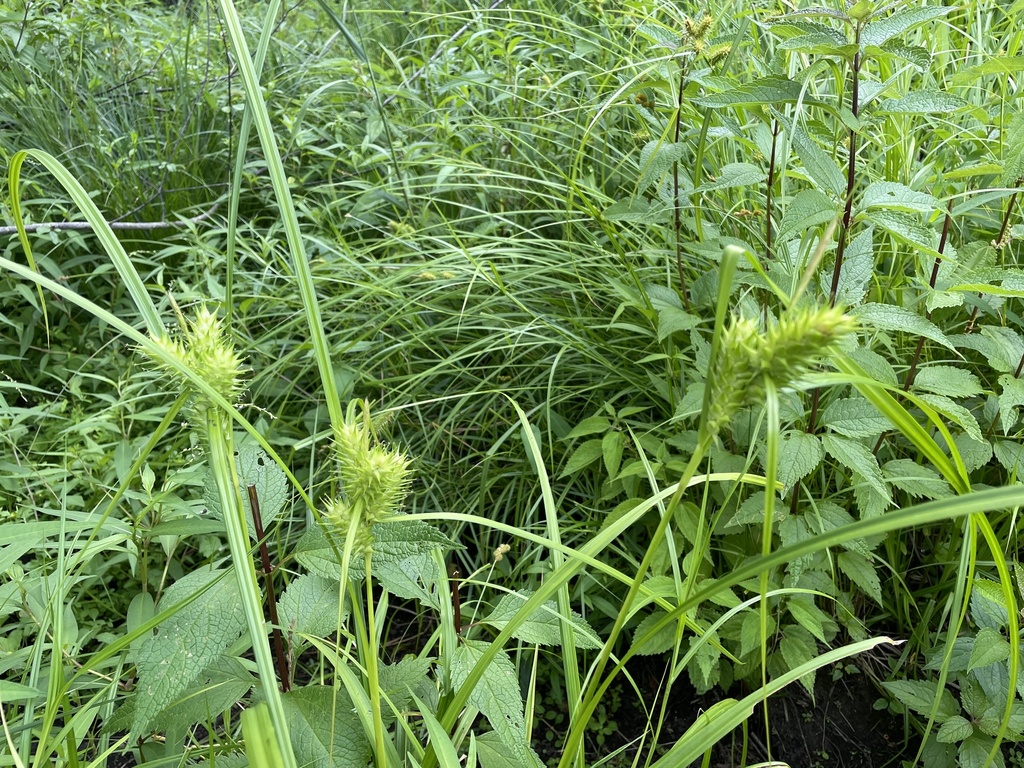
Its habitat includes swamps and swamp forests, bottomland hardwood forests, wet woods, marsh edges, wet meadows, pond and lake shores, ditches and other places with saturated soil or seasonal standing water. The U.S. Army Corps of Engineers rates it an obligate wetland plant (OBL) in all regions where it occurs.
📋 Regional plant lists featuring Hop Sedge: New York, Pennsylvania & Northern New Jersey · Ohio & Indiana · Michigan, Wisconsin & Eastern Minnesota · Kentucky & Tennessee · Nebraska, Kansas & Eastern Colorado · Connecticut, Massachusetts & Rhode Island · New Hampshire, Maine & Vermont · Maryland, Virginia & West Virginia · Delaware, Southern New Jersey & Long Island · Illinois, Iowa & Missouri · Alabama, Georgia & Mississippi · North & South Florida · North & South Carolina · Arkansas, Louisiana, Eastern Oklahoma & Eastern Texas
Growing & Care Guide
Hop sedge is one of the easiest native sedges for wet places. It is sold by many native plant nurseries as plugs or potted plants, and it establishes quickly in soggy soil where many other plants fail.
Light
It grows in full sun to part shade. In full sun it needs constantly wet soil; in part shade, such as at the edge of a wet woodland, it tolerates slightly drier conditions.
Soil & Water
Plant it in wet loam, muck, clay or silty soil that stays moist to saturated. It tolerates seasonal flooding and shallow standing water a few inches deep, so it is ideal for rain gardens, stormwater basins, swales, pond edges and stream banks. It does not tolerate long periods of dry soil.
Planting Tips
Plant plugs or pots in spring or early fall, about 12 to 18 inches apart for a dense planting. Use it in drifts in the wettest zone of a rain garden, along shorelines or in wet meadows with other sedges, rushes, irises and wetland wildflowers. Its upright clumps and interesting spikes also work well in large containers kept wet.
Pruning & Maintenance
Little care is needed. Cut back old foliage in late winter or early spring before new growth begins, if you want a tidier look. Leave seed heads standing through fall to feed birds. No fertilizer is needed.
Propagation
Divide established clumps in spring or early fall. It also grows from seed: sow ripe seed in fall outdoors, or give it a cold, moist stratification of about two months before spring sowing, and keep the soil wet. Plants often self-seed in suitable wet spots.
Landscape Uses
- Rain gardens and bioswales: for the wettest, frequently flooded zone
- Pond and stream edges: clumps that tolerate fluctuating water levels
- Wetland restoration: in swamp, wet meadow and stormwater plantings
- Wet woodland gardens: a bold, leafy sedge for wet part shade
- Waterfowl habitat: seeds for ducks and other wetland birds
Wildlife & Ecological Value
Like many wetland sedges, hop sedge feeds waterfowl and supports insects in wet habitats.
For Pollinators
Sedges are wind-pollinated, so hop sedge does not offer nectar. However, sedges are host plants for the caterpillars of several native butterflies and moths, including some satyrs and skippers that feed on Carex leaves.
For Birds
Ducks, such as wood ducks and mallards, and other wetland birds eat the seeds, which ripen in large numbers in summer and fall. The clumps provide cover for marsh birds, and songbirds glean insects from the foliage.
For Mammals
Deer rarely browse hop sedge. Muskrats and other wetland mammals may eat the leaves and stem bases.
Ecosystem Role
Its dense roots help stabilize wet soils and shorelines, filter stormwater and take up nutrients. As an obligate wetland plant, it is a reliable indicator of wetland conditions and an important part of swamp and wet meadow communities.
Cultural & Historical Uses
The name lupulina comes from Humulus lupulus, the hop plant used in brewing, because hop sedge’s plump spikes resemble hop cones. The species was described in the early 1800s from specimens collected by the American botanist Gotthilf Heinrich Ernst Muhlenberg, which is why its full name is Carex lupulina Muhl. ex Willd.
Hop sedge belongs to a group of large-fruited sedges (section Lupulinae) that includes sallow sedge and giant sedge. Botanists separate them mainly by the size of the perigynia and the shape of the achene, so a hand lens is helpful.
Today hop sedge is a standard plant in native wetland restoration and rain garden mixes across the eastern United States, valued for its reliability in wet, poorly drained soil and its distinctive, hop-like fruiting spikes.
Frequently Asked Questions
Will hop sedge grow in standing water?
Yes. It tolerates seasonal flooding and shallow standing water a few inches deep, as long as the water is not deep for long periods during the growing season.
Can I grow hop sedge in a regular garden bed?
Only if the soil stays consistently moist. It is best in rain gardens, low spots, pond edges and other wet sites.
How do I tell hop sedge from sallow sedge?
Hop sedge has larger perigynia, about 1/2 inch or more long, and a larger, diamond-shaped achene. Sallow sedge has smaller perigynia, usually under 10 mm long, and a smaller achene.
Does hop sedge spread aggressively?
No. It forms loose clumps that expand slowly and may self-seed in wet spots, but it is not invasive.
Is hop sedge good for wildlife?
Yes. Ducks and other wetland birds eat its seeds, and sedges host caterpillars of several native butterflies and moths.

Looking for a nursery that carries Hop Sedge?
Browse our native plant nursery directory: Alabama & Arkansas · Connecticut, Delaware, Florida & Georgia · Illinois, Indiana, Iowa & Kansas · Kentucky, Louisiana, Maine, Maryland, Massachusetts, Michigan, Minnesota, Mississippi & Missouri · Nebraska, New Hampshire, New Jersey, New York, North Carolina, Ohio & Oklahoma · Pennsylvania, Rhode Island, South Carolina, Tennessee, Texas, Vermont & Virginia · West Virginia & Wisconsin